Meteorite contains the oldest material on Earth: 7-billion-year-old stardust

SH.org OP Username
Timeshifter
SH.org OP Date
2020-04-29 16:25:00
SH.org Reaction Score
4
SH.org Reply Count
9

Timeshifter

Core Member
Patron
Active Member
Joined
Aug 26, 2020
Messages
893
Reaction score
1,054
Location
United Kingdom
????

It helps with lockdown at least...

'Stars have life cycles. They’re born when bits of dust and gas floating through space find each other and collapse in on each other and heat up. They burn for millions to billions of years, and then they die...

When they die, they pitch the particles that formed in their winds out into space, and those bits of stardust eventually form new stars, along with new planets and moons and meteorites...

And in a meteorite that fell fifty years ago in Australia, scientists have now discovered stardust that formed 5 to 7 billion years ago — the oldest solid material ever found on Earth'
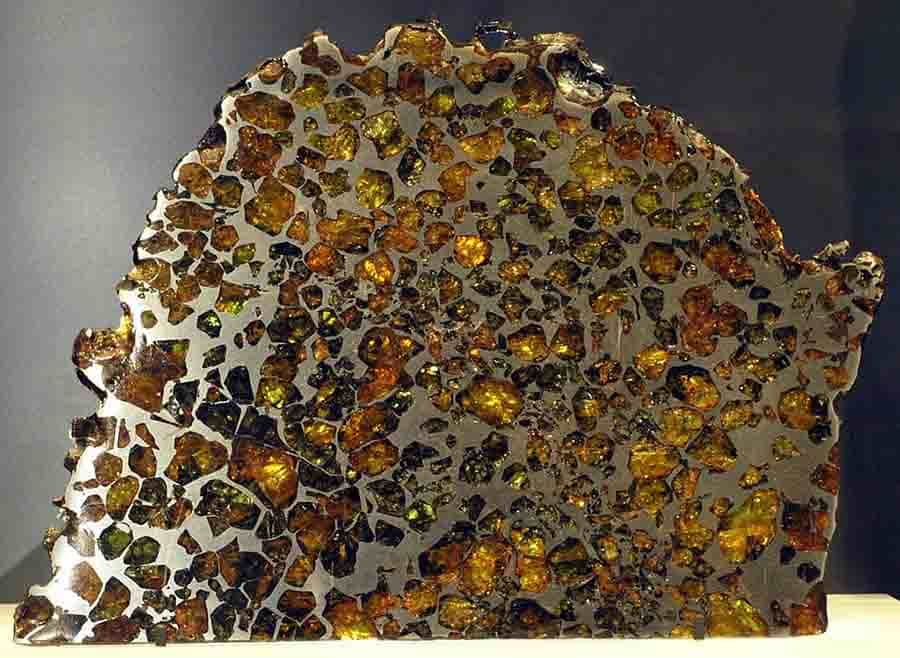
Meteorite-GeologyPage.jpg

“It starts with crushing fragments of the meteorite down into a powder ,” explains Jennika Greer, a graduate student at the Field Museum and the University of Chicago and co-author of the study. “Once all the pieces are segregated, it’s a kind of paste, and it has a pungent characteristic-it smells like rotten peanut butter.”

This “rotten-peanut-butter-meteorite paste” was then dissolved with acid, until only the presolar grains remained. “It’s like burning down the haystack to find the needle,” says Heck'

Once the presolar grains were isolated, the researchers figured out from what types of stars they came and how old they were.

Im done ???

Meteorite contains the oldest material on Earth: 7-billion-year-old stardust | Geology Page
Note: This OP was recovered from the Sh.org archive.
Note: Archived Sh.org replies to this OP are included in this thread.
 
Note: This post was recovered from the Sh.org archive.
Username: Banta
Date: 2020-05-03 01:01:49
Reaction Score: 7
I was wondering, how does one (pretend) to date stardust? From the article:

Well, rainfall isn't constant, how about cosmic rays?

Error - Cookies Turned Off

I suppose this is how you get a range of about two billion years for your dating estimate.

It is a good thing that everyone in "science" have such specialized knowledge, because any sort of rudimentary glance into information outside of your niche will contradict whatever narrative you're trying to sell. It seems one can only believe the "truths" of their own field provided they insulate themselves from everything else!
 
Note: This post was recovered from the Sh.org archive.
Username: andym
Date: 2020-05-03 05:26:59
Reaction Score: 2
so i am still wondering what rotten peanut butter smells like...
 
Note: This post was recovered from the Sh.org archive.
Username: ISeenItFirst
Date: 2020-05-03 14:03:54
Reaction Score: 1
I'm wondering what characteristics are of "pre-solar" grains that make them resistant to acid treatment.

Seems fairly arbitrary to me. Age selective acid?

Maybe I should read the whole article.
 
Note: This post was recovered from the Sh.org archive.
Username: BrokenAgate
Date: 2020-05-03 15:19:52
Reaction Score: 3
I read it, and it has a lot of words without actually saying much. Lots of assumptions about cosmic rays, with no supporting evidence. They mention that 100 of these grains could fit on the period at the end of a sentence. How do they test something that small? How do they know the grains are from before the solar system formed? How do they know that their techniques for determining age aren't flawed? Surely, something that's been floating around in outer space could pick up contaminants.
 
Tips
Tips
Please respect our Posting Rules.
Back
Top