Sunken treasure in Cornwall, UK at the foot of a bronze age settlement

SH.org OP Username
Witchcraft
SH.org OP Date
2019-11-07 13:13:28
SH.org Reaction Score
6
SH.org Reply Count
13

Witchcraft

Contributor
Active Member
Joined
Sep 17, 2020
Messages
29
Reaction score
17
Down in sunny Cornwall
Tucked away near Rock
Lies a lonely chapel
Called St. Enodoc.

001.jpg
Greetings,

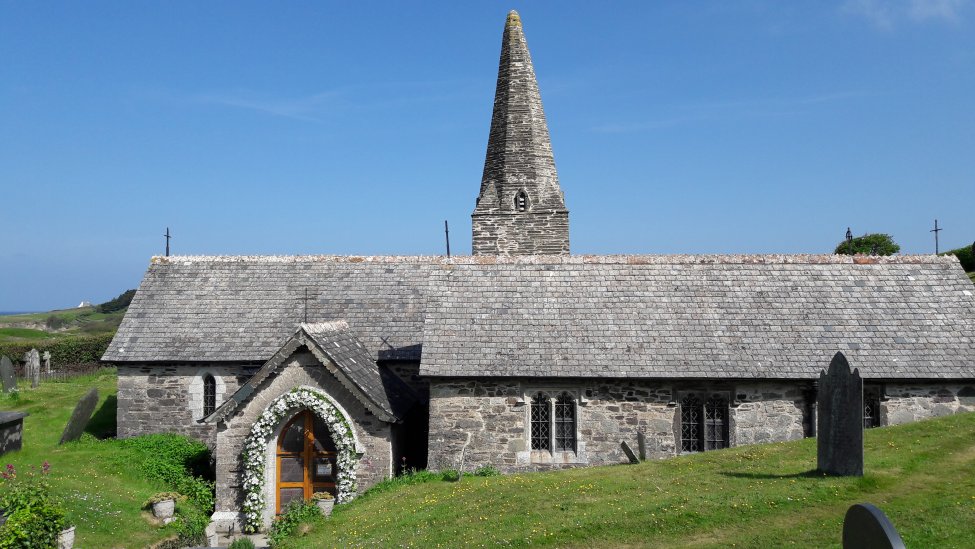
I'd like to share with you a few photos I took about 2 years back when we lived in Cornwall. The chapel itself is in Trebetherick and it's about a half mile walk from the main road off a long lane that leads to Daymer Bay.

In this picture below, you can make out the spire if you follow the path. To the right you can see Brea Hill which was found to have Bronze Age burial mounds.
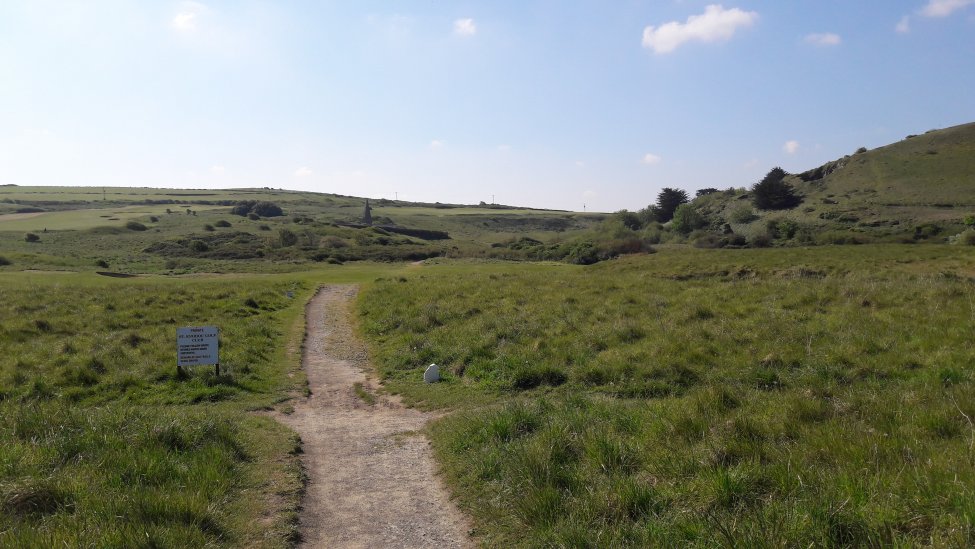
002.jpg
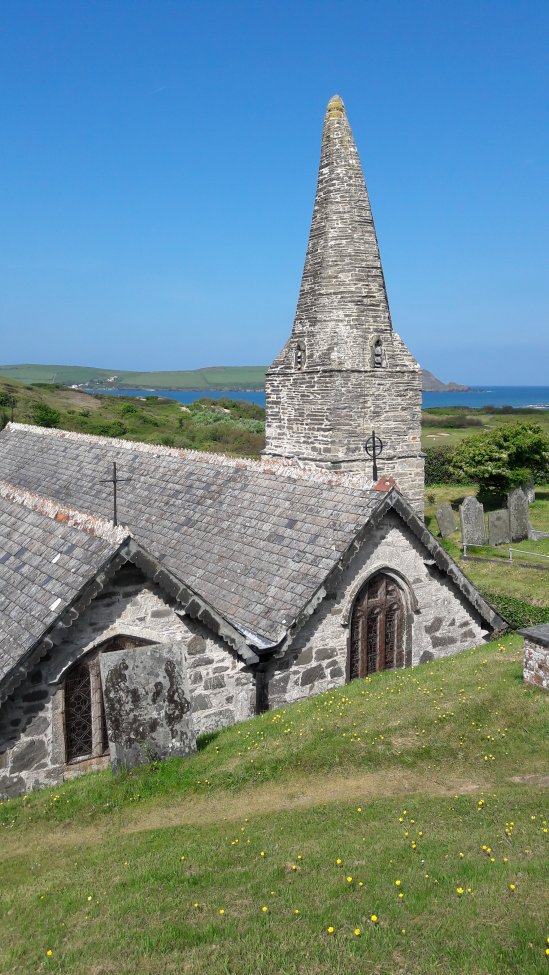
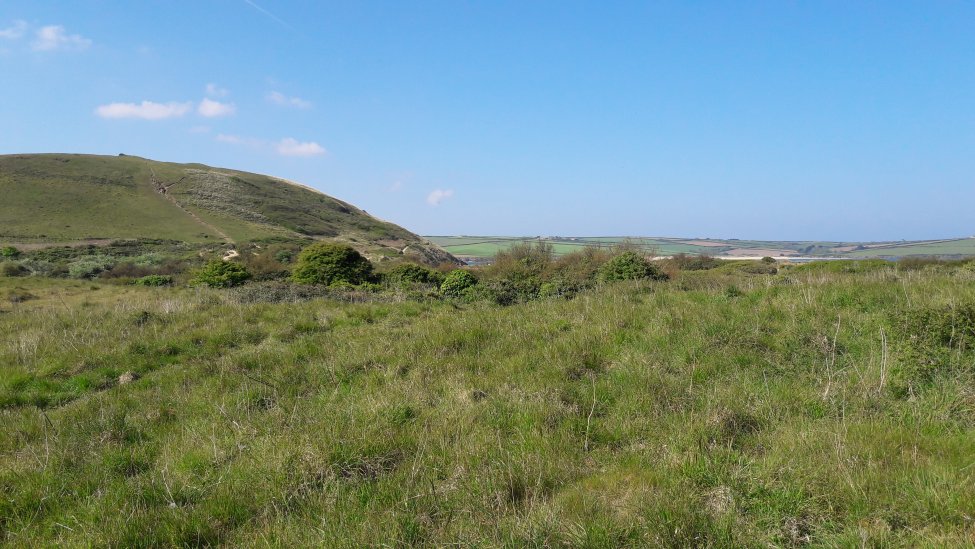
This next one is the view of Brea Hill as you stand with your back to the chapel (you can make out Padstow in the distance over the bay).

003.jpg
and here's a couple of close ups of the chapel itself.

005.jpg006.jpg
It's also the resting place of John Betjeman, who wrote a few poems involving his beloved Trebetherick. Here's a verse from one of them...

Then roller into roller curled
And thundered down the rocky bay,
And we were in a water world
Of rain and blizzard, sea and spray,
And one against the other hurled
We struggled round to Greenaway.
Blessed be St Enodoc, blessed be the wave,
Blessed be the springy turf, we pray, pray to thee,
Ask for our children all happy days you gave
To Ralph, Vasey, Alistair, Biddy, John and me.
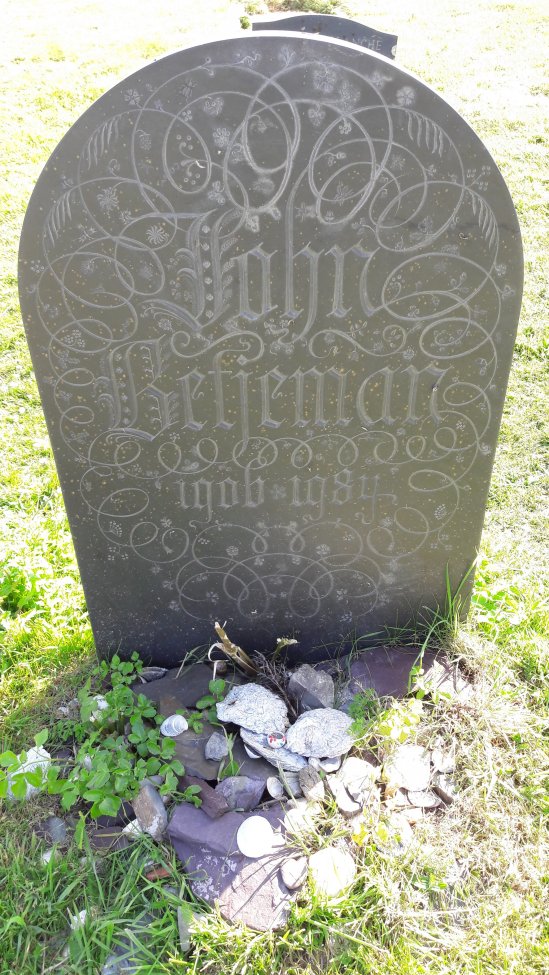
007.jpg
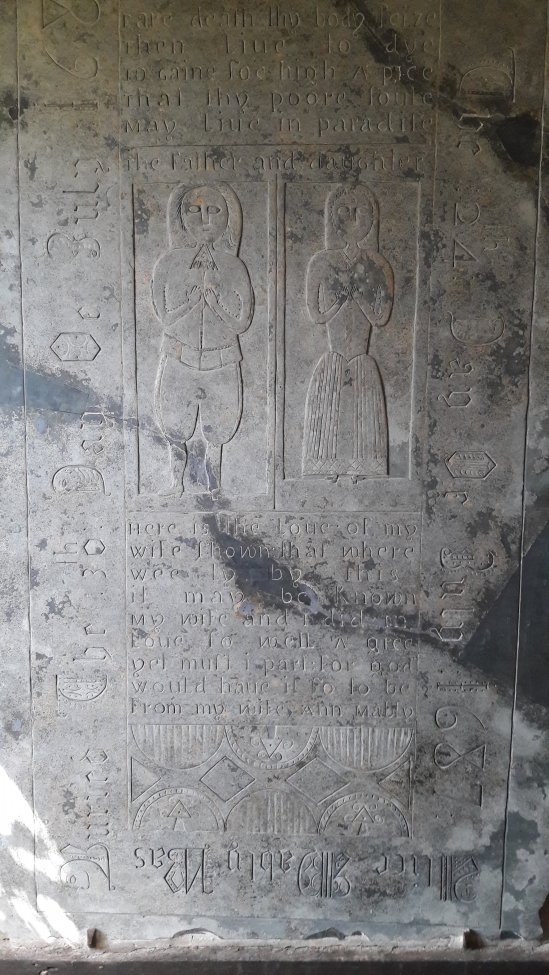
Facing the door as you go in is a memorial to a John Mably and his wife, I assume they were a pretty prominent family as the majority of gravestones at the back of the chapel had that surname. This is a dedication to 'the love of his life'.

0008.jpg
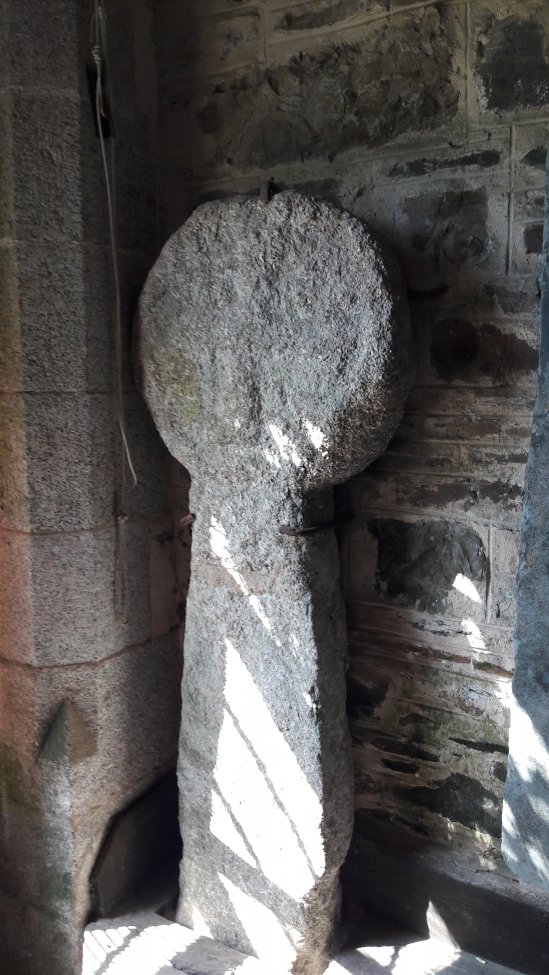
and to the left of that is this which I can't seem to find much info on apart from it being a 'very old celtic cross'. The guide books call it 'a little puzzle'.

0009.jpg

The wikipedia write up reckons --- 'From the sixteenth century to the middle of the nineteenth century, the church was virtually buried by the dunes and was known locally as "Sinking Neddy". To maintain the tithes required by the church, it had to host services at least once a year, so the vicar and parishioners descended into the sanctuary through a hole in the roof. By 1864 it was unearthed and the dunes were stabilized.'

Anyway, I hope you enjoyed visiting St Enodoc's. I don't have too much info on the saint other than they think she was a woman called Qendydd from the 6th century and comes from South Wales - and lived as a hermit.
009.jpg
Note: This OP was recovered from the Sh.org archive.
Note: Archived Sh.org replies to this OP are included in this thread.
 
Note: This post was recovered from the Sh.org archive.
Username: KorbenDallas
Date: 2019-11-07 17:00:43
Reaction Score: 0
The building definitely appears to be mudflooded. Whether this is the case I do not know, but it sure does look that way.

Wondering what the purpose of that spire was.
 
Note: This post was recovered from the Sh.org archive.
Username: Witchcraft
Date: 2019-11-07 17:34:05
Reaction Score: 0
I'm not sure about the spire but they make a point of "a north transept leading to the tower, which unusually is to the north of the church." Not sure how unusual that is or what it even means, but could well have something to do with that bronze age settlement over yonder.

I have a great desire to dig for 'Thundereggs' at the bottom of that hill (different 'out there' idea about these as well, but for another time when I can explain my thoughts coherently), I would love to know what secrets they hold.
 
Note: This post was recovered from the Sh.org archive.
Username: KorbenDallas
Date: 2019-11-07 17:59:57
Reaction Score: 0
Apparently this church is located in Trebetherick. The linked Wiki has the following line in there:
  • Between its fairways is St Enodoc Church, a small church with a bent steeple. It lies considerably below the current surrounding ground level, having been excavated in 1863 after being completely buried by drifting sand.
Wiki for the actual church says this:
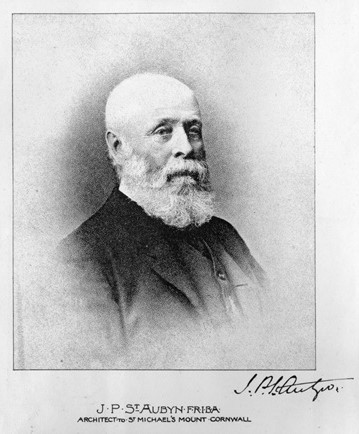
  • The church is said to lie on the site of a cave where Enodoc lived as a hermit. The oldest fabric in the church dates from around the twelfth century. Additions were made in the thirteenth and fifteenth centuries. By the eighteenth century the church was partly submerged in sand. During the nineteenth century the sand was removed and the church was cleaned and restored under the direction of the vicar of St Minver, Rev. W. Hart Smith. The architectural restoration was carried out in 1863–64 by J. P. St Aubyn.
Here is the guy who allegedly dug it out, and restored.

J P St Aubyn.jpeg
 
Note: This post was recovered from the Sh.org archive.
Username: Witchcraft
Date: 2019-11-07 18:32:48
Reaction Score: 0
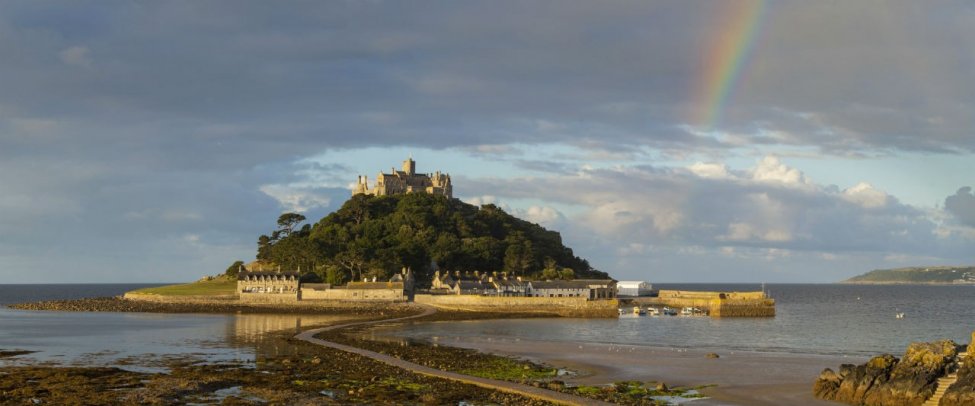
St Michael's Mount, very interesting place in Cornwall, thank you for that snippet!

St_Michaels_Mount_-_rainbow_-_credit_Mike_Newman.jpg

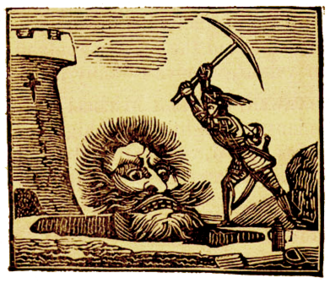
and the island was created by a giant named Cormoran no less!

330px-Cormoran.png
 
Note: This post was recovered from the Sh.org archive.
Username: HollyHoly
Date: 2019-11-07 18:40:55
Reaction Score: 0
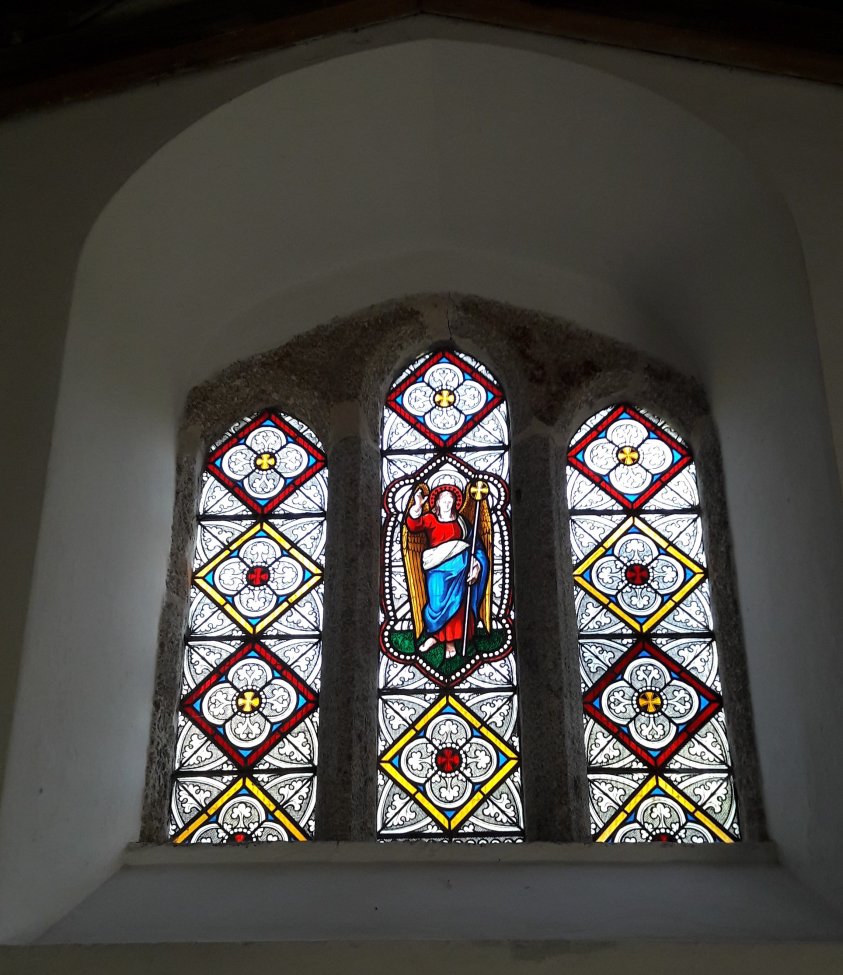
that stained glass widow is amazing,especialy when you think it was buried entirely at one time
 
Note: This post was recovered from the Sh.org archive.
Username: knowncitizen
Date: 2019-11-07 21:13:04
Reaction Score: 1
Old lead stained glass windows have zero lateral strength. If sand built up against this window, it would get destroyed. Lead is not a strong metal. This window is not original if the building was buried..
 
St Michael's Mount, very interesting place in Cornwall, thank you for that snippet!

St_Michaels_Mount_-_rainbow_-_credit_Mike_Newman.jpg


and the island was created by a giant named Cormoran no less!
Apparently St Michael's mount was originally part of the sunken Country of Lyonesse.
In his “Portrait of the Isles of Scilly”, C. Mumford also mentions Lyonesse and the Isles of Scilly. According to local legend, the Isles of Scilly are the remnants of the lost land of Lyonesse, a piece of country which once upon a time joined the islands to Lands End (and included St Michael’s Mount) and which was drowned by a huge flood never to reappear.
According to the English poet Tennyson, "the lost land Lyonesse", where apart from the Isles of Scilly - all now is wild sea".
Lyonesse Disappeared Under Water In A Single Night
The oldest written account of a lost country outside Cornwall's coast is described in "Irinerar" dated to 14th century and written by William of Worcester, who mentions fields, forests, and 140 parish churches that disappeared in the region of the Isles of Scilly, an archipelago of around a hundred islands and islets southwest of Land's End in Cornwall, southwestern Britain.


Lyonesse that disappeared

A Cornish poet, antiquarian and Elizabethan gentleman, Richard Carew, identified this so-called “Irinear” with Lyonesse mentioned in the Arthurian Saga, and his report on the subject, appeared in Britannia and in his "Survey of Cornwall"(1602).

He writes:


“The encroaching sea hath ravined from it [Cornwall] the whole country of Lionesse, together with divers other parcels of no little circuit, and that such a Lionesse there was these proofs are yet remaining. The space between the land’s end and the Isles of Scilly, being about thirty miles, to this day retaineth the name, in Cornish Lethowsow, and carrieth continually an equal depth of forty or sixty fathom (a thing not unusual in the sea’s proper dominion) save that about the midway there leith a rock which at low water discovereth his head. They term it the Gulfe, suiting thereby the other name of Scilla.

Carew also reports that fishermen casting their hooks in this location have drawn up pieces of doors and windows.
Sunken Land Of Lyonesse: Legendary Kingdom That Influenced Stories Of Writers And Fishermen | Ancient Pages

So it would appear the flood that buried both the chapel and the land of Lyonesse happened in the 14th century and not after the 15th as per the Korban Dallas post above.
 
Apparently St Michael's mount was originally part of the sunken Country of Lyonesse.

You can still see bits of it when the tide is right apparently. I wonder if it was linked to Brittany? Their culture is very 'Cornishy'.
 
. I wonder if it was linked to Brittany? Their culture is very 'Cornishy'.
According to the linked article there is memory in Brittany also of Lyonesse. Whether it linked directly or not between lands I know not.
 
St Michael's Mount is intriguing.
I wonder if that's a man-made mound? If not, its still a magnificent geological specimen of an island. Stone begets earth energy.
Our forebears may have put churches and castles on energetic mounds at a crossing of Ley Lines. Energy for spirit, energy for defense.
Thats odd, the website does not tell the history of the castle...why?

smm.jpg

What will you discover inside?
  • A crossbow for hunting hares or rabbits.
  • A clock that tells you the time of the tide as well as the hour of the day.
  • A frieze with hunting scenes, including an ostrich munching on a horseshoe.
  • A piece of Napoleon’s coat worn at the Battle of Waterloo.
  • A statue of St Michael offering mercy to the Devil at his feet.
  • The sofa where Queen Victoria sat as the housekeeper entertained her to a cup of tea.
  • An unusual souvenir from a trip to Egypt: a mummified cat.
  • A magnificent Samurai Warrior, a gift from the Emperor of Japan.
  • An etched windowpane, where a doubtful St Aubyn daughter checked the authenticity of her diamond engagement ring before she accepted a proposal.

https://www.stmichaelsmount.co.uk
 
Last edited:
Tips
Tips
Please respect our Posting Rules.
Back
Top