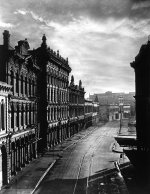
SH Archive 1866 Oswego Iron Furnace: Oregon

SH.org OP Username
KorbenDallas
SH.org OP Date
2019-04-17 07:13:10
SH.org Reaction Score
2
SH.org Reply Count
2

KD Archive

Not actually KorbenDallas
Active Member
Joined
Sep 22, 2020
Messages
4,691
Reaction score
1,500
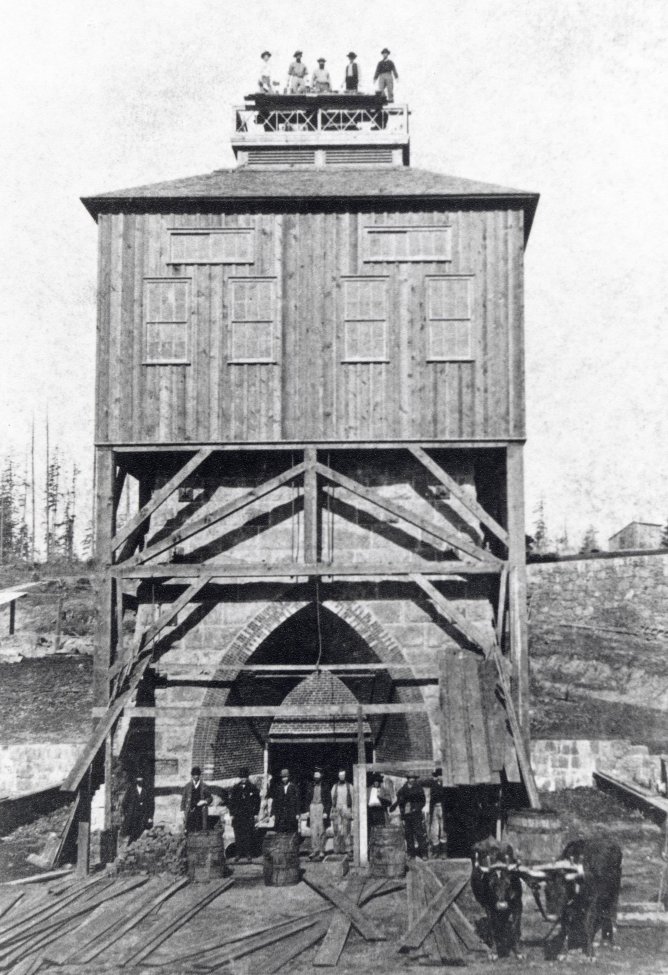
Came across this image today, and wanted to ask for opinions. It was supposed to be an Iron Furnace. It probably was a furnace. Obviously the prominence, and quality of the structure stands out. What attracted my attention in addition to the arched structure, were those stone walls behind. What could they be for?

This image is supposed to represent its "construction", right?

Oswego_Furnace_under_construction_ca._1866.jpg

Link
The Oswego Iron Furnace, built in 1866 at the confluence of Oswego Creek and the Willamette River, was the first iron furnace on the Pacific Coast. Between 1867 and 1885, it produced 42,000 tons of pig iron, sold as "Oregon Iron" to foundries in Portland and San Francisco. Before 1867, all iron on the Pacific Coast was brought by ship around Cape Horn.

kd_separator.jpg

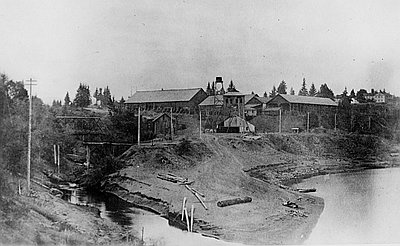
Allegedly, below is the same Furnace. What happened to the landscape?
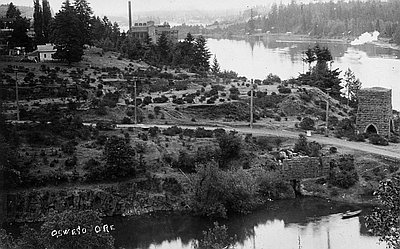
Oswego_Furnace_aerial_134.jpg

Oswego Iron Furnace

The image below is representative of this "furnace's" state prior to some recent exploration. Nice stones they used back in the day, didn't they?
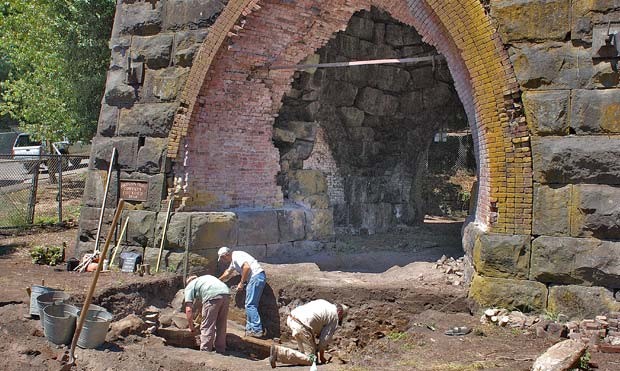

Any thoughts on this building?
Note: This OP was recovered from the KeeperOfTheKnowledge archive.
Note: Archived Sh.org replies to this OP are included in this thread.
 
Note: This post was recovered from the Sh.org archive.
Username: Searching
Date: 2019-04-17 07:56:14
Reaction Score: 1
I see a slow digression through time. While the blocks of the wall are not megalithic, they are definitely larger than the stonework of today. It is obvious that the arch is made of different stone, by a smaller people, from a different time.

Like other structures in this realm, a less knowledgable people came along later and added on.
 
Note: This post was recovered from the Sh.org archive.
Username: jd755
Date: 2019-04-17 08:24:00
Reaction Score: 1
The first picture is of the topping out of the building hence the workers holding tools.
The high stone wall is built on top of the natural rock as evidenced by following the cut stone downwards.
The lower stone wall looks like a revetment of sorts to keep the land behind the building from moving down to the building. This one seems to be of the same age of installation as the building stone going by the colour in relation to the wall on top of the rock which I feel predates the building construction.
Comparing the first and last pictures I feel the stone wall on the rock was now also built to stop the 'hill' moving down towards the furnace.

The reason why the hill would move is the removal of tree cover from the tops of hills and ridges allows rain to create large volumes of moving water to flush soils off the hill and down the slopes in a 'mud flood'. To see it in action find a normally clear stream coming off of a hill with no tree cover on top after a rain event. There's the cause of mudfloods world wide.
Not saying any more here as you asked about the furnace. If this is a digression too much, I have form, please delete it.

I feel going off local experience that once the furnace went out of use and the industrial area that would have arisen around it the 'locals' robbed the walls out for other purposes, walls are easier to rob out than big buildings so are a prime target once a site is abandoned, hence the 'degraded landscape' in the second image which reverted to its steady march down to the river courtesy of the lack of tree cover.

The arch is brick, not stone and the interior would originally also been of brick as stone cannot stand the heat. The interior lining would have needed regular replacement. I just wonder how big the crucible was and what provided the heat as there is no chimney visible unless the entire structure is the chimney and the smoke exhausts where those men are stood. What fired the furnace?
Coal would be my guess, possibly mixed with coke to get the heat up. Sorry my smelting know how is limited.
Post automatically merged:

Just been to the linked site and found these.
Here is the denuded hill. Denuded of tree cover.
hill.jpg


According to that site the furnace consumed 22,000 acres of trees during its working life. That's a lot of bare land where rain will no longer infiltrate in moderated by trees and a lot of soil just itching to flow away. Commerce and greed have lot to answer for.

Here are the surrounding buildings probably after the furnace had gone out of use but it shows the land above the furnace needed stabilising with the walls.
industry.jpg


Now my schooldays come back to me as the town here had the largest Ironworks 'in the world' once upon a time hence the grammar school history class subject matter of iron smelting.
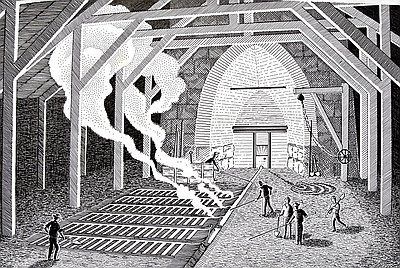
interior.jpg


Here they are making pig iron which explains the pair of very low walls probably footings for the wooden shed affair running towards the camera in the first picture. Why an engraving not a photo though?
pig iron.jpg
 
So that's where Cast Iron Portland came from😏 Thankfully, Minor White was paid by the system to document the demolition of cast iron Portland for future suspicion. Look at the size of those cast iron building fronts built in 1860s, simply insane narrative imo. His collection can be found on Oregon digital archives, though the cast iron is stamped as being made in San Francisco in some photos? Prosperous city San fran😊
 

Attachments

  • in-the-beginning-minor-whites-oregon-photographs-06.jpg
    in-the-beginning-minor-whites-oregon-photographs-06.jpg
    267.1 KB · Views: 116
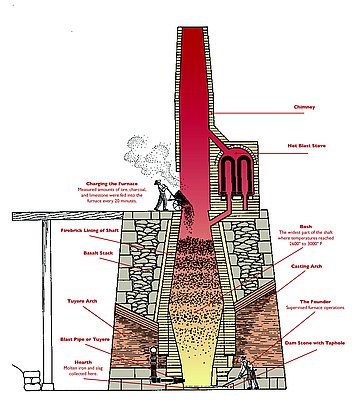
These structures are smelting-furnaces and lime-kilns. They were primarily used for two purposes...the kilns were for cooking limestone, and the furnaces were for smelting various forms of iron. Both processes were necessary for creating materials from which to construct Old-World infrastructure and architecture. Lime-kilns and iron-smelting-furnaces were very common-place, and were prolifically found everywhere this type of construction occurred.

The Old-World furnaces and kilns were built to different styles and scales, depending on the quantity of processed materials needed. Without these furnaces and kilns the Old-World infrastructure and architecture would not have been possible.

1728686381912.png
Old-World Iron-Smelting-Furnace.
What attracted my attention in addition to the arched structure, were those stone walls behind. What could they be for?​
The stone walls in the background may be the necessary ramps, up which to cart materials into the upper level of the furnace.

1728687053891.png
Old-World Iron-Smelting-Furnace.


screenshot.png
Old-World Lime-Kiln.
Allegedly, below is the same Furnace. What happened to the landscape?
The odd-shaped landscape (hills, cliff-faces, lakes, ponds, or pits) surrounding the furnaces and kilns, were often the very same location from where the limestone and other ores were quarried.

Many Old-World kilns and furnaces have been destroyed, along with the Old-World architecture. Comparatively, very few examples remain today.

Example: Lime Kiln · 1567 West Side Rd, Friday Harbor, WA 98250, États-Unis
Example: Historic Lime Kilns · Big Sur, CA 93920, États-Unis]

Their modern equivalents, are pictured below.
screenshot2.png
Modern Lime-kiln.

1728686199951.png
Modern Iron-Kiln.
 
Last edited:
Tips
Tips
Please respect our Posting Rules.
Back
Top