SH Archive 1867 Steam Road Roller by Aveling & Porter

SH.org OP Username
KorbenDallas
SH.org OP Date
2019-06-04 04:41:37
SH.org Reaction Score
1
SH.org Reply Count
1

KD Archive

Not actually KorbenDallas
Active Member
Joined
Sep 22, 2020
Messages
4,691
Reaction score
1,500
1867 Steam Road Roller
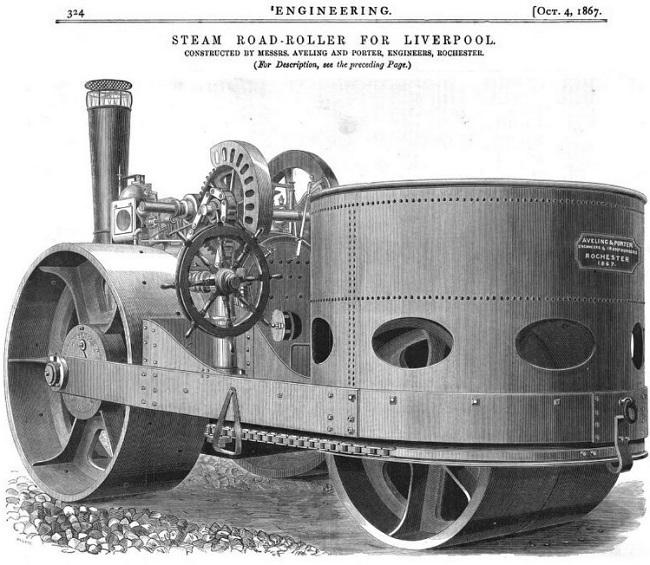
This 1867 "achievement" got lost within some other thread. Figured would give it a life of its own. For technical details please visit:
1867_steam_roller_3.jpg

Source

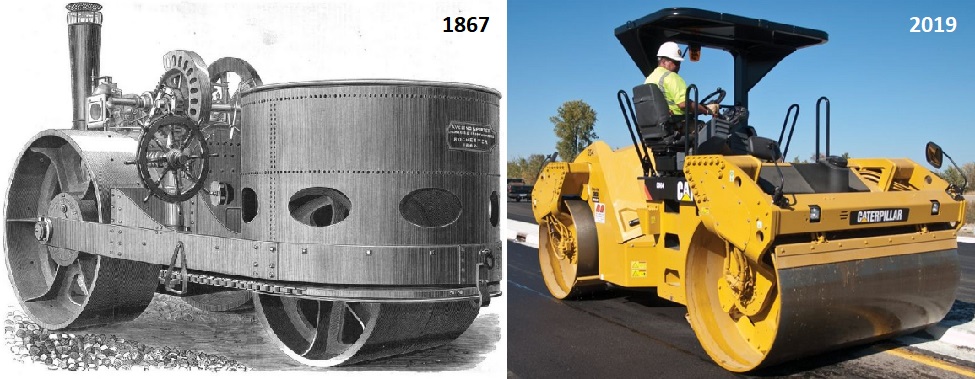
Tiny Comparison
road_roller.jpg

kd_separator.jpg

In 1856 Thomas Aveling produced the first steam plough. In 1858 Aveling acquired premises in High Street, Rochester, a workshop in Edward's Yard (near Free School Lane) and a foundry over the river in Strood that later became the Invicta Works. At the Smithfield Show of 1860, Thomas Aveling of Rochester exhibits an 8 hp patent locomotive engine invented by himself and made by Clayton and Shuttleworth and by 1861, in partnership with Henry Rawlinson, they started building steam engines to their own patented designs. The firm was know as Aveling & Rawlinson.
  • Richard Porter joined the company in 1862 and the name changed to Aveling and Porter. At the Bath and West Society Show of 1862, Aveling and Porter showed a traction engine that they had driven 190 miles from Rochester to Bath in under 48 hours. At the 1862 International Show of the Agricultural Society they showed an agricultural locomotive engine for threshing, ploughing and general traction purposes. In 1864 they produced their first engine to run on rails and continued in this market until 1926. They developed a steam engine in 1865 and produced more of the machines than all the other British manufacturers combined and their steam roller was tested in Hyde Park, London, Military Road, Chatham and at Star Hill in Rochester, Kent and was a success. Aveling and Porter steam rollers were exported to Europe and as far afield as India and the USA.
  • 1867 brought the production of the first steam roller weighing 30 tons for the Liverpool Corporation. At the 1876 Royal Agricultural Show at Birmingham with agricultural self-propelling engines of 4, 6, 8 and 10 hp. Also a 12 hp ploughing engine and a 10-ton roller. Thomas Aveling died in 1882 and was succeeded by his son Thomas Lake Aveling. Under Thomas Lake Aveling's direction, the company concentrated most of its efforts on the production of steamrollers. Aveling and Porter met about 70 per cent of the British market for road rollers in the early twentieth century. The firm continued to make various products such as traction engines, ploughing engines, steam wagons, and tramway locomotives, but many others were contracted out. Aveling and Porter threshing machines, for example, were made by Nalder and Nalder of Wantage. By 1895 the firm employed 1,000 workers.
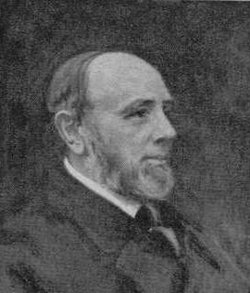
Thomas Aveling
aveling.jpg

09.11.1824 - 03.07.1882
Thomas Aveling was born 11 September 1824 at Elm, Cambridgeshire. His mother was widowed while Aveling was still young and the family settled in Hoo (Rochester, Kent). His mother remarried to the Rev. John D'Urban of Hoo. Thomas' stepfather brought him up with "a Bible in one hand and a birch rod in the other". Aveling was apprenticed to Edward Lake, a farmer, of Hoo. Aveling married Edward's niece, Sarah Lake (daughter of Robert Lake of Milton-Chapel near Canterbury) and in 1850 took a farm at Ruckinge on Romney Marsh. In 1851 he was recorded as a farmer and grazier employing 16 men and 6 boys. The business also included a drainage tile works. In 1859, Aveling invented the traction engine when he modified a Clayton & Shuttleworth portable engine, which had to be hauled from job to job by horses, into a self-propelled one. The alteration was made by fitting a long driving chain between the crankshaft and the rear axle. Aveling later invented the steamroller in 1867. Thomas Aveling is regarded as "the father of the traction engine".
  • Aveling had a reputation as something of a martinet in business, only keeping on the best men. However he did provide his staff with recreational facilities with a lecture room and mess room. Lectures were delivered on educational, social and political topics with Aveling himself in the chair and participation from the floor encouraged.
  • Following the success of the Aveling and Porter business, Thomas rose to local prominence, first on the council and then between 1869 and 1870 as Mayor of Rochester. Politically he held rather radical views within the Liberal Party. Not surprisingly (given the location of the Invicta Works) he was a strong advocate of improving the river bank at Strood, which was at that time marsh. As mayor he took an interest in the significant local charity Watts' Charity and was appointed to the board of trustees in 1871. He helped lay out the public gardens in Rochester Castle, sat on the Rochester School Board and was a governor of the Sir Joseph Williamson's Mathematical School.
  • He was a member of the Royal Agricultural Society of England, serving as councilman 1875–1882 and on various committees. He secured the building of a chemical laboratory for the society. He was a member of the Institution of Civil Engineers, the Institution of Mechanical Engineers and the Iron and Steel Institute.
  • Aveling enjoyed yachting and had his own 28-ton yacht Sally. He was active in the management of several yacht clubs including the Royal Cinque Ports and the Royal Victoria. After contracting a chill on board her in late February 1882 he developed pneumonia and died on 7 March 1882. Aveling is buried at St Werburgh Church, Hoo.

Richard Porter
incognito-icon-22.png

~1835-1913
Richard Porter's grandfather John (1736–1812) established a grocery business in Sheffield, Yorkshire. His son Thomas married Ann Girdler and they had Richard in around 1835. By 1861 Richard had moved to Enfield, London where he married Marianne Atkin (b. 1840) who had also been born in Sheffield.
  • In 1862 he went into partnership with Thomas Aveling and subsequently moved to Rochester where in around 1863 he had his first child, Edith. 1871 he is recorded as living at Boley Hill House with his wife, four children and four servants. His occupation is recorded in the census as "Manufacturing Engineer".
  • Ten year later in 1881 the census locates him at Raleigh, Fox Grove Road, Beckenham with the family and servants as before plus his widowed sister-in-law Mary Studer. He remained in Beckenham, the house being recorded as 26, Foxgrove Road after 1901. He died in 1913. His will was proven the following year when he was shown as "Engineer and Chairman of Aveling and Porter".

kd_separator.jpg

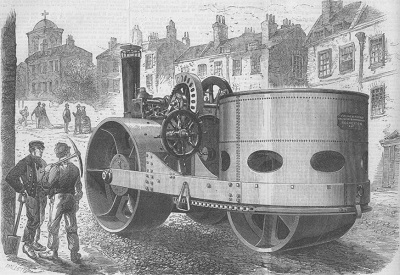
And by the way, this steam roller was huge.

aveling_steam_roller.jpg
Note: This OP was recovered from the Wayback Archive.
Note: Archived Sh.org replies to this OP are included in this thread.
 
Note: This post was recovered from the Sh.org archive.
Username: jd755
Date: 2019-06-04 06:49:40
Reaction Score: 1
Getting away from the bullshit department that is wakipedia (is it run by the Vatican bullshit history factory? Feels like it quite honestly)

From here Steam Rollers in Britain courtesy of giberu

'The area was in an uproar. Shopkeepers closed their stores, children ran crying to their mothers, horses bolted and dogs barked themselves into a frenzy. The world's first steam roller had made its appearance.' ' Those were the headlines of a Kent County newspaper in the year 1865. However, they were in correct, as the world's first steam roller had been demonstrated in 1860 in France, built by Monsieur Louis Lemoine; the first British built roller appeared in 1863. This latter was the result of a joint design by Mr. William Clark, Chief Municipal Engineer of Calcutta, India and Mr. Batho of Birmingham, England.
In 1866, Aveling & Porter took one of their standard 12 NHP traction engines and to it fitted rear wheels 7 feet in diameter and 3 feet wide and also fitted larger wheels to the front, to which attached a chain and pinion type steering controlled by a ship's wheel. It weighed 20 tons overall and provided a ground pressure of three tons per square foot. This roller was worked extensively in Hyde Park, London.


From here Aveling and Porter - Graces Guide courtesy of duckduckgo

1865 They developed a steam engine and produced more of the machines than all the other British manufacturers combined.

1865 Their steam roller was tested in Hyde Park, London, Military Road, Chatham and at Star Hill in Rochester, Kent and was a success. Aveling and Porter steam rollers were exported to Europe and as far afield as India and the USA.

It was in 1865 that Aveling after experimenting with one of his large, road locomotive engines fitted for the purpose with very wide and heavy driving wheels and drawing a detached cast iron roller of width sufficient to cover the space between the outside wheels, decided to construct a machine expressly for rolling.

1867 Produced the first steam roller weighing 30 tons for the Liverpool Corporation.


They had a steam roller at the Philadelphia bash in 1876!

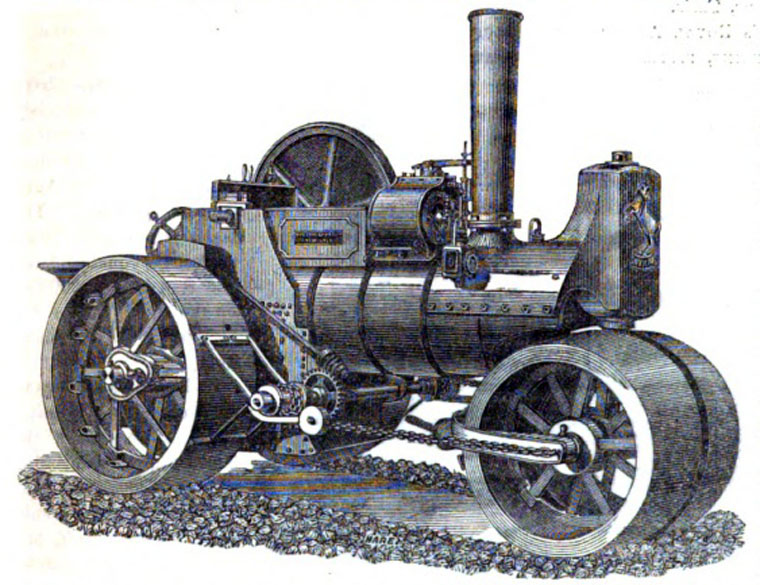
1876 Philadelphia International Exhibition - British Section: Aveling and Porter's Steam Road Roller, fitted with their patent side-plate brackets;- This machine is a special adaptation of Aveling and Porter's ordinary Road Locomotive to the purpose of road rolling, and in its design and construction every improvement suggested by long experience has been adopted. The engine is carried upon four rollers of equal width, the two hind ones acting as drivers, and the two in front as steering - rollers. These latter cover the space between the two driving- rollers, and are made slightly conical in order that on the ground line they may run close together while leaving room above their axle for the vertical shaft which connects them to the engine, and which serves to support the forward part of the boiler; at the same time play is given to the vertical shaft for the rollers to accommodate themselves to the curved surface of the road. The machine can be turned round in little more than its own length, thus enabling it to roll steep hills without injury to the fire-box, while retaining the manifold practical advantages of the horizontal over the vertical boiler for locomotive purposes; amongst which may be enumerated absence of priming, economy in fuel, wear and tear, and much lower centre of gravity. It may be also noted as important features of these rollers that they are[adapted for driving stone-breakers or other fixed machinery most economically when not required for rolling and for use as traction engines. They are managed by one person. With each Roller the following free extras are supplied: feed oil can, box spanner and set of spanners, screw-hammer, two gauge glasses and washers, set of firing irons, and tube brush and rod. Aveling and Porter introduced the Steam Road Roller in the year 1868 and have since then manufactured a great number of them. Among other places they are now working in London, Edinburgh, Liverpool, Manchester, Birmingham, Leeds, Sheffield, Bradford, Hull, Huddersfield, Newcastle-on-Tyne, Brighton, Darlington, Middlesbro', Blackpool, Kidderminster, Walsall. New York, Philadelphia, Chicago, Washington, Newhaven, Auburn, Hartford, Newark, Richmond, Bridgeport, St. Louis, Pittsburgh, Wilmington, Rochester. Berlin. Vienna. Pesth. Milan. Christiania. Stockholm. India. Canada. South America. Australia. West Indies.

Here it is: Design moved on a bit.
Im20170320RB-Appleby1.jpg

Here's a link to the catalogue of British exhibits at Philadelphia; Philadelphia international exhibition, 1876. British section. Copy of catalogue interleaved for use of the judges.

Went looking for the earlier French or British version mentioned above using the French Rouleau compresseur 1865 and startpage found this site;
histoire de l' attelage dans la vie quotidienne - attelage-patrimoine

Full of pictures of horse and ox drawn rollers.
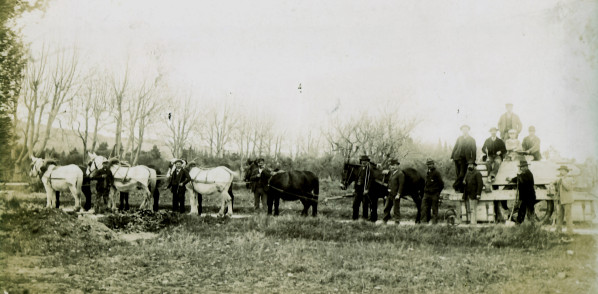
This is an example with horses and people for scale.

7.jpg

Although some of the people look out of scale to the horses so perhaps they are actually ponies.
 
Tips
Tips
Please respect our Posting Rules.
Back
Top