Alexander fights King Porus Invention of firearms reflected in Shahname

MaziarMohajer

Core Member
Active Member
Joined
Mar 19, 2021
Messages
131
Reaction score
308
Alexander fights King Porus
Invention of firearms reflected in Shahname


Abstract Alexander's battle with King Foor in Shahname is discussed, showing that Alexander invented a kind of firearm (the Metal Army), whereas his opponent probably used the trebuchet (War Elephant). This new war machine was a hollow, sealed iron object similar to a horse and rider, filled with Naft (gunpowder) that could be ignited by hand and used to defeat the enemy. To be more specific, the depicted firearm is the Zamburak, a mobile camel gun utilized in India in the 18th century. As a result, the Shahname is unlikely to have been composed before the 18th century, certainly not earlier than the 16th.

Keywords Shahname, Alexander, Zamburak, trebuchet, Firearm, Chronology.


Alexander the Great is a prominent historical figure. From a non-traditional historical view, he is an interesting character because multiple sources provide paradoxical and unexpected information about his life. In Western countries, these sources are known as the Alexander Romance. In Eastern tradition, these are known as Eskandar-Name-ha. 1 Of course, academic sources regard these stories as false and generally reject them. But what if these books are examined from an untraditional perspective? I'll focus on a small section of Shahname that covers Alexander's war with Porus. I will argue that Alexander used firearms and guns. Analyzing the text allows one to guess the true date and possible place of Shahname's writing. Still, the enigma of the Elephant Army remains unsolved.

As the reader already knows, after conquering Persia, Alexander (Eskandar) moves toward east. He leads his army against the Indian king, Porus (Foor).Here, I present a translation of this part of Shahname. As others have noticed, the text is vague, so I will do my best. There will be a line-by-line translation for the most interesting parts.

“Eskandar then formed a new battle plan. ... Eskandar had sixty astrologers and sages to advise him on the combat. When Foor became aware of the enemy’s approach, he chose a place suitable for battle, ... with elephants in the front and his warriors behind them. Meanwhile Eskander’s spies told him of the war elephants in Foor’s army, and how a war elephant can kill a horse from the distance of two miles. 2 … the spies also described the elephant trunk – which under protection of Saturn is higher than air (sky). The spies drew a picture of an elephant on a piece of paper and showed it to the king, who in addition had a model of the animal made from wax.

Then Eskandar turned to his advisors and said, “Who can think of some way to defeat this?” The wise men of his court think about … The blacksmiths made a horse of iron, with an iron saddle and an iron rider; They used copper and nails to seal any foramen and seam 3. Then they heated both the rider and the horse’s body. It was mounted on wheels and inside of it was filled with black Naft. With the wheels(carts) they pushed the horse near to the king, who was pleased by the device and saw that it would be very useful. He ordered that more than a thousand of these iron horses and riders be made. What king had ever seen an army of dappled, gray, bay, and black horses, all of them made of iron? The devices went forward on wheels, and looked exactly like cavalry prepared for war.​

As Eskandar approached Foor’s forces, amid clouds of dust a great cry went up from each side, and the warriors advanced on each other. Then Eskander’s men set fire to Naft and iron horses which caused chaos in Foor’s army. Flames flared out from the iron steeds, and as soon as the elephants saw this they rushed hastily. Foor’s army was in turmoil, when their trunks were burned with fire. The guardians of the elephants were astounded. The whole Indian army, including its mighty elephants, began to flee, and Eskandar pursued his enemies like the wind.”


1716923059451.png

Figure 1: Eskander’s Iron Cavalry Battles King Foor (from the Great Ilkhanid Shahname, 1335 AD) 4

Let’s analyze it. It is said that a new military tactic was developed to defeat Foor's army, particularly the mighty war elephants.The idea was for engineers and blacksmiths to build a brand-new weapon. I think the section that discusses wax and paper is actually a part of the production process. Following design, a prototype was developed, and next, a procedure of mass production was established. It is clear that this new weapon is a firearm even in the absence of further explanation or commentary.

The war machine is a hollow, sealed object filled with black Naft. Nowadays, the term Naft is commonly used to refer to oil (petroleum) but it also has another meaning. people used to call gunpowder "Naft." An old dictionary says that Naft, a material developed by scientists, catches fire wherever it is thrown. Shahname says Naft catches fire and explodes with a considerable amount of noise and dust. It is also emphasized that its color is black similar to gunpowder.​
1716923237249.png

Figure 2: غیاث اللغات فارسی. Naft means gunpowder.​

The image of a cannon grows clearer when wheels are added to the firearm. We know that Early firearms were usually named after an animal's name. They were also decorated and polished. For example, decoration with the head of a dragon was commonly seen. The interesting point is the presence of a horseman on top of the artillery.
Can we specify the firearm type? It appears that the poet is referring to wheeled cannons. However, we read about the horse and rider who attacks the enemy with fire. Wheeled cannons and even horse artillery could not penetrate the enemy line.

The poet refers to a specific type of mobile firearm known as Zamburak. This is a camel gun. The gun has a swivel attachment to the frame, which allows it to be mounted on a camel's saddle. So, gun is attached to quadruped. There is no serpentine, so the gun is ignited by hand, exactly as the poet says. This gun is not an early firearm; it gained popularity in the eighteenth century on the Indian subcontinent. Please keep in mind that an artist is influenced by his surroundings through what he sees and hears. The poet appears to be attempting to depict an army of Zamburaks here, but the image is unclear, mixed with a wheeled-cannon.​

1716923401787.png
Figure 3: Zamburak 18th century. Colorful saddles and flags just like the metal army of Alexander.
1716923520020.png

Figure 4: Zamburak regiment, Late 19th century in Tehran.
1716923573957.png

Figure 5: Two-gun zamburak dated to 1860s. Guns are attached to the saddle (and the camel)

What about the war elephants? Actually, for several reasons, this question is more interesting. Scholars believe that elephants were used in warfare 5 , and I do not disagree. However, Ferdowsi's description differs. While not as apparent as Alexander's weaponry, elephants also appear to be a kind of weapon. First, the emphasis is on its terrifying killing ability. Then, the poet states it has a trunk that hits the sky and is related to Saturn (in Arabic literature, everything that is tall is compared to Saturn because of its distance and height from the earth).

There are two more clues. The text says that a "war elephant" can slaughter a horse from a two-mile distance. Then in the battle narrative, it is mentioned that the elephant's trunks caught fire easily.

I think the poet is referring to a kind of catapult, which is a device that launches projectiles without the aid of gunpowder. Trebuchets are larger, more advanced version of it. It has the ability to launch a heavy object a distance of over three hundred meters. These medieval monsters have a 15-meter-long beam 6 . During the launch, the beam could rotate vertically in a large arc. These are parallel to Ferdowsi's description of a gigantic, killer elephant with a long trunk that reaches the sky. A wooden trebuchet can easily catch fire.

1716923715075.png

Figure 6: trebuchet with a body and a long arm resembling an elephant.

Historians believe that even after the invention of gunpowder, trebuchets were used. Accordingly, in this section of Shahname, we read about the first use of firearms against earlier types of mechanical weapons. Trebuchets disappear, and cannons replace them; the elephant army is defeated.

Interestingly, the so-called metal army of Alexander 7 has been mentioned in other sources as well. I will keep this section brief because someone else has already studied it. According to a 12th-century Persian source named Darab-nameh, Alexander, instructed by Aristotle, 8 forged horses and knights from copper, set wheels under their feet, and filled the metal figures' bellies with sand, sulphur, and Naft. 9 Then it says the elephants were burned as they touched the heated metal army, which was pushed to the battlefield. Another source, with an unknown date (12th to 14th century) named Eskandar-Nameh, says that Alexander's army smeared camels with tar, built boxes, and placed them on the camels. Each box was manned by an archer with bows and arrows, and during the attack, they threw flaming Naft bottles at the terrified elephants. The confused author does not mention why the army smeared the camels with tar. 10 The texts of Pseudo-Callisthenes contain a comparable passage to the Persian sources. 11 These are less detailed but are quite similar. 12​

An early military technology book depicts Alexander with Meufaton (kind of rocket?) and A giant war carriage. 13

1716923881461.png

Figure 7: Alexander as the inventor of large-scale military hardware, reported by German engineers in 15th century. left is Alexander holding a rocket. Right is a giant tank – or troop carrier- with cannons, scythes, and wheels. The soldiers enter by the front door. 14

When was Shahname written? This book is a massively significant historical and cultural work. It’s dating may cast doubt on historically accepted timelines and events. Should we view Alexander's Metal Army as a type of wheeled artillery, Shahname cannot have been composed before the sixteenth century. Should the poet depict Zamburak, then it is a late 17th- or early 18th-century work. It explains why the first translation into a European language didn't happen until the middle of the 18th century.​

Sources:

Different pages of Wikipedia.


Shahname Translation 484 -8 by Dick Davis.

The Alexander Romance: Here

The “Metal Army” of Alexander. Here. 16

Fomenko books: Here and Here

Old Persian dictionary Here

Online Shahname Here and Here

Paintings and old Zamburak photography Here , Here , Here and Here


Other interesting and related topics

- The Army of Elephants اصحاب الفیل

- The Year of Elephant: عام الفيل

- I do not cherry-pick. You can compare the duel between Eskandar and Foor - which comes after the analyzed section – to fight between Tristan and Morholt and also fight between Amr ibn Abd al-Wud and Ali. These three duels are oddly similar.

- Battle of Karnal in 1739. One can compare it to Alexander’s war in India. This war is vividly depicted in abovementioned Eskandar Name, dated to some centuries earlier with tarred camels. Look at the camels in the top corner of this Persian rug with their backs on fire, referencing the myth of the using this tactic to scare the
Mughal war elephants.
1716924158624.png
Figure 8: Nader Shah fights the Indian king and sets fire to the back of camels to scare the elephants, as a war tactic.

Footnotes

1 For example, Alexander is a Muslim in many Eastern books.

2 I corrected this translation: “Overpowering trunks (that were under the protection of Saturn), they could destroy two miles of cavalry.”

3 I corrected this translation: “Its joints were held together with nails and solder." Darz درز means seal and foramen and not joint.

4 Scholars assure you the painter has never seen a firearm.

5 They generally ignore the amount of water that an elephant needs.

6 The long beam can mimic a trunk.

7 It is not a metal army. It is an army with firearms, but scholars prefer to ignore its presence in an "old "book.

8 This is very close to Fomenko’s idea on the Battle of Kulikovo; Sergiy Radonezhsky (Aristotle) blesses Dmitry (Alexander) and gives him 'secret weapon' (firearm). By the way, according to these sources, gunpowder was invented by “the Romans” not the Chinese.

9 Scholars still tell you Naft (naphtha) means petroleum.

10 Please go to interesting and related topics.

11 One source says “mouths and lips of beasts were burnt” So, the Indian army had a kind of firearm too.

12 Ferdowsi is said to have been paid for every line, so it is not surprising that the stories are detailed. On the downside, there are several tedious sections, including Kayd testing, … .

13 I couldn't translate the German articles. Any kind of help would be appreciated.

14 I remind you that an artist is influenced by the environment (time and place). It explains why Alexander's metal army is depicted as Zamburak regiment by 18th century Indian(?) poet as opposed to the rocket and tank described by the 15th century German engineers.

15 Fomenko has a book on Shahname. He argues that it actually talks about the events of the XII-XVIII centuries.

16 A very good article with data collection but it lacks abstract thinking.​
 
Let’s analyze it. It is said that a new military tactic was developed to defeat Foor's army, particularly the mighty war elephants.The idea was for engineers and blacksmiths to build a brand-new weapon. I think the section that discusses wax and paper is actually a part of the production process. Following design, a prototype was developed, and next, a procedure of mass production was established. It is clear that this new weapon is a firearm even in the absence of further explanation or commentary.

The war machine is a hollow, sealed object filled with black Naft. Nowadays, the term Naft is commonly used to refer to oil (petroleum) but it also has another meaning. people used to call gunpowder "Naft." An old dictionary says that Naft, a material developed by scientists, catches fire wherever it is thrown. Shahname says Naft catches fire and explodes with a considerable amount of noise and dust. It is also emphasized that its color is black similar to gunpowder.

The English translation of the Shahnameh makes it quite clear that the weapons were not cannons...

They made a horse of iron, with an iron saddle and an iron rider; its joints were held together with nails and solder, and then they polished both the rider and his steed. It was mounted on wheels and filled with black oil. They pushed it in front of Sekandar, who was pleased by the device and saw that it would be very useful. He ordered that more than a thousand of these iron horses and riders be made. What king had ever seen an army of dappled, gray, bay, and black horses, all of them made of iron? The devices went forward on wheels, and looked exactly like cavalry prepared for war. (Shahnameh, Penguin Classics translation by Dick Davis.)

The poet refers to a specific type of mobile firearm known as Zamburak. This is a camel gun. The gun has a swivel attachment to the frame, which allows it to be mounted on a camel's saddle. So, gun is attached to quadruped. There is no serpentine, so the gun is ignited by hand, exactly as the poet says. This gun is not an early firearm; it gained popularity in the eighteenth century on the Indian subcontinent. Please keep in mind that an artist is influenced by his surroundings through what he sees and hears. The poet appears to be attempting to depict an army of Zamburaks here, but the image is unclear, mixed with a wheeled-cannon.

Can you please quote the exact verse where Ferdowsi mentions a Zamburak, or is this your own personal interpretation of the iron, oil-filled horses with riders?

First, the emphasis is on its terrifying killing ability. Then, the poet states it has a trunk that hits the sky and is related to Saturn (in Arabic literature, everything that is tall is compared to Saturn because of its distance and height from the earth).

There are two more clues. The text says that a "war elephant" can slaughter a horse from a two-mile distance. Then in the battle narrative, it is mentioned that the elephant's trunks caught fire easily.

The English translation puts a different perspective on this...

Meanwhile Sekandar’s spies told him of the war elephants in Foor’s army, and how with their overpowering trunks (that were under the protection of Saturn) they could destroy two miles of cavalry, who would be unable either to defeat them or to get back to their own ranks. The spies drew a picture of an elephant on a piece of paper and showed it to the king, who had a model of the animal made from wax. (ibid.)

When was Shahname written? This book is a massively significant historical and cultural work. It’s dating may cast doubt on historically accepted timelines and events. Should we view Alexander's Metal Army as a type of wheeled artillery, Shahname cannot have been composed before the sixteenth century. Should the poet depict Zamburak, then it is a late 17th- or early 18th-century work. It explains why the first translation into a European language didn't happen until the middle of the 18th century.

My own research on the Shahnameh showed that it has been written, rewritten, manipulated and redefined many many times since the 10th century. Personally, I think it's unreasonable to claim that its origin dates to the 18th century based upon the evidence you have presented. Even if I could find it more convincing, it would only indicate that the particular section you are quoting from may date from the 18th century. However, there are hundreds of other similar anomalies that have been caused by previous manipulations.

Thanks to foreign European visitors in the 17th century, the Iranians discovered that everyone else knew more about their ‘history’ than they did and the Shahnameh became mythology, to be replaced by an official mainstream version that dovetailed perfectly into all the other mainstream narratives. This has happened all over the world to every national history, leaving a trail of cultural carnage that is now almost impossible to resolve into any kind of truth.
 
The English translation of the Shahnameh makes it quite clear that the weapons were not cannons...


Can you please quote the exact verse where Ferdowsi mentions a Zamburak, or is this your own personal interpretation of the iron, oil-filled horses with riders?


The English translation puts a different perspective on this...


My own research on the Shahnameh showed that it has been written, rewritten, manipulated and redefined many many times since the 10th century. Personally, I think it's unreasonable to claim that its origin dates to the 18th century based upon the evidence you have presented. Even if I could find it more convincing, it would only indicate that the particular section you are quoting from may date from the 18th century. However, there are hundreds of other similar anomalies that have been caused by previous manipulations.

Thanks to foreign European visitors in the 17th century, the Iranians discovered that everyone else knew more about their ‘history’ than they did and the Shahnameh became mythology, to be replaced by an official mainstream version that dovetailed perfectly into all the other mainstream narratives. This has happened all over the world to every national history, leaving a trail of cultural carnage that is now almost impossible to resolve into any kind of truth.
Hello and thank you for commenting;

English translation is surprisingly good but not perfect particularly for some key lines:
  • Its joints were held together with nails and solder : No . It says they sealed the hollow metal object that has a belly- because it talks about gun barrel .No mention of joint in it.
  • ( Elephants) They could destroy two miles of cavalry :No ( what a strange translation of a very simple Persian sentence) It says the elephants can kill a horse from two miles distance- because it is not about war elephant it is about the trebuchet with a long arm (not trunk) that hits the sky.
  • Naphtha does not mean oil here . It means gunpowder or the main component of it : saltpeter. No one mixes oil with sand and sulphur.
    response .jpg
    Even google translate can be useful. I just changed اسپ to اسب as google does not know they are the same words ( but I can not convince you on translation particularly if you think it would be more precise and reliable than the original)
Of course, there is no mention of Zamburak. I have said that this is a non-traditional analysis of this section of the Shahname. I should have stated more clearly that these assumptions are based on the New Chronology. If someone reads Shaname based on academic opinions, "my assumptions "are completely absurd. However, I think there is no explanation for the German book Bellifortis as the book clearly talks about firearms invented by Alexander.

I have accepted the academic view that Shahname was written by one person -Ferdowsi- which can be wrong. All old manuscripts have this section of the book , one is with painting dated to 1335.
 
Its joints were held together with nails and solder : No . It says they sealed the hollow metal object that has a belly- because it talks about gun barrel .No mention of joint in it.

I have no desire to get into arguments regarding the translation of Persian words. I was merely expressing an informed opinion, but it seems that you are already convinced of your own, or is it Fomenko's? Anyway, why would a hollow metal object need to be sealed if it was to contain gunpowder? The sealing only makes sense if it contained a liquid. How would they have used nails and copper to seal iron?

Eskander’s men set fire to Naft and iron horses which caused chaos in Foor’s army. Flames flared out from the iron steeds, and as soon as the elephants saw this they rushed hastily.

If the iron horses had been filled with gunpowder they would have exploded rather than just producing flames. There is no mention of shrapnel, which would have been much more deadly over a far greater range than flames. I would like to have seen the trebuchets rushing away hastily with their trunks on fire.

( Elephants) They could destroy two miles of cavalry :No ( what a strange translation of a very simple Persian sentence) It says the elephants can kill a horse from two miles distance- because it is not about war elephant it is about the trebuchet with a long arm (not trunk) that hits the sky.

You're claiming that Alexander's trebuchets had an accurate range of 3,218 meters. According to Wikipedia, even a modern reconstructed counterweight trebuchet can only manage 445 meters. So killing a horse from two miles away is an even stranger translation imo.

If someone reads Shaname based on academic opinions, "my assumptions "are completely absurd.

Are you implying that I read the Shahnameh "based on academic opinions?"

I should have stated more clearly that these assumptions are based on the New Chronology.

So, you read the Shahnameh based on Fomenko's opinions.
 
I have no desire to get into arguments regarding the translation of Persian words. I was merely expressing an informed opinion, but it seems that you are already convinced of your own, or is it Fomenko's? Anyway, why would a hollow metal object need to be sealed if it was to contain gunpowder? The sealing only makes sense if it contained a liquid. How would they have used nails and copper to seal iron?
It is a pleasure to know your opinion. I am convinced of nobody's opinion. I do my own research , lots more than I can write in English and post here. Because It is must be a closed cylinder like a gun barrel It is not about liquid. I do not claim that Nafta means gunpowder, It is expressed in an old dictionary with the source provided. How did they use nails and copper to make joints? It is not a perfect description of any thing. Like any other artist the poet used real events / objects - then with lots of extra-lines and distortion of reality- to compose a story. Can I ask you a question? Alexander hired spies to get the image of war elephant on paper. Why did he do that ? He could have seen lots of elephant in India during his journey. He did it because war elephants in fact are a kind of war machine as I have explained it.
If the iron horses had been filled with gunpowder they would have exploded rather than just producing flames. There is no mention of shrapnel, which would have been much more deadly over a far greater range than flames. I would like to have seen the trebuchets rushing away hastily with their trunks on fire.
Do you believe that this war tactic really worked ? Was it a real invention? It is a distorted report on gun usage. I did not want to go into details but a different version of Shahname says that the war elephants did not move - a dot below and lower than the line changes the meaning : بجنبید - نجنبید
You're claiming that Alexander's trebuchets had an accurate range of 3,218 meters. According to Wikipedia, even a modern reconstructed counterweight trebuchet can only manage 445 meters. So killing a horse from two miles away is an even stranger translation imo.
Again. It is poetry not a technical weaponry book. Mile میل and Elephant فیل rhyme in Farsi. The poet just wanted to compose some lines and get the reward. In addition, Why do you think our old poet used the same measurement scale as it is used nowadays? that is a 1000 years old book about more than 2000 years ago events! The translation is clear and even Google can handle it perfectly. By the way, I claim that Alexander used a sort of firearm and his opponent the Indian king Foor used trebuchets ! not vise versa.
Are you implying that I read the Shahnameh "based on academic opinions?"
If you think an old man in remote area around Mashhad , living 1000 years ago had access to many books and lots of writing material,...yes you read Shahname based on academic opinion. The main question is: When and where Shahname was written. Who provided the old poet with the books - such as the alexander romance- and "reward for each line" , Was it a Turk sultan ? What is your opinion?
So, you read the Shahnameh based on Fomenko's opinions.
Mostly , yes. He has analyzed the first part of it. Years ago I read that book - using google translate. I started reading Shahname. well I am not a big fan of poetry as you know - just a good high school student , years ago, used to read and memorize nonsense poems for the exams lol- but I read these two books and I was convinced that Fomenko,s theory , mostly, is right and It can explain many things.
By the way. I have reasoned that 400 years after our old poet , a german scientist has written a book called "Bellifortis " . It clearly says that Alexander invented two heavy guns. One is a rocket and the second one is a huge tank with cannons and wheels. What is your thoughts on this book?
 
Why did he do that ? He could have seen lots of elephant in India during his journey. He did it because war elephants in fact are a kind of war machine as I have explained it.

There must be a huge difference between a normal elephant and a war elephant. How can you claim anything to be "In fact" - you are giving your opinion, which does not constitute a fact.

Do you believe that this war tactic really worked ? Was it a real invention? It is a distorted report on gun usage. I did not want to go into details but a different version of Shahname says that the war elephants did not move

I am quite old, but not enough to have been there and so I cannot give an opinion either way. Again, you're just giving your own biased opinion. As I said in my first post in this thread, there have been so many different versions of the Shahnameh, it's impossible to know if any of the original narrative remains unmolested. Can it even be said with any certainty that the Sekandar of the Shahnameh is one and the same as the mainstream Alexander the Great? Maybe he was Alexander Severus... or vice versa?

Again. It is poetry not a technical weaponry book. Mile میل and Elephant فیل rhyme in Farsi. The poet just wanted to compose some lines and get the reward. In addition, Why do you think our old poet used the same measurement scale as it is used nowadays? that is a 1000 years old book about more than 2000 years ago events! The translation is clear and even Google can handle it perfectly. By the way, I claim that Alexander used a sort of firearm and his opponent the Indian king Foor used trebuchets ! not vise versa.

OK, so 'mile' rhymes with 'elephant' in Farsi, but what about the quantity of 2? Why choose a ludicrous 2 of them rather than just one? You seem to think that an old poet from 1000 years ago used the same modern Farsi language that Google can handle perfectly today, but that's hardly likely. I know who you are claiming used which technology.

If you think an old man in remote area around Mashhad , living 1000 years ago had access to many books and lots of writing material,...yes you read Shahname based on academic opinion. The main question is: When and where Shahname was written. Who provided the old poet with the books - such as the alexander romance- and "reward for each line" , Was it a Turk sultan ? What is your opinion?

It's a great mistake to write people off just because they are old. Firdowsi came from a family referred to as ‘dehqan’, which was a class of land owning magnates dating from the later Persian / Iranian empire, so one would imagine that such a family would have had access to whatever historic material was available, not to mention its own family tradition. One of Firdowsi's sources is stated to have been The Khwaday-Namag, the "Book of Lords". It told the story of the Iranians from their beginnings. It doesn't survive, except in stories taken from it by later Islamic historians and Persian poets. No doubt most of his material came from oral traditions, just as happened everywhere else in the world during those times. The sources for the Sekandar—Alexander the Great—material are described as “mainly and perhaps exclusively written sources, some of which still exist,” although I have never taken the time to search for them.

An interesting point is that, unlike Firdowsi, other writers, including the historians Tabari and Mas’udi, all contaminated Persian cosmology, chronology and creationism with elements from the Quran. Uniquely, Ferdowsi totally ignored the newer Islamic equivalents in favour of the older originals that were pre-Islamic and similar to those of the Indian Vedas and Greek / Celtic mythology. However, I must again emphasise that the Shahnameh has been systematically contaminated over the past 1000 years to satisfy many different agendas.

Mostly , yes. He has analyzed the first part of it.

Are you referring to the 'The World Kings' section? Is this the part where "he argues that it actually talks about the events of the XII-XVIII centuries?" Given that there is no chronology anywhere in the entire Shahnameh and the dates and durations of the different monarchs are given only for a handful of them, how does Fomenko perform his usual analysis? How does he incorporate the 1000 year rule of the demon Zahak into the events of the XII-XVIII centuries?
 
There must be a huge difference between a normal elephant and a war elephant. How can you claim anything to be "In fact" - you are giving your opinion, which does not constitute a fact.


I am quite old, but not enough to have been there and so I cannot give an opinion either way. Again, you're just giving your own biased opinion. As I said in my first post in this thread, there have been so many different versions of the Shahnameh, it's impossible to know if any of the original narrative remains unmolested. Can it even be said with any certainty that the Sekandar of the Shahnameh is one and the same as the mainstream Alexander the Great? Maybe he was Alexander Severus... or vice versa?


OK, so 'mile' rhymes with 'elephant' in Farsi, but what about the quantity of 2? Why choose a ludicrous 2 of them rather than just one? You seem to think that an old poet from 1000 years ago used the same modern Farsi language that Google can handle perfectly today, but that's hardly likely. I know who you are claiming used which technology.


It's a great mistake to write people off just because they are old. Firdowsi came from a family referred to as ‘dehqan’, which was a class of land owning magnates dating from the later Persian / Iranian empire, so one would imagine that such a family would have had access to whatever historic material was available, not to mention its own family tradition. One of Firdowsi's sources is stated to have been The Khwaday-Namag, the "Book of Lords". It told the story of the Iranians from their beginnings. It doesn't survive, except in stories taken from it by later Islamic historians and Persian poets. No doubt most of his material came from oral traditions, just as happened everywhere else in the world during those times. The sources for the Sekandar—Alexander the Great—material are described as “mainly and perhaps exclusively written sources, some of which still exist,” although I have never taken the time to search for them.

An interesting point is that, unlike Firdowsi, other writers, including the historians Tabari and Mas’udi, all contaminated Persian cosmology, chronology and creationism with elements from the Quran. Uniquely, Ferdowsi totally ignored the newer Islamic equivalents in favour of the older originals that were pre-Islamic and similar to those of the Indian Vedas and Greek / Celtic mythology. However, I must again emphasise that the Shahnameh has been systematically contaminated over the past 1000 years to satisfy many different agendas.


Are you referring to the 'The World Kings' section? Is this the part where "he argues that it actually talks about the events of the XII-XVIII centuries?" Given that there is no chronology anywhere in the entire Shahnameh and the dates and durations of the different monarchs are given only for a handful of them, how does Fomenko perform his usual analysis? How does he incorporate the 1000 year rule of the demon Zahak into the events of the XII-XVIII centuries?
We both need a time machine to go back and check the facts lol , so, this discussion and debate for the moment is endless. One topic remains which you do not like to mention. There is a German book about the weaponry which says Alexander the Great ( not all other Alexanders) invented two huge guns. Fomenko book is available - in Russian- in his site and I have given the source. I salute you from this side of the world.
 
this discussion and debate for the moment is endless. One topic remains which you do not like to mention. There is a German book about the weaponry which says Alexander the Great ( not all other Alexanders) invented two huge guns.

Yes, you are right it's not getting anywhere. I'm afraid I just don't have the time to look in to the German book and if I'm honest, neither the inclination. My research is currently in a totally different area, even though the Shahnameh did form part of it a while ago. Anyway, let's take a different approach...

The English translation of the Shahnameh was based upon the Moscow edition (20th century,) which in turn was based upon manuscripts from the 13th and 14th centuries. In 1977 an older version was found in Florence, dated to 1217. I'm pretty sure you won't consider any of the original sources to be genuine, but 18th century fakes. You keep saying that the most important question is - when was the Shahnameh written? Personally, I don't think it's the most important question... Given that the official mainstream history of Persia / Iran had already been decided upon by the 17th century, (whereby the Achaemenid Empire was created and entangled with Jewish Biblical history, which was then replaced by the equally fake Ancient Greek and Ancient Roman empires, to finally disappear into a back-dated Islamic invasion,) what would be the purpose of anyone writing the Shahnameh in the 18th century? We're not just talking about producing one massive manuscript, but many different versions of a massive manuscript, some of which were commissioned by Islamic Sultans and feature elaborate illustrations. Why would anyone undertake such a huge task? If, as you claim, it happened, then considering that the Shahnameh was already regarded as mythology by the 18th century, what exactly did it achieve?

I bellieve it doesn't always have to be Fomenko's view vs. the 'academic' view - black vs. white. There's room for shades of grey.
 
An active line in history is a line having its own historiography. The creation of an active line is an immense amount of work. Therefore the creators of history, from the 15th century on, have limited the number of active lines. For the whole of ancient history (Antiquity and the Middle Ages) there are only five active lines: the Greek line, the Roman line, the Jewish line, the Christian line and the Islamic line. For the construction of the political layer of ancien history, a scheme of five successive world empires was used: the Babylonians or Assuyrians, the Medes, the Persians, the Greek and the Romans. It has never been the intention to give an active status to te first three. The scheme was only invented to separate the Greeks from the Romans, to give to each a world empire, and to place this world empires one after the other in times, as to obtain a Roman empire in the time of Christ. The mythical Alexander the Great became a central figure in the construction of the Greek/Hellenistic world empire.
The Persians were conceived as a passive line. A passive line has no own historiography. A passive line is only documented indirectly through active lines. Herodotus was allowed to write on the Persians, because he belonged to the Greek active line. The Persians were allowed to sculpture huge winged bulls, but they were not allowed to write their own history. In the construction of the story of ancient history the Persians were systematically used as the Great Enemy of the East. From the beginning on they were the enemies of the Greek. As the Persian line became too long (while remaining passive all the time) the line was cut in two and a piece was inserted where they were called Parthians. The Parthians were the Great Enemy in the East of the Romans. Afterwards they were called Persians again and became the Great Enemy in the East of the Byzantine Greek Christians (who wrote about them) until the Islamic conquest. As the Shahnameh (which originated in the real Islamic line) reflects the standard history of Antiquity, the work cannot be older than the 15th century, and is to be compared with the late medieval Alexander Romance and the also late medieval Antiquities of the Jews ascribed to Flavius Josephus (which contains the story about the visit of Alexander to the temple of Jerusalem).
 
An active line in history is a line having its own historiography. The creation of an active line is an immense amount of work. Therefore the creators of history, from the 15th century on, have limited the number of active lines. For the whole of ancient history (Antiquity and the Middle Ages) there are only five active lines: the Greek line, the Roman line, the Jewish line, the Christian line and the Islamic line. For the construction of the political layer of ancien history, a scheme of five successive world empires was used: the Babylonians or Assuyrians, the Medes, the Persians, the Greek and the Romans. It has never been the intention to give an active status to te first three. The scheme was only invented to separate the Greeks from the Romans, to give to each a world empire, and to place this world empires one after the other in times, as to obtain a Roman empire in the time of Christ. The mythical Alexander the Great became a central figure in the construction of the Greek/Hellenistic world empire.
The Persians were conceived as a passive line. A passive line has no own historiography. A passive line is only documented indirectly through active lines. Herodotus was allowed to write on the Persians, because he belonged to the Greek active line. The Persians were allowed to sculpture huge winged bulls, but they were not allowed to write their own history. In the construction of the story of ancient history the Persians were systematically used as the Great Enemy of the East. From the beginning on they were the enemies of the Greek. As the Persian line became too long (while remaining passive all the time) the line was cut in two and a piece was inserted where they were called Parthians. The Parthians were the Great Enemy in the East of the Romans. Afterwards they were called Persians again and became the Great Enemy in the East of the Byzantine Greek Christians (who wrote about them) until the Islamic conquest. As the Shahnameh (which originated in the real Islamic line) reflects the standard history of Antiquity, the work cannot be older than the 15th century, and is to be compared with the late medieval Alexander Romance and the also late medieval Antiquities of the Jews ascribed to Flavius Josephus (which contains the story about the visit of Alexander to the temple of Jerusalem).
It is a smart and interesting explanation, Thank you!
 
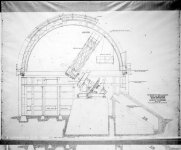
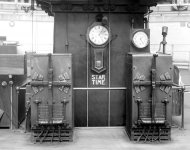
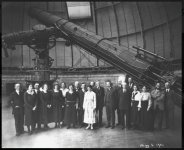
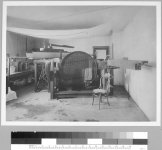
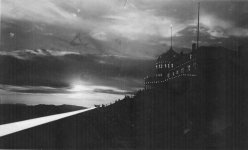
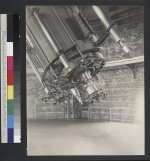
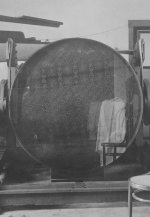
I'd posit these circa 1900 telescopes were a wholly other type of tech or weapon and not telescope. Note the magnetron type assembly, the mercury filled armature and the geometry pattern embedded in the crystal lens of the 40" refractor of Yerkes Observatory. And the sunbeam light on side of Mount Wilson. These are from Huntington Digital library, an excellent source for hi res scrutiny😉
 

Attachments

  • p15150coll2_1151_extralarge.jpg
    p15150coll2_1151_extralarge.jpg
    366 KB · Views: 180
  • Screenshot_20240627-162426.jpg
    Screenshot_20240627-162426.jpg
    750.2 KB · Views: 165
  • legacy-astronomical-in-every-way-slide-10@2x.jpg
    [email protected]
    136.4 KB · Views: 201
  • Yerkes1.jpg
    Yerkes1.jpg
    147.9 KB · Views: 172
  • p15150coll2_524_extralarge.jpg
    p15150coll2_524_extralarge.jpg
    298.2 KB · Views: 165
  • 06009r-e1548263800774.jpg
    06009r-e1548263800774.jpg
    142.4 KB · Views: 180
  • p15150coll2_101_extralarge.jpg
    p15150coll2_101_extralarge.jpg
    414.4 KB · Views: 192
  • p15150coll2_524_extralarge__01.jpg
    p15150coll2_524_extralarge__01.jpg
    111.8 KB · Views: 166
I'd posit these circa 1900 telescopes were a wholly other type of tech or weapon and not telescope. Note the magnetron type assembly, the mercury filled armature and the geometry pattern embedded in the crystal lens of the 40" refractor of Yerkes Observatory. And the sunbeam light on side of Mount Wilson. These are from Huntington Digital library, an excellent source for hi res scrutiny😉
Hello and thank you very much for this wonderful reply. I mentioned a vague " old" story about a weapon with a mirror and vessels filled with mercury, the so called Plato's burning mirror. Interestingly, you have found something related. As far as i know all early reflecting telescopes were dismantled for no apparent reason.
 
Hello and thank you very much for this wonderful reply. I mentioned a vague " old" story about a weapon with a mirror and vessels filled with mercury, the so called Plato's burning mirror. Interestingly, you have found something related. As far as i know all early reflecting telescopes were dismantled for no apparent reason.
Yeah I always took Observatories at face value until I started rewiring my brain drive. I think they had an entirely different purpose before they were found. The 40" lenses having a cymatic fractal pattern embedded in the crystal lens makes no sense for an "optical lens"? Unless of course it may have once "projected a frequency"? Glad you enjoyed the photos, and my 2 cents. Awesome article, so many layers
 
Hello and thank you very much for this wonderful reply. I mentioned a vague " old" story about a weapon with a mirror and vessels filled with mercury, the so called Plato's burning mirror. Interestingly, you have found something related. As far as i know all early reflecting telescopes were dismantled for no apparent reason.
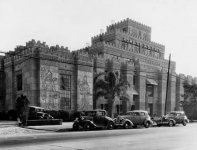
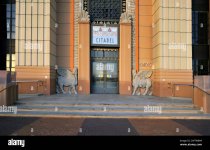
I forgot to mention my initial thought when I started reading your article. It was because this old "tire factory" (Assyrian Citadel with 1,700 feet of fortress walls and mega relief carvings etc) building popped into my head, which simply appeared in East Los Angeles in a few months circa 1927 I believe. It was built by some broke pleb who ran a tire repair shop from a tiny shack, as it was his dream, then he sold it a few months later, seriously! I'd been to it a few times in the 90s (outlet mall😏) and was dumbfounded by its megalithic size. Maybe they had some Assyrian battles in Los Angeles back in the day as it seems no matter where one looks, there's something out of time and place staring right at us?
 

Attachments

  • samson2.jpg
    samson2.jpg
    46.9 KB · Views: 191
  • exterior-art-deco-architecture-of-the-citadel-outlets-mall-originally-the-samson-tire-company-...jpg
    exterior-art-deco-architecture-of-the-citadel-outlets-mall-originally-the-samson-tire-company-...jpg
    145.2 KB · Views: 181
  • Screenshot_20240710-151004.jpg
    Screenshot_20240710-151004.jpg
    1.1 MB · Views: 184
  • Screenshot_20240710-150950.jpg
    Screenshot_20240710-150950.jpg
    1.1 MB · Views: 181
  • CHS-35355.jpg
    CHS-35355.jpg
    130.6 KB · Views: 188
  • Screenshot_20240710-150930.jpg
    Screenshot_20240710-150930.jpg
    1.2 MB · Views: 160
Phorus Fosforus and what is the Bosphorus where acc. to doc Fomi ''Jessy was aplicated on cross''
-
they let you hint also some years back that in 1241 battle og Muhi alos was used gunpowder; intresting the russians say for Huns ans Guns and Tartars are the Huns whatever
 
Tips
Tips
Please respect our Posting Rules.
Back
Top