- Joined
- Mar 19, 2021
- Messages
- 131
- Reaction score
- 309
Introduction
The Lament of Athens is a 69-verse Greek poem, likely written in the second half of the fifteenth century, lamenting the fall of Athens to the Ottomans. A notable feature of the poem is the poet’s choice to refer to the conquerors as 'Persians' rather than 'Turks'. In other words, it is about a war between the Christian inhabitants of Athens and the Muslim Persians who conquered the city (Tziovas, 2014, pp. 230-251). This linguistic distinction has drawn scholarly attention. The author remains unknown. The text is composed in vernacular Greek by a person of some education who may or may not have been a cleric.
This discussion will first explore the academic perspective on this apparent anomaly before shifting to an analysis based on New Chronology and chronological shifts.
Key Themes and Interpretations
While reading the full poem is highly recommended, a summary is provided (Tziovas, 2014, p. 235-238). The central theme of the Lament of Athens revolves around the conquest of Christian Athens by 'Persians,' described as the offspring of Muhammad. It is important to note that some interpretations have been added by the author:
Why the Poet Called the Ottomans Persians
Gonda Van Steen, in Sin and the City: A Mid-Fifteenth-Century Lament for the Fall of Athens to the ‘Persians’, explores the poet’s deliberate choice to refer to the Ottoman conquerors as 'Persians' rather than 'Turks' (Tziovas, 2014).
"Firstly, the term 'Persians' invokes a classical historical analogy, linking the Ottoman conquest of Athens (1456) to the Persian Wars of the fifth century BCE. By making this association, the poet frames the Ottoman invasion as part of a recurring conflict between Greeks and Eastern adversaries, reinforcing a narrative of historical recurrence and resistance. Secondly, the poet’s use of 'Persians' serves as a rhetorical device to degrade the Ottomans, portraying them as a continuation of the ancient enemies of Greek civilization. Thirdly, the poet employs the term to emphasize religious and cultural antagonism, drawing a parallel between pagan Persians and Muslim Ottomans. By framing the Turks as heirs to historical pagan adversaries, the poet reinforces the binary opposition between Greeks and Muslims. Lastly, the terminology resonates with existing Byzantine literary traditions invoking historical comparisons to ancient conflicts.
In summary, the "Lament of Athens" focuses on the clash between Christianity in Athens and the Muslim faith of the Ottoman Turk conquerors, happened in 15th century , using the metaphor of "Persians". The Greco-Persian Wars took place in the 5th century BC, while the Ottoman-Greek conflict happened in the 15th century.
Chronological Considerations and New Chronology
The reader probably is familiar with Dr. Fomenko's theory. In essence, the New Chronology posits that the history of ancient Greece and Athens, as currently accepted, is largely a phantom reflection of later mediaeval events due to chronological shifts and misinterpretations. One of the main shifts is the Greek-Biblical shift, estimated to be approximately 1800 to1900 years, which artificially pushes Greek history far into the past. Dr. Fomenko propose a significant overlap and potential misdating between the "ancient" Persian attacks on Greece and various military engagements in mediaeval Greece including incursions by the Ottoman Turks (Fomenko, 2005, p. 253).
The main shifts (Fomenko, 2012)
The Persian Wars and Ottoman Conquests
Temporal Shifts in Religious Figures
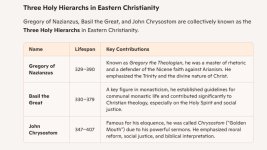
In the opening lines of the Lament of Athens, the poet mentions three prominent figures: Gregory of Nazianzus, who is called the "great theologian," and Basil and John Chrysostom, both described as "luminaries." The poet restricts the reference to these three despite the potential for an extensive list of scholars and philosophers. Traditionally, these theologians are identified as figures of the fourth century (Tziovas, 2014, p. 235 ). However, given that the author is characterized as a person with "some" education, it raises the possibility that he may have been alluding to personalities contemporary to his time rather than to distant historical figures. Indeed, according to conventional chronology, these theologians are placed in the fourth century, yet New Chronology suggests a possible ten-century shift. With this corrected chronology, the implication is that the poet was praising three contemporary theologians instead of randomly invoking individuals from a remote, misdated past.
Hijri Date Shifts and the Saracen Conquest Hypothesis
Reference :
Fomenko, A. T., & Nosovskiy, G. V. (2012). How it was in reality: Reconstruction. AST. (Translated by Stuart Alexander & Anna Gray).
Fomenko, A. T. (2005). History: Fiction or Science? Chronology 2. Delamere Publishing.
Setton, K. M. (1954). On the raids of the Moslems in the Aegean in the ninth and tenth centuries and their alleged occupation of Athens. American Journal of Archaeology, 58(4), 311–319. https://doi.org/10.2307/500384
Tziovas, D. (Ed.). (2014). Re-imagining the past: Antiquity and modern Greek culture. Oxford University Press.
Wikipedia