

- Joined
- Mar 19, 2021
- Messages
- 131
- Reaction score
- 309
Introduction
The discussion will focus on the tomb of Omar Khayyam located in Nishapur, Iran. It will be shown how it was "discovered" and "reconstructed" in the late 19th and early 20th centuries.
For those who are not familiar with Omar Khayyam, here is a brief list of topics with links. If you are familiar with this character and his tomb, you may skip this section.
- Omar Khayyam : (1048–1131) Persian polymath from Nishapur, renowned for his contributions to mathematics, astronomy, philosophy, and poetry. He notably classified cubic equations and calculated the solar year accurately, designing the Jalali calendar. His poetry, particularly quatrains, gained prominence through Edward FitzGerald's English translation- published in 1859- making him a significant literary figure in Orientalism.
- Mausoleum of Omar Khayyam : The Mausoleum of Omar Khayyam, a modern white marble structure in Nishapur, symbolizes Persian architecture and national heritage. The current tomb is the third tomb of Khayyam in the modern era, as it will be discussed.
- Before the 20th century, Omar Khayyam's tomb was a modest grave rather than a grand monument. After his death in 1131, he was buried in Hayrah Cemetery, Nishapur, Iran. His pupil, Nizami Aruzi, visited in 1135-6 and noted it was located at a garden wall's foot, adorned with flower petals, aligning with Khayyam's burial prophecy. The tomb itself survived various calamities; including several major earthquakes, raids by the Turks tribes and Mongols. In the succeeding centuries, it situated in an open wing of a shrine of a certain Islamic saint called Imamzadeh Mahruq, likely built by Shah Abbas.
History of tomb in the 20th century
I will discuss the "reconstruction" of the tomb in the first half of the 20th century. There will be old photographs and paintings showing how the reconstruction was carried out. In addition, the transformation of the shrine, its tiles and the garden will also be shown. Briefly , there has been three tombs.
- The old one in the wing of the shrine: up to 1934
- A stone column : from 1934 to 1963
- The modern mausoleum : completed in 1963
Old Tomb
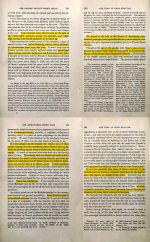
William Jackson, an American Iranologist, visited the tomb in 1907-8. Here is an excerpt from his book From Constantinople to the House of Omar Khayyam. You can read the highlights and omit the rest.
- The author noted that the turquoise dome of the Mosque of the Imamzadeh Mahruq, which adjoins Omar's grave, became increasingly visible as they approached Then he mentions that he turned to the left, as did Nizami of Samarkand eight hundred years prior, in order to approach the spot where Omar Khayyam is buried. Nizami's account from the year 1135-1136 describes his visit to Khayyam's grave and how he was led to it. The tomb was found at the end of a garden wall, beneath an arched wing added to the left of the Mosque of the Imamzadeh Muhammad Mahruq.
- The tomb of Omar Khayyam is situated approximately four miles southeast of Nishapur, adjacent to the Mosque of the Imamzadeh Muhammad Mahruq. This notable site features a central arched recess, part of a structure housing the tomb, flanked by two smaller arches. A couple of terraced brick steps lead to the tomb's flooring. The tomb is an oblong structure made of brick and cement. There is no inscription to identify whose bones are interred below, yet it is known to be the grave of Omar Khayyam. Unfortunately, the tomb has suffered from vandalism. The mosque's proximity contributes to the tomb's preservation. Legend has it that Omar foretold his resting place would be where spring flowers would scatter their petals over his grave. The mosque, believed to have been built in the seventeenth century, adds further historical context. Some people feel it is to be regretted that some of Omar's admirers in the West do not provide a suitable inscription on the spot.
Mr. Jackson has included several Illustrations in his book:
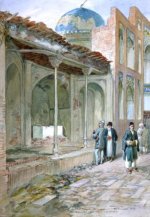
Figure 1 : The tall trees do not match with figure 3 from the same book, probably a photomontage
Figure 2 : To my eyes both are photomontage/ painted .Look at the steps, the building in the photo above is located in a higher elevation considering the yard in the front.
Figure 3 : purposefully low quality , hiding the left wing behind the trees. an abandoned building with some random trees and wild bushes. there are no walls.
Percy Sykes describes a similar scene. He, too, emphasizes that the stone tomb has no inscription. source
Figure 4
Figure 5 : This is just an imagination if we consider the photographs
Fortunately , thanks to the internet, there are more photographs.
These two images do not have data, but show the shrine from the rear. They are said to show the state of the building before 1900.
Figure 6 : An abandoned building. the right wing- in right side is most likely covered by white ink. No bushes of rose.
Figure 7 : The ground is bare or covered with hay or some kind of grass. Look at random loss of tiles in the dome
More interestingly, Frederick Gardner Clapp , an American engineer took several high quality photographs from the Imamzadeh. These photographs were taken in 1933 and in 1937, before and after the construction of the second tomb. Source
Figure 8 : reconstruction or construction? The photographer was no Iranologist. It shows the real left and right wings. Compare it to figures 5, 4, 2. Tiles are new with no drops and loss.

Figure 9 : The Persian garden is under construction

Figure 10 : A rare photo of the old tomb. It clearly has no inscription. It is located in the most unusual place for a tomb, inside a building. There is a quatrain written on the black plaque. Some vandalism is seen too.
Second tomb
Figure 9 : The Persian garden is under construction
Figure 10 : A rare photo of the old tomb. It clearly has no inscription. It is located in the most unusual place for a tomb, inside a building. There is a quatrain written on the black plaque. Some vandalism is seen too.
Second tomb
"The Iranian government took advantage of the Firdausi millenary (Oct. I934) to erect a new monument of white marble over the tomb. Source In other words, a phallus like stone structure was erected on the site of old tomb. the left wing of the shrine was removed. additionally, the right wing was destroyed too. A staircase was built in front of it and the front area was transformed into a garden with newly planted trees.
Figure 11 : The left and right wings are demolished. The phallus like tomb is erected and the Persian garden is developing.
Figure 12 : Trees are growing tall.
Figure 13 : the exteriors are getting ready for more tile attachment.
Third tomb
In 1959, Hooshang Seyhoun designed a larger tomb for Khayyam in the garden area and moved the tomb there because the main problem with the second tomb was its proximity to the Imamzadeh. The current tomb, which is Khayyam's third mausoleum in the modern era, was opened in 1963, and the previous tomb was moved to the city of Nishapur. Source The image below shows taking Khayyam's bones out of the grave and holding religious ceremonies !
Discussion
I admit that there are shortcomings in this study of Khayyam's tomb. One should explore additional scholarly resources regarding the Imamzadeh shrine. I could find few sources.
In the book "History of Neyshabur by M. Sabeti" pages 304 and 305 the author wonders how the graves of Khayyam and Mahruq survived the destruction of the city by the Mongol army. He also believes that based on historical records, Khayyam's tomb and shrine should be found in separate cemeteries that are quite far apart. Then he points out that Nizami Aruzi did not mention Imamzadeh Mahruq in his description of Khayyam's tomb. Please note that Mr. Jackson found the tomb near the shrine guided by this old narrative!
There is an article titled " Study of the architectural and decorative aspects of the Imamzadeh Mahruq tomb in Neyshabur " in which the authors skip the developments and transformations that occurred in the early 20th century. Source
Mr. Fitzgerald, in his book, first edition 1859, says that "For whatever Reason, however, Omar as before said, has never been popular in his own Country, and therefore has been but scantily transmitted abroad. The MSS. of his Poems, mutilated beyond the average Casualties of Oriental Transcription, are so rare in the East as scarce to have reacht Westward at all, in spite of all the acquisitions of Arms and Science. There is no copy at the India House, none at the Bibliotheque Nationale of Paris. We know but of one in England: No. 140 of the Ouseley MSS. at the Bodleian, written at Shiraz, A.D. 1460. Mr. Sykes mentions that " In Persia he is celebrated as a philosopher and astronomer, and his reputation does not rest on his quatrains."
This links says " Foreign academics and Iranologists, including Jackson, Sergeant Sykes, and Colonel Yeatt, visited Khayyam's grave when passing through Nishapur after becoming acquainted with him through Fitzgerald's translation of his Rubaiyat. All of them have pointed out the humble nature of the tomb and the lack of attention paid to it by the national and local rulers. During the Qajar period, only a few people in Nishapur knew Khayyam, and they did not consider him to be of much interest due to the his different perceptions and philosophical thoughts, and were surprised by the great attention paid by foreigners to Khayyam's tomb."
Back to the topic, I will discuss the old tomb based on images and data I have already provided.
The shrine appears to have been a ruined and abandoned structure in the early 1900s, located a few kilometers from Nishapur. Its exterior had no tiles or inscriptions (Figures 3, 6, 7). Similar to many other buildings of this type, it featured two wings, each containing three porch-like structures. The left wing contained a white stone that bore no inscriptions. I should mention that the configuration of the left wing in Figures 2, 4, and 5 differs from the high-resolution photographs taken in 1933 (Fig. 8, 9, 10). I can not comprehend what occurred. Upon close inspection of the bricks in the left structure in 1933, we will observe that they are identical to those used in the main building. Consequently, there is a chance that Figures 2, 4, and 5 are forgeries based on travelers fantasies'. In the rear view images, the right wing is absent, and we can infer that the left wing is likely missing too. In 1934, both wings were demolished and a phallus-like column was erected in the exact previous tomb's location. Several years later, as the experts changed their minds, Khayyam's remains were moved to another location, where a magnificent contemporary mausoleum was built.
Now let's look at the area around the building. If we look carefully at the images ( Figures 3, 6 , 7) , we will notice that the area was not a Persian garden with tall trees, cobbled paths, water streams and especially with rose bushes. The area did not have walls either. The area was dirt and covered with grass - probably hay - with a few scattered trees. It was in 1933 onwards that we see the gradual creation of the garden with newly planted trees.
The dome had its original old tiles, which is why they had randomly fell and damaged, as shown in Figures 6 and 7. In 1933, work began to add a few tiled sections to the outside. It explains why there were no damaged areas and the new tiles were in perfect condition. Scaffolding is noticeable (Figure 8).
Conclusion
Mr. FitzGerald's translation of Khayyam's poetry was published in 1859. Khayyam gained popularity among Westerners a few decades later. They attempted to find his tomb in Neyshabur ,based on old books they had in their library. When they went to Neyshabur, they were unable to locate the tomb. Oddly, the well-known poet was unknown to the locals. So, travelers and Iranologists searched the city's outskirts. They found a shrine in ruins. There was a stone with no inscription in an unusual place. Some might say that the Iranologists even constructed it with brick and cement. Finding the tomb, even if it was just a plain stone without any inscription, was more important than the fact that their investigation was not based on their old texts. They returned to their homelands. Based on their imagination, they created books with illustrations that depicted the tomb inside a Persian garden that never existed. Iranians were initially confused .Even some religious people did not like the pessimistic Rubaiyat. Gradually, they changed their minds. They became ashamed of their ignorance and lack of historical knowledge. The history that the foreigners knew better. Reza Shah came to power through nationalist propaganda. Iranians begun building a proper tomb. They destroyed the old tomb and some parts of the building. The shrine, however, was adorned with new tiles and inscriptions.
The outcome is remarkable. Shia Imamzadeh has a beautifully decorated shrine, and the pessimistic poet has an elaborated tomb. In addition, there is a large Persian garden with tall trees, cobbled paths, water streams and of course, rose bushes. see the gallery.
Attachments
Last edited:


