Note: This post was recovered from the Sh.org archive.
Username: MeNTaLMoNKeY
Date: 2018-10-11 16:06:18
Reaction Score: 2
These are my thoughts exactly about Piranesi.
I’m just a regular person who ended up spending a few hours a day writing down his observations. You can rest assured on this one. When I went on my Utah roadtrip, @CyborgNinja was keeping an eye on this place filling in the void with his articles.
If you want to continue discussing this local conspiracy please take it to the general subforum.
Ack. Sorry. I'll try to behave.
I do not know if continents can grow as well, but we had 360° degrees in 1564, just like we do now. A lot of people are saying that old maps are wrong because continents on them are much bigger than they are today. Well, the continents could be of the same size if the oceans were simply getting wider. Hence 1° value would change as well. Not sure if it could work like that, but that's a thought I had.
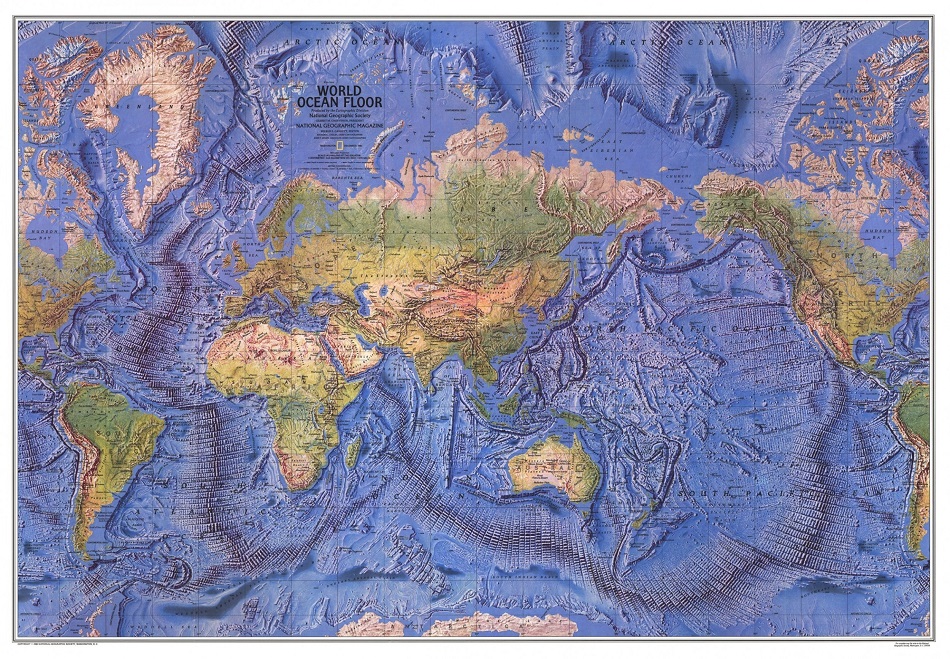
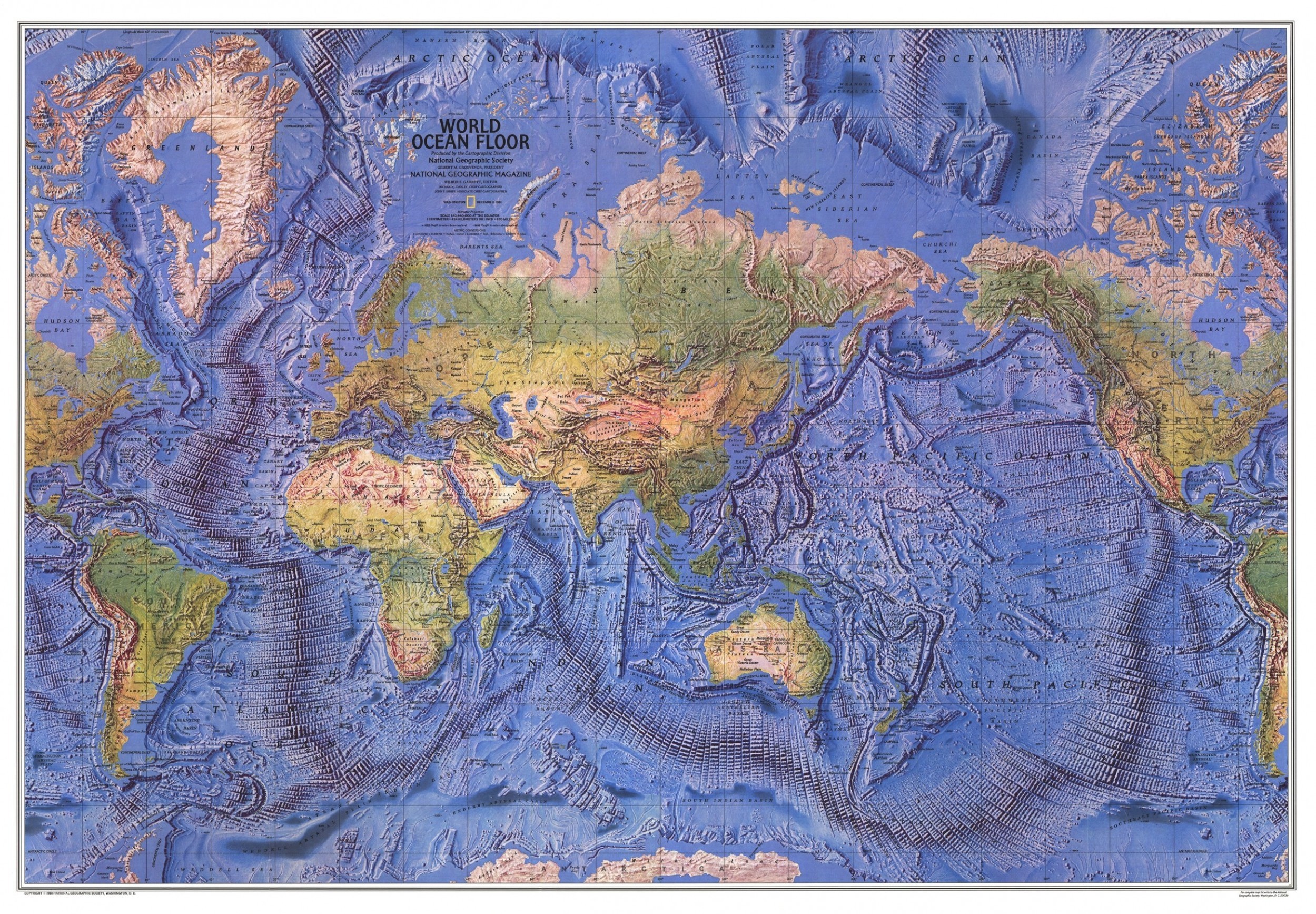
This is the way I've understood it, although I'll admit I haven't dug too deep into it. The oceans are basically ripping apart, expanding out, leaving wider and deeper bodies of water. The NOAA did an ocean floor study and came to the conclusion that the ocean floor was only millions of years old as opposed to the billions of years old of the Earth itself and the exposed land mass.
https://ngdc.noaa.gov/mgg/image/crustageposter.jpg Obviously we'll need to take those timelines with a huge grain of salt, but they are admitting that the oceans are newer than the rest of the land mass that's above water. Their explanation for this is subduction, which is certainly only a theory as nobody has actually seen a tectonic plate sliding underneath another plate.
Personally I think it makes more sense to consider that everything has been pulling apart, as opposed to some areas pulling apart and others slamming into each other and getting pushed down toward the core of the earth. Especially when you look at the lines where the NOAA is showing new ocean floor growth, the closer you get to those big rifts in the ocean, the younger the ocean floor is. Go toward the coasts and the ocean floor is older. Seems to me that it likely could be splitting apart in the middle.
Not that I'm arguing this the the correct theory, I don't know. Just throwing ideas out there. The idea of the continents also growing is intriguing. I haven't heard that before.
Yes, I think they grew as well.
Because the growing earth theory is actually pretty much wrong in every respect:
- No gradual growth
- no spinning ball in space
- no ball growing in volume
This wouldn't be possible, because how could a ball spinning through space grow in size?
I've spent quite a bit of time reading through Wild Heretic's blog and think that there is a lot of stuff in concave earth theory that makes lots of sense. It somewhat opened my eyes to properly looking at the world around me and I often feel that when I look around, the land actually looks like it forms a bit of a bowl around me. I must say that if I had to pick a cosmology right now, it would probably be concave earth.
With that out of the way, I'm curious as to how you came to the conclusions above, as I don't see concave earth to be mutually exclusive from expanding earth.
"No gradual growth" - I don't see why this would be required. It could certainly be sudden jolts of growth. I think that makes more sense than gradual growth. Sure, the NOAA age maps make it look as though the oceans are slowly pulling apart, but how much can we honestly believe their age data. I pretty much only take it for the value that they're admitting the oceans are younger than the exposed land mass.
"No spinning ball in space" - I don't see what this has to do with expanding earth at all
"No ball growing in volume" - I'd be very interested to learn who has measured this over the past several hundred years and how they did so.
Further to that, just as with the oceans ripping apart and getting more expanse, so too could the earth. I didn't really consider this to be that the continents were actually growing, as I mentioned in my last post, but like you describe, where rifts can open up. I suppose depending on how you look at it, that could be considered continent growth, but when I think of growth I don't think of something ripping apart at the seams and leaving a chasm in the middle.
When you posit that the continents are getting bigger, but earth is not expanding, does that then imply that the oceans are getting smaller?
Sorry. I've derailed this topic, haven't I?