Questionable Ancient Egypt megathread

The Mexican calendar is similar to the Tzolkin calendar including the cycles of 13 and 20 days, although a lot of the symbology is different. I was told the Tzolkin calendar divides the precession of the equinoxes into five parts rather than the four of the Mexican calendar.

My teachers say that the quality of the Sun's radiation changes every time we move into a different sun cycle (which we are doing now) and consequently many profound changes occur. The outgoing tecpatl sun created the conditions for the extreme inequality we have seen, the new sun can't sustain that so many pyramidical power structures are going to collapse. The new sun cycle is the Quetzalcoatl sun which is helping us to rediscover our true power, so we may get a soft landing if we are lucky.
 
The Mexican calendar is similar to the Tzolkin calendar including the cycles of 13 and 20 days, although a lot of the symbology is different. I was told the Tzolkin calendar divides the precession of the equinoxes into five parts rather than the four of the Mexican calendar.

My teachers say that the quality of the Sun's radiation changes every time we move into a different sun cycle (which we are doing now) and consequently many profound changes occur. The outgoing tecpatl sun created the conditions for the extreme inequality we have seen, the new sun can't sustain that so many pyramidical power structures are going to collapse. The new sun cycle is the Quetzalcoatl sun which is helping us to rediscover our true power, so we may get a soft landing if we are lucky.
So maybe no cataclysm ... there's some unexpected good news for sure .
 
I find it curious how our school curriculums are absolutely obsessed with Ancient Egypt. Even the show "Ancient Aliens" seems to focus heavily on Egypt. No matter where you hear about Ancient Egypt, it's always presented as the world's greatest mystery - the pyramids especially.

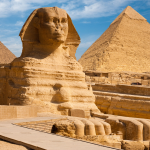
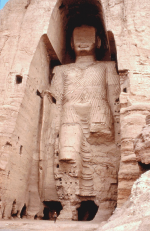
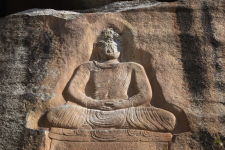
I also find the Sphinx noteworthy, namely how crude it is in terms of craftsmanship, relative to the old world architecture. If you'll allow me to deviate from the topic at hand - I recognize that crude craftsmanship in other places: for example, the Buddha statues all over Asia.

My question is whether all these sculptures could've been made by the same group of people (perhaps I'm pointing out the obvious here? Is this something that's already been discussed?)

I see three possibilities: 1) they were made by the same parasitic entity/organization who twisted our history; 2) they were made by survivors of the resets in every corner of the globe, as a way of preserving important knowledge - survivors who didn't have the same level of sophistication in engineering and art as the civilization who built the old world structures; 3) there is absolutely no relation between these sculptures around the world, and their crudeness is a coincidence, or a nonexistent connection which I'm merely perceiving.

1654546313477.png1654546106535.png1654546511906.png
(Actually the Sphinx's head to me seems more skillfully crafted than its own body.)

There's also the Olmec heads which I'm reminded of in terms the level of craftsmanship. Perhaps even the famous Moai/Rapa Nui statues. All of these sculptures are relatively famous, just like how Ancient Egypt is a popular topic in our schools.

If I were a parasitic organization/entity, it would behoove me to go around smearing my crude artwork everywhere in order to falsify history, and then go on to make my altered version of history a popular topic in schools, based around the crude artwork I had established earlier.

(Apologies for taking a detour from the original topic.)
 
Last edited:
I find it curious how our school curriculums are absolutely obsessed with Ancient Egypt. Even the show "Ancient Aliens" seems to focus heavily on Egypt. No matter where you hear about Ancient Egypt, it's always presented as the world's greatest mystery - the pyramids especially.

I also find the Sphinx noteworthy, namely how crude it is in terms of craftsmanship, relative to the old world architecture. If you'll allow me to deviate from the topic at hand - I recognize that crude craftsmanship in other places: for example, the Buddha statues all over Asia.

My question is whether all these sculptures could've been made by the same group of people (perhaps I'm pointing out the obvious here? Is this something that's already been discussed?)

I see three possibilities: 1) they were made by the same parasitic entity/organization who twisted our history; 2) they were made by survivors of the resets in every corner of the globe, as a way of preserving important knowledge - survivors who didn't have the same level of sophistication in engineering and art as the civilization who built the old world structures; 3) there is absolutely no relation between these sculptures around the world, and their crudeness is a coincidence, or a nonexistent connection which I'm merely perceiving.

View attachment 23188View attachment 23187View attachment 23190
(Actually the Sphinx's head to me seems more skillfully crafted than its own body.)

There's also the Olmec heads which I'm reminded of in terms the level of craftsmanship. Perhaps even the famous Moai/Rapa Nui statues. All of these sculptures are relatively famous, just like how Ancient Egypt is a popular topic in our schools.

If I were a parasitic organization/entity, it would behoove me to go around smearing my crude artwork everywhere in order to falsify history, and then go on to make my altered version of history a popular topic in schools, based around the crude artwork I had established earlier.

(Apologies for taking a detour from the original topic.)
I remember reading that the Sphinx was made during the age of Leo (between 10,000 and 8000 BC) and had a lion’s head which was altered by Cheops to look like him. If you watch the Lost History of a flat earth, the repeated cycles of freezing over might explain the water damage done to the Sphinx. Perhaps the primitive style you are suggesting is simply caused by environmental changes and antiquity.
 
Supposedly, the Sphinx was built before 10,500 B.C.. At the time 10,500 B.C. the constellation Leo would be on the eastern horizon perfectly aligned for the Sphinx to see it rise. There is a good book about this that is written by Robert Bauval and Graham Hancock that somewhat clarifies this.

I would like to mention the Shriners. I believe they have some say as to what is available to be excavated in Egypt and if you know anything about the Shriners, we know that they are part of the Masonic tribe. Why should they have any say in these matters. Which brings back my the importance of my mention of Seqenenre Tao. Supposedly Masonic rituals have something to do with this Pharaoh. I have also heard some people believe that the great pyramid actually looks the same as the top, underneath the sand.

I would also like to mention a youtube channels that mention a time where evidence can be found right on the Giza plateau and below, that this area had been devastated by fire and water, and what is left is really just remnants of a civilization (more modern than we know) If you take a look at the surrounding areas, you can really get a huge glimpse of this. Look at the White and Black Deserts, look at the whale bone graveyard, it really adds up.

Maybe Egypt is close to the epicenter, or was the epicenter, of this deformation of the land. There are pictures of the Sphinx in the early 1900's and its head is blackened as well as being covered by sand up to its neck. Some say it happened when Napoleon was there but I don't buy it. Napoleon was French and the French were big into the Masonic movement, especially in the 17 and 1800's.

I believe the reason why mainstream education has used the Egyptians some much was to actually distract us. Sometimes the best hiding places are the ones that are right in front of you, the most obvious, and this was the easiest way to convolute any truths that could be deduced.
 
Last edited:
a clear fact that there is more to dig in egypt for example is the so called dendera temple.
There are plenty traces/evidences that the columns visible on ground level are the second floor of that building and a bunch of academic scholars have demanded to make digs to verify that there is a basement or a floor beneath what we see today...all of theses demands were refused by authorities like "Dr." Zahi Hawas.

True to live at the moment AND to know all that stuff...thanks to all for your work and thoughts ;)
 
This woman presents a quite provocative theory about the great pyramids of Giza.
She goes opposite the different glorious narratives about the being of these structures.
She claims that the Giza complex is an advanced civilizations mining storage site.
In short, they are made to prevent and contain soil and water pollution from acid or alkaline drainage.
I’m not saying she is right nor wrong, but listening to her theories and how she tries to prove it is interesting.
If nothing else it’s a different perspective of it.


View: https://youtu.be/tFzd2z0Rr1U
 
If nothing else it’s a different perspective of it.
That it is. However, she completely omits the complex mathematical elements used in their construction. Including that would blow her theory out of the water as there would be now way to explain why the builders would go to such extremes to place their 'waste' in such manner.
 
I just watched a program with David Wilcock and he says he has info that tells of pyramids on many different planets, and moons, or satellites. I guess some of these pyramid shapes are supposed to represent the human form. The pyramids we see on this planet i assume are all part of an interconnected plan, a way to communicate with each other.

I must say that the inside of the pyramid is just the left over guts to a working machine that may have been used as protection devices. It kind of gives me a "Fifth Element" note.

I think that it is great that the great pyramid knows exactly where it is on our planet by the calculations of its build. Pretty Cool!!!
 
also interesting regarding this topic is James Browns book "fire in the middle"...he has visited many times this site in the 70ies and collected minerals from the inside (shafts and chambers) and they ve made chemical tests with these minerals. He concluded that it must be drained by the water of nile to generate piezo electronic reactions. Pyramida old greece for fire in the middle
....so energy device.
I try to make a post in future with all pages of the book (hundreds of colour pics)
 
Whilst we're at it, I know it doesn't add a great deal to the conversation, but I would love to know what is beneath the pryamids. They're pointing up, but as above, so below, leads my mind to wander down below.
There is a mathemathist in germany called Dr. Hans Jelitto who made a series of lectures in german: "das Gizehplateau in einem anderen Licht" = "the plateau of Giza from another perspective/spotlight based on a book of him. He is really a nerd who must have invested thousands of ours in collecting and comparing data...

He speaks about the conjunctions of spheres of the planets in universe and compared the data with the measurement of the Giza plateau and the structures. Absolutely stunning is, what he concluded and what is verified by two other university mathematics of Heidelberg. Nearly everything he says can be proofed by yourself, if you are a bit experienced in the treating of measurements and numbers:

Mercury, Venus and Earth (first 3 planets of our universe if we can believe the heliocentric perspective, but that is irrelevant at the moment for this topic more or less) have the same volume as the pyramids Mykorinos, Chefren and cheops pyramid with an accurancy of 0.004 %.
And they^ re also the same sequence as these 3 "planets".

So maybe we have it to do with a starmap if you want so. Because the 3 great pyramids aren^t not in a straight line rather in an angle of several degrees, he concluded that this no coincidence.

He compared the spheres of these 3 planets and tested WHEN the angle of theses 3 buildings are exactly the same as the planets (in NASA^s heliocentric view the 9 planets are less or more situated in one dimension around the sun...) and finded out that these constellation happens just 3 times within a time of several thousand years. (I guess he used celestia or any tool like that, but he get really in every single detail which data he used like the academic scientists usually are).

Everytime thie constellation appears, the sun had the distance to mercury in relation to the dimensions of the giza plateau of 726m exactly south of this pyramid. Next time he visited the plateau he mesured this 726m and stands on a concrete plattform. This is bizarre since concrete has been never used in modern egypt until the beginning of 20 century. Means in his opinion, that must be a structure (10 to 20 meters when I remind me correctly) fo the past hundred years.

If I get time I will make a post with screenshots and further explanations.

P.S. and old proverb/saying of the old people in cairo says that the entrance to neverending life is through the hottest point on earth...so what do they hide beneath the sands of egypt could really go further as we can imaging.
 
It used to have lots of vegetation, and the Nile runs today, a very different course.
nile-1800.jpg
Here's a photo allegedly taken in 1800's. It looks authentic but we should not completely rule out the possibility of photoshop work. The screenshot is taken from the video
View: https://www.youtube.com/watch?v=FYh-jSdcwNY
(The Great Atmospheric Electricity Power Pyramid of Giza by Aaron Dover) Aaron Dover was a great truther who investigated the electricity deeply. He hypothesized that electricity was being produced by extracting the atmospheric electricity in the ancient Egyptian times and today too, using huge pylons called transmission lines that we see all around the cities. He claimed that those pylons were not there to transmit but rather to produce electricity. More on that later. If you take a look at the video, you'll notice Aaron's uncanny ability to explain what's going on in our world.
 
I'm just about to watch. I came across the Egyptian pylon a couple of weeks back. The portals/temples, the religious nature of the things. Power. In the UK, our power lines are strung together via pylons. Egypt via Greece, the great etymology hub, or at least one of them, it seems. I should probably find out why that is, there's probably an easy answer.
I have seen this video now. I am going to sit quietly and let that sink in for a while. Thank you.
 
Last edited:
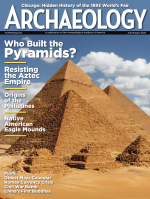
I just got my July/August 2022 issue of Archaeology and low and behold, on the front cover is a picture of the Great pyramid. The title underneath in bold letters reads "Who built the pyramids?", and I had to laugh to out loud even though I got a couple weird looks from others in the post office.

As I proceeded to open the mag, the first page hit me right away, POW, the infamous Dr. Zahi HawAss and his cohort, the new Secretary General of the Supreme Council of Antiquities, Dr. Mostafa Waziri. These people can and do pick and choose who can see what, where, and when. These are the turds that keep the fake narrative going and do not reveal the real truth of what we are looking in Egypt.

In the Archaeology mag, they show a picture of a basalt rock that has "saw" marks in it and they actually say that it was cut with a copper saw. Yes folks it really says that. Then I went to a site to check that info out which was Penn Museum Expedition website and they said the exact opposite. We are always being fed a pile of crap when it comes to any of these people.

I have also heard that some people have been doing sound testing in the great pyramid, just like they have done in Malta. In Malta they have found that sound reverbs in the hypogeum at Malta at the A frequency which is quite interesting if you know a thing or two about ART(acoustics).

It is important to really look at the whole country of Egypt and its landscape from past to present, to see the changes that this wonderful and mysterious place has to offer. It is a great story all along the southern Mediterranean coast line. Egypt has the white desert, the black desert, many Oasis, and water underneath the great sands, whale bone graveyards and much more. I have never been, but is on my bucket list.

Oh, I wanted to mention, even though it is off topic, the Archaeology issue that I was talking about also has a great article about the 1893 Chicago World Fair and shows some good pictures and some more false narrative. Hope you all enjoy! BE WELL!!!
 
I just got my July/August 2022 issue of Archaeology and low and behold, on the front cover is a picture of the Great pyramid. The title underneath in bold letters reads "Who built the pyramids?", and I had to laugh to out loud even though I got a couple weird looks from others in the post office.

Here it is, if anyone is interested:

1655912838735.png

Funny that it discusses the "Hidden History of the Chicago World's Fair"... Of course, no real hidden history in the article. But it contains this comment about excavating the fair area, implying that lots of stuff didn't get documented at all:

“One thing we didn’t know, for example, was that there was a servant class working at the house,” Graff says. “There are no documents that refer to these people, and the archaeology demanded that we look into this aspect of the fair.”

For me it's already telling that archeologists excavate something that their grandparents still could have wittnessed, the cultural amnesia is really obvious. One could argue that the existence of a servant class isn't important, but how many other things were not documented? This servant class was part about the complicated logistics that we often wonder about how it was pulled off.
 

Attachments

  • Archaeology_-_JulyAugust_2022.pdf
    26.7 MB · Views: 197
Are all megaliths modern constructions? It would certainly explain how they were built..

See this video (not made by me)

View: https://youtu.be/5PVkvRVpyFs


main points covered:
1. shrubs or pine trees are growing in newly 'excavated' sites
2. rebars and metal fixtures are found inside 'stone' statues and buildings
3. signs of a weave or vertical texture can be seen on the surface of "stone" blocks
4. in the "re"assebly of the Abu Simbel temple, statues and buildings can be easily deconstructed into individual blocks
The re-assembly of the Abu Simbel temple is a masterpiece of the twentieth century: pictures - egyptfwd.org
5. selected photos of 'excavation' sites of temples and the Sphinx shows scaffolding
6. it is well established that some megaliths are built with geopolymer concrete; what if it was not an ancient technology but a modern one
I will add one more from a Chinese professor, Huang Heqing
以图证史:希腊雅典、埃及金字塔和伊朗波斯波利斯“古迹”都是现代新建伪造(四则)(三)

His main points on the pyramids are:
- Early depictions of pyramids have completely different dimensions as the ones we see now.
- The Sphinx is depicted with a human face, and there are 2 sphinx(es?) in some depictions.

"Atlas du voyage en Haute et Basse-Egypte" by Vivant Denon, supposedly drawn during Napoleon's Egypt expedition, depicts the Sphinx's head slanting upwards
"Les pyramides de Memphis, le Sphinx, au soleil couchant" by Balzac Charles Louis depicted Egypt's geograpy as a Hügelland,not as a desert
Both of which indicate the pictures were fabrications

Also, In Jacob Spon's "Voyage d'Italie, de Dalmatie, de Grèce et du Levant, Lyon", he descibred "pierre fondue" (melted stone) was common in France. In fact Spon mentioned this specifically to contrast it with Roman stone which he said was 'whole' stone. So it is argued, that geopolymer technology exists back in the 17th century
 
Last edited:
Furthermore, as I have argued in this thread about Napoleon Bonaparte
SH Archive - Napoleonic Oddities
Napoleon may very well be a fictitious figure.

If Napoleon did not exist, then the story of the Rosetta Stone must be fake, and any decoding based on the Rosetta Stone cannot be trusted - which would destroy the whole foundation of Egyptology
 
Many of you have made it here after listening to my appearance on The Higherside Chats with Greg Carlwood. In that interview we went briefly into a discussion on how Egyptology is a controlled psyop created by Napoleon and his merry band of Maltese Jesuits. I reached this conclusion in no small part from the many threads contributed to this site, and I thought a megathread could benefit those who seek to know more, or to open the floor for questions on this topic. remember that searching through the archived replies is recommended.

In short - the history of Ancient Egypt has been highjacked by gatekeepers for the last 200 years. It is extremely difficult to determine what can be confirmed in the historical record - as historical forgery often leads to monetary gain. When a country's major export to humanity is a historical narrative you can be assured that they will ensure that they manage to stay relevant. Alternative archeologists/journalists like Graham Hancock and Robert Shoch have created a tension among those who are interested in Egyptology to demand more answers from these gatekeepers, but in many cases we appear to be just as much in the dark as we were before their work. The only difference I see now is that the current state of mainstream Egyptology is one of desperation - they know that the "answers" they have been sitting on for many generations is crumbling around them, and they are in a mad scramble to stay relevant. This, in my opinion, has led to them either revealing discoveries they have been hesitant to reveal in the past due to their potential narrative-breaking existence, or manufacturing fake history to an extent that hasn't been seen since the middle ages when monks were rewarded handsomely to copy pagan scrolls.


Egypt unearths trove of artifacts, 250 mummies in ancient necropolis
This article I saw today was actually the inspiration to create this thread.


250 is an absurd amount of Sarcophagi - the numbers they find in these "discoveries" seems to increase every time they want to grab headlines.


Again, another perfect example of gatekeeping. They'll show you a few photos of some Sarcophagi, but where is a photo of the papyrus? Where are these bronze statues? Are we not worthy enough to see these discoveries? Do they even exist?


As an Egyptian, it deeply saddens me that my home country has resorted to cheap tactics in order to draw tourists and revenue.


Three massive and major discoveries all within a few months of each other, during a time when tourism was at an all time low. Is this just coincidence? It seems strange to me that if the Egyptology departments are having a hard time getting money to perform additional research that they just so happened to make all these discoveries during that time.
I would just like to add a basic etymological observation regarding their "hieroglyphics" I personally feel that for such an alleged great civilization the usage of a pictoral dictionary is completely obsurd and very unpractical. Even when I was at school I couldn't comprehend a practical use for them, just seemed so gimmicky and convenient for egyptologists to tell stories without departing any practical knowledge whatsoever.
 
I would just like to add a basic etymological observation regarding their "hieroglyphics" I personally feel that for such an alleged great civilization the usage of a pictoral dictionary is completely obsurd and very unpractical. Even when I was at school I couldn't comprehend a practical use for them, just seemed so gimmicky and convenient for egyptologists to tell stories without departing any practical knowledge whatsoever.

Here is the word directly from the horse's mouth, so to speak:

Reading Hieroglyphs

(n.b. also hieratic and demotic)


- hieroglyphs - 3100 BC to 300 AD

- originally thought to be symbolic

- although most are pictures of plants, animals, equpment, they mean sounds

- when a sign actually means the image, a determinative stroke is used

- no vowels so our pronunciation is a tad fictitious

- determinatives are silent (e.g. for names... male - seated man... female - seated woman)

- include

- phonograms (sound signs) - alphabetic, biliteral, triliteral

- ideograms (sense signs) - logograms and determinatives (to distinguish words otherwise identical n.b. no vowels, also as word dividers)


- n.b. a single hieroglyph can vary in function

- direction

- organization - aesthetics and symmetry - Egyptians liked rectangles, avoided blanks and gaps, would adjust size, direction, and orientation to make it pretty

Source: 2140

As mentioned previously in this thread, who is to really know the authenticity of the Rosetta stone. Besides being able to prove it was created in the time it was estimated - one also has to be fluent in Coptic and ancient Greek in order to even attempt to verify its claims. Furthermore - even if you were to decipher it they readily admit that each hieroglyph can vary in function IE. we can make it mean whatever we want in order to show that we "solved" the puzzle of a particular string of glyphs.

To your point - there aren't really a lot of pictorial or logographic ancient languages - Egyptian, Hebrew, Mayan, and Chinese are the only examples I can find in which the educated elite claims to have solved (native american languages also have hieroglyphs - but few have actually been claimed to have been translated). On one hand I could see the benefit of pictorial languages in ancient times as an "easier" way to learn to write - if you can associate a picture with a sound/idea/word then it may make things easier. However due to the inherently symbolic nature of pictures, I feel that it is quite the opposite - if a hieroglyph can have multiple meanings depending on the context, and context is rarely given in instances of found hieroglyphs - then who is to say a meaning wasn't "added" to a hieroglyph in order to give it the meaning that was intended by one of these "elite" professors at a university, attempting to get more grant money to continue their research.

In addition - the lack of vowels is also concerning - making it almost impossible to speak out loud. If you remove the vowels from any modern language it becomes tedious and difficult to speak.

Most importantly here - there are no hieroglyphs found anywhere on or inside the pyramids, or on a mummy recovered from the same sites.

An article on hieroglyphs from an "official" source has a hard time keeping the cognitive dissonance from surfacing

1. Hieroglyphics uses pictures, but it isn’t picture writing.

Because the symbols used in hieroglyphic writing look like little pictures of people, animals and objects, it’s easy to assume that the hieroglyphs represent those things. Instead, some hieroglyphs signify sounds in the ancient Egyptian language, just as the characters in the Roman alphabet do. Others are ideographic signs, which represent concepts but don’t have a sound attached.

3. Ancient Egyptians used other forms of writing.

Because hieroglyphic writing was so complicated, the ancient Egyptians developed other types of writing that were more convenient. Hieratic writing, a cursive script that was written on papyrus with a pen or brush, or upon a piece of limestone called an ostracon was invented for use primarily on papyrus, a more fragile material. But, Dornan says, it rarely made the jump to formal monuments. Demotic, another form of writing that was developed in the 800s B.C., was used for everyday documents, as well as for literary works.

4. Hieroglyphic writing has odd quirks.

Hieroglyphic writing doesn't have any spaces between the words, and there's no punctuation. That means that readers have to have a good grasp of ancient Egyptian grammar and know something about the context of a message in order to be able to tell individual words, clauses, sentences, paragraphs and chapters apart. Additionally, unlike modern English, hieroglyphics aren’t necessarily read horizontally from left to right. Hieroglyphics could be written either from left to right, or right to left, and vertically as well as horizontally.

5. Few Egyptians could read hieroglyphic writing.

In the later stages of ancient Egyptian civilization, only priests were able to read hieroglyphic writing, according to James P. Allen in his book Middle Egyptian: An Introduction to the Language and Culture of Hieroglyphs. "Inscriptions that were meant to have a larger audience were carved in Demotic instead," he writes.

6. Hieroglyphic writing gradually died out.

After the Ptolemies, who were of Macedonian descent, began to rule Egypt in the 300s B.C., Greek replaced Egyptian as the official court language. About 600 years later, in 384 A.D., the Christian Roman Emperor Theodosius approved a decree that banned pagan religion from being practiced in Egypt, which was the beginning of the end for the use of hieroglyphics, according to author Stephane Rossini.

By the time that the last known hieroglyphic writing was carved into the Philae Temple in 394 A.D. there probably were few Egyptian sculptors left who even could understand what they were being asked to carve into the walls, as Hilary Wilson writes in Understanding Hieroglyphs: A Compete Introductory Guide.

So to sum up Egyptian Hieroglyphs in a nutshell:
  • It is pictorial, but not pictorial
  • It was a language used by Egyptians, except it wasn't and they used other languages to communicate with each other
  • alanguagewithnospacingorpuncuationbetweenwordsmeansthatnotonlyisitcomplicatedbutifitalsohasnovowelstwldbvnhrdrtrdndptntrprttn
  • If we believe the mainstream timeline it didn't take long for these symbols to become uninterpretable by the civilization who lived on top of egypt.

In my opinion - all of these thoughts point to the conclusion that at best modern etymologists are just guessing as to what Egyptian Hieroglyphs actually stand for. At worst - it was wholly manufactured and carved into these structures thousands of years later, by occultists and history-shapers who sought to bring Ancient Egypt within the context of socially acceptable ancient history.

_______________________________
Similar discussions of this concept can be found here, for those interested:
SH Archive - Latin Language: alternate translation
Language Reform as a method of hiding the past and altering the present.
Latin never was the spoken language in Rome/Pompeii
 
Tips
Tips
Please respect our Posting Rules.
Back
Top