

- Joined
- Nov 17, 2021
- Messages
- 319
- Reaction score
- 2,009
Jef Demolder, thanks for your response. Before anything else, let me tell you that I have gone carefully through your entire blog and read every single post. You’re probably too polite to shill yourself, so I will do it for you. For those readers here who are unfamiliar with Jef’s work, I strongly encourage you to check it out:
Abyss of Time
Jef, you have at least twenty posts there that would blow a lot of minds and generate a lot of discussion if you ever choose to republish them here. I tried to comment there once and it involved registering under my real name, so I didn’t do it. It’s a pity, because you have so many great ideas.
I agree strongly with what you say about the terrible error:
Hegel echoes the Actus Purus that you cite. As an idealist, Hegel believes that the final essence of reality is Geist or spirit. The Geist constantly flows into material existence in the form of what he calls “negativity”, which could also be described in more Greek language as “becoming” (as opposed to “being”). To return to an earlier imagery, I imagine that the Geist lives in the “neutral center” of the rotating torus, in the tiny gap where space and counterspace meet. I read somewhere that this is the significance of the Planck Unit – it is the precise size of the gap into which photons disappear and from which they reappear. Light emerges, spirals upwards, curves around the torus, then disappears back into the neutral center on the other side bearing the information it picked up on its journey from through space, and which it now imprints on the infinite sea of holographic aether. Hegel refers to this process as the spontaneous self-determination of Spirit. It is a process we can either hinder or facilitate.
For Hegel, negativity “wants” to become material. It wants to move from the abstract to the concrete. It wants to be slowed down, elaborated, made material. True thought involves seizing this flow of negativity and riding it. The goal is not to dominate the Geist, nor is it to submit to it passively. There is an intermediate way. To return to the original theme of this thread, this is exactly how a dream must be interpreted. The dream is the portal through which the living unconscious, the Geist, sends messages from counterspace. Those messages “hit” the artificial unconscious of the dreamer and are spontaneously translated into complex, unique individual dreams. These dream symbols are simultaneously expressions of the subject’s desire to evolve and distortions of it. Crucially, these symbols are then subjected to a second distortion when they are translated from an instantaneous image into diachronic language.
To return to the point made by Jef Demolder about the archons and the Actus Purus, it seems to me that human life, as opposed to archontic life, is not closer to the counterspatial source at the center of the torus (where we might be tempted to situate God), but rather suspended precisely at its most distant edge, in other words, at exactly the midpoint of the “photon’s” spiral journey from the north pole exit of the neutral center, around the donut, and back into counterspace through the south pole entrance exactly one Planck unit away from its starting point. On the ascending journey we find archons and disembodied intelligences and on the descending journey we find increasingly dense and wise entities like trees and rocks. We humans appear to live right at the fertile verge where everything meets. Jef, maybe this is the place you refer to when you say we are closer to God.
This leads me to something I have been thinking about recently. I wondered earlier on this thread if some languages are inherently more holographic than others, based largely on Jef Demolder’s theory that certain ancient languages were used by the gods and not the people. I believe that it is not language but the human unconscious that is holographic in nature. I suspect it can take any language, any symbolic system, and imbue it with holographic power. That said, some languages, and some alphabets, appear to react differently than others to being transformed into holograms, as I hope to illustrate.
In psychoanalysis, the goal is always to return to reality in its most concrete essence. Patients are always tempted to drift off into abstraction when the truth is always singular and concrete. Abstract interpretations often leave the patient feeling good, but explain nothing. A good example of the flight into abstraction is the “dream dictionary”. These are books where you can look up dream symbols and get a ready-made explanation for what they mean. But since dream symbols are holographic encodings of traumas and desires from the patient’s own life, it is impossible to find their meaning in a book. They are always radically singular, although they love to “hide” behind commonplace interpretations. If a patient dreams of a snake, it is a dead end to search for a collective interpretation, such as: the snake represents wisdom, the snake represents sexuality, the snake represents the gods... Once you start down this path, the unconscious has won, and is laughing at you. It loves to lead both the patient and the analyst into sterile, feel-good discussions about generalities. The unconscious put the snake there to trick you into going to the dream dictionary, reading that it represents wisdom, and then “introspecting” about what wisdom is. Once it can get you introspecting, it wins and you lose. What the unconscious does not want is for the patient to remember the particular (ugly, painful) childhood episode or the specific (shameful, humiliating) childhood desire that is hiding behind the snake (more specifically, behind the word “snake”, even more specifically, behind the letters S, N, A, K, and E). Most of all it does not want you to vocalize certain things. There is no way to derive the concrete content hidden behind the symbol from the symbol itself. The symbol is always a higher-level hologram that encodes multiple messages. Again, the holographic intelligence of the unconscious is utterly breathtaking when you come face to face with it. A dream composed of only a handful of superficially simple symbols (an abandoned house, a tunnel, a stream, a mummy, a companion) often reveals itself to possess three, four, five or more layers of signification that only reveal themselves when the patient is ready. An entire analysis can begin and end with the same dream. Even more mysteriously, the dream symbol does not just passively “reveal” secrets, it actively pushes the dreamer towards the realization of a more authentic mode of existence, which I would define as a less dissociated existence, an existence that is precisely more rooted in the real, the here and now, the concrete, the humble, the slow (see The Shell and the Kernel by Nicolas Abraham and Maria Torok). But you have to engage with the dream for it to help you. It is like a horse. If you know how to approach the horse, it might let you climb on its back and ride it. If you don’t, it will just stand there and ignore you or possibly even kick you in the head and kill you.
The unconscious is in some ways as stupid as it is brilliant. On the one hand, it is a quantum holography machine that no AI will ever outdo. On the other hand, it struggles with certain functions.
- It cannot distinguish between homonyms.
- It has no concept of zero.
- It has no concept of the passage of time. The unconscious is always “there”, exactly where you left it.
- It has no concept of contradiction. Dreams can only contradict themselves once they have been translated into conscious thought. Someone can be simultaneously alive and dead in a dream, himself and someone else, etc.
- Something can just as easily be represented by its opposite as by itself.
Concretely, what a psychoanalyst does is notice isometries in the patient’s speech, or to use a less pretentious language, notice coincidences and bring them to the patient’s attention. For example, a patient comes in with a dream about a mansion with a wood floor. There is a man in the house. He escapes. A little later in the dream, the mansion has become a manor house. Now Woody Harrelson is there. As the patient recounts the dream, he free associates, saying whatever passes through his mind. He complains that unlike others, he has no style, no specific “manner” of being in the world. At some point he repeats, “I would…have a manner, if…” with an unusual emphasis on the word “would”.
The wrong way to approach this dream would be isolating the elements in their “imaginary” dimension, the manor house for example. I am sure I could pick up a dream dictionary, look up “manor house”, and find something like: “the house is a representation of the self, and a manor house indicates an inflated sense of self”, or whatever. No, the way to pierce the mystery of the dream is by ignoring the imaginary dimension of the symbols and focusing on the words, the sounds, and the letters that are being pronounced. Two words, “man” and “wood”, appear too many times for it to be a coincidence: man/manner/manor/mansion/wooden/would/Woody. These syllables are where the secrets lie. This is the center of the dream. Do I know what specific unconscious resonance these base syntagms, man and wood have for my patient? Not yet. Only the patient is capable of penetrating the mystery, since he is the author of his unconscious. I have a suspicion that there is a general connection with the concept of manhood, based on other things I have heard this patient say, but I know from experience that there is much more to the dream than that. The important thing is for the patient to see and feel that his everyday, logical, linear, “algebraic” discourse is actually a screen that conceals the true “geometrical” nature of thought and its interface with the unconscious and the body. Just as intelligence agencies insert their operatives in cover jobs, the unconscious inserts its syllables, its words, its signifiers, in cover discourses. Free association is nothing but a technique for disabling the rule that we always speak logically and coherently, in other words, that we respect the linear algebra of grammar and literal coherence. To put it more succinctly, conscious thought and consciously experienced reality is linear and algebraic, whereas unconscious thought and unconscious reality is geometric and without extension in time or space. Geometry does not lie the way algebra can. As psychoanalysis advances, the logical mode of discourse begins to appear more and more artificial, and the geometric, poetic mode of discourse begins to appear more natural. Life becomes more difficult, because as soon as you start speaking freely, people get confused and upset…
Psychoanalysis really gets interesting when the patient starts to catch his unconscious in flagrante delicto inserting parasitic language into his speech. In the same way, political understanding only begins when you realize that everything you see on the news has been manipulated, massaged, or even outright scripted by intelligence agencies. We will never know exactly what all these clever spooks are doing, but once we realize they are there, constantly lying to us, we can distance ourselves from the cover discourses they constantly use to hypnotize us. In the same way, the real goal of psychoanalysis is not to completely decipher the unconscious, which is ultimately impossible anyway, but to realize that it is constantly distorting reality and calibrate to it.
I guess that everyone here has had the experience of noticing a first Big Lie such as 9/11, then beginning to investigate, then discovering more lies, then eventually realizing that in fact the original Big Lie is nothing but the most visible element of an entire architecture of interlocking lies that touches every aspect of our history and goes back to the very beginning. Yet this architecture of lies is so cleverly constructed that it almost never contradicts itself. It is always logical, or rather, as I hope to show, pseudo-logical, para-logical. One of the major problems with Aristotelian logic is that it cannot say if a proposition is true or not. It can only say if a proposition is self-contradictory or not. Truth is another matter entirely. The only proper use of logic is to test a proposition for self-contradiction. All important truths must be seized by other, more direct means. Aristotelian logic is linear and algebraic. If A, then B, and so on. It is a chain that unfolds in time, syllogism by syllogism. Unconscious logic is geometrical. There are multiple possible relationships between A and B on a hypercube. These relationships are “instantaneous” and mutually determinative. Insight occurs in a flash. Just as the unified electromagnetic force separates into electricity and magnetism upon contact with matter, the unconscious splits into algebra and geometry, with the former ruled by Aristotelian logic (non-contradiction) and the latter ruled by dream logic.
This finally brings me to a theme that directly concerns Stolen History, namely the history of the Phoenicians, their domination of global shipping, their invention of the alphabet, and the mystery of human sacrifice.
The official story of the origin of writing is as follows. Mankind made little drawings of cows and animals to simplify accounting transactions. These little drawings became more abstract until they became cuneiform and hieroglyphics. These are NOT letters. They are symbols with no relationship to speech. Symbols resonate with each other in a geometrical way. Here I invite linguists to correct me if I say something wrong. I used to have a friend who studied Chinese and lived in China for years. He explained to me that although the internal logic of Chinese was not grammatically complicated per se, it was nearly impossible to learn how to construct even simple phrases and ideas the way a Chinese person spontaneously might. The impression that I got was that Chinese was more of a geometric language than an algebraic one. My understanding of Chinese thought and wisdom is that it is usually expressed in short, dense, poetic “crystals”, from the Tao to Mao’s Little Red Book. Like hieroglyphics, Chinese is a language without letters, although apparently it has received a phonetic overlay with time, like Egyptian hieroglyphics (this was Champollion’s big breakthrough, to recognize that the hieroglyphs were also phonetic letters). But I am getting ahead of myself. At first the symbols were just symbols. Julian Jaynes:

At some point letters appeared – Phoenician letters. This is a radical departure from symbolic writing systems. Letters have no symbolic or imaginary resonance. They are just sounds. There is no geometry there, only algebra. As soon as you start writing in letters, you gain something and you lose something. You lose the ability to express ideas holistically and instantaneously, and you gain the ability to push things apart from each other. Linear logic, in which A leads to B leads to C and so on, emerges for the first time. And now we have a powerful new form of hypnosis. Once people get used to thinking syllogistically, it is very easy to use false syllogisms to hypnotize people into doing whatever you want. “There is a new virus, therefore you can’t leave your house.” The connection between idea A and idea B is completely delusional, complete nonsense, but because it is presented in a pseudo-logical form, it has power, owing to the fact that very few people actually know how to think. Our bureaucracies and legal systems are perfect examples of this. They have absolutely nothing to do with justice. They are completely insane. If you isolate and focus on any one detail of a bureaucratic or legal procedure, it might appear reasonable, but when you step back and consider the system in its entirety, what appears is a death machine with no connection to reality, a machine which sadists and masochists can use to get off sexually. Kafka understood this. I suspect that these legal domination systems are an artifact of Aristotelian logic and Phoenician alphabets. Justice in its hypothetical pure state would be crystalline, geometrical, and impossible to explain. It would be different in every case. It would be sometimes harsh, sometimes lenient, and always surprising. Each judgment would be as unique as a dream. Gunnar Heinsohn argues that the Jewish Law is responsible for weaning humanity from sacrificial death cults. I think the opposite is true and the Law as we know it today is a far more voracious death cult than any of the old Mystery religions. https://stolenhistory.net/threads/gunnar-heinsohn-1947-2023.6480/post-120851
I want to go back to the unconscious. The mind as we know it needs signifying elements to function, and if it does not encounter them outside of itself, it will not evolve beyond a very elementary level of organization. A lot of people diagnosed with profound retardation or autism suffer from no organic dysfunction. Their minds simply refuse to mature as a result of a bad encounter with the symbolic order outside of themselves. The lungs need fresh air; the mind needs true words. In my opinion this phenomenon bears witness to the fact that the fundamental structure of the universe is information, which is immanent to matter.
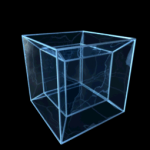
Lacan called these discrete particles of mind-oxygen signifiers because the ultimate nature of these units of signification is not clear. Are they words? Sounds? Pictograms? Letters? Whatever the case is, the unconscious is constructed around a signifying system. And by creating an artificial system of signifiers, such as a phonetic alphabet, the unconscious is forced into a certain container. Here is the crucial point: if the unconscious is fed an algebraic language, it will take these algebraic letters and attempt to assemble them geometrically. It “wants” to think geometrically. The analytic process reveals how the unconscious takes a linear, literal language and constructs superficially nonsense dreams that can only be interpreted by reducing them to their constituent sounds and letters. Or rather, there is a profound logic behind the superficial nonsense. To return to the original imagery: Geist rushes from counterspace into space, where it hits the web of signifiers, some of which have been invested with libidinal charge. These signifiers then vibrate and crystallize into a polygon whose vertices are letters. Or even better, a hypercube, because the dream has a time dimension as well.

Go here to see it rotating: Hypercube - Wikipedia
This mobile geometrical shape is the individual dream. The psychoanalyst Serge Leclaire has a fascinating book called A Child is being Killed in which he presents the case study of a man who slowly reduces his unconscious to the following contingent sequence of letters: POORDJELI. This idiotic formula was the matrix of an entire life of suffering.
Here I am reminded of the fact that Phoenician writing had no spaces. I have another thread in which I explore the idea that churches, temples, towers, etc. were originally radio transmitters and receivers, and that the Phoenicians were the first people to use this technology. Temples and Churches as Radio Frequency Receivers I am currently playing with the idea that the Phoenician alphabet was originally created as a simple telegraphic code. The alphabet emerged after the Bronze Age Collapse, which might indicate that telegraphy began here, perhaps replacing an earlier, more direct, possibly even “psychic” form of broadcasting. This would also provide us with a possible explanation for the origin of gematria. This practice does not reveal the “divine architecture” of language as suggested by (in my opinion completely delusional) texts like the medieval Sefer Yetzirah. On the contrary, what if it is just a built-in redundancy in the code to guarantee faithful transmission? After all, if the radio receiver knows that the message is supposed to add up to a certain sum, he can fill in the missing letters in the case of a weak signal. I suspect it was only much later that this simple and logical technique was cargo-culted into the mystical mumbo-jumbo practiced by Kabbalists today.
So, pursuing my hypothesis, humanity (or more precisely, the priest class of humanity) was first given a geometrical, symbolic, resonant writing system (hieroglyphics). I suspect that this language had a collectivizing function that ensured social harmony at the expense of individual liberty. Jan Assmann on Ancient Egyptian subjectivity:

At some point, the use of a specific technology necessary for the management of the empire leads to the creation of a simplified writing code system based on a small number of phonetic letters. This signifying system begins to develop a life of its own, infecting the minds of those who practice it, displacing hieroglyphics and creating a “new mind”, the Phoenician mind, a mind that is instrumental, exploitative, logical, cunning, non-resonant, and in many ways more free. Perhaps this language cuts off the individual from the swarm, the hive, the collective. Here we return to Jaynes and his theory that everyone was hallucinating and hearing voices until around the Bronze Age Collapse, or more precisely a few hundred years later. Jaynes explicitly suggests writing and trade were the factors leading to the breakdown of the bicameral mind. Here I would like to make a suggestion that is perhaps too simplistic, and I invite linguists to correct me. The Greek verb “to speak” is phonein, giving us words like telephone, etc. Is this where the Phoenicians got their name? Were they simply the talkers, the radio technicians, the ones who used a phonetic language? Were they not a race but a class of people whose minds had been transformed by the contact with letters? Is this why the Phoenicians were able to dominate commerce and shipping? Did they have a monopoly on subjectivity and its attendant advantages, logic (and hypnosis through pseudologic), not to mention the ability to conceptually subdivide and manipulate time and space, at a time when most other people were plugged into a collective mind dominated by dreamlike, eternal-present geometric thinking? Were the Phoenicians the first “atheists” by virtue of their alphabet? Were the gods themselves powerless over the Phoenicians, since they had no foothold in their brain?
The Phoenicians have their own foothold in the brain, and it is of a different sort. Freud noted that the superego, the inner tyrant, was first and foremost an internalized voice. This voice paralyzes. It issues commands. It acts directly on the body. From Darian Leader's Psychoanalysis and the Voice:


Even more fascinating:

Does the Phoenician alphabet, from which all of our later Western alphabets derive, function by implanting a literal voice in our heads? Is this the secret of Phoenician mind-control? The unconscious is full of syntagms invested with the force of external authority. When they are “pulsed” by a signal message, they vibrate and shout at us. In the worst case, they zombify us. There is a reason psychotics hear voices. I once read a fascinating study in which three groups of “schizophrenics” from Ghana, India, and the United States were compared.
https://www.researchgate.net/public...the_USA_India_and_Ghana_Interview-based_study
Half of the people from Ghana and India reported that the voices were friendly and belonged to family members, whereas all of the American schizophrenics reported that the voices were hostile and aggressive. I now find myself wondering how many of the Ghanaians and Indians were illiterate or semi-literate. Was it the presence of internalized letters, as opposed to more holistic symbols, that made the American voices so tyrannical? Is this where the connection between spelling (writing) and spelling (magic) emerges? My understanding of magic rituals is that both geometry and algebra are mobilized: a spell is pronounced diachronically (there is a sequence of words that unfolds in time) and then concentrated into a sigil whose operation is instantaneous.
To summarize: the mind uses language to contain trauma. The trauma is “sealed” under a unique geometrical symbol that is assembled from syllables and letters scavenged outside of the self. What I am here calling “trauma” might more accurately be described as the raw experience of life before it is symbolized. Look at a baby crying. He is not in more pain than you are. He is just unable to treat the stimulus flow by channeling it into a sophisticated symbolic system. As he develops and learns to speak, as language increasingly colonizes his body, those specific sounds, letters, and words which absorb the biggest “charge” of traumatic life energy come to function as the invisible matrix of his entire life. If a phonetic alphabet rather than a symbolic one has been injected into the unconscious, these signifiers will take the form of letters corresponding to sounds. When these letters are activated sympathetically, for example when a situation resembling some original traumatic situation is encountered, or when certain trigger words are encountered, the letters “come to life” and shout at the subject. This shout causes the subject to dissociate to a greater or lesser degree. When in a dissociated state, the subject is vulnerable to hypnosis. Orders received in such a state are mindlessly executed. The natural geometric intelligence of the mind is deactivated. However, this intelligence can be reactivated by going back to the scene of the crime and undoing the “shout” mechanism, at which point the originally repressed energy can be reappropriated. Curious fact: psychoanalysis only works if the words are spoken out loud and subjectivized with another person present. Writing them doesn’t have the same effect. Vocalizing the secret command codes somehow deactivates the “inner voice” in which they are shouted at us. The more I think about it, the more magical this all appears.
It is interesting to note that the whole system does not need to be directed from without to function. In fact, what one finds in psychoanalysis is that the unconscious formulas that cause us to dissociate and sabotage our lives (POORDJELI) are mostly meaningless and governed by chance. Language is an inherently alienating structure. Magicians, propagandists, bankers, cult leaders, intelligence agents, etc. are simply people who understand how this system functions and put themselves in the “driver’s seat” that language creates and then leaves empty in our heads. The mind-eaters have an incredible advantage in that our minds automatically split upon contact with reality. It takes twenty years for our brains to mature. By the time we hit puberty, the unconscious is fully formed, meaning that we enter adulthood very deep in the hole already, and have to work very hard just to get back to something resembling an undistorted picture of reality. Children respond to trauma that they are not yet strong enough to process by “freezing” it in more or less meaningless letters and sounds (=repression). The teenage years are often so difficult because you suddenly have a full-force river of hormonally boosted energy flowing into a symbolic canal system that was haphazardly designed by a five-year-old for a much weaker stream. When we return to the original repressions as an adult, they are no longer as much of a danger to us. The mind-controllers understand all this intuitively. They know that we all come with a crack, and that crack can be artificially widened using all sorts of hypnotic crowbars. Any kind of lie will do. The concrete content of the lies is less important than the fact that they are lies. In this way, the original crystal mind, which spontaneously shattered upon contact with reality, is prevented from re-forming into the higher-level crystal it is supposed to grow into. A false unconscious is placed right over the original fault line like an oil derrick. When this artificial parasitic unconscious is activated, subjectivity is replaced by automatic behavior. Deactivate the lies, and the derrick stops working.
I have written a post for the other thread in which I pursue these ideas further and present more evidence for the Phoenician hypothesis as well as a more concrete series of reflections. Anyone who would like to speculate about the material/technological connection can go here and post on this thread: Temples and Churches as Radio Frequency Receivers
Abyss of Time
Jef, you have at least twenty posts there that would blow a lot of minds and generate a lot of discussion if you ever choose to republish them here. I tried to comment there once and it involved registering under my real name, so I didn’t do it. It’s a pity, because you have so many great ideas.
I agree strongly with what you say about the terrible error:
Often it has been said that to have a spiritual life you have to escape from bodily conditions on the side of the more ideal beings. This way of thinking is a terrible error. The contrary is the case. The closer we are to simple reality, the closer we are to ultimate reality, the source of being/energy.
Hegel echoes the Actus Purus that you cite. As an idealist, Hegel believes that the final essence of reality is Geist or spirit. The Geist constantly flows into material existence in the form of what he calls “negativity”, which could also be described in more Greek language as “becoming” (as opposed to “being”). To return to an earlier imagery, I imagine that the Geist lives in the “neutral center” of the rotating torus, in the tiny gap where space and counterspace meet. I read somewhere that this is the significance of the Planck Unit – it is the precise size of the gap into which photons disappear and from which they reappear. Light emerges, spirals upwards, curves around the torus, then disappears back into the neutral center on the other side bearing the information it picked up on its journey from through space, and which it now imprints on the infinite sea of holographic aether. Hegel refers to this process as the spontaneous self-determination of Spirit. It is a process we can either hinder or facilitate.
For Hegel, negativity “wants” to become material. It wants to move from the abstract to the concrete. It wants to be slowed down, elaborated, made material. True thought involves seizing this flow of negativity and riding it. The goal is not to dominate the Geist, nor is it to submit to it passively. There is an intermediate way. To return to the original theme of this thread, this is exactly how a dream must be interpreted. The dream is the portal through which the living unconscious, the Geist, sends messages from counterspace. Those messages “hit” the artificial unconscious of the dreamer and are spontaneously translated into complex, unique individual dreams. These dream symbols are simultaneously expressions of the subject’s desire to evolve and distortions of it. Crucially, these symbols are then subjected to a second distortion when they are translated from an instantaneous image into diachronic language.
To return to the point made by Jef Demolder about the archons and the Actus Purus, it seems to me that human life, as opposed to archontic life, is not closer to the counterspatial source at the center of the torus (where we might be tempted to situate God), but rather suspended precisely at its most distant edge, in other words, at exactly the midpoint of the “photon’s” spiral journey from the north pole exit of the neutral center, around the donut, and back into counterspace through the south pole entrance exactly one Planck unit away from its starting point. On the ascending journey we find archons and disembodied intelligences and on the descending journey we find increasingly dense and wise entities like trees and rocks. We humans appear to live right at the fertile verge where everything meets. Jef, maybe this is the place you refer to when you say we are closer to God.
This leads me to something I have been thinking about recently. I wondered earlier on this thread if some languages are inherently more holographic than others, based largely on Jef Demolder’s theory that certain ancient languages were used by the gods and not the people. I believe that it is not language but the human unconscious that is holographic in nature. I suspect it can take any language, any symbolic system, and imbue it with holographic power. That said, some languages, and some alphabets, appear to react differently than others to being transformed into holograms, as I hope to illustrate.
In psychoanalysis, the goal is always to return to reality in its most concrete essence. Patients are always tempted to drift off into abstraction when the truth is always singular and concrete. Abstract interpretations often leave the patient feeling good, but explain nothing. A good example of the flight into abstraction is the “dream dictionary”. These are books where you can look up dream symbols and get a ready-made explanation for what they mean. But since dream symbols are holographic encodings of traumas and desires from the patient’s own life, it is impossible to find their meaning in a book. They are always radically singular, although they love to “hide” behind commonplace interpretations. If a patient dreams of a snake, it is a dead end to search for a collective interpretation, such as: the snake represents wisdom, the snake represents sexuality, the snake represents the gods... Once you start down this path, the unconscious has won, and is laughing at you. It loves to lead both the patient and the analyst into sterile, feel-good discussions about generalities. The unconscious put the snake there to trick you into going to the dream dictionary, reading that it represents wisdom, and then “introspecting” about what wisdom is. Once it can get you introspecting, it wins and you lose. What the unconscious does not want is for the patient to remember the particular (ugly, painful) childhood episode or the specific (shameful, humiliating) childhood desire that is hiding behind the snake (more specifically, behind the word “snake”, even more specifically, behind the letters S, N, A, K, and E). Most of all it does not want you to vocalize certain things. There is no way to derive the concrete content hidden behind the symbol from the symbol itself. The symbol is always a higher-level hologram that encodes multiple messages. Again, the holographic intelligence of the unconscious is utterly breathtaking when you come face to face with it. A dream composed of only a handful of superficially simple symbols (an abandoned house, a tunnel, a stream, a mummy, a companion) often reveals itself to possess three, four, five or more layers of signification that only reveal themselves when the patient is ready. An entire analysis can begin and end with the same dream. Even more mysteriously, the dream symbol does not just passively “reveal” secrets, it actively pushes the dreamer towards the realization of a more authentic mode of existence, which I would define as a less dissociated existence, an existence that is precisely more rooted in the real, the here and now, the concrete, the humble, the slow (see The Shell and the Kernel by Nicolas Abraham and Maria Torok). But you have to engage with the dream for it to help you. It is like a horse. If you know how to approach the horse, it might let you climb on its back and ride it. If you don’t, it will just stand there and ignore you or possibly even kick you in the head and kill you.
The unconscious is in some ways as stupid as it is brilliant. On the one hand, it is a quantum holography machine that no AI will ever outdo. On the other hand, it struggles with certain functions.
- It cannot distinguish between homonyms.
- It has no concept of zero.
- It has no concept of the passage of time. The unconscious is always “there”, exactly where you left it.
- It has no concept of contradiction. Dreams can only contradict themselves once they have been translated into conscious thought. Someone can be simultaneously alive and dead in a dream, himself and someone else, etc.
- Something can just as easily be represented by its opposite as by itself.
Concretely, what a psychoanalyst does is notice isometries in the patient’s speech, or to use a less pretentious language, notice coincidences and bring them to the patient’s attention. For example, a patient comes in with a dream about a mansion with a wood floor. There is a man in the house. He escapes. A little later in the dream, the mansion has become a manor house. Now Woody Harrelson is there. As the patient recounts the dream, he free associates, saying whatever passes through his mind. He complains that unlike others, he has no style, no specific “manner” of being in the world. At some point he repeats, “I would…have a manner, if…” with an unusual emphasis on the word “would”.
The wrong way to approach this dream would be isolating the elements in their “imaginary” dimension, the manor house for example. I am sure I could pick up a dream dictionary, look up “manor house”, and find something like: “the house is a representation of the self, and a manor house indicates an inflated sense of self”, or whatever. No, the way to pierce the mystery of the dream is by ignoring the imaginary dimension of the symbols and focusing on the words, the sounds, and the letters that are being pronounced. Two words, “man” and “wood”, appear too many times for it to be a coincidence: man/manner/manor/mansion/wooden/would/Woody. These syllables are where the secrets lie. This is the center of the dream. Do I know what specific unconscious resonance these base syntagms, man and wood have for my patient? Not yet. Only the patient is capable of penetrating the mystery, since he is the author of his unconscious. I have a suspicion that there is a general connection with the concept of manhood, based on other things I have heard this patient say, but I know from experience that there is much more to the dream than that. The important thing is for the patient to see and feel that his everyday, logical, linear, “algebraic” discourse is actually a screen that conceals the true “geometrical” nature of thought and its interface with the unconscious and the body. Just as intelligence agencies insert their operatives in cover jobs, the unconscious inserts its syllables, its words, its signifiers, in cover discourses. Free association is nothing but a technique for disabling the rule that we always speak logically and coherently, in other words, that we respect the linear algebra of grammar and literal coherence. To put it more succinctly, conscious thought and consciously experienced reality is linear and algebraic, whereas unconscious thought and unconscious reality is geometric and without extension in time or space. Geometry does not lie the way algebra can. As psychoanalysis advances, the logical mode of discourse begins to appear more and more artificial, and the geometric, poetic mode of discourse begins to appear more natural. Life becomes more difficult, because as soon as you start speaking freely, people get confused and upset…
Psychoanalysis really gets interesting when the patient starts to catch his unconscious in flagrante delicto inserting parasitic language into his speech. In the same way, political understanding only begins when you realize that everything you see on the news has been manipulated, massaged, or even outright scripted by intelligence agencies. We will never know exactly what all these clever spooks are doing, but once we realize they are there, constantly lying to us, we can distance ourselves from the cover discourses they constantly use to hypnotize us. In the same way, the real goal of psychoanalysis is not to completely decipher the unconscious, which is ultimately impossible anyway, but to realize that it is constantly distorting reality and calibrate to it.
I guess that everyone here has had the experience of noticing a first Big Lie such as 9/11, then beginning to investigate, then discovering more lies, then eventually realizing that in fact the original Big Lie is nothing but the most visible element of an entire architecture of interlocking lies that touches every aspect of our history and goes back to the very beginning. Yet this architecture of lies is so cleverly constructed that it almost never contradicts itself. It is always logical, or rather, as I hope to show, pseudo-logical, para-logical. One of the major problems with Aristotelian logic is that it cannot say if a proposition is true or not. It can only say if a proposition is self-contradictory or not. Truth is another matter entirely. The only proper use of logic is to test a proposition for self-contradiction. All important truths must be seized by other, more direct means. Aristotelian logic is linear and algebraic. If A, then B, and so on. It is a chain that unfolds in time, syllogism by syllogism. Unconscious logic is geometrical. There are multiple possible relationships between A and B on a hypercube. These relationships are “instantaneous” and mutually determinative. Insight occurs in a flash. Just as the unified electromagnetic force separates into electricity and magnetism upon contact with matter, the unconscious splits into algebra and geometry, with the former ruled by Aristotelian logic (non-contradiction) and the latter ruled by dream logic.
This finally brings me to a theme that directly concerns Stolen History, namely the history of the Phoenicians, their domination of global shipping, their invention of the alphabet, and the mystery of human sacrifice.
The official story of the origin of writing is as follows. Mankind made little drawings of cows and animals to simplify accounting transactions. These little drawings became more abstract until they became cuneiform and hieroglyphics. These are NOT letters. They are symbols with no relationship to speech. Symbols resonate with each other in a geometrical way. Here I invite linguists to correct me if I say something wrong. I used to have a friend who studied Chinese and lived in China for years. He explained to me that although the internal logic of Chinese was not grammatically complicated per se, it was nearly impossible to learn how to construct even simple phrases and ideas the way a Chinese person spontaneously might. The impression that I got was that Chinese was more of a geometric language than an algebraic one. My understanding of Chinese thought and wisdom is that it is usually expressed in short, dense, poetic “crystals”, from the Tao to Mao’s Little Red Book. Like hieroglyphics, Chinese is a language without letters, although apparently it has received a phonetic overlay with time, like Egyptian hieroglyphics (this was Champollion’s big breakthrough, to recognize that the hieroglyphs were also phonetic letters). But I am getting ahead of myself. At first the symbols were just symbols. Julian Jaynes:
At some point letters appeared – Phoenician letters. This is a radical departure from symbolic writing systems. Letters have no symbolic or imaginary resonance. They are just sounds. There is no geometry there, only algebra. As soon as you start writing in letters, you gain something and you lose something. You lose the ability to express ideas holistically and instantaneously, and you gain the ability to push things apart from each other. Linear logic, in which A leads to B leads to C and so on, emerges for the first time. And now we have a powerful new form of hypnosis. Once people get used to thinking syllogistically, it is very easy to use false syllogisms to hypnotize people into doing whatever you want. “There is a new virus, therefore you can’t leave your house.” The connection between idea A and idea B is completely delusional, complete nonsense, but because it is presented in a pseudo-logical form, it has power, owing to the fact that very few people actually know how to think. Our bureaucracies and legal systems are perfect examples of this. They have absolutely nothing to do with justice. They are completely insane. If you isolate and focus on any one detail of a bureaucratic or legal procedure, it might appear reasonable, but when you step back and consider the system in its entirety, what appears is a death machine with no connection to reality, a machine which sadists and masochists can use to get off sexually. Kafka understood this. I suspect that these legal domination systems are an artifact of Aristotelian logic and Phoenician alphabets. Justice in its hypothetical pure state would be crystalline, geometrical, and impossible to explain. It would be different in every case. It would be sometimes harsh, sometimes lenient, and always surprising. Each judgment would be as unique as a dream. Gunnar Heinsohn argues that the Jewish Law is responsible for weaning humanity from sacrificial death cults. I think the opposite is true and the Law as we know it today is a far more voracious death cult than any of the old Mystery religions. https://stolenhistory.net/threads/gunnar-heinsohn-1947-2023.6480/post-120851
I want to go back to the unconscious. The mind as we know it needs signifying elements to function, and if it does not encounter them outside of itself, it will not evolve beyond a very elementary level of organization. A lot of people diagnosed with profound retardation or autism suffer from no organic dysfunction. Their minds simply refuse to mature as a result of a bad encounter with the symbolic order outside of themselves. The lungs need fresh air; the mind needs true words. In my opinion this phenomenon bears witness to the fact that the fundamental structure of the universe is information, which is immanent to matter.
Lacan called these discrete particles of mind-oxygen signifiers because the ultimate nature of these units of signification is not clear. Are they words? Sounds? Pictograms? Letters? Whatever the case is, the unconscious is constructed around a signifying system. And by creating an artificial system of signifiers, such as a phonetic alphabet, the unconscious is forced into a certain container. Here is the crucial point: if the unconscious is fed an algebraic language, it will take these algebraic letters and attempt to assemble them geometrically. It “wants” to think geometrically. The analytic process reveals how the unconscious takes a linear, literal language and constructs superficially nonsense dreams that can only be interpreted by reducing them to their constituent sounds and letters. Or rather, there is a profound logic behind the superficial nonsense. To return to the original imagery: Geist rushes from counterspace into space, where it hits the web of signifiers, some of which have been invested with libidinal charge. These signifiers then vibrate and crystallize into a polygon whose vertices are letters. Or even better, a hypercube, because the dream has a time dimension as well.
Go here to see it rotating: Hypercube - Wikipedia
This mobile geometrical shape is the individual dream. The psychoanalyst Serge Leclaire has a fascinating book called A Child is being Killed in which he presents the case study of a man who slowly reduces his unconscious to the following contingent sequence of letters: POORDJELI. This idiotic formula was the matrix of an entire life of suffering.
Here I am reminded of the fact that Phoenician writing had no spaces. I have another thread in which I explore the idea that churches, temples, towers, etc. were originally radio transmitters and receivers, and that the Phoenicians were the first people to use this technology. Temples and Churches as Radio Frequency Receivers I am currently playing with the idea that the Phoenician alphabet was originally created as a simple telegraphic code. The alphabet emerged after the Bronze Age Collapse, which might indicate that telegraphy began here, perhaps replacing an earlier, more direct, possibly even “psychic” form of broadcasting. This would also provide us with a possible explanation for the origin of gematria. This practice does not reveal the “divine architecture” of language as suggested by (in my opinion completely delusional) texts like the medieval Sefer Yetzirah. On the contrary, what if it is just a built-in redundancy in the code to guarantee faithful transmission? After all, if the radio receiver knows that the message is supposed to add up to a certain sum, he can fill in the missing letters in the case of a weak signal. I suspect it was only much later that this simple and logical technique was cargo-culted into the mystical mumbo-jumbo practiced by Kabbalists today.
So, pursuing my hypothesis, humanity (or more precisely, the priest class of humanity) was first given a geometrical, symbolic, resonant writing system (hieroglyphics). I suspect that this language had a collectivizing function that ensured social harmony at the expense of individual liberty. Jan Assmann on Ancient Egyptian subjectivity:
At some point, the use of a specific technology necessary for the management of the empire leads to the creation of a simplified writing code system based on a small number of phonetic letters. This signifying system begins to develop a life of its own, infecting the minds of those who practice it, displacing hieroglyphics and creating a “new mind”, the Phoenician mind, a mind that is instrumental, exploitative, logical, cunning, non-resonant, and in many ways more free. Perhaps this language cuts off the individual from the swarm, the hive, the collective. Here we return to Jaynes and his theory that everyone was hallucinating and hearing voices until around the Bronze Age Collapse, or more precisely a few hundred years later. Jaynes explicitly suggests writing and trade were the factors leading to the breakdown of the bicameral mind. Here I would like to make a suggestion that is perhaps too simplistic, and I invite linguists to correct me. The Greek verb “to speak” is phonein, giving us words like telephone, etc. Is this where the Phoenicians got their name? Were they simply the talkers, the radio technicians, the ones who used a phonetic language? Were they not a race but a class of people whose minds had been transformed by the contact with letters? Is this why the Phoenicians were able to dominate commerce and shipping? Did they have a monopoly on subjectivity and its attendant advantages, logic (and hypnosis through pseudologic), not to mention the ability to conceptually subdivide and manipulate time and space, at a time when most other people were plugged into a collective mind dominated by dreamlike, eternal-present geometric thinking? Were the Phoenicians the first “atheists” by virtue of their alphabet? Were the gods themselves powerless over the Phoenicians, since they had no foothold in their brain?
The Phoenicians have their own foothold in the brain, and it is of a different sort. Freud noted that the superego, the inner tyrant, was first and foremost an internalized voice. This voice paralyzes. It issues commands. It acts directly on the body. From Darian Leader's Psychoanalysis and the Voice:
Even more fascinating:
Does the Phoenician alphabet, from which all of our later Western alphabets derive, function by implanting a literal voice in our heads? Is this the secret of Phoenician mind-control? The unconscious is full of syntagms invested with the force of external authority. When they are “pulsed” by a signal message, they vibrate and shout at us. In the worst case, they zombify us. There is a reason psychotics hear voices. I once read a fascinating study in which three groups of “schizophrenics” from Ghana, India, and the United States were compared.
https://www.researchgate.net/public...the_USA_India_and_Ghana_Interview-based_study
Half of the people from Ghana and India reported that the voices were friendly and belonged to family members, whereas all of the American schizophrenics reported that the voices were hostile and aggressive. I now find myself wondering how many of the Ghanaians and Indians were illiterate or semi-literate. Was it the presence of internalized letters, as opposed to more holistic symbols, that made the American voices so tyrannical? Is this where the connection between spelling (writing) and spelling (magic) emerges? My understanding of magic rituals is that both geometry and algebra are mobilized: a spell is pronounced diachronically (there is a sequence of words that unfolds in time) and then concentrated into a sigil whose operation is instantaneous.
To summarize: the mind uses language to contain trauma. The trauma is “sealed” under a unique geometrical symbol that is assembled from syllables and letters scavenged outside of the self. What I am here calling “trauma” might more accurately be described as the raw experience of life before it is symbolized. Look at a baby crying. He is not in more pain than you are. He is just unable to treat the stimulus flow by channeling it into a sophisticated symbolic system. As he develops and learns to speak, as language increasingly colonizes his body, those specific sounds, letters, and words which absorb the biggest “charge” of traumatic life energy come to function as the invisible matrix of his entire life. If a phonetic alphabet rather than a symbolic one has been injected into the unconscious, these signifiers will take the form of letters corresponding to sounds. When these letters are activated sympathetically, for example when a situation resembling some original traumatic situation is encountered, or when certain trigger words are encountered, the letters “come to life” and shout at the subject. This shout causes the subject to dissociate to a greater or lesser degree. When in a dissociated state, the subject is vulnerable to hypnosis. Orders received in such a state are mindlessly executed. The natural geometric intelligence of the mind is deactivated. However, this intelligence can be reactivated by going back to the scene of the crime and undoing the “shout” mechanism, at which point the originally repressed energy can be reappropriated. Curious fact: psychoanalysis only works if the words are spoken out loud and subjectivized with another person present. Writing them doesn’t have the same effect. Vocalizing the secret command codes somehow deactivates the “inner voice” in which they are shouted at us. The more I think about it, the more magical this all appears.
It is interesting to note that the whole system does not need to be directed from without to function. In fact, what one finds in psychoanalysis is that the unconscious formulas that cause us to dissociate and sabotage our lives (POORDJELI) are mostly meaningless and governed by chance. Language is an inherently alienating structure. Magicians, propagandists, bankers, cult leaders, intelligence agents, etc. are simply people who understand how this system functions and put themselves in the “driver’s seat” that language creates and then leaves empty in our heads. The mind-eaters have an incredible advantage in that our minds automatically split upon contact with reality. It takes twenty years for our brains to mature. By the time we hit puberty, the unconscious is fully formed, meaning that we enter adulthood very deep in the hole already, and have to work very hard just to get back to something resembling an undistorted picture of reality. Children respond to trauma that they are not yet strong enough to process by “freezing” it in more or less meaningless letters and sounds (=repression). The teenage years are often so difficult because you suddenly have a full-force river of hormonally boosted energy flowing into a symbolic canal system that was haphazardly designed by a five-year-old for a much weaker stream. When we return to the original repressions as an adult, they are no longer as much of a danger to us. The mind-controllers understand all this intuitively. They know that we all come with a crack, and that crack can be artificially widened using all sorts of hypnotic crowbars. Any kind of lie will do. The concrete content of the lies is less important than the fact that they are lies. In this way, the original crystal mind, which spontaneously shattered upon contact with reality, is prevented from re-forming into the higher-level crystal it is supposed to grow into. A false unconscious is placed right over the original fault line like an oil derrick. When this artificial parasitic unconscious is activated, subjectivity is replaced by automatic behavior. Deactivate the lies, and the derrick stops working.
I have written a post for the other thread in which I pursue these ideas further and present more evidence for the Phoenician hypothesis as well as a more concrete series of reflections. Anyone who would like to speculate about the material/technological connection can go here and post on this thread: Temples and Churches as Radio Frequency Receivers
Attachments
Last edited:


 love.
love.


