- Joined
- Dec 17, 2020
- Messages
- 399
- Reaction score
- 1,152
The following is from notes of a talk about Rev George Oliver given to Cambridgeshire/Lincolnshire (England) freemasons 2 to 5 years ago. I don't have the exact date.Perhaps jesters were not so much an advisor to rulers in the middle ages but a director of policy.
The Role Of The Jester In Medieval Society - About History
A MAJOR influence over middle ages society eh? Hmmm
Well, very interesting insight.
Check out these jester paintings from ye olde times.
God figure looking down on them from heaven, and he doesn't look very happy. I think you're spot on with Enoch!
Also lots of occult hand gestures and Masonic symbolism alright in these images. Not to mention how inherently evil they are portrayed, and the nose may have much more meaning than the modern round red nosed clowns.
Among freemasons, Oliver is known for writing masonic text books and somewhat less well-known for founding the town of Grimsby's 'Apollo' masonic lodge (originally lodge No 510, later No 544). That founding came shortly after the 1813 creation of the United Grand Lodge of England from the 1717 Premier Grand Lodge and the 1751 'Antients' Grand Lodge.
Outside of masonic circles, Oliver is barely known. If known at all, it is for writing books on the history of east England. I've quoted from them in various threads.
At the talk, the presenter said this about the membership of Grimsby's 'Apollo' lodge:
the lodge flourished under his guidance... It's membership being recorded as being at that time:
119 in total.
- 7 clergy
- 3 esquires
- 10 gentlemen
- 3 lawyers
- 2 doctors
- 18 marines
- 43 comedians
- 2 custom officers
- 3 lieutenants
- 27 tradesmen
- 1 farmer
I don't know of any single source that explains that little oddity but, from reading a diverse range of sources, it seems reasonable to speculate that:
- Jesters were indeed advisors or perhaps policy directors.
- Jesters/comedians also functioned as teachers (there's an explicit reference to that in one of the Punch and Judy histories I encountered while writing an earlier post in this thread).
- Early 19th Century professionals and the armed and 'owning' classes were recruited into freemasonry to help implement new social policies. Knowlingly and unknowingly.
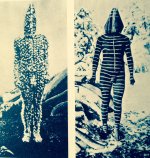
- My guess is that the jester costume is evidence of a cargo cult. An imitation of PPE, uniform or equipment seen earlier.
- The head on a stick was possibly a real, shrunken head being used as a pretend communication device (another cargo cult relic).
- Some - and perhaps all - of the occult symbolism is also cargo cult. The remnants of hand signals and physical signage previously used by our owner-creators and their proxies, our earlier managers.
Last edited: