The Tartarian Origin of the Jews

The Bible is the word of God. He gave us a path to follow. He could have chose anything to put in there and he chose to include those "mixed multitudes" that came along with the Jews during the Exodus.
Bible is the word of man. The old testament is not to be put alongside the new as 2 texts of the same religion. it's some trickery by the priestly class. true christianity was subverted by and the jewish bible was tacked onto the christian bible.

the god characters are not the same.
 
Bible is the word of man. The old testament is not to be put alongside the new as 2 texts of the same religion. it's some trickery by the priestly class. true christianity was subverted by and the jewish bible was tacked onto the christian bible.

the god characters are not the same.
IMHO it is the other way around. The Jewish Bible came first and the Christian and Muslim texts came after. They both reference the old testament. Jesus was supposed to be the fulfillment of the Jewish standards of their messiah but did not meet them like not bringing world peace, not having Elijah announce his presence first, working on the Sabbath. Mohammed wanted to be considered a prophet by the Jews but was rejected. The Quran altered versions of things from the first bible.

Also in the Jewish bible God is talking to the Jews. In the Christian and Muslim texts, God is not talking to them at all. Jesus was "channeling" or claiming to be a prohet but it does not say God talked through him. In Muslim texts, Mohammed is being talked to by the angel Gabriel. Gabriel came down from heaven in a floating bright light btw.
 
IMHO it is the other way around. The Jewish Bible came first and the Christian and Muslim texts came after. They both reference the old testament. Jesus was supposed to be the fulfillment of the Jewish standards of their messiah but did not meet them like not bringing world peace, not having Elijah announce his presence first, working on the Sabbath. Mohammed wanted to be considered a prophet by the Jews but was rejected. The Quran altered versions of things from the first bible.

Also in the Jewish bible God is talking to the Jews. In the Christian and Muslim texts, God is not talking to them at all. Jesus was "channeling" or claiming to be a prohet but it does not say God talked through him. In Muslim texts, Mohammed is being talked to by the angel Gabriel. Gabriel came down from heaven in a floating bright light btw.
or was the old testament retroactively written into the new? 🙈
 
Rome and Egypt are the same empire. When the Jews talk about being slaves, it means they were working for nothing while their labor funded a class of beings who receive everything for free and never lift a finger: Africans. "We were kings," indeed. EBT and welfare are jizya, infidel payments from Jews to the pharaoh/pope. The US dollar has a pyramid on it because it is backed by the unpaid slave labor of Jews, as it was in Ancient Egypt. Every portrayal of Moses is white. I imagine that Egypt probably had a racial caste system in which caucasians were at the bottom, and their revolution was none other than that of Moses AKA Merlin, whose followers fled Egypt and reached Ireland. Some, presumably, went east to what we call Tartaria
 
Last edited:
I’m not sure how far off-topic this is, but while reading about ancient traditions, Jews, lost peoples, and historical narratives that seem to change depending on who is telling them, I came across something rather strange in Mexico.

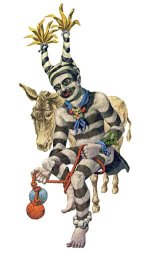
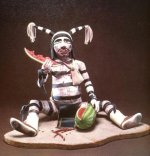
The Cora people of Nayarit preserve a ceremony that, from an outsider’s perspective, looks like something out of a strange dream or a film blending religion, theater, and ancient symbolism.

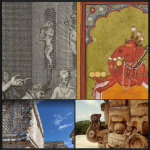
During certain festivities, some participants ritually transform themselves into characters commonly identified as “Jews.” They wear red wigs, paint their faces white with black stripes, behave like buffoons, play pranks, run through the village, and take part in the search for a Nazarene child who represents Jesus.

At first glance, this might seem like nothing more than a dramatization of the Passion. But when one begins to look closely at the details, some intriguing questions start to emerge.


View: https://www.youtube.com/shorts/X-KEQ8BJdp0


View: https://www.youtube.com/watch?v=-QxRLpVz8jY


View: https://www.youtube.com/watch?v=xTzjvxM0aa4


Why do these characters have an appearance that resembles ritual clowns more than any historical image of Judea?

Why is their behavior so similar to that of the so-called sacred clowns found in other cultures—figures who act in reverse, break social norms, mock everything, and embody forces of chaos?


MuseoMascaraSLP19.JPG

Cora people - Wikipedia

Why do they appear as pursuers of a sacred child?

The conventional explanation usually links this to the reenactment of the death of Christ and to agricultural cycles of fertility, renewal, and harvest. Yet the imagery remains striking. A group of grotesque characters searches for a sacred child, captures him, and participates in his symbolic death so that the renewal of the world may subsequently take place.

In fact, many myths around the world follow precisely this pattern: the ritual sacrifice of a king, a god, or a divine child in order to ensure the return of life and the regeneration of the cosmos.

What is particularly curious is that when we encounter something similar in medieval Europe, references immediately arise to the so-called blood libel—the accusations that Jewish communities kidnapped and sacrificed Christian children. Modern historians generally regard these accusations as false and interpret them as products of religious propaganda and persecution.

Death_of_William_of_Norwich.jpg
Ritualmord-Legende.jpg

Sandomierz_katedra_-_mord_rytualny.jpg


However, the interesting question is not whether those accusations were true or false.

The real question is something else.

Why does the same idea appear again and again in completely different places?

Why does the same narrative pattern keep recurring?

The sacred child.

The pursuers.

The sacrifice.

The renewal.
 

Attachments

  • sfco campeche.jpg
    sfco campeche.jpg
    191.8 KB · Views: 7
  • 0656df014b7667b68a46737a86b396c1.jpg
    0656df014b7667b68a46737a86b396c1.jpg
    55.2 KB · Views: 7
  • chichen13.png
    chichen13.png
    628.2 KB · Views: 6
  • Bernard Picart (mezzotint by Nicolaas Verkolje after Jean-Marc Nattier, 1715).jpg
    Bernard Picart (mezzotint by Nicolaas Verkolje after Jean-Marc Nattier, 1715).jpg
    205 KB · Views: 7
  • boda mexicana4.png
    boda mexicana4.png
    2.3 MB · Views: 7
  • boda mexicana5.png
    boda mexicana5.png
    1.2 MB · Views: 7
  • boda mexicana6.png
    boda mexicana6.png
    1,022.3 KB · Views: 6
  • boda mexicana8.png
    boda mexicana8.png
    1 MB · Views: 6
  • boda.png
    boda.png
    582.7 KB · Views: 7
  • 1.png
    1.png
    47.6 KB · Views: 7
  • 188764e4b35648595d515c6d92e19725.jpg
    188764e4b35648595d515c6d92e19725.jpg
    23.9 KB · Views: 7
  • sacred-clowns-of-the-pueblo-native-americans-v0-i81xw2nck5sg1.jpg
    sacred-clowns-of-the-pueblo-native-americans-v0-i81xw2nck5sg1.jpg
    54.4 KB · Views: 6
  • yucatan.jpg
    yucatan.jpg
    229.8 KB · Views: 6
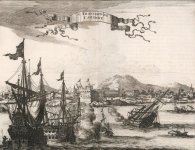
This also brings to mind Korben’s thread about the country the Spaniards supposedly discovered called Yucatán. It described what appeared to be a kind of great Venice, populated by people wearing European-style clothing, with remarkable architecture, witches or oracles consulted during times of war, and even accounts of child sacrifice. All of this seems to fit surprisingly well with certain traditions documented in that region.


These rituals are generally attributed to the Olmecs, Maya, or Aztecs. However, I had understood that many of the sacrifices described in historical sources were more commonly associated with adults, prisoners, or captives taken in war. I am not sure to what extent children were specifically designated for this type of sacrifice.

It is also worth adding the references to circumcision that some authors claimed to have observed in regions of Yucatán and Oaxaca, introducing yet another intriguing element into the discussion.

yucatan.jpg
sfco campeche.jpg
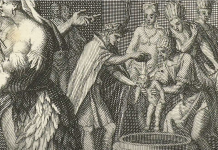
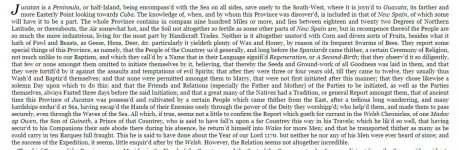
They relate several notable customs of this province, namely that the people of the country commonly practiced, long before the arrival of the Spaniards, a certain religious ceremony not unlike our own baptism, which they called by a name in their language meaning “Regeneration” or “Rebirth.”

They observed it so diligently that few, if any, failed to undergo it, believing that through it the seeds and foundations of all virtue were planted within them, and that by means of it they were strengthened against the assaults and temptations of evil spirits.

From the age of three or four until the age of twelve, children were commonly washed and baptized in this manner. No one was permitted to marry without first having been initiated through this ceremony.

They also selected a solemn day on which to perform it, and the friends and relatives of those to be initiated—especially their father and mother—as well as the initiates themselves, always fasted for three days before the ceremony took place.

1.png

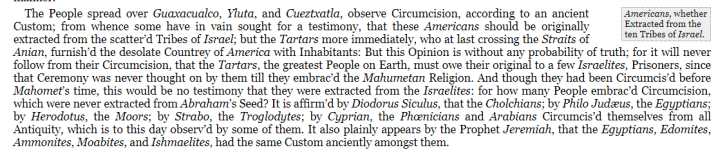
Los pueblos que habitan Guaxacualco, Yluta y Cueztxatla practican la circuncisión según una antigua costumbre. Por ello, algunos han intentado —sin éxito— encontrar pruebas de que estos americanos descienden originalmente de las tribus dispersas de Israel . Otros, en cambio, sostienen que descienden más directamente de los tártaros , quienes, tras cruzar el estrecho de Anián , poblaron las vastas y desoladas regiones de América.

Yet this opinion lacks a solid foundation, for the mere fact that they practiced circumcision does not imply that the Tartars—the most numerous people on Earth—owed their origin to a small group of captive Israelites. Indeed, there is no evidence that the Tartars adopted this practice until they embraced the Mohammedan (Islamic) religion. And even if they had practiced circumcision before the time of Muhammad, this would not prove descent from the Israelites, for how many peoples have practiced circumcision without being descendants of Abraham?

Diodorus Siculus states that the Colchians practiced circumcision; Philo of Judea says the same of the Egyptians; Herodotus mentions it among the Moors; Strabo among the Troglodytes; and Cyprian among the Phoenicians and Arabs, many of whom continued to observe the custom. The prophet Jeremiah also makes it clear that the Egyptians, Edomites, Ammonites, Moabites, and Ishmaelites had practiced the same custom since ancient times.


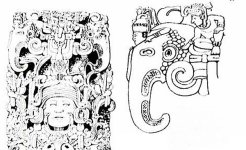
One of the most striking aspects is that several sixteenth-century Spanish chroniclers claimed to have encountered rituals in Mesoamerica that reminded them of Christian baptism. Diego de Landa wrote that among the Maya of Yucatán there existed an initiation ceremony called caputzihil, a term he interpreted as “to be born again.” According to his account, this rite had been practiced since ancient times, long before the arrival of Europeans, and was associated with protection against evil spirits, purification, and the moral preparation of children for adulthood. The resemblance to core concepts of Christian baptism greatly surprised the missionaries.

Another intriguing point is that various Mesoamerican peoples performed naming, purification, and childhood initiation ceremonies that involved water, blessings, predictions concerning a child’s future, and the assignment of social roles. Sahagún describes how, among the Mexica, newborns underwent a kind of baptism in which they were given a name and subjected to rituals connected with their destiny. In the case of boys, the umbilical cord might be buried in places associated with warfare; in the case of girls, it was buried near the home, symbolizing the role they were expected to fulfill within society.

Equally noteworthy is the persistence of practices related to circumcision and the belief that a newborn’s soul is not yet fully united with the body. Some colonial authors claimed to have found references to circumcision in certain Maya regions of Guatemala, while numerous Indigenous traditions held that baptism—or equivalent rituals—served to protect a child’s soul from evil spirits. Among several contemporary Maya groups, there remains a belief that an unbaptized infant is especially vulnerable to supernatural entities, a concept that echoes the ancient apotropaic function of baptism—its role as protection against evil—which was also present in early Christianity.

Perhaps most fascinating is the way the Maya fused Indigenous and Christian elements into a symbolic system of their own. Ceremonies such as the Yucatec hetz-mek, in which a child is given tools or objects symbolizing their future social role, continue to function as genuine rites of initiation. At the same time, Christian baptism acquired very specific local meanings: it is believed to confer a name, a spiritual identity, and access to the afterlife. In some communities, it is even considered essential to baptize stillborn children so that they may be recognized in the other world—a belief that illustrates the extent to which ancient Indigenous traditions and Christianity became intertwined within a shared vision of the universe.

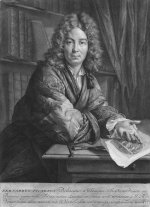
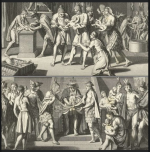
El autor es Bernard Picart .

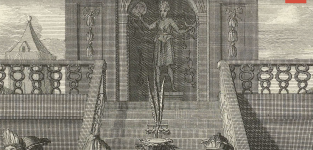
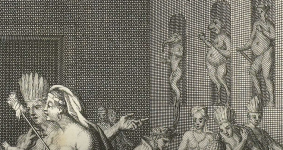
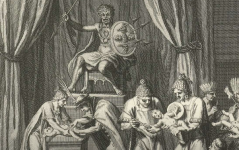
The engraving known as “A Mexican Wedding” (1715) is generally attributed to Bernard Picart (1673–1733), a French engraver and illustrator best known for his monumental work Cérémonies et coutumes religieuses de tous les peuples du monde (Ceremonies and Religious Customs of All the Peoples of the World), published between 1723 and 1743.

Picart never traveled to Mexico. Many of his illustrations were based on accounts from travelers, missionaries, chroniclers, and other secondary sources. For that reason, his engravings are valuable as evidence of how eighteenth-century Europeans imagined or represented the customs of other peoples, but they should not necessarily be regarded as exact depictions of historical reality or as visual records comparable to photographs.

His work is particularly noteworthy because he often juxtaposed Indigenous American ceremonies with Jewish, Muslim, Christian, Hindu, and other religious traditions, reflecting an effort to compare rituals and beliefs from different parts of the world. This comparative approach became one of the defining features of Picart’s work.
 
Tips
Tips
Please respect our Posting Rules.
Back
Top