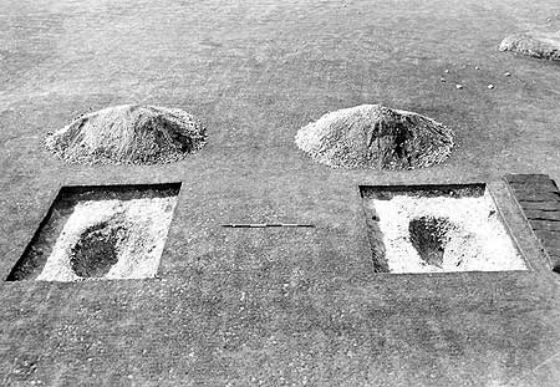
SH Archive Was Stonehenge rebuilt, or constructed in 1954?

SH.org OP Username
KorbenDallas
SH.org OP Date
2018-03-23 07:13:16
SH.org Reaction Score
110
SH.org Reply Count
110
Note: This post was recovered from the Sh.org archive.
Username: Feralimal
Date: 2019-12-09 16:52:27
Reaction Score: 0
I don't think that Stonehenge is what we are told. And I'd definitely conceed that it was mucked about with in the 50s.

But, I don't think it was created in the 1950s.

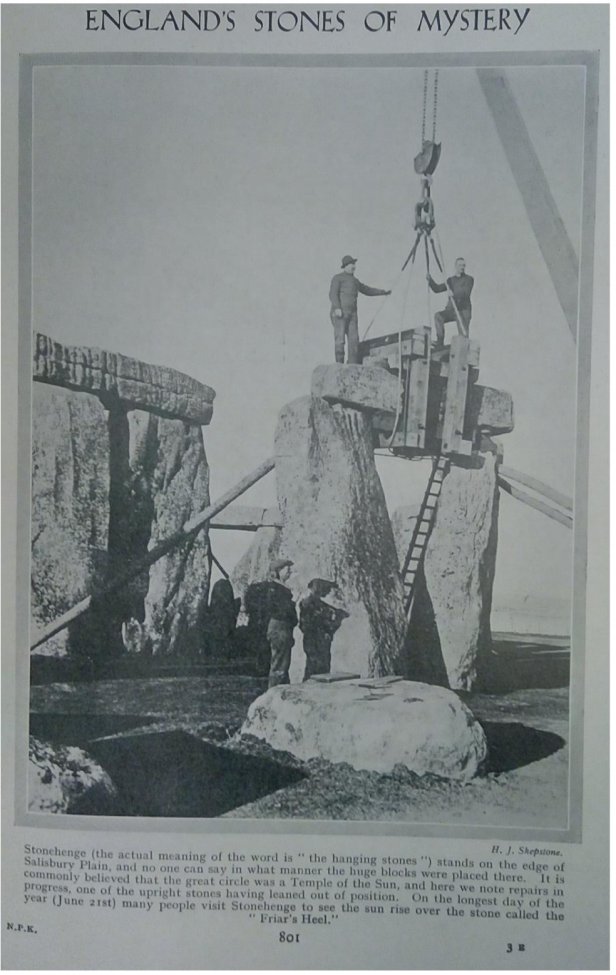
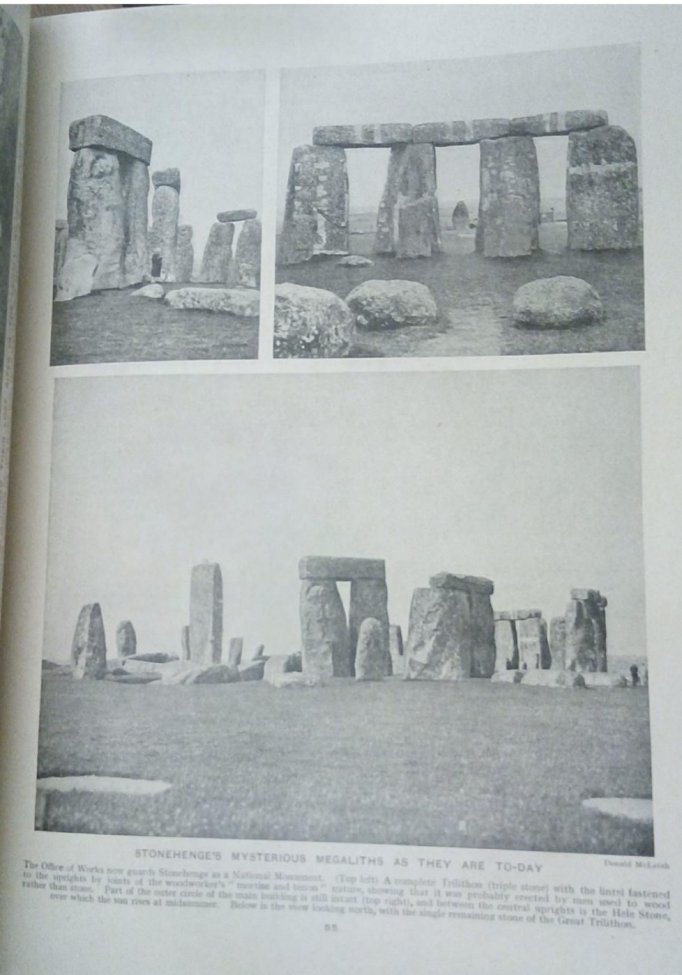
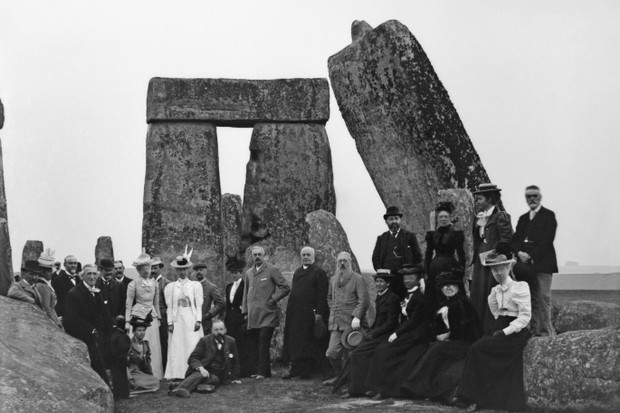
As jd755 points out, there is a painting of it that is purported to have been painted in 1835. I also have some older photos of it in books that were printed in the 1930s (ie earlier that 1950s). See below:

Screenshot_2019-12-09-16-39-31_1_1.jpg
Screenshot_2019-12-09-16-39-20_1_1.jpg

So, there is some evidence to support the view than the idea that it was built more than 70 years ago.
 
Note: This post was recovered from the Sh.org archive.
Username: KorbenDallas
Date: 2019-12-09 17:00:41
Reaction Score: 3
This thread is outdated. Will probably do an updated one.

In a nutshell, if we built a new Pantheon (based on older images) in 1890s, or 1920s, or 1950s and called it a 3k year old building, how old would it really be?
 
Note: This post was recovered from the Sh.org archive.
Username: Feralimal
Date: 2019-12-09 17:13:05
Reaction Score: 0
Fair enough. But I think there is evidence it was there before 1950. The books I have are dated from the 1930s.

If there were structural issues, you would see the sort of photos we have from the 1950s. If they built it new then we would see the same sort of photos. The existence of structural photos doesn't prove anything either way.

But if you are going to say it was built in 1950 how do you account for the (apparently) earlier evidence?
 
Note: This post was recovered from the Sh.org archive.
Username: KorbenDallas
Date: 2019-12-09 17:34:06
Reaction Score: 0
The pre-Stonehenge field they used in the 1950s was in pristine condition prior to the install. Yet we have books, earlier photos and stuff.

This issue is beyond mysterious, imho.
 
Note: This post was recovered from the Sh.org archive.
Username: jd755
Date: 2019-12-09 17:59:30
Reaction Score: 1
My money is on it predating 1954 at least the stones were carved and notched etc but it was in an entirely different location.
 
Note: This post was recovered from the Sh.org archive.
Username: Feralimal
Date: 2019-12-09 20:04:52
Reaction Score: 1
It's a possibility.

But the earlier photos and painting won't help us establish that either way. I think they are too ambiguous - I don't think you can make out any geographical features to pinpoint the location. In fact we are shorter on evidence for claiming that they were moved or were newly created, than the official story which is supported by the paintings and earlier photos.

We are on more solid ground when we point out that there was a massive reconstruction in the 1950s, without trying to provide a counter narrative. The evidence supports questions we may have over what the reconstruction was about.

Personally, I wouldn't be unsurprised if they were shoring it up/improving it to make work better as a tourist attraction or to prevent further digs at the site or even as a special site to help roll out UNESCO or some similar organisation, that allows them to lock up certain sites. But that's all speculation too!
 
Note: This post was recovered from the Sh.org archive.
Username: jd755
Date: 2019-12-09 20:13:11
Reaction Score: 0
Being a lazy bugger and not looking back over the thread but I've read somehere and seen a painting of the stones showing them or rather the text saying, they were originally on some estate. Cannot even recall the title of the aristocrat whose estate it was. I'll nave a ruminate and see what turns up.
Thhere is precious little evidence at all about these stones and it bears repeating there is no way to establish the date a stone was carved, quarried or laid down let alone asembled into what appears today. So it's all supposition from the get go.
 
Note: This post was recovered from the Sh.org archive.
Username: Feralimal
Date: 2019-12-09 20:18:30
Reaction Score: 0
Yes. But here, in this case, there is the evidence of the photographic record. You have to account for it. You might dispute its authenticity, find it misleading or accept it. But you have negotiate it as evidence.
 
Note: This post was recovered from the Sh.org archive.
Username: KorbenDallas
Date: 2019-12-09 20:21:57
Reaction Score: 0
Find a photograph of the 1950s “reconstruction” field and see if there are any signs of Stonehenge on the ground.
 
Note: This post was recovered from the Sh.org archive.
Username: Feralimal
Date: 2019-12-09 20:29:17
Reaction Score: 0
I have looked. Especially at your initial post:
Was Stonehenge rebuilt, or constructed in 1954?

My view is that typically you cannot use the photos to work out the geography. On one or 2 photos you can see the terrain. IMO the terrain seems to be similar to the site that's there today.

But then it's pretty flat there, with no significant landmarks...
 
Note: This post was recovered from the Sh.org archive.
Username: KorbenDallas
Date: 2019-12-09 21:07:39
Reaction Score: 3
If the thing was always in that exact same spot, we would have no controversy. 1920s, 1954... alleged renovations do look like brand new construction activities.

Why do they even need to renovate some 4-5,000 year old ruins? They were doing just fine without any interference, or so it seems.

Then again, judging by everything else, the original Stonehenge would have to be buried under 25 feet of dirt. Just about everything else that old gets excavated, and Stonehenge was just sitting up on top? If they found any younger than Stonehenge buried structure in the general vicinity, that could put a dent. I’m not saying they did, but any archaeological digs in the area could probably shed some light.

Under the actual Stonehenge they have what? Built by who, and when?

Then, what’s the oldest discovered document mentioning Stonehenge is, and when was that doc first mentioned?

Stuff is not right with this historic complex, and I think our suspicions and questions are justified.
 
Note: This post was recovered from the Sh.org archive.
Username: jd755
Date: 2019-12-09 21:39:42
Reaction Score: 2
I'm not disputing photographs. My feeling is prior to be arranged in its current site, I have no idea when, the stones were either piled up or erected elsewhere, I have no idea where.
Salisbury plain is as you know a military playground today, how long its been one I don't know. What part that has in this tale again I don't know but I feel it is of significance. For example if the area was under military control when the stones were orginally moved in then n-one would bee any the wiser save the movng/installation crew. Supposition again. I realise that but just as possible as any other theory.

Using startpage and the string stonehenge 1800 these sites popped up.
Incidentally when did stonhenge the word first make its appearance?

From here; Stonehenge: a prehistoric tourist trap
Why did they level the ground out?
Stonehenge today is identical to the first accurate survey, drawn in 1740 by John Wood, architect of Georgian Bath.
edwardian.jpg

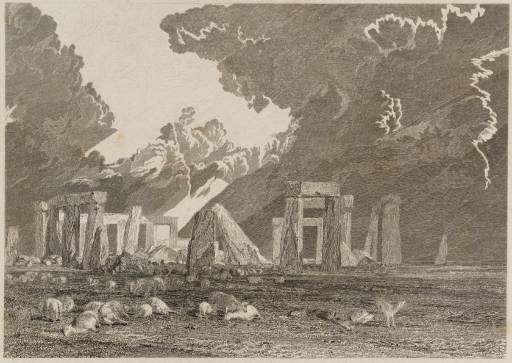
From here; ‘Stonehenge, Wiltshire’, after Joseph Mallord William Turner, 1829 | Tate
Where did the hill go?
T04548_9.jpg
after Joseph Mallord William Turner
Stonehenge, Wiltshire
1829

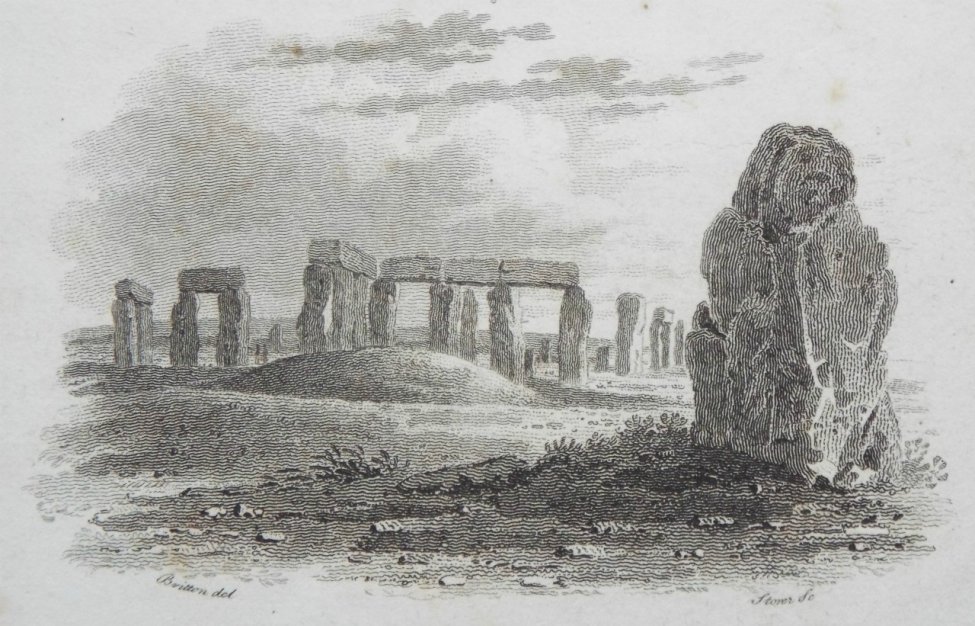
From here; Antique Prints of Stonehenge
Where did the mound go?
P24220.JPG
(Stonehenge from the East) Title Vignette
Ref: P/9039
Date: 1801
Series: Beauties of Wiltshire
Artist: Britton, John
Engraver: Storer
Medium: Copper
Dimensions: 57 x 89 mm
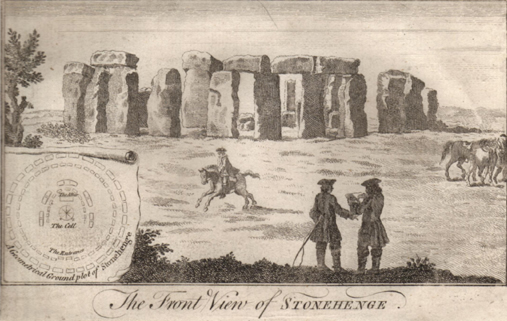
From here; The Front View of Stonehenge | The Salisbury Museum
Does this chain of events strike only me as odd?
What was so wrong with the original drawing?
Why combine them at all?

1740
By William Stukeley

This image combines two prints that were in a book about Stonehenge by Dr William Stukeley. Stukeley drew them and then Harris engraved the plan and Gerard Van der Gucht engraved the main picture.

art-of-stonehenge-pd145.jpg
 
Note: This post was recovered from the Sh.org archive.
Username: Feralimal
Date: 2019-12-09 21:52:35
Reaction Score: 1
I don't disagree. I'm saying is you need to let the evidence do the talking, but not to present an alternative story.

In this case I don't see that the photos support any counter narrative such as Stonehenge having been moved or created. If you want to use those photos to support that claim I think it will fail.

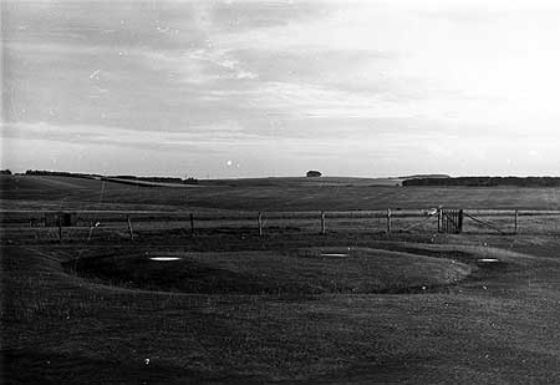
What I think the evidence is good for is to show the flaws in the official narrative. You can say that the site was tampered with in the 1930s (as evidenced by one of the photos I posted) and that there was a major overhaul in the 1950s. Why? Why would they overhaul a site that has stood there for 4000 years? Was it moved? Etc.

Basically, I think you are on sound footing when you draw attention to the flaws in their claim. They (archeologists) should defend that claim and provide additional data to support their argument. I would leave it at that.

However, if instead you claim that this is a new or moved site but then there are earlier photos of the site which trumps your evidence, this actually ends up supporting the official narrative. It supports it, because your claim can be easily dismissed and their claim still stands. It will also be harder to re-present this evidence of photos in future, as that has been viewed and dismissed.

Ultimately, claims (historical, scientific, etc) should work like this: incredible claims require incredible evidence. Here, we have a claim - that Stonehenge is 4000 years old, but there is little evidence apart from the narrative (and talk is cheap). The official claim has not really been tested but still it has been accepted by the population. What I think we want to do is to draw attention to this official claim and show is problems.

We don't want to try to promote a replacement narrative, especially without incredible evidence - which we don't have - as it will likely fail. We do want open access to the evidence there is and we want theories that best fit the evidence that we do have. This is the scientific method. The narrative should be that which best fits the evidence. There may be several plausible narratives, and that's ok. We may have to live with the possibility of never knowing.
 
Note: This post was recovered from the Sh.org archive.
Username: jd755
Date: 2019-12-09 21:54:15
Reaction Score: 1
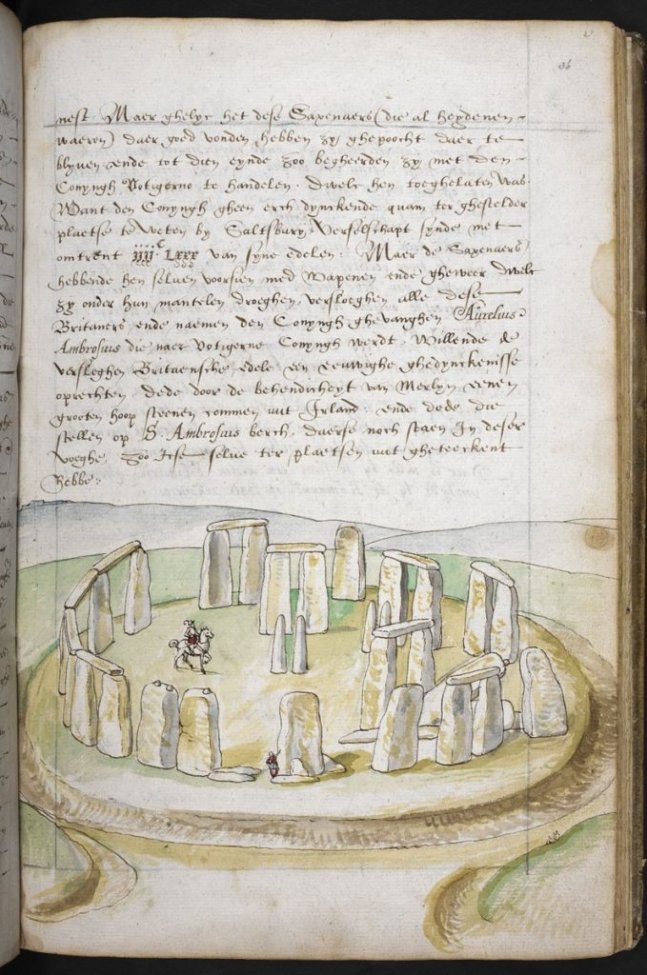
From here; An Artist Visits Stonehenge in 1573 and Paints a Charming Watercolor Painting of the Ancient Ruins
When they were up they were up!
An Artist Visits Stonehenge in 1573 and Paints a Charming Watercolor Painting of the Ancient Ruins

stonehenge-679x1024.jpg

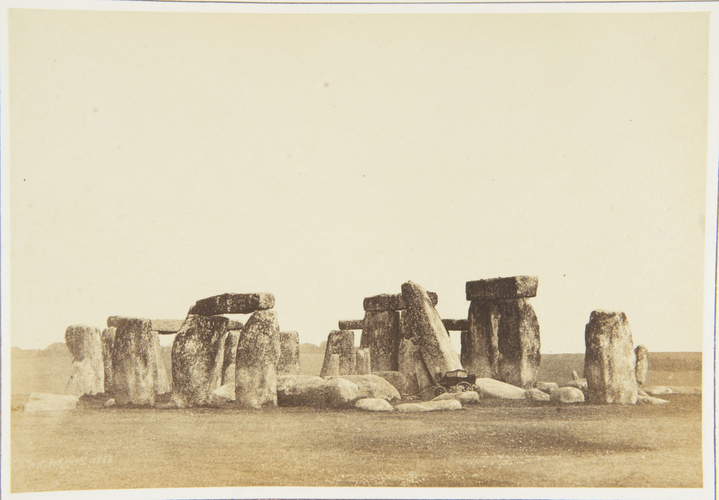
From here; Stonehenge | Historic England

The first photographs: 1853-1900

From here; William Russell Sedgfield (1826-1902) - Stonehenge 2953 albumen print

410011-1377857792.jpg
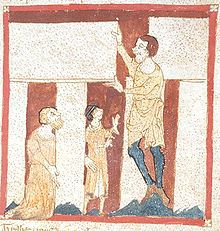
From here; How Interpretations of the Ritual Nature of Stonehenge Have Changed over Time; a study illustrated with 5 artworks

220px-blegerton3028fol30rstonehengecropped.jpg
A 14th Century Print with Merlin Building Stonehenge
 
Note: This post was recovered from the Sh.org archive.
Username: KorbenDallas
Date: 2019-12-09 22:18:56
Reaction Score: 3
This is why I said that this thread is outdated, and a new updated with more info in the OP was needed.

I am not presenting any alternate version here, just asking questions. Yet the interested ones need to figure out what they were doing in 1954 as compared to the official narrative of their 1954 actions.
  • Is something being hidden from us or not?
If 1954 was an official renovation, than the current spot is the same one the Stonehenge is at today. This way we do not need to guess where the photograph was made. And if the pristine pre-1954 renovation field is the same one the Stonehenge is located at today, and was allegedly always there, than where are any traces of the pre-renovation Stonehenge?

Where are all the prior holes in the ground from where the stones had to get removed for renovation? For how long were the stones gone, and why do we not see any signs of the Stonehenge being there before?

If the narrative insists that the 1954 site is the original site, but there are no traces of the pre-renovation site in that same very place, than in support of the narrative there has to be a clear explanation why they are digging brand new installation holes in that field. Did they fill the old holes in and seeded the grass, etc. If they don’t have an explanation for the lack of the prior holes, things are not straight.

kd_separator.jpg
The video originally published in the OP was deleted at some point. I replaced with the other one I found. Not sure it is the same one for I do not remember the original.

Just in case the OP replacement video gets deleted again, I downloaded it, and uploaded to the SH server. This guy in the video emphasizes, that they are merely putting stones in place. Yup.
  • I have no clue when this video was made.
kd_separator.jpg
If below is indeed the Stonehenge circle at the site of the renovation... what's going on?

stonehendge_site.jpg
stonehendge_site-2.jpg
As far as I understand, restoration works were performed on two separate occasions: 1954 and 1958.

What's our way to figure out what's real: Faked Photos of Stonehenge Update
 
Note: This post was recovered from the Sh.org archive.
Username: jd755
Date: 2019-12-10 17:41:21
Reaction Score: 1
From here down in the comments section.; No spin at Stonehenge in 1920

Apparently, you sincerely need to maintain faith in the authenticity of Stonehenge. I understand everything, so i will not insist.

But for those who are interested in revising the ideas about the past imposed by British armed forces, i will provide this information:

– The first military exercise was held in the Stonehenge area 121 years ago.

– From that time until World War II, the Ministry of Defence had been buying up large tracts of land in the area

– Currently, the Ministry of Defense owns 390 sq.km (!) in the immediate vicinity of Stonehenge, some of which are permanently closed, while others have very limited access. (By Wikimapia, the border of the nearest military base is one and a half kilometers from these stones to the north, and the military runway is 5 kilometers to the south-east).

– In the past, a railway line and an airfield were built in the immediate vicinity of Stonehenge, both of which were subsequently dismantled (there are other sources that the military airfield was much closer, just one mile from Stonehenge)

– In 1943 the village of Imber (15 km from Stonehenge) and the village of Par Hinton were evicted. The article about Imber states that to this day the village is still under the control of the military

– 2 km north of Stonehenge is the Royal Artillery School, which carries out real shooting 340 (!) days a year

– Behind the military airfield, 9 km southeast, there is the Defence Laboratory of Science and Technology, the work of which is mainly classified.

– There is a military airbase and helicopter airport of combat Apache, 17 km west of Stonehenge.

– There is no agricultural activity in the area of Stonehenge because of the danger of running into unexploded ordnance, which has accumulated over the last century. Because of this, the green meadows around Stonehenge have acquired scientific value (Site of Special Scientific Interest) as they represent the last natural lawns in England, and possibly throughout Europe.


This from the article above the comments.

Here are two more press cuttings, reporting the start of excavations and restorations at Stonehenge directed by William Hawley in 1919 and 1920. A lot happened in those first few months of what became a project lasting years: stones 6 and 7 in the outer circle were set in concrete, after their pits had been excavated, and their lintel was secured with lead seals; the Aubrey Holes were discovered; sections of the ditch were excavated; and the new-found origin of bluestones in Pembrokeshire was announced after petrographer HH Thomas had examined pieces of stone from the digs.


The first article here (from the Salisbury Times, April 1920) describes in plain terms what the journalist saw when he or she visited the site. The second (February 1921) describes what had been found. It is essentially a précis of Hawley’s first report in the Antiquaries Journal; the photos above come from that report (Vol 1, 1921, pp19–41). It had previously been delivered as a lecture to the Society of Antiquaries in London in 1920, and it was then, in the discussion after Hawley’s talk, that Thomas had announced his discovery that most of the bluestones came from “the Prescelly Mountains of Pembrokeshire”. It would be hard to keep something like that out of the press today until after it had appeared in a peer-reviewed archaeological journal.


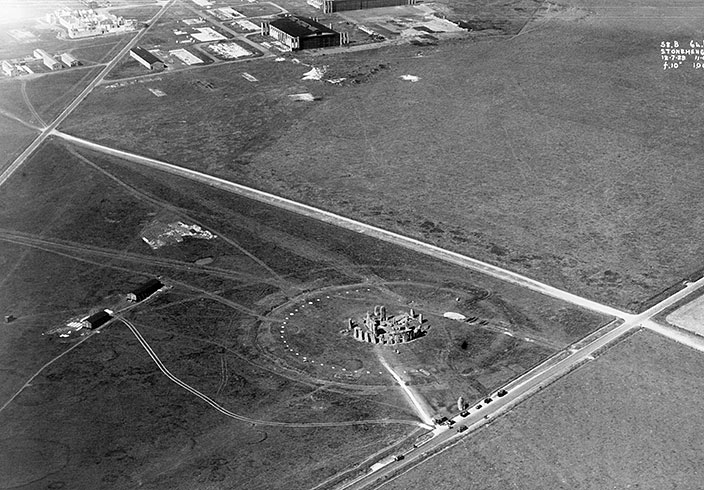
From here; Stonehenge in the 1930s and 40s: Protecting the Landscape - English Heritage Blog

stonehenge-and-aerodrome.jpg
This aerial view of Stonehenge, taken in July 1928, shows Hawley’s excavation huts to the south-east (left) of Stonehenge and the remaining aerodrome buildings in the distance (© Historic England Archive)
 
Note: This post was recovered from the Sh.org archive.
Username: KorbenDallas
Date: 2019-12-11 05:57:52
Reaction Score: 1
It’s all nice, and I believe could be legit as well. Only it does not answer why the Stonehenge is not there in 1954. Instead we have a bare field free of any signs of the Stonehenge.

This Japanese guy raises similar questions, and points out a few interesting details.

 
Note: This post was recovered from the Sh.org archive.
Username: jd755
Date: 2019-12-11 08:31:42
Reaction Score: 1
Who would build an aerodrome so close to an ancient monument in an area of military significance?
The story is a private pilot bought land built a hangar then the government/military took it over. Does that ring true or feel likely?
Back when this was going on, 1920's apparently people could walk up to the stones clamber over them touch them despite them.
Also 'after excavation' some stones had concrete poured round their bases to stabilise them does that feel likely?
However long these things may have been upright they managed perfectly well the art of standing and instead of falling over. Due to unknown circumstances they leaned over a bit alowing preservationists to push them back up straight and pour their concrete.
What if the 'original builders' designed the groundwork in the chalk so the stone was meant to lean?
What if it was designed as an atristic landscape piece from the get go?
That scenario raises the question of how they moved and erected the things and does nothing to answer wheen vut us as viable as any other.

As mentioned a few times stone is undaterable. It cannot be time stamped. Neither can the concrete put into the bases of the stones. An date given to the working of stone is also supposition and is a guess nothing more. Everything about the thing in the official sources is questionable at best, at least the articles I've read are.

In the process of restoration the people designing the work process must have had a clear knowledge of the weight of these things, what rget are composed of, what is in the ground aka how the stones sit within the ground. Where it was safe to place machinerry, the places to attach the supporting frames, the secure lifting points, etc etc. How they got this knowledge I have been unable to fathom.

Where are the personal tales, stories, anecdotes of te archaeologists who worged on the digs?
Same goes for thise working on the restorations. Did working on the foremost henge site in the world' not merit an odd jotting or two or sense of pride where one would recant tales to family, friends or down the pub?

Were the restorers actually military personnel dressed in civvies for the purposes of the 1954 event?
We today are trained to see uniform of any sort as authority maybe it was the same in the 50's so to have the army in uniform would have been too much of a red flag. Supposition again for sure but nothing about this place and the events said to have occured there holds water.
 
Note: This post was recovered from the Sh.org archive.
Username: Feralimal
Date: 2019-12-11 09:10:24
Reaction Score: 0
That is a great video, and he puts together lots of evidence. I absolutely agree that in the 50s and perhaps earlier they 'reconstructed' the stones - and by that I mean repositioned and moved them. Perhaps 'they' would explain that as trying to prevent further deterioration of the monument, that some stones were liable to falling, etc.

I'm most interested in the idea that Stonehenge was created or moved from an entirely different location. He definitely presents an interesting idea when he shows an empty field with a distinctive tent-shaped pile of earth behind the field. He then shows another picture of Stonehenge which has a similar tent shaped pile of earth behind it. He says the existence of the distinctive pile of earth is conclusive proof that previously there was no Stonehenge at that location.

My position is that is certainly possible that this is the case, and that on the basis of those 2 photos there is some support. But, I think he is wrong to call the evidence 'conclusive'. Yes, it raises more questions, and it would be good to present all the questions together. However, the 2 photo are not enough to pass the threshold of proof for me that Stonehenge is new or moved though - it is NOT conclusive, despite the claim.

All I can comfortably say is that this site has been heavily 'renovated' and that lots of that renovation occurred in the 50s. Given the earlier photos/paintings it does not seem that it was created in the 50s - I think that claim can be dismissed. Re the claim of whether it was moved, there is probably more to be uncovered via analysis of the background topology - using the shape of background hills, roads etc, perhaps we could confirm or deny the 'move' idea.

Throughout, I bear in mind that photos can be manipulated or misused to present something other than the underlying reality. Eg, who says that photo of the pile of earth without Stonehenge in it, really is the same field? Could a small pile of earth trick us?

Overall, I accept there are problems with the current explanation of stones existing there for 4k years - it is clear that they moved lots of stones, 'fixed up' some of them, etc. I'd like to understand the justification that is given for those changes. My thinking would be that the more data we have on the official explanation the easier it will be to show the issues with it. Perhaps then we can get back to the underlying evidence, and see what narrative best fits that evidence.
 
Tips
Tips
Please respect our Posting Rules.
Back
Top