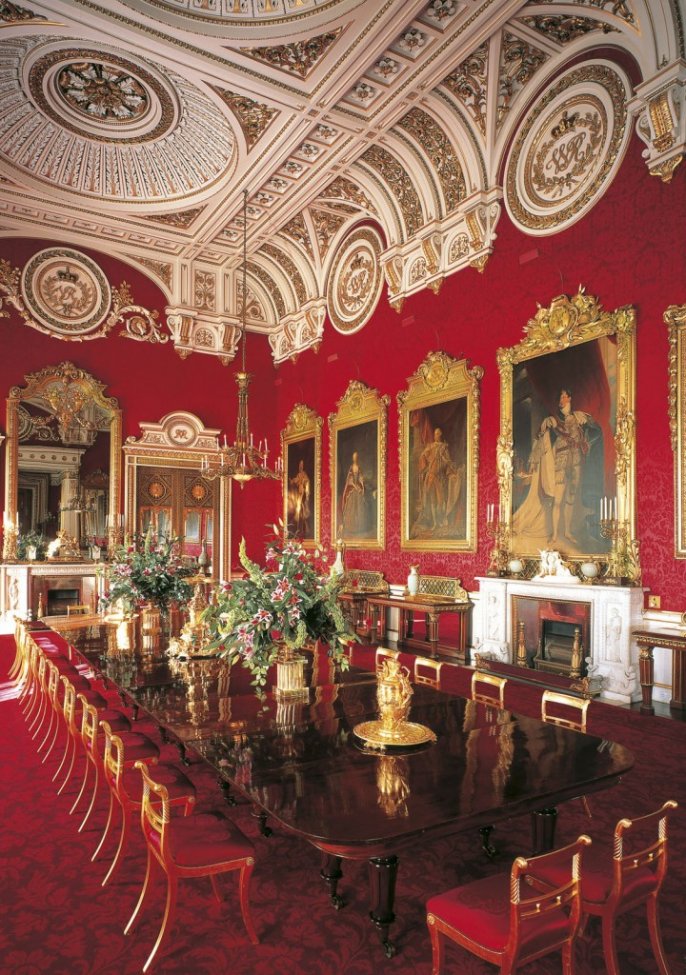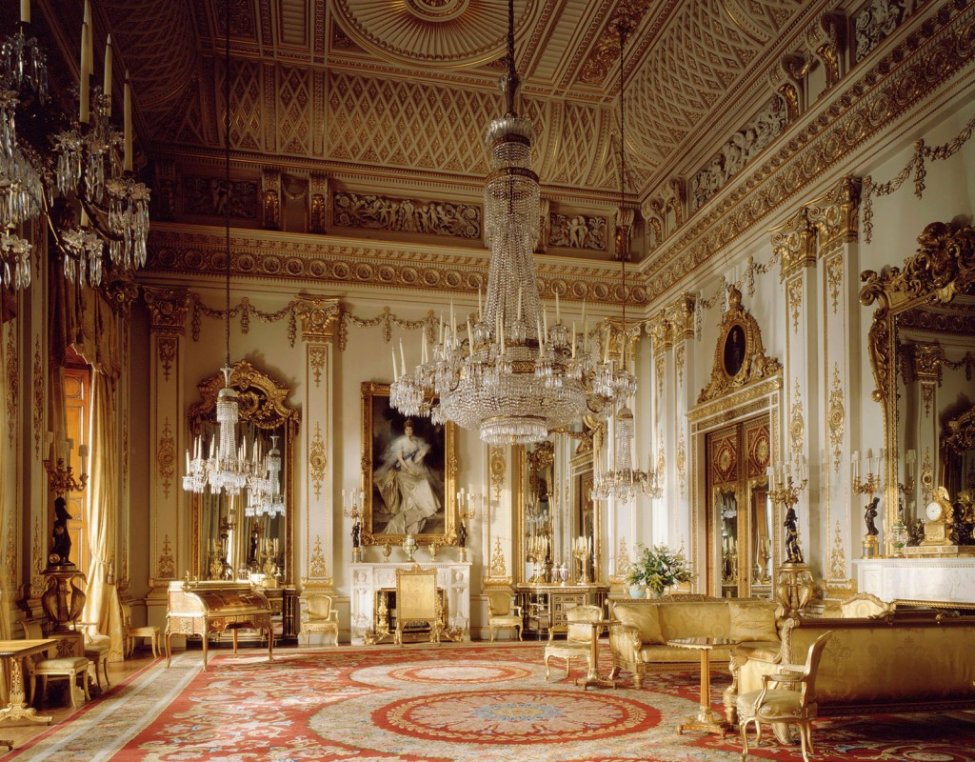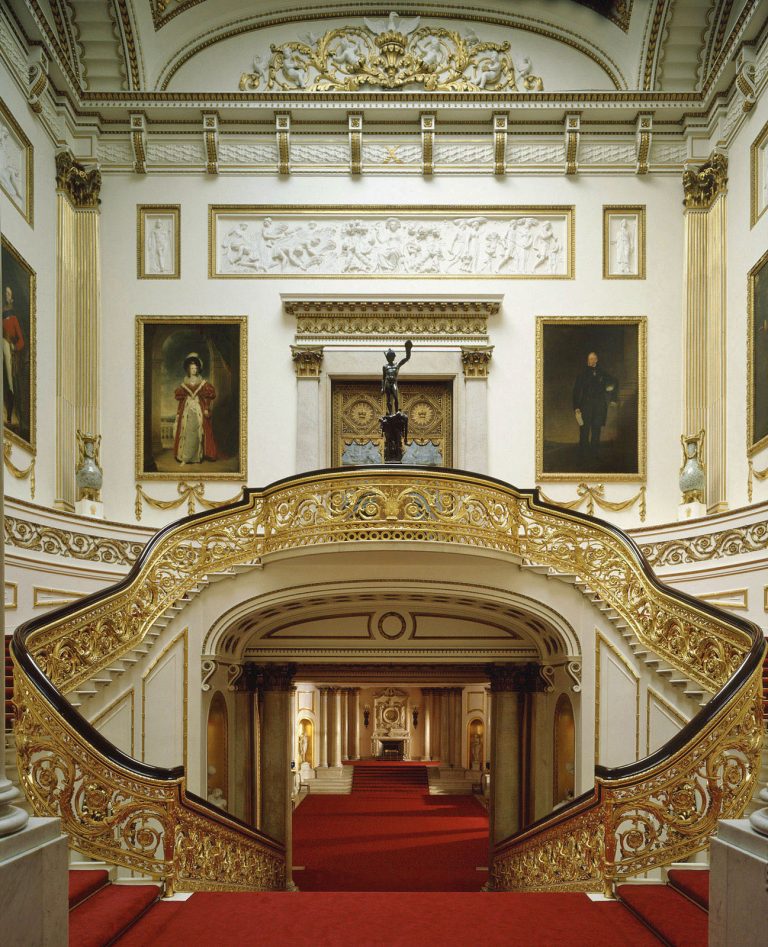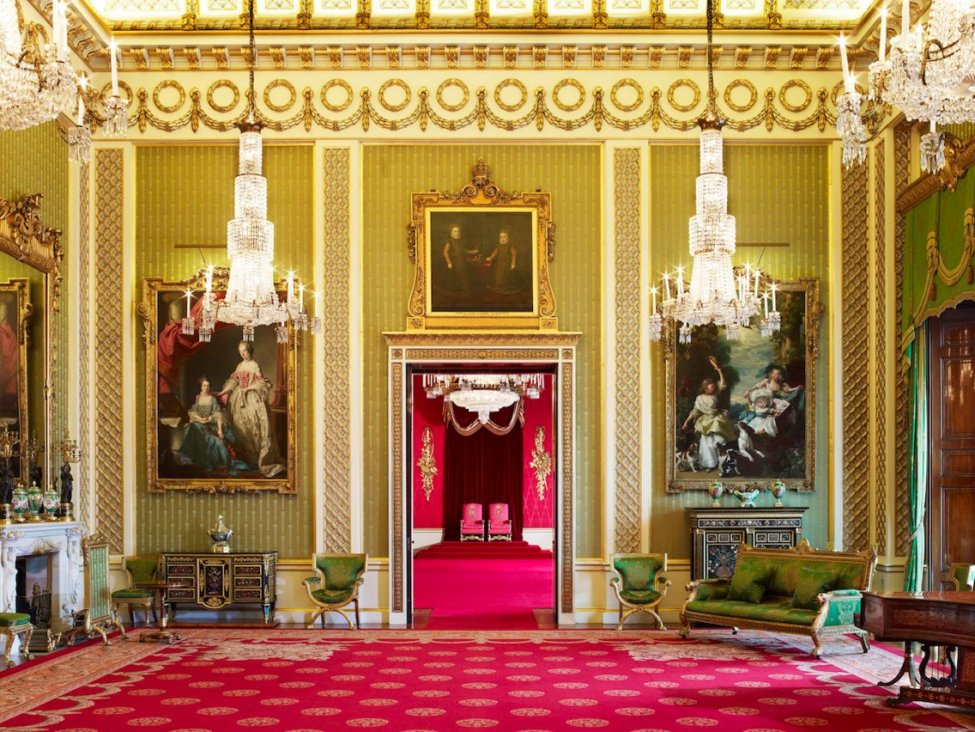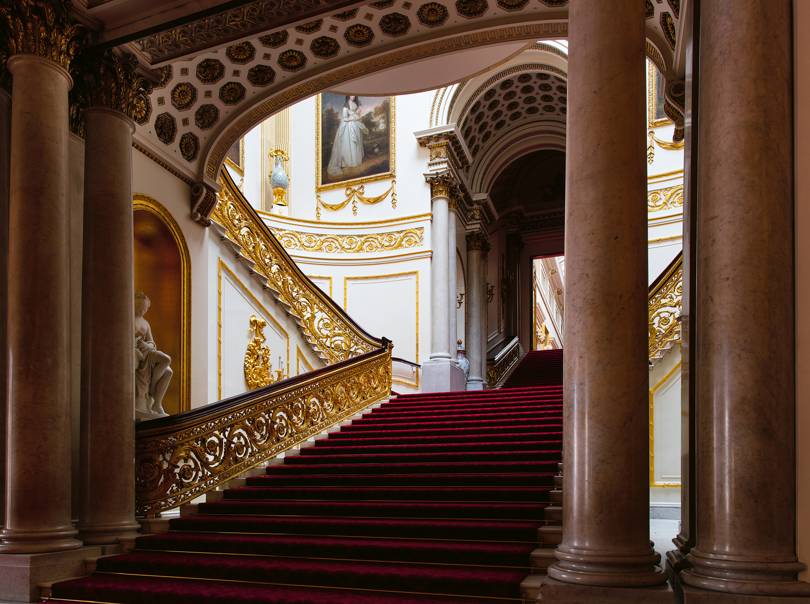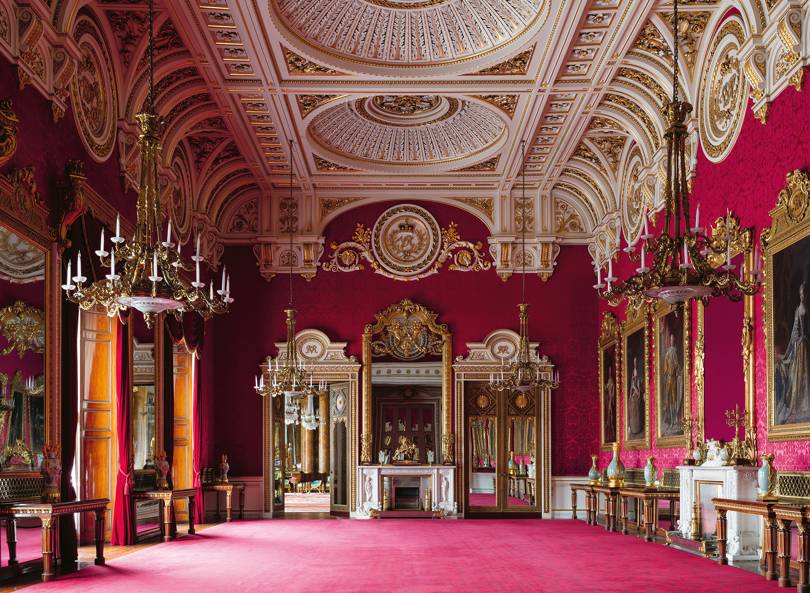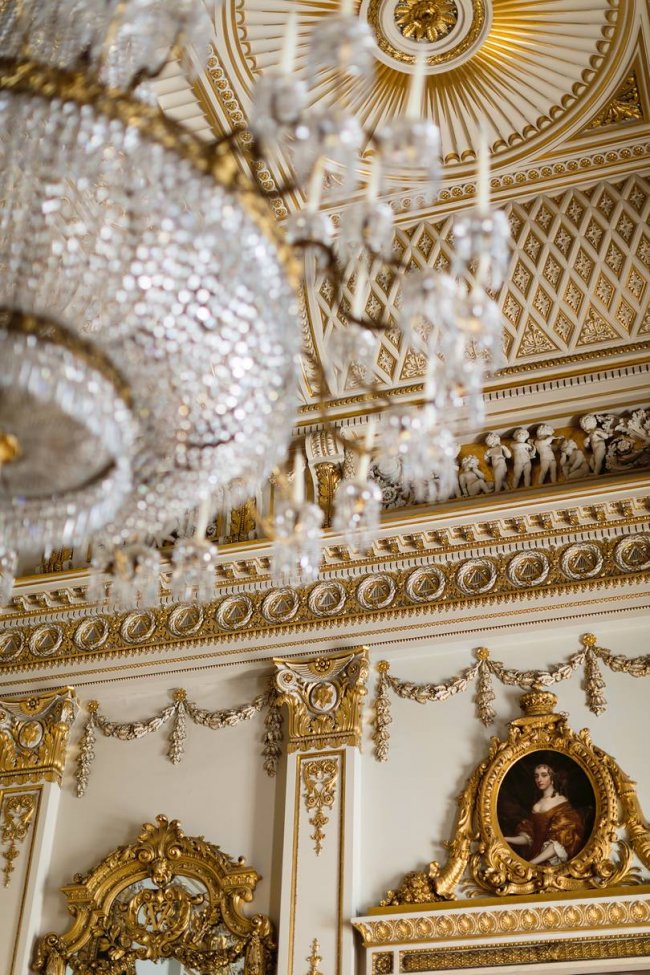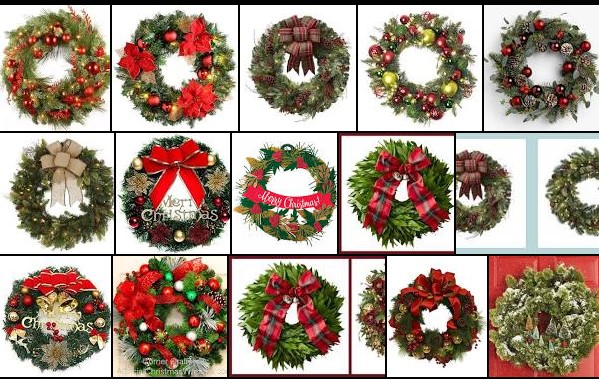
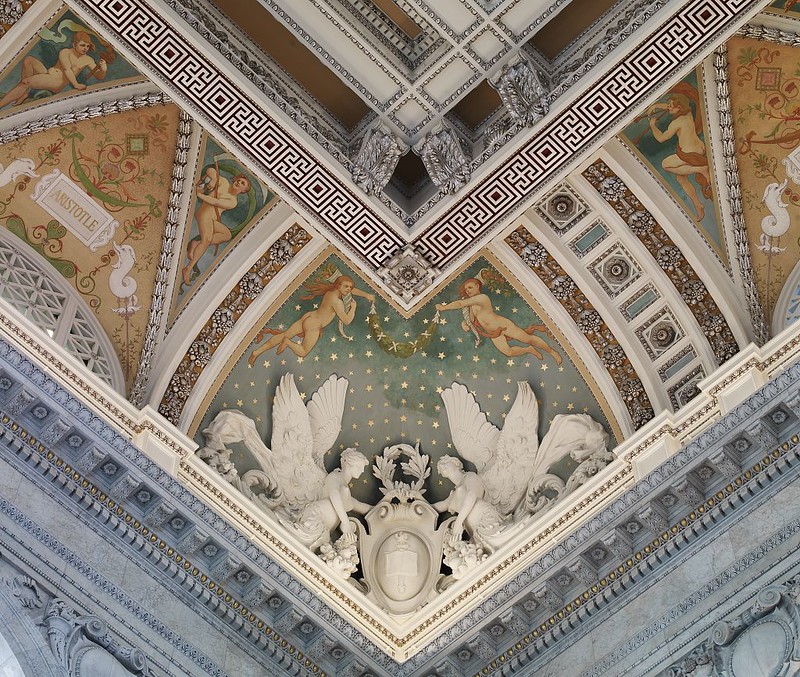
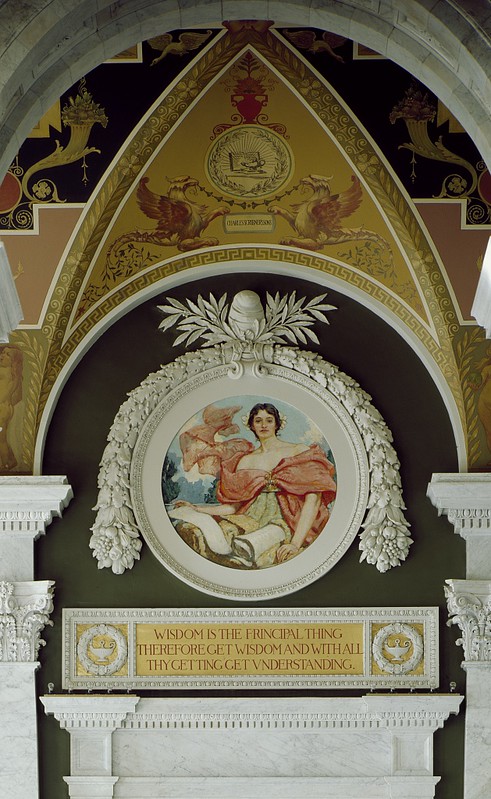
My fascination with decorative motifs that make no sense continues. The wreath and it's decorative friend, the garland, aren't just for Christmas. They show up all over the Library of Congress and other US Government buildings. Here are some of them from around the Jefferson Building of the LOC. I won't point the garlands and wreaths out since there are multiple examples in each photo.

Anyone watching the impeachment proceedings, will see them right there always lurking, with the fasces. Note the garland over the arched door. Nothing masonic about the two pillars surrounding the chairman. They do like their pillars in US Government design.

Then you saw the wreaths again in the main house chamber. And the pillars framing the speaker's chair. And a fasces with a garland draped on it. Wonder if that has any significance.


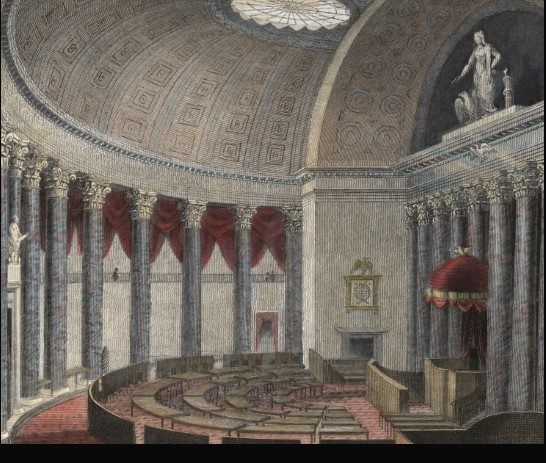
Here is the old chamber in what is now statuary hall. They has to move because of the echos. Almost like they were re-purposing a building that was used for something else. I see lady liberty shaking her finger at the legislators with what looks like an eagle and a fasces, but no wreaths, no garlands. This room was only used from 1819 to 1857, during our suspect reset period.
Oh wait, they kept lady liberty after all. She is shaking the constitution at us. And the fasces has a snake around it. Is this what the garland represents in the the picture above? One could definitely make that assumption. A lot less gripping from the masses over garlands versus a snakes, Garlands are little to pagan-y I guess.
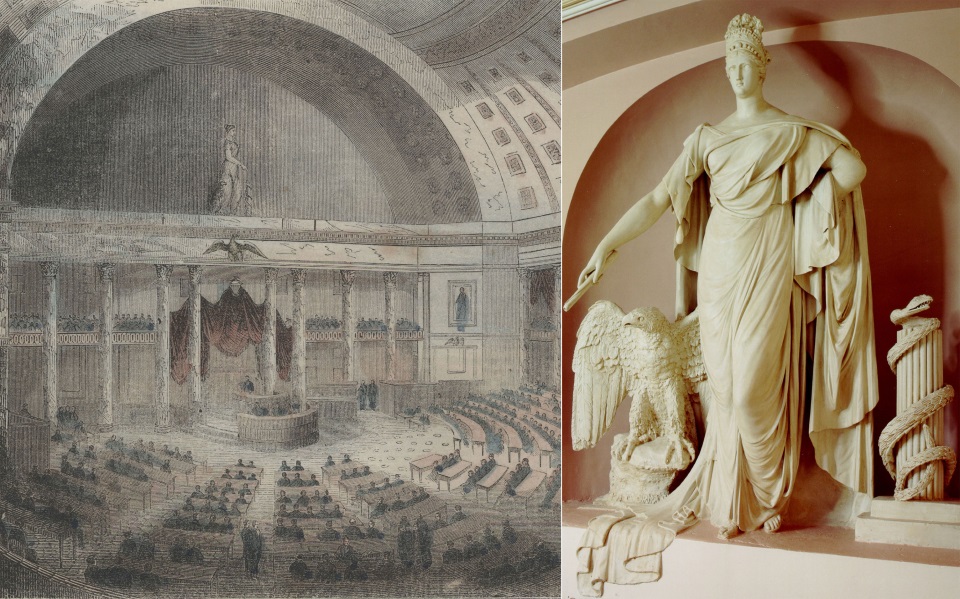
If you are curious to where the representatives met before this, I brought it up in the @BrokenAgate post about the Mormon Temple as the building was exactly like the Mormon Tabernacle Choir building. Also an obvious re-purposed building that makes no sense. They called it the oven!

ORIGINS OF THE WREATH
The word wreath comes from Middle English wrethe and from Old English writha, band.
 : The word is English but the wreath's origins seem to be Etruscan. Although there is evidence it is was used even earlier, here is the burial gear from Ur, Queen Puabi, who wore four wreaths and a bunch of other stuff.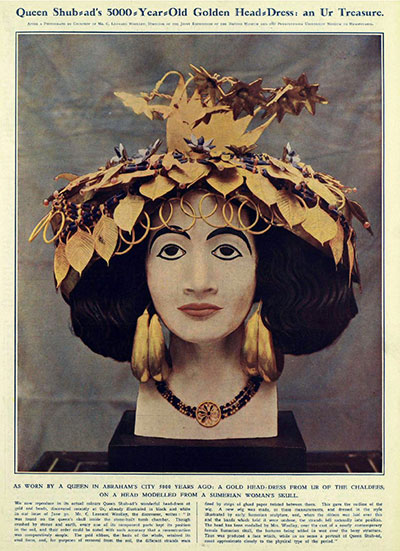
Ancient Roman writers referred to Etruscan corona sutilis, which were wreaths with their leaves sewn onto a background. These wreaths resemble a diadem, with thin metal leaves being attached to an ornamental band. Wreaths also appear stamped into Etruscan medallions. The plants shown making the wreaths in Etruscan jewelry include ivy, oak, olive leaves, myrtle, laurel, wheat and vines.
sultis is latin for sewn or bound together and corona is latin for the crown. So we have the sewn crown. I always associated the corona with the glow around the sun. We'll have to see if there are any other sun associations with the wreath. El-it-epedia says this about the corona :A corona (meaning 'crown' in Latin derived from Ancient Greek 'κορώνη' (korōnè, “garland, wreath”)) is an aura of plasma that surrounds the Sun and other stars. The Sun's corona extends millions of kilometres into outer space and is most easily seen during a total solar eclipse, but it is also observable with a coronagraph.
Wreaths were worn as crowns by Etruscan rulers. The Etruscan symbolism continued to be used in Ancient Greece and Rome. Roman magistrates also wore golden wreaths as crowns, as a symbolic testament to their lineage back to Rome's early Etruscan rulers. Roman magistrates also used several other prominent Etruscan symbols in addition to a golden wreath crown: fasces, a curule chair, a purple toga, and an ivory rod.
sighs: Purple toga, wonder if they know the Phoenicians?.... Phoenicians=Etruscans? I think someone made that argument somewhere here on SH but I am too lazy to seek it out.Here are some of the Etruscan models: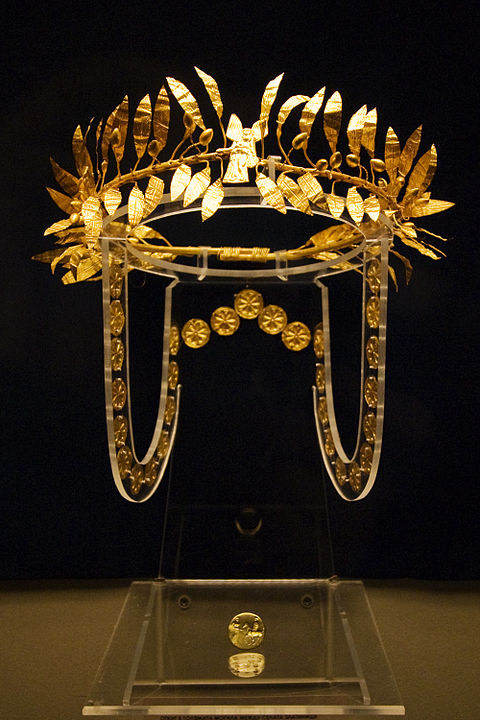
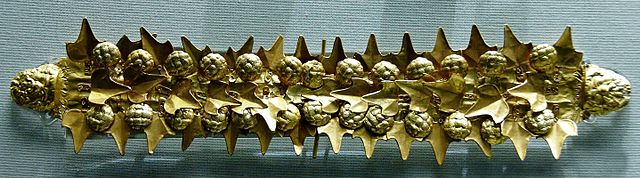
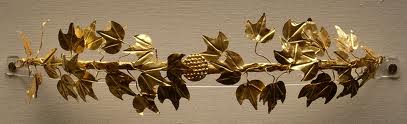
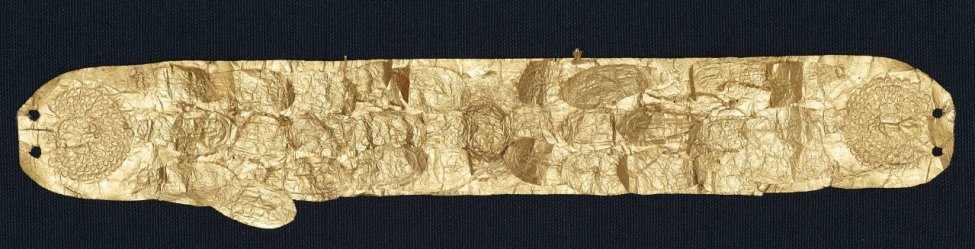
More Etruscan wreaths
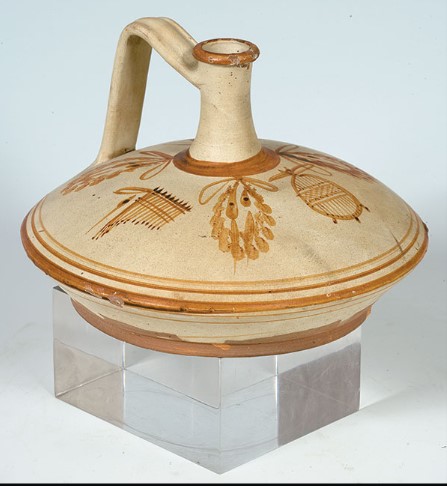
In the Greco-Roman world, wreaths were used as an adornment that could represent a person’s occupation, rank, their achievements and status. Here is a pot with wreaths and musical instruments as the motif.
The wreath that was commonly used was the laurel wreath. The use of this wreath comes from the Greek myth involving Apollo, Zeus’ son and the god of life and light, who fell in love with the nymph Daphne. When he pursued her she fled and asked the river god Peneus to help her. Peneus turned her into a laurel tree. From that day, Apollo wore a wreath of laurel on his head. Laurel wreaths became associated with what Apollo embodied; victory, achievement and status and would later become one of the most commonly used symbols to address achievement throughout Greece and Rome. Laurel wreaths were used to crown victorious athletes at the original Olympic Games and are still worn in Italy by university students who just graduated.
: So a laurel wreath is associated with the sun and metamorphoses. Why would it signify achievement and victory? In the story, Apollo lost, he did not achieve his goal nor was he victorious over Daphne. Makes no sense to me.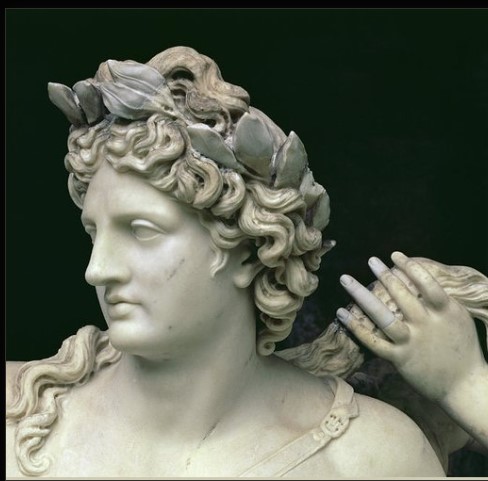
Zeus is also associated with oak wreath crowns, which symbolize wisdom because he made his decisions in an oak grove.
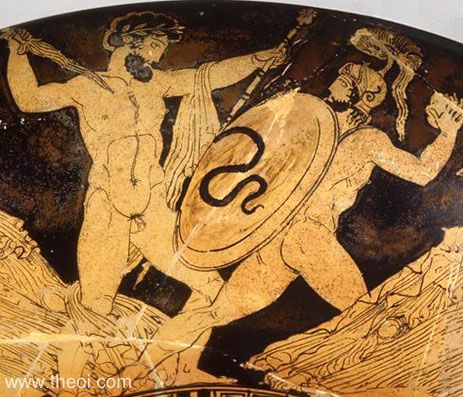
Law XII. Large wreaths shall not be borne at a funeral; nor shall perfumes be burned on the altars.
"Longæ Coronæ." This term, while obscure, would seem to refer to garlands of excessive size, exhibited by way of pomp and ostentation at the celebration of funeral rites. The greater part of the legislation of this Table was evidently framed for the correction of the inordinate display of wealth and luxury already becoming prevalent at the burial of the dead.
Law XIII. Anyone who has rendered himself deserving of a wreath, as the reward of bravery in war, or through his having been the victor in public contests or games, whether he has obtained it through his own exertions or by means of others in his own name, and by his own money, through his horses, or his slaves, shall have a right to have the said wreath placed upon his dead body, or upon that of any of his ascendants, as long as the corpse is at his home, as well as when it is borne away; so that, during his obsequies, he may enjoy the honor which in his lifetime he acquired by his bravery or his good fortune.
: No reasons were found by this researcher for why the Romans associated the wreath with death but we still use wreaths to honor the dead. The el-ites like to lay them at cenotaphs and unknown soldier eternal flame type spots.Let's not forget the definition of the word itself.
Bonus from the 12 Tablets:
Purple robes again. Law VII. When a corpse is prepared for burial at home, not more than three women with their heads covered with mourning veils shall be permitted to perform this service. The body may be enveloped in purple robes, and when borne outside, ten flute players, at the most, shall accompany the funeral procession.
Law XI. No wine flavored with myrrh, or any other precious beverage, shall be poured upon a corpse while it is burning; nor shall the funeral pile be sprinkled with wine.
: Wonder if the three magi dropped off the myrrh...In Ancient Greece, the harvest wreath was a sacred amulet, using wheat or other harvested plants, woven together with red and white wool thread. The harvest wreath would be hung by the door year-round. Harvest wreaths were an important symbol to the community in Ancient Greece, not merely to the farmer and his family. The festivals devoted to Dionysus, the Oschophoria and Anthesteria, included a ritual procession called the eiresîonê. A harvest wreath was carried to Pyanopsia {Festival for Apollo} and Thargelia {Festivals for Delian Apollo and Artemis} by young boys, who would sing during the journey. The laurel or olive wreath would be hung at the door, and then offerings were made to Helios and the Hours. It was hoped that this ritual would bring protection against crop failure and plagues
: Sun godapalooza associated with the wreath in Greece.So at this point you are thinking, well Christmas was aligned with pagan holidays dedicated to Saturn (the first sun) so it makes sense that the wreath would carry over. Except the wreath was not associated with Christmas officially until.... 1839.
According to the official narrative below, the advent wreath is around in the 1500s but not officially noted until the 19th century. What prompted 16th century Lutherans to start using the advent wreath is unknown, I guess, since motive is not ascribed until the 1839 tall tale. Another symbol with yet another suspicious origin story.
directly from el-ite-epedia:
The Advent wreath was first used by Lutherans in Germany in the 16th century, and in 1839, Lutheran priest Johann Hinrich Wichern used a wreath made from a cart wheel to educate children about the meaning and purpose of Christmas, as well as to help them count its approach, thus giving rise to the modern version of the Advent wreath. For every Sunday of Advent, starting with the fourth Sunday before Christmas, he would put a white candle in the wreath and for every day in between he would use a red candle.
There is already a great post by KD about the Saturnalia origins of Christmas here. December 25th was also the festival of Dies Natalis Solis Invicti. Here is Christ the Sun God, el-ite-pedia calls it ChristAsSol from the Tomb of Julii
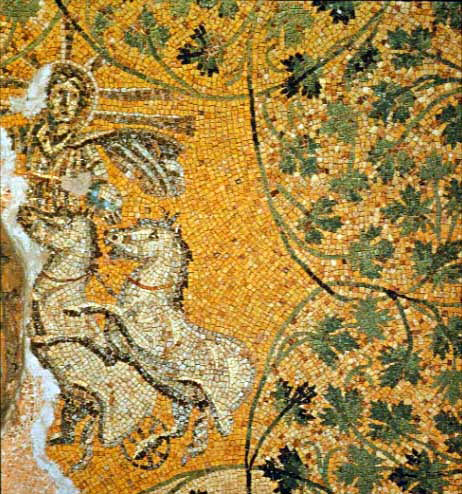
And here with the halo(or corona=wreath) pictured as a parhelion or sun cross. So maybe not so far fetched to associate him with the wreath.
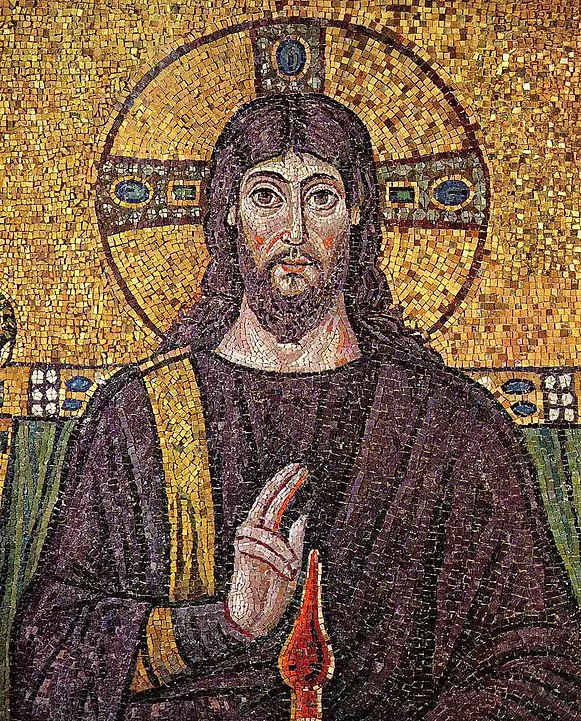
He is the sun of God. Like Apollo, Mithras, Sol Invictus, Helios......
The wreath is important enough to be features on several Tarot cards, just to make sure we hit all the occult bases.
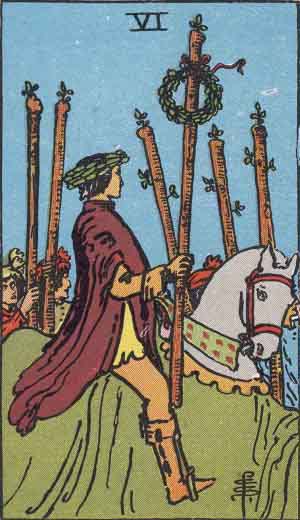
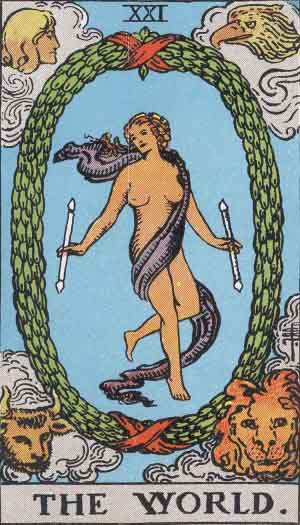
So back to politics and the wreath
By the Renaissance period, wreaths became symbols of political and religious alliances in England. During the Interregnum following the overthrow of Charles I of England, wreaths symbolized Royalist sympathies. In Bath, Somerset, the coronation of Charles II of England was marked with a procession of 400 maidens in white and green, carrying "gilded crowns, crowns made of flowers, and wreaths made of laurel mixed with tulips", and led by the mayor's wife.
Well that should explain why the US decided to put wreaths and garlands an every public building in Washington DC after 1850.
ORIGINS OF THE GARLAND
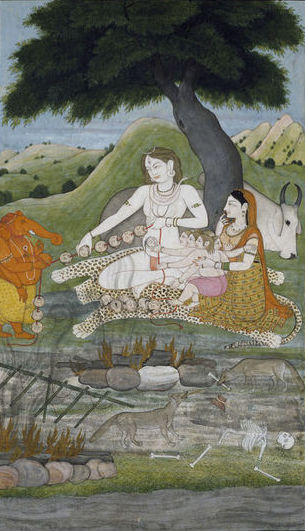
: Although seemingly European, the garland is a worldwide trend. The flowery Lei in Hawaii is the most familiar to us westerners but the garlands are widely used in India, both flower garlands and these lovely ones, called mundamala, around the necks of Hindu gods. The third pic is Shiva and family makig the mundamala while on a picnic. Family time is important.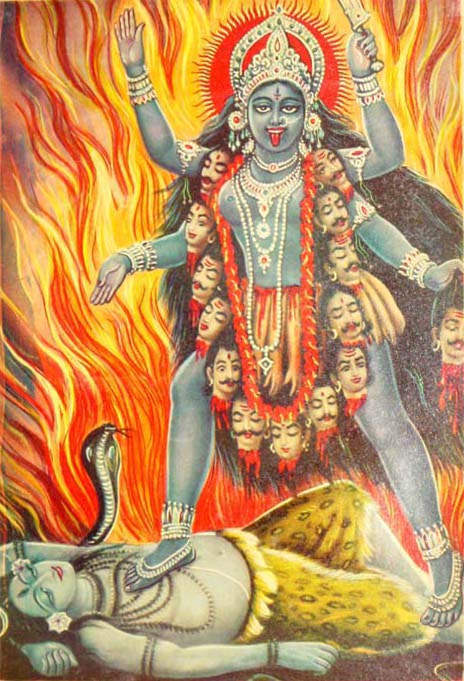
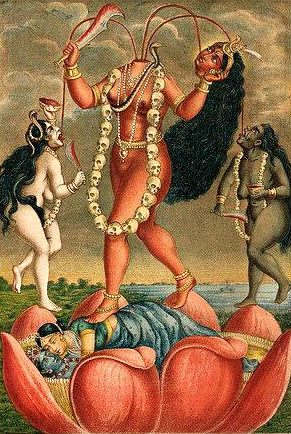
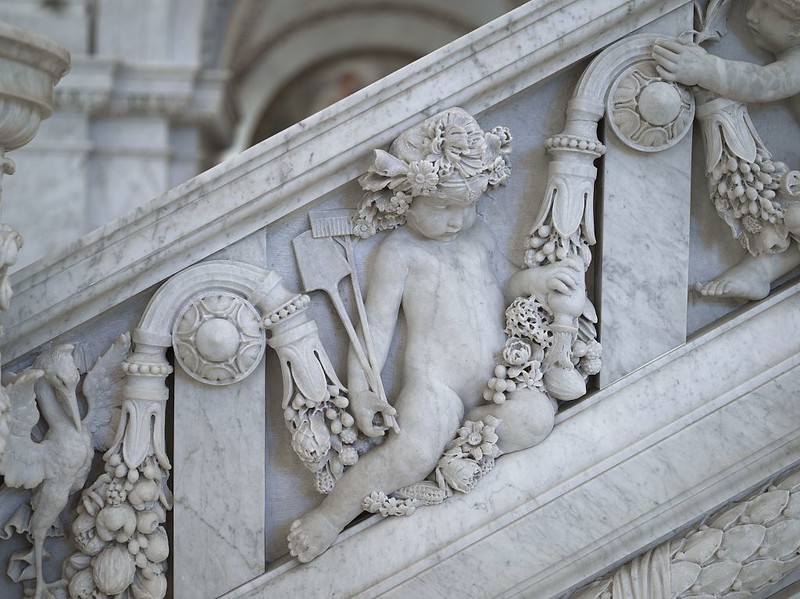
These garlands from the Jefferson building look more like Cornucopias to me.
Other strangeness with Christmas symbols and traditions.
 The custom of sending Christmas cards was started in the UK in 1843 by Sir Henry Cole. He was a senior civil servant (Government worker) who had helped set-up the new 'Public Record Office' (now called the Post Office), where he was an Assistant Keeper, and wondered how it could be used more by ordinary people. As printing methods improved, Christmas cards became much more popular and were produced in large numbers from about 1860. : He had his friend an artist make them up and then they sold them for profit. The commercialization of Christmas began so long ago. Christmas trees were a custom in German Protestant homes in medieval (again, sometime vaguely in the 16th century) times but didn't become popular outside Lutheran Germany and Baltic countries until... the second half of the 19th century. Modern tinsel was invented in Nuremberg around 1610. Tinsel was originally made from extruded strands of silver. Because silver tarnishes quickly, other shiny metals were substituted. Before the 19th century, tinsel was used for adorning sculptures rather than Christmas trees. It was added to Christmas trees to enhance the flickering of the candles on the tree. Tinsel was used to represent the starry sky over a Nativity scene.
 Another item that became associated with Christmas in the 1800s.
It was so popular that they would use it to decorate prints , Here is Madame Vestris as Apollo from England 1837-1840. Note the wreath around the sun scepter in her hand.
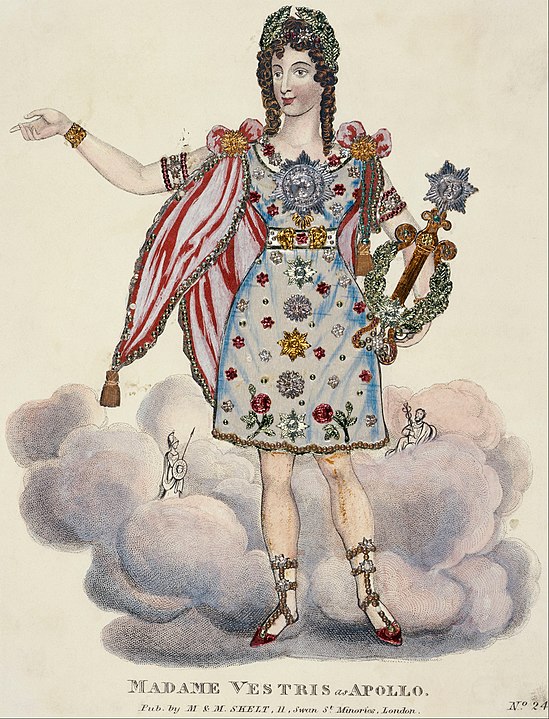
Apollo? The sun again and stars again.
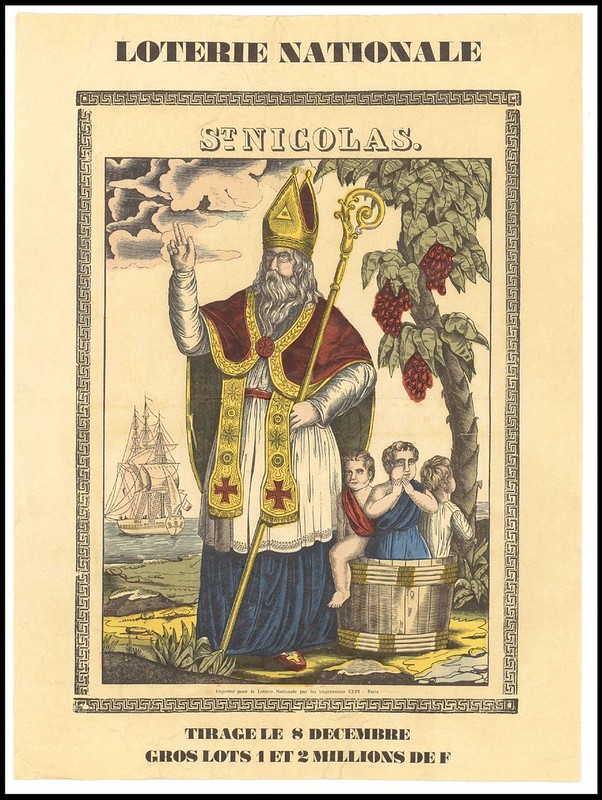
Christmas crackers are a traditional Christmas favorite in the UK. They were first made in about 1845-1850 by a London sweet maker called Tom Smith. He had seen the French 'bon bon' sweets (almonds wrapped in pretty paper) on a visit to Paris in 1840. The earliest connection of Christmas and eggnog is from the Virginia Chronicle in 1793. The poinsettia was made widely known because of a man called Joel Roberts Poinsett (that's why we call them Poinsettia!). He was the first Ambassador from the USA to Mexico in 1825. Poinsett had some greenhouses on his plantations in South Carolina, and while visiting the Taco area in 1828, he became very interested in the plants. He immediately sent some of the plants back to South Carolina, where he began growing the plants and sending them to friends and botanical gardens. : How they became associated with Christmas is an old Mexican Legend. I was always told they were Christmas related because their leaves do not turn red until the plants are in the dark for 14 hours a day for about 8 weeks, which occurs around the solstice. Same with the christmas cactus but that isn't as cute as the Mexican legend. Christmas bells also became tradition in Victorian times (1837-1910). In Victorian times, it was very fashionable to go carol singing with small handbells to play the tune of the carol. Sometimes there would only be the bells and no singing! Handbell ringing is still popular today.Perhaps the most famous bells at Christmas now are the ones in the song 'Jingle Bells'. However, the song was first called "One Horse Open Sleigh" and was originally published, in the USA, in September 1857 as a Thanksgiving song. The Candy Cane begins in the 1600s with a tall tale in Germany. Here is El-ite-epedia's nonsense: According to a folklore, in 1670, in Cologne, Germany, the choirmaster at Cologne Cathedral, wishing to remedy the noise caused by children in his church during the Living Crèche tradition of Christmas Eve, asked a local candy maker for some "sugar sticks" for them. In order to justify the practice of giving candy to children during worship services, he asked the candy maker to add a crook to the top of each stick, which would help children remember the shepherds who visited the infant Jesus. In addition, he used the white colour of the converted sticks to teach children about the Christian belief in the sinless life of Jesus. From Germany, candy canes spread to other parts of Europe, where they were handed out during plays reenacting the Nativity. As such, according to this legend, the candy cane became associated with Christmastide. That is the folklore. Then they say it was not until 1837 that stick candy is mentioned. Then in 1844 a recipe for straight candy sticks with colored stripes. The candy cane is mentioned in literature in 1866 and first associated with Christmas in 1874. This pattern of early vague origins, usually in the 1600s to Christmas tradition in the 1800s getting to anyone else? After looking into this stuff, I thought the candy cane represented the crozier/staff of St. Nicholas.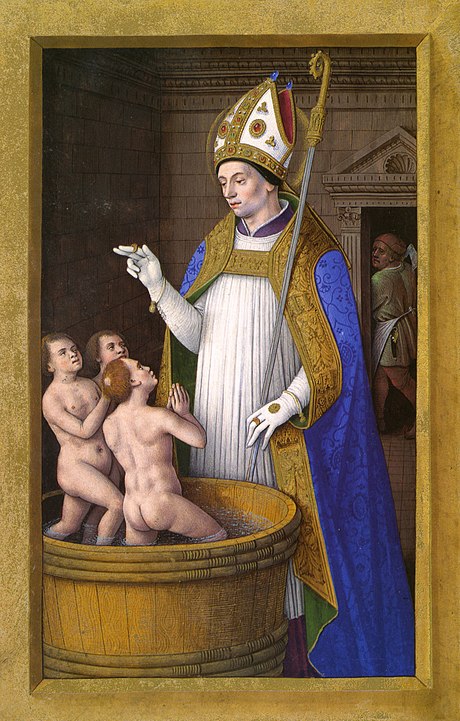
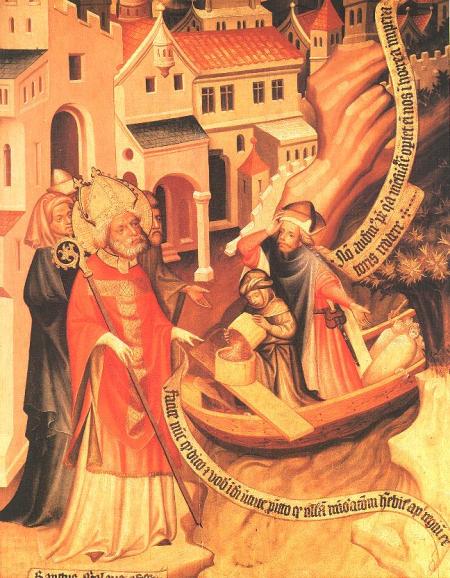
Yeah, he has the glove, the ring and the magic crozier. Must be were his magic powers come from... Below the cloth grab version with the Mercury style cozier.
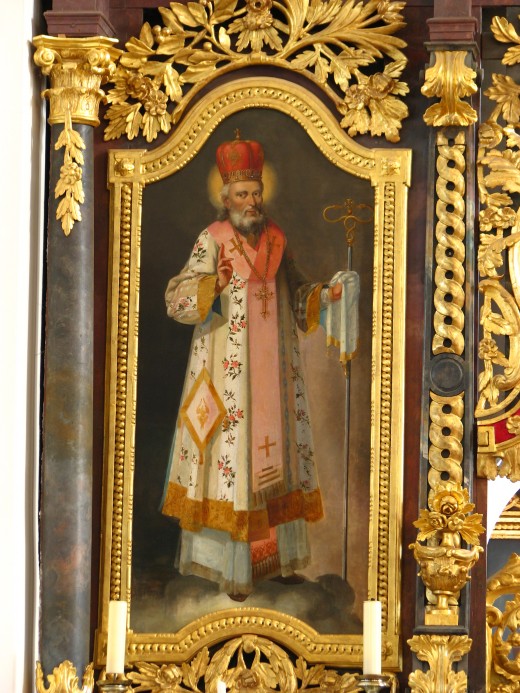 Mistletoe is also associated with pagan gods - Nordic, Celtic (semen of Taranis!), Druid, Greece and Rome. It does have roots with the pre-Christian practice of the Saturnalia. The Romans associated mistletoe with peace, love and understanding and hung it over doorways to protect the household. Hanging mistletoe was part of the Saturnalia festival. Of course, it did not become associated with Christmas until the 18th century. A little earlier than the other trimmings but not by much. : Read some strange stuff about mistletoe here including the origin of the word - mistle means shit and tan means twig or stick. So mistletoe is literally a shit stick. Sure makes me want to kiss somebody. Carols were first sung in Europe thousands of years ago, but these were not Christmas Carols. They were pagan songs, sung at the Winter Solstice celebrations as people danced round stone circles. The Winter Solstice is the shortest day of the year, usually taking place around 22nd December. The word Carol actually means dance or a song of praise and joy! Carols used to be written and sung during all four seasons, but only the tradition of singing them at Christmas has really survived. Of course el-ite-epedia says; The publication of Christmas music books in the 19th century helped to widen the popular appeal of carols..... The publication in 1871 of Christmas Carols, New and Old by Henry Ramsden Bramley and Sir John Stainer was a significant contribution to a revival of carols in Victorian Britain .,, Antiquarians in the 19th-century rediscovered early carols in museums. According to the Encyclopædia Britannica, about 500 have been found. Some are wassailing songs, some are religious songs in English, some are in Latin, and some are "macaronic" — a mixture of English and Latin .... The first version of Santa Claus that don't look like the Bishop St Nicholas appeared in a children's book in 1821. Nice antiquitech behind him.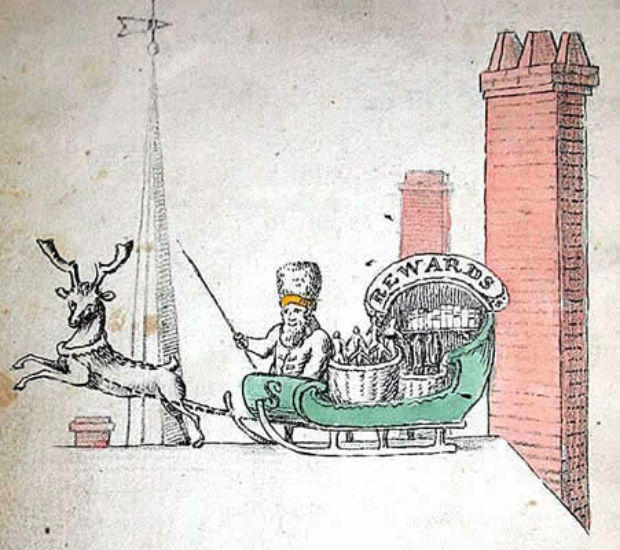
It is Thomas Nast's Civil War era drawings that really start to form the character we know today.
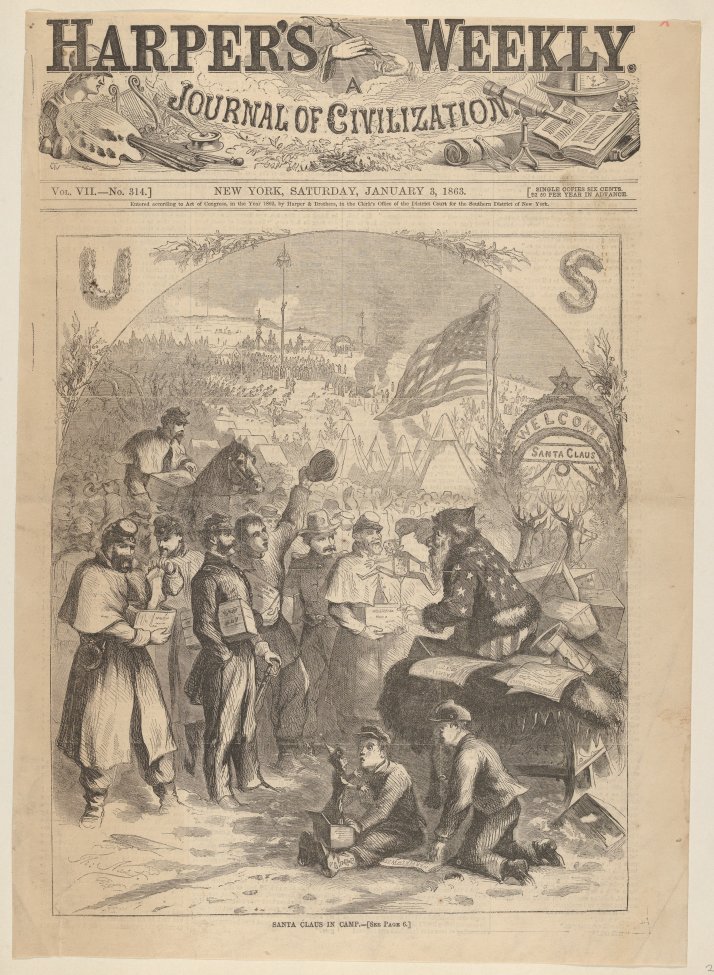

Thumbnail with better details of characters.
Y'all should remember Thomas Nast as the guy who popularized Uncle Sam over the earlier personification of the Unites States, Brother Jonathan. He also was the first to represent the democrats with a donkey and republicans with a elephant. Nast really came up a lot of American symbols in the 1800s. Eventually, Santa Claus stops looking like he made his outfit out of an American flag and starts to look more like he does today thanks to Nash. Here he is in 1881.
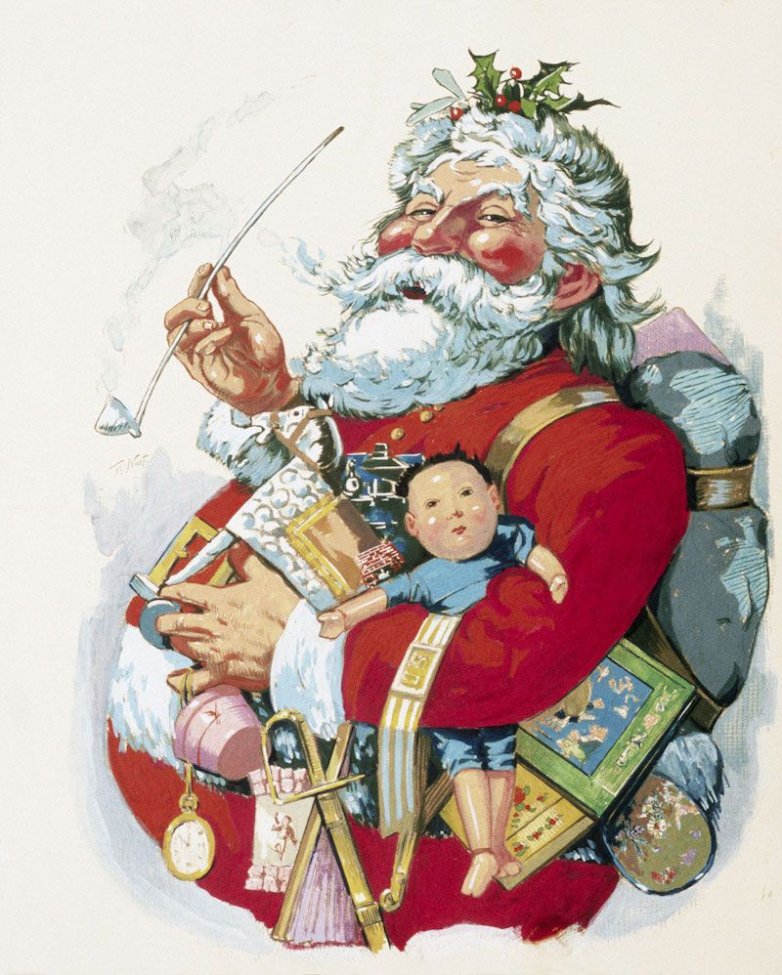
Here is an article from Smithsonian Magazine about the "Santa deity" -their words --and Propaganda. They should know about propaganda.
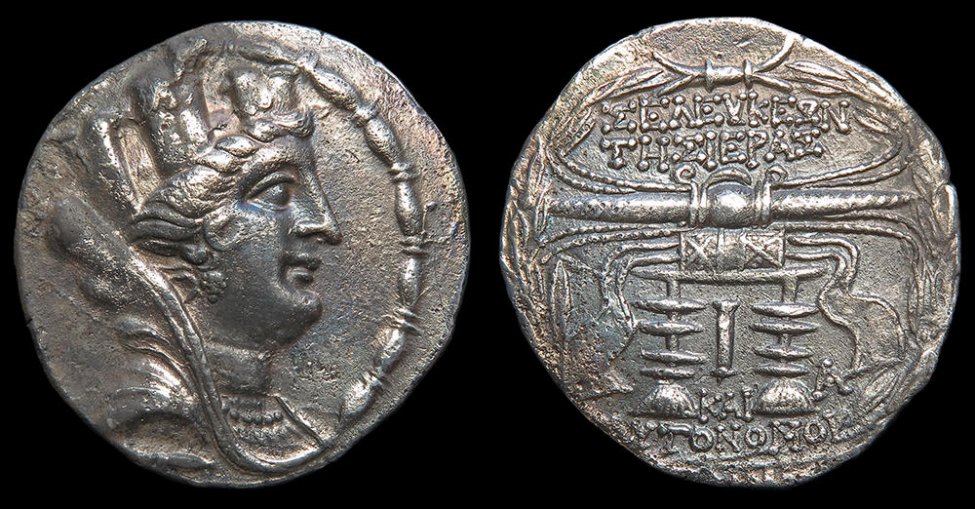
With that out of my system, back to wreaths. Why the symbol of the wreath and garland are so important that we use it today? Whether gracing the halls of government, places of death, and your front door, the el-ites must want us to see it. They put it on coins in ancient times. Here with a thunderbolt and some sort of towers that that look like something is flowing from a device on top of them. Lots more ancient wreath coins here.
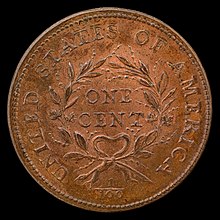
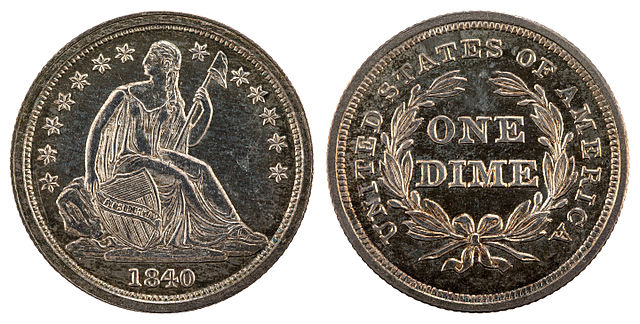
Here it is on the reverse of some US coins:
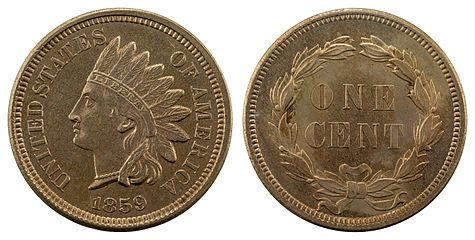
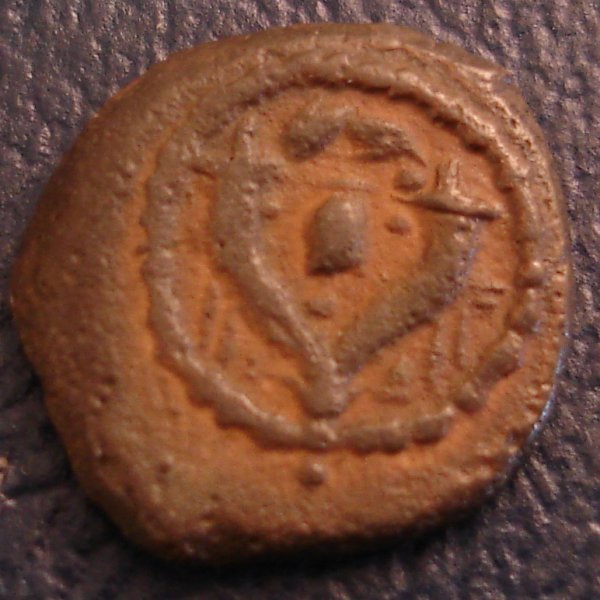
And of course, the wreath should be paired with a couple of cornucopia just to complete the loop of strange motifs. On a coin.
So I'll quote from the poem "A Visit from St. Nicholas", written in 1823 of course : Merry Christmas To All and to All a Good Night!
Plissken
Note: This OP was recovered from the Sh.org archive.
Note: Archived Sh.org replies to this OP are included in this thread.