Note: This post was recovered from the Sh.org archive.Username: Silvanus777Date: 2018-11-25 12:07:46Reaction Score: 6
KD,
I highly recommend looking into the etchings of Giovanni Battista Piranesi (1720-1778). He came to Rome in the 1740 and around 1748 he started producing and publishing etchings depicting Rome with its manifold ruins, also its contemporary buildings as well as countless (alledged??) archeological findings made there during his day.
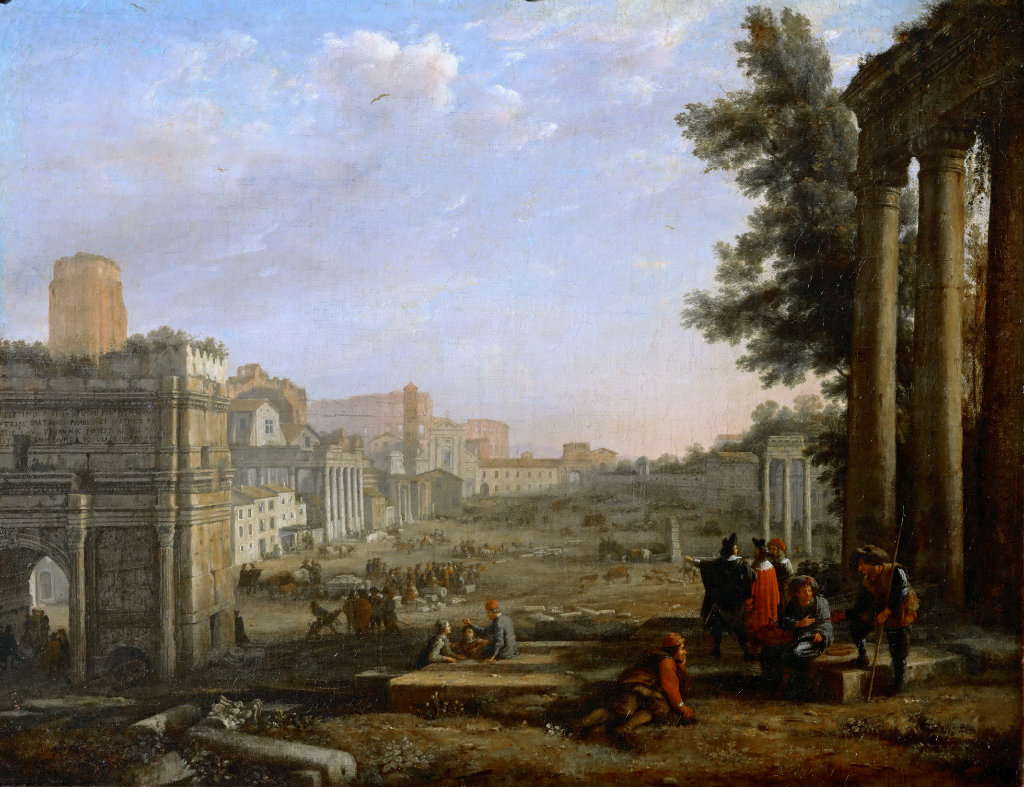
Now considering Piranesi depicted the state of affairs in Rome no earlier than when he first arrived there in 1740, have a look at his etching of the same Campo Vaccino ("cow pasture" - very eminent name there, haha) you showed in the Lorrain artwork:
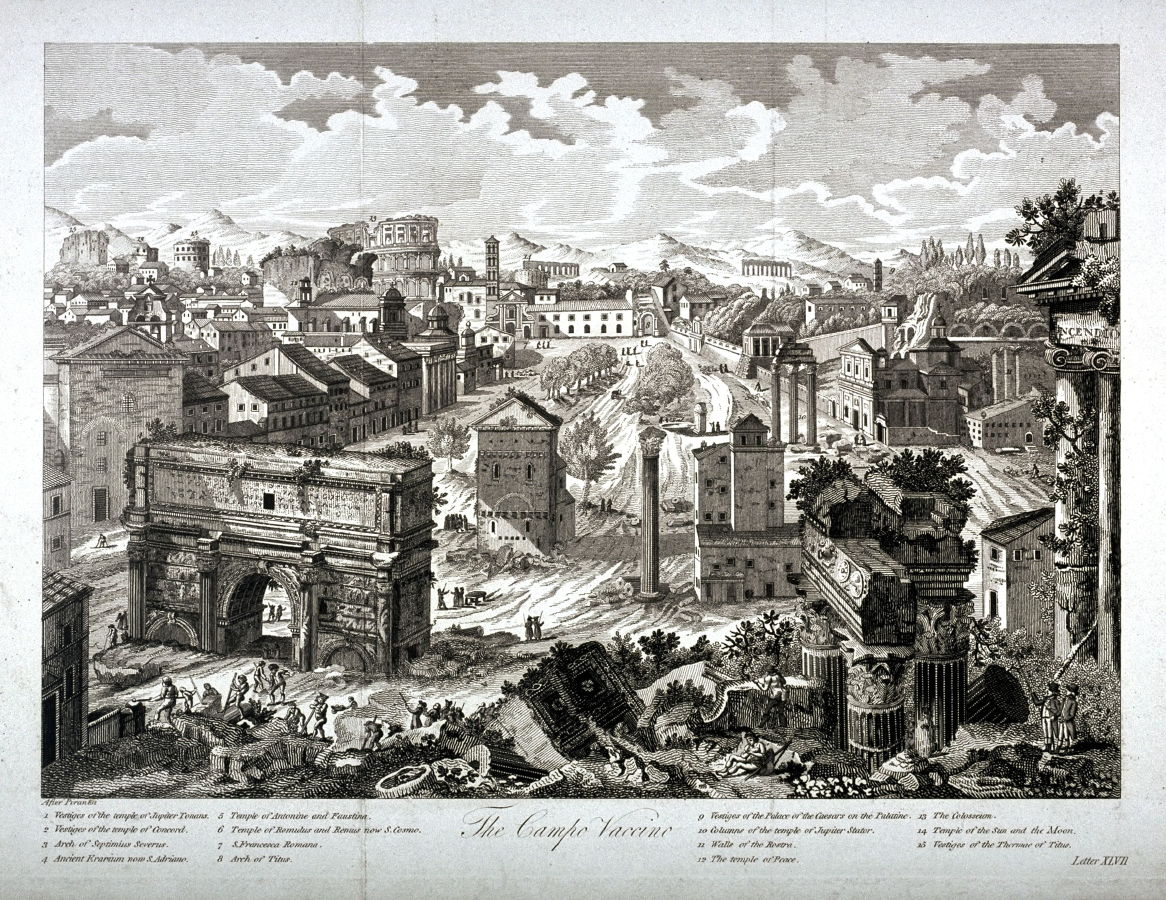
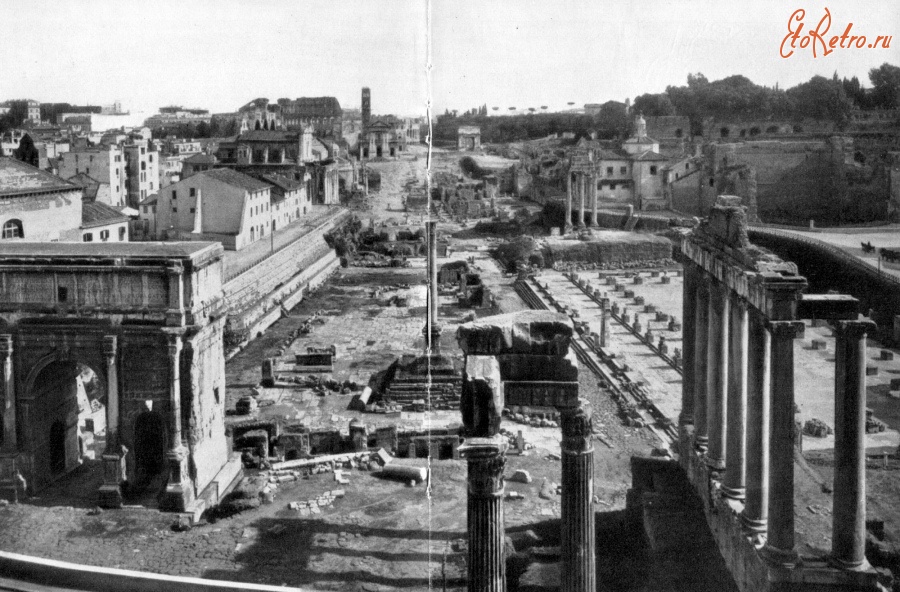
Well, if the above scene would not fit the bill of "mud flood", for lack of a better term, I don't know what does. One can see an impressive mud flow pouring down through the "Campo" towards the Arch of Septimius Severus and the viewer. The Arch is about 1/3 buried in the mud (see this impressively demonstrated in the comparison image below)...
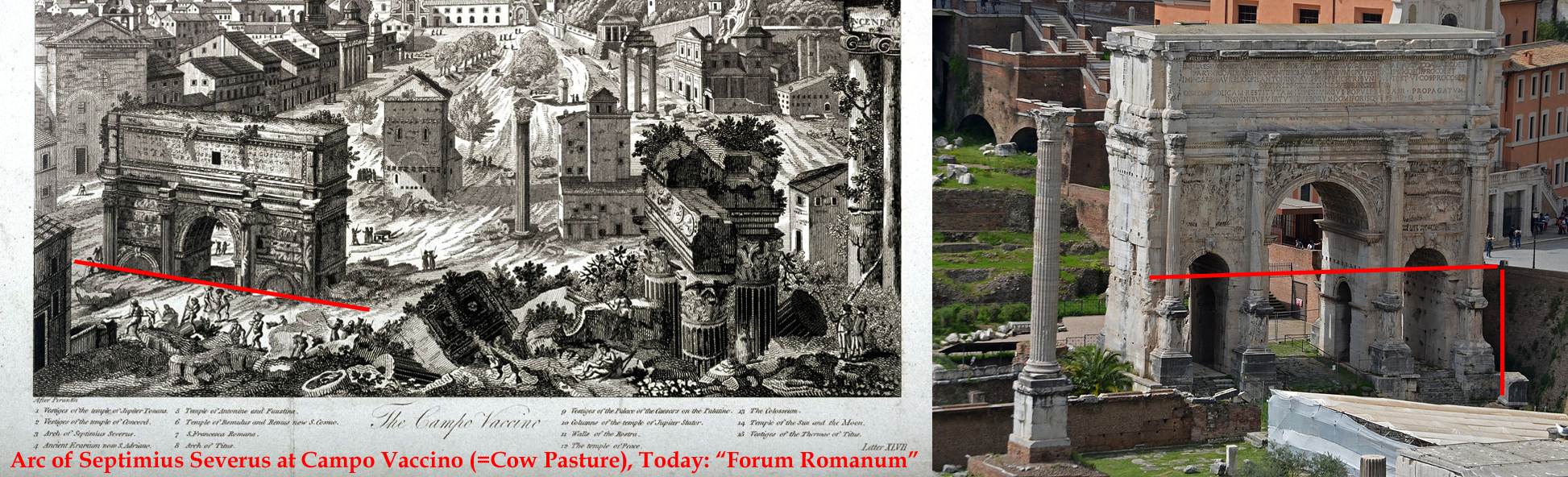
...and you can even see some workers with sticks and shovels excavating, prying open stuff etc. I recently purchased a complete collection of Piranesi's etchings in book form (I would really recommend
getting this book - it's an invaluable visual resource for our kind of research, a high quality edition, dirt cheap at 800+ pages) and made the general observation that everywhere in these scenes of 18th century Rome you have A) workers excavating, uncovering, toiling in the mud everywhere as well as B) finely dressed 18th century noble- or gentlemen, pointing around as if in amazement of just freshly discovering long lost wonders of antiquities (see for example the two lads in the lower right hand corner).
I think what we see in Piranesi's work is the systematic excavation and exploration of the mud-covered old Rome by the 18th century aristocracy (yes, yes and the RCC). As this seems to have been quite the elitist operation, it would have been easy to control the narrative, to decide what of the discovered artifacts would be kept, what locked away in the Vatican basement or wherever, what destroyed. Same with architecture. Looking through the hundreds of etchings Piranesi made of Roman antiquities/monuments, the scenes are replete with stuff that has simply been destroyed or covered up again after having been inspected (and looted maybe) between then and the photographic area. And mind-blowing stuff I must say.
Look at this megalithic architecture! That is the foundation of a temple. The foundation! And look at the tiny, tiny humans in comparison:
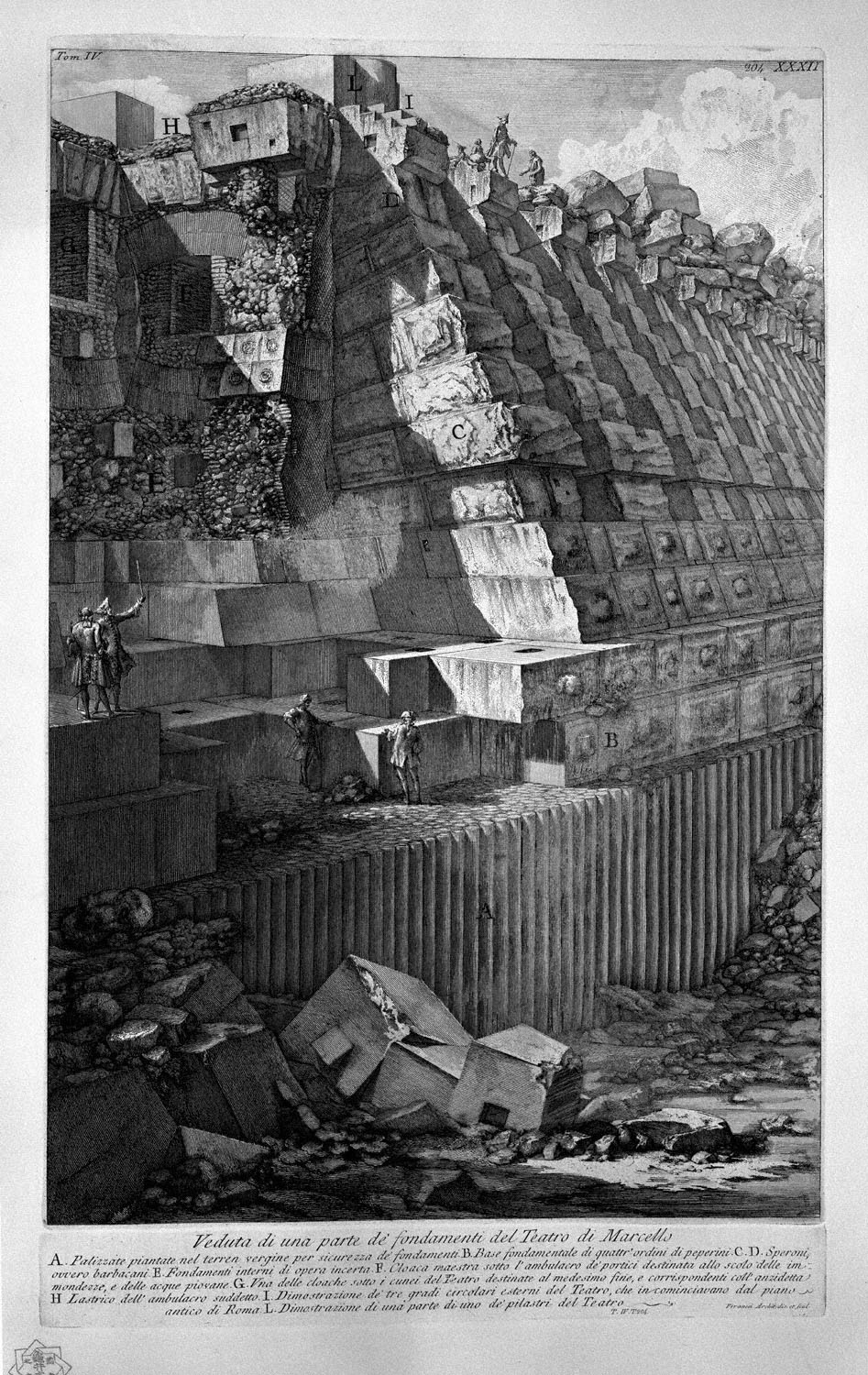
Looking at images like this one simply blows my mind. It is as if looking at something you'd find on an alien planet. You don't see these things in nowadays Rome, neither in any popular history textbooks.
The painting by Claude Lorrain from 1682 that you showed, KD, makes for an interesting comparison with the circa 1748 etching by Piranesi. We see in the newer ones that trees have grown on this ancient Roman "cow pasture", as well as several buildings having been erected in the meantime. Everything fits the 14th century catastrophe theory perfectly in my opinion. The original city of Rome got covered by several feet of mud around 1450-1500. Cultural, economic and knowledge centers along with most people perish. Scarce survivors move into devastated Rome being forced into a primitive lifestyle as herdsmen, scavengers, etc. As the continent is slowly recovering, foreigners, elites move into Rome and occupy it in the form of the Vatican. We see these "nobles" in the 1682 scene of Rome shown in Lorrain's painting. In the mid 1700s we see Piranesi depicting not only a systematic exploration and excavation of the "Antiquities of Rome", but also a thorough purge of "inconvenient" relics and structures, streamlining and tailoring everything in the city to fit the consolidating, counterfeit narrative of our textbook chronology. This process is completed with the 1930s clean-up operations in Rome under Mussolini.
This seems a very plausible course of events to me, but as always: speculations, albeit backed up by circumstantial evidence ;-)
Hope this helps in some way

(...though you probably have seen the Piranesi stuff already and got very similar feelings about it all!)