Archive
Old SH Archive
- Joined
- Sep 8, 2020
- Messages
- 17,737
- Reaction score
- 3,167
All I was trying to do was read the 1893 book that Korben linked to in this thread:
1893: 100 MPH High Speed Electric Train
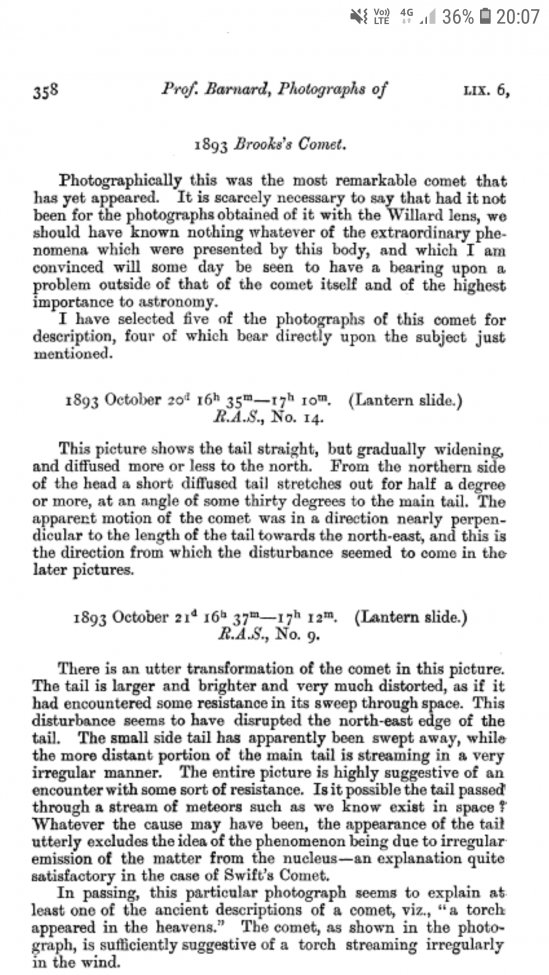
But then I read something like this on the first page:
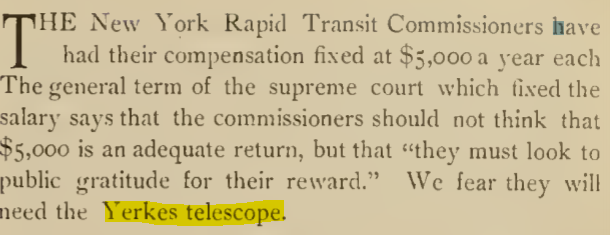
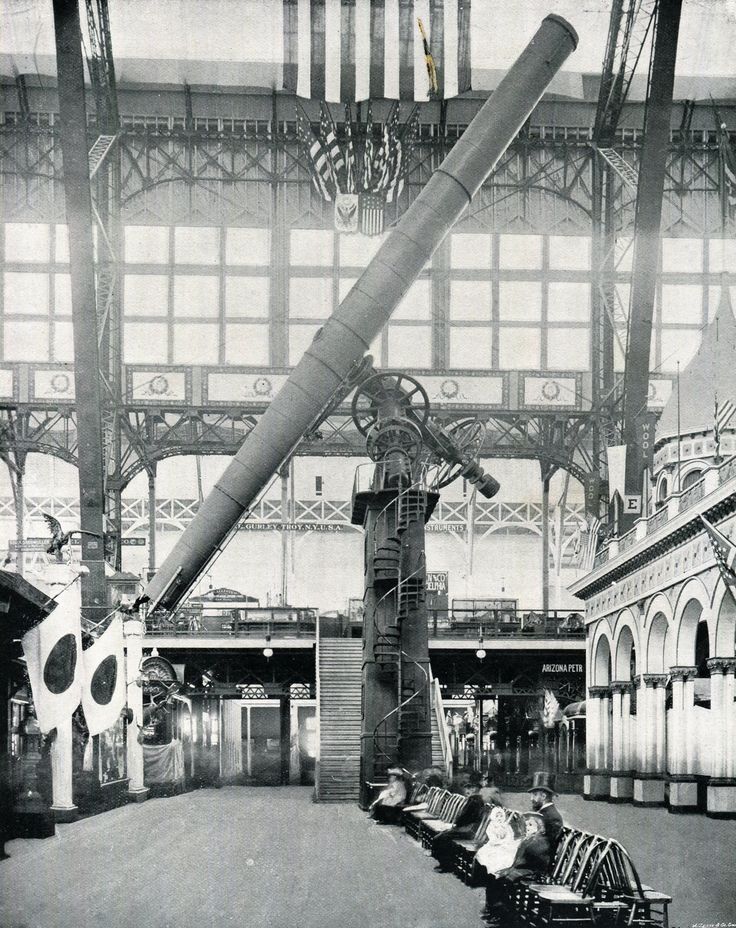
Being that we're in 1893, it immediately makes me think that it's the telescope at the Chicago Columbian Exposition. And it appears to be. Let's wiki a little bit, first Charles Yerkes:
I think he probably warrants more study, but there are too many threads here. Staying with the main topic the Yerkes Observatory, the place where the telescope ended up:
So, the telescope was basically just a shell at the expo. Right?
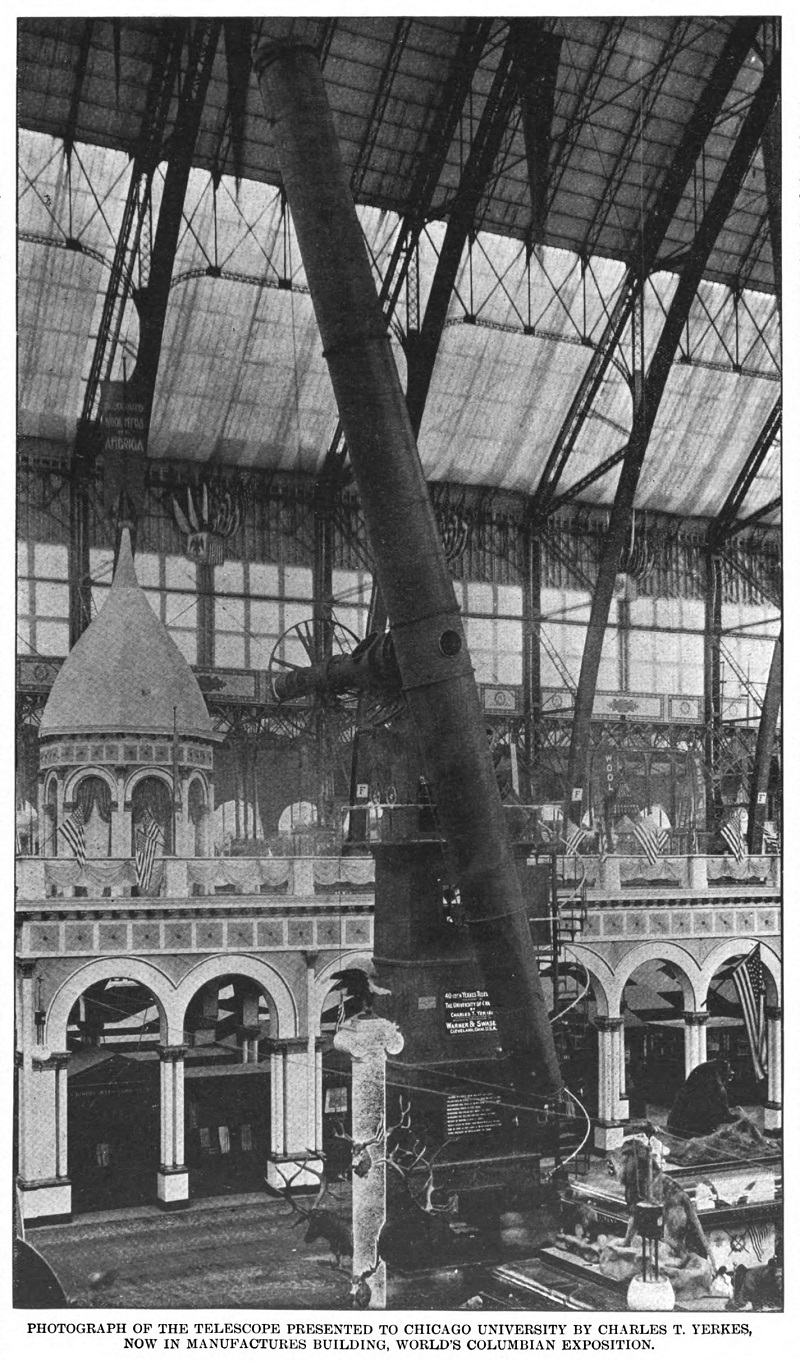
The Yerkes Telescope, Great Revealer of the Solar System - Chicago's 1893 World's Fair
So, some problems here. Let's look at one of the companies cited with the production of the telescope, Alvin Clark & Sons:
American company making telescopes for Russia in the 19th century. What a history of cooperation in the skies! What happened to the lens that Hale found. Hale, by the way:
Don't worry, if you read this, you'll see that he didn't really see an elf, it was a little demon. A metaphorical one. Probably.
2000JHA....31...93S Page 93
The company that is credited with the mounting and tube, Warner & Swasey:
A couple more things about the telescope:
Getting murkier...
So, after the expo, the telescope was relocated to the newly built Yerkes Observatory:
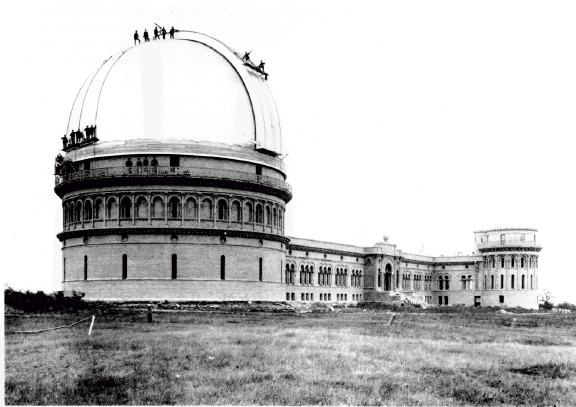
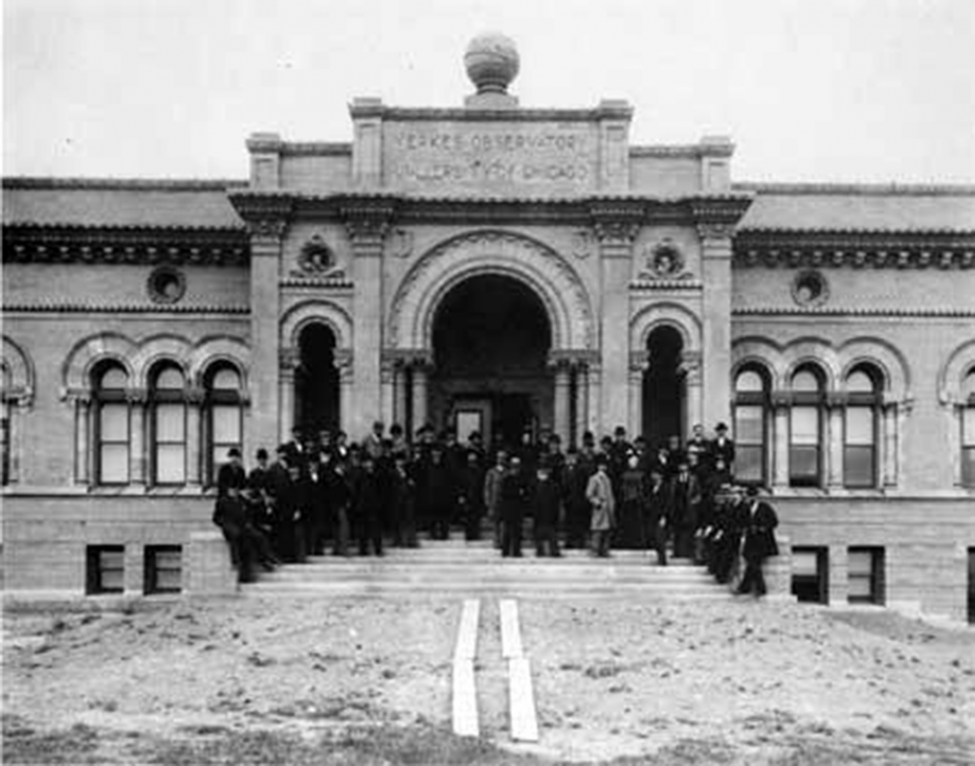
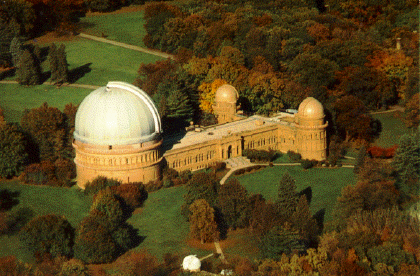
The architect, Henry Ives Cobb:
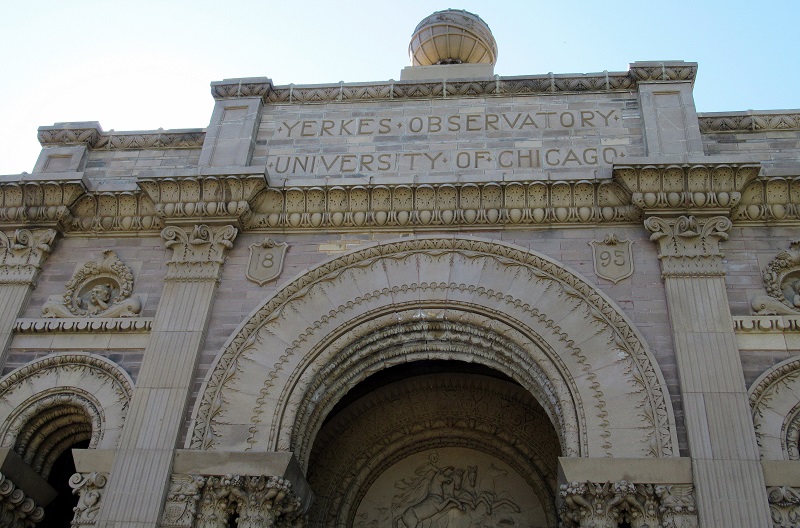
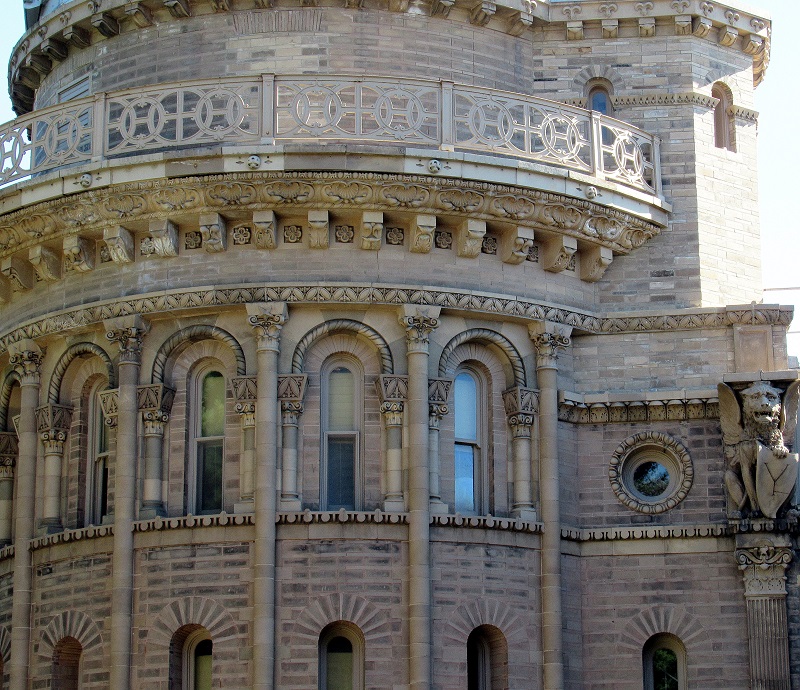
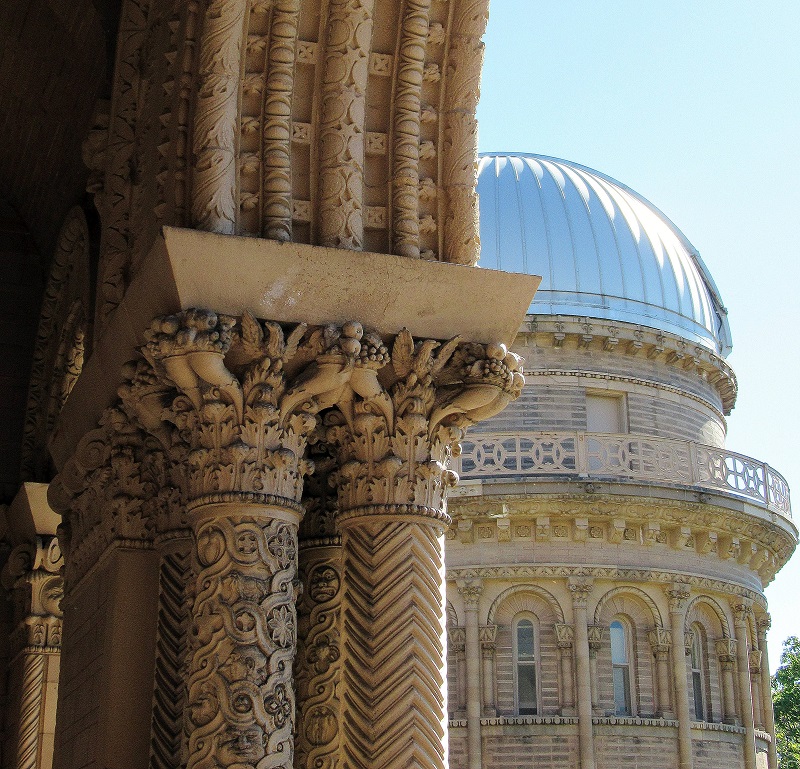
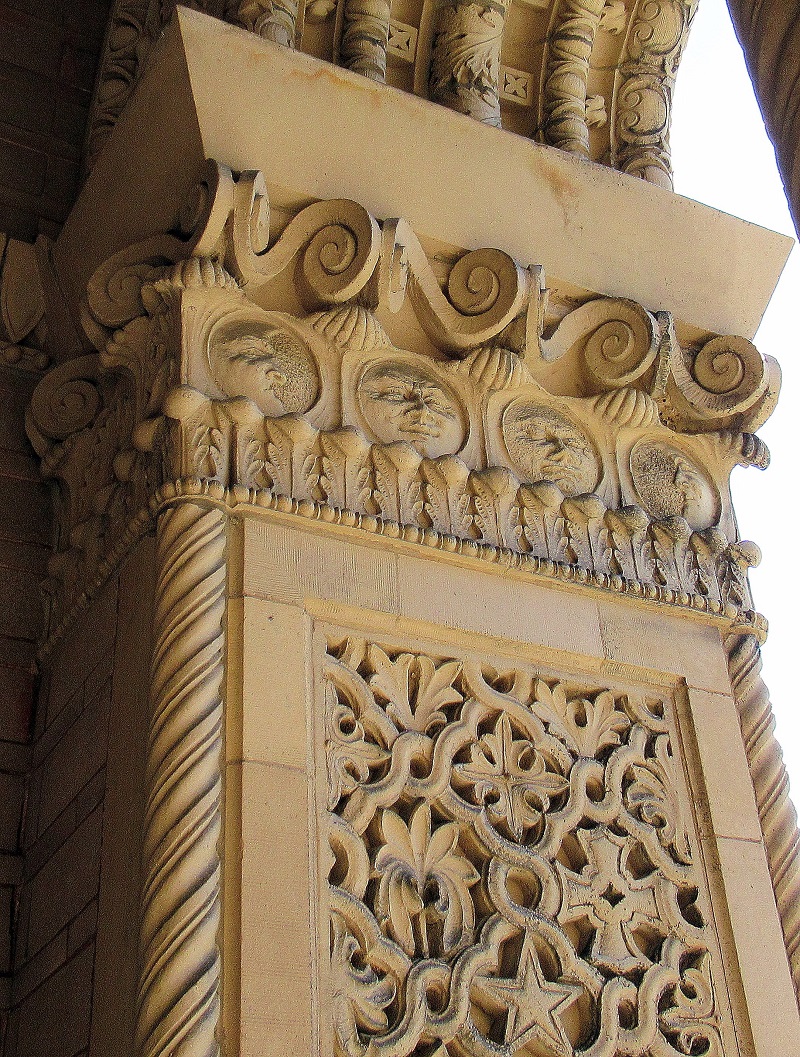
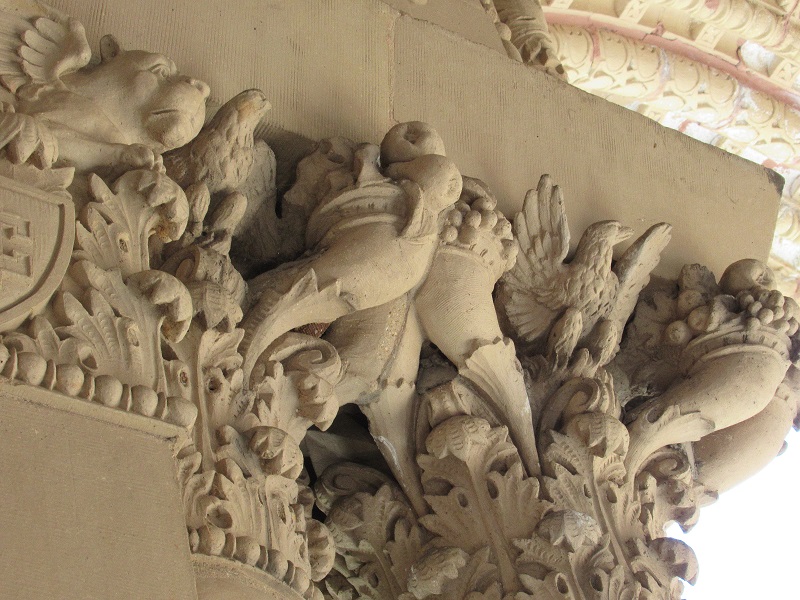
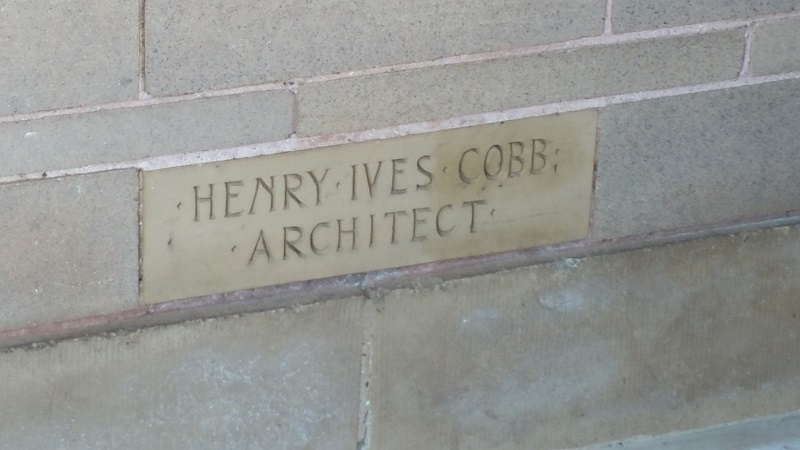
Henry Ives Cobb’s Yerkes Observatory (1897) features whimsical decorative detail reminiscent of his earlier Fisheries Building at the 1893 World’s Fair.
Yerkes Observatory Faces Uncertain Future - Chicago's 1893 World's Fair
This video from 2017 below has some more details on the telescope.
Astronomer Dan Koehler talking about different eyepieces at 5:10:
And now there's some kind of a legal battle going on, with the Yerkes family being involved. Just a mess.
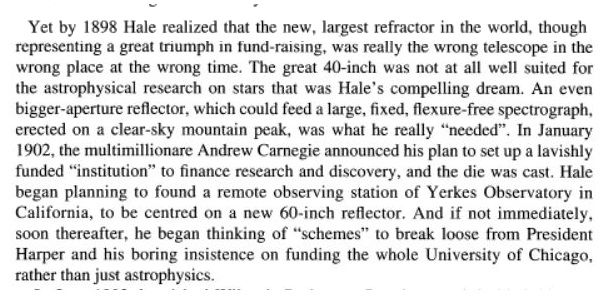
So, when exactly was this telescope put all together? Is it possible it was functional for the 1893 Expo? What happened to subsequent attempts to build larger ones (which, if you read through the linked document on Hale's elf, he had plans to construct a 60 inch one that seems to have fallen through)?
BONUS:
Another closed observatory, the one named after our telescope manufacturers, Warner & Swasey, Just thought it looked cool.

1893: 100 MPH High Speed Electric Train
But then I read something like this on the first page:
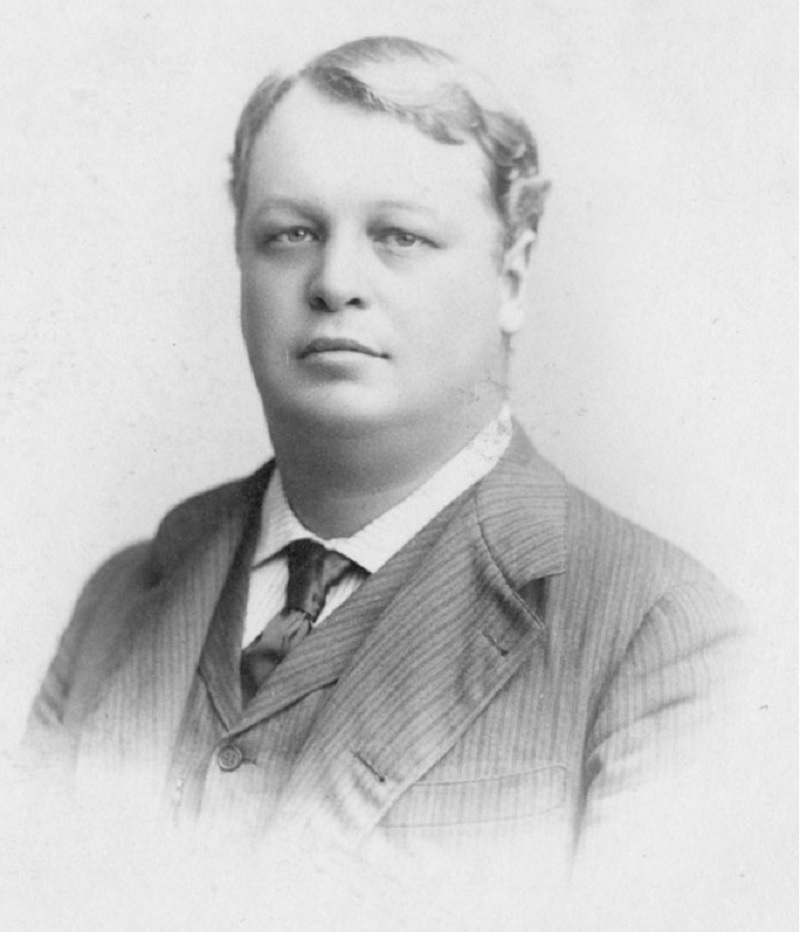
Being that we're in 1893, it immediately makes me think that it's the telescope at the Chicago Columbian Exposition. And it appears to be. Let's wiki a little bit, first Charles Yerkes:
Charles Yerkes - WikipediaCharles Tyson Yerkes (June 25, 1837 – December 29, 1905) was an American financier. He played a major part in developing mass-transit systems in Chicago and London...
Yerkes was born into a Quaker family[1] in the Northern Liberties, a district adjacent to Philadelphia, on June 25, 1837. His mother died of puerperal fever when he was five years old and shortly thereafter his father was expelled from the Society of Friends for marrying a non-Quaker. After finishing a two-year course at Philadelphia's Central High School, Yerkes began his business career at the age of 17 as a clerk in a local grain brokerage. In 1859, aged 22, he opened his own brokerage firm and joined the Philadelphia stock exchange.
By 1865 he had moved into banking and specialized in selling municipal, state, and government bonds. Relying on his bank president father's connections, his political contacts, and his own acumen, Yerkes gained a name for himself in the local financial and social world. However, while serving as a financial agent for the City of Philadelphia's treasurer, Joseph Marcer, Yerkes risked public money in a large-scale stock speculation. This speculation ended calamitously when the Great Chicago Fire sparked a financial panic. Left insolvent and unable to make payment to the City of Philadelphia, Yerkes was convicted of larceny and sentenced to thirty-three months in Eastern State Penitentiary.
In an attempt to remain out of prison, he attempted to blackmail two influential Pennsylvania politicians. The blackmail plan initially failed, however the damaging information on these politicians was eventually made public and political leaders including then-President Ulysses S. Grant feared that the revelations might harm their prospects in the upcoming elections. Yerkes was promised a pardon if he would deny the accusations he had made. He agreed to these terms and was released after serving seven months in prison.[2]
I think he probably warrants more study, but there are too many threads here. Staying with the main topic the Yerkes Observatory, the place where the telescope ended up:
Yerkes Observatory - WikipediaYerkes Observatory's 40 in (100 cm) refracting telescope has a lens produced by the optical firm Alvan Clark & Sons and a mounting by the Warner & Swasey Company. It is the largest refracting telescope used for astronomical research.[8][9] (A larger demonstration refractor, the Great Paris Exhibition Telescope of 1900, was exhibited at the Paris Universal Exhibition of 1900.[9]) The mounting and tube for the 40-inch (100 cm) telescope was exhibited at the 1893 World's Columbian Exposition in Chicago before being installed in the observatory. The grinding of the lens was completed later
So, the telescope was basically just a shell at the expo. Right?
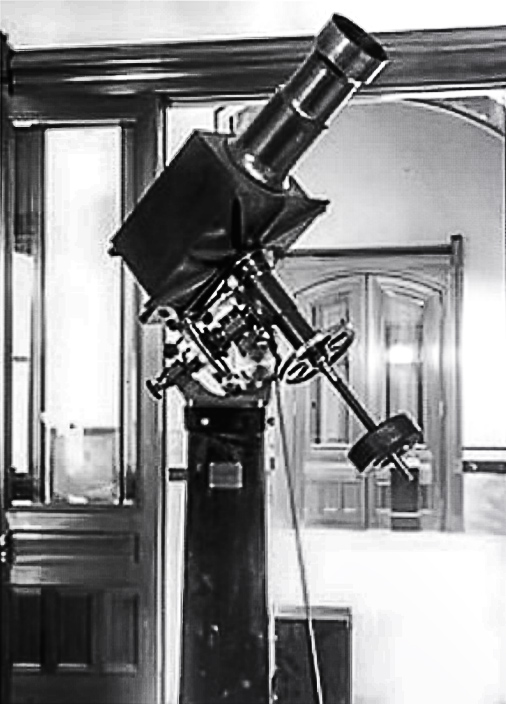
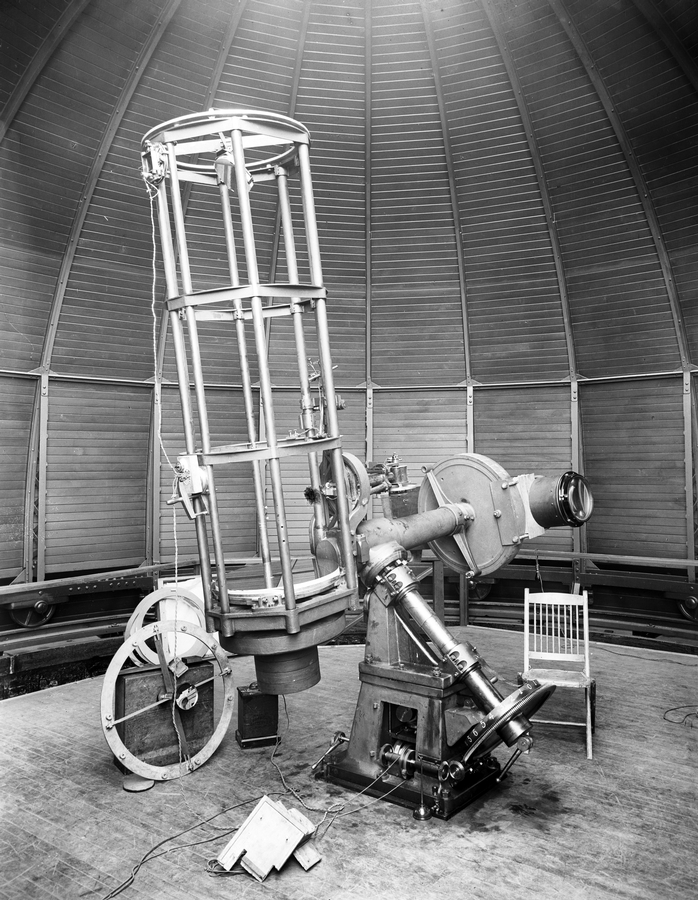
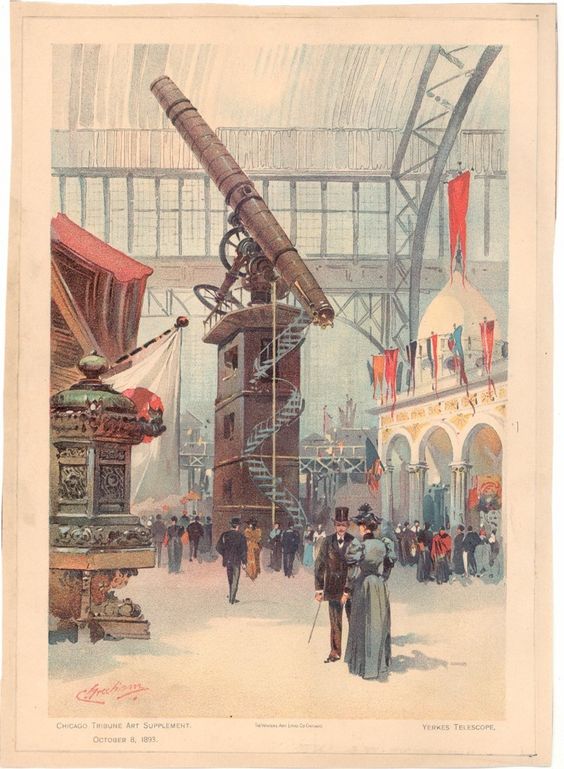
This great revealer of the solar system has a double interest for everybody, from the fact that it is the largest telescope in the world and has been presented to what promises to be the greatest university in this country. The column it rests upon is forty-three feet high and weighs fifty tons. The polar axis of steel is fifteen inches in diameter and weighs three and one-half tons, while the declination axis also of steel, is twelve inches in diameter and weighs one and one-half tons. The main driving wheel is eight feet in diameter and the driving clock, which moves the great tube, weighs one and one-half tons. The object glass is forty inches in diameter, the largest ever made, and weighs, with the cell, 750 pounds. The tube is 64 feet in length and 12 inches in diameter. The total weight of the entire piece of mechanism is 75 tons.
This telescope is the gift of Charles T. Yerkes, of Chicago, who is president of the North and West Side Street Railway companies, to the University of Chicago. At the close of the Fair the instrument will be re moved to Lake Geneva, Wisconsin, this location being decided upon from the fact of it being away from the dust and smoke of the city, which would have made its use almost impossible.
The Yerkes Telescope, Great Revealer of the Solar System - Chicago's 1893 World's Fair
Yerkes Observatory Dedication -- October 21, 1897 | Connecting the Windy CityThis story begins in July of 1892 when the president of the University of Chicago, William Rainey Harper, invited a young astronomer, George Hale, to join the faculty at the university. It was a good move for Harper . . . with the 24-year-old came an observatory the young man’s father had built at 4545 Drexel Boulevard and a promise to raise $250,000 in cash within three years to build a bigger observatory. Young George was, as part of the deal, to be named as the director of that new observatory.
By September the lens of history begins to sharpen George Hale’s ambitions when he learns there are two 42-inch optically perfect lenses that are sitting useless as a result of a deal that fell through. That deal, brokered by the University of Chicago, had at its heart the construction of the world’s largest observatory in the world atop California’s Mount Wilson. [atro.uchicago.edu.]
The trick was to find a way to cough up 16,000 bucks to get the things out of hock. A willing benefactor turned up in October as Hale and Harper drop in on Charles Tyson Yerkes at his office at 444 North Clark Street on October 4, just three days after the university officially opened its doors. [Franch, John. Robber Baron: The Life of Charles Tyson Yerkes. University of Illinois Press: 2006]
Promising that the telescope would be the largest in the world and that, with a little luck, it might even be ready in time to be displayed at the great World’s Columbian Exposition in 1893, the two men convinced Yerkes to foot the bill.
“Gentlemen, go ahead and build the finest telescope on earth and let it be equipped with everything that is needed to make it the best,” Yerkes is supposed to have said. “When you have it all finished send the bill to me and I will pay it. Never mind the question of cost.”
Unfortunately, a sum was mentioned in the meeting on Clark Street – somewhere around $60,000 for the telescope and the frame on which it would be mounted. You can’t blame Yerkes (and he can be blamed for a lot) for figuring that was the figure that he would eventually owe. Perhaps, more unfortunate was that there was no mention in the meeting of the building that would eventually be needed to house the massive piece of apparatus.
The question of the building become a good-sized problem by January of 1893 when Harper received a letter stating that without knowledge of the final site for which the telescope was intended, the piece could not be finished in time for display at the fair. With time sliding past, a site just outside Lake Geneva, Wisconsin was chosen after a group considered candidates from Highland Park to Peoria.
You can imagine Mr. Yerkes’s reaction. Facing significant criticism in Chicago because of his heavy-handed – some might say less than legal – methods of doing business, the railroad magnate was probably hoping the telescope would deflect a galaxy of criticism and underscore the magnificent generosity of a gift that placed Chicago second-to-none in the world of astronomy. But the great observatory would be sited in farm country, 80 miles north of the city, and it would take a significant amount of effort to get there to hold the grandiosity of the railroad baron's gift.
In any event, the great telescope was somehow completed for display at the Great Fair. It was massive. Mounted on a base that stood 43 feet high and weighed 50 tons, the six-ton telescope towered above fairgoers in the Manufactures Building.
So, some problems here. Let's look at one of the companies cited with the production of the telescope, Alvin Clark & Sons:
Alvan Clark & Sons - WikipediaAlvan Clark & Sons was an American maker of optics that became famous for crafting lenses for some of the largest refracting telescopes of the 19th and early 20th centuries. Founded in 1846 in Cambridgeport, Massachusetts, by Alvan Clark (1804–1887, a descendant of Cape Cod whalers who started as a portrait painter), and his sons George Bassett Clark (1827–1891) and Alvan Graham Clark (1832–1897).[1] Five times, the firm built the largest refracting telescopes in the world. The Clark firm gained "worldwide fame and distribution", wrote one author on astronomy in 1899.
The 18.5-inch (470 mm) Dearborn telescope (housed successively at the University of Chicago, Northwestern University and Adler Planetarium) was commissioned in 1856 by the University of Mississippi. The outbreak of civil war prevented them from ever taking ownership. As a result, it was being tested in Cambridgeport when Alvan Graham observed Sirius B in 1862.
In 1873 they built the 26-inch (660 mm) objective lens for the refractor at the United States Naval Observatory. In 1883, they build the 30-inch (760 mm) telescope for the Pulkovo Observatory in Russia, the 36-inch (910 mm) objective for the refractor at Lick Observatory was made in 1887, and the 40-inch (1,000 mm) lens for the Yerkes Observatory refractor, in 1897, only ever exceeded in size by the lens made for Great Paris Exhibition Telescope of 1900
American company making telescopes for Russia in the 19th century. What a history of cooperation in the skies! What happened to the lens that Hale found. Hale, by the way:
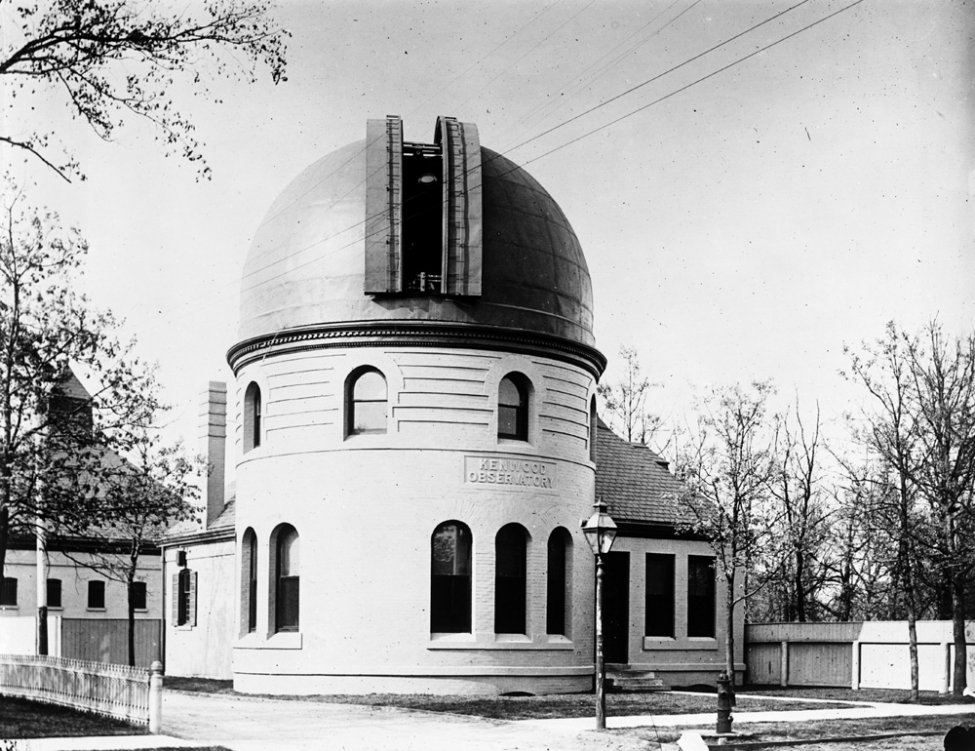
George Ellery Hale - WikipediaGeorge Ellery Hale was born on June 29, 1868 in Chicago, Illinois to William Ellery Haleand Mary Browne.[3] He is descended from Thomas Hale of Watton-on-Stone, Hertfordshire, England, whose son emigrated to America about 1640.[3] His father acquired a considerable fortune manufacturing and installing passenger elevators during the reconstruction of Chicago, which had been destroyed in the Great Chicago Fire of 1871....
...In 1890, he was appointed director of the Kenwood Astrophysical Observatory; he was professor of astrophysics at Beloit College (1891–93); associate professor at the University of Chicago until 1897, and full professor (1897–1905) ...
Hale was a driven individual, who worked to found a number of significant astronomical observatories, including Yerkes Observatory, Mount Wilson Observatory, Palomar Observatory, and the Hale Solar Laboratory. At Mount Wilson, he hired and encouraged Harlow Shapley and Edwin Hubble toward some of the most significant discoveries of the time. He was a prolific organizer who helped create a number of astronomical institutions, societies and journals. Hale also played a central role in developing the California Institute of Technology into a leading research university. After retiring as director at Mount Wilson, he built the Hale Solar Laboratory in Pasadena, California, as his office and workshop, pursuing his interest in the sun....
Hale suffered from neurological and psychological problems, including insomnia, frequent headaches, and depression. The often-repeated myth of schizophrenia,[18] alleging he claimed to have regular visits from an elf who acted as his advisor, arose from a misunderstanding by one of his biographers.[19] He used to take time off to spend a few months at a sanatorium in Maine. These problems forced him to resign as director of Mount Wilson.[18] He died at the Las Encinas Sanitarium in Pasadena in 1938
Don't worry, if you read this, you'll see that he didn't really see an elf, it was a little demon. A metaphorical one. Probably.
2000JHA....31...93S Page 93
The company that is credited with the mounting and tube, Warner & Swasey:
WARNER & SWASEY CO. | Encyclopedia of Cleveland History | Case Western Reserve UniversityThe WARNER & SWASEY CO. was once a leading manufacturer of machine tools, with a world-wide reputation for its telescopes and precision instruments. New England machinists WORCESTER P. WARNER and AMBROSE SWASEY formed a partnership in Chicago in 1880 but moved to Cleveland, opening a machine tool shop on Carnegie Ave. near E. 55th St. in Aug. 1881. With the advent of the sewing machine, bicycle, and automobile industries, the firm began to focus on producing turret lathes. Utilizing the same techniques and machinery used to produce machine tools, the firm also produced telescopes—due primarily to Warner's interest in astronomy. The company gained international fame in 1886 by building the largest telescope at the time for the Lick Observatory in California, and later completed large telescopes for the U.S. Naval Observatory and the Yerkes Observatory in Wisconsin. While the company used its astronomical instruments to gain publicity, most of its profit came from machine tools.
| Encyclopedia of Cleveland History | Case Western Reserve University
After incorporation in 1900, Warner & Swasey placed more emphasis on its profitable turret lathe business and became the world's leading manufacturer of such lathes by 1928. During World War II, the company employed 7,000 people and produced half of the turret lathes manufactured in the U.S. After the war, it diversified into textile machinery construction equipment and the electronics industry through internal growth and acquisitions. By 1965 Warner & Swasey employed 2,000 people and began to move several operations to SOLON. Its headquarters relocated to UNIV. CIRCLE in 1968. During the business recession in the early 1980s, Bendix Corp., which had purchased the company in 1980, closed several of its plants in the Cleveland area and implemented large-scale layoffs. In 1983 Bendix was taken over by the Allied Corp. of New Jersey, which sold Warner & Swasey to Cross & Trecker, a Michigan machinery firm, in 1984. Cross & Trecker was absorbed by Giddings & Lewis, a Wisconsin tool company, which shut down Warner & Swasey's only remaining plant in Solon in Jan. 1992, closing out 110 years of operation in the Cleveland area.
A couple more things about the telescope:
Yerkes TelescopeThe Yerkes telescope, located in the Manufactures building, was not placed in position until several weeks after the opening of the Fair. It was not until late in December of 1892 that the contract for making this instrument was assumed by the Cleveland firm of Warner & Swasey, and it was thought that at least a year would be required for the task, the magnitude and delicacy of which it is impossible to over-estimate. The telescope was put together at the Fair, as indeed it must be; for apart from the question of transportation, to place the tube in position on its supporting columns would have required an unobstructed space equal to that of a six-story building with sixty feet of frontage.
The 40-inch.In 1890, this telescope was already partially under construction, and it was planned to be the world's largest telescope. It was, in fact, the world's largest telescope from 1897 (when it was commissioned) to 1909, and it is still the world's largest refractor. The lenses started as glass disks cast by Mantois of Paris and were polished into 40-inch lenses by Alvan Clark and Sons in Cambridgeport, Massachusetts. Warner and Swasey of Cleveland built the mounting for the telescope and a 90-foot diameter dome to house it. They also constructed a 75-foot diameter movable floor that raises astronomers to the telescope eyepiece. This is necessary because the telescope pivots about the middle of the telescope tube: if one end points to a star low on the horizon, the other end (through which you want to look) will be far off the ground. So, the floor rises so that you can be hoisted up to the eyepiece.
Getting murkier...
So, after the expo, the telescope was relocated to the newly built Yerkes Observatory:
Just the facts, Ma'am.Stats on the Observatory
Stats on the 40-inch
- Construction began in 1895.
- George Ellery Hale (1868-1938) was responsible for convincing the University of Chicago to help fund the Observatory; he and the president of the University approached transit tycoon Charles Tyson Yerkes, who agreed to fund the facility.
- Observatory grounds are 80 acres.
- Dome is 90 feet in diameter and weighs 120 tons.
- The dome slit is 11 feet wide and 85 feet long.
- The telescope tube is 63 feet long and weighs 6 tons; all the gears (etc) to move it weigh 20 tons.
- It was the biggest telescope in the world in 1897, and it is, in fact, still the world's biggest refractor.
- The floor is 75 feet in diameter and weighs 37.5 tons. It's held by 4 pairs of cables. It's only fallen once, in May 1897. (For more information on this, see the 40-inch page.)
- The telescope is used nearly every night that weather permits.
- The lens has one small crack in it, which was stopped by drilling a small hole at the end of the crack. It was most likely caused by water between the lens and the cell that expanded as it froze and thus exerted pressure on the lens.
- The telescope's f ratio is f/19.
- The mounting of the telescope was exhibited at the World's Fair in 1893, called the "Columbian Exposition" and held near the current campus of the University of Chicago in Chicago, IL.
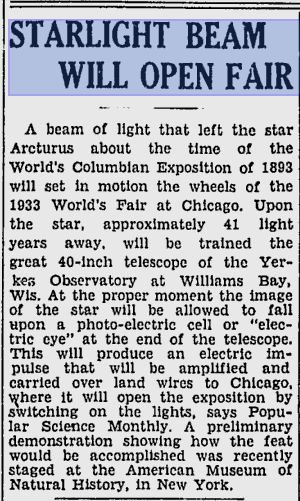
- The telescope was also involved in the next World's Fair in 1933, called the "Century of Progress." They set up a switch on the 40-inch so that when the light from Arcturus (about 40 light-years away) reached the switch, it would light the lights and "turn on" the 1933 World's Fair. Since Arcturus is about 40 light years away, the light that left Arcturus 40 years earlier during the Columbian Exposition was now reaching the 1933 World's Fair.
A World's Fair Moment: The Star that Connected 1893 and 1933Just as President Grover Cleveland had dramatically opened the World’s Columbian Exposition of 1893 with the touch of a button triggering electrical current all around the fairgrounds, the 1933 Century of Progress would open just as dramatically with an electrical signal that would activate the Fair’s lights. And that electrical signal would be triggered by photons from the star Arcturus, light that had left that star in 1893.
It was a symbolic and powerful connection between Chicago’s two great World’s Fairs.
Arcturus is one of the brightest stars in the sky. Its distance was thought to be 40 light-years away, so photons captured in 1933 could be said to have started on their journey through space in 1893.
Director of the Yerkes Observatory in Wisconsin proposed the idea to the first director of the Adler Planetarium in Chicago that the Fair be opened by this beam of starlight. Photons from Arcturus would pass through the Yerkes 40-inch refracting telescope and focus on to a photoelectric cell that would generate the electric current needed to light up the three and a half miles of lights along the Chicago lakefront fairgrounds. There was great excitement and support for the idea.
The Fair was conceived by prominent Chicago businessmen as a celebration of 100 years of technological innovation; its motto “Science Finds, Industry Applies, Man Adapts.” The Century of Progress was intended to bolster national optimism during the bleakest years of the Depression.
The architect, Henry Ives Cobb:
Henry Ives Cobb, born on August 18, 1859, in Brookline, Massachusetts, had become one of Chicago’s most distinguished architects by the time of the 1893 World’s Columbian Exposition. Cobb designed several buildings for the Fair, including the Fisheries Building, Café de la Marine (aka Marine Café), the Indiana Building, the East India Pavilion, and the Street in Cairo exhibit on the Midway.
In the early 1880s, Cobb designed the Palmer Mansion, which once stood at 1350 N. Lake Shore Dr. and served as an important social center during the 1893 World’s Fair when Potter and Bertha Palmer entertain visiting dignitaries in their home. Around the time of the Fair, Cobb contributed several other impressive and beautiful architectural structures to Chicago, including the old Chicago Historical Society Building (632 N. Dearborn St.) in 1892, the Chicago Athletic Association(12 S. Michigan Ave.) in 1893, the Newberry Library (60 W. Walton St) in 1893, the ornate brick Chicago Varnish Company Building (33 West Kinzie St.) in 1895, and buildings for the campuses of the University of Chicago and nearby Lake Forest College.
Completed in 1897, the Yerkes Observatory in Williams Bay, Wisconsin, is one of Cobb’s most beautiful buildings. The façade connecting three observatories features graceful rows of arches and columns. Cobb’s ornate decorations showcase images of stars, symbols, mythical creatures, and even (perhaps) the visage of University of Chicago founder and first president, William Rainey Harper. Above the front door, the Olympian sun god Apollo rides across the sky in a chariot pulled by a team of horses.
Henry Ives Cobb’s Yerkes Observatory (1897) features whimsical decorative detail reminiscent of his earlier Fisheries Building at the 1893 World’s Fair.
Yerkes Observatory Faces Uncertain Future - Chicago's 1893 World's Fair
This video from 2017 below has some more details on the telescope.
Astronomer Dan Koehler talking about different eyepieces at 5:10:
And it might be several decades before anyone uses it again....what was available and had tested some other brands especially for powers to see how much power we were actually going to be able to use because the telescope hadn't been used visually for many many decades so there was no one around who could really advise me as to what would work and what wouldn't I kind of had to discover that on my own right
Yerkes Observatory heirs reported slowing down the next moveClosed after more than a century
The University of Chicago announced in March 2018 that it was closing Yerkes Observatory after more than 120 years as a astronomical research laboratory and as an iconic symbol of the Lake Geneva region.
The observatory officially closed its doors Oct. 1, amid strong sentiment locally that the facility should be preserved rather than repurposed or developed.
Its lakefront campus surely is worth millions of dollars to the university — or whoever ends up owning it.
And now there's some kind of a legal battle going on, with the Yerkes family being involved. Just a mess.
So, when exactly was this telescope put all together? Is it possible it was functional for the 1893 Expo? What happened to subsequent attempts to build larger ones (which, if you read through the linked document on Hale's elf, he had plans to construct a 60 inch one that seems to have fallen through)?
BONUS:
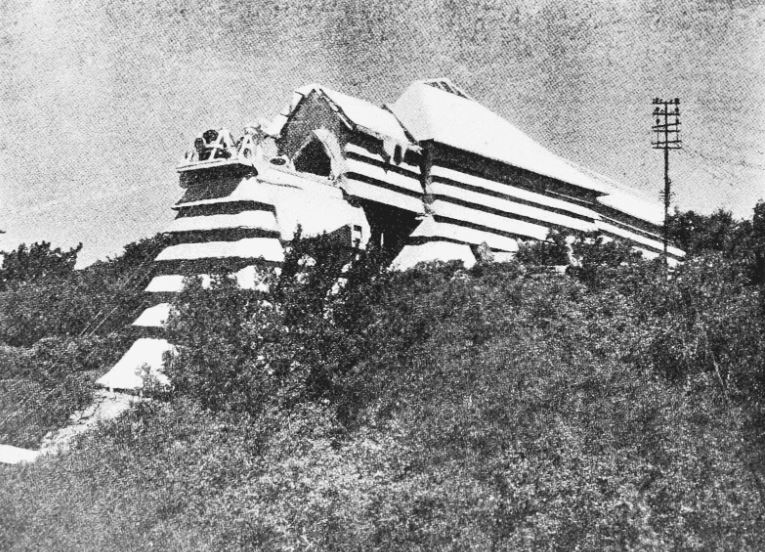
Another closed observatory, the one named after our telescope manufacturers, Warner & Swasey, Just thought it looked cool.
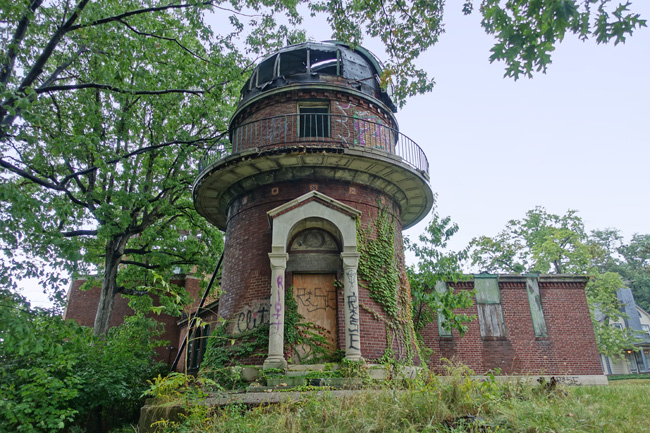
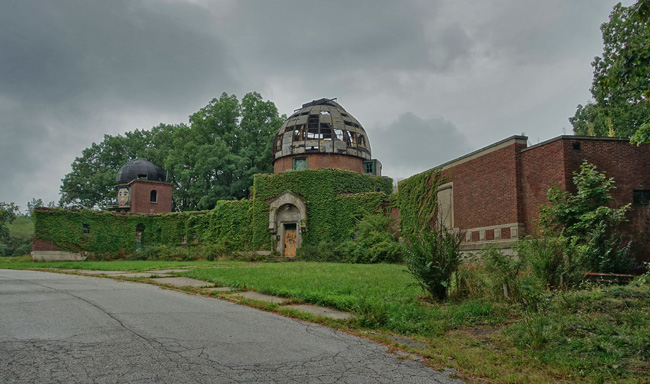
The Incredible Ruins of an Abandoned ObservatoryOn a hilltop in East Cleveland lie the fascinating ruins of the century-old Warner and Swasey Observatory.
A half dozen miles from the massive industrial ruins of Warner & Swasey Company, which I explored in my last article, lies another abandoned piece of the Warner and Swasey legacy.
Note: This OP was recovered from the Sh.org archive.
Note: Archived Sh.org replies to this OP are included in this thread.