Where in the available sources does it say how many people overall were involved in the construction?
How many people worked on specific buildings and the length of time it took them to complete each specific building?
How many people worked on the pipe organ, and how much time it took them to complete it, so we could compare with realistic time frames.
How much time and how many people it took to dig a lake in the middle of the expo, what equipment was used to dig, and what equipment was used to haul the dirt away? Where it was dumped?
I have about 50 additional questions of similar nature. If we have the answers, and I missed them, kindly point me in the right direction.
So far we have a city built in 18 months, and may be 75 workers altogether in the pictures, with half of them working on the plaster.
My greatest concern is the attendance. Not only for this specific expo, but in general. It’s unattainable with the official population numbers.
Where do we go seek the answers to your questions?
Either on this thread or the Columbian or Lousiana one I posted a link or two which shows tickets were per visit not per visitor thus making it very easy for the organisers to fiddle with the attendance figures to suit, but that is my guess and so not trustworthy even though the practice goes on today.
They also burnt the used tickets at the end of the day in the furnaces on site. The only reason that makes sense to me for this to be done is to 'fiddle the figures. In other words none of these attendance figures can be substantiated in any way.
Here's a list of the makeup of the boards at the Pan Am most of which are clickable to see their bio's Pan Am's Who's Who
Again a none trustworthy source but evidence of the probability that companies large and small were engaged to build the thing. City it ain't. Set of large and small empty halls it was. Infrastructure was built most certainly, utilities for example but large empty structures do not need much in the way of utility infrastructure, based entirely on my experience of large empty buildings namely shipyard buildings where the infrastructure was the thing I primarily worked on and large exhibition halls like the NEC in Birmingham. Again not trustworthy as its 'just my experience' but where else should we be looking?
We have photographs, newspaper articles and other texts, but we do not have understanding of how it was accomplished. I'm exactly the opposite from @anotherlayer on this entire Buffalo Expo.
Oh, I didn't mean it like that. I selfishly meant that I have my beliefs and so do you. There is nothing wrong with this discussion. You want answers that are easily found in the newspapers. The question about the number of workers, the time it took, etc. There was even a workers strike midway through construction. That *really* puts 18 months even less believable. So, I am hip to your thoughts and what you consider questionable. I just haven't found anything that really puts me closer to your side.
"General View of the Pan-American Exposition" New-York tribune. [volume] (New York [N.Y.]) 1866-1924, April 21, 1901, Image 27
"Manufacturers and Liberal Arts Building from the West"
"The Triumphal Bridge"
"Entrance to the Streets of Mexico"
"The Horticulture Building"
"The Agriculture Building"
"Entrance to the Agriculture Building"
"One of the Towers of the Electricity Building"
"Testing the Circuit of the Electricity Building"
"Southern Entrance and Towers of the Electricity Building"
"The Machinery of Electricity Buildings"
"Pergola East of the Esplanade" With Government Building at the right
"Colonnade of the Ethnology Building"
"Bridge West of the Triumphal Bridge"
"The Propylea (at the left) and the Entrance to the Stadium (at the right)"
"New York State Building"
"West Entrance of the Liberal Arts Building"
"The Mines Building"
"Soldier's Place" 'Where Lincoln Parkway, the formal entrance to the exposition, begins."
"West Colonnade of the Electric Tower" "Showing statuary representing Lake Erie and Lake Michigan"
"The Electric Tower from the Court of Fountains"
"Lundy's Lane Monument" "Marking the battlefield on which the British were defeated by the Americans in 1814"
"United States Government Building from the West"
"Venice in America from the Realto" "Showing the Grand Canal, with the Machinery Building in the background"
Left: "Southern Entrance to the Machinery and Transportation Building" "Showing the elaborate plastic ornamentation of the columns and other architectural features characteristic of the Spanish Renaissance"
Right: "East side middle entrance of the Machinery Building"
"St. Clair" "Spandrel for the Electric Tower"
"Niagara" "Spandrel for the Electric Tower"
"Mounted Standard Bearer for the Triumphal Bridge"
"'Courage' for the Triumphal Bridge"
"'Liberty' for the Triumphal Bridge"
The Pan-Am was to outdo Chicago with an "electric fountain" built on an artificial island with a 250 foot high jet of water and over 100 minor jets. This fountain was said to be able to make "watery designs" such as pyramids, pine trees, sheaves of wheat, lilies, fans, and mist banks. New-York tribune. [volume] (New York [N.Y.]) 1866-1924, April 21, 1901, Page 14, Image 40
"The Wisconsin Building"
"The Switchboard in the Electricity Building"
"Thirty-Inch Searchlight" from the Electric Tower
I think it's BOTH. And anything printed is dubious. Easier to doctor old pictures where the resolution is poor.
Hide it in plain site. So overwhelm and confuse people don't see it. Put on a facade, theme park to distract...
Some were either there or BURIED and unearthed. Or else ALL of the sites would have been some of those most valuable land and not waited for those fairs. The rich would've taken the hills already...
Reclaiming swampland is a joke for the timeframe. Chicago is ABSURD. But I can attest to what overgrowth can cover! Jungles, deserts, oceans hiding entire civilizations until... The 19th century! Treasure hunt! Feed the rich private collections and the British Museum!
Out east harder to figure out. Maybe more made up to gloss over all the inherited architecture in the cities. But out west? Fagetaboutit. And yes, resources and manpower and precision don't match up. Especially since we were RAMSHACKLING every available niche in our "progress" around these incredible buildings everywhere. They established the foundations and system, corrupted and perverted from the previous, and then brought the GHETTO.
Like animals "we" were. Dirty, nasty, ill-behaved. Those prior buildings don't become us AT ALL.
And a little (or lot) of FEAR, SUPERSTITION and RIGID BELIEF SYSTEMS can work MARVELS and WONDERS on the spineless and nutless.
Just happy to be here! Thanks for the peanuts and popcorn! Don't hurt or kill me please!!
Fo sho!
I talked with Preston Nichols over the phone a couple years ago (passed on last year), and he was a sound and radio WIZARD.
Wanted to know about his sound bed he created. Was going to go experience it, but ALAS. I'm sure all of his equipment has been seized...
He shared a story of having to go help tune one of the massive organs in NYC which had a 55 foot long bass tube. Had to compare with sound recording on a cd he had of that organ playing something. Did it BY EAR.
We talked awhile, but then he had to relieve his bladder. What a treat. Was wanting to ask him about "seven parallel realities" and his visit from the WingMakers, but never got there. What a guy. Miss him although I hardly knew him.
Post automatically merged:
What if?...
Since illiteracy was common and widespread before the Prussian schooling system took over (run, Jane, RUN!), and the Greeks and Romans and every other Tom, Dick and Harry messed with our calendar and altered history...
Hence the taking over of mansions, burning and fires, killing, relocating...
Since we're LACKING all records of incontrovertible truth... Photos, articles, testimonies, especially during a time cameras and filming would have been all the rage. And if money was actually involved, money would have been there. With CAMERAS.
So, what if it was 100 years earlier. Or 57. Who cares, take your pick. 150?... Who EVEN knows. No digital signatures (which can be changed, anyway) on anything then. Had to WRITE it on. And writing can be edited, altered, added later... CHANGED.
So. My money is on TWO things. Three, maybe.
ONE, it was before any times listed.
TWO, buildings were buried, flooded, overgrown with foliage (especially those in the magically reclaimed swampland), and we're actually just being dug out and cleaned up as waters receded. Staff and plaster and paint was used to cover them or give them a sprucing up.
THREE, that a lot of these city buildings and mansions and estates were "owned" by the usurping pimps and land barons, so why not the lands these cities were on? People were also limited transportationally (challenged) and have always been SOFT. Not really adventurers, most of them, except from their favorite chairs and sofas. So they're not going to go poking around swamps or digging up scary old ruins. Fear and superstition and "it's a big old scary world out there full of savages" can go a long way toward subjugation.
Post automatically merged:
Oh, gawd. Just following the wiki popular historical narrative gives lots of clues...
Paris, Paris, Paris... Italy, Italy... Shows the progression of the circus.
And OLD pics in all of these places show a general lack of public appeal or turnout. Maybe everyone was bedridden with bleeding ears from all of the LIES of the old STURCH.
But I've been intuiting mote from imagining things as mostly the SAME as they are today. Albeit some UNBELIEVABLE architecture and technology and industry. Some of the NWO was already seeping through and spreading. NYC. Chicago. All of those office buildings. New versions of monastic cells. Centers of "higher learning" would trickle in slowly because of having to round up and remove traces of the old. And then to determine, like all media we're privy to, just what and how much they could let through. JUST enough to contain the truth with little concealment. Remove the challenging bits.
Why Tibet as a last stronghold of our memory and past here was so important to get to. Or a lot of the places our wars have taken us for the last several centuries...
What baffles me is the fact that they went to so much effort and time to construct all of this stuff that was supposed to be temporary. Why? It had to have cost millions, required years of planning and financing. Were these Pan Ams paid for by rich guys with nothing better to do, or by taxpayers? I'm pretty sure no taxpayer would be cool with paying for all this crap, only so it could be demolished and thrown in a junk yard a year later. But would bored rich guys be cool with it, either? I mean, sure, spending money profligately is what they do, but this is really extreme.
I was looking at this picture of workmen eating their lunch at the Chicago World Expo, 1891, and thinking about how much planning even this simple activity would have required. 40,000 men were employed in making everything. Imagine the amount of food they ate every day for a year, and how much coordination it took to get all of that food delivered, cooked, and served. These expos were no small affairs, they were major, and it just makes no damn sense to do it all just to be temporary. At least some of the buildings had to have been there already, with just enough temporary constructions to give legitimacy to the entire place being one giant facade on the playground of the rich.
These are some very good points you are raising, and I believe you are answering one of your main points with the drawing above.
I think we are not looking at the money issue in the correct light.
First off, we are dealing in a time of very few financial laws compared to today; a time when robber barons ran amok. Finance and accounting matters were quite a bit different in the 19th century.
Just because the exhibition didn't turn a big profit, doesn't mean everyone lost money. Feeding, housing, and selling anything you can to people coming to see the exhibit was probably one of the main reasons for the city to put on the event. All that planning created jobs and income for the city and it's residents. Jobs, albeit temporary, are always a good thing. It surely helped the city's business people and I'm quite sure there would have been a good deal of locals spending money as well. There was a lot of money changing hands in the city at the time of this exposition, and I'm confident the same is true at all these exhibitions.
It reminds me of when the Olympics came to LA in 1984. People were making money hand over fist prior to, during, and even after it was over. And it generated future business for the area and created some new and also improved infrastructure. Most of the Olympic buildings lose money and many are demolished before their time or even simply abandoned. Much like these expositions, Olympiads are temporary events that often lose money, but somehow we keep pulling them off. Someone is making some serious cash and it isn't all in the books.
Or the return on their investment isn't monetary. Or, as frequently, probably a combination of both, as a brief search into Olympic selection committee scandals will indicate that there's definitely some off-book transactions for sure.
All of your points are reasonable. To me, it's clear to the organizers that the Expos were not a money making activity and for all the reasons you noted, there's enough benefit to enough people that no one but the organizers would have room to complain financially. The sticking point for me is the excess. I look at these turn of the century expos and cannot square it with any type of temporary event I've seen in my lifetime. In fact, if you could build like this 100+ years ago, you'd think that every county fair today could do small approximations...
I wonder if it wasn't all obvious propaganda and racism, sexism, nationalism.
AND a ritual to sacrifice the old to the new.
MOSTLY made up, like they say, but with slaves or forced labor. There's NO WAY any of these places could have supplied the resources or labor force to accomplish this without stopping ALL of their regular business.
They wanted it uber grandiose to compete with Europe. And uber large as a thumb off the nose at the former power structure they were nailing the coffin lid shut on.
Looking like giants built it or could use it, but just for us little folk now. Look how grand and royal we all are!
And then destroy it as part of the ritual. Possibly kill the secret labor force as well.
Anyway, checking the history of the rails and what they were up to around this time might fill in the blanks. It's how they would have gotten the goods around...
The Buffalo Pan American Exposition of 1901 was strange. First that Buffalo could hold a World's Fair, second that this was the place of the assassination of a US President in the Temple of Music. There was more. Beyond the usual record 2 year building time for a 350 acre event, and the immediate destruction of it all once the fair was completed- was immense racism and white supremist exhibits, and amazing displays of electricity. But more amazing was I found the top of the dome in the Temple of Music where Mckinley was shot, was not actually destroyed. It survived and can still be seen to this day. Check in to the end of the video to see where this odd monument wound up.
The Buffalo Pan American Exposition of 1901 was strange. First that Buffalo could hold a World's Fair, second that this was the place of the assassination of a US President in the Temple of Music. There was more. Beyond the usual record 2 year building time for a 350 acre event, and the immediate destruction of it all once the fair was completed- was immense racism and white supremist exhibits, and amazing displays of electricity. But more amazing was I found the top of the dome in the Temple of Music where Mckinley was shot, was not actually destroyed. It survived and can still be seen to this day. Check in to the end of the video to see where this odd monument wound up.
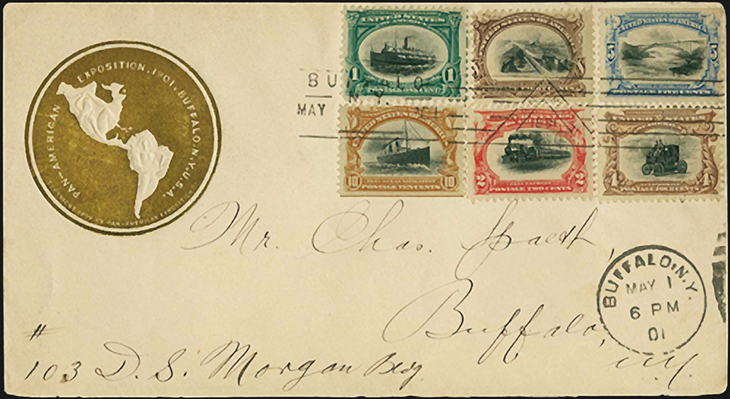
My earliest and nerdiest hobby has been collecting US postage stamps. Been doing it since about 1965. It may not seem a big deal to people in this age, but back in the day, postage stamps were very important in our society. The subjects were taken very seriously. It could be likened to a major feature film in today's society. They issued special printed envelopes with cancelled stamps on the first day of issue that could be purchased by special order of the US Postal Service. They are called "first day covers."
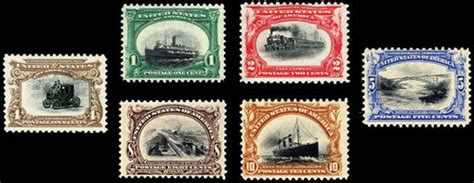
In fact, prior to the 1893 Colombian Exhibition, all US postage stamps were of VIP's, such as presidents and other major dignitaries. In my collection is the 1901 Pan American commemorative stamps "celebrating the achievements of the 19th century". That's right, the US post office made a series of commemorative stamps to commemorate the exhibition. But these were made more like an advert for the event because they were issued the day the event began. It was illegal at the time for the post office to issue adverts, so they called it an exhibition to skirt by the rules.
This was so important, that the US Post office broke the law just to advertise them!
It was also the first time the post office used two color printing on commemorative postage stamps, which was at the time, a difficult technology for them and very expensive. They were printed by the Banknote Corporation of America, the same folks who printed the money! It's no wonder they were used as alternative currency during wartime.
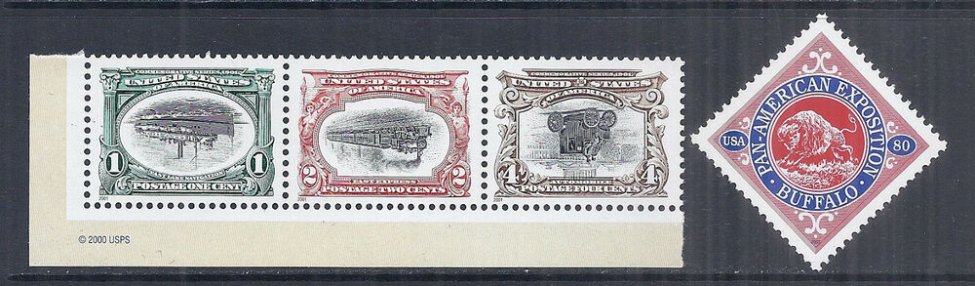
They also "accidentally" printed some of the stamps with inverted images.
"While the 1 cent and 2 cent inverts reached post offices by accident, the 4 cent invert was printed deliberately as the result of a misunderstanding—and, in fact, never went on sale. After the discovery of the 1¢ and 2¢ inverts in mid-1901, the Third Assistant Postmaster, Edwin C. Madden, decided to track down any additional errors, and in late summer had his assistant instruct the Bureau of Engraving and Printing to send any inverted Pan-American stamps in their inventory to Madden's office. No inverted stamps in fact remained on hand, and proper procedure would have been for the Bureau to inform Madden that none were still in stock. However, interpreting Madden’s communique as an unconditional demand for inverts, the Bureau produced four sheets of them from the 4 cent plates and sent 400 copies on to Madden. The word "specimen" was then handstamped in purple ink on about half of the stamps. Between 1901 and 1904 Madden distributed 172 four cent inverts as gifts to friends, associates and his sons (also keeping one for himself), both with and without the overstamp. News of this prompted charges of impropriety and an official investigation by the Postmaster General, but Madden was cleared of any wrongdoing, given that no money had changed hands. Of the copies that remained, a pane of 100 went into the Government Collection of American Stamps in the Washington National Museum. The curator there later traded 97 inverts from that pane to stamp dealers in exchange for examples of rare U. S. issues missing from the museum’s collection.[2][3](No record exists of what happened to the rest of the 400 original copies.) " Pan-American invert - Wikipedia
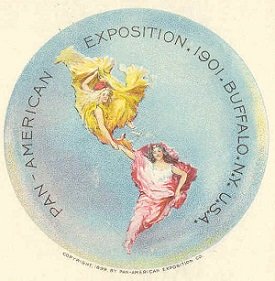
This is the logo on the first day cover. There is also a creepy story behind that.
It looks like another Columbia image and that we were not told, but one of the models was Maude Coleman Woods who "was a Charlottesville native who was voted the 'most representatively beautiful woman in America' in 1901. As a result, many consider her to be the first Miss America.
When she was 20 years old, her father gave his permission for Maude to be photographed for a pamphlet called "The Rosebud Garden of Girls" being produced for a reunion of Confederate generals."
Celebrating the losers of the civil war?
It gets even more strange. "A New York photographer saw her image and came to Charlottesville to photograph her. Without her consent or knowledge, he submitted her photos to a contest, the winner of which would serve as the model for North America on the logo for the 1901 World's Fair (or Pan-American Exposition). She won the contest and was named America's Most Beautiful Blonde."
The story continues, "As a result, her identity was revealed and her picture was published nation-wide, which was considered scandalous at the time. To escape notoriety, Maude fled to Claremont, her family's estate on the James River. There, she contracted typhoid and died on August 24th[2] or 25th[1] 1901, right around her 24th birthday. She is buried atMaplewood Cemetery." She died three months before the exhibition ended! Maude Coleman Woods - Cvillepedia
The other woman was a famous American actress at the time named Maxine Elliot. I guess it wasn't yet politically correct to use a south American woman as the model. Eliott, Maxine
This series was the third set of commemorative's ever printed. The first, the Colombian Exhibition in 1893. The second was the 1898 Trans-Mississippi Exhibition. I'll bet we can find some creepy stuff in that one as well.
These exhibitions were obviously much more than what we are told.
My earliest and nerdiest hobby has been collecting US postage stamps. Been doing it since about 1965. It may not seem a big deal to people in this age, but back in the day, postage stamps were very important in our society. The subjects were taken very seriously. It could be likened to a major feature film in today's society. They issued special printed envelopes with cancelled stamps on the first day of issue that could be purchased by special order of the US Postal Service. They are called "first day covers." View attachment 48524
In fact, prior to the 1893 Colombian Exhibition, all US postage stamps were of VIP's, such as presidents and other major dignitaries. In my collection is the 1901 Pan American commemorative stamps "celebrating the achievements of the 19th century". That's right, the US post office made a series of commemorative stamps to commemorate the exhibition. But these were made more like an advert for the event because they were issued the day the event began. It was the first time the post office used two color printing on commemorative postage stamps, which was at the time, a difficult technology for them and very expensive. They were printed by the Banknote Corporation of America, the same folks who printed the money! It's no wonder they were used as alternative currency during wartime. View attachment 48522
They also "accidentally" printed some of the stamps with inverted images. View attachment 48530
"While the 1 cent and 2 cent inverts reached post offices by accident, the 4 cent invert was printed deliberately as the result of a misunderstanding—and, in fact, never went on sale. After the discovery of the 1¢ and 2¢ inverts in mid-1901, the Third Assistant Postmaster, Edwin C. Madden, decided to track down any additional errors, and in late summer had his assistant instruct the Bureau of Engraving and Printing to send any inverted Pan-American stamps in their inventory to Madden's office. No inverted stamps in fact remained on hand, and proper procedure would have been for the Bureau to inform Madden that none were still in stock. However, interpreting Madden’s communique as an unconditional demand for inverts, the Bureau produced four sheets of them from the 4 cent plates and sent 400 copies on to Madden. The word "specimen" was then handstamped in purple ink on about half of the stamps. Between 1901 and 1904 Madden distributed 172 four cent inverts as gifts to friends, associates and his sons (also keeping one for himself), both with and without the overstamp. News of this prompted charges of impropriety and an official investigation by the Postmaster General, but Madden was cleared of any wrongdoing, given that no money had changed hands. Of the copies that remained, a pane of 100 went into the Government Collection of American Stamps in the Washington National Museum. The curator there later traded 97 inverts from that pane to stamp dealers in exchange for examples of rare U. S. issues missing from the museum’s collection.[2][3](No record exists of what happened to the rest of the 400 original copies.) " Pan-American invert - Wikipedia
This is the logo on the first day cover. There is also a creepy story behind that. View attachment 48527
It looks like another Columbia image and that we were not told, but one of the models was Maude Coleman Woods who "was a Charlottesville native who was voted the 'most representatively beautiful woman in America' in 1901. As a result, many consider her to be the first Miss America.
When she was 20 years old, her father gave his permission for Maude to be photographed for a pamphlet called "The Rosebud Garden of Girls" being produced for a reunion of Confederate generals."
Celebrating the losers of the civil war?
It gets even more strange. "A New York photographer saw her image and came to Charlottesville to photograph her. Without her consent or knowledge, he submitted her photos to a contest, the winner of which would serve as the model for North America on the logo for the 1901 World's Fair (or Pan-American Exposition). She won the contest and was named America's Most Beautiful Blonde."
The story continues, "As a result, her identity was revealed and her picture was published nation-wide, which was considered scandalous at the time. To escape notoriety, Maude fled to Claremont, her family's estate on the James River. There, she contracted typhoid and died on August 24th[2] or 25th[1] 1901, right around her 24th birthday. She is buried atMaplewood Cemetery." She died three months before the exhibition ended! Maude Coleman Woods - Cvillepedia
The other woman was a famous American actress at the time named Maxine Elliot. I guess it wasn't yet politically correct to use a south American woman as the model. Eliott, Maxine
This series was the third set of commemorative's ever printed. The first, the Colombian Exhibition in 1893. The second was the 1898 Trans-Mississippi Exhibition. I'll bet we can find some creepy stuff in that one as well.
These exhibitions were obviously much more than what we are told.
This is the logo on the first day cover. There is also a creepy story behind that. View attachment 48527
It looks like another Columbia image and that we were not told, but one of the models was Maude Coleman Woods who "was a Charlottesville native who was voted the 'most representatively beautiful woman in America' in 1901. As a result, many consider her to be the first Miss America.
When she was 20 years old, her father gave his permission for Maude to be photographed for a pamphlet called "The Rosebud Garden of Girls" being produced for a reunion of Confederate generals."
Celebrating the losers of the civil war?
It gets even more strange. "A New York photographer saw her image and came to Charlottesville to photograph her. Without her consent or knowledge, he submitted her photos to a contest, the winner of which would serve as the model for North America on the logo for the 1901 World's Fair (or Pan-American Exposition). She won the contest and was named America's Most Beautiful Blonde."
The story continues, "As a result, her identity was revealed and her picture was published nation-wide, which was considered scandalous at the time. To escape notoriety, Maude fled to Claremont, her family's estate on the James River. There, she contracted typhoid and died on August 24th[2] or 25th[1] 1901, right around her 24th birthday. She is buried atMaplewood Cemetery." She died three months before the exhibition ended! Maude Coleman Woods - Cvillepedia
The other woman was a famous American actress at the time named Maxine Elliot. I guess it wasn't yet politically correct to use a south American woman as the model. Eliott, Maxine
This series was the third set of commemorative's ever printed. The first, the Colombian Exhibition in 1893. The second was the 1898 Trans-Mississippi Exhibition. I'll bet we can find some creepy stuff in that one as well.
These exhibitions were obviously much more than what we are told.
Right I mention that in the book and video. The idea was to somehow signify I think that north and south america were both the goddess "Columbia" thus under the control of the United States...to present the new Pan Americanism after the US won the Spanish-American war.
I mentioned that oddly the two models, one is from Maine, a key northern state in the Civil War, while the other was from Virginia, a key Southern State...thus in some way they are also linking the two sides of the Civil War into one, and in fact part of these fairs might have been to create a overlay of history with this Civil War thing to cover the war that really happened in the 1800's... what ever really happened to all those destroyed north american cities and fire stories. I think that logo is in some way pointing to wards that too.
Pan-Ams and Expos were nothing but peacocking. We have photographs of Buffalo as far back as the 1850s. Ain't no one failed to notice a child's Atlantis dream built 2 miles from downtown Buffalo (which had and still has all those Tartarian buildings we think we didn't build).
Pan-Ams and Expos were nothing but peacocking. We have photographs of Buffalo as far back as the 1850s. Ain't no one failed to notice a child's Atlantis dream built 2 miles from downtown Buffalo (which had and still has all those Tartarian buildings we think we didn't build).
Oh, I know. White superiority and eugenics and the prerequisite cookies and CRACKERS.
The only missing link, persistent bother and impediment to progress is the SLAVERY rampant through all. STILL a problem, obviously.
Why no construction photos? Hm. I wonder. Not.
So, we have the Carrington Event or whatever caused the memory wipe and halt in construction and colonialization. And we have the continued slavery issue and labor revolts all over the world. Division and formation of countries with imaginary borders.
SSDD.
Oh, I know. White superiority and eugenics and the prerequisite cookies and CRACKERS.
The only missing link, persistent bother and impediment to progress is the SLAVERY rampant through all. STILL a problem, obviously.
Why no construction photos? Hm. I wonder. Not.
So, we have the Carrington Event or whatever caused the memory wipe and halt in construction and colonialization. And we have the continued slavery issue and labor revolts all over the world. Division and formation of countries with imaginary borders.
SSDD.