- Joined
- Sep 22, 2020
- Messages
- 4,691
- Reaction score
- 1,500
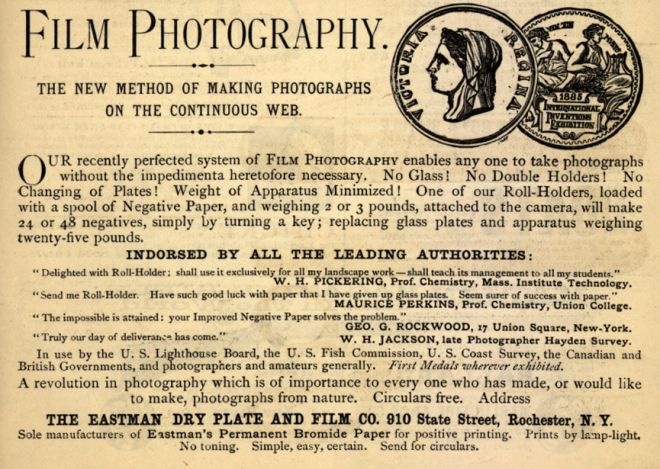
Very often we hear that the reason for not having too many 19th, and early 20th centuries photographs lies within the novelty of the invention. It is often suggested that opportunities to have a photo taken were few and far between. I am not so sure about that, for the amount of the 19th century photo studios, and various other types of private photographers appears to be staggering. Let us take a look at some of the old advertisements.
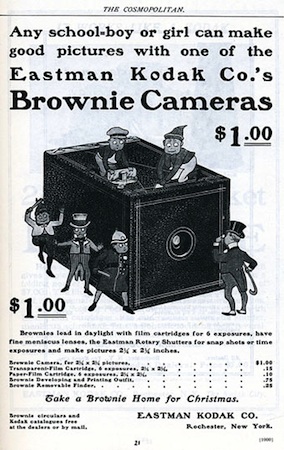
The Brownie camera, introduced in February 1900, invented low-cost photography by introducing the concept of the snapshot to the masses. The Brownie was a very basic cardboard box camera with a simple meniscus lens that took 2 1/4-inch square pictures on 117 roll film. The Brownie camera was conceived and marketed for sales of Kodak roll films. Because of its simple controls and initial price of $1 (equivalent to $29 in 2017) along with the low price of Kodak roll film and processing, The Brownie camera achieved and surpassed its marketing goal.
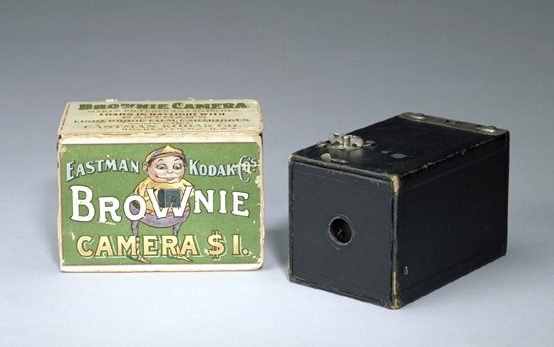
The first model of the camera was invented by Frank A. Brownell. Consumers responded, and over 150,000 Brownie cameras were shipped in the first year of production. Allegedly there were 245,000 first model cameras sold between 1900 and 1901.
An improved model, called No. 2 Brownie came in 1901, which produced larger 2-1/4 by 3-1/4 inch photos and cost $2 and was also a huge success.
Brownie (camera)
Kodak Brownie Camera Information - The Original | The Brownie Camera Page
Kodak No.1 Brownie Camera Information | The Brownie Camera Page
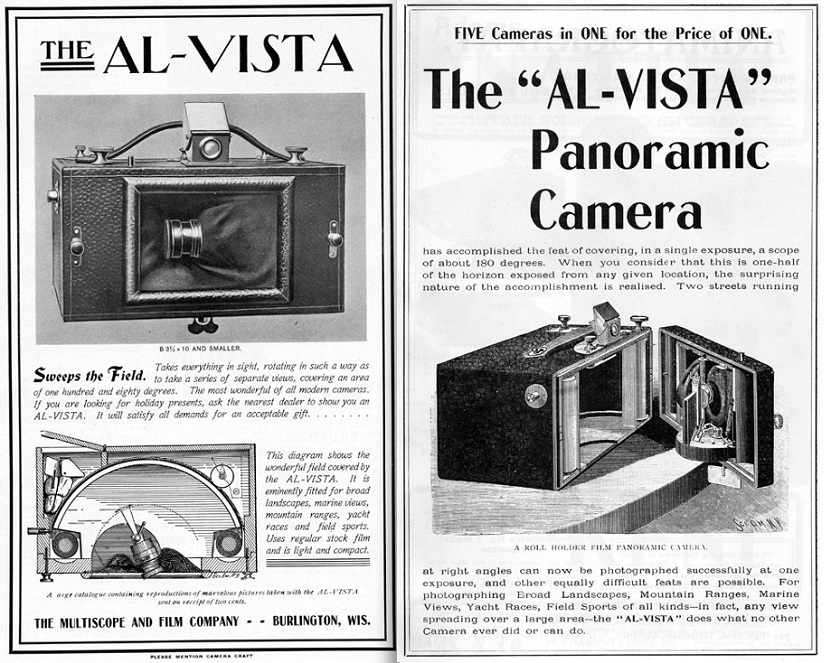
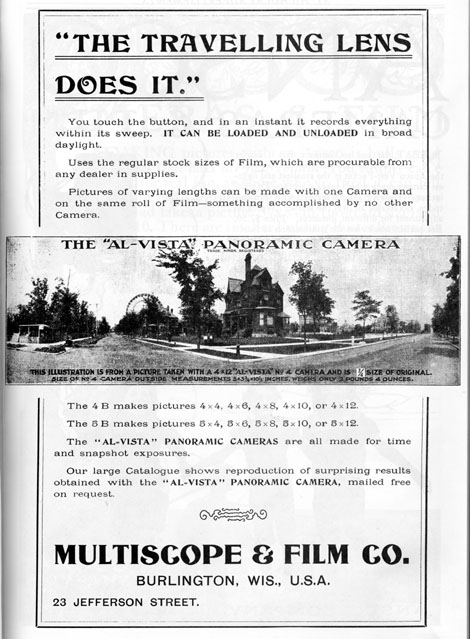
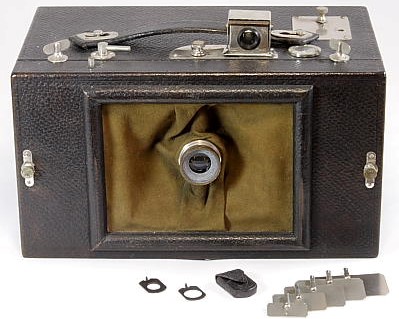 The Al-Vista pre-dates the Kodak Panoram and had many additional features. Looking into the lens, the take-up spool is on the left. As the shutter is tensioned the lens moves to the right. The length of film to be exposed is now set on the top of the camera. When the shutter is released the lens sweeps across the film and is stopped by a bar which was positioned when the exposure length was set. As the lens is stopped by the bar a baffle moves behind the lens to block the light. Advancing the film operates a film counter. A punch is provided so that individual frames can be marked and cut off prior to development.
Al-Vista - Antique and Vintage Cameras
Following $1 to $29 (2017) ratio, we end up with approximately $725 in today's money. While this is definitely expensive, it is important to note that quite a lot of people today own cameras which cost way more than that.
George Eastman Camera
The most important cardboard box ever?
Eastman Camera
See What the Oldest Surviving Kodak Camera Looks Like Now
Essentially the amount of Photo Studios snowballs starting with 1842. A very good example of the ads can be seen in the link below:
An Introduction to Photography in the Early 20th Century
By 1840, these advances were enough to pave the way for photography’s professionalization. Mr. Wolcott and Mr. Johnson were the first in the country to open a commercial portrait gallery, and others soon followed. Images in New York cost $3 to $10, a sum that allowed more people than before to see themselves reflected in a portrait, an experience both strange and wonderful.
“They were not all that cheap, but they were so much cheaper than having a painted portrait. It really democratized the whole idea of having your image for yourself,” said Miles Orvell, an English professor at Temple University and the author of American Photography.
By 1844, there were 16 daguerreotype galleries in New York City. Less than a decade later, according to Professor Orvell, there were 86, more than in any other metropolis in the country. The epicenter of the trade was Broadway, home to the largest and most lavish galleries in the city, which served as both studios and exhibition spaces. For Brady, who became famous photographing “men of achievement” including presidents and statesmen, these portrait rooms served a grand social function.
Year 1900
Let's start with 1900. It appears to be an obvious date after which any person who wanted to take a photograph could easily do so. For less than $2.00 anyone could buy The Brownie, a roll of film, and get it processed.The Brownie camera, introduced in February 1900, invented low-cost photography by introducing the concept of the snapshot to the masses. The Brownie was a very basic cardboard box camera with a simple meniscus lens that took 2 1/4-inch square pictures on 117 roll film. The Brownie camera was conceived and marketed for sales of Kodak roll films. Because of its simple controls and initial price of $1 (equivalent to $29 in 2017) along with the low price of Kodak roll film and processing, The Brownie camera achieved and surpassed its marketing goal.
The first model of the camera was invented by Frank A. Brownell. Consumers responded, and over 150,000 Brownie cameras were shipped in the first year of production. Allegedly there were 245,000 first model cameras sold between 1900 and 1901.
An improved model, called No. 2 Brownie came in 1901, which produced larger 2-1/4 by 3-1/4 inch photos and cost $2 and was also a huge success.
Kodak Brownie Camera Information - The Original | The Brownie Camera Page
Kodak No.1 Brownie Camera Information | The Brownie Camera Page
Year 1897
The first model of the Al-Vista was introduced in c. 1897. The model here is the improved version of c. 1900.
Al-Vista - Antique and Vintage Cameras
Year 1888
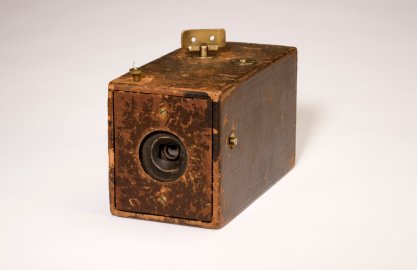
US inventor George Eastman took an important step forward in the 1880s, when he popularised a flexible film that did away with the need for weighty plates. His first "Kodak Camera" went on sale in 1888, pre-loaded with enough film to take 100 photographs. When the last picture was taken, the entire camera was sent back to Kodak to be developed. It was an uncomplicated box but it cost $25 - a significant amount of money. It was still a device for the wealthy.
Following $1 to $29 (2017) ratio, we end up with approximately $725 in today's money. While this is definitely expensive, it is important to note that quite a lot of people today own cameras which cost way more than that.
George Eastman Camera
The most important cardboard box ever?
Eastman Camera
See What the Oldest Surviving Kodak Camera Looks Like Now
Pre-1888
It appears that prior to this date if you wanted to take a picture you would have to use services of one of the hundreds of various private photographers.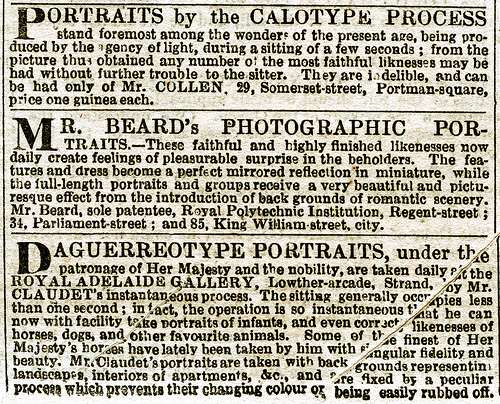
Essentially the amount of Photo Studios snowballs starting with 1842. A very good example of the ads can be seen in the link below:
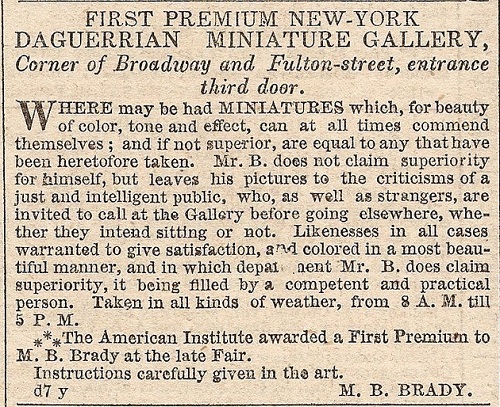
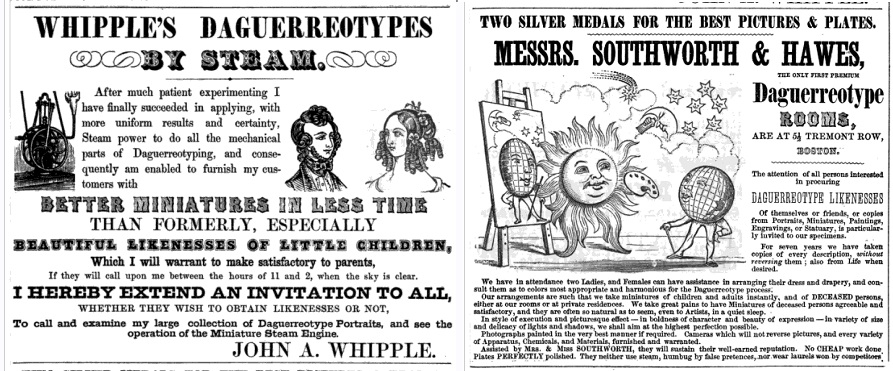
1865 - 1890
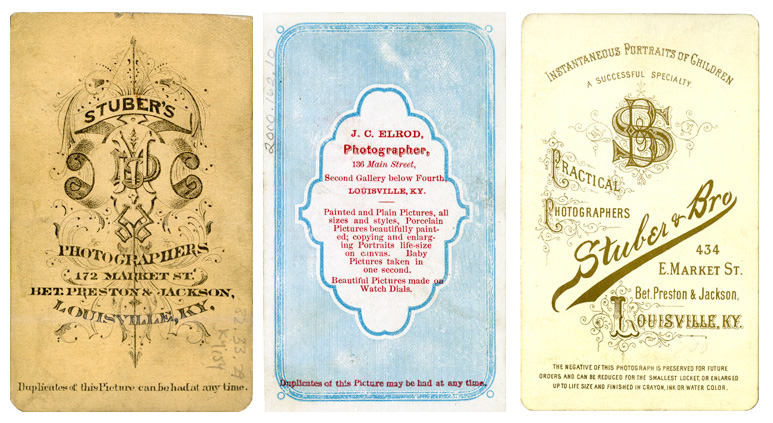
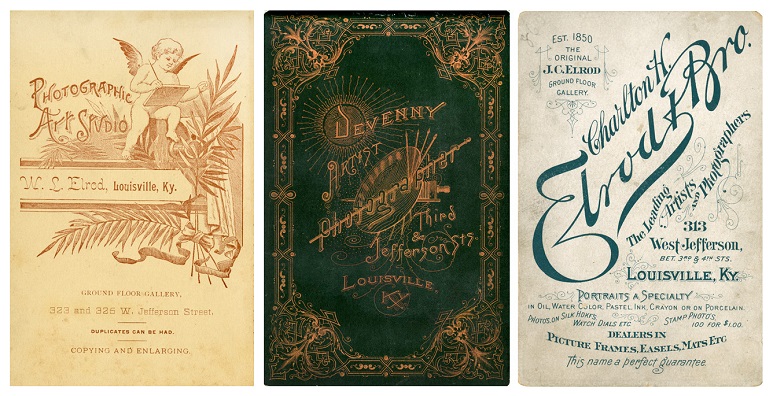
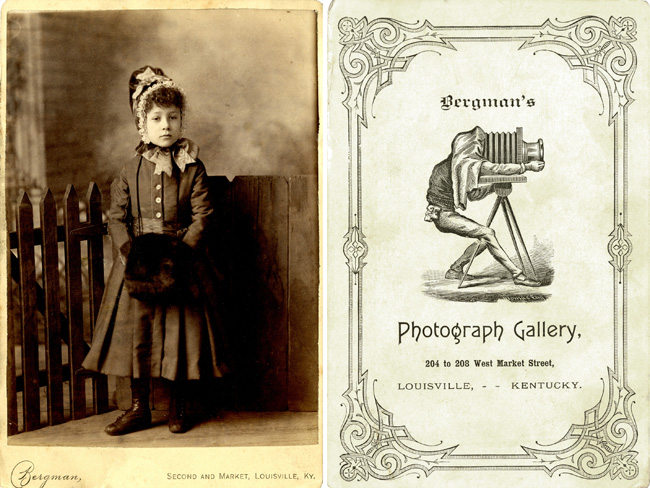
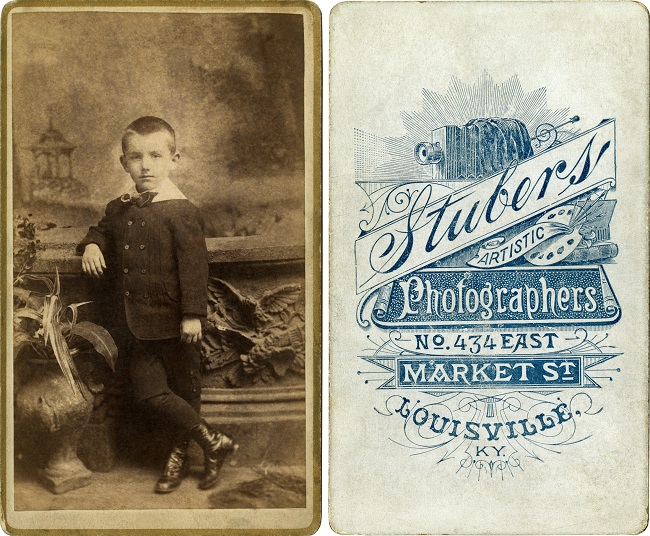
The First 100 Years of Camera Advertising
An Introduction to Photography in the Early 20th Century
* * * * *
Essentially, judging by the volume of the surviving advertisement, photography related business was booming starting with approximately 1840s.
By 1840, these advances were enough to pave the way for photography’s professionalization. Mr. Wolcott and Mr. Johnson were the first in the country to open a commercial portrait gallery, and others soon followed. Images in New York cost $3 to $10, a sum that allowed more people than before to see themselves reflected in a portrait, an experience both strange and wonderful.
“They were not all that cheap, but they were so much cheaper than having a painted portrait. It really democratized the whole idea of having your image for yourself,” said Miles Orvell, an English professor at Temple University and the author of American Photography.
By 1844, there were 16 daguerreotype galleries in New York City. Less than a decade later, according to Professor Orvell, there were 86, more than in any other metropolis in the country. The epicenter of the trade was Broadway, home to the largest and most lavish galleries in the city, which served as both studios and exhibition spaces. For Brady, who became famous photographing “men of achievement” including presidents and statesmen, these portrait rooms served a grand social function.
- The Rise of Paper Photography in 1850s France
- The Daguerreian Era and Early American Photography on Paper, 1839–60
- The Hidden History of Photography and New York
- Where were US flags prior to the Civil War?
- Where is the US Flag on 1826-1855 Washington DC Capitol Building?
- US Congress 1840 - 1860
Note: This OP was recovered from the KeeperOfTheKnowledge archive.
Note: Archived Sh.org replies to this OP are included in this thread.