Another story about the Caesarean birth of Jesus

MaziarMohajer

Core Member
Active Member
Joined
Mar 19, 2021
Messages
131
Reaction score
308
Dr. Fomenko's viewpoints on the life of Jesus are an essential part of his New Chronology. One astonishing discovery is that Jesus' virginal birth was actually a Caesarean Section (C/S). It may be known to the reader that Dr. Fomenko has discovered numerous ghostly characters that are duplicates of Jesus. Some of them are born via C/S. The birth of Rustam in Shahnameh is the most striking example. Knowing the story since childhood, I became interested in the New Chronology and a personal journey started... .

Dr. Fomenko says, " Given examples illustrate how widespread the myth of the birth of Jesus by caesarean section really is. You can see how passionately and how much this event was discussed if it generated such a multitude of versions, notably in places of wide ranging geographic and linguistic diversity." source

This is the narrative from Shahnameh on C/S birth of Rustam.
"
1727980585923.png
1727980710637.png


A child's birth is celebrated here, while knowing and accepting the risks . It's really beautiful. If you can read Farsi, then read the original. It is beautiful. Enjoy the poem and forget the New Chronology. Even if you are told having a baby is a mistake, It is still beautiful.

What about dark and pessimistic views on Jesus? Let's read Toledot Yeshu. Dr. Fomenko has found a story that corresponds to C/S:

"In the texts, Jesus’ miracles take on a sinister twist, with the young prophet stealing the Tetragrammaton, the name of God, from the Jewish temple. He then cuts his thigh open, inserts the name into his wound, and escapes from the temple undetected. It is the Tetragrammaton, the text claims, that allows him to perform the illicit magic." source. According to the New Chronology, this is a distorted story on C/S birth of Jesus.

I have found a more vivid story on C/S birth of Jesus in Toledot Yeshu. This has remined unnoticed by Dr. Fomenko and others. Here, we read a story that says Jesus-Yeshu was a surgeon, in fact ,"a magician with a specialization in gynecologic and obstetrics." Source

1727982609828.png

It clearly says that Jesus was a surgeon and did C/S but failed. There is a very famous poem by Hafiz says, our friend who was hanged , his crime was that he revealed secrets. ( He obviously talks about Jesus-Yeshu)

گفت آن یار کز او گشت سر دار بلند
جرمش این بود که اسرار هویدا می کرد


Jesus was guilty because he knew science (the Tetragrammaton) and wanted it for everyone ( stealing the name and revealing it ). One field of science that Jesus practiced was medicine and surgery. He was born via C/S and did it for others. I will discuss it further.
 

Attachments

  • 1727982432814.png
    1727982432814.png
    2.5 KB · Views: 134
Last edited:
Very interesting post, and it lines up with some ideas I recently had after reading Fomenko as well.

- Note that the baby in the Shahnameh is described as “mammoth” in the English translation. I find Fomenko's insistence on the medical novelty of birth by Caesarean section somewhat insufficient to explain the supposedly universal fascination this event generated. If Andronicus (or whoever) had to be cut out in this way because he was a giant, however, it makes more sense.

- Was “Andronicus” killed by the members of his own family because he gave language to humanity at large? In Fomenko’s version of history, he was a member of the divine royal family whose crucifixion caused a religious schism between those who went on to worship him and his legacy (“apostolic Christianity”) and those who continued to worship the Royal Family of which he was a member (“royal Christianity” which is basically sacrificial paganism).

- Could the “knowledge of Good and Evil” from the Bible be better described as “the capacity to distinguish between True and False using language and reason”?

- Remember the argument of the neuroscientist Julian Jaynes that everyone on Earth was essentially hallucinating voices that remote-controlled them until “1000 BC” in the conventional chronology. He believes that it is precisely trade and the spread of written language that essentially changed the brains of primitive people in a way that made them autonomous and “silenced the voices”. Was Andronicus/Christ somehow responsible for beginning or accelerating this process with his gift of the Tetragrammaton?

- This perhaps connects with the Christ symbol of the rooster (gallus). The rooster is precisely the animal that announces the arrival of the sun by "speaking". Europe is full of "Gal" places: Gaul, Galicia, Portugal, Wales, etc. In the "France is Biblical Israel" thread, the argument is made that the origin of this connection is the Slavonic root "Glagolu" which means "word" (attributed to PIE by mainstream linguists). This would also give us the word "to call".

- Remember as well that all those golden hats and ornate swords they dig up all over Europe, which are decorated with symbols and designs very similar to “Sumerian” and Persian motifs despite being “thousands of years more recent”, supposedly come from pre-literate “Celts” whose proper names we do not even know, hence their designation as “Urnfield culture”, “Hallstatt culture”, “La Tene culture”, etc. Were these people somehow psychically controlled from the center of the Empire before attaining literacy and with it autonomy, thanks to the gift of Christ?

- Check out the following “Norse” myth of Odin’s discovery of runes, which has some points of similarity with the legends you shared:

Screenshot_20241006_132129.jpg
Screenshot_20241006_132143.jpg
Screenshot_20241006_132155.jpg
Screenshot_20241006_132208.jpg
Screenshot_20241006_132220.jpg

Odin's Discovery of the Runes - Norse Mythology for Smart People

- Is this how the crucifixion of Andronicus/Christ went down? Was he a member of the divine royal family who had himself voluntarily nailed to a tree and pierced in the side with a spear to attain “wisdom”/magical powers which he then shared with his followers? Was he killed by his family after his auto-crucifixion for sharing a protected “technology”, namely letters, with the humans? Note that some of the “powers” granted to Odin by this act of ritual self-sacrifice seem more in line with witchcraft than wisdom. If we consider magic to be a classified weapon employed exclusively by the Royal Family, that makes Odin guilty of sedition. In another version I read, he also ingests some substance (a drug?) as part of the process, which links up with Ammon Hillman’s ideas about the nature of the mysteries (=rituals involving the ingestion of powerful substances offering contact with the “other side” and the acquisition of magical powers through near-death experiences). The drug even makes him thirsty, just like Christ. Was Andronicus/Prometheus/Odin/Jesus giving people the Logos that would free them from external influence and awaken them to their “true selves”, or was he initiating them into witchcraft, i.e. replacing the voice of the benevolent royal family with the voices of unscrupulous disembodied spirits who would control them in a more subtle way, through their egos and appetites? The “runes” that revealed themselves to him are more like powerful magic sigils than letters that could be used for purposes of self-knowledge.

- King Solomon emerges from this analysis as another syncretic compromise formation uniting two separate and indeed opposed functions of language: (1) to summon spirits and thereby attain power; (2) to attain wisdom and judgment, and refuse the temptations of power.

- The story you share must also be a duplicate of the “Greek” myth of Zeus sewing Dionysus into his thigh. If Dionysus was the god who shared the initiatic mysteries with humanity, then we have another parallel. I guess the Tetragrammaton stolen by Christ is a metaphor for the magical power of sigils and runes. Perhaps it is also the Seal of Solomon.

- The deeper you get into “conspiracy theories”, the more it seems like the entities who run our realm practice a “religion” based on deception and deception alone, deception for the sake of deception. Well, when we look at this from a Fomenko lens, it actually makes sense. If magical language was a protected technology of the “gods” shared prematurely (?) with the masses by a renegade member of the divine royal family (“Odin” “Andronicus” “Prometheus” “Christ” “Dionysus” “Enki” etc.), wouldn’t the only way to “put the genie back in the bottle” be by developing a counter-religion of pure deception that alone would neutralize the “reality-creating” magical powers of true language and keep humanity “in its place”? Here Christ also becomes Nimrod and the crucifixion also becomes the Tower of Babel. That might seem too mixed up, but when you read Fomenko it becomes easier to imagine how all these old events were duplicated and refracted in this way.

- Once humans possessed true words, true letters, and true concepts, they would inevitably realize, through the exercise of logic and reason, that past a certain point they didn’t need or deserve to be remote controlled from the imperial center. Or alternatively: once they possessed powerful magic, they were in danger of destroying the Empire with their rebelliousness. The first objective of the deceivers in either case ought therefore to be: confuse humanity with false words, false letters, and false concepts that would render gnosis impossible. They could even frame this as “protecting them from themselves”. Perhaps they would even be justified in doing so.

- Were there two “Christ” characters? The rebel Prometheus/Odin/Lucifer who shared “divine fire” with humanity, and a second “damage control Christ” or “double agent Christ” who was sent later to usurp the identity of the first and bring people back to the original law of the royal family? Did these two characters eventually become fused into the contradictory and psychologically unconvincing “Jesus Christ” we get in the Bible today?

- Fomenko believes today’s Jews are descendents of the various castes of emissaries and administrators that spread out from the imperial center to manage the provinces. If that’s true, it’s only natural that they would remember who the “first Christ” really was, namely a traitor to the Empire they served (“Yahweh”). I suspect their legends are basically accurate.

- The first Christ offered humans contact with powerful spirits on the other side. Humans were tempted by them. Some, like the allegorical King Solomon, overcame temptation and learned to use these powers for good. Others were devoured and became evil. Did the second Christ, one of whose jobs was to blackwash his ethically ambiguous predecessor as “Lucifer”, put in place some kind of spiritual failsafe mechanism to bring humans back to the Imperial Law through the detour of transgression? I occasionally listen to testimonials of born-again Christians and it seems like Christ always waits until the absolute last moment, when they are strung out and about to commit suicide, to intervene. Why wait so long? My cynical take is that he allows them to fall so low because otherwise they won’t be sufficiently impressed/traumatized to serve him unconditionally after being “saved”. That’s what he wants: to be served, to be worshiped, to harvest their energy. Missionaries have a lot more success in prisons than in universities. Healthy people don’t need Christ, just as they don’t need to be constantly supervised by the police. An incredibly clever good cop/bad cop deception, perhaps cooked up by the entire divine Royal Family in a desperate attempt to stop their rapidly evolving children from simply leaving their narcissistic guidance behind completely…
 
Last edited:
Very interesting post, and it lines up with some ideas I recently had after reading Fomenko as well.

- Note that the baby in the Shahnameh is described as “mammoth” in the English translation. I find Fomenko's insistence on the medical novelty of birth by Caesarean section somewhat insufficient to explain the supposedly universal fascination this event generated. If Andronicus (or whoever) had to be cut out in this way because he was a giant, however, it makes more sense.

- Was “Andronicus” killed by the members of his own family because he gave language to humanity at large? In Fomenko’s version of history, he was a member of the divine royal family whose crucifixion caused a religious schism between those who went on to worship him and his legacy (“apostolic Christianity”) and those who continued to worship the Royal Family of which he was a member (“royal Christianity” which is basically sacrificial paganism).

- Could the “knowledge of Good and Evil” from the Bible be better described as “the capacity to distinguish between True and False using language and reason”?

- Remember the argument of the neuroscientist Julian Jaynes that everyone on Earth was essentially hallucinating voices that remote-controlled them until “1000 BC” in the conventional chronology. He believes that it is precisely trade and the spread of written language that essentially changed the brains of primitive people in a way that made them autonomous and “silenced the voices”. Was Andronicus/Christ somehow responsible for beginning or accelerating this process with his gift of the Tetragrammaton?

- This perhaps connects with the Christ symbol of the rooster (gallus). The rooster is precisely the animal that announces the arrival of the sun by "speaking". Europe is full of "Gal" places: Gaul, Galicia, Portugal, Wales, etc. In the "France is Biblical Israel" thread, the argument is made that the origin of this connection is the Slavonic root "Glagolu" which means "word" (attributed to PIE by mainstream linguists). This would also give us the word "to call".

- Remember as well that all those golden hats and ornate swords they dig up all over Europe, which are decorated with symbols and designs very similar to “Sumerian” and Persian motifs despite being “thousands of years more recent”, supposedly come from pre-literate “Celts” whose proper names we do not even know, hence their designation as “Urnfield culture”, “Hallstatt culture”, “La Tene culture”, etc. Were these people somehow psychically controlled from the center of the Empire before attaining literacy and with it autonomy, thanks to the gift of Christ?

- Check out the following “Norse” myth of Odin’s discovery of runes, which has some points of similarity with the legends you shared:


Odin's Discovery of the Runes - Norse Mythology for Smart People

- Is this how the crucifixion of Andronicus/Christ went down? Was he a member of the divine royal family who had himself voluntarily nailed to a tree and pierced in the side with a spear to attain “wisdom”/magical powers which he then shared with his followers? Was he killed by his family after his auto-crucifixion for sharing a protected “technology”, namely letters, with the humans? Note that some of the “powers” granted to Odin by this act of ritual self-sacrifice seem more in line with witchcraft than wisdom. If we consider magic to be a classified weapon employed exclusively by the Royal Family, that makes Odin guilty of sedition. In another version I read, he also ingests some substance (a drug?) as part of the process, which links up with Ammon Hillman’s ideas about the nature of the mysteries (=rituals involving the ingestion of powerful substances offering contact with the “other side” and the acquisition of magical powers through near-death experiences). The drug even makes him thirsty, just like Christ. Was Andronicus/Prometheus/Odin/Jesus giving people the Logos that would free them from external influence and awaken them to their “true selves”, or was he initiating them into witchcraft, i.e. replacing the voice of the benevolent royal family with the voices of unscrupulous disembodied spirits who would control them in a more subtle way, through their egos and appetites? The “runes” that revealed themselves to him are more like powerful magic sigils than letters that could be used for purposes of self-knowledge.

- King Solomon emerges from this analysis as another syncretic compromise formation uniting two separate and indeed opposed functions of language: (1) to summon spirits and thereby attain power; (2) to attain wisdom and judgment, and refuse the temptations of power.

- The story you share must also be a duplicate of the “Greek” myth of Zeus sewing Dionysus into his thigh. If Dionysus was the god who shared the initiatic mysteries with humanity, then we have another parallel. I guess the Tetragrammaton stolen by Christ is a metaphor for the magical power of sigils and runes. Perhaps it is also the Seal of Solomon.

- The deeper you get into “conspiracy theories”, the more it seems like the entities who run our realm practice a “religion” based on deception and deception alone, deception for the sake of deception. Well, when we look at this from a Fomenko lens, it actually makes sense. If magical language was a protected technology of the “gods” shared prematurely (?) with the masses by a renegade member of the divine royal family (“Odin” “Andronicus” “Prometheus” “Christ” “Dionysus” “Enki” etc.), wouldn’t the only way to “put the genie back in the bottle” be by developing a counter-religion of pure deception that alone would neutralize the “reality-creating” magical powers of true language and keep humanity “in its place”? Here Christ also becomes Nimrod and the crucifixion also becomes the Tower of Babel. That might seem too mixed up, but when you read Fomenko it becomes easier to imagine how all these old events were duplicated and refracted in this way.

- Once humans possessed true words, true letters, and true concepts, they would inevitably realize, through the exercise of logic and reason, that past a certain point they didn’t need or deserve to be remote controlled from the imperial center. Or alternatively: once they possessed powerful magic, they were in danger of destroying the Empire with their rebelliousness. The first objective of the deceivers in either case ought therefore to be: confuse humanity with false words, false letters, and false concepts that would render gnosis impossible. They could even frame this as “protecting them from themselves”. Perhaps they would even be justified in doing so.

- Were there two “Christ” characters? The rebel Prometheus/Odin/Lucifer who shared “divine fire” with humanity, and a second “damage control Christ” or “double agent Christ” who was sent later to usurp the identity of the first and bring people back to the original law of the royal family? Did these two characters eventually become fused into the contradictory and psychologically unconvincing “Jesus Christ” we get in the Bible today?

- Fomenko believes today’s Jews are descendents of the various castes of emissaries and administrators that spread out from the imperial center to manage the provinces. If that’s true, it’s only natural that they would remember who the “first Christ” really was, namely a traitor to the Empire they served (“Yahweh”). I suspect their legends are basically accurate.

- The first Christ offered humans contact with powerful spirits on the other side. Humans were tempted by them. Some, like the allegorical King Solomon, overcame temptation and learned to use these powers for good. Others were devoured and became evil. Did the second Christ, one of whose jobs was to blackwash his ethically ambiguous predecessor as “Lucifer”, put in place some kind of spiritual failsafe mechanism to bring humans back to the Imperial Law through the detour of transgression? I occasionally listen to testimonials of born-again Christians and it seems like Christ always waits until the absolute last moment, when they are strung out and about to commit suicide, to intervene. Why wait so long? My cynical take is that he allows them to fall so low because otherwise they won’t be sufficiently impressed/traumatized to serve him unconditionally after being “saved”. That’s what he wants: to be served, to be worshiped, to harvest their energy. Missionaries have a lot more success in prisons than in universities. Healthy people don’t need Christ, just as they don’t need to be constantly supervised by the police. An incredibly clever good cop/bad cop deception, perhaps cooked up by the entire divine Royal Family in a desperate attempt to stop their rapidly evolving children from simply leaving their narcissistic guidance behind completely…

Very interesting post, and it lines up with some ideas I recently had after reading Fomenko as well.

- Note that the baby in the Shahnameh is described as “mammoth” in the English translation. I find Fomenko's insistence on the medical novelty of birth by Caesarean section somewhat insufficient to explain the supposedly universal fascination this event generated. If Andronicus (or whoever) had to be cut out in this way because he was a giant, however, it makes more sense.
Hello and thank you for the useful and detailed response. Here I argue that the C/S birth of Jesus done due to the presence of twins and not because the fetus was large/ giant.

I would start with the narrative of the Quran about the crucifixion of Jesus.

وَقَوْلِهِمْ إِنَّا قَتَلْنَا الْمَسِيحَ عِيسَى ابْنَ مَرْيَمَ رَسُولَ اللَّهِ وَمَا قَتَلُوهُ وَمَا صَلَبُوهُ وَلَٰكِنْ شُبِّهَ لَهُمْ ۚ وَإِنَّ الَّذِينَ اخْتَلَفُوا فِيهِ لَفِي شَكٍّ مِنْهُ ۚ مَا لَهُمْ بِهِ مِنْ عِلْمٍ إِلَّا اتِّبَاعَ الظَّنِّ ۚ وَمَا قَتَلُوهُ يَقِينًا

"and for their saying, ‘We killed the Messiah, Jesus son of Mary, the apostle of Allah’—though they did not kill him nor did they crucify him, but so it was made to appear to them. Indeed those who differ concerning him are surely in doubt about him: they do not have any knowledge of that beyond following conjectures, and certainly, they did not kill him. "Source

Based on Gospel of Barnabas : In the Gospel of Barnabas, Jesus was not crucified. Judas Iscariot (whose face was made to resemble his) replaced him on the cross, and Jesus was raised into heaven by God. This agrees with the mainstream interpretations of Sura An-Nisa 157–158, affirming that Jesus was not crucified but instead his lookalike was.

Some early Christians thought that one of Jesus’ brothers, Jude or Judas - both are translations of the same Greek word- was actually a twin. Source. This person however is not the famous traitor one.

Medical papers state that while a twin pregnancy can be delivered vaginally, it is risky and most cases are delivered via C/S

Dr. Fomenko says that Jesus' virginal birth was actually a C/S.

So, let's summarize these "alternative views" and draw conclusions. Someone else - Judas - who looked like Jesus was crucified in his place. I think it is reasonable to say that Jesus had an identical twin. His name was Judas. In an era when twin pregnancies rarely resulted in successful births, presence of twins particularly identical ones was something of a miracle.

Madonna_with_Child_and_Young_St_John.jpg

Let's go back to the Qur'an. Disciples are presented in the text as submitters to God . No exceptions are mentioned and no one is a traitor. source
Thus, the substitution hypothesis has a strong foundation, but still it does not tell the whole story. It does not cover C/S birth of Jesus.

Actually, what I think is that Judas was the identical twin brother of Jesus. They were born via C/S, so a very rare event could happen. It was kept as a secret. So, the enemy of Jesus did not know it. Even some apostles of Jesus did not know it too . Jesus' enemies were confused to find him because the two individuals looked alike . Finally, when the enemy approached, Judas decided to sacrifice himself. The two brothers hugged and kissed each other for the last time, kiss of Judas. Judas was so loyal to his brother that he even accepted the accusation of being a traitor. Jesus fled and Judas was crucified/hanged. It is beautiful. Forget the New Chronology and traditional negative narratives. Jesus' closest friend did not betray him. In fact, his brother sacrificed his life. It is beautiful and bright.


1024px-Giotto_-_Scrovegni_-_-31-_-_Kiss_of_Judas copy.jpg

Hafiz says:
چه مبارک‌سَحَری بود و چه فرخنده‌شبی
آن شبِ قدر که این تازه‌براتم دادند

What a blessed morning it was and what an auspicious night, That night of destiny, when they gave me a new BRIGHT one.

By the way, probably we can find more commonalities between our views. I should read and study more on other points you mentioned.​
 
Last edited:
8b2937b54929075066bb83-11380860-images-thumbs&n=13.jpg
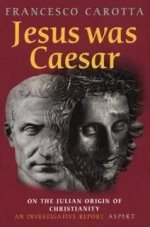
I didn't know that the myth mentions jesus had a caesarean birth! It makes Carotta's argument even more pertinent.
I wonder where the term 'caesarean birth' came from / when it was first used.

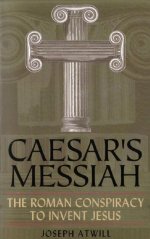
Though, Joseph Atwill's argument that the story of jesus is a retelling of Titus' story is even more convincing to me.
I would highly recommend reading either of these books.

They both conclusively point out that the story of ancient rome and the story of jesus were written at the same time by the same group.

Joseph_Atwill_Caesar_s_Messiah.jpg
 
I would highly recommend reading either of these books.

They both conclusively point out that the story of ancient rome and the story of jesus were written at the same time by the same group.
Thank you for the book recommendation. I will read.

I agree. Even opposing viewpoints such as Toledot Yeshu were, in my opinion, written by the same group that wrote the accounts of the life of Jesus.
The Quran calls them People of the Book اهل کتاب .
"The word kitāb, meaning 'writing' or 'book', occurs very often in the Quran."
So, actually they were People of Writing - writers- ( not necessarily people believing in the books , such as the Christian or Jews,...). This topic needs a detailed discussion, of course.
 
Last edited:
You made a good and accurate point. We are talking about Gnosticism in a kind of materialistic way.
I think gnosticism is just a Vatican-approved euphemism for Odinism. They can't call their enemies Odinists because then it's obvious that Odin and God are the same and raises the question of why the Vatican was executing people who worship "God," so they talk around it by calling it heresy
 
Tips
Tips
Please respect our Posting Rules.
Back
Top