The burned house horizon consumed cultures (pun intended) around the Black Sea and in the Balkan peninsula from 6500 BCE until 2000 BCE. What makes it interesting to us is even the so called expert scholars can't agree on what caused the fires. Were they intentionally set? Were they the result of some ritual we are not aware of? Was it warfare? Was it some sort of reoccurring natural catastrophe? Was it domicide?
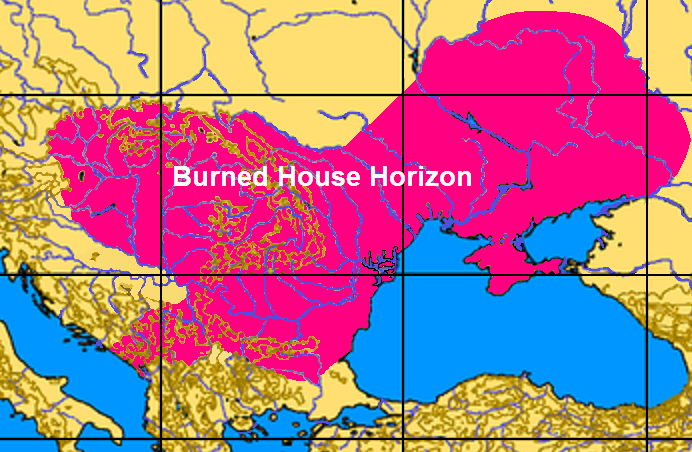
Although the practice of house burning took place among a handful of different Neolithic cultures in southeast Europe, it is most widely known among the Cucuteni-Trypillian culture for a number of reasons:
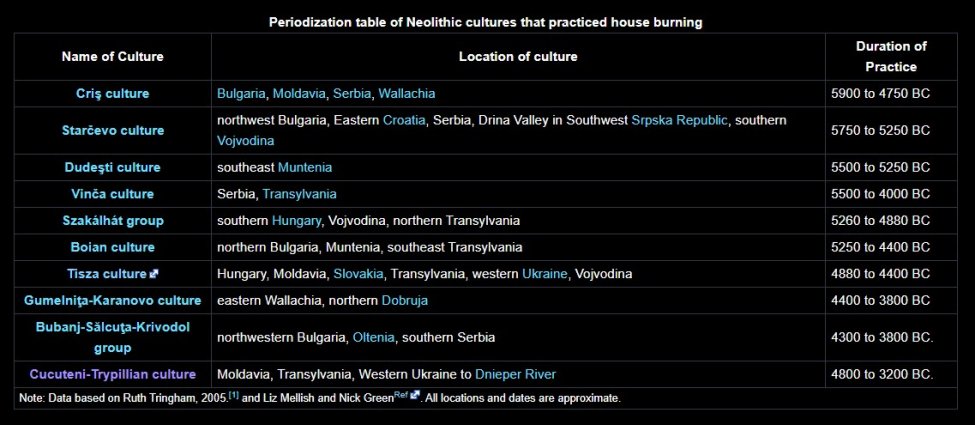
Cucuteni-Trypillian Culture One of the most notable aspects of this culture was the periodic destruction of settlements, with each single-habitation site having a lifetime of roughly 60 to 80 years. The purpose of burning these settlements is a subject of debate among scholars; some of the settlements were reconstructed several times on top of earlier habitational levels, preserving the shape and the orientation of the older buildings. One particular location; the Poduri site in Romania, revealed thirteen habitation levels that were constructed on top of each other over many years.[7]
 Of course this culture at Cucuteni was not discovered until.......wait for it..... 1884. Then miraculously at the same time, a site was discovered in Trypillia, Ukraine. Hence the hyphenated name of the culture.
Like other Neolithic societies, the Cucuteni–Trypillia culture had almost no division of labor. Although this culture's settlements sometimes grew to become the largest on Earth at the time (up to 15,000 people in the largest), there is no evidence that has been discovered of labour specialisation.
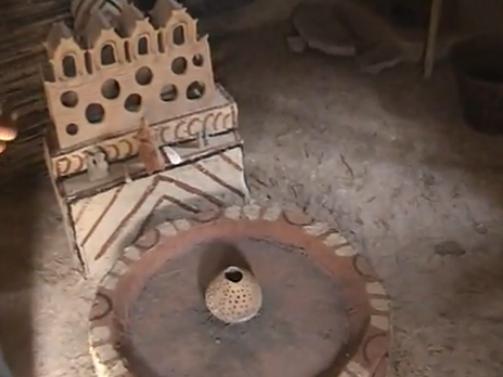
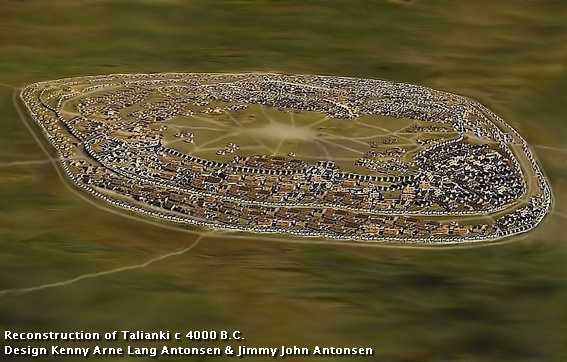
15,000 people! Here is a reconstruction of one of the towns. Notice the circular wheel shape. So they burned this whole town down regularly and rebuilt. Over and over again.
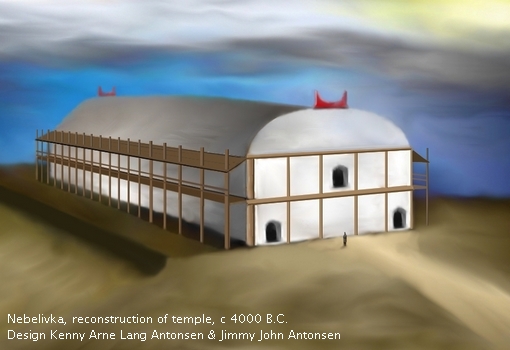
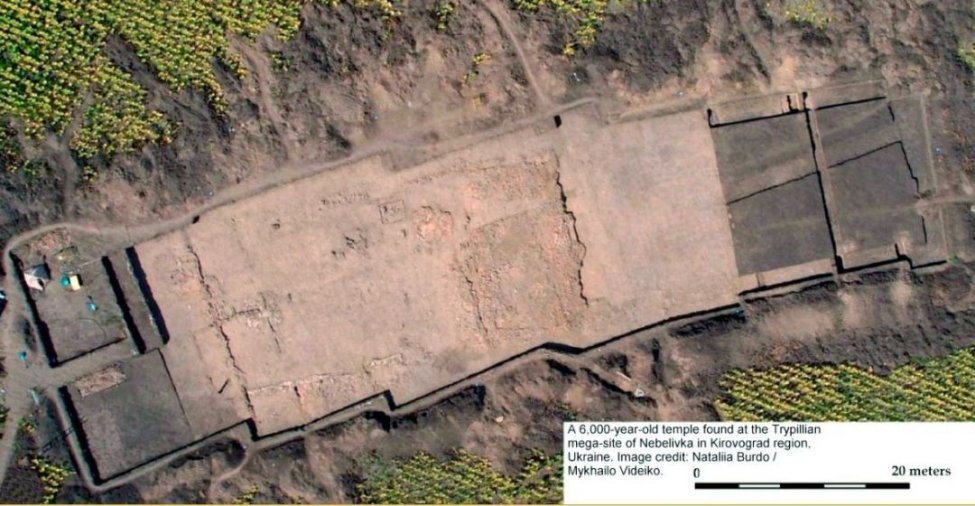
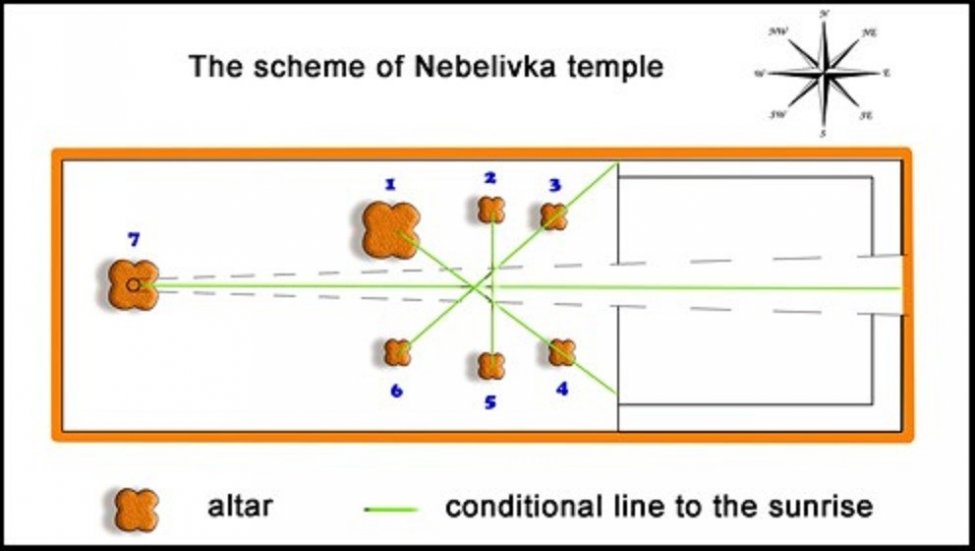
And the temple/gathering place. Nice bull horns.
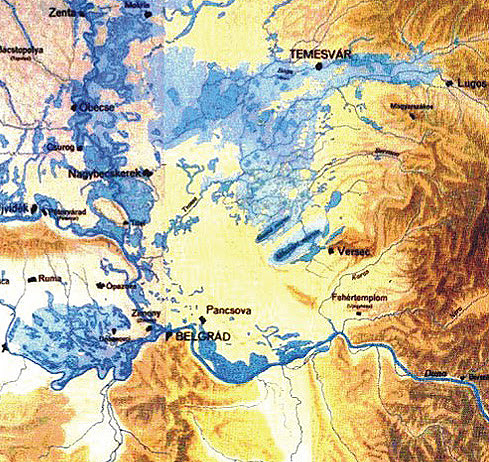
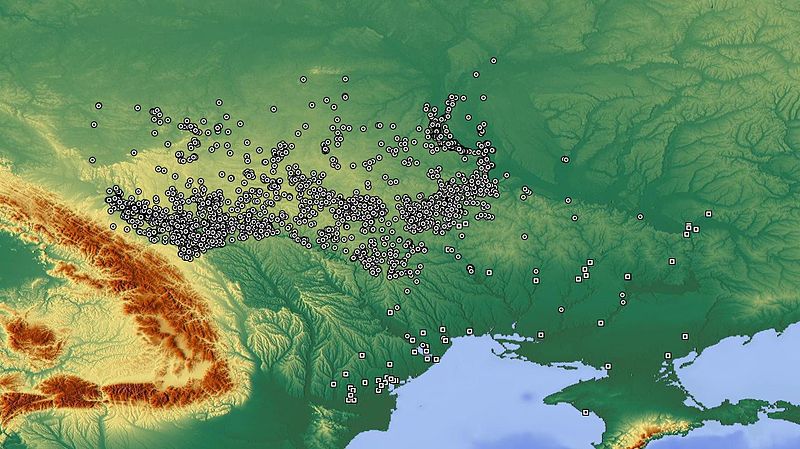
New settlements are being discovered all the time but yet not until the 19th century. Makes you wonder how they could miss them for thousands of years. Here is the current map of CT settlements.
The houses of the Cucuteni–Trypillia settlements were constructed in several general ways:
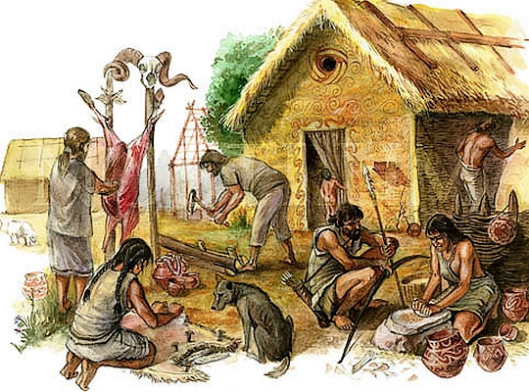
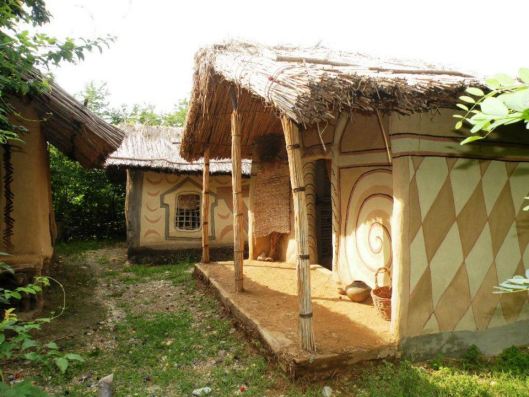
The Cucuteni–Trypillia culture is known by its distinctive settlements, architecture, intricately decorated pottery and anthropomorphic and zoomorphic figurines, which are preserved in archaeological remains. At its peak it was one of the most technologically advanced societies in the world at the time, developing new techniques for ceramic production, housing building, agriculture and producing woven textiles (although these have not survived and are known indirectly).
Journal abstract - Ancient Pages - Wordpress about CT
Official explanations of these burnings include proximity of houses; storing things that will burn inside their houses like grain and textiles or the the spontaneous combustion of said grain (you think the Cucuteni-Trypillians would figure this out after the first couple of times); weatherproofing, aggression from other cultures; recycling of building materials; fumigation, or demolition; symbolic end of house ie domicide.
All of these theories have flaws, which is why the scholars can't agree. For one thing, sometimes the homes were burnt with all the household goods, sometimes not. Sometimes their were human remains found, sometimes not. When they tried to recreate the burning of one of these places, they had to pile additional fuel next to the buildings to get the same results. Durham University PDF
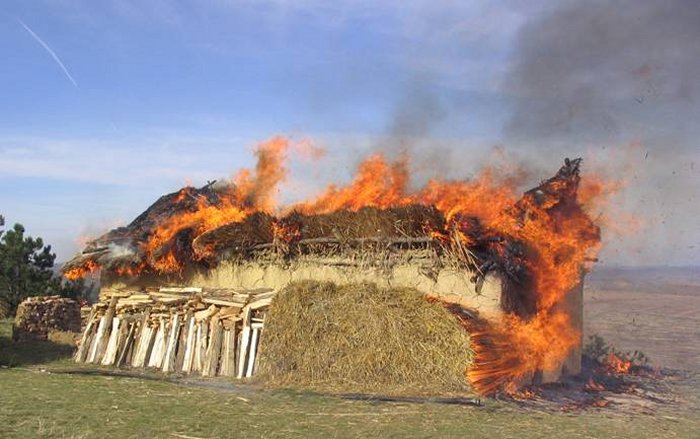
In 1978, Bankoff and Winter purchased a decaying wattle-and-daub house from a Serbian peasant family in order to conduct an experiment into house burning. The results were surprising: although the roof timbers and thatch were soon destroyed, the solid clay-plastered walls and their inner structural elements survived the fire, whose plume of smoke could be seen from the surrounding countryside (Bankoff & Winter 1979). The archaeologists noted that it would have taken much effort to collect extra fuel to ensure the complete destruction of the whole of the house.
Is anyone else having a hard time getting the song "Burning Down the House" out of your talking head? Must be me. So we are still to believe these fires are accidental or done as part of some other human caused action. A society that is subsistence farming is going to gather extra fuel to burn these sites, deforest the area, and burn their household goods every second or third generation? Live expectancy in the neolithic and bronze age was 34 years. This just doesn't sound right. So what could produce enough heat that extra fuel would not be needed? I would like to hear all of your ideas on what you think caused these fires because none of the scholars have a clue.
This site has a ton of info and pics about the culture. He is an atheist and his post is about the matriarchal nature of these societies and the spread of dairy cows and the milk theory. I know I read someone talking about cheese and the fat goddess figures just recently. Too lazy to go find the mention.

One of the things that always comes into my mind when talking about cyclic timing: the universe, the galaxy, the solar system. Maybe meteors or bolides hit this area on a regular basis , like the Chelyabinsk meteor. This meteor did a lot of property damage and injured a lot of people. You can find a lot of videos of this meteor thanks to the Russian tendency to have a camera on every car. The lack of meteor remnants can easily be explained if it exploded in the air. I know the alternate earth shape crowd just groaned in unison but the meteor showers are cyclical and can do random damage. In addition, a comet with an opposite charge than earth, could also reek havoc on a cyclical basis.
Maybe there was some plasma arching that occurred during these periods. According to the Plasma cosmology around 4900 BC.
The globe stood, inactive except for a daily rotation about the North Pole, for another 700 years. The globe looked white. This was the planet Saturn enclosed in a closely held coma of plasma in glow mode. All the tales recall that when God first emerged (700 years later), it was as a smaller object -- an egg.
Although in some legends of creation only a globe is remembered, other sources recall the figure of a duck or a goose, having noticed the planet Uranus, which was displaced from the central axis of rotation of the Saturnian planets (as noted in the previous chapter). Uranus still looked like the head of a bird -- with a beak and with a neck seemingly connected to the globe of Saturn. Thus any number of creation legends hold that the creator god was a (white) duck or goose. The Egyptian hieroglyph for Ra, the creator God, is a duck. The sacred animal of Brahma, the Vedic creator God, is a goose. As I have noted, from about 5000 BC egg-shape designs are added to pottery decorations in Eastern Europe. [note 8]
In Greek mythology, as in Egyptian mythology, the globe is the original creator God -- Ouranus ("Father Sky") in Greece. Even before the Goose of Creation laid its egg, or before the Egg of Creation hatched, the imagery must have been understood as being alive -- even though nothing much happened for 700 years -- for it moved in a circle around the pole star on a daily basis and additionally the plasma connections would have grown and moved (and changed shape) throughout the year as Saturn moved alternately closer and more distant from the Sun on its orbit. [note 9]
The egg, the real egg, not the body of the duck or goose, might have been Mercury, enclosed in a glow mode plasma, but distinct enough from Saturn to be noticed as a smaller object seen below the duck or next to the duck. With a coma Mercury would have been 10 to 30 times its current diameter.
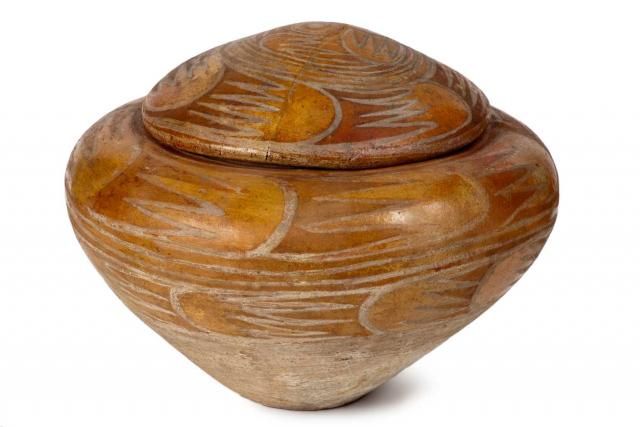
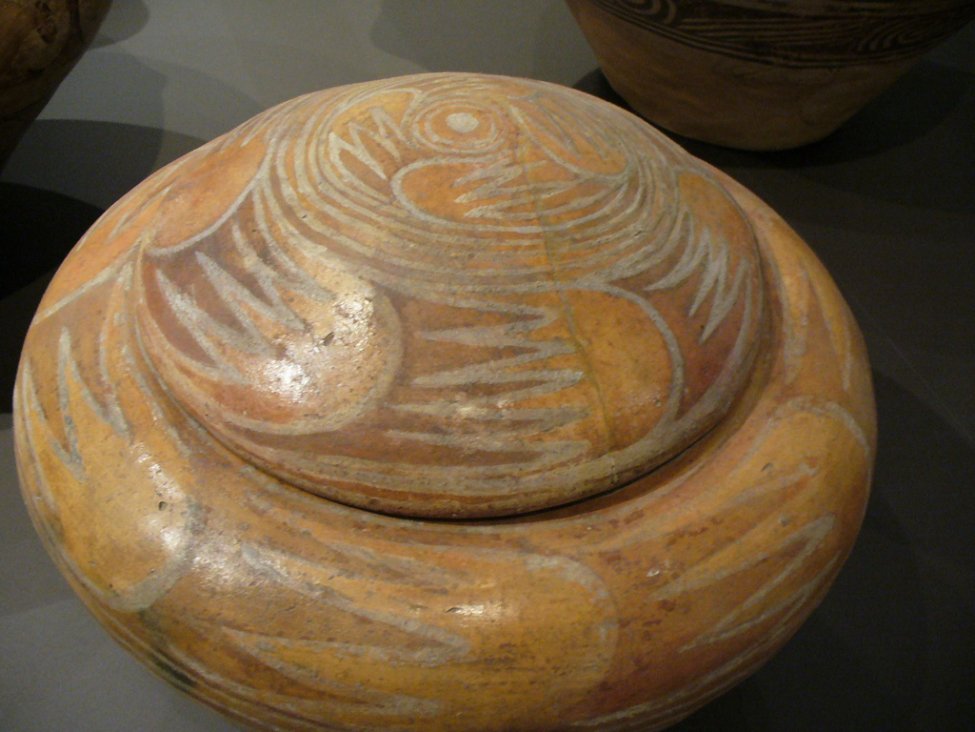
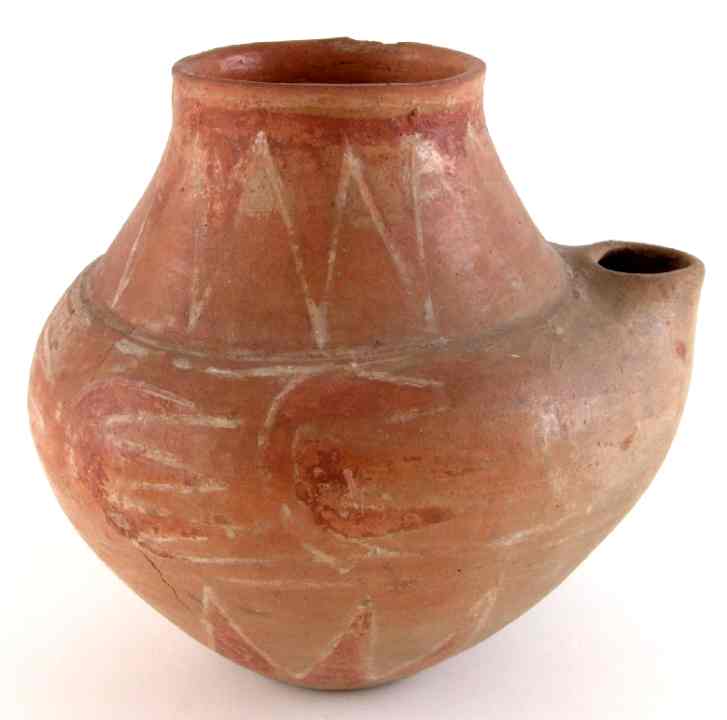
Here are some CT culture pottery designs featuring the duck/goose/bird design:
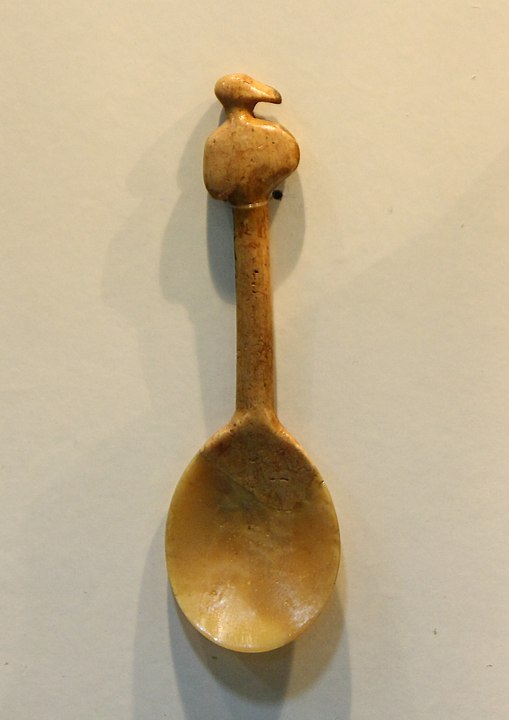
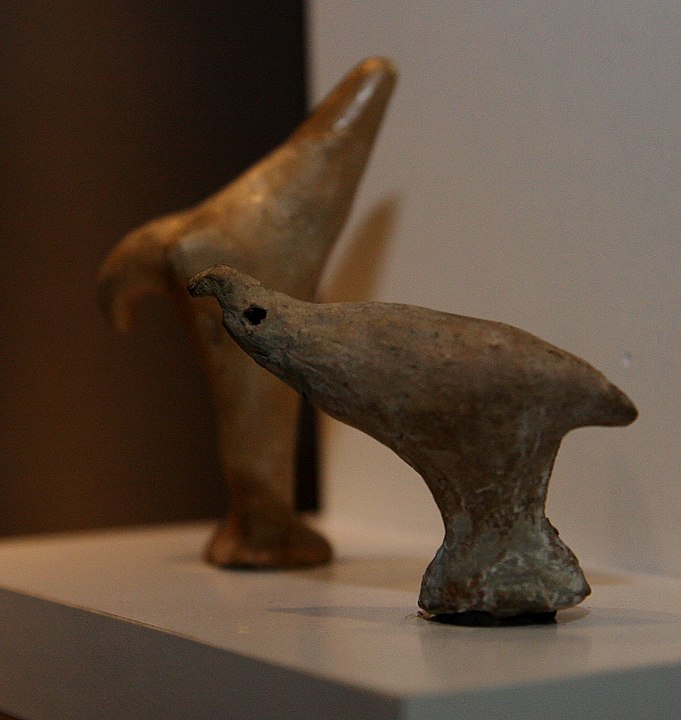
Creation 4077 BC - Saturn goes supernova Is this what the Triskelion represents on this pottery? Notice the disc in the center and the rays on the edge. Is this the earliest representation of this symbol? Y'all know I like my supernova/starburst theme.
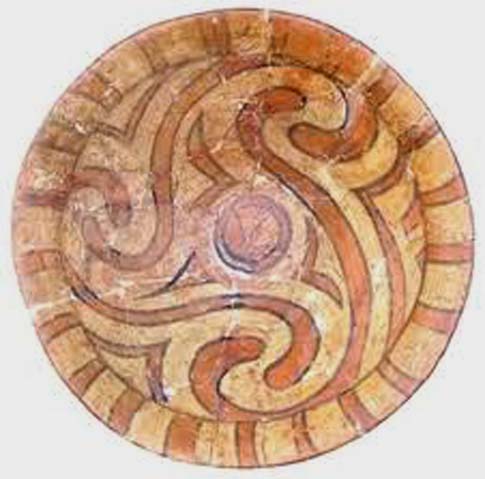
After the initial period of chaos, and after looking like a duck with an adjacent egg, Saturn went nova and started to blaze like a sun in 4077 BC. Saturn burst into arc mode, threw out an enormous amount of matter, and developed a corona, that is, it lit up like a sun. Initially the globe (egg) seemed to split and light up, and bright circles (rings) appeared at the periphery. The glow mode coma collapsed and disappeared suddenly, as happens in a change from glow mode to arc mode. The mass ejection formed the rings with which Saturn remained marked. Venus was expelled from Saturn and started to revolve around the planets far beyond Saturn's rings. Lightning flashed continuously from Saturn to the rings, as it also still does today.
The sun "looked" like a person, with outstretched arms, the rings of Saturn, and a twisted leg reaching down to Earth. The text here suggests that perhaps Earth was relatively close to Saturn initially, and distanced over the next thousand years. The "Sun," as noted, rose only part way.
So do we have anything from this culture that looks like a person with outstretched arms and twisted leg? Sure do. On a bulls head which reinforces the bulls head shape.
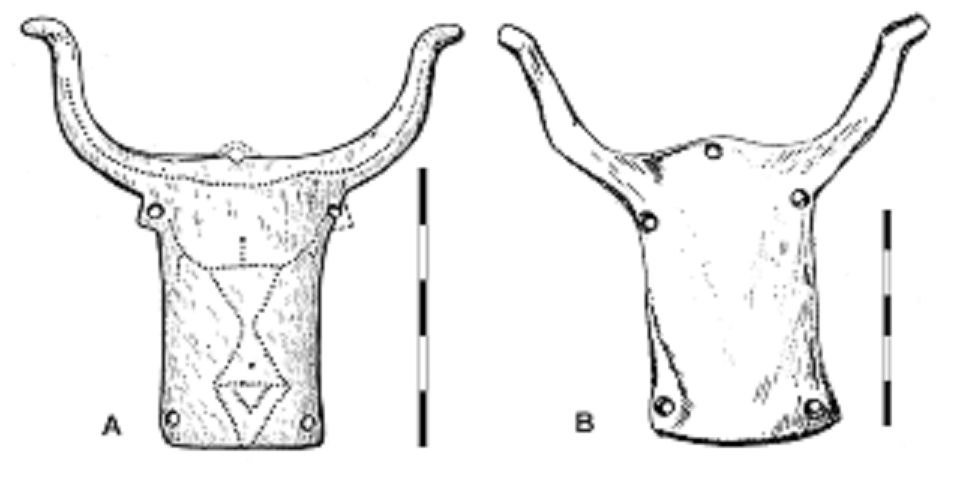
On the front of the lodge/temple.
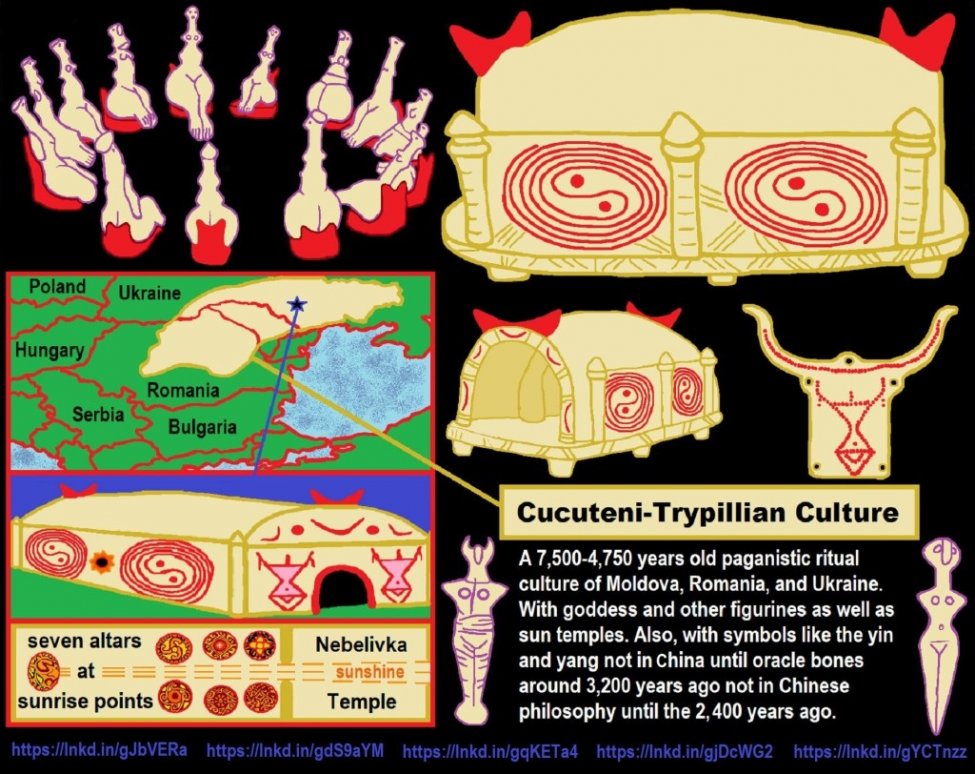
The there are all the Goddess or Venus figures. These clay goddesses change shape and differ slightly as time goes on as the formation changed while the distance grew over time. It also accounts for differences in these figures in different areas of the word. It was all about the perspective of the viewer.
The head with the missing face, often shown with what looks like braided hair covering the face, is a glow level plasma discharge from Uranus located above Neptune, but offset so that the head looks to be nodding forward. This is a consistent feature of the figurines.
In the later period of the Magdalenian, the planets above Saturn seems to have moved further apart, elongating the necks of the figurines. This change in how the figurines looked is likely due to a change in perspective. At some time Earth passed through a position at an equatorial elevation to Saturn.
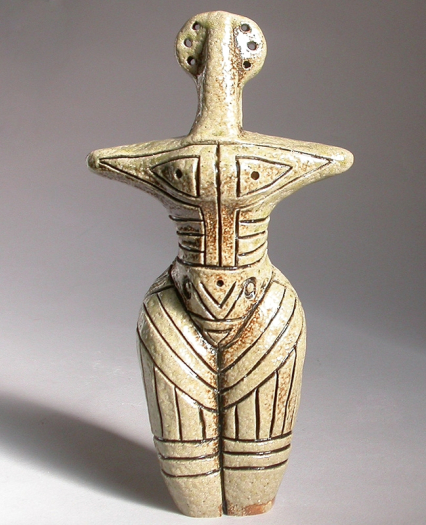
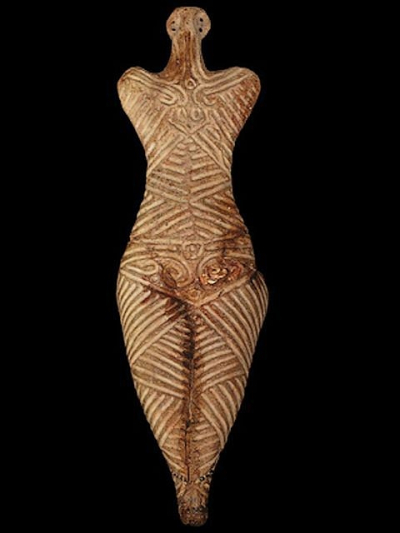
Saturn was now seen clearly in the skies over the northern horizon, as were Venus, Mercury, and Mars, plus their satellites. Uranus would disappear behind Saturn, as Neptune had done earlier. This event was recalled throughout the world as the start of "The Age of the Gods." It was universally held that humanity was witness to this creation event. The year when Saturn lit up can be derived from the Sumerian King List, and from the Jewish historian Josephus -- both of which I will detail in a following chapter.
The glow mode plasma which had encompassed Earth, now reduced to a single column in arc mode, with a bang. The change to arc mode must have caused a tremendous noise to be heard throughout the world. A late Egyptian source of the Third Kingdom relates:
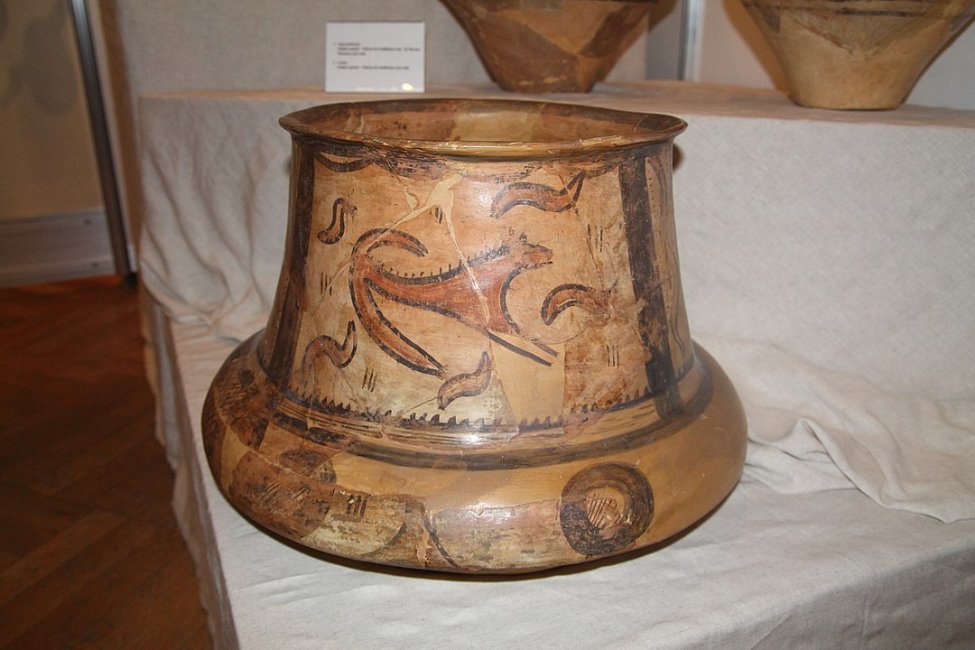
:Maybe some of the "fifty times" involved these settlements? Here are some thunderbolt type themes. Notice the "fur" looks like the croziers or the the tops of cathedrals. I call them thundercats. The first one seems to be standing/striking some mountains. Notice they are all in different positions and always have at least two points of contact with the earth.
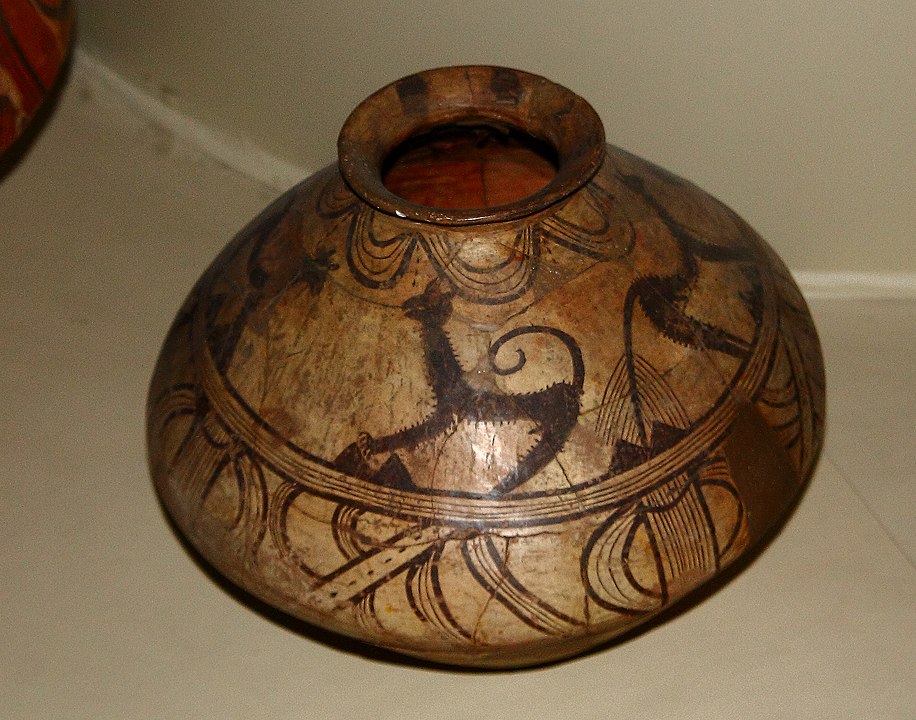
Here we have plasma steams in the sky that are not attached to thundercat.
Once the planets are visible, you start to see bull motifs.
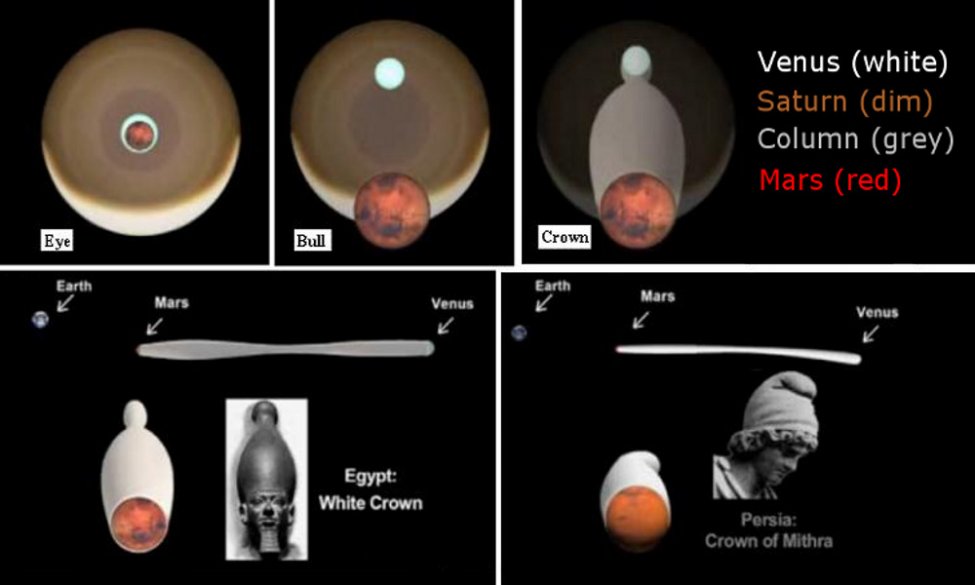
This culture also mounted bull skulls with horns in their homes. Remember we also saw bull horns on either end of their temples. Here are some bull related works from this culture:
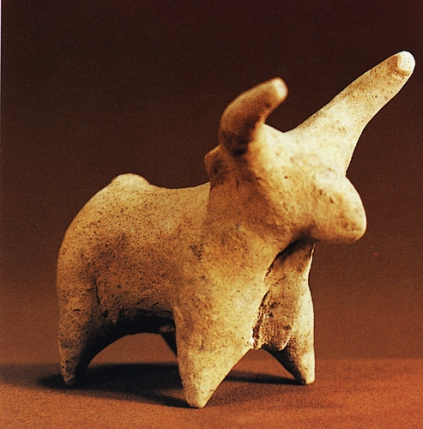
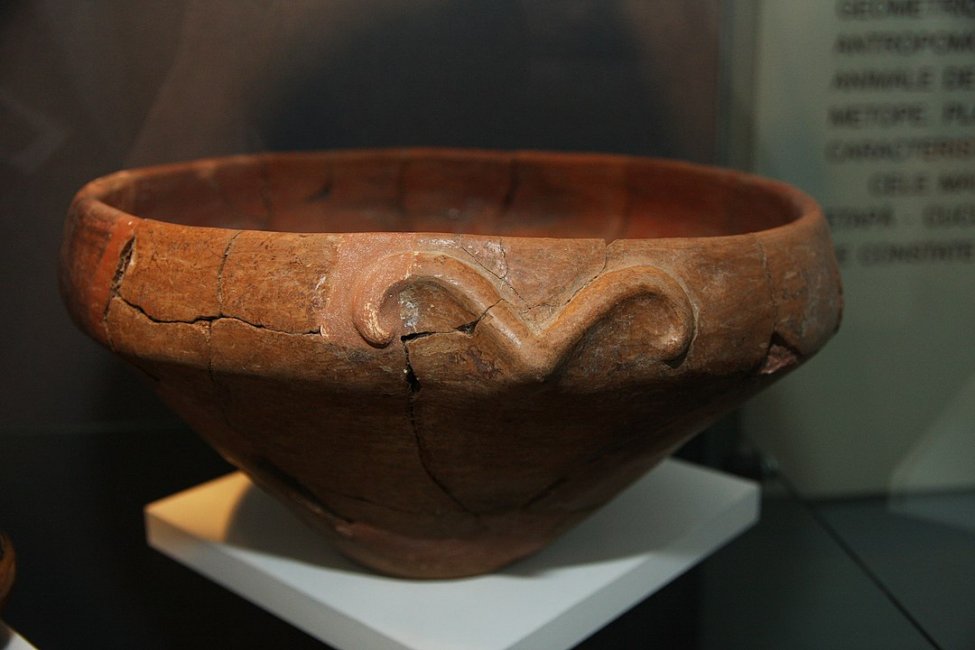
And Bull horns surrounding an X, Saturn.
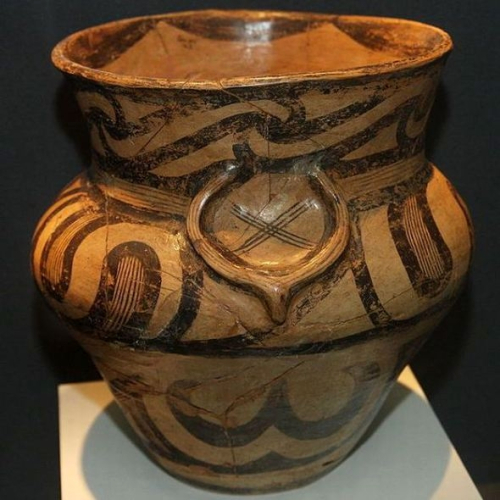
Other sky symbols are the yin yang or the Supreme Ultimate. Notice how these ceramic pieces mimic their temples. More thundercats over mountains bottom center.
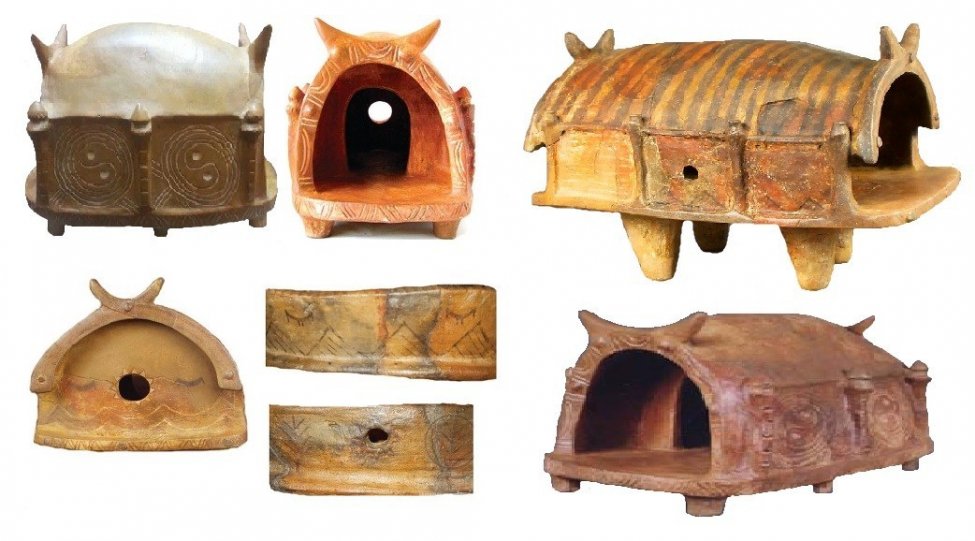
And some more
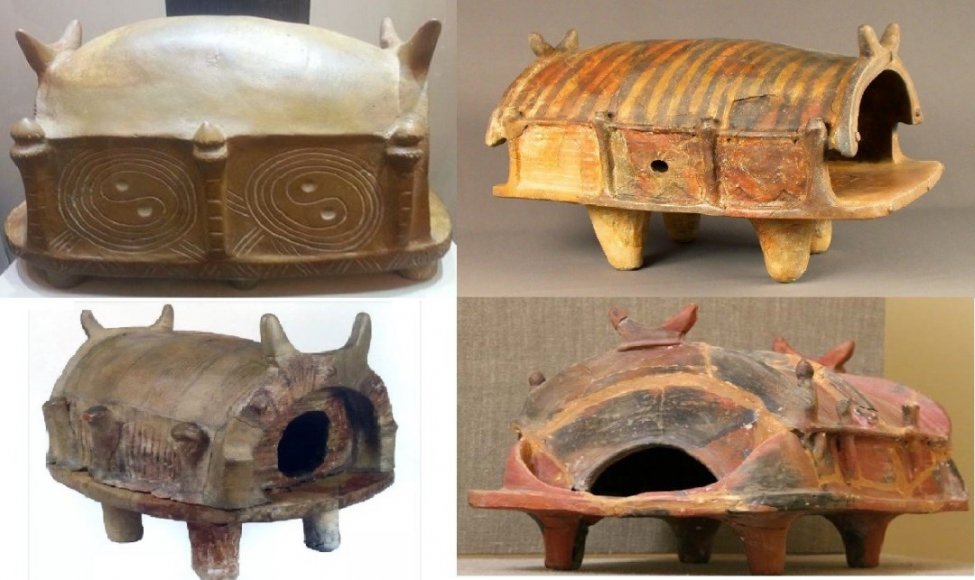
The earliest swaztika, also a symbol in plasma cosmology.
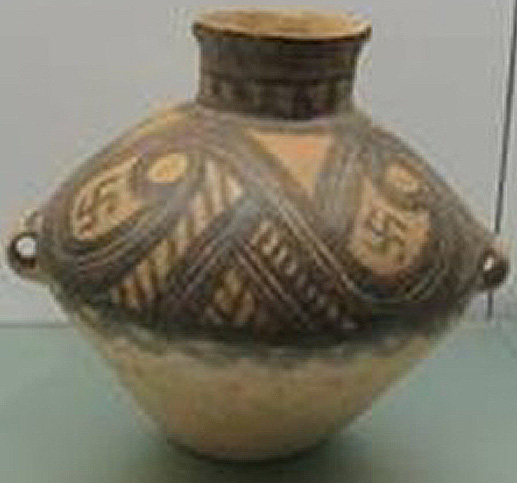
More Random sky stuff. Snakes and dragons almost always represent plasma in the cosmology.
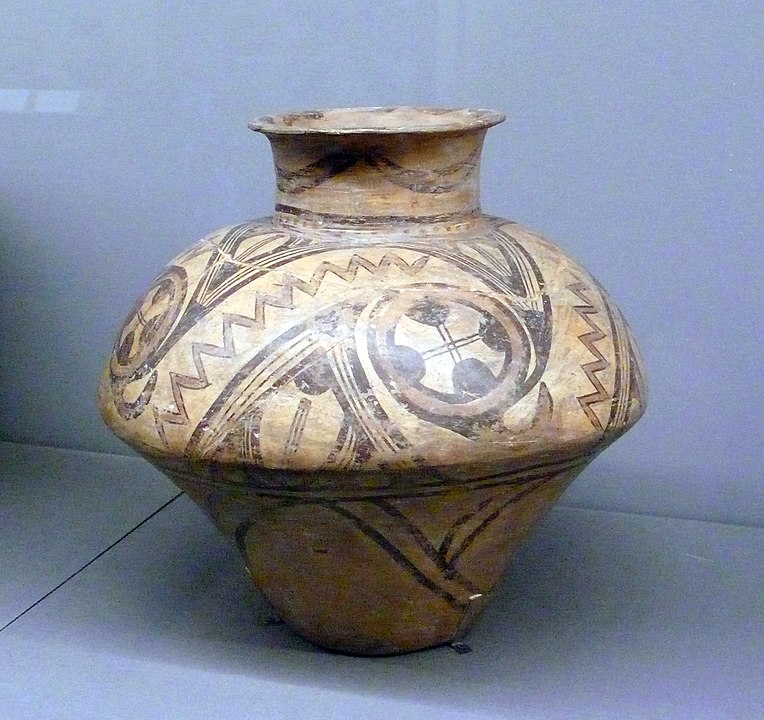
This ATS post has a theory of their sky symbols in a more traditional solar model.
myths are history 7000-5600 - Myths are History - Everything's electric
Other fun facts concerning the burned house horizon.
They might have domesticated the horse. Some scholars believe that the earliest form of writing developed in the burned horizon under the Vinca culture, the Tărtăria tablets = before Sumerian cuniform. Interesting name for the tablets, right? They were named after the modern town they were found near but I have a hard time with coincidences anymore.
Also The Gradeshnitsa tablet - article about tablets - Origins of Indo European languages
Speaking of writing, the following image shows a CT pot and a Hindu letter. They look very similar almost like it was a precursor. The Hindu letter is Om.
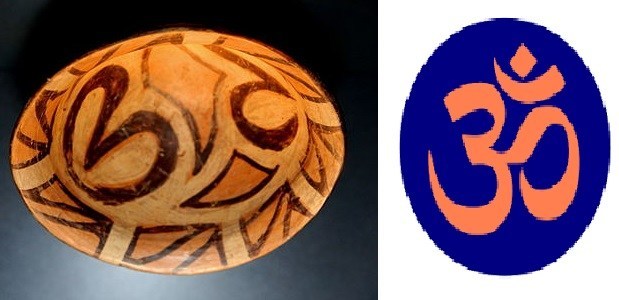
In conclusion, whatever caused these fires, the fascination with fire definitely continued in the area. The Phoenicians of course come to mind. They like to burn things. The Wayback machine found this interesting fact: It must be noted that village Trypillia is pronounced differently in Russian and for the Russian pronunciation there is a corresponding English spelling, which can be useful for the researchers to know. The correct Russian spelling should be TRIPOLIE. The other possible Russian spellings are: TRIPOLLIE, TRIPOLE, or similar. Carthage is located in the area where we have Tripoli, Libya today. There is also a Tripoli, Lebanon --"Evidence of settlement in Tripoli dates back as early as 1400 BCE. In the 9th century, the Phoenicians established a trading station in Tripoli." Huh. Yet another coincidence. The goddess figures were talked about in connection with several locations here on SH
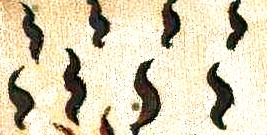
Zoroastrianism or Mazdayasna is one of the world's oldest continuously practiced religions. They liked the fire too. Or Scythians. Here is one of their old coat of arms. Notice how the black shapes are similar, if not identical to thundercat pot #2.
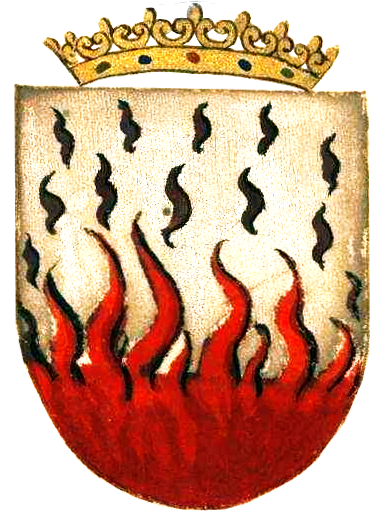
Plissken
Although the practice of house burning took place among a handful of different Neolithic cultures in southeast Europe, it is most widely known among the Cucuteni-Trypillian culture for a number of reasons:
- The Cucuteni-Trypillian culture had the largest settlements in history up to their time.
- There is evidence that every single settlement in this culture probably practiced house burning.
- This culture practiced house burning for a longer period of time (1600 years), and for a later date (up to 3200 BC), than any of the other cultures.

- The Cucuteni-Trypillian culture was considered by some scholars to be the largest and most influential of the Neolithic cultures of eastern Europe during the transition to the Eneolithic period.
Cucuteni-Trypillian Culture
Of course this culture at Cucuteni was not discovered until.......wait for it..... 1884. Then miraculously at the same time, a site was discovered in Trypillia, Ukraine. Hence the hyphenated name of the culture. Like other Neolithic societies, the Cucuteni–Trypillia culture had almost no division of labor. Although this culture's settlements sometimes grew to become the largest on Earth at the time (up to 15,000 people in the largest), there is no evidence that has been discovered of labour specialisation.
15,000 people! Here is a reconstruction of one of the towns. Notice the circular wheel shape. So they burned this whole town down regularly and rebuilt. Over and over again.
And the temple/gathering place. Nice bull horns.
New settlements are being discovered all the time but yet not until the 19th century. Makes you wonder how they could miss them for thousands of years. Here is the current map of CT settlements.
The houses of the Cucuteni–Trypillia settlements were constructed in several general ways:
- Wattle-and-daub homes.
- Log homes, called (Ukrainian: площадки, romanized: ploshchadky).
- Semi-underground homes called bordei.
They eventually built walls round their cities and lived in them.
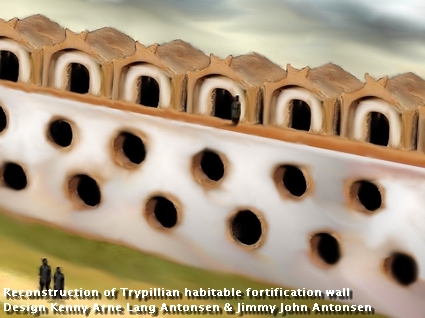
Journal abstract - Ancient Pages - Wordpress about CT
THE BURNINGS
Now that we know who they are, why did their cities burn every 75-80 years? The scholars can't even agree if it was accidental or intentional. Do they really think they accidentally burned on a regular basis? Mrs. O'Leary's cow must of been really busy to cause that many urban fires.Official explanations of these burnings include proximity of houses; storing things that will burn inside their houses like grain and textiles or the the spontaneous combustion of said grain (you think the Cucuteni-Trypillians would figure this out after the first couple of times); weatherproofing, aggression from other cultures; recycling of building materials; fumigation, or demolition; symbolic end of house ie domicide.
All of these theories have flaws, which is why the scholars can't agree. For one thing, sometimes the homes were burnt with all the household goods, sometimes not. Sometimes their were human remains found, sometimes not. When they tried to recreate the burning of one of these places, they had to pile additional fuel next to the buildings to get the same results. Durham University PDF
Is anyone else having a hard time getting the song "Burning Down the House" out of your talking head? Must be me. So we are still to believe these fires are accidental or done as part of some other human caused action. A society that is subsistence farming is going to gather extra fuel to burn these sites, deforest the area, and burn their household goods every second or third generation? Live expectancy in the neolithic and bronze age was 34 years. This just doesn't sound right. So what could produce enough heat that extra fuel would not be needed? I would like to hear all of your ideas on what you think caused these fires because none of the scholars have a clue.This site has a ton of info and pics about the culture. He is an atheist and his post is about the matriarchal nature of these societies and the spread of dairy cows and the milk theory. I know I read someone talking about cheese and the fat goddess figures just recently. Too lazy to go find the mention.
One of the things that always comes into my mind when talking about cyclic timing: the universe, the galaxy, the solar system. Maybe meteors or bolides hit this area on a regular basis , like the Chelyabinsk meteor. This meteor did a lot of property damage and injured a lot of people. You can find a lot of videos of this meteor thanks to the Russian tendency to have a camera on every car. The lack of meteor remnants can easily be explained if it exploded in the air. I know the alternate earth shape crowd just groaned in unison but the meteor showers are cyclical and can do random damage. In addition, a comet with an opposite charge than earth, could also reek havoc on a cyclical basis.
Maybe there was some plasma arching that occurred during these periods. According to the Plasma cosmology around 4900 BC.
The globe stood, inactive except for a daily rotation about the North Pole, for another 700 years. The globe looked white. This was the planet Saturn enclosed in a closely held coma of plasma in glow mode. All the tales recall that when God first emerged (700 years later), it was as a smaller object -- an egg.
Although in some legends of creation only a globe is remembered, other sources recall the figure of a duck or a goose, having noticed the planet Uranus, which was displaced from the central axis of rotation of the Saturnian planets (as noted in the previous chapter). Uranus still looked like the head of a bird -- with a beak and with a neck seemingly connected to the globe of Saturn. Thus any number of creation legends hold that the creator god was a (white) duck or goose. The Egyptian hieroglyph for Ra, the creator God, is a duck. The sacred animal of Brahma, the Vedic creator God, is a goose. As I have noted, from about 5000 BC egg-shape designs are added to pottery decorations in Eastern Europe. [note 8]
In Greek mythology, as in Egyptian mythology, the globe is the original creator God -- Ouranus ("Father Sky") in Greece. Even before the Goose of Creation laid its egg, or before the Egg of Creation hatched, the imagery must have been understood as being alive -- even though nothing much happened for 700 years -- for it moved in a circle around the pole star on a daily basis and additionally the plasma connections would have grown and moved (and changed shape) throughout the year as Saturn moved alternately closer and more distant from the Sun on its orbit. [note 9]
The egg, the real egg, not the body of the duck or goose, might have been Mercury, enclosed in a glow mode plasma, but distinct enough from Saturn to be noticed as a smaller object seen below the duck or next to the duck. With a coma Mercury would have been 10 to 30 times its current diameter.
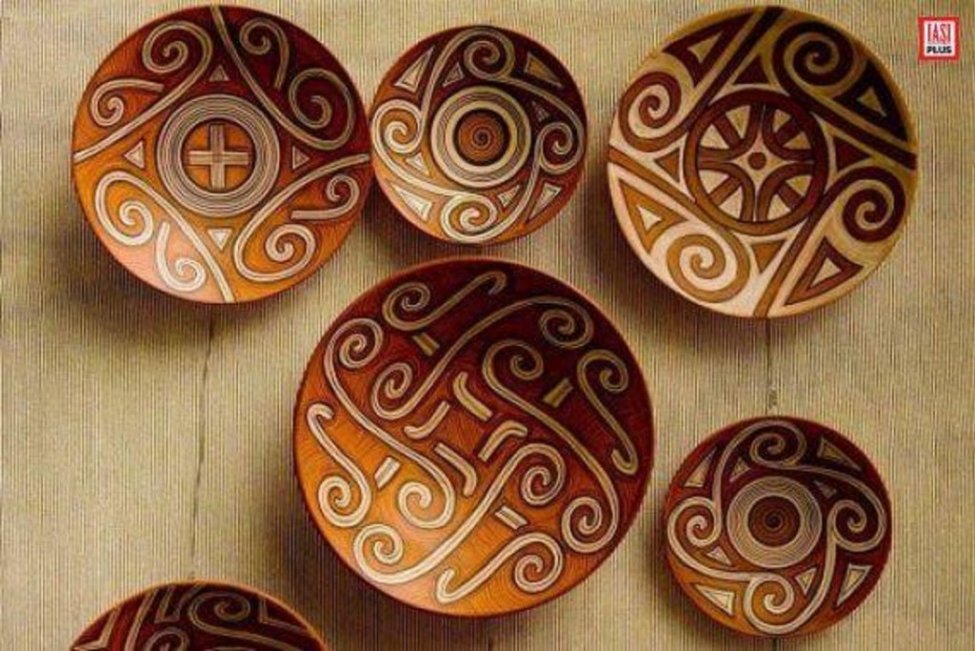
Here are some of their swirling sky pottery designs:
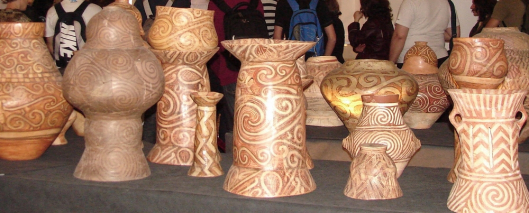
Here are some CT culture pottery designs featuring the duck/goose/bird design:
Creation 4077 BC - Saturn goes supernova Is this what the Triskelion represents on this pottery? Notice the disc in the center and the rays on the edge. Is this the earliest representation of this symbol? Y'all know I like my supernova/starburst theme.
After the initial period of chaos, and after looking like a duck with an adjacent egg, Saturn went nova and started to blaze like a sun in 4077 BC. Saturn burst into arc mode, threw out an enormous amount of matter, and developed a corona, that is, it lit up like a sun. Initially the globe (egg) seemed to split and light up, and bright circles (rings) appeared at the periphery. The glow mode coma collapsed and disappeared suddenly, as happens in a change from glow mode to arc mode. The mass ejection formed the rings with which Saturn remained marked. Venus was expelled from Saturn and started to revolve around the planets far beyond Saturn's rings. Lightning flashed continuously from Saturn to the rings, as it also still does today.
The sun "looked" like a person, with outstretched arms, the rings of Saturn, and a twisted leg reaching down to Earth. The text here suggests that perhaps Earth was relatively close to Saturn initially, and distanced over the next thousand years. The "Sun," as noted, rose only part way.
So do we have anything from this culture that looks like a person with outstretched arms and twisted leg? Sure do. On a bulls head which reinforces the bulls head shape.
On the front of the lodge/temple.
The there are all the Goddess or Venus figures. These clay goddesses change shape and differ slightly as time goes on as the formation changed while the distance grew over time. It also accounts for differences in these figures in different areas of the word. It was all about the perspective of the viewer.
Early fat goddess configuration. Venus of Willendorf.
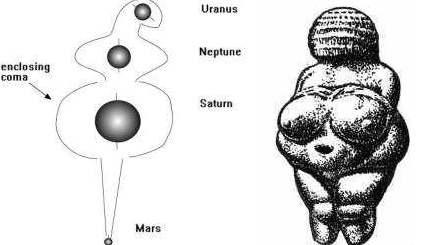
The evolution of the Venus figure(note the bird configuration)
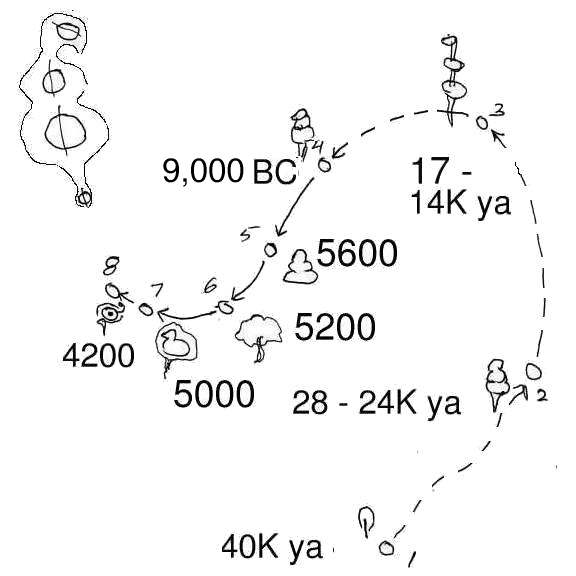
From Cook: I think the Venus Figurines of the Upper Paleolithic, consistently naked, fat, female, faceless, and footless, and later similar naked female figurines of the Neolithic, describe Saturn in glow level plasma discharging to a set of planets -- two above and two below the poles of Saturn. A plasma discharge in glow mode will form a bubble much larger than the object that is discharging, and will look like a physical connection between close planets, which consists, however, only of an enclosing bubble of charged particles for each planet, with a pinched condition in the region between the planets.The evolution of the Venus figure(note the bird configuration)
The head with the missing face, often shown with what looks like braided hair covering the face, is a glow level plasma discharge from Uranus located above Neptune, but offset so that the head looks to be nodding forward. This is a consistent feature of the figurines.
In the later period of the Magdalenian, the planets above Saturn seems to have moved further apart, elongating the necks of the figurines. This change in how the figurines looked is likely due to a change in perspective. At some time Earth passed through a position at an equatorial elevation to Saturn.
Saturn was now seen clearly in the skies over the northern horizon, as were Venus, Mercury, and Mars, plus their satellites. Uranus would disappear behind Saturn, as Neptune had done earlier. This event was recalled throughout the world as the start of "The Age of the Gods." It was universally held that humanity was witness to this creation event. The year when Saturn lit up can be derived from the Sumerian King List, and from the Jewish historian Josephus -- both of which I will detail in a following chapter.
The glow mode plasma which had encompassed Earth, now reduced to a single column in arc mode, with a bang. The change to arc mode must have caused a tremendous noise to be heard throughout the world. A late Egyptian source of the Third Kingdom relates:
This is the sound of an electric arc striking, followed by the sounds of a sustained electric discharge. In one of the Egyptian creation epics (as well as a large number of other tales), God creates himself by his own spoken word. Spoken words were capable of great power for the Egyptians. John 1:1 is one of the last evocations of this notion from antiquity."Amun initiated creation, in association with his sacred animal, the goose. He is called the Great Honker, who gave a great screech which stirred the inert cosmos into action. He is also called the Great Cackler -- the creative energy in the form of a goose which carried the cosmic egg from which all life emerged."
-- Ogdoad of Hermopolis, paraphrased
Another source depicts the creator God in coitus with Mother Earth, penetrating her "fifty times" and eventually moving away, never to lie with her again. Read that as individual arcs, which are as likely as a sustained arc discharge. (This may sum up a thousand years of celestial events.) We see this today (on a larger scale) in pulsar stars -- acting as relaxation oscillators."In the beginning was the Word, and the Word was God."
:Maybe some of the "fifty times" involved these settlements? Here are some thunderbolt type themes. Notice the "fur" looks like the croziers or the the tops of cathedrals. I call them thundercats. The first one seems to be standing/striking some mountains. Notice they are all in different positions and always have at least two points of contact with the earth.Here we have plasma steams in the sky that are not attached to thundercat.
Once the planets are visible, you start to see bull motifs.
And Bull horns surrounding an X, Saturn.
Other sky symbols are the yin yang or the Supreme Ultimate. Notice how these ceramic pieces mimic their temples. More thundercats over mountains bottom center.
And some more
The earliest swaztika, also a symbol in plasma cosmology.
More Random sky stuff. Snakes and dragons almost always represent plasma in the cosmology.
This ATS post has a theory of their sky symbols in a more traditional solar model.
myths are history 7000-5600 - Myths are History - Everything's electric
Other fun facts concerning the burned house horizon.
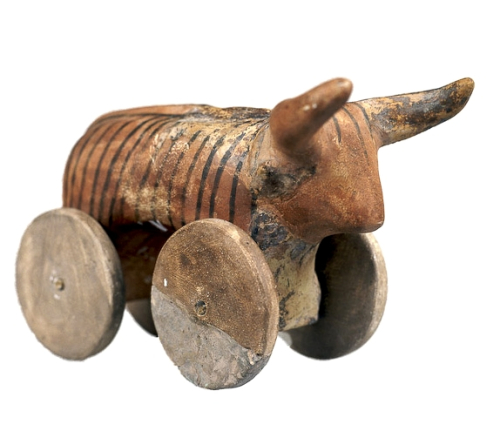
They have found toys and figurines with wheels.
They might have domesticated the horse. Some scholars believe that the earliest form of writing developed in the burned horizon under the Vinca culture, the Tărtăria tablets = before Sumerian cuniform. Interesting name for the tablets, right? They were named after the modern town they were found near but I have a hard time with coincidences anymore.
Also The Gradeshnitsa tablet - article about tablets - Origins of Indo European languages
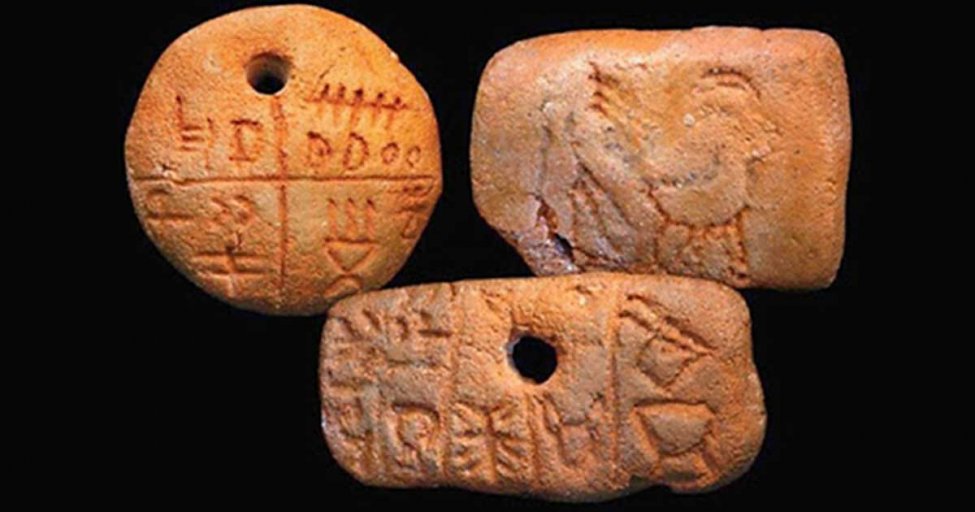
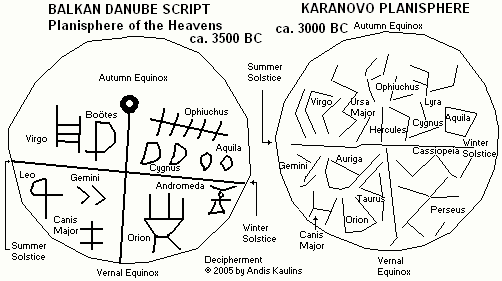
Speaking of writing, the following image shows a CT pot and a Hindu letter. They look very similar almost like it was a precursor. The Hindu letter is Om.
In conclusion, whatever caused these fires, the fascination with fire definitely continued in the area. The Phoenicians of course come to mind. They like to burn things. The Wayback machine found this interesting fact: It must be noted that village Trypillia is pronounced differently in Russian and for the Russian pronunciation there is a corresponding English spelling, which can be useful for the researchers to know. The correct Russian spelling should be TRIPOLIE. The other possible Russian spellings are: TRIPOLLIE, TRIPOLE, or similar. Carthage is located in the area where we have Tripoli, Libya today. There is also a Tripoli, Lebanon --"Evidence of settlement in Tripoli dates back as early as 1400 BCE. In the 9th century, the Phoenicians established a trading station in Tripoli." Huh. Yet another coincidence. The goddess figures were talked about in connection with several locations here on SH
Zoroastrianism or Mazdayasna is one of the world's oldest continuously practiced religions. They liked the fire too. Or Scythians. Here is one of their old coat of arms. Notice how the black shapes are similar, if not identical to thundercat pot #2.
Plissken
Note: This OP was recovered from the Sh.org archive.
Note: Archived Sh.org replies to this OP are included in this thread.