
I wonder why some show a 1.From a British Army Register India
View attachment 27814
Coin from Germany -Flooding in (1)736
Russian Map from 750
Us coin J 783
You are using an out of date browser. It may not display this or other websites correctly.
You should upgrade or use an alternative browser.
You should upgrade or use an alternative browser.
Collecting Historical clues for calendar manipulation
- Thread starter dreamtime
- Start date
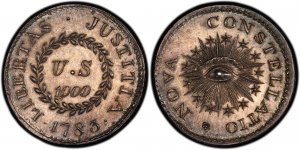
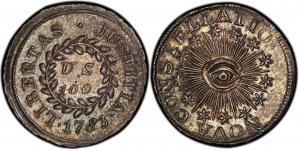
do you have the name of this book/pamphlet, or the video where you cropped this image from?

- Joined
- Aug 22, 2022
- Messages
- 116
- Reaction score
- 250
On reading this Chronicle more, I suspect that the Anno years refer to the age of London, not England. There are references to king renewing the ‘fraunchise’ of London. This would mean that London was first established as an entity in King John’s time, circa 1200. Not quite the ancient Roman city of AD47 as They would have us believe! Makes sense that the parasitic traders would take advantage of a war-mongering idiot king to gain access to his people, and set up shop under the cloak of ‘support’.Middle English text with additional 1198 years:
I came across the University of Michigan’s Corpus of Middle English Prose and Verse collection free online resource (Corpus of Middle English Prose and Verse) while researching the 1607 tsunami that hit south-west England.
I was struck by the chronological listing, starting from Year One, in “A chronicle of London, from 1089 to 1483”. It is described as “written in the fifteenth century, and for the first time printed from mss. in the British museum: to which are added numerous contemporary illustrations, consisting of royal letters, poems, and other articles descriptive of public events, or of the manners and customs of the metropolis”.
For example, it records “Anno sexto: In this yere were seyn at oones too fulle mones in the firmament” [in this year were seen at once two full moons...]. In the chronological listing, Anno sexto corresponds to Year Six. The next entry is Anno vij, familiar as Year Seven in Roman numerals - lower case J’s seem to be used for the last “digit”, presumably to signify the end of the number.
And yet, interjected between these dates, it says: “And in this yere of oure lord a ml'cciiij began the ordre of Frere P’chours…” [and in this year of our lord 1204 began the order of …]. Year Six is also recorded as 1204 - a difference of 1198 years. It is as if two different chronologies are being rather crudely spliced together.
Oddly, Anno primo (Year One) is given as the “yere kyng John loste all Normandye”, while Wikipedia has it that this also happened in 1204.
In Anno ix, it records: “in this yere was born Herry the kynges sone”. Henry III, King John’s son, is reputed to have been born in 1207, again a difference of 1198 years.
(hmmm - just been struck by the similarity of “kynges” with “Genghis”….)
The numbering subsequently gets more unfamiliar, with additional superscripts, so that we have Ao. po , Ao s’c'do , Ao. t’cio, Anno iiijto ,Anno vto , Anno vito , etc. It is a shame that the originals can’t be viewed online, but I haven’t enquired so perhaps the library might be persuaded to take a few photographs of the source texts.
(Aside: There are also lots of weird and wonderful Fortean-type mentions in the Chronicle - one memorable one was of a sickness in the north-east that had the effect of reducing the number of teeth people were born with afterwards from 32 to 28. Radiation?)

- Joined
- Dec 17, 2020
- Messages
- 399
- Reaction score
- 1,152
A London-centered origin for 'Anno' may well be worth following up. Because there are plenty of problems with orthodox histories of 'London'.On reading this Chronicle more, I suspect that the Anno years refer to the age of London, not England. There are references to king renewing the ‘fraunchise’ of London. This would mean that London was first established as an entity in King John’s time, circa 1200. Not quite the ancient Roman city of AD47 as They would have us believe!
See Gunnar Heinsohn's (admittedly complex) discussion of the problems of locating the site(s) of first millennium London.
See John Byng's Torrington Diaries for frequent references to England's 18th century rural elite and its hangers-on moving to London en-masse, often having their country houses dismantled and brought after them to be rebuilt in London. (I suspect he is describing the final days of England's role in the Holy Roman Empire):
Our new neighbour. Source: Carnival Row
See various chronologists' questioning of first millennium narratives. And for geological evidence, search for the 'black mat' of dark silt lying a few feet under modern London.
From When the Sea Flooded Britain, by Steve Mitchell, 2005:
the tidal head of the Thames has moved steadily down the valley until it is some 25m OD or more below its medieval level...
None of this is controversial. My findings differ only in degree from the generally accepted picture. The paradigm is one of relatively small and sluggish changes in the sea-levels over the whole period in question, whereas I suggest that the late Roman/early Anglo-Saxon marine transgression was higher and quicker than previously thought and that, as a consequence, it disrupted the whole fabric of society.
Mitchell says there were Roman wharfs located where London now is. His point is that pretty much the whole lot disappeared under the sea or wide tidal estuary until sometime in the second millennium:
In the 13th/14th century, bulk commodities bound for Oxford came up the Thames as far as Henley by boat and were then transhipped by road [68]. The boats arrived on the flood-tide from London. Henley was then the nearest transhipment point for Oxford. There is no reason to suppose that the tideway stopped there.
There is tentative evidence that the tidal limit might have been as far inland as Reading, which might have been the first fording point
In that scenario, first millennium London would have been a rippling sea.
Last edited:
- Joined
- Aug 22, 2022
- Messages
- 116
- Reaction score
- 250
Thank you, so much to digest and investigate! Happy days!A London-centered origin for 'Anno' may well be worth following up. Because there are plenty of problems with orthodox histories of 'London'.
See Gunnar Heinsohn's (admittedly complex) discussion of the problems of locating the site(s) of first millennium London.
See John Byng's Torrington Diaries for frequent references to England's 18th century rural elite and its hangers-on moving to London en-masse, often having their country houses dismantled and brought after them to be rebuilt in London. (I suspect he is describing the final days of England's role in the Holy Roman Empire):
Our new neighbour. Source: Carnival Row
See various chronologists' questioning of first millennium narratives. And for geological evidence, search for the 'black mat' of dark silt lying a few feet under modern London.
From When the Sea Flooded Britain, by Steve Mitchell, 2005:
Mitchell says there were Roman wharfs located where London now is. His point is that pretty much the whole lot disappeared under the sea or wide tidal estuary until sometime in the second millennium:
In that scenario, first millennium London would have been a rippling sea.
I found an old map of Reading which had oyster beds on the Kennet, upstream from where it joins the Thames - but *curses*, I didn’t save a copy and I haven’t been able to relocate it. This would indicate the tidal reach.
The Chronicle also mentions two years when the king gave orders for weirs on the Thames to be destroyed. There is still a weir at Mapledurham, upstream of Reading.

- Joined
- Nov 17, 2021
- Messages
- 319
- Reaction score
- 2,009
First of all, I am not sure if this is the appropriate thread for this, since it seems to be centered on England. Mods, if there's a more appropriate place for these images, please tell me. I was recently in South Tyrol and took a stroll through the church graveyard in a small city. I always check for J's and i's now. I found plenty of those, but also something I've never seen discussed here: backwards N's in an otherwise normal German language tombstone.

She died "AM i9TEN AUG: i809" but if you look close it appears that the "i9ten" and especially the i809 were possibly added later by a different person.


I cannot imagine that a professional engraver would not know how to write N correctly. The other gravestones had normal N's. The gravestone features a weird skull that looks a lot different from most of the other stones:

I noticed a few more anomalies. Here is j688 with a very weird J and horizontal 8's:
 And if we look closely we see that there are actually three different symbols for "1":
 i6 ivl i675, but notice that the i in i675 has two feet. And then there's the fancy J. Was the dot added above the I6 (in 16IVL) later so it wasn't too obviously a completely different symbol from the "1" in i675? On the IVL it clearly indicates a letter. This one is also in Latin.
Here's another one where the date is small and appears added later. Was this common practice? Was the stone engraved with the expectation that the priest would add the final date later? The same year as the first stone, but the N's are normal:

 Also, why are these written in Latin characters rather than in Gothic German characters like the following?
 And here we have a j with a dot after it. Is this gravestone authentic and the others done later? The dot clearly indicates an abbreviated word, whereas on the other stones, the i is used not only on the year dates but also on simple numbers like 19. Also, the others are engraved using Latin letters, perhaps indicating that the engravers no longer knew how to use Gothic script. Was the i used for 1 by usurpers to cover up the fact that on older inscriptions it referred to a word?
Were the N's on the other stone backwards because the engraver was now being forced to use a script that was new and unfamiliar to him? It would allow us to date the moment the real J.dates became the transitional fake i.dates: between 1758 and 1809.
Finally, this was the oldest looking gravestone:
 That's a weird design. What is that thing? Looking closely, I see that the words ANNO DOMINI are written in Latin letters whereas the rest is in Gothic. The "Anno Domini" also looks like it was added later in what must have been empty spaces on the original gravestone! Sadly the photo cuts the bottom out, where a date might have been written. Did the new elite add the ANNO DOMINI along with a fake date when they took over?
ADDED: I found this very informative article about the Napoleonic campaign in Tyrol, which occurred in...1809, suggesting indeed that this was when the retroactive forgery operation began, as the physical evidence confirms. Napoleon and his Bavarian allies wanted to eradicate the region's Catholic religion and social structure. There is nothing explicitly "Christian" on any of the pre-1809 tombstones I saw, only heraldry, suggesting that the "Catholic" religion that was erased along with the original dates was something very different than we imagine it to be. The Tyrolean rebellion is apparently personified by a Habsburg loyalist patriot named Andreas Hofer. This longish excerpt is worth reading:
Napoleon never fully understood the insurrection or the reasons for which Hofer was fighting. Despite the mantra by which Hofer lived, “for God, the Emperor and the fatherland”, Napoleon never appeared to grasp that it was an ideological war against the French revolution and everything that it sought to eradicate, including conservative, traditional social hierarchy and the Catholic religion, as much as a war of liberation in reaction to the reforms implemented by Bavaria. Hofer's devoted loyalty to the Hapsburgs, although with hindsight misguided, remained incomprehensible for the pragmatist Napoleon, who never hesitated to dethrone a king or lock up the pope if it suited his needs.
However, the history of the insurrection and Hofer's role has become caught up in the historical debate and the legendary retellings that followed his death. The first issue up for debate was the role that Hofer played in the insurrection. His strongly held ideological views and devotion to the Austrian crown made him a perfect figurehead in the rebellion against the Bavarian forces. Equally, he rarely intervened in tactical discussions of a military nature. His leadership and his worth in battle came from his presence, the strength of his belief, and the moral and symbolic authority that he brought. Jean Sévillia notes that “Hofer's legitimacy was neither purely of a military nature, nor purely political. It was based on feudal order […] founded on a moral pact which linked [him] and the Archduke Johann and, above that, the Emperor Francis I.” He embodied the Tyrol region: a paysan, deeply religious, profoundly loyal and reservedly modest. His regency was characterised by the emphasis he placed on hospitality, piety and tradition. Even his thick, dark beard, modest attire and large hat contributed to his image as the embodiment of the Tyrol. Debate over his involvement was not long in coming; on 4th March, 1810, just two weeks after his death, the Gazette de France, reporting on Hofer's execution, remarked that he was “not a bad man, nor dangerous in himself, but his was caught up in his enthusiasm, and many terrible things were committed in his name. This man had absolutely no knowledge of military tactics, administration or politics; he was simple and ignorant. The Tyroleans venerate him, in sorts…” Already at this point, Hofer had become a Tyrolean symbol.
Then, in 1817, Hormayr published anonymously his Geschichte Hofers, his history of the insurrection and Hofer's actual involvement in it. Highly critical of the innkeeper, he also sought to claim the credit for the creation of the Hofer myth and emphasise his role in the events. Despite the politics involved in such an attempt, it does serve to illustrate the uncertainty around Hofer and the 'legend' of Hofer. His story greatly appealed to the Romantics of the time and those that came later. William Wordsworth dedicated a poem to him. In 1830, James Robinson Planché adapted the story of William Tell for an opera based on Hofer and the insurrection. Numerous histories appeared during the middle period of the 19th century, in French, Italian, German and English, many almost fictional in their retelling of the insurrection and Hofer's role. The image of Hofer was also embraced in the name of various different causes: German unification and Pan-Germanism during the 19th century (despite the fact that he was in fact fighting Bavarian occupation), an anti-Nazi, anti-fascist resistance movement in the south Tyrol named the Andreas Hofer Allianz in 1939…
Yet during the 20th century, very little was written in France. In Austria, Hofer remained in the collective memory. A statue of the rebel was erected at the Berg Isel in 1893 and in 1909, the centenary celebrations of the insurrection saw 33,000 tirailleurs parade in Innsbruck. 1959 was celebrated with a parade of 26,000 tirailleurs. The Austrian monarchy of Hofer's triumvirate may be no more, but in the Tyrol, Hofer was not forgotten. Yet the exploitation of Hofer's image, indeed the 'idea' of Andreas Hofer, remains paradoxical, to the extent that many have lost sight of what he did and what he was actually fighting for. Hofer was fighting for his Catholicism, his Emperor and his homeland. It was not individual liberty that he was fighting for, but freedom from Bavarian domination. He wanted a return to Habsburg rule, despite being used and then abandoned by the Austrian Emperor to whom he was so devoted.
Hofer remains a Tyrolean national hero, the very symbol of Tyrolean identity, and, to a certain extent, of Tyrolean independence. The “freedom-fighter” hero remains a popular image; the reluctant one, even more so. Otto W. Johnston sums it up neatly thus: “Suffering, endurance, the building of character, and the offer of hope constitute the substance of Hofer's myth.” The fatherland, a distant third in Hofer's triumvirate, has taken precedence, usurping the other more conservative tenants that Hofer valued more highly. The image that many have of Hofer today is that of a revolutionary, fighting for his homeland and for individual freedom. Yet Hofer's insurrection was very anti-revolutionary in its ideals: this was not self-determinism and he was not looking forward. His regard was firmly set on the past, on a more conservative time, and more conservative values.
Andreas Hofer and the insurrection in the Tyrol, 1809 - napoleon.org
Wow. I suggest reading the whole article. What I read between the lines here is the following. Until 1809, Tyrol was Holy Roman and followed a Catholic religion that had very little to do with Christ and much more to do with the old political/economic order. After the new, centralized, Napoleonic system was imposed, the old religion and customs were blotted out and rewritten using the possibly fictional character of "Andreas Hofer", who served to conceal just how different the old system and religion were. Very clever: the victors of the war did not falsify history in a heavy-handed Stalinist way that inevitably generates resentment, but rather by offering up a fake rebel hero who actually functions as a cognitive Trojan Horse. We also have evidence here that the Romantic movement was a big psy-op whose objective was to sanitize the past by draping it in legend.
Here's the image of Hofer at Wikipedia. The hidden hand tells us everything we need to know: this guy was an agent, if he was even real. His biography reads like the mega-spook Garibaldi's completely impossible story, as if they were written from the same template.

And maybe we have an answer for the backwards N's: in 1809 the Napoleon system came to town, and the engraver messed up the N's on the tombstone, either because it was his first time using Latin letters, or as a subtle FU to...Napoleon, who put that big N everywhere (go to Paris and look at the bridges).
She died "AM i9TEN AUG: i809" but if you look close it appears that the "i9ten" and especially the i809 were possibly added later by a different person.
I cannot imagine that a professional engraver would not know how to write N correctly. The other gravestones had normal N's. The gravestone features a weird skull that looks a lot different from most of the other stones:
I noticed a few more anomalies. Here is j688 with a very weird J and horizontal 8's:
Here's another one where the date is small and appears added later. Was this common practice? Was the stone engraved with the expectation that the priest would add the final date later? The same year as the first stone, but the N's are normal:
Were the N's on the other stone backwards because the engraver was now being forced to use a script that was new and unfamiliar to him? It would allow us to date the moment the real J.dates became the transitional fake i.dates: between 1758 and 1809.
Finally, this was the oldest looking gravestone:
ADDED: I found this very informative article about the Napoleonic campaign in Tyrol, which occurred in...1809, suggesting indeed that this was when the retroactive forgery operation began, as the physical evidence confirms. Napoleon and his Bavarian allies wanted to eradicate the region's Catholic religion and social structure. There is nothing explicitly "Christian" on any of the pre-1809 tombstones I saw, only heraldry, suggesting that the "Catholic" religion that was erased along with the original dates was something very different than we imagine it to be. The Tyrolean rebellion is apparently personified by a Habsburg loyalist patriot named Andreas Hofer. This longish excerpt is worth reading:
Andreas Hofer and the history of the insurrection
Napoleon never fully understood the insurrection or the reasons for which Hofer was fighting. Despite the mantra by which Hofer lived, “for God, the Emperor and the fatherland”, Napoleon never appeared to grasp that it was an ideological war against the French revolution and everything that it sought to eradicate, including conservative, traditional social hierarchy and the Catholic religion, as much as a war of liberation in reaction to the reforms implemented by Bavaria. Hofer's devoted loyalty to the Hapsburgs, although with hindsight misguided, remained incomprehensible for the pragmatist Napoleon, who never hesitated to dethrone a king or lock up the pope if it suited his needs.
However, the history of the insurrection and Hofer's role has become caught up in the historical debate and the legendary retellings that followed his death. The first issue up for debate was the role that Hofer played in the insurrection. His strongly held ideological views and devotion to the Austrian crown made him a perfect figurehead in the rebellion against the Bavarian forces. Equally, he rarely intervened in tactical discussions of a military nature. His leadership and his worth in battle came from his presence, the strength of his belief, and the moral and symbolic authority that he brought. Jean Sévillia notes that “Hofer's legitimacy was neither purely of a military nature, nor purely political. It was based on feudal order […] founded on a moral pact which linked [him] and the Archduke Johann and, above that, the Emperor Francis I.” He embodied the Tyrol region: a paysan, deeply religious, profoundly loyal and reservedly modest. His regency was characterised by the emphasis he placed on hospitality, piety and tradition. Even his thick, dark beard, modest attire and large hat contributed to his image as the embodiment of the Tyrol. Debate over his involvement was not long in coming; on 4th March, 1810, just two weeks after his death, the Gazette de France, reporting on Hofer's execution, remarked that he was “not a bad man, nor dangerous in himself, but his was caught up in his enthusiasm, and many terrible things were committed in his name. This man had absolutely no knowledge of military tactics, administration or politics; he was simple and ignorant. The Tyroleans venerate him, in sorts…” Already at this point, Hofer had become a Tyrolean symbol.
Then, in 1817, Hormayr published anonymously his Geschichte Hofers, his history of the insurrection and Hofer's actual involvement in it. Highly critical of the innkeeper, he also sought to claim the credit for the creation of the Hofer myth and emphasise his role in the events. Despite the politics involved in such an attempt, it does serve to illustrate the uncertainty around Hofer and the 'legend' of Hofer. His story greatly appealed to the Romantics of the time and those that came later. William Wordsworth dedicated a poem to him. In 1830, James Robinson Planché adapted the story of William Tell for an opera based on Hofer and the insurrection. Numerous histories appeared during the middle period of the 19th century, in French, Italian, German and English, many almost fictional in their retelling of the insurrection and Hofer's role. The image of Hofer was also embraced in the name of various different causes: German unification and Pan-Germanism during the 19th century (despite the fact that he was in fact fighting Bavarian occupation), an anti-Nazi, anti-fascist resistance movement in the south Tyrol named the Andreas Hofer Allianz in 1939…
Yet during the 20th century, very little was written in France. In Austria, Hofer remained in the collective memory. A statue of the rebel was erected at the Berg Isel in 1893 and in 1909, the centenary celebrations of the insurrection saw 33,000 tirailleurs parade in Innsbruck. 1959 was celebrated with a parade of 26,000 tirailleurs. The Austrian monarchy of Hofer's triumvirate may be no more, but in the Tyrol, Hofer was not forgotten. Yet the exploitation of Hofer's image, indeed the 'idea' of Andreas Hofer, remains paradoxical, to the extent that many have lost sight of what he did and what he was actually fighting for. Hofer was fighting for his Catholicism, his Emperor and his homeland. It was not individual liberty that he was fighting for, but freedom from Bavarian domination. He wanted a return to Habsburg rule, despite being used and then abandoned by the Austrian Emperor to whom he was so devoted.
Hofer remains a Tyrolean national hero, the very symbol of Tyrolean identity, and, to a certain extent, of Tyrolean independence. The “freedom-fighter” hero remains a popular image; the reluctant one, even more so. Otto W. Johnston sums it up neatly thus: “Suffering, endurance, the building of character, and the offer of hope constitute the substance of Hofer's myth.” The fatherland, a distant third in Hofer's triumvirate, has taken precedence, usurping the other more conservative tenants that Hofer valued more highly. The image that many have of Hofer today is that of a revolutionary, fighting for his homeland and for individual freedom. Yet Hofer's insurrection was very anti-revolutionary in its ideals: this was not self-determinism and he was not looking forward. His regard was firmly set on the past, on a more conservative time, and more conservative values.
Andreas Hofer and the insurrection in the Tyrol, 1809 - napoleon.org
Wow. I suggest reading the whole article. What I read between the lines here is the following. Until 1809, Tyrol was Holy Roman and followed a Catholic religion that had very little to do with Christ and much more to do with the old political/economic order. After the new, centralized, Napoleonic system was imposed, the old religion and customs were blotted out and rewritten using the possibly fictional character of "Andreas Hofer", who served to conceal just how different the old system and religion were. Very clever: the victors of the war did not falsify history in a heavy-handed Stalinist way that inevitably generates resentment, but rather by offering up a fake rebel hero who actually functions as a cognitive Trojan Horse. We also have evidence here that the Romantic movement was a big psy-op whose objective was to sanitize the past by draping it in legend.
Here's the image of Hofer at Wikipedia. The hidden hand tells us everything we need to know: this guy was an agent, if he was even real. His biography reads like the mega-spook Garibaldi's completely impossible story, as if they were written from the same template.
And maybe we have an answer for the backwards N's: in 1809 the Napoleon system came to town, and the engraver messed up the N's on the tombstone, either because it was his first time using Latin letters, or as a subtle FU to...Napoleon, who put that big N everywhere (go to Paris and look at the bridges).
Last edited:

Something in the language = she died (Mort) in 1675 but she was "taken, attended to, cared for" (Curavit) as if by God or in heaven in 1688? That's a good trick. Did they keep here on ice for 13 years?First of all, I am not sure if this is the appropriate thread for this, since it seems to be centered on England. Mods, if there's a more appropriate place for these images, please tell me. I was recently in South Tyrol and took a stroll through the church graveyard in a small city. I always check for J's and i's now. I found plenty of those, but also something I've never seen discussed here: backwards N's in an otherwise normal German language tombstone.
She died "AM i9TEN AUG: i809" but if you look close it appears that the "i9ten" and especially the i809 were possibly added later by a different person.
I cannot imagine that a professional engraver would not know how to write N correctly. The other gravestones had normal N's. The gravestone features a weird skull that looks a lot different from most of the other stones:
I noticed a few more anomalies. Here is j688 with a very weird J and horizontal 8's:
And if we look closely we see that there are actually three different symbols for "1":
i6 ivl i675, but notice that the i in i675 has two feet. And then there's the fancy J. Was the dot added above the I6 (in 16IVL) later so it wasn't too obviously a completely different symbol from the "1" in i675? On the IVL it clearly indicates a letter. This one is also in Latin.
Here's another one where the date is small and appears added later. Was this common practice? Was the stone engraved with the expectation that the priest would add the final date later? The same year as the first stone, but the N's are normal:
Also, why are these written in Latin characters rather than in Gothic German characters like the following?
And here we have a j with a dot after it. Is this gravestone authentic and the others done later? The dot clearly indicates an abbreviated word, whereas on the other stones, the i is used not only on the year dates but also on simple numbers like 19. Also, the others are engraved using Latin letters, perhaps indicating that the engravers no longer knew how to use Gothic script. Was the i used for 1 by usurpers to cover up the fact that on older inscriptions it referred to a word?
Were the N's on the other stone backwards because the engraver was now being forced to use a script that was new and unfamiliar to him? It would allow us to date the moment the real J.dates became the transitional fake i.dates: between 1758 and 1809.
Finally, this was the oldest looking gravestone:
That's a weird design. What is that thing? Looking closely, I see that the words ANNO DOMINI are written in Latin letters whereas the rest is in Gothic. The "Anno Domini" also looks like it was added later in what must have been empty spaces on the original gravestone! Sadly the photo cuts the bottom out, where a date might have been written. Did the Holy Roman elite add the ANNO DOMINI along with a fake date when they took over?
ADDED: I found this very informative article about the Napoleonic campaign in Tyrol, which occurred in...1809, suggesting indeed that this was when the retroactive forgery operation began, as the physical evidence confirms. Napoleon and his Bavarian allies wanted to eradicate the region's Catholic religion and social structure. There is nothing explicitly "Christian" on any of the pre-1809 tombstones I saw, only heraldry, suggesting that the "Catholic" religion that was erased along with the original dates was something very different than we imagine it to be. The Tyrolean rebellion is apparently personified by a Habsburg loyalist patriot named Andreas Hofer. This longish excerpt is worth reading:
Andreas Hofer and the history of the insurrection
Napoleon never fully understood the insurrection or the reasons for which Hofer was fighting. Despite the mantra by which Hofer lived, “for God, the Emperor and the fatherland”, Napoleon never appeared to grasp that it was an ideological war against the French revolution and everything that it sought to eradicate, including conservative, traditional social hierarchy and the Catholic religion, as much as a war of liberation in reaction to the reforms implemented by Bavaria. Hofer's devoted loyalty to the Hapsburgs, although with hindsight misguided, remained incomprehensible for the pragmatist Napoleon, who never hesitated to dethrone a king or lock up the pope if it suited his needs.
However, the history of the insurrection and Hofer's role has become caught up in the historical debate and the legendary retellings that followed his death. The first issue up for debate was the role that Hofer played in the insurrection. His strongly held ideological views and devotion to the Austrian crown made him a perfect figurehead in the rebellion against the Bavarian forces. Equally, he rarely intervened in tactical discussions of a military nature. His leadership and his worth in battle came from his presence, the strength of his belief, and the moral and symbolic authority that he brought. Jean Sévillia notes that “Hofer's legitimacy was neither purely of a military nature, nor purely political. It was based on feudal order […] founded on a moral pact which linked [him] and the Archduke Johann and, above that, the Emperor Francis I.” He embodied the Tyrol region: a paysan, deeply religious, profoundly loyal and reservedly modest. His regency was characterised by the emphasis he placed on hospitality, piety and tradition. Even his thick, dark beard, modest attire and large hat contributed to his image as the embodiment of the Tyrol. Debate over his involvement was not long in coming; on 4th March, 1810, just two weeks after his death, the Gazette de France, reporting on Hofer's execution, remarked that he was “not a bad man, nor dangerous in himself, but his was caught up in his enthusiasm, and many terrible things were committed in his name. This man had absolutely no knowledge of military tactics, administration or politics; he was simple and ignorant. The Tyroleans venerate him, in sorts…” Already at this point, Hofer had become a Tyrolean symbol.
Then, in 1817, Hormayr published anonymously his Geschichte Hofers, his history of the insurrection and Hofer's actual involvement in it. Highly critical of the innkeeper, he also sought to claim the credit for the creation of the Hofer myth and emphasise his role in the events. Despite the politics involved in such an attempt, it does serve to illustrate the uncertainty around Hofer and the 'legend' of Hofer. His story greatly appealed to the Romantics of the time and those that came later. William Wordsworth dedicated a poem to him. In 1830, James Robinson Planché adapted the story of William Tell for an opera based on Hofer and the insurrection. Numerous histories appeared during the middle period of the 19th century, in French, Italian, German and English, many almost fictional in their retelling of the insurrection and Hofer's role. The image of Hofer was also embraced in the name of various different causes: German unification and Pan-Germanism during the 19th century (despite the fact that he was in fact fighting Bavarian occupation), an anti-Nazi, anti-fascist resistance movement in the south Tyrol named the Andreas Hofer Allianz in 1939…
Yet during the 20th century, very little was written in France. In Austria, Hofer remained in the collective memory. A statue of the rebel was erected at the Berg Isel in 1893 and in 1909, the centenary celebrations of the insurrection saw 33,000 tirailleurs parade in Innsbruck. 1959 was celebrated with a parade of 26,000 tirailleurs. The Austrian monarchy of Hofer's triumvirate may be no more, but in the Tyrol, Hofer was not forgotten. Yet the exploitation of Hofer's image, indeed the 'idea' of Andreas Hofer, remains paradoxical, to the extent that many have lost sight of what he did and what he was actually fighting for. Hofer was fighting for his Catholicism, his Emperor and his homeland. It was not individual liberty that he was fighting for, but freedom from Bavarian domination. He wanted a return to Habsburg rule, despite being used and then abandoned by the Austrian Emperor to whom he was so devoted.
Hofer remains a Tyrolean national hero, the very symbol of Tyrolean identity, and, to a certain extent, of Tyrolean independence. The “freedom-fighter” hero remains a popular image; the reluctant one, even more so. Otto W. Johnston sums it up neatly thus: “Suffering, endurance, the building of character, and the offer of hope constitute the substance of Hofer's myth.” The fatherland, a distant third in Hofer's triumvirate, has taken precedence, usurping the other more conservative tenants that Hofer valued more highly. The image that many have of Hofer today is that of a revolutionary, fighting for his homeland and for individual freedom. Yet Hofer's insurrection was very anti-revolutionary in its ideals: this was not self-determinism and he was not looking forward. His regard was firmly set on the past, on a more conservative time, and more conservative values.
Andreas Hofer and the insurrection in the Tyrol, 1809 - napoleon.org
Wow. I suggest reading the whole article. What I read between the lines here is the following. Until 1809, Tyrol was Holy Roman and followed a Catholic religion that had very little to do with Christ and much more to do with the old political/economic order. After the new, centralized, Napoleonic system was imposed, the old religion and customs were blotted out and rewritten using the possibly fictional character of "Andreas Hofer", who served to conceal just how different the old system and religion were. Very clever: the victors of the war did not falsify history in a heavy-handed Stalinist way that inevitably generates resentment, but rather by offering up a fake rebel hero who actually functions as a cognitive Trojan Horse. We also have evidence here that the Romantic movement was a big psy-op whose objective was to sanitize the past by draping it in legend.
Here's the image of Hofer at Wikipedia. The hidden hand tells us everything we need to know: this guy was an agent, if he was even real. His biography reads like the mega-spook Garibaldi's completely impossible story, as if they were written from the same template.
And maybe we have an answer for the backwards N's: in 1809 the Napoleon system came to town, and the engraver messed up the N's on the tombstone, either because it was his first time using Latin letters, or as a subtle FU to...Napoleon, who put that big N everywhere (go to Paris and look at the bridges).
But the use of i or L or anything except 1 is easy to explain - many or most of the people believed that the world would end in 1000 AD, and when it did not, they expected that they
were on borrowed time, that some souls had been redeemed to heaven and they were
merely awaiting their turn to join them.

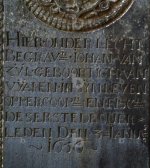
I found this picture while looking for "Portuguese Graves Goa" Although in the dutch language this gravestone illustrates perfectly the use of the letter j before the date. The mans name is "johann van syl" he died the 3rd of "janua" in "j 636"
Attachments
DielectricFlow
New Member
- Joined
- Feb 20, 2023
- Messages
- 4
- Reaction score
- 13
Here is an interesting book from 1930's Soviet Union. It has many recipes for artificial stone. I've upload the Russian and Google Translate version in PDF. These recipes were collected from throughout Europe. Chapter on Artificial Stones starts on page 43 of the text.stone (or stone forming materials)
B. ARTIFICIAL STONES
I.
Imitation gems
For the preparation of artificial precious stones, first of all, good glass fluxes are required, which give the so-called "rhinestones" and form the basis of artificial stones. These glass fluxes require the following materials: a) rock crystal, crushed into powder, b) borax or other soda salt, c) potassium nitrate, d) lead carbonate (white), e) red lead and f) metal oxide, which is used to paint
flux.
Various components (each separately) are crushed into powder, sieved through a fine sieve, placed in a melting crucible covered with a clay lid, and fused into a common mass by prolonged but careful incandescence (preferably in a muffle furnace). The resulting glass should be cooled slowly to avoid cracking. From the resulting glass, the necessary products are made by casting in molds or grinding chipped pieces. 1. Artificial Aquamarine Pound and fuse 36 rock crystal, 12 soda, 11 1/4 borax, 7 1/2 red lead. 3 3/4 saltpeter, 1/2 iron oxide, 1/8 copper carbonate. Instead of copper salt, 1/10 of cobalt carbonate can be added. 2. Artificial Pomegranate Pound and fuse 37 1/2 rock crystal, 11 1/4 soda, 8 1/2 borax, 5 1/2 minium, 1/4 manganese sulphate, 1/5 iron oxide. 3. Artificial azure stone Pound and fuse 22 1/2 rock crystal, 7 1/2 soda, 5 1/2 borax, 1 1/2 saltpeter, 3 3/4 bones, burned white, 1/8 cobalt carbonate. 4. Imitation Opal Pound and fuse 37 1/2 rock crystal, 11 1/4 soda, 5 1/2 red lead, 1 saltpeter, 5 1/2 bones, burnt white, 1/8 silver chloride. 5. Artificial ruby Pounded and fused: 5.1. 24 rock crystal, 12 soda. 11 1/4 borax, 11 1/4 red lead, 5 1/2 saltpeter, 1 cassia purple, 1/2 antimony sulphide 5.2. 24 rock crystals, 6 1/4 borax, 2 1/2 saltpeter, 1 cassia purple, 3 3/4 ammonium chloride (powdered). 6. Artificial sapphire
Pound and fuse 36 rock crystal, 22 1/2 soda, 7 1/2 borax, 7 1/2 red lead, 3 3/4 saltpeter, 1/3 cobalt carbonate; or: 24 rock crystal, 12 soda, 5 1/2 red lead, 1 1/4 saltpeter, 1 1/4 copper carbonate.
7. Artificial emerald
36 rock crystal, 22 1/2 soda, 7 1/2 borax, 7 1/2 red lead, 3 3/4 saltpeter, 1 1/4 iron oxide, 2/3
copper carbonate; or: 36 rock crystal, 12 soda, 7 1/2 borax, 7 1/2 red lead, 2 1/2 saltpeter, 1/10 cobalt carbonate, 2/3 chromium carbonate.
8. Artificial Tourmaline
8.1. To obtain a reddish-brown tourmaline, crush and
alloy: 36 rock crystal, 12 soda, 11 1/4 borax, 5 1/2 minium, 5 1/2 saltpeter, 1/2 nickel oxide.
8.2. For bulbous green to blue tourmaline
crush and fuse 22 1/2 rock crystal, 48 glass, 22 1/2 minium, 12 borax, 2 1/2 saltpeter, 1/10 cobalt carbonate.
Note. With this mixture, you can accidentally get topaz and chrysolite if
there is a small amount of iron in the mixture. You can also achieve this by replacing cobalt carbonate 1/4 yellow uranium oxide.
9. Artificial chrysolite
Pound and fuse 22 1/2 rock crystal, 22 1/2 soda, 5 3/4 borax, 3 3/4 saltpeter, 1/8 manganese sulphate. With manganese ore, you can also
amethyst can also be faked, and only 1/16 of manganese ore should be put on 24 mixtures.
10 Artificial Chrysoprase
Pound and melt 36 rock crystal, 12 soda, 11 1/4 borax, 7 1/2 red lead, 1 1/4 saltpeter, 7 1/2 bones, burnt
white, 1/8 copper carbonate, 1/4 iron oxide, 1/2 chromium carbonate. Light shades can be obtained by using only 1/4 of the oxides of three
metals (copper, iron and chromium).
II. Artificial marble and granite 1. Artificial marble according to Borchardt
1.1. The mass is prepared from pure quartz sand, carbon dioxide lime, talc and gypsum, to which may be added
finely ground dye. The sand used
consist of pure silica, and for this purpose it is washed and free from any organic constituents. After full
drying sand, 5-6% tripoli is added to it. Then as
binder for every 100 sand add 6-7 lime carbonate, 3 talc, 4 gypsum, 3 feldspar. All
components are mixed together with a small amount
water. The resulting mass is laid out in molds and after complete drying is fired at white-hot heat in a furnace without a blower.
1.2. Take 80 gypsum and 20 carbonic lime, finely grind, mix and knead with a mixture consisting of 1000 distilled water, 1080 lime sulphate.
1.3. Take 1000 water, 1440 glue, 1000 sulfuric acid. Then put
the dough into molds and, when it hardens, take it out, dry it in continuation of two hours, ground and polished with ordinary
way. Finally, the object is dipped in a bath of linseed oil at 70°C, then dried and smeared with stearin. For
aniline dyes are recommended.
1.4. The artificial marble is pale yellow to white. 30 rough white sand, 42 chalk, 24 rosin, 4 burnt lime.
1.5. Greenish. 28 coarse white sand, 42 chalk, 2 blue ultramarine, 24 rosin, 4 burnt lime.
1.6. Bodily. 28 coarse white sand, 42 chalk, 1 ultramarine blue, 1 cinnabar, 24 rosin, 4 burnt lime.
2. Imitation marble
2.1. According to Van der Steen. First prepare the water in which
be ground gypsum, adding carpenter's glue and resin to it; glue dissolves in warm water in the usual way, and the resin in warm turpentine bath. In the water thus prepared
gypsum is diluted in such a way that the entire mass is enough for filling out the form. After that, add the necessary
for coloring marble paint; paints should be prepared in special vessels. Thus prepared and painted marble
then poured into molds of gypsum, cement or rubber for flat plates on glass or stone boards. This
a marble layer is applied 4 mm thick, then a layer of dry gypsum is sifted over it to remove excess water used to dissolve the painted gypsum. As soon as this layer of powdered gypsum is thoroughly moistened with water contained in excess in colored gypsum, a thin layer of well-dissolved, but not colored gypsum is poured onto it, and canvas or radish is poured onto it. Then follows a layer of dissolved gypsum, to which crushed crushed stone is mixed. This last layer depends on the thickness to which one wants to give the object y, made of artificial marble. As soon as the mass hardens sufficiently (after 6-8 hours), it is removed from the plate or removed from the mold, wiped with pumice and the pores in the mass are filled with dissolved gypsum, painted in the main color of the cast object. To make the surface waterproof, it is treated with potassium silicate, and either immersed in a bath or spread the liquid with a brush. When the mass is completely dry, the surface is polished, and the novelty of the polishing process lies in the fact that it is polished with a swab wrapped in a rag and soaked in polishes compiled according to special recipes: 2.1.1. White polish for light artificial marble: 100 bleached gummilac, 600 alcohol, 25 finely ground gypsum. 2.1.2. Brown polish: 100 orange gummilac, 600 alcohol, 25 finely ground gypsum. First, the object to be polished is wiped with a swab dipped in alcohol, then the polish is applied with another swab
and the swab is continued to be rubbed until some adhesion is noticeable. The layer of polish thus formed is treated with the first swab soaked
in alcohol until a completely smooth surface is obtained. 2.1.3. Black polish. To do this, take a little black aniline paint on a rag. To achieve a uniform and very shiny polish, it is necessary to moisten the rag covering the swab from time to time with a few drops of oil. 2.2. According to Rosmer. Objects made from ordinary limestone - vases, figures, etc., are heated for 12 hours, at a pressure of 5 atmospheres, with boiling water or steam. Then they are placed in a bath consisting of a solution of alum at 5 ° B., in which they remain from 1 day to
several weeks. In this way, the stone acquires greater hardness and the ability to perceive polish. If they want to color the stone, then aniline paints dissolved in water are added to the mass. 2.3. According to Ostermeier. Milk of lime is mixed with finely crushed marble, or milk
of lime with chalk, until a kind of slurry is obtained. Based on a study of Pompeian cement, Ostermeyer recommends adding to this mass a sufficient amount of coarsely crushed limestone. This cement dries and hardens quickly. 3. Granite imitation Pure fine sand, pyrites or some other mass containing flint is mixed with freshly burnt and crushed lime in the following proportion: 10 sand or pyrites and 1 lime. Lime, quenched by the moisture of the sand, corrodes the flint and forms a thin layer around each flint grain. Upon cooling, the mixture is softened with water. Then take 10 crushed granite
and 1 lime and knead into place. Both mixtures are placed in a metal mold in such a way that the mixture of sand and lime forms the very middle of the object, and the mixture of granite and lime forms the outer shell from 6 to 12 mm (depending on the thickness of the object being prepared). Finally, the mass is pressed and hardened by drying it in air. The coloring matter is iron ore and iron oxide, which are mixed hot with granular granite. If they
want to give objects formed from the above composition a special hardness, then they are placed for an hour in potassium silicate and subjected to heat at 150 ° C.
Attachments

- Joined
- Nov 17, 2021
- Messages
- 319
- Reaction score
- 2,009
Not sure if this is the correct thread since so many threads touch on the "added thousand years" theme.
Poking through a Bavarian junk store, I came across two framed old letters. They appear to be written in German. I can't decipher them at all.
Whoever wrote these letters (which I presume have some official status as there are wax seals) left out the 1 in the dates and instead drew a horizontal line above them.
The first letter is from 1750:


The second is from 1832:


I'm not a historian, so there are huge gaps in my knowledge base. I wasn't sure if this was some kind of common practice, so I asked ChatGPT:
 So they did it to "save space and time". This sounds like one of those "obvious and reasonable" inferences made by complacent historians that actually make no sense upon closer inspection: the "1" takes up almost no space, and the horizontal bar takes just as much time to write.
One could argue that we do the same thing in writing, replacing "I am" with "I'm", which only saves a tiny amount of time and space (although still more than omitting the 1), but I would argue that the abbreviation in that case is motivated more by a desire to render speech phonetically than to save space. As for reducing titles like "Mister" to "Mr.", the time- and space-saving argument makes a bit more sense, as multiple letters are left out.
The second paragraph is particularly interesting. What it suggests is that the "1" was forced on people from the top, and they only used it when they had to, preferring the familiar "old" system in private until quite late (at least until 1832 as we see here).
In other words, we are told that dropping the 1 was an organic, bottom-up "innovation", but there is no sufficient reason for such a practice to take hold. However, if the 1 had been arbitrarily decreed, there would indeed be an organic, bottom-up reason to leave it off for so long...
I didn't know any of this, did you? In any case, the fact that it was "relatively common" in personal writing to omit the 1 makes the whole "added thousand years" theory a lot easier to accept.
Poking through a Bavarian junk store, I came across two framed old letters. They appear to be written in German. I can't decipher them at all.
Whoever wrote these letters (which I presume have some official status as there are wax seals) left out the 1 in the dates and instead drew a horizontal line above them.
The first letter is from 1750:
The second is from 1832:
I'm not a historian, so there are huge gaps in my knowledge base. I wasn't sure if this was some kind of common practice, so I asked ChatGPT:
One could argue that we do the same thing in writing, replacing "I am" with "I'm", which only saves a tiny amount of time and space (although still more than omitting the 1), but I would argue that the abbreviation in that case is motivated more by a desire to render speech phonetically than to save space. As for reducing titles like "Mister" to "Mr.", the time- and space-saving argument makes a bit more sense, as multiple letters are left out.
The second paragraph is particularly interesting. What it suggests is that the "1" was forced on people from the top, and they only used it when they had to, preferring the familiar "old" system in private until quite late (at least until 1832 as we see here).
In other words, we are told that dropping the 1 was an organic, bottom-up "innovation", but there is no sufficient reason for such a practice to take hold. However, if the 1 had been arbitrarily decreed, there would indeed be an organic, bottom-up reason to leave it off for so long...
I didn't know any of this, did you? In any case, the fact that it was "relatively common" in personal writing to omit the 1 makes the whole "added thousand years" theory a lot easier to accept.
Last edited:

- Joined
- Aug 31, 2020
- Messages
- 1,141
- Reaction score
- 2,177
In the answer, chat gpt does not mention your observation of an even longer dash across the top or even down the side of the date (boxing it in). Also, what you're seeing is the opposite to an abbreviation - the overlining or partial boxing requires more effort and care than the addition of a mere "1".
- Joined
- Nov 17, 2021
- Messages
- 319
- Reaction score
- 2,009
Another quick hit regarding an added thousand years.
Fomenko believes that Plethon, the 14th-15th century Byzantine Platonist, was actually Plato (as well as Plotinus, I believe). In French the names are even more similar: Platon, Plotin, Plethon. It struck me as well that there might also be a connection with Pluto. Anyway, I'm interested in the subject, so I recently bought John Opsopaus' "The Secret Texts of Hellenic Polytheism: a Practical Guide to the Restored Pagan Religion of George Gemisthos Plethon".
From pp 32-33:


So at a time before printing, Kabakes was somehow a fan of a thousand-year-old emperor who had "briefly restored" paganism rather than someone closer to him in time?
This makes very little sense unless we assume that those thousand years were interpolated.
Fomenko believes that Plethon, the 14th-15th century Byzantine Platonist, was actually Plato (as well as Plotinus, I believe). In French the names are even more similar: Platon, Plotin, Plethon. It struck me as well that there might also be a connection with Pluto. Anyway, I'm interested in the subject, so I recently bought John Opsopaus' "The Secret Texts of Hellenic Polytheism: a Practical Guide to the Restored Pagan Religion of George Gemisthos Plethon".
From pp 32-33:
So at a time before printing, Kabakes was somehow a fan of a thousand-year-old emperor who had "briefly restored" paganism rather than someone closer to him in time?
This makes very little sense unless we assume that those thousand years were interpolated.
Very interesting thread. IMHO, the most logical thing going on (from the Christian perspective) is the hiding of the Millennial Kingdom, to disguise the fact that we are now in Satan's short season. The Inversion of everything is upon us. I'm confused as to dates and times of everything, but, clearly, "they" want us confused as to time, dates. The changing of the calendar from a lunar, 13 month one to a 12 month one, daylight savings time. The Book of Enoch references the Days of the Sinners, how the years are shortened, the stars are mistaken for gods (Mars, Mercury, etc.). The heavens above are a giant clock, so time is very important to God, who wants us cognizant of time. But it is altered and hidden from us.
The Book of Enoch, Ch 80:
And their seed shall be tardy on their lands and fields,
And all things on the earth shall alter,
And shall not appear in their time:
And the rain shall be kept back
And the heaven shall withhold (it).
3. And in those times the fruits of the earth shall be backward,
And shall not grow in their time,
And the fruits of the trees shall be withheld in their time.
4. And the moon shall alter her order,
And not appear at her time.
5. [And in those days the sun shall be seen and he shall journey in the evening †on the extremity of the great chariot in †the west]
And shall shine more brightly than accords with the order of light.
6. And many chiefs of the stars shall transgress the order (prescribed).
And these shall alter their orbits and tasks,
And not appear at the seasons prescribed to them.
7. And the whole order of the stars shall be concealed from the sinners,
And the thoughts of those on the earth shall err concerning them,
[And they shall be altered from all their ways],
Yea, they shall err and take them to be gods.
8. And evil shall be multiplied upon them,
And punishment shall come upon them
So as to destroy all.’
The Book of Enoch, Ch 80:
LXXX. 2-8. Perversion of Nature and the heavenly Bodies owing to the Sin of Men.
2. And in the days of the sinners the years shall be shortened,And their seed shall be tardy on their lands and fields,
And all things on the earth shall alter,
And shall not appear in their time:
And the rain shall be kept back
And the heaven shall withhold (it).
3. And in those times the fruits of the earth shall be backward,
And shall not grow in their time,
And the fruits of the trees shall be withheld in their time.
4. And the moon shall alter her order,
And not appear at her time.
5. [And in those days the sun shall be seen and he shall journey in the evening †on the extremity of the great chariot in †the west]
And shall shine more brightly than accords with the order of light.
6. And many chiefs of the stars shall transgress the order (prescribed).
And these shall alter their orbits and tasks,
And not appear at the seasons prescribed to them.
7. And the whole order of the stars shall be concealed from the sinners,
And the thoughts of those on the earth shall err concerning them,
[And they shall be altered from all their ways],
Yea, they shall err and take them to be gods.
8. And evil shall be multiplied upon them,
And punishment shall come upon them
So as to destroy all.’
- Joined
- Aug 22, 2022
- Messages
- 116
- Reaction score
- 250
The Polychronicon Ranulphi Hidden maonachi Cestrensis; together with the English translations of John Trevisa and of an unknown writer of the fifteenth century, is in the on-line library of Michigan University collection of Middle English prose, and has an interesting passage on the various calculations of time through the ages in The third Preface to the story. Capitulum quartum.
Below is the full excerpt, followed by a ‘translated’ version - I hesitate to use the term ‘translated’, as I really just went through copying and pasting, adjusting the spelling to be more easily readable. Where I was unsure, I have left the original word and would appreciate any suggestions!
“…hit is to be attendede that þer were viij. maneres to calcle yeres; iij. anendes men of Ebrewe, thre anendes the Grekes, oon at the Romanes, and oon now at Cristen men. Men of Ebrewe take theire yere in thre maneres. The vsualle yere is begynnenge from Ianuary anendes theyme whom thei vse in contractes. Also a lawefulle yere begynnenge from Marche, whom thei vse in cerimonyes. Also there is a yere emergente as anendes theyme begynnenge from May when thei wente from Egipte, whom thei vse in cronicles and calculaciones. The Grekes note theire yeres in thre maneres:—In the firste they cotede yeres at the glory of their victory from the captiuite of Troye. After that þe Olimpias begunne, thei assignede the nowmbre of þeire yeres after the nowmbre of theyme. In the thrydde maner, when thei began to haue dominacion, thei notede their yeres in thys maner:—In suche a yere in the reigne of men of Grewe, or in suche a yere, as hit is expressede in the bookes of Machabes. At the laste þe Romanes floryschenge ascribede theire yeres from the begynnenge of theire cite y-made. But nowe laste Cristen men suppute theire yeres from the Incarnacion of Criste. Wherefore hit is to be aduertisede that the calculation of
Dionysius, whom Englonde and Fraunce doe folowe, hathe lesse then the computacion of Seynte Ierom by the nowmbre of xxtiij. yere. Also William Malmesburye dothe reherse in his booke of byschoppes the iiijthe that Ma|rianus a Scotte and a monke, included at a cyte callede Mangotia in Allemeyne, abowte the yere of grace mllxxvj., [folio 21a] serchede cronicles thro grete study and labour, aduertenge firste or sole the dissonaunce of the cicles after the cal|culation of litelle Dionise ageyn the trawthe of the Gos|pelle, whiche accomptenge euery yere from the begynnenge of the worlde addede to the foreseide cicles xxtiij. yere, makenge a harde and a diffusede cronicle, whose booke Roberte Byschoppe of Herefforde onornede splendidiously; wherefore commune cronicles folowenge Dionysius fayle and stumble alle day, Seynte Ierom wyttenes in the translacion of the cronicle of Eusebius, where x. yeres wonte betwene the passion of Criste and tyme of Vaspasian, and also xiiij. wonte abowte the tymes of Decius themperoure, as hit schalle be schewede under the vjthe age of the worlde. That erroure is moche encreased in so moche, that dayes
and monethes be ouerskippede in whom hit is seyde kynges haue reignede by holle yeres; and also other spaces of tymes be neglecte betwene or amonge the endes off men reignenge and begynnenges of men folowenge. Where|fore y schalle ascribe how euery thynge hathe bene in the yere þer of after my powere in this presente wrytenge. In so moche that y schalle purpulle the mariantes nye the hedes of þe gestes with a dowble ordre of yeres. From Abraham vn to the cite off Rome y-made, the yere of the age of the worlde and of the duke and gouer|noure schalle be wryten. From the cite y-made to Criste, the yere of the age of the cite and of the transmigra|cion schalle be wryten. From Criste, the yere of grace and of the prynce reignenge that tyme schalle be wryten to gedre.”
Translated:
“…it is to be attended that there were eight manners to calculate years; three anends men of Hebrew, three anends the Greeks, one at the Romans, and one now at Christian men. Men of Hebrew take their year in three manners. The usual year is beginning from January anends them whom they use in contracts. Also a lawful year beginning from March, whom they use in ceremonies. Also there is a year emergent as anends them beginning from May when they went from Egypt, whom they use in chronicles and calculations. The Greeks note their years in three manners:—In the first they counted years at the glory of their victory from the captivity of Troy. After that the Olympias begun, they assigned the number of their years after the number of them. In the third manner, when they began to have domination, they noted their years in this manner:—In such a year in the reign of men of Greece, or in such a year, as it is expressed in the books of Machabes. At the last, the Romans, flourishing, ascribed their years from the beginning of their city y-made. But now last Christian men suppute their years from the Incarnation of Christ. Wherefore it is to be advertised that the calculation of
Dionysius, whom England and France do follow, has less than the computation of Saint Jerome by the number of 22 years. Also William Malmesbury does rehearse in his book of bishops the fourth that Marianus a Scot and a monk, included at a city called Mangotia in Allmeyne, about the year of grace 1076, [folio 21a] searched chronicles through great study and labour, aduertenge first or sole the dissonance of the cycles after the calculation of little Dionise against the truth of the Gospel, which accomptenge every year from the beginning of the world added to the foresaid cycles 22 year, making a hard and a diffused chronicle, whose book Robert Bishop of Hereford onorneed splendidiously; wherefore commune chronicles following Dionysius fail and stumble all day, Saint Jerome witness in the translation of the chronicle of Eusebius, where ten years wont between the passion of Christ and time of Vespasian, and also fourteen wont about the times of Decius the emperor, as it shall be showed under the sixth age of the world. That error is much increased in so much, that days
and months be overskipped in whom it is said kings have reigned by whole years; and also other spaces of times be neglected between or among the ends of men reigned and beginnings of men following. Wherefore I shall ascribe how everything has been in the year thereof after my power in this present writing. In so much that I shall purpulle the mariantes near the hedes of the geasts with a double order of years. From Abraham unto the city of Rome y-made, the year of the age of the world and of the duke and governor shall be written. From the city y-made to Christ, the year of the age of the city and of the transmigration shall be written. From Christ, the year of grace and of the prince reigned that time shall be written together.”
This text is presented as part of a mish-mash of three sub-texts, from the 1400’s, which some unknown hand has spliced together. I have difficulty with the dating, as the English language used is really not so different from today. Letters and spelling are different, but not many of the words.
The mention of cycles is fascinating, a notion that has recently been obliterated in favour of a linear view of time. And how does Dionysius fit into calculations? Maybe it is related to the di- prefix meaning of two ? According to the text, it was known in the 1400’s that there was already a 22-year discrepancy, which is an astonishingly precise figure.
Below is the full excerpt, followed by a ‘translated’ version - I hesitate to use the term ‘translated’, as I really just went through copying and pasting, adjusting the spelling to be more easily readable. Where I was unsure, I have left the original word and would appreciate any suggestions!
“…hit is to be attendede that þer were viij. maneres to calcle yeres; iij. anendes men of Ebrewe, thre anendes the Grekes, oon at the Romanes, and oon now at Cristen men. Men of Ebrewe take theire yere in thre maneres. The vsualle yere is begynnenge from Ianuary anendes theyme whom thei vse in contractes. Also a lawefulle yere begynnenge from Marche, whom thei vse in cerimonyes. Also there is a yere emergente as anendes theyme begynnenge from May when thei wente from Egipte, whom thei vse in cronicles and calculaciones. The Grekes note theire yeres in thre maneres:—In the firste they cotede yeres at the glory of their victory from the captiuite of Troye. After that þe Olimpias begunne, thei assignede the nowmbre of þeire yeres after the nowmbre of theyme. In the thrydde maner, when thei began to haue dominacion, thei notede their yeres in thys maner:—In suche a yere in the reigne of men of Grewe, or in suche a yere, as hit is expressede in the bookes of Machabes. At the laste þe Romanes floryschenge ascribede theire yeres from the begynnenge of theire cite y-made. But nowe laste Cristen men suppute theire yeres from the Incarnacion of Criste. Wherefore hit is to be aduertisede that the calculation of
Dionysius, whom Englonde and Fraunce doe folowe, hathe lesse then the computacion of Seynte Ierom by the nowmbre of xxtiij. yere. Also William Malmesburye dothe reherse in his booke of byschoppes the iiijthe that Ma|rianus a Scotte and a monke, included at a cyte callede Mangotia in Allemeyne, abowte the yere of grace mllxxvj., [folio 21a] serchede cronicles thro grete study and labour, aduertenge firste or sole the dissonaunce of the cicles after the cal|culation of litelle Dionise ageyn the trawthe of the Gos|pelle, whiche accomptenge euery yere from the begynnenge of the worlde addede to the foreseide cicles xxtiij. yere, makenge a harde and a diffusede cronicle, whose booke Roberte Byschoppe of Herefforde onornede splendidiously; wherefore commune cronicles folowenge Dionysius fayle and stumble alle day, Seynte Ierom wyttenes in the translacion of the cronicle of Eusebius, where x. yeres wonte betwene the passion of Criste and tyme of Vaspasian, and also xiiij. wonte abowte the tymes of Decius themperoure, as hit schalle be schewede under the vjthe age of the worlde. That erroure is moche encreased in so moche, that dayes
and monethes be ouerskippede in whom hit is seyde kynges haue reignede by holle yeres; and also other spaces of tymes be neglecte betwene or amonge the endes off men reignenge and begynnenges of men folowenge. Where|fore y schalle ascribe how euery thynge hathe bene in the yere þer of after my powere in this presente wrytenge. In so moche that y schalle purpulle the mariantes nye the hedes of þe gestes with a dowble ordre of yeres. From Abraham vn to the cite off Rome y-made, the yere of the age of the worlde and of the duke and gouer|noure schalle be wryten. From the cite y-made to Criste, the yere of the age of the cite and of the transmigra|cion schalle be wryten. From Criste, the yere of grace and of the prynce reignenge that tyme schalle be wryten to gedre.”
Translated:
“…it is to be attended that there were eight manners to calculate years; three anends men of Hebrew, three anends the Greeks, one at the Romans, and one now at Christian men. Men of Hebrew take their year in three manners. The usual year is beginning from January anends them whom they use in contracts. Also a lawful year beginning from March, whom they use in ceremonies. Also there is a year emergent as anends them beginning from May when they went from Egypt, whom they use in chronicles and calculations. The Greeks note their years in three manners:—In the first they counted years at the glory of their victory from the captivity of Troy. After that the Olympias begun, they assigned the number of their years after the number of them. In the third manner, when they began to have domination, they noted their years in this manner:—In such a year in the reign of men of Greece, or in such a year, as it is expressed in the books of Machabes. At the last, the Romans, flourishing, ascribed their years from the beginning of their city y-made. But now last Christian men suppute their years from the Incarnation of Christ. Wherefore it is to be advertised that the calculation of
Dionysius, whom England and France do follow, has less than the computation of Saint Jerome by the number of 22 years. Also William Malmesbury does rehearse in his book of bishops the fourth that Marianus a Scot and a monk, included at a city called Mangotia in Allmeyne, about the year of grace 1076, [folio 21a] searched chronicles through great study and labour, aduertenge first or sole the dissonance of the cycles after the calculation of little Dionise against the truth of the Gospel, which accomptenge every year from the beginning of the world added to the foresaid cycles 22 year, making a hard and a diffused chronicle, whose book Robert Bishop of Hereford onorneed splendidiously; wherefore commune chronicles following Dionysius fail and stumble all day, Saint Jerome witness in the translation of the chronicle of Eusebius, where ten years wont between the passion of Christ and time of Vespasian, and also fourteen wont about the times of Decius the emperor, as it shall be showed under the sixth age of the world. That error is much increased in so much, that days
and months be overskipped in whom it is said kings have reigned by whole years; and also other spaces of times be neglected between or among the ends of men reigned and beginnings of men following. Wherefore I shall ascribe how everything has been in the year thereof after my power in this present writing. In so much that I shall purpulle the mariantes near the hedes of the geasts with a double order of years. From Abraham unto the city of Rome y-made, the year of the age of the world and of the duke and governor shall be written. From the city y-made to Christ, the year of the age of the city and of the transmigration shall be written. From Christ, the year of grace and of the prince reigned that time shall be written together.”
This text is presented as part of a mish-mash of three sub-texts, from the 1400’s, which some unknown hand has spliced together. I have difficulty with the dating, as the English language used is really not so different from today. Letters and spelling are different, but not many of the words.
The mention of cycles is fascinating, a notion that has recently been obliterated in favour of a linear view of time. And how does Dionysius fit into calculations? Maybe it is related to the di- prefix meaning of two ? According to the text, it was known in the 1400’s that there was already a 22-year discrepancy, which is an astonishingly precise figure.
- Joined
- Aug 22, 2022
- Messages
- 116
- Reaction score
- 250
I found this reference to a pretty recent attempt to ’reform’ the calendar in England & Wales in the Parliamentary Debate record from 1908.

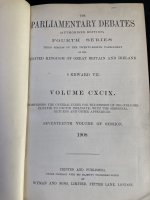
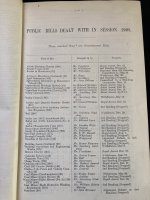

It seems a Bill for Calendar Reform was put forward by Liberal MP Robert Pearce, and was Withdrawn on 18 June 1908. HIs Wikibio mentions him introducing the Daylight Saving Bill in the same year, but not his passion for mucking about with days and months, as well as hours.
Apparently he was born in East England, and worked as a solicitor in London, yet sought office as an MP for Leek, in Staffordshire in central England three times before winning. He was clearly not a popular gent, as he was ousted by a renowned cricketer, Arthur Heath, just two years later. Heath did not stand again, a potential indication of skullduggery, and Pearce succeeded in sliming his way back into the House of Commons at the next opportunity. I guess he won the rotten borough in the end.
It seems a Bill for Calendar Reform was put forward by Liberal MP Robert Pearce, and was Withdrawn on 18 June 1908. HIs Wikibio mentions him introducing the Daylight Saving Bill in the same year, but not his passion for mucking about with days and months, as well as hours.
Apparently he was born in East England, and worked as a solicitor in London, yet sought office as an MP for Leek, in Staffordshire in central England three times before winning. He was clearly not a popular gent, as he was ousted by a renowned cricketer, Arthur Heath, just two years later. Heath did not stand again, a potential indication of skullduggery, and Pearce succeeded in sliming his way back into the House of Commons at the next opportunity. I guess he won the rotten borough in the end.

I was just reading this thread SH Archive - History of Britain as told in the British Records and it made me wonder if that stuff Miles Mathis is always citing, the peerage info, would be a useful clue in all of this?I found this reference to a pretty recent attempt to ’reform’ the calendar in England & Wales in the Parliamentary Debate record from 1908.
View attachment 34089View attachment 34090View attachment 34091
View attachment 34096
It seems a Bill for Calendar Reform was put forward by Liberal MP Robert Pearce, and was Withdrawn on 18 June 1908. HIs Wikibio mentions him introducing the Daylight Saving Bill in the same year, but not his passion for mucking about with days and months, as well as hours.
Apparently he was born in East England, and worked as a solicitor in London, yet sought office as an MP for Leek, in Staffordshire in central England three times before winning. He was clearly not a popular gent, as he was ousted by a renowned cricketer, Arthur Heath, just two years later. Heath did not stand again, a potential indication of skullduggery, and Pearce succeeded in sliming his way back into the House of Commons at the next opportunity. I guess he won the rotten borough in the end.
- Joined
- Aug 22, 2022
- Messages
- 116
- Reaction score
- 250
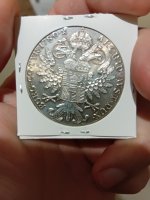
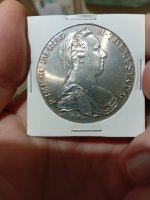
It would be interesting to see the other side, too. Is it a medal or a coin, or…? Thanks for sharingHaving an actual piece of the puzzle in hands is pretty cool, got it recently on an antiques fair
The "date" clearly is i780, from the austro hungarian empire, made of silver
View attachment 34108

- Joined
- Dec 20, 2021
- Messages
- 518
- Reaction score
- 950
Some consider it to be a coin, others a medal due to the size and how detailed it isIt would be interesting to see the other side, too. Is it a medal or a coin, or…? Thanks for sharing
- Joined
- Dec 20, 2021
- Messages
- 518
- Reaction score
- 950
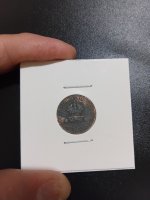
Found another coin with an i date! Have this one on the collection for years but only recently looked at it with more attention
It's from Italy, kingdom of lombardy to be more precise, and the date, i822, crystal clear!
Quite a late i date, but since It's pre unification of Italy, that could explain it

It's from Italy, kingdom of lombardy to be more precise, and the date, i822, crystal clear!
Quite a late i date, but since It's pre unification of Italy, that could explain it

Similar threads

- Replies
- 5
- Views
- 3K

- Replies
- 0
- Views
- 1K

- Replies
- 6
- Views
- 1K

