

- Joined
- Sep 22, 2020
- Messages
- 4,691
- Reaction score
- 1,500
Drones, or any other unmanned vehicles are normal occurrence in today's life. Yet, I was surprised to find out that there were plenty of unmanned systems as early as 1915. I understand, that in part it demonstrates certain blank spots in my own education, and general knowledge. At the same time all of my friends displayed a very similar level of ignorance. I have this feeling, that for some people World War I drones might be a surprise as well. Did this technology belong to the time frame they were used in? I, personally, think they did not, others might think otherwise.
Tech is not supposed to just pop out of nowhere. There has to be some sort of scientific basis leading up to the invention of any ground braking technology. I do not see the existence of such a basis at the end of 19th, and the very beginning of the 20th century.
Wireless control should not be getting patented simultaneously with a roll of toilet paper.
Let us see what unmanned vehicles were available approximately 100 years ago.
Lay's torpedo was controlled by a ship or shore based operator via a multi-core insulated electric cable dispensed from the torpedo
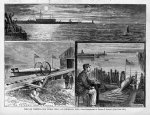
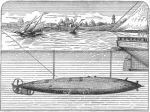
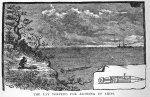
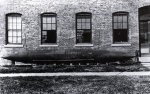
The Lay torpedo, though mechanically advanced and promising in theory and practice, was not widely adopted as it was very costly. In 1878 a single Lay torpedo was worth USD 15,000. I do not know what material they used to make this torpedo, but the price tag sounds ridiculous for 1878. Additionally when did price stopped our Military from building a weapon? The Lay's Torpedo was clearly a weapon capable of altering the outcome of a naval battle. I doubt that price was a real reason to stop the development of this torpedo. Sounds like they either could not harness a technology they did not fully understand, or simply found a few torpedoes, and shortly ran out of the tiny supply.
Having made and lost a fortune in Europe Lay returned to America where he died homeless and destitute in New York's Bellevue Hospital on Monday April 17, 1899. This type of a life finale is becoming a trademark.
NOTE: Wire guided torpedoes are still being used today 150 years later: Black Shark Torpedo, Tigerfish, Mark 48, etc.
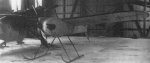
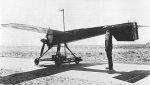
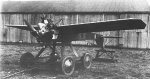
This led the army to commission a project to build an "aerial torpedo", resulting in the Kettering Bug which first flew in 1918.
WW I: Kettering Bug - 1918
The Kettering Bug was an experimental, unmanned aerial torpedo, a forerunner of present-day cruise missiles. It was capable of striking ground targets up to 121 kilometres (75 mi) from its launch point, while traveling at speeds of 80 kilometres per hour (50 mph). The prototype Bug was completed and delivered to the Aviation Section of the U.S. Army Signal Corps in 1918, near the end of World War I. The first flight on October 2, 1918 was a failure: the plane climbed too steeply after takeoff, stalled and crashed. Subsequent flights were successful, and the aircraft was demonstrated to Army personnel at Dayton.
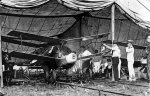
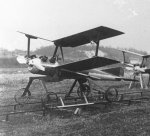
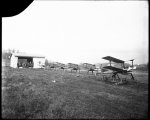
While the Bug's revolutionary technology was successful, it was not in time to fight in the war, which ended before it could be fully developed and deployed.
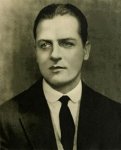
In 1935 Denny demonstrated a prototype target drone, the RP-1, to the US Army. Denny then bought a design from Walter Righter in 1938 and began marketing it to hobbyists as the "Dennymite", and demonstrated it to the Army as the RP-2, and after modifications as the RP-3 and RP-4 in 1939. In 1940, Denny and his partners won an Army contract for their radio controlled RP-4, which became the Radioplane OQ-2.
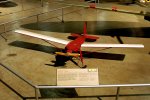
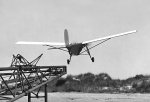
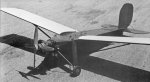
The OQ-2 Radioplane was the first mass-produced UAV or drone in the United States, manufactured by the Radioplane Company. A follow-on version, the OQ-3, became the most widely used target drone in US service, with over 9,400 being built during World War II.
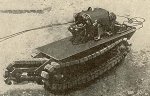
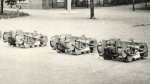
WW II: Teletank
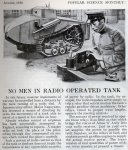
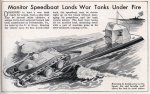
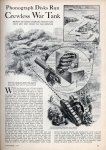
Teletanks are the series (Reno-russky, T-18, TT-18, TT-27, TT-26, TT-BT-7, T-55, T-72B) of the remotely controlled unmanned robotic tanks produced in the Soviet Union in the 1920s – 1940s, 1960s, 2000s. They saw their first combat use in the Winter war – military conflict between the Soviet Union and Finland (30 November 1939 – 13 March 1940) at the start of World War II. Teletanks were controlled by radio from appropriate Control Tanks at a distance of 500-1500 meters. - Teletank
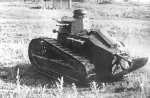
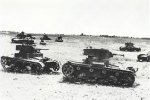
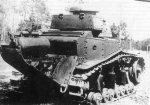
WW II: Goliath tracked mine
The Goliath tracked mine - complete German name: Leichter Ladungsträger Goliath (Goliath Light Charge Carrier) was a name given to two German Unmanned ground vehicles, disposable demolition vehicles, used during World War II. These were the electrically powered Sd.Kfz. 302 and the petrol-engine powered Sd.Kfz. 303a and 303b. They were known as beetle tanks to the Allies.
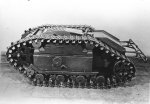
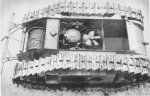
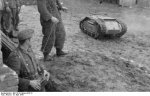
Employed by the Wehrmacht during World War II. They carried 60 or 100 kilograms (130 or 220 lb) of high explosives, depending on the model, and were intended to be used for multiple purposes, such as destroying tanks, disrupting dense infantry formations, and the demolition of buildings or bridges. Goliaths were single-use vehicles that were destroyed by the detonation of their warhead.
Tech is not supposed to just pop out of nowhere. There has to be some sort of scientific basis leading up to the invention of any ground braking technology. I do not see the existence of such a basis at the end of 19th, and the very beginning of the 20th century.
Wireless control should not be getting patented simultaneously with a roll of toilet paper.
Let us see what unmanned vehicles were available approximately 100 years ago.
WATER
The Lay Torpedo: wire guided - 1870s
The Lay Torpedoes were designed by John Louis Lay. Lay enlisted in the United States Navy in July 1861 and in 1864 was responsible for introducing Lieutenant William Barker Cushing to offensive torpedo warfare. Cushing later used a spar torpedo perfected by Lay to sink the Confederate ram Albemarle at Plymouth, North Carolina, on October 27, 1864.The Lay Torpedo: wire guided - 1870s
Lay's torpedo was controlled by a ship or shore based operator via a multi-core insulated electric cable dispensed from the torpedo


Having made and lost a fortune in Europe Lay returned to America where he died homeless and destitute in New York's Bellevue Hospital on Monday April 17, 1899. This type of a life finale is becoming a trademark.
NOTE: Wire guided torpedoes are still being used today 150 years later: Black Shark Torpedo, Tigerfish, Mark 48, etc.
AIR
WW I: Aerial Target (AT) - 1916
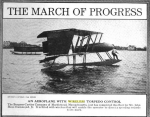
Serbian-American inventor and engineer Nikola Tesla had described a fleet of unmanned aerial combat vehicles in 1915 . The first pilotless aircraft were built during and shortly after World War I. Leading the way, was the Ruston Proctor Aerial Target of 1916. The wireless control apparatus was developed by Captain Archibald Low of the Royal Flying Corp.WW I: Aerial Target (AT) - 1916


WW I: Kettering Bug - 1918


While the Bug's revolutionary technology was successful, it was not in time to fight in the war, which ended before it could be fully developed and deployed.
WW II: Reginald Denny and the Radioplane
The first large-scale production, purpose-built drone was the product of Reginald Denny. He served with the British Royal Flying Corps during World War I, and after the war, in 1919, emigrated to the United States to seek his fortunes in Hollywood as an actor. Denny had made a name for himself as an actor, and between acting jobs, he pursued his interest in radio control model aircraft in the 1930s. He and his business partners formed "Reginald Denny Industries" and opened a model plane shop in 1934 on Hollywood Boulevard known as Reginald Denny Hobby Shops.


The OQ-2 Radioplane was the first mass-produced UAV or drone in the United States, manufactured by the Radioplane Company. A follow-on version, the OQ-3, became the most widely used target drone in US service, with over 9,400 being built during World War II.
GROUND
WW I: Torpille Terrestre
At least two tethered UGVs were introduced by the French in 1915. The wire-guided Crocodile Schneider Torpille Terrestre carried a 40-kilogram internal charge for attacking German barbed-wire and concrete-casement defenses. Its lackluster performance during operational testing through June, 1916 was eclipsed by higher expectations for the newly introduced battle tanks. - Land torpedo Crocodile Schneider (France)WW I: Torpille Terrestre


WW II: Teletank


WW II: Goliath tracked mine


Employed by the Wehrmacht during World War II. They carried 60 or 100 kilograms (130 or 220 lb) of high explosives, depending on the model, and were intended to be used for multiple purposes, such as destroying tanks, disrupting dense infantry formations, and the demolition of buildings or bridges. Goliaths were single-use vehicles that were destroyed by the detonation of their warhead.
Additionally


* * * * *
Apparently, drones were a fairly common thing in the 1920s. I only listed a few examples. There were many more. Some additional links are below.
- RAE Larynx
- Henschel Hs 293
- V-1 Flying Bomb
- GB-8
- Fritz_X
- LBD Gargoyle
- British Goliath
- The Mother of All Drones
- 1892 Bottle cap
- 1892 Bicycle seat (padded),
- 1893 Zipper
- 1897 Ice cream scoop
- 1900 Fly swatter (manual)
- 1901 Windowed envelope
- 1903 Tea bag
- 1907 Paper towel
Note: This OP was recovered from the KeeperOfTheKnowledge archive.
Note: Archived SH.org replies to this OP: Drones: Unmanned Systems of World Wars I and II


