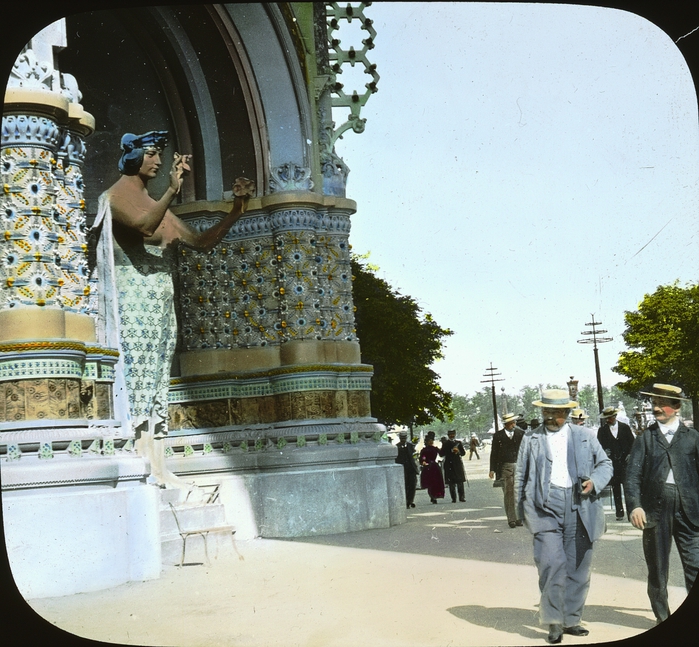
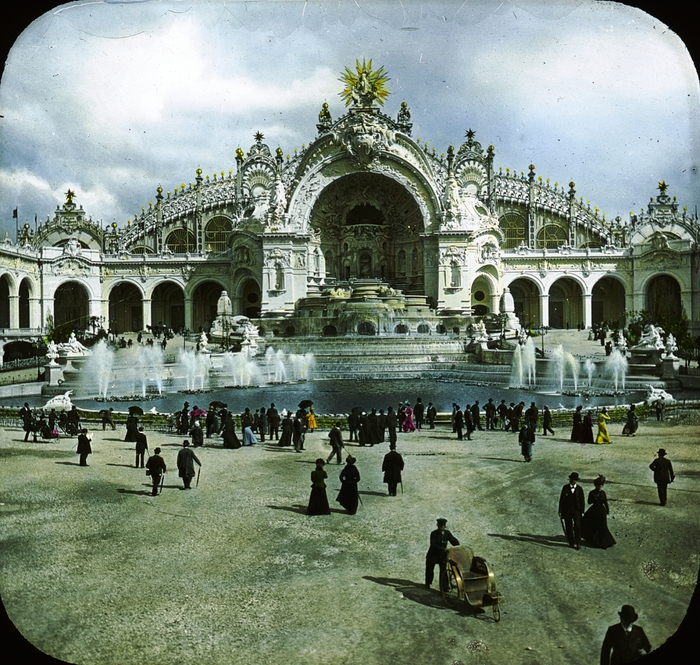
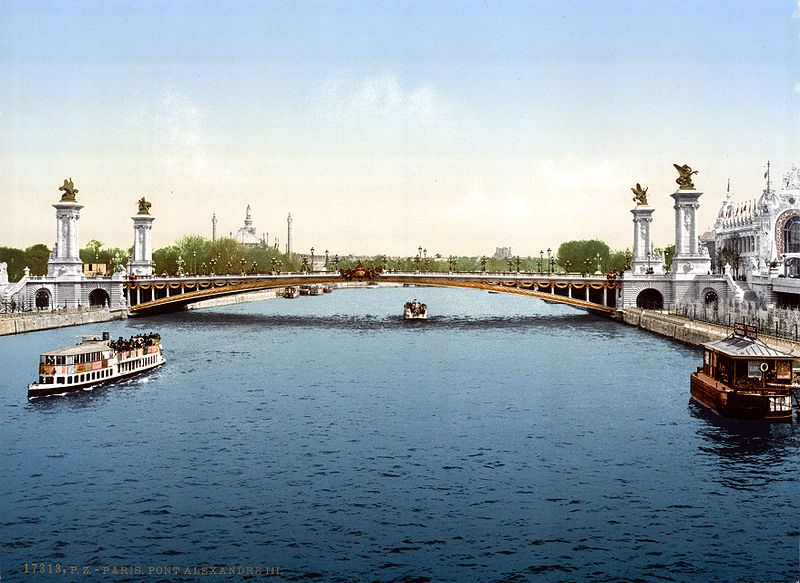
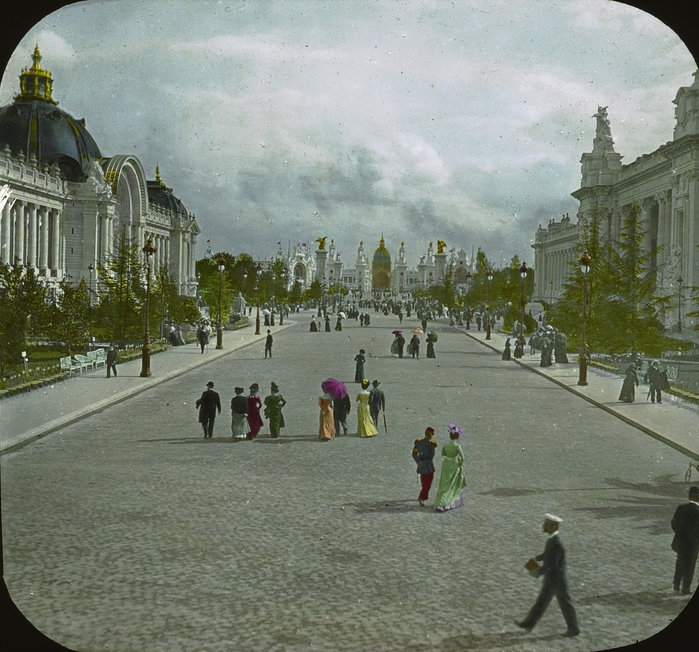
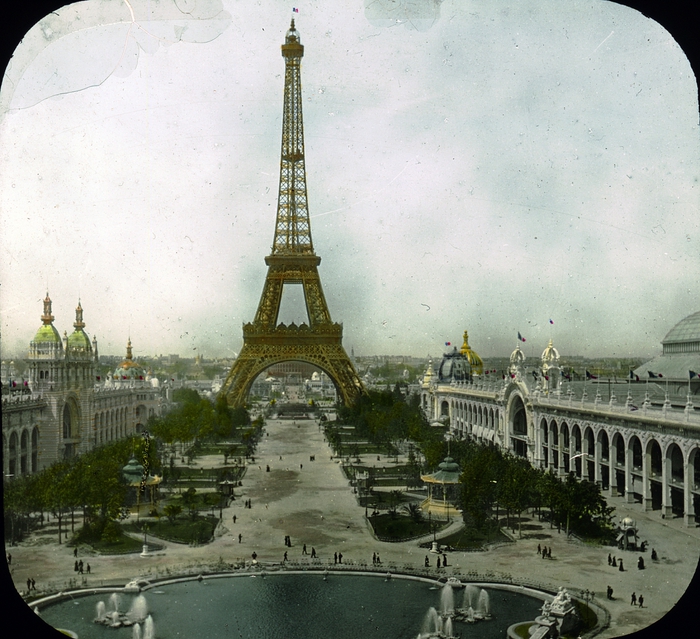
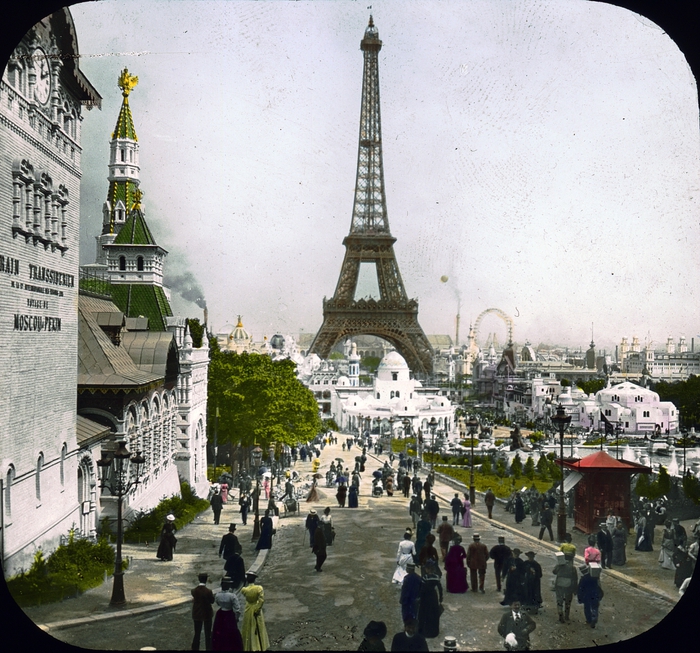
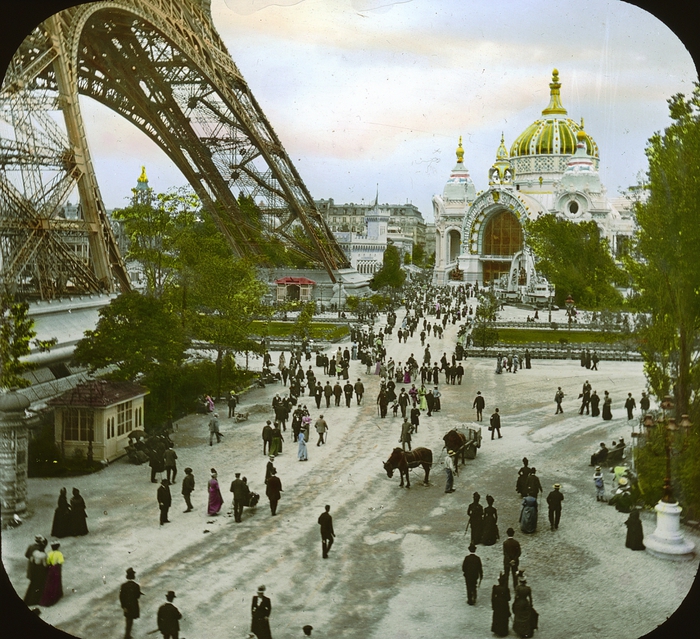
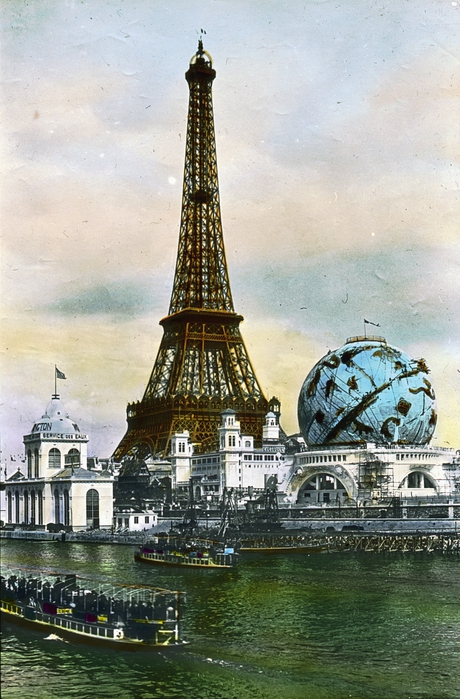
The sheer scale of this exposition is breathtaking but do read the names on the buildings...why for example is the algerian presence so big and russe and siberia so small in comparison?
also the grand bretagne aka great britain presence is tiny so how much of the mighty british empire 'tales' are simply made up?
tartaria/tartary/tartarie doesn't feature anywhere, save in the buildings themselves.
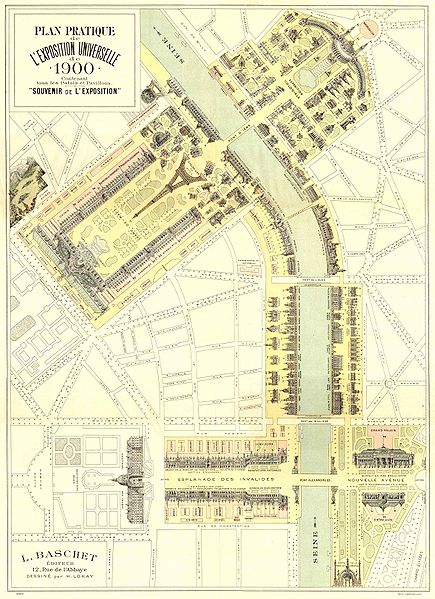
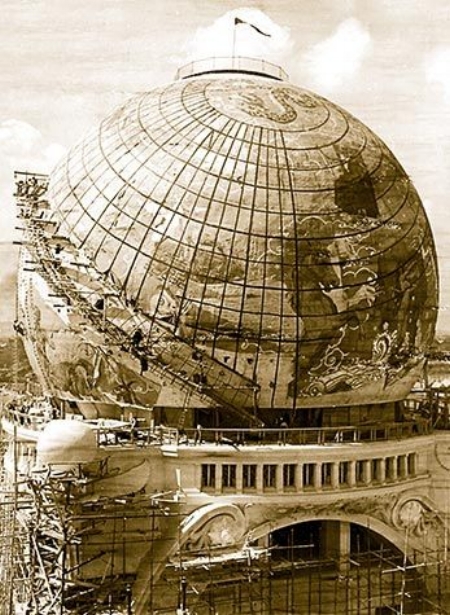
the tour du monde which i have been looking at is shown on the plan as one building which isn't clear in any of the photographs/pictures/engravings.
also the grand bretagne aka great britain presence is tiny so how much of the mighty british empire 'tales' are simply made up?
tartaria/tartary/tartarie doesn't feature anywhere, save in the buildings themselves.
good point but I can't imagine France wanting a large British presence at their own World's Fair, we weren't exactly neighbours on great terms!
also, from what I gather - wasn't Tartaria almost entirely erased from maps/books by 1900?
(is there any 20th century reference to the Tartarian Empire?)
This page is real, real goldmine of pictures and words. "L'Exposition Universelle de Paris, 1900"
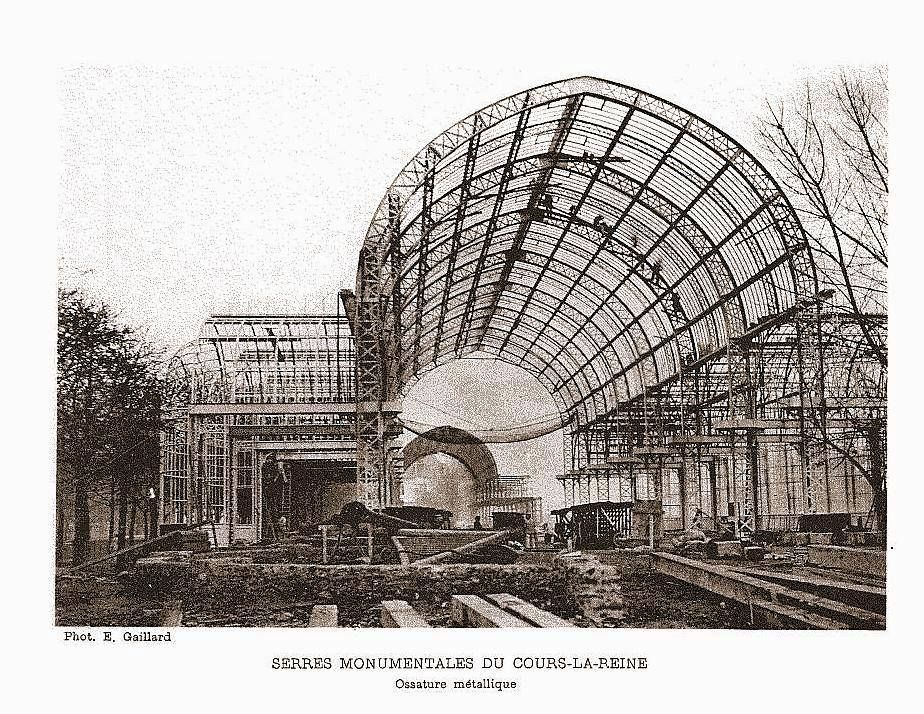
Scaffolding of 'the day' looks and feels like repairs or finishing NOT construction.
good point but I can't imagine France wanting a large British presence at their own World's Fair, we weren't exactly neighbours on great terms!
also, from what I gather - wasn't Tartaria almost entirely erased from maps/books by 1900?
(is there any 20th century reference to the Tartarian Empire?)
just throwing stuff out as it appears...i for one do not believe the france versus england and then great britain and then united kingdom animosity through the ages as being an indicator of reality...
as for tartaria who knows i wasn't around then just have the feeling it is still around but hidden in plain sight..
These photos are incredible! I just can't imagine why all of that would be destroyed. It's stunning, it's gorgeous, it's obviously built to last for centuries, not temporarily. Look at the buildings we have now: ugly, boxy, depressing to look at, depressing to have to work in, as well.
These photos are incredible! I just can't imagine why all of that would be destroyed. It's stunning, it's gorgeous, it's obviously built to last for centuries, not temporarily. Look at the buildings we have now: ugly, boxy, depressing to look at, depressing to have to work in, as well.
well these two sites will blow your socks off.. been perusing for ages its staggering the sheer volume of what was done for a temporary exhibition...perhaps those that know the tartarian/predecessor way of doing things were trying their 'powers' out..
The Universal Exhibition of 1900
The prosperity of France during the Belle Epoque gives Paris the privilege of receiving no less than 5 universal exhibitions between 1850 and 1900. But the exhibition of 1900 is the one that surpasses them all.
In regulatory terms (BIE), universal exhibitions are called registered international exhibitions. They have a universal theme of interest and relevance for all of humanity. Since 1895, they have been held in principle at least every five years. Their maximum duration is six months.
In what way the universal exhibition of 1900 is it a symbol of the recovered power of France?
I- The exposure of all sizes
A- The largest of all the exhibitions.
The Universal exhibition was inaugurated April 14, 1900 by President Emile Loubet, then it opens to the public on April 15 and ends on November 12, 1900. It covers 216 hectares through the Champs Elysees, Champs de Mars, Wood Vincennes, the Invalides ...
The Universal Exhibition of 1900 is the fifth world exhibition to have him in Paris in less than 50 years, the first having taken place in 1855.
It has a very important influence, it is the biggest universal exhibition ever organized with more than 51 million visitors from around the world.
1888, Barcelona: 2 million
1889, Paris: 32 million
1893, Chicago: 27 million
1897, Brussels: 8 million
1900, Paris: 51 million
In 212 days, the Exhibition brings together no less than 83,000 exhibitors. The exhibition is considered a kind of escalation to excess.
B- Urbanistic Revolution of Paris.
To accommodate such an exhibition, the city of Paris underwent many changes. First, the city has 3 additional stations that are the Gare d'Orsay, Gare des Invalides and Gare de Lyon. These stations allow the massive arrival of tourists but they are also the symbol of the industrial progress of France. The streets, the bridges are enlarged as well as the large squares to facilitate the circulation in the capital for the visitors. The city is also equipped with large bicycle parking, which is needed more and more to move.
In addition to developments, Paris saw the birth of new buildings in the image of the Eiffel Tower during the exhibition of 1889. The Petit and the Grand Palais are built to accommodate exhibitors. Fountains come to beautify the capital, and the Place de la Concorde is designed to become the entrance to the World Fair.
With its new large spaces, large buildings, the Eiffel Tower or the Ferris wheel (100m Diameter), Paris shows its size.
C- Innovative power of France.
If Paris can also host the World Fair regularly, it is because France is one of the greatest innovative powers of the 19th century. Thanks to the universal exhibitions, Paris becomes the showcase of innovation in the world.
Paris, presents to the world its Metropolitan, an urban revolution inspired by London. The first Paris metro line (Porte de Vincennes - Porte Maillot) was inaugurated on 19 July 1900 during the exhibition, but its technique still needs to be developed.
Paris also presents among its innovations a moving sidewalk of "the future".
All these innovations attract the visitors but it is especially "the fairy electricity" which covets the glances.
"Palaces" are built to accommodate different innovations. The palace of electricity or the palace of industry, chemistry or mechanics.
II- A legacy of the Belle Epoque
A- "Marking the end of the century", an optimistic and civilizing world.
The theme that France gives to its universal exhibition is that of "balance sheet of the century". This exhibition is part of the prosperous period of the beautiful era, the conflicts seem distant, which gives it a very optimistic aspect. The nineteenth century was the century of innovation for France, the values of the revolution are definitely acquired, the universal exhibition shows the beauty of France.
The universal exhibition is a symbol of growing democracy in Europe because it shows what men have been able to do and advocates freedom.
The universal exhibition of 1900 is also an element of civic federation. France wants to show the world its rights of the man and the citizen. The whole of France is gathered and celebrated on the occasion of this exhibition, in particular with the banquet of the mayors which gathers 20277 people.
B- Wealth of the world, beauty of science and harmony of peoples.
France in 1900 wants to make its world fair, a spectacle of the wealth of the world while the race for the colonies and stronger than ever. By showing the riches of the world, France can justify these colonies to the population. By emphasizing the harmony
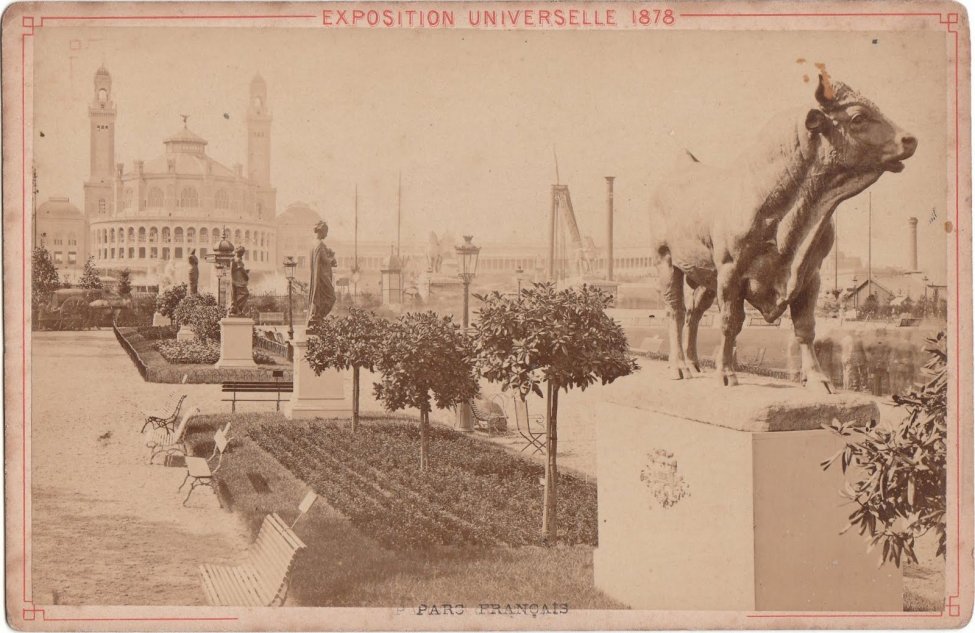
Check out the ghost people to the right of the enormous bull sculpture.
The water cart on the extreme left of the picture seems to belong in the 1700's. Source
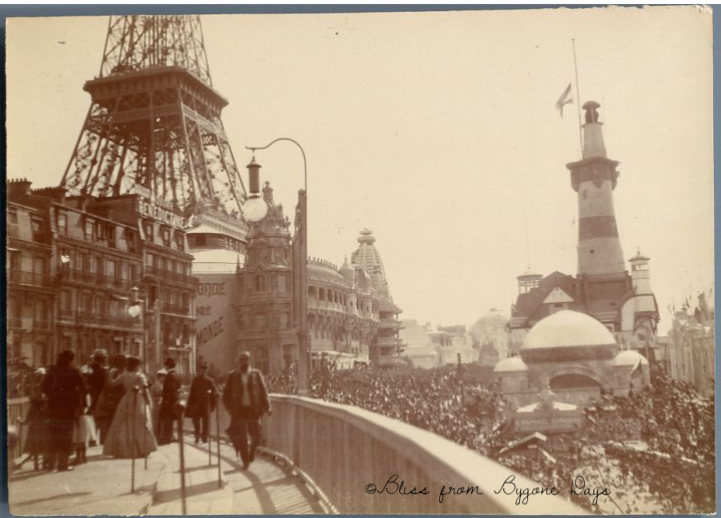
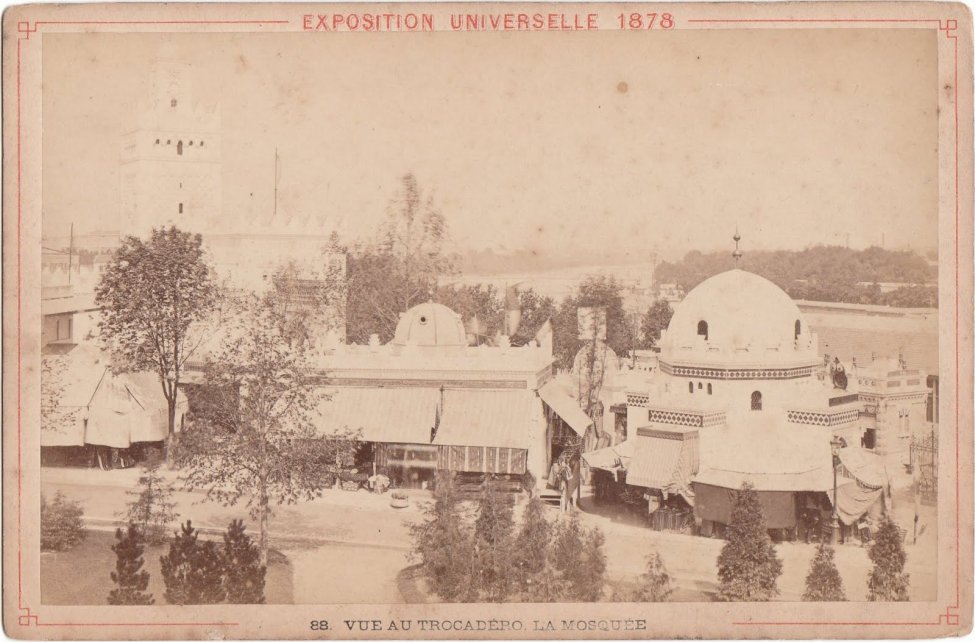
This one says its a mosque and sat on it is a very big owl Tartary?
And again, only a handful of children to be found in all the photos. As I kid, I would have killed my parents if they visit such a thing without me, so where were they?
These two albums [First and Second] from the Neurdein brothers (ND Phot is their ID on the bottom of each) probably contain the best quality photos of the event.
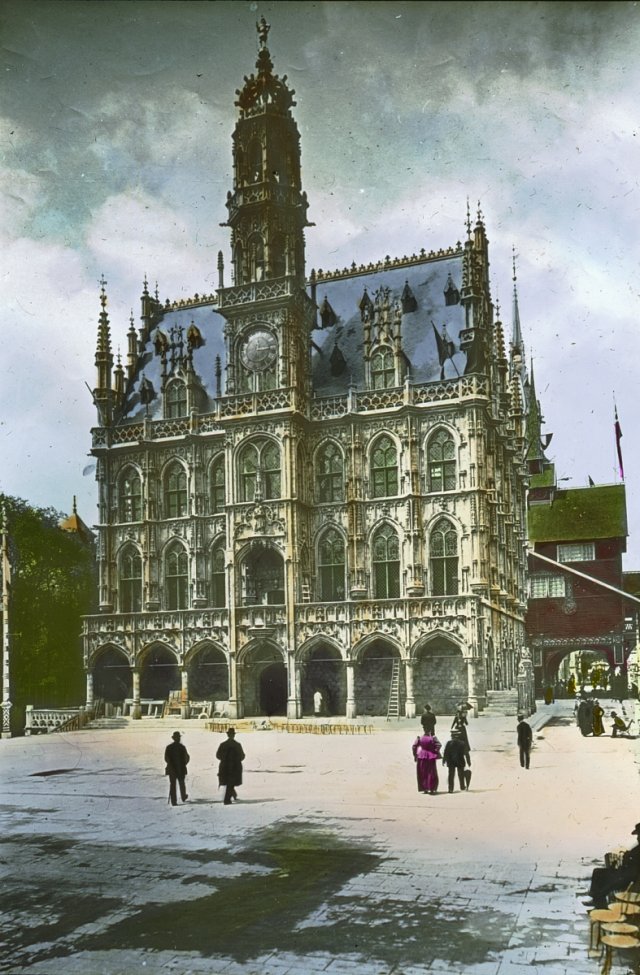
Here is the one with the Belgium building showing the double headed eagle (I tried uploading my full res screenshot of it -25MPix- it said too large...)
Those are the notable ones that struck my eye in the first series.
I will take some time to inspect the second one later. I am sure there is a lot of interesting details left to find.
Here's one more right at the beginning of the album n°2 to make it 10
I think that this is the state everything was in (foreground) before they renovated them, white washing with paint to make them look new, plaster like and fake. But you can see the individual stones/layers even with a coat of paint and that brightness.
Another instance of them painting ? (Turkish Pavillion photo)
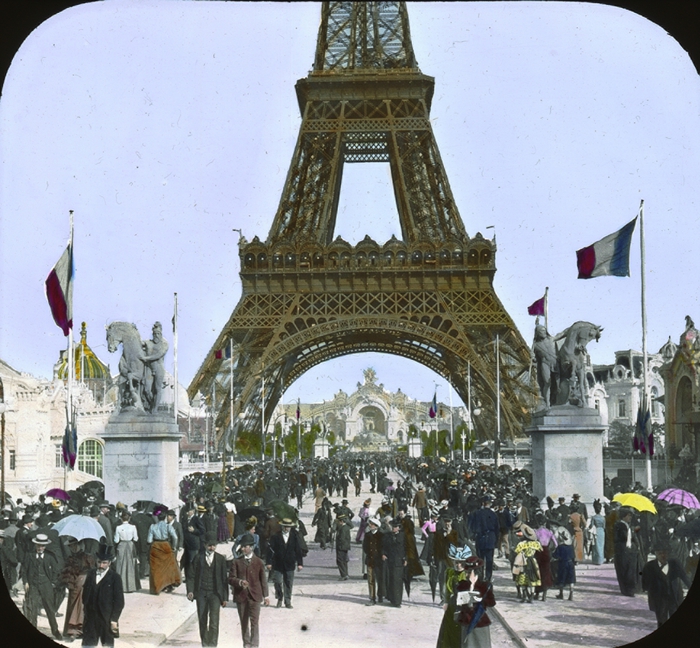
Now there was something huge to notice on these pictures. The people are all wearing hats and some even carry umbrellas !
To me this is a clear indication that the sun was unbearable back then like it has became nowadays, which makes me think that the hats were not just fashion but were of utility as protection against the sun...
Now I have got a good friend who is a very skilled remote viewer and we dug a bit into this subject.
She found out that the sun simulators were there also at the time to cover the fact that the sun became invisible (the "black sun", out of visible light range) like for us at the beginning of the century. It is part of a cycle and for some reason they crank up the projectors at this time (I'm sure you noticed the sun is freakin intense and also white light not yellow like previously) before initiating a civilizational reset. That would also explain why so many photos look overexposed, could it be that it was just awfully bright outside ? Now I don't see this being in the middle of the summer considering how they are dressed.
So yes this was right before a flood reset. The question is did this really take place when they say it did (1900) or was it actually around 1800 ?
What happened is that they did build some "temporary" structures (notably the least impressive ones) but a lot were real and solid, the construction photos are staged during the dismantling with editing eventually and then passed on as building.
Anothing important thing related to resets is that they take people underground, the hundreds of years of food stocks that we thought were for the elite survival is actually to sustain life of the people in DUMBs. They can stay there for generations before being brought back up to repopulate (yes that's where they come from essentially) while who knows what happens on the surface, destruction of evidence and staging I'm sure.
The question for me is where is the evidence for the pre existence of any of these buildings?
Assuming the dating is accurate in calendar terms there should be pictures, oaintings drawings sketching of these buildings lying abandoned or derelict let alone newspaper and articles from the time. I've yet to find anything which even as much as hints at their pre-existence for this exposition and indeed any exposition.
There has to be something if not in the digital realm then in the old world paper realm.
This is highly suggestive to me and I do realise I'm batting on my own wicket here, highly suggestive of a building being constructed not one being done up or re-purposed. It is also highly suggestive we are almost beyond comprehending that people alive in the time these expositions were put on were highly skilled in what they did and had methods of working vastly different to to those in this highly regulated machine/tech age.
From pinterest so no link.
@Xanvast, no disrespect to your remote viewing friend but people in that era avoided tanning. My grandmother was baffled by us lying in the sun tanning ourselves.
She told us that in her day a tan was a sign of poverty. It meant you had to work in the fields. Being lily white (no tan) meant you could afford hired hands. So no tan was a bit of a status symbol.
Of course, it's the exact opposite now. If you're tanned it means you have time to lounge around doing nothing but getting tanned.
Also, when I was very young, we weren't allowed to go out in public without gloves and a hat (and a handkerchief). No proper lady would be seen in public dressed shabbily.
We owned jeans but weren't allowed to be seen wearing them. Jeans were not a fashion statement, they were for work requiring sturdy clothes.
Apparently my family had money and status at one time (gone by the time I was born) and old habits die hard.
When mini skirts came out my sister talked me into wearing some to school. Bad idea as I'm tall for a woman with about 3 feet of legs so mini skirts are not flattering on me at all. Anyway, we got as far as the front door and out came grandma with a switch. (Did she just keep one in her room? We didn't even have a willow tree in our yard). After a few licks from the switch I decided mini skirts really didn't look good on me anyway.
Point of all this nostalgic rambling being that things were very different just 100 years ago. It's hard for us to comprehend just how different the values and culture were. Polite conversation consisted of talking about the weather so I heard a lot of stories about the climactic conditions of grandma's era. There was no mention of an overly bright or unusually hot sun (except the occasional summer days).
I honestly think people dressed as they did because it was expected. NO ONE just threw on jeans and a t-shirt and went running around in view of other people. Probably would have been publicly stoned. LOL.
The photo in OPs post at the very top of this thread the gold appears hand painted in (maybe was done back then, but most likely it's a modern day bad colorization). That said, all these photos have been colorized during modern times. That's why they look "off". They aren't a "true" representation of what the color looked like at the time. Only an "approximation" based off of the modern colorizer's best guess of the color of things.
Side Note:
If you're interested in modern colorization of old black and white photos/film, I suggest watching the behind the scenes featurette for They Shall Not Grow Old titled The Making of They Shall Not Grow Old. They go over the pain staking amount of time they spent on "getting it right" like for the different shades of green for the grass. Going in so far as visiting the actual battlefield locations to take pictures of all the shades of colors of the locations to reference. It's an amazing behind the scenes film about how they recreated the authenticity of the color and sounds when restoring the black and white photos/film. I highly recommend it!
The question for me is where is the evidence for the pre existence of any of these buildings?
Assuming the dating is accurate in calendar terms there should be pictures, oaintings drawings sketching of these buildings lying abandoned or derelict let alone newspaper and articles from the time. I've yet to find anything which even as much as hints at their pre-existence for this exposition and indeed any exposition.
There has to be something if not in the digital realm then in the old world paper realm.
This is highly suggestive to me and I do realise I'm batting on my own wicket here, highly suggestive of a building being constructed not one being done up or re-purposed. It is also highly suggestive we are almost beyond comprehending that people alive in the time these expositions were put on were highly skilled in what they did and had methods of working vastly different to to those in this highly regulated machine/tech age.
From pinterest so no link.
From what I overstand and what makes sense to me is that they changed the narrative later on with a bait and switch.
Of course it is a bit hard to imagine with this theory that they would have destroyed all the evidence, and falsified documents to support their version. With Paris the thing is most older maps are centered around the Île de la Cité (the Cathedral island) and don't go past the Louvre so yeah impossible to say what's past it. But having successfully gotten rid of most maps pre 1500 makes me believe everything is possible and they sure have the means to do it. Especially since everything on the internet is heavily monitored and controlled. Like you said the best hope is something physical leftover.
Now I've yet to find any newspaper saying that they would build everything from scratch to be temporary structures. However here's something else that is out there... (not related to the Paris Expositions though, couldn't find much)
Renovation : St. Paul daily globe, August 31, 1892
"The streets of the world's fair site are being renovated"
The St. Louis Republic, November 15, 1904
"after the restoration"
Painting : Wheeling Sunday register, November 27, 1892
Ranche and range, June 15, 1899
The Lewiston teller, March 27, 1902
Destruction : The St. Louis Republic, October 12, 1904
"only on those structures which have been erected by the Fair management"
So far from what I've seen the St Louis one has the most compelling evidence of construction. It's possible that it was conducted to have them all put into the same basket of wood & plaster show. Even though as found here 1904: the destruction of the Louisiana Purchase Exposition in Saint Louis it a bit eyebrow raising that they had to remove people by force :
@Xanvast, no disrespect to your remote viewing friend but people in that era avoided tanning. My grandmother was baffled by us lying in the sun tanning ourselves.
She told us that in her day a tan was a sign of poverty. It meant you had to work in the fields. Being lily white (no tan) meant you could afford hired hands. So no tan was a bit of a status symbol.
Of course, it's the exact opposite now. If you're tanned it means you have time to lounge around doing nothing but getting tanned.
Also, when I was very young, we weren't allowed to go out in public without gloves and a hat (and a handkerchief). No proper lady would be seen in public dressed shabbily.
We owned jeans but weren't allowed to be seen wearing them. Jeans were not a fashion statement, they were for work requiring sturdy clothes.
Apparently my family had money and status at one time (gone by the time I was born) and old habits die hard.
When mini skirts came out my sister talked me into wearing some to school. Bad idea as I'm tall for a woman with about 3 feet of legs so mini skirts are not flattering on me at all. Anyway, we got as far as the front door and out came grandma with a switch. (Did she just keep one in her room? We didn't even have a willow tree in our yard). After a few licks from the switch I decided mini skirts really didn't look good on me anyway.
Point of all this nostalgic rambling being that things were very different just 100 years ago. It's hard for us to comprehend just how different the values and culture were. Polite conversation consisted of talking about the weather so I heard a lot of stories about the climactic conditions of grandma's era. There was no mention of an overly bright or unusually hot sun (except the occasional summer days).
I honestly think people dressed as they did because it was expected. NO ONE just threw on jeans and a t-shirt and went running around in view of other people. Probably would have been publicly stoned. LOL.
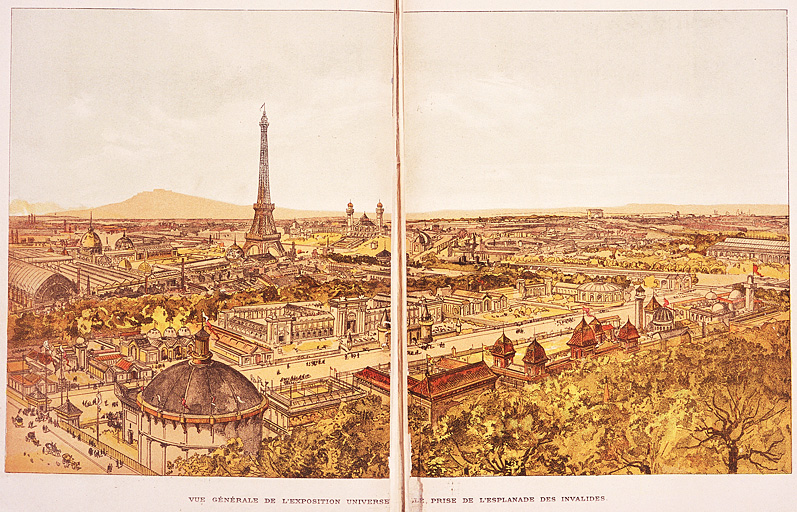
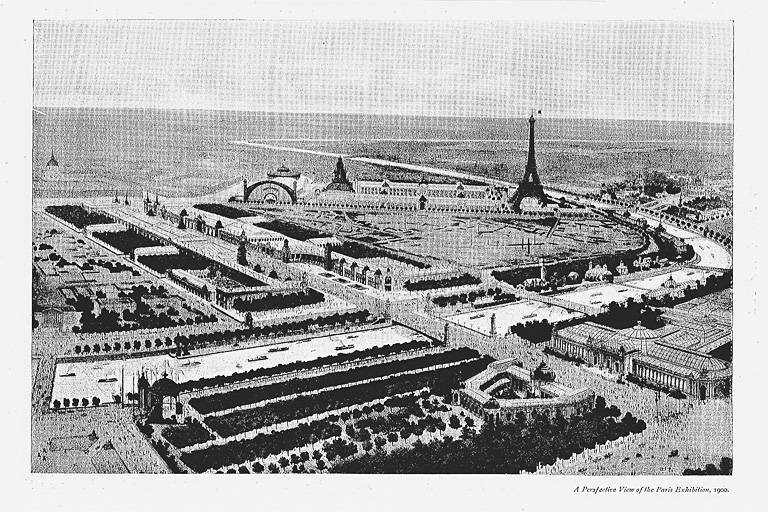
Staying with Paris. The two aerial overviews show quite clearly that on the 1889 version the 1900 buildings are not there. True it seems anything can be flip flopped, placed in time, changed in time, removed completely or replaced completely by those who hold the records and seem to have a vested interest in these shenanigans
As I've said somewhere else recently it is hard if not impossible for those alive today to cast aside what we think we know and adopt or enter a world of the 1800's. This is what clouds things. all we have to rely on is everything but firsthand accounts as all the people alive then are dead.
Now I've yet to find any newspaper saying that they would build everything from scratch to be temporary structures. However here's something else that is out there... (not related to the Paris Expositions though, couldn't find much)
As you say nothing from the Paris Expo's and yet there were five of them. There are lots of small artifacts, catalogues, marketing material in the digital domain which seems to tie in perfectly with the dating of these events and their layouts and locations. Precious little to support the 'official' numbers though. So if the powers that be changed the narrative and destroyed all the evidence then all these things would have to be planted evidence to support the replacement narrative.
That is some collossal undertaking just to hide the existence of a previous civilisation in one city let alone everywhere else in the known world. eithe it was done and is still being done or it isn't. If everything was done away with how does one prove it and what does one do with the proof when all the sources of proof are compromised?
From what I overstand and what makes sense to me is that they changed the narrative later on with a bait and switch.
Of course it is a bit hard to imagine with this theory that they would have destroyed all the evidence, and falsified documents to support their version. With Paris the thing is most older maps are centered around the Île de la Cité (the Cathedral island) and don't go past the Louvre so yeah impossible to say what's past it. But having successfully gotten rid of most maps pre 1500 makes me believe everything is possible and they sure have the means to do it. Especially since everything on the internet is heavily monitored and controlled. Like you said the best hope is something physical leftover.
Now I've yet to find any newspaper saying that they would build everything from scratch to be temporary structures. However here's something else that is out there... (not related to the Paris Expositions though, couldn't find much)
Renovation : St. Paul daily globe, August 31, 1892
Destruction : The St. Louis Republic, October 12, 1904
View attachment 50475
"only on those structures which have been erected by the Fair management"
So far from what I've seen the St Louis one has the most compelling evidence of construction. It's possible that it was conducted to have them all put into the same basket of wood & plaster show. Even though as found here 1904: the destruction of the Louisiana Purchase Exposition in Saint Louis it a bit eyebrow raising that they had to remove people by force :
The clippings about white washing and renovation are pretty amazing!! Great finds!! We have a World’s Fair/Chicago Columbian thread, might be cool to post there, as well great work! Here’s one I like:Documentary: 1893 World's Columbian Exposition in Chicago
@ Xanvast,
"Looks like all these articles are telling another story (the date is in the name of each they range from 1881 to 1909)
Nothing about tanning."
No, they're calling it sunburning. Tanning is the body's response to getting sunburned. Seems to be no real fear portrayed in the articles from getting sunburned, just a desire for it to not happen to you.
@jd755 , "
Looks like all these articles are telling another story (the date is in the name of each they range from 1881 to 1909)
Nothing about tanning."
No, they're calling it sunburning. Tanning is the body's response to getting sunburned. Seems to be no real fear portrayed in the articles from getting sunburned, just a desire for it to not happen to you.
Aloe Vera must not have been well known back then... Or abject slavery and poverty were TOO WELL known...
And those sexy bathing suits they had back then made for some killer farmer's tan lines.
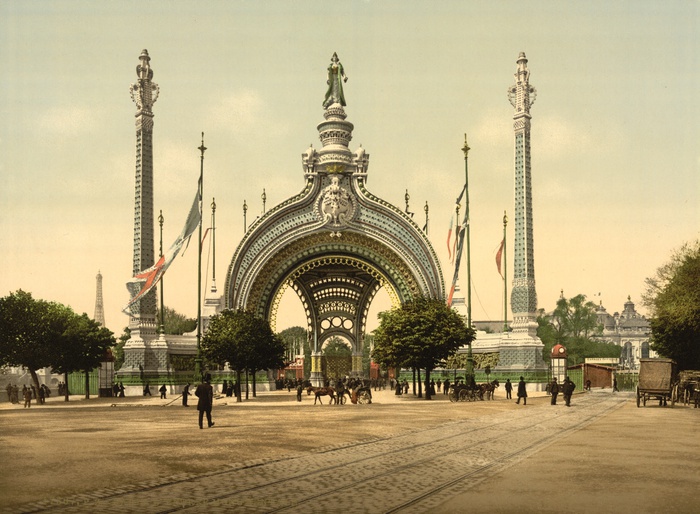
PARIS, 1900. THE WORLD EXHIBITION IN PARIS IN 1900
Main entrance
William Henry Goodyear (1846-1923), whose collection of photographs is represented here, was the first curator of the Brooklyn Museum of Art (1899-1923) and a famous theoretician and researcher in the field of art and architecture history. In 1900, Goodyear visited the Paris Exhibition with a photographer Joseph Hawks. They made numerous photos from the exhibition, including street life, perspectives, pavilions, statues, decorative details. At the World Exhibition in 1900 were first presented to the public sounded films and escalators, and Campbell Soup was awarded a gold medal (it is still depicted on a soup can). Rudolf Diesel presented to the visitors of the exhibition a diesel engine working on rapeseed oil. Many panoramic paintings and new panoramic techniques were also presented, such as the sineorama, In the center of attention in the Palace of Illusions was a telescope with a lens diameter of 1.25 m, allowing you to see the moon from a distance of one meter. This telescope was the largest of all created at that time. The eyepiece of the telescope was 60 m long and 1.5 m in diameter. And the Russian press enthusiastically spoke about the Russian department. The gold medal of the exhibition by a special committee headed by Gustav Eiffel was awarded to the Russian engineer Lavr Proskuryakov for the Krasnoyarsk railway bridge. The French press unanimously noted "the huge growth of Russian industry" and the "incredible progress" of Russia in all branches of art and industry. The newspaper "Liberte"wrote: "For a few years, Russian industry and trade have taken such a development, which amazes everyone." During the exhibition, the Russian exposition received 1,589 awards: 212 highest, 370 gold medals, 436 silver medals, 347 bronze medals and 224 honorary recalls.
The World Exhibition at the turn of the two centuries aroused particular interest. It was called the international holiday of labor, progress and civilization. For the first time, 35 states, and among them the Russian Empire, arranged their national pavilions. They concentrated everything that characterizes the country and distinguishes it from others, historical monuments, art objects. Everything new that has arisen in the world, actual and imaginary progress in any field of activity was presented at the exhibition of the century. Parade-all art, science and technology!
On the Champ de Mars, the most interesting sections of the exhibition were located in all respects. There were expositions of mining and metallurgy, a general department of machines, an even broader and more rich drawing on electricity. Nearby there is a building art with pictures, plans and descriptions of the most remarkable buildings of the world; transport business, chemical industry, agriculture with all its dependent industries; yarn, fabric and ready-made dress, the department of public education with its study rooms and laboratories, experienced and observant stations; exemplary operating rooms with cabinets filled with the latest surgical instruments. There was an exhibition of "free" arts: photography, printing, music, stage art, etc.
The main principle of the exhibition is raw products, the ways of processing them consistently, so that visitors can see not just a collection of objects, but understand how this or that product turns out. Machines and appliances operated right before the eyes of visitors. At each department there was something like a small museum, on the models of which it was possible to judge the successes in this field. Thus, the history of technical means included A.Lavoisier's chemical apparatuses, L.Paster's microscope, Robert's first paper machine, A.Muissan's apparatuses producing artificial diamonds.
Here the world learned about new scientific discoveries and technical achievements.
A special place was occupied by the pavilion of illusions, where electricity, cinematography and a car were demonstrated. All these "illusions" developed into real directions of technology. It is interesting to get acquainted with the formulation of problems that worried people at the turn of the 20th century. "Technology" magazine in 1900, wrote: "In this exhibition put forward a number of issues we have inherited to the XX century, we need to tackle urgently.
Cars tend to replace the horses, it is a revolution in the life of cities and villages.
The steam engine - giving only 15-20% of useful work, will be replaced by thermal machines (diesel engines, kerosimotors, etc.)
Electric lighting requires improvement and, perhaps, even replacement with new kerosene lighting with calyl bodies.
The transfer of electric forces to the distance promises to make a whole economic revolution; Our inactive waterfalls will give their energy of strength.
The telephone and the telegraph without wire, the X-rays of X-ray - are predicting new data, new conquests ahead.
The successes of chemistry in obtaining synthetic, nutritious, coloring, odoriferous and other substances in the future promise the greatest gifts to man " ... For an hour before the approach of midnight on October 30, 1900 the Eiffel Tower lit up in purple-red light and a cannon- This is how the 19th century ended at world exhibitions, from the article by Mezenin NA
"1900, Paris. The Great Siberian Way "/ Kaggy-Karr / ( read full article )
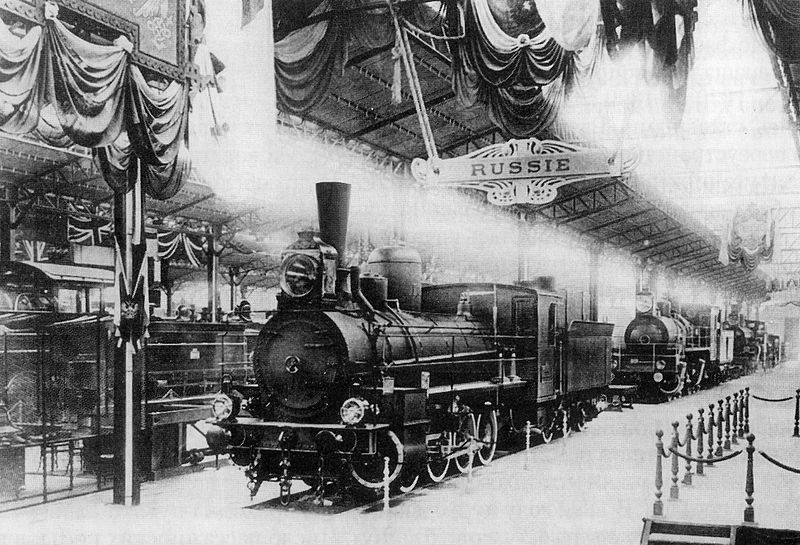
At previous World Exhibitions, Russia was poorly represented, but at the exhibition in 1900 the government decided to demonstrate Russia's technical might as fully as possible. Thanks to the special friendly relations between Russia and France, the Russian department has been allocated the largest exhibition area - 24 000 m². To participate in the exhibition, Russia spent 5,226,895 rubles (of which the government allocated 2,226,895, and institutions and exhibitors 3,000,000 rubles). The highest commission was headed by the Director of the Department of Trade and Manufactures VI Kovalevsky, besides him, the general commissioner was appointed Prince Tenishev, and St. Petersburg's Meltzer was chosen as the chief architect. DI Mendeleyev actively participated in the exhibition, who was vice-president of the International JuryThe Russian department began its work only on April 17, two days after the opening of the exhibition. Of the 18 thematic departments (palaces) represented at the exhibition, Russia did not participate in only one - the colonization department. For some parts of the Russian exposition, separate buildings were built, since there was not enough dedicated space. The central pavilion was the Pavilion of Russian outskirts built by the project of Melzer, repeating the architecture of the Moscow and Kazan Kremlin. A handicraft street with typical Russian barracks, cottages and a rural wooden church was built nearby. Near the Eiffel Tower is the Alcoholic Pavilion, where an alcohol rectification unit operated and souvenir bottles with Russian vodka were sold. The pavilion of M. S. Kuznetsov and the windows of P.I. Kharitonenko were built according to the project of architect F.O. Shekhtel. .
Russian Pavilion
The gold medal of the exhibition by a special committee headed by Gustav Eiffel was awarded to the Russian engineer Lavr Proskuryakov for the Krasnoyarsk railway bridge. A great impression was made by the exhibition of the Ministry of Railways on the project of Pyasetsky, dedicated to the Trans-Siberian Railway, the Trans-Siberian Railway Panorama.
The audience passed into wagons with an imitation of the movement of the train, from which they could enjoy Russian landscapes, which were changed by means of a special mechanism. At the end of the "way", visitors went out the back door and went to the Chinese department. This attraction was awarded with the highest award of the Grand Prix. The grand prix award was also awarded to the Merzalov palm forged from the rail.
Minusinsk Museum of Local Lore was awarded a silver medal.
The press enthusiastically spoke about the Russian department. As a result of the exhibition, the French newspaper Liberte wrote:
"We are still under the influence of the sense of surprise and admiration we experienced while visiting the Russian department.For a few years, Russian industry and commerce have taken such a development that amazes all those who have the opportunity to compose an idea of the path that has been taken in such a short time. The development is so large that it leads to a lot of speculation. "
Awesome contribution! I was doing some research last week on another topic,when I came across some pictures of this exposition. That was my other topic research gone for the night, I was hooked. Interesting too the Russian superiority in all aspects.
35 States involved in this exposition and 14 years later all involved in a world war?
What a peaceful constructive world we could be living in today were it not for parasites.
Edit to add "here is a building art with pictures, plans and descriptions of the most remarkable buildings of the world".
I wonder is there anyway we can find those plans still.










 (the date is in the name of each they range from 1881 to 1909)