

Archive
Old SH Archive
- Joined
- Sep 8, 2020
- Messages
- 17,737
- Reaction score
- 3,168
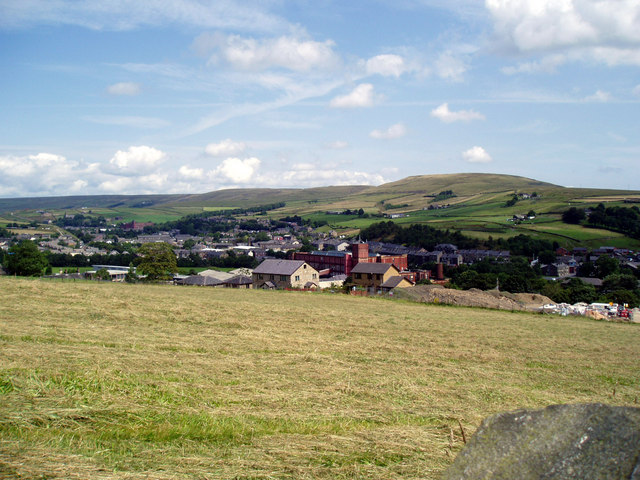
View towards Brown Wardle,
The factory seen in the center of the picture was the last Victorian Cotton Mill remaining in Whitworth, which was torn down for housing.
According to the Worrall's Cotton Spinners Dicectory, in 1891 we had 95 of these mills scattered throughout the area.
I kinda like the sound of this,
DigVentures website.
While this post may not necessarily be about our Stolen History, I hope you guys don't mind me documenting this and sharing my findings from out in the field (pun intended) as I piece the research and history of Whitworth together.. before it does get altered, stolen or lost. I have been knee deep in mud, climbing through underground shafts, combing through bogs, bushes and animal bones, braving the good old Whitworth weather, Surveying the areas around Whitworth as the heavens poured down on us... because it was awesome!

Whitworth is a small town and Civil Parish in Rossendale, Lancashire, England, amongst the foothills of the Pennines between Bacup, to the north, and Rochdale, to the south. It had a population of 7,500 at the 2011 Census. spanning the Whitworth Valley, a 7 square miles (18.1 km2) area consisting of Healey, Broadley, Whitworth, Facit and Shawforth, it can be described as one road straight through. We do have our own local history museum with trinkets and artifacts that have been collected over the years and a valuable extensive library of past residents and village undertakings. All are welcome to visit and delve into their ancestry.
Whitworth Historical Society Website,
Lancashire Archaeology Wordpress Article. Introduction to the Archaeology and Early History of Whitworth.
I have also managed to located the original Sites and Monuments Survey of The Rochdale Borough, 1981. Which was conducted by a team financed by The Manpower Services Commission, under the direction of Greater Manchester Archaeological Unit.
Day 1: Early Industrial Hamlets.
June 7th 2019,
Cowclough was once the largest settlement in Cowm Valley. together the team explored the ruins, creating the first official map of the hamlet, and shared some of the curious tales about its past residents, like James ‘Treacle’ Sanderson, a blacksmith who later became a National Sporting Champion.
In the Cowm valley the construction of a reservoir began in 1868 and it opened for use in 1877. The Cowm valley lies just outside the town of Whitworth, about three miles north of Rochdale. Before it was built the Rochdale Corporation had great difficulty meeting the demand for water, both from domestic and industrial consumers. During periods of drought it had sometimes been necessary to use water carts with barrels to maintain basic water supplies.
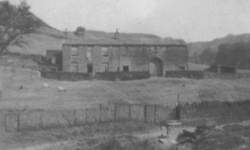
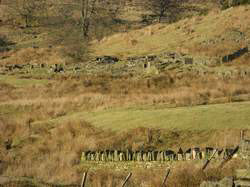
The date for the B/W photo is unknown, the colour was taken in 2011
The Census of 1851 recorded that 139 people lived in the valley. They occupied 26 houses and farms, and there was a cotton mill and a stone polishing mill. After the reservoir came into being several houses, including the hamlet of Cowclough, survived as they were above the water line. But gradually they were abandoned. The last few people to live in the Cowm valley left in 1950.
While I wasn't present on this day due to other commitments, DigVentures have been kind enough to let me use the pictures, These are just some of the pictures taken on the day, thanks to DigVentures for allowing me to use their footage.


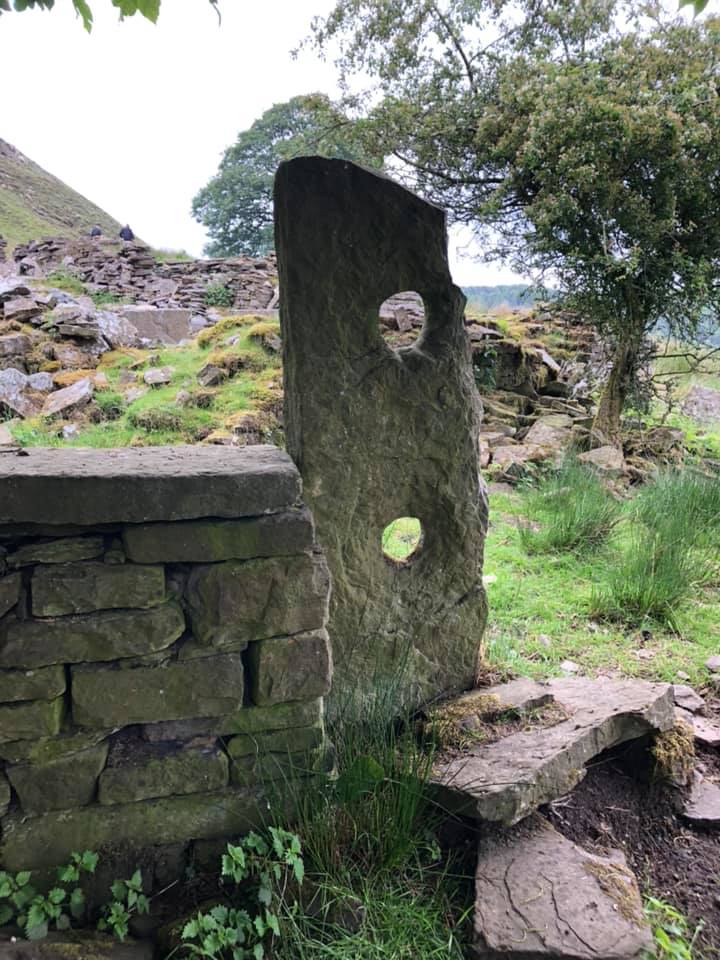
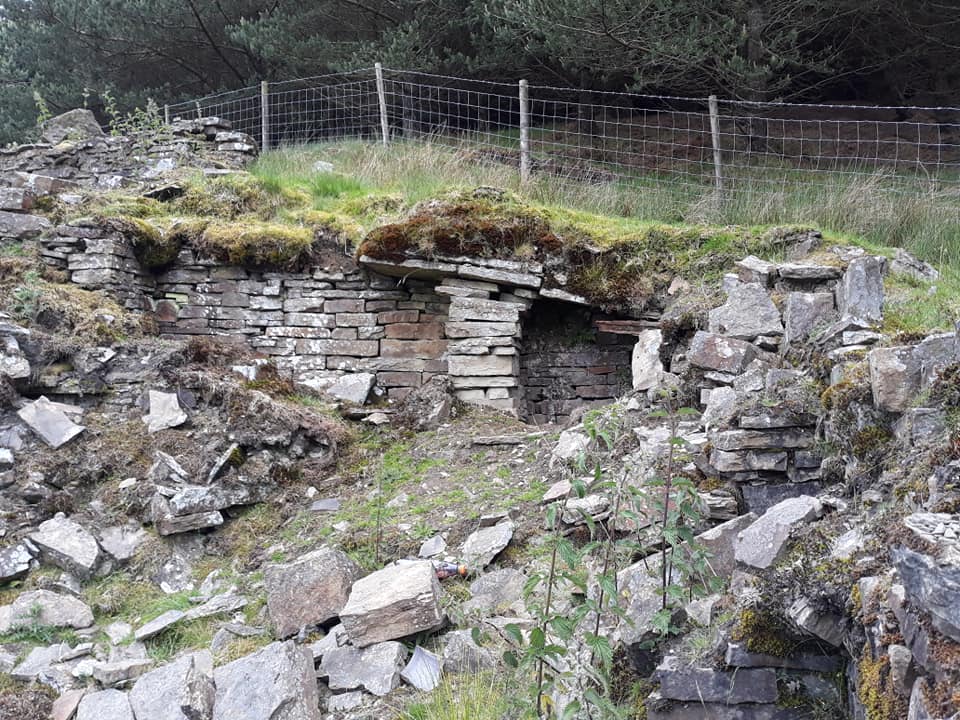
June 8th,
I have been to this location many times, not knowing the history beneath my feet.. I would even squeeze through a few of the abandoned underground cellars/basements in my youth.
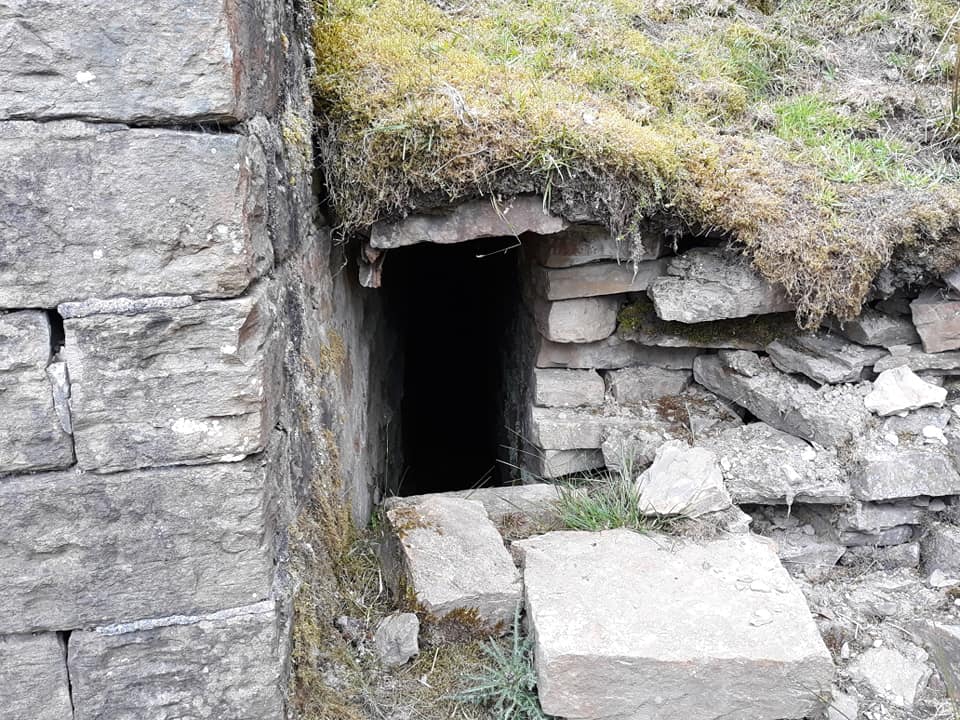
What we found strewn across the soggy moorland bogs enclosed within crumbling, fallen walls.. were piles of broken stones , and an interesting row of uniformed posts I always associated with our local farming families, but I'm told could be neolithic in age. We all took an area and went exploring, what was probably over a 1000 broken stones lay on the floor and covered everything.. but with my new "Archaeological" eyes I could see things I'd never previously noticed before, suddenly the ghost of the farm began to take form. We came across the entrance to a tunnel built with arched brickwork, inside we found a plastic bucket filled with water and a stone table, unfortunately the bricks are nothing like the ones we can find in Egypt and Peru. We took lots of pictures, took notes and decided it was maybe a little to wet to do anything else, gutted I didn't find my Giants skull.. maybe I'll have better luck tomorrow.
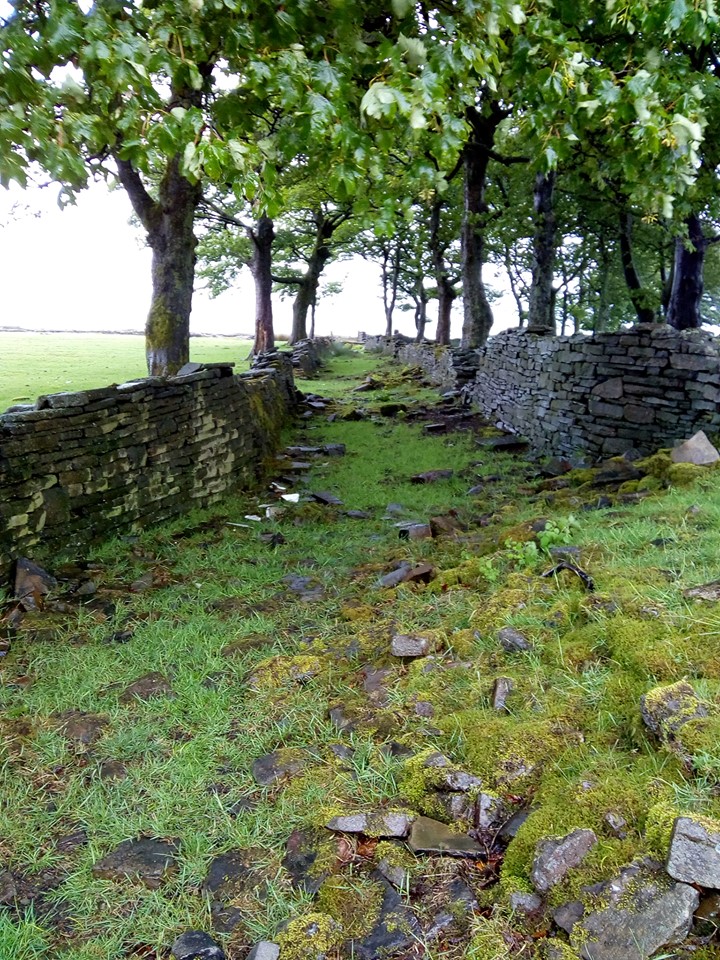
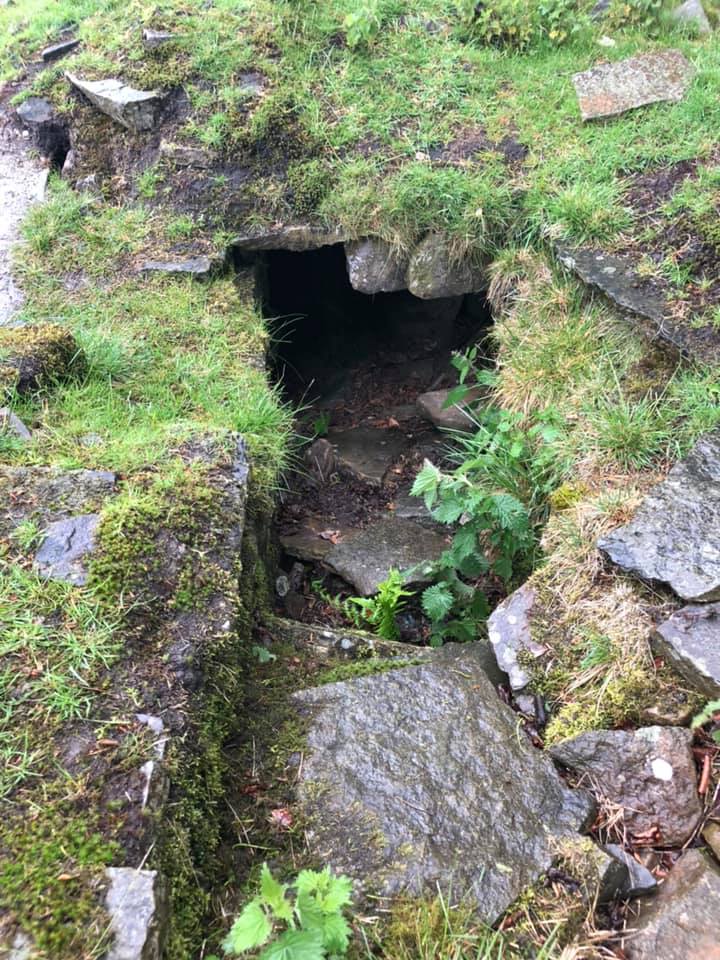


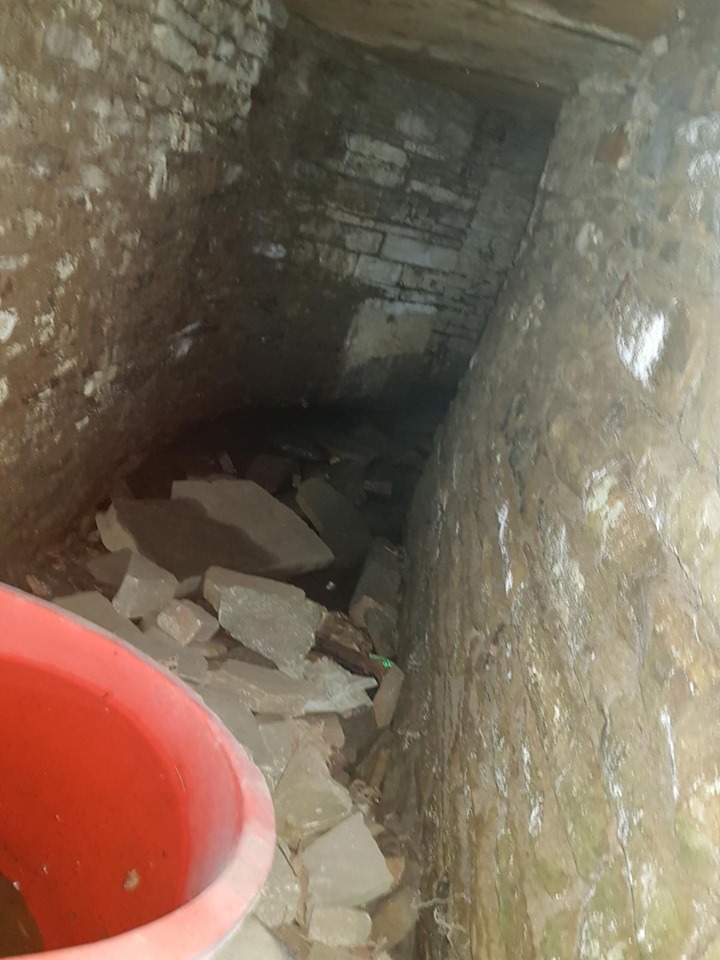
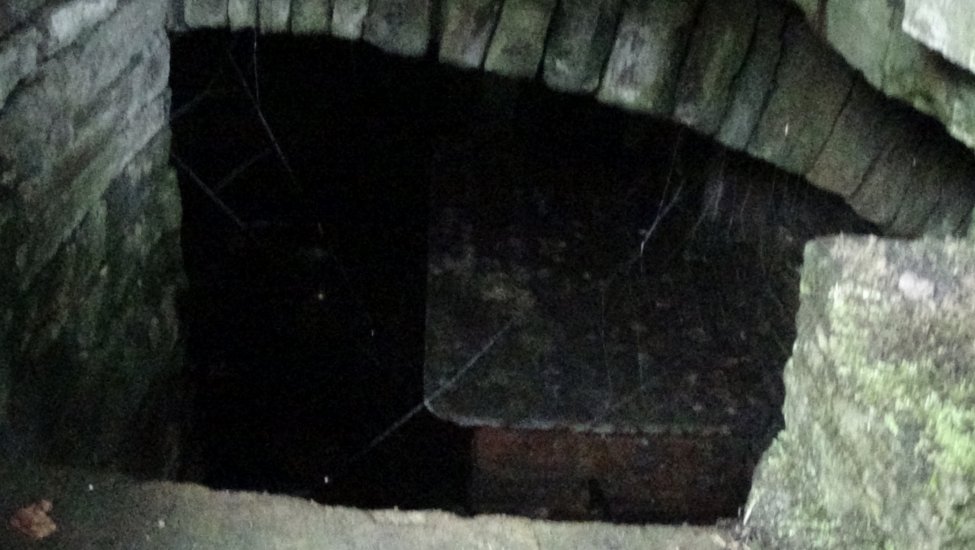
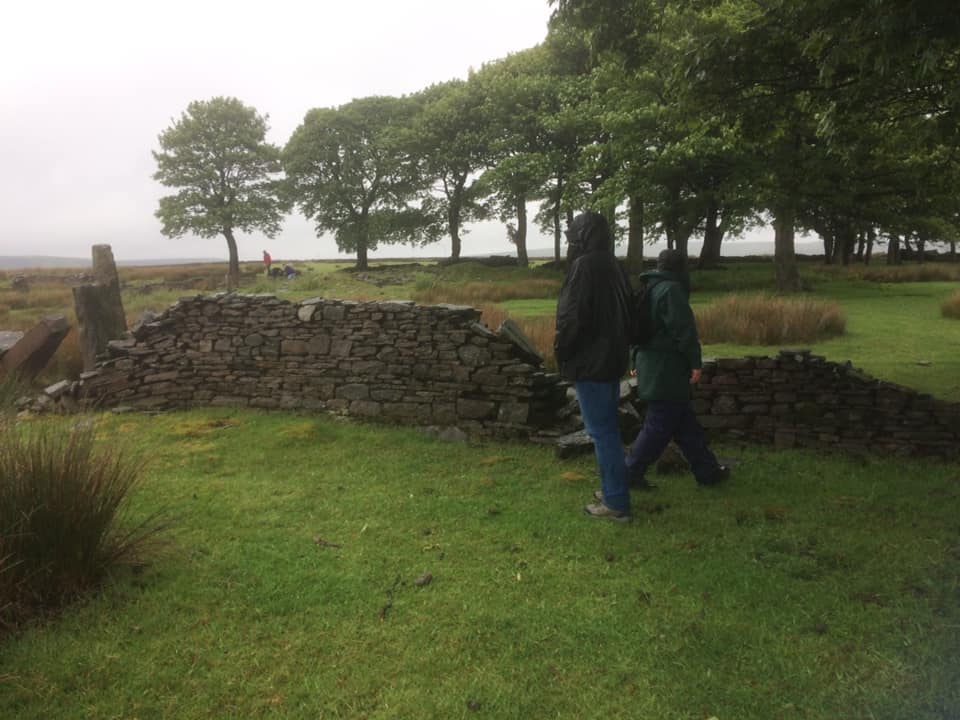
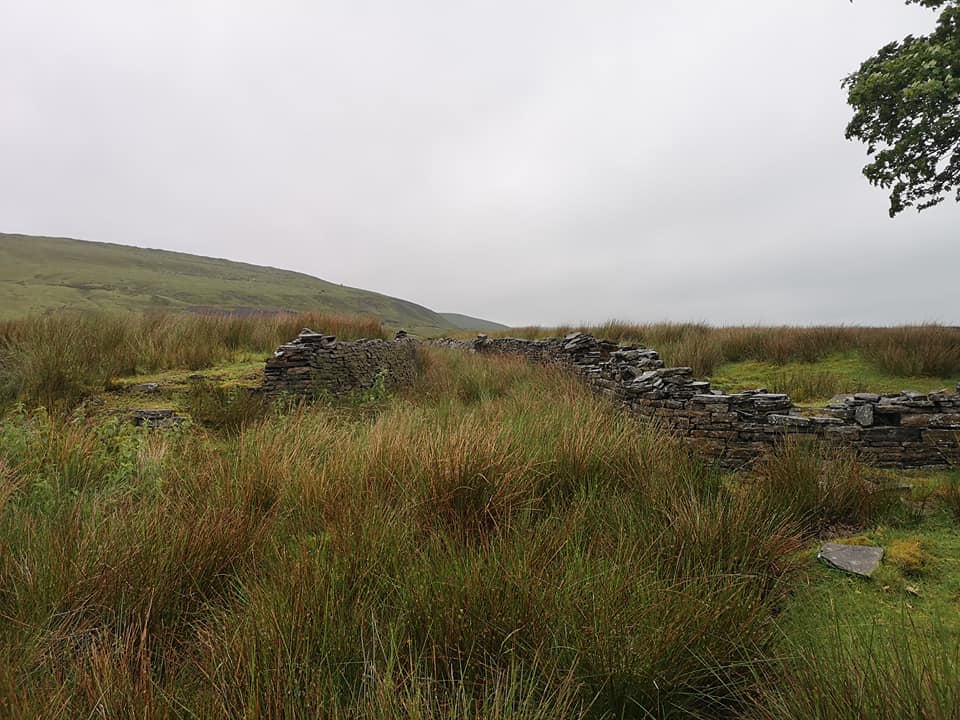
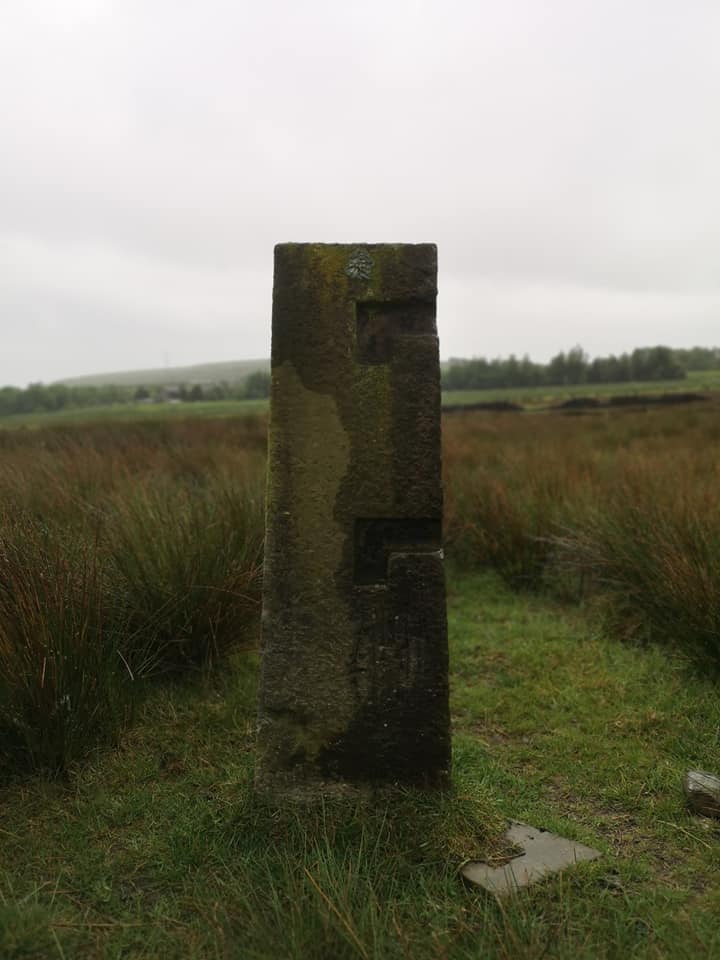
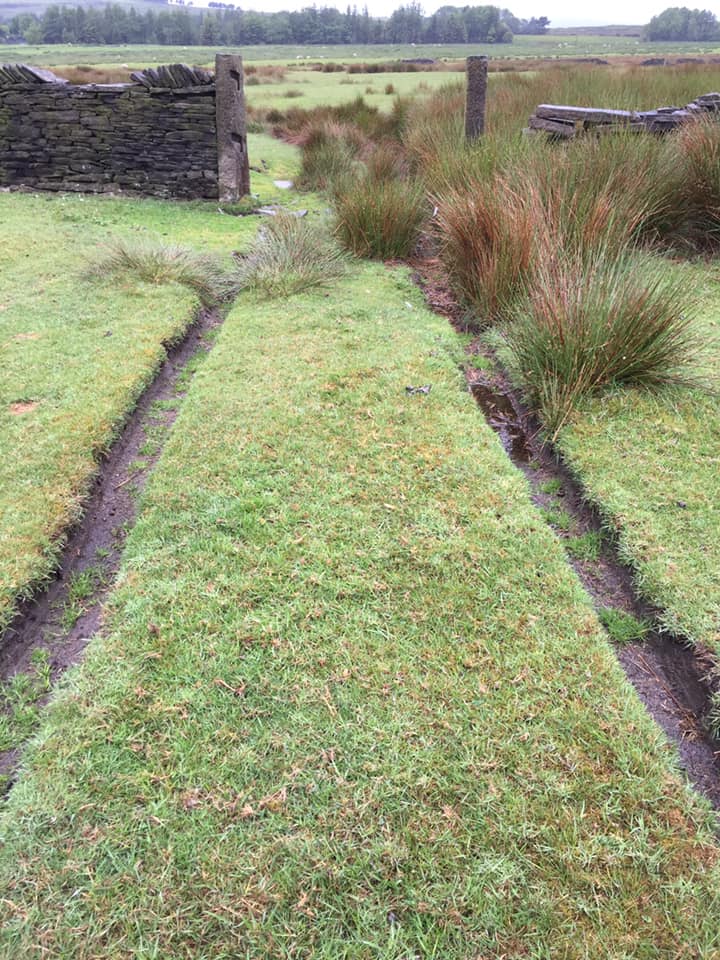
Brown Wardle Farm was once home to John Stott, a herbalist doctor who supplied the community with tinctures and potions in the early 19th-century. Today was the first official survey ever made of the ruins, in the hope to establish the earliest date of the settlement, how people lived, and why it was abandoned. Evidence suggests that the earliest settlements are much more likely to have been on the uplands rather than down in the valley, and no one really knows why the settlement was abandoned.
We’ve chosen these small hamlets for excavation because it is typical of many similar abandoned sites in the wider area. Nobody knows when they started, when they ended, and what effects the industrialisation of the area had on them. This is our chance to find out!
The Domesday Book, commissioned by William The Conqueror after his successful invasion in 1066, records a settlement in Spotland occupied by ‘Gamel the Thane’, proving that there have been people living near Rochdale for over 1,000 years. It is likely that settlement began much earlier, however there is no conclusive evidence. Place names also indicate that there was some Scandinavian settlement locally, showing that the area was rich in diversity and culture.
We’ve chosen Brown Wardle Farm for the excavation because there is a good chance that there there is an earlier phase to the site predating the buildings we can see today, and because the location is likely to have been important to the wider area. In addition to the excavation, we’ll be doing photogrammetry and building surveys at another site nearby called Cow Clough, an early industrial settlement and nunnery removed by the construction of a reservoir. Both of these sites have very significant archaeological questions to answer...
Whitworth is your typical village really, nothing ever happens here..
Day 3: Mon/Man stone and the Prehistoric Barrow.
June 9th,
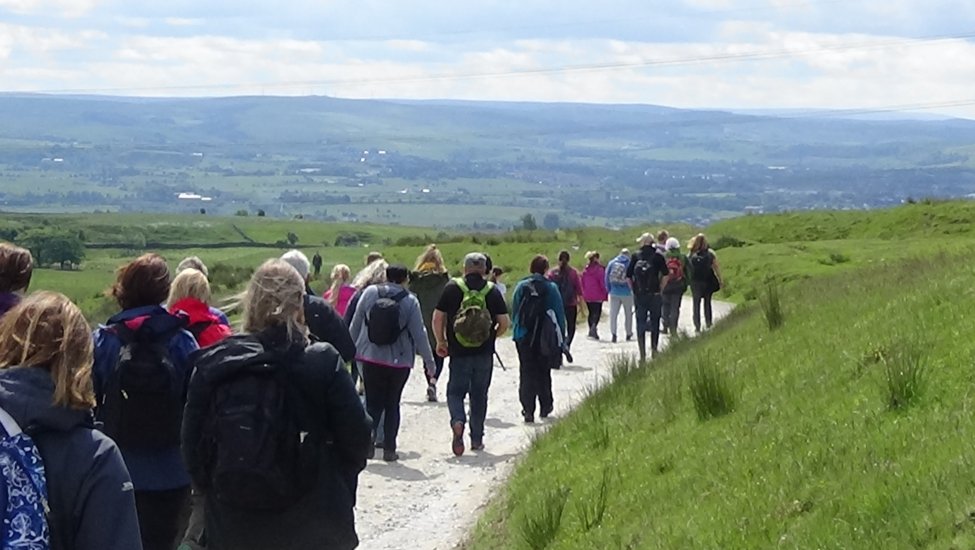
We had planned to visit a set of stone circles that have been found not far from our location but we ran out of time, I will be going to see these in the next few days.
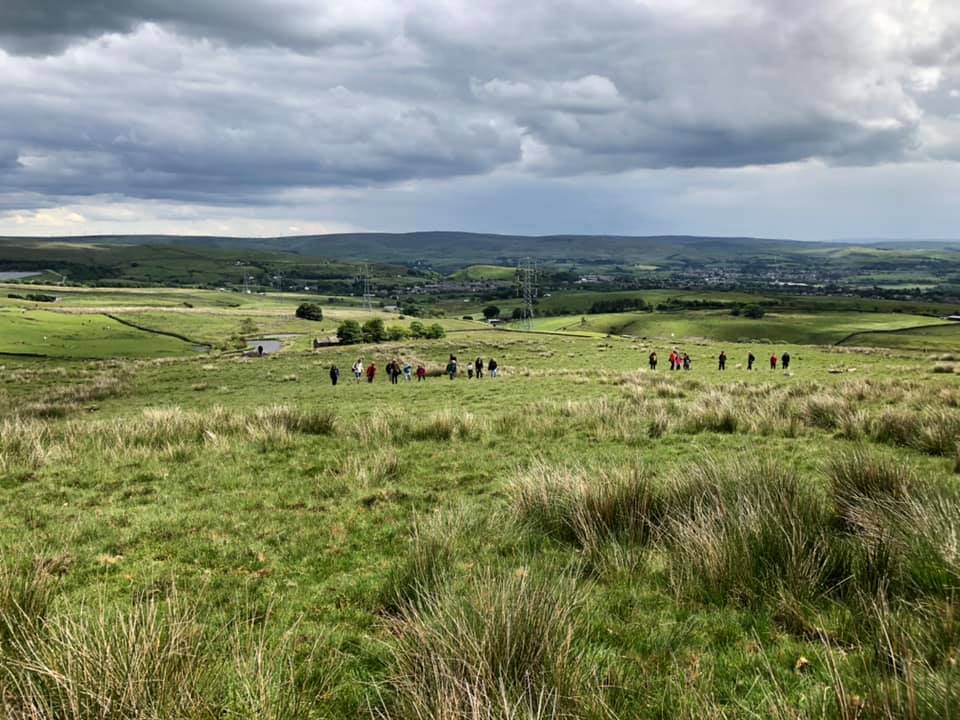
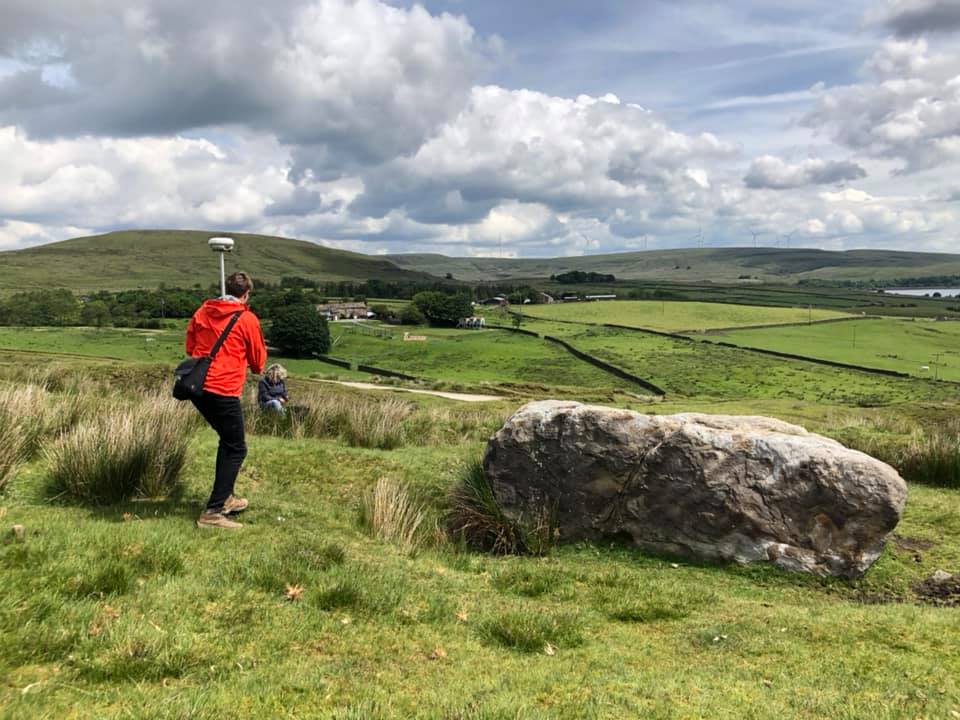
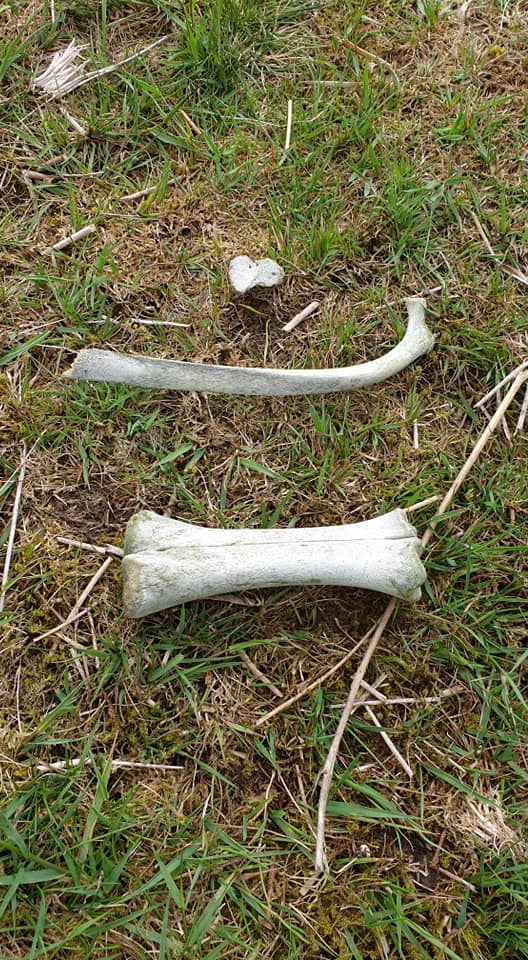

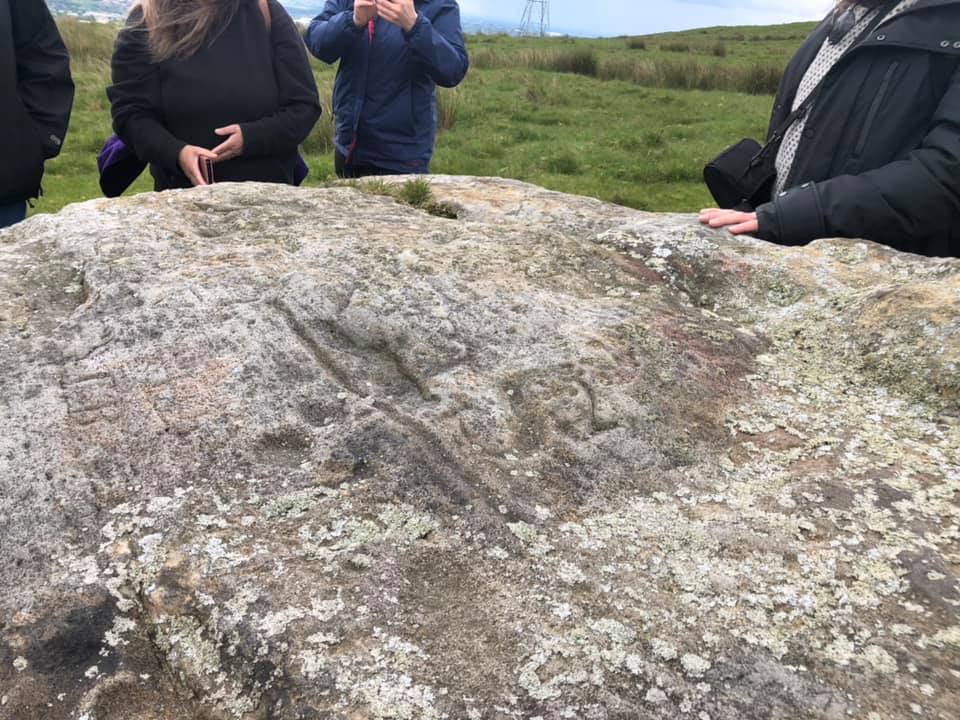

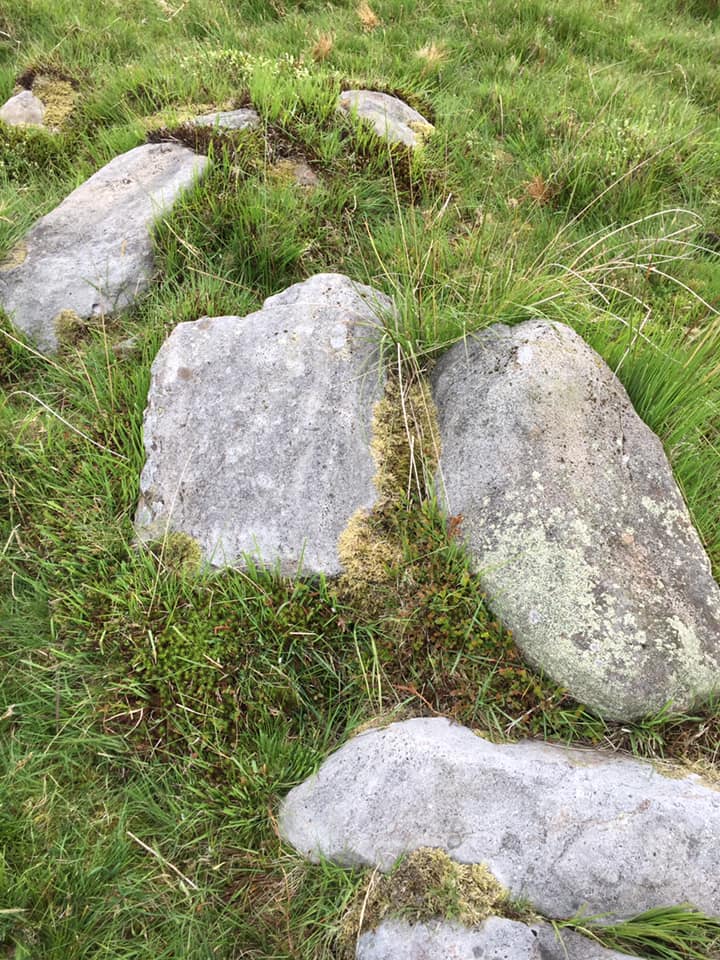
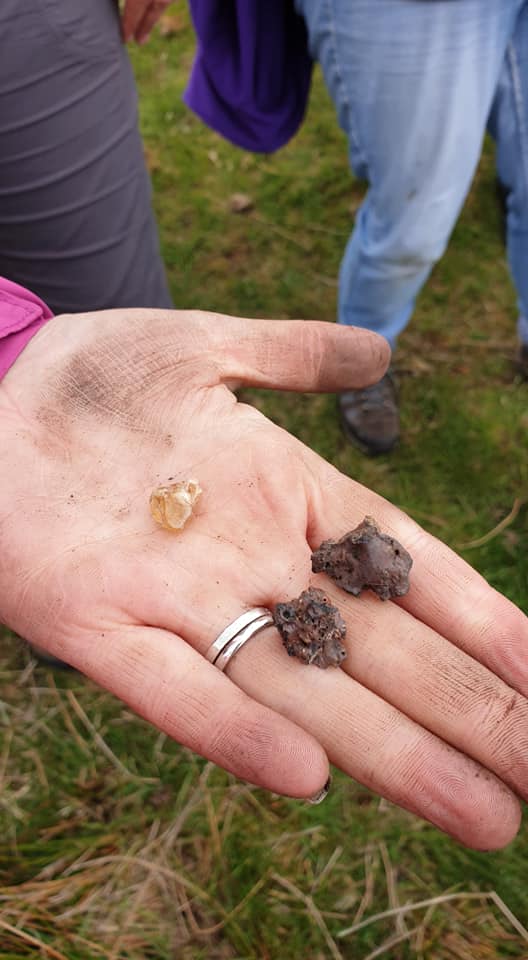
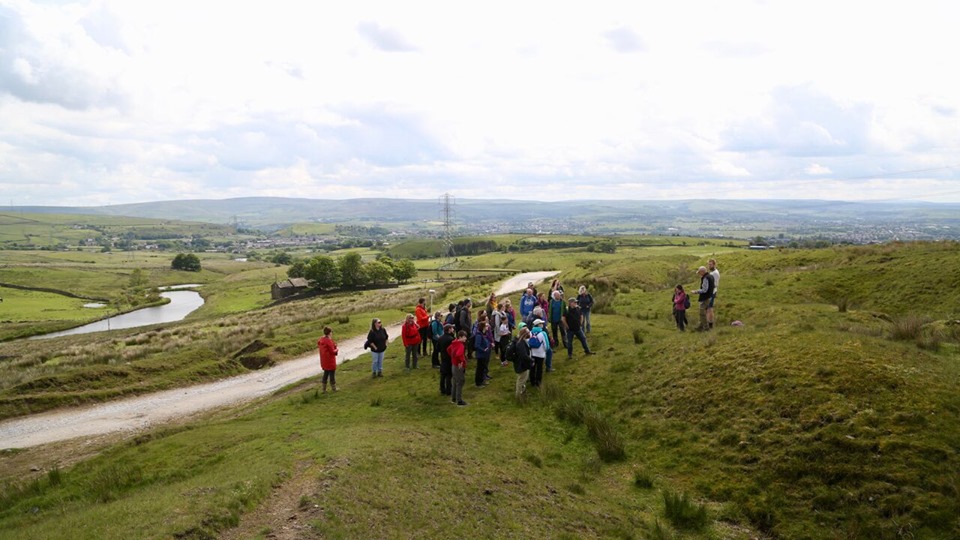
The Northern Aquarian, The Mon Stone.
Melathix, Robin Hood's Bed.
I jumped at the chance to join this group, for me it was a very rare chance to pick the brains of an Archaeologist.. I wasn't surprised to learn the group had not looked into the stones of Mesoamerica, neither had they come across the Bosnian Pyramids, until now...
I shall be keeping a close eye on the status of these landmarks and I'll updating the post as I gather information, we're not even taught about our local history at our local schools and it's forgotten about.
There are a few more interesting historical landmarks we have hidden about Whitworth and it's surrounding hills.
Hades Hill.
The Hades Hill cairn/barrow is located high on the moors some 3 miles north-east of Whitworth and the smaller village of Facit, near Rochdale. Its exact location is close to a footpath halfway between Hades hill and Rough hill, though it is not mentioned on modern OS maps. It is quite difficult to get to it's a long hard walk. I haven't been to this location yet
This small, low barrow or cairn — a couple of miles north of the little-known Man Stone — measures 15 meters north to south, 13 meters east to west and is 0.9 meters high (about 3 feet in height). But not a great deal can be seen today.
It was excavated in 1898 when a number of artifacts were discovered near the center of the barrow. The most famous of these ancient artifacts was a Celtic two-tiered urn (of the Pennine type) which had rope imprints and chevrons; inside this urn were the burnt bones of a female, flints, a scraper and a fine pointed borer. Other stuff that came out of the barrow included animal bones, charcoal, flint implements and an arrow head. The urn was placed in the hands of The March Collection at The Rochdale Free Library (now known as Touchstones). A more recent excavation was carried out in 1982 but nothing was recorded at this time. In Dr Whitaker’s History of Whalley, he described there being “the remains of a large beacon, with the foundations of a large circular enclosure” on Hades Hill.
A peculiar tunnel, can be found leading to Whitworth.. date stamped to 1935, it runs in a straight line. I'm unable to dig any further on this tunnel, I think I may have reached a dead end.
Megalithic Portal article, Hades Hill.
Healey Dell
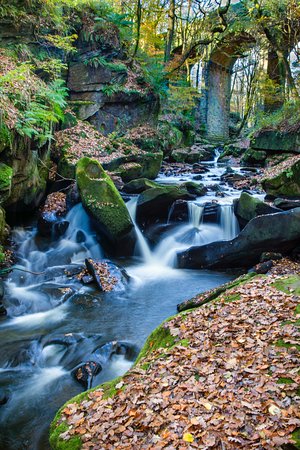
I can't talk about Whitworth and not mention Healey Dell, our very own nature reserve, we once had a train line running though the middle of it.. all that remains of this forgotten line is the viaduct crossing over the River Spodden.
Although at about 90yd it is not a long viaduct, it is in Railway Historian Gordon Biddle’s (2003) opinion.. one of the most graceful in the north of England, and beautifully constructed. Designed by Sturges Meek, Chief Civil Engineer to the Lancashire & Yorkshire Railway, it still survives and has been granted a Grade II Listed status. It was opened in October 1870, there is a photo of the viaduct under construction but nearing completion.
Whereas the nearby Roch Viaduct was constructed of brick, Healey Dell is built of rock-faced gritstone from local quarries and is carefully snecked (i.e. the courses are frequently interrupted by smaller stones). Its particularly gracefulness results from its narrowness, as it was built only for a single track; it's considerable height, rising to 105ft above the River Spodden, the narrow, tapering piers. There are eight 30ft round-headed arches, and three of them are acutely skewed, these being the arch over the river and the two either side. Biddle notes that the voussoirs are squared, and equal care was given to the snecking of the tooled soffit stones and the sharp arrisses. Even the stone corbels that supported the wooden centering during construction have concave mouldings.

Healey Dell Viaduct is seen under construction c1866, looking south-west.
The arches appear to be complete, but the timber frame beneath the crown of two arches and the scaffolding are still in place and the superstructure remains to be added.
The photograph is likely to have been taken on a Sunday when building work would be laid aside in observance of the Sabbath, as a navvy in his cap and smock he has time to stand by the rocky bed of the River Spodden and contemplate the fine building that he has been helping to construct.
From the Eric Bollington and Jeffrey Wells collections.
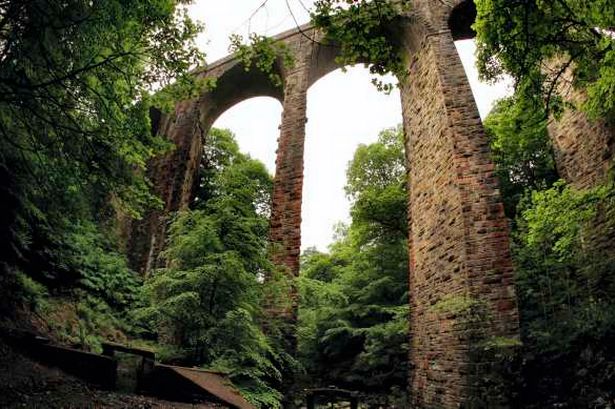

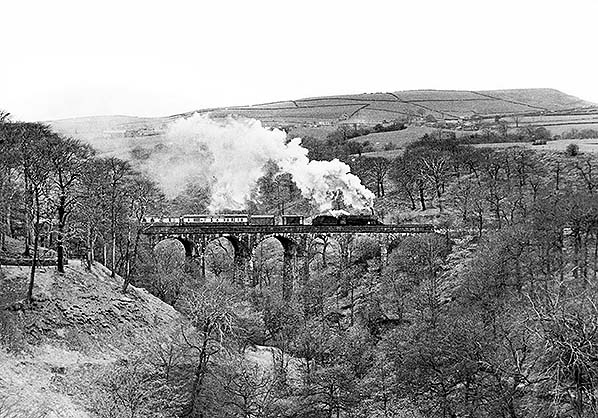
On 30 April 1963 a weedkilling train is travelling north over Healey Dell Viaduct.
Hauling the train is No. 42750, a Hughes-designed ‘Crab’ 2-6-0 built in June 1927 at the LMS Crewe works.
In August 1963 she was withdrawn from 39A,
Gorton shed, to be cut up at Wards, Broughton Lane, Sheffield, in May 1964.
Disused stations Website,
ROF Healey Hall Mill Munitions Filling Factory.
In 1941 an explosives filling factory was established at Healey Hall Mill in Healey Dell, Rochdale. It was designated as an assisted factory with guidance provided by the Royal Ordnance Factory at Chorley.
Opened in 1941 and closed two years later, ROF Healey Hall Mill Munitions Filling Factory filled 136 million 20-lb bombs for the RAF and 4 million mortar bombs for the Army. Rumour has it the site was ‘moth balled’ into the 1950’s ready to be brought back into production if the Cold War escalated.
Lancashire at War article, Healey Dell Munitions,
The Submerged Village of Watergrove.
There was a small village called Watergrove, now submerged under the reservoir, and scattered around the valley were about thirty farms, some of which had a few cottages close to them. In the nineteenth century the population reached about 300, but it had started to decline before the reservoir was built. It was about 250 at the turn of the century and about 200 in the 1920s. The Water Board insisted that nearly everyone should move out, including people living above the water line.
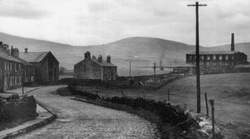
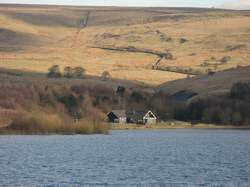
B/W photo, Watergrove Mill, 1879. There's a red buoy marks the location of the village, 2011.
Similarly we find the same outcome for the neighbouring town of Hollingworth Lake, you can see the church spire sticking out of the water on a warm day. In 1793, an Act of Parliament sanctioned the construction of the Rochdale Canals to feed Hollingworth Lake and the Blackstone Edge reservoirs. The lake was completed in 1800 and four years later, over 200 years ago.. the first water began to flow into the newly-opened canal. The lake covers an area of 130 acres and the path around it originally measured two-and-a-half miles. Beneath the cold waters, was the old hamlet of Hollingworth, complete with fields quaintly known as Horse Copper, Great Cote Meadow, Sweet Field and Close Before the Door.
MEN Article, Hollingworth Lake, 200 Years of Glory and Tragedy.
A lot of the information can be found on the website, Abandoned Communities ..... Rochdale Reservoirs.
From their Website..
Since the Middle Ages thousands of towns, villages, and other human communities in Great Britain have been abandoned.
Some places have been abandoned at a single point in time, while others have been gradually depopulated until there was no-one left. In some cases the forces of nature have made a major contribution to the abandonment, but more often economic and social changes have caused people to move away, or the decision of a powerful individual, organisation, or government has compelled inhabitants to leave.
This website commemorates all abandoned communities. But we will focus on a number of specific places that have been deserted at various times, for various reasons. In each case we will consider what type of community it was, the events leading up to its abandonment, and what happened to the inhabitants after they moved away. We will also be interested in what you are likely to find if you visit the place today, and in this respect you will notice that the observations and experiences of the author will often be recorded.
That's all I have for now, I thank you for your time and reading about my home.. I like the sound of what DigVentures is doing, I'm glad to see some effort being done to preserve the past, rather than cover it up with water or even mud I know this is just the beginning, I plan do go on more digs with this group.. maybe one day I'll even make it to Eygpt and Bosnia and write about that.. I am yet to add much more. We know there's yet be hundreds, even thousands, of places with historical importance hiding under our very feet.. all over the place, yearning to be uncovered.If you have of any local legends/myths to share, please do.
That's All Folks,
Jzzr
Relevant Links , Websites:
DigVentures,
Spodden Valley Revealed,
SVR,
Mid Pennine Arts,
Grace's Guide to British Industrial History,
A Journey Through the Valley of Stone,
Note: This OP was recovered from the Wayback Archive.
Note: Archived Sh.org replies to this OP are included in this thread.


