Hebrew is Greek.

Joined
Mar 25, 2022
Messages
9
Reaction score
17
Fascinating read!

In 1982, a suppressed, ages-old, historical truth, was resurrected through the publication of a book by Becket Publications of Oxford, England (ISBN O 7289 0013 O).
The book, published in English, and titled 'Hebrew is Greek', was written by lawyer, linguist and researcher, Joseph Yahuda, the son of Isaac Benjamin Ezekiel Yahuda, an ethnic Jew and longtime researcher and linguist. Though Jewish both by nationality and religion, J. Yahuda could be considered a Greek-- according to Isocrates' definition of a Hellene, since his decades-long, unbiased, and meticulously thorough search reveals the linguistic relationship of numerous groups of words in Hebrew, Greek and Arabic. Work that was published without fear or hesitation by a scholar whose only concern was for the discovery of the truth."
Hebrew is Greek - The 'blocked' book of Joseph Yahuda

This is what the mainstream wants you to believe: Greek is European whilst Hebrew is Semitic, from the same family as Arabic, Aramaic, Ethiopian etc. They share a few similarities because they were quite big languages around the same time period (ie about 2000-3000 years ago, and so they influenced each other a little).


Hebrew is Greek - The 'blocked' book of Joseph Yahuda
 
In the 1870s, when Milton Woolley wrote Hebrew Mythology or the rationale of the Bible, Hebrew was a dead language. In this book several sacred/secret books of the Old Testament, all written in Hebrew are analysed and the author shows that all of them deal only with natural phenomena.

The Hebrew language was “revived” after 1890, because it was promoted and part of the plan.

Imo, dead languages like Latin, Hebrew and “ancient Greek” were never spoken by common people. Those were SECRET languages, created for the purpose of secret and safe communication between the rulers and to conceal knowledge from the stupid peasants. Most peasants could not read and write anyway merely 200 years ago.

“THEY” aka “The Hierarchy Enslaving You” tried before to “revive” ancient classical greek, but failed.

Greek scholar Admantios Korais (1748–1833) created a pseudo-ancient form of the language called Katharevousa back in the late 1700s and early 1800s and "THEY" tried to use it for literary and official purposes. Besides the creation of “ancient” philosophical texts & authors, there was a creation of a wave of Greek nationalistic feeling resulting in the Greek War of Independence (1821-29) and the creation of modern, independent state of Greece in 1829.

King Otto of Bavaria was selected King of Greece. But … where were the Greeks ? There was an Albanian speaking population that called themselves Romei (Romans).
greece-set-up2.jpg


greece-set-up.jpg

Katharevousa was used for government and official purposes, but not spoken in daily language. People in Athena still spoke Albanian some 70 years after the creation of Greece.

greece-set-up4.jpg

There were no Hellenes or Greek in ancient Macedonia ! Those are RHO-man inventions. Created by "THEY"
Source of images above in this article: History of Greece.

Hebrew is greek, by inverting the ancient koine letters, macedonian koine letters and changing some vocals.

Greek has its own branch on the language tree, as Albanian and Armenian. Albanian language is special and unique and the origins are still blurry and debated. ;) But it is spoken all over! Albanian diaspora.

Btw, did you ever hear about “The chosen greeks” ?
connect the dots … both are told to be “chosen people”, the Hebrew & the Greek = Heraclites (Dorians)
 
In the 1870s, when Milton Woolley wrote Hebrew Mythology or the rationale of the Bible, Hebrew was a dead language. In this book several sacred/secret books of the Old Testament, all written in Hebrew are analysed and the author shows that all of them deal only with natural phenomena.

The Hebrew language was “revived” after 1890, because it was promoted and part of the plan.

Imo, dead languages like Latin, Hebrew and “ancient Greek” were never spoken by common people. Those were SECRET languages, created for the purpose of secret and safe communication between the rulers and to conceal knowledge from the stupid peasants. Most peasants could not read and write anyway merely 200 years ago.

“THEY” aka “The Hierarchy Enslaving You” tried before to “revive” ancient classical greek, but failed.

Greek scholar Admantios Korais (1748–1833) created a pseudo-ancient form of the language called Katharevousa back in the late 1700s and early 1800s and "THEY" tried to use it for literary and official purposes. Besides the creation of “ancient” philosophical texts & authors, there was a creation of a wave of Greek nationalistic feeling resulting in the Greek War of Independence (1821-29) and the creation of modern, independent state of Greece in 1829.

King Otto of Bavaria was selected King of Greece. But … where were the Greeks ? There was an Albanian speaking population that called themselves Romei (Romans).
Katharevousa was used for government and official purposes, but not spoken in daily language. People in Athena still spoke Albanian some 70 years after the creation of Greece.


There were no Hellenes or Greek in ancient Macedonia ! Those are RHO-man inventions. Created by "THEY"
Source of images above in this article: History of Greece.

Hebrew is greek, by inverting the ancient koine letters, macedonian koine letters and changing some vocals.

Greek has its own branch on the language tree, as Albanian and Armenian. Albanian language is special and unique and the origins are still blurry and debated. ;) But it is spoken all over! Albanian diaspora.

Btw, did you ever hear about “The chosen greeks” ?
connect the dots … both are told to be “chosen people”, the Hebrew & the Greek = Heraclites (Dorians)

So, for those who speak Macedonian, here is the link how many Albanians were in Macedonia and when did they showed up in that part of The Balkans! Just helping you with the info... not interested in arguing!

Settlement of Albanians in Macedonia

Historical testimonies suggest that the first Albanians in Macedonia began to move more intensively only after the mid-18th century.

According to the Ottoman census from 1430 to 1431, there were no Albanians in Macedonia at all. Since the mid-15th century, with the Islamisation of Albanians, they have begun to come to Macedonia as Turkish soldiers and mercenaries, but still in very minor numbers. The Ottoman census of 1452–1453 recorded only 32 Albanian families on the territory of all of Macedonia, 31 families in the Kalkandelen Province (Polog) and 1 Catholic family in Skopje.

These Albanians were already islamized for the most part and labelled ottoman authorities as ARNAUTI or ARBANASI, in order to distinguish themselves from the indigenous one. In the census notebooks, the Ottomans added "Arbanas" or "Arnaut" to distinguish them from the natives, for whom there were no adjectives to the people.

The Ottoman census of 1467–1468 recorded only 84 Albanian households on the territory of all of Macedonia in the following provinces:

Census 1467-1468

Calkandelen Province (Polog) 20 households
Uskup Province (Skopje) 2 households
Pirlepe Province (Prilep) 10 households
Ciprjuli Province (Veles) 3 households
Nahya Krchovo (Kicevo) 7 households
Nahia Mariovo 1 household
Nahia Monastery (Bitola) 41 household

Source: TDIMN. Opd, item III, 35–143 (Calkandelen Province), 150; TDIMN. Opd, item I, 197–199; TDIMN. Opd, item II, 139–271 (Nahya Monastery), 271–485

First six Albanian villages in Macedonia

Albanians came to Macedonia's borders in 1572. Frenchman Philippe Canaje described Kacanik's seizure by several as he personally wrote "Albanian groups of murderers and thugs" in 1572.

(Френски пътеписи за Балканите, p.140).

In 1595, for the first time in history, an Albanian thug gang was spotted looting several villages in Polog, and many villagers were wounded and killed.

(J. Trifunoski, Polog, p. 38).

According to a 1597 Ottoman document, about 10,000 Albanian robbers from northern Albania robbed and burned 27 villages in western Macedonia, and in 6 of those villages, in the Debar area, the first Albanians settled in Macedonia

(Shopova, D. Cit. s.c., 83).

So the first settlement of Albanians in a Macedonian village dates back 3 years before the beginning of the 17th century and was in the Debar area.

Albanian settlement in Skopje area

An Ottoman document from 1595 first noted the presence of "Arnaut thug groups" in the Skopje area, but without Albanian settlement.

(Shopova, D. Cit. suc., 78-79)

Albanians began gradually conquering the high mountainous Macedonian villages of Skopje Montenegro (Skopska Crna Gora) only in the late 17th century.

(Materials, 536. / "ARNAUTI" Vasil Kanchov, "Macedonia. Ethnography and statistics" (with 11 cards), Issued by the Bulgarian Literary Society in Sofia, 1900, Part One. Peoples in Macedonia. Arnauti., p. 1. 83-100).

Albanians first occupied the highest Macedonian villages in Skopje's Montenegro and then gradually descended on the low villages. The village of Brest until the 19th century was a pure Macedonian village, Albanians entered Ljuboten in the late 18th century.

(Vasil Kanchov, "Macedonia. Ethnography and statistics", Part One.Peoples in Macedonia. Arnauti., p. 1. 83-100).

German traveller Hahn visited the Albanian villages of Skopje Montenegro in the second half of the 19th century and Albanians themselves reported that they had moved to Skopje's northern mountains after the Austrian wars, which was the end of the 17th century.

(Hahn, Reise von Belgrad nach Salonik, Wien, 1868 p. 70).

By the 20th century, Albanians settled on Kitka and Black Peak in 21 Macedonian villages. They came from Kosovo during the 18th and 19th centuries, and the inhabitants of Aldinci knew that their ancestors came to Aldinci from Gjilane.

(Materials, p. 1. 523. / Vasil Kanchov, "Macedonia. Ethnography and statistics", Part One. Peoples in Macedonia. Arnauti., p. 1. 83-100).

In the Skopje field, the first Albanians descended only in the 19th century, during the management of Hamzi Pasha, an Albanian who phased in Albanians from northern Albania.

(J. Trifunoski, Skopje Polje, 358).

Albanian settlement of Polog

The beginning of Albanian settlement, i.e. the capture of Polog, began in the mid-18th century. However, they were a very small minority group in Polog at the time, until the first half of the 19th century, when Polo was ruled by Albanian Abduraman Pasha, who violently and massly inhabited Albanians from northern Albania.

(J. Trifunoski, Polog, s. 71-74)

A large part of Polog's indigenous Macedonian population was forced to be declared as Albanian, entire tribes were forcibly converted and declared Albanian, as were many women and girls under pressure from Tetovo Albanian Pashas and their zulum.

(J. Trifunoski, Polog, pp. 38-39, 50-51)

The same is the case with Kichevo area, where the majority of those Albanians are actually of Macedonian origin. Therefore, we can say that Albanians in Macedonia are Macedonian brothers.

Albanians from the village of Tearce were inhabited by Tetovo Pasha, from Mat, Dolen Debar and Prizren; Albanians from the province of Dobrošte came from Debar and Šuma. In the province of Deep, the province of Straza and the province of Cultino, Albanians originate from Dukachin Šuma. In the last village, Abdurrahman Pasha in the early 19th century expelled Macedonians and settled Albanians (Materials (Sofia), 437, 439, 446–447).

There is much more... neverending list! Населување на Албанците во Македонија

Albanians NEVER had anything to do with Macedonia... these are just latest inventions to justify the massive land grabs encouraged by the Puppet Masters, who want chaos on The Balkans!
 
According to the Ottoman census from 1430 to 1431, there were no Albanians in Macedonia at all. Since the mid-15th century, with the Islamisation of Albanians, they have begun to come to Macedonia as Turkish soldiers and mercenaries, but still in very minor numbers. The Ottoman census of 1452–1453 recorded only 32 Albanian families on the territory of all of Macedonia, 31 families in the Kalkandelen Province (Polog) and 1 Catholic family in Skopje.

These Albanians were already islamized for the most part and labelled ottoman authorities as ARNAUTI or ARBANASI, in order to distinguish themselves from the indigenous one. In the census notebooks, the Ottomans added "Arbanas" or "Arnaut" to distinguish them from the natives, for whom there were no adjectives to the people.

The Ottoman census of 1467–1468 recorded only 84 Albanian households on the territory of all of Macedonia in the following provinces:
a census from 1452/53 and one from 1467/68 ? 😮
could you please post a link (+pics) of those in this thread ? they would be the oldest surviving OFFICIAL RECORDS ... for now record holder of the oldest official documents is a Churchbook from 1576 (Bad Tölz, Germany).
I get no results with a search of the source "TDIMN. Opd, item III, 35–143 (Calkandelen Province), 150; TDIMN. Opd, item I, 197–199; TDIMN. Opd, item II, 139–271 (Nahya Monastery), 271–485"

Albanians NEVER had anything to do with Macedonia... these are just latest inventions to justify the massive land grabs encouraged by the Puppet Masters, who want chaos on The Balkans!
inventions and CHAOS .. you NAME it ! THEY "slogan" Ordo ab Chao, therefor THEY first have to create it. We've been mocked for centuries ! 🤡🌍
 
These are the official Ottoman documents of the land... and they are translated and published into books... I am not sure if they have them in the digital format, but I can try to source the oldest document... these are not books for birth, marriages or deaths... But, I have to say that few sentences from Family Search troubled me:

"The Ottoman Turks conducted extensive surveys of land and population for taxation purposes as early as the 1500s. These early surveys are of great value to demographers to estimate the size and character of the population in various regions of the Ottoman empire, but they contain no names and are not of significant genealogical value. After the Crimean war a cadastral (land) survey was conducted to reestablish the tax base of the empire. This and later surveys included names of head of households. This survey was conducted in 1858-1859 in the provinces [sancaks] of Bursa and Janina, then empire wide in 1860."

It seems that these were the tax books, no census as claimed...

All the documents in the form of a book had every area in Macedonia separate and they start from the XV century! You could not find them because they are all published in Bulgarian or Macedonian language so TDIMN is for "Турски документи за историjата на македонскиот народ" or in English - Turkish documents for the history of the Macedonian population, Opd. is for "Опширен пописен дефтер..." or in English - Extensive census register, then the name of the area follows, with the year, volume and book number

The State Archive of Macedonia published these books from the 1980's until 2018... many books! Very simple looking but with some of the most precious documents included. The originals are not all published... so the archive should be able to provide a photo of those not published...

1665062768621.png


This is the book for the XIX century, and I am searching for the one with the same title but different volume and book number for the XV century...

Searching from China is not fun... most of the sites are blocked! This is the original title of the book of documents I am looking for!

Турски документи за историjата на македонскиот народ : Опширен пописни дефтери од ХV век Т.I (in Macedonian)

 
Last edited by a moderator:
Why do i smell hoax/his-story land & power grabbing here?? Surveys from alledged 1500s that only got published from 1980s onwards?!?!
The State Archive of Macedonia published these books from the 1980's until 2018... many books! Very simple looking but with some of the most precious documents included. The originals are not all published... so the archive should be able to provide a photo of those not published...
 
Why do i smell hoax/his-story land & power grabbing here?? Surveys from alledged 1500s that only got published from 1980s onwards?!?!
I don't know... you can ask them... collecting, translating, finding money and someone who will allow you to do it... government have their reasons... Macedonian government does not need to grab their own land... but it could be to protect it from grabbing. 😊
 
According to Ior Bock via Jim Chesnar. Hellenic derives from Helsinki. The Greek language comes from the Nordic lands. ior bock jim chesnar etymology hellenic is finnish at DuckDuckGo
These are the official Ottoman documents of the land... and they are translated and published into books... I am not sure if they have them in the digital format, but I can try to source the oldest document... these are not books for birth, marriages or deaths... But, I have to say that few sentences from Family Search troubled me:


It seems that these were the tax books, no census as claimed...

All the documents in the form of a book had every area in Macedonia separate and they start from the XV century! You could not find them because they are all published in Bulgarian or Macedonian language so TDIMN is for "Турски документи за историjата на македонскиот народ" or in English - Turkish documents for the history of the Macedonian population, Opd. is for "Опширен пописен дефтер..." or in English - Extensive census register, then the name of the area follows, with the year, volume and book number

The State Archive of Macedonia published these books from the 1980's until 2018... many books! Very simple looking but with some of the most precious documents included. The originals are not all published... so the archive should be able to provide a photo of those not published...

View attachment 25706

This is the book for the XIX century, and I am searching for the one with the same title but different volume and book number for the XV century...

Searching from China is not fun... most of the sites are blocked! This is the original title of the book of documents I am looking for!

Турски документи за историjата на македонскиот народ : Опширен пописни дефтери од ХV век Т.I (in Macedonian)

Understand your frustration. Airvpn is a small company, they will let you test for free if you are behind the wall.
 
Last edited:
According to Ior Bock via Jim Chesnar. Hellenic derives from Helsinki. The Greek language comes from the Nordic lands. ior bock jim chesnar etymology hellenic is finnish at DuckDuckGo

Understand your frustration. Airvpn is a small company, they will let you test for free if you are behind the wall.
Thanks for the tip... I will try now...

One more theory in need to be explored. The only problem I have with Greeks being Finnish, before reading it , is that they are mostly of dark complexion and physically completely different from the Scandinavians!

AirVpn.org, .eu, .info... none are accessible... sadly, Chinese are really good in this! But, thanks for the help! One day something small will go through the wall...

Screenshot from 2022-10-08 06-22-15.pngScreenshot from 2022-10-08 06-22-29.pngScreenshot from 2022-10-08 06-23-13.png
 
Last edited by a moderator:
a census from 1452/53 and one from 1467/68 ? 😮
could you please post a link (+pics) of those in this thread ? they would be the oldest surviving OFFICIAL RECORDS ... for now record holder of the oldest official documents is a Churchbook from 1576 (Bad Tölz, Germany).

This is what I found while searching for the picture...

"These and other cadastral surveys have been published by Turkish archives (Basvekâlet Arsivi and Tapu ve Kadastro umum müdürlügünün in Ankara), including the surveys of 1485, 1497, 1534, 1536, 1571, 1582, and 1591.

It is not possible at this time to determine the extent to which this record exists and has been preserved. Some are kept at the Cadastral Department archives [Tapu ve Kadastro Umum Mudurlugu arsivi] in Ankara and Istanbul. Others may be kept at local and provincial archives. None of these records have been acquired by the Family History Library. Access to these records is pretty much limited to those who can visit archives in Turkey." Ottoman Empire Census

The other interesting fact I discovered was this:

The yearbooks, however, are deemed unreliable sources as they, in some districts, did not register the female population, but balanced the numbers against the male population, though it is a well known fact that the number of male heads exceeded the number of female heads throughout this period not only in those lands but in Serbia Proper as well!

Hoaxes were becoming the norm from the earliest times?

So, I will continue my search, but with the Chinese blocking access to most of the sites I need and the Turkish being secretive about their originals, not an easy task getting that photo.
 
Last edited by a moderator:
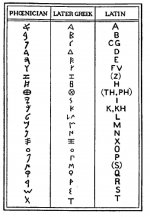
quite, proof that the Greeks were from Hebrews/Semites is that the Greek alpha is comparable to the Hebrew aleph, the Greek beta to the Hebrew beth, the Greek gamma to the Hebrew gimel, the Greek delta to the Hebrew daleth, and several more near-matches.
 
I thank you from the bottom of my heart for this. I have been doing extensive reading about this and I am convinced he is right
 
Last edited:
Phoenician is English! Interesting our modern English alphabet has similar letters just backwards. Like hearing a message in a song that is reversed. Quoting the Bible backwards is Satanic. I wonder what reading English or Phoenician does?

f6a382242029063282b63fbdac127--phoenician-alphabet.jpg
 
Tips
Tips
Please respect our Posting Rules.
Back
Top