

- Joined
- Aug 31, 2020
- Messages
- 1,140
- Reaction score
- 2,171
I'm saying science gets to pick and choose. Did you check the link I posted?Note: This post was recovered from the Sh.org archive.Username: FeralimalDate: 2020-05-02 17:53:17Reaction Score: 0
I'm saying science gets to pick and choose. Did you check the link I posted?Note: This post was recovered from the Sh.org archive.Username: FeralimalDate: 2020-05-02 17:53:17Reaction Score: 0

I guess, any narrative is possible..Note: This post was recovered from the Sh.org archive.Username: TimeshifterDate: 2020-05-03 09:18:36Reaction Score: 6
DNA similaritiesNote: This post was recovered from the Sh.org archive.Username: plamskiDate: 2020-05-03 15:23:48Reaction Score: 1
Note: This post was recovered from the Sh.org archive.
Username: Red Bird
Date: 2020-05-03 15:27:00
Reaction Score: 1
Do you believe in evolution? Hey, we should have a poll.DNA similarities
The hidden evolutionary relationship between pigs and primates revealed by genome-wide study of transposable elements
A new study has revealed a potential hidden evolutionary link between pigs and primates. Genetic elements called SINES (short interspersed elements) are usually considered to be ‘junk DNA’, left behind by marauding viruses. However, these elements may hold additional clues about our mammalian evolutionary history.
In humans, the most common SINE is the Alu transposable element, which is derived from the small cytoplasmic 7SL RNA. The latest research has revealed that 7SL RNA is also the original source for a common swine SINE. Just a fluke? Unlikely, according to researchers, who think that this SINE must have had a common origin.
The hidden evolutionary relationship between pigs and primates revealed by genome-wide study of transposable elements
Note: This post was recovered from the Sh.org archive.
Username: plamski
Date: 2020-05-03 17:59:45
Reaction Score: 5
The term evolution assumes directionality but the latest understanding even within the mainstream, which resonates with me, is that we do not have directionality. There's no development from simple to complex organisms but one constant process of adaptation to the surrounding conditions - natural selection. Like a game of musical chairs.Do you believe in evolution? Hey, we should have a poll.
Tribe shows geometry 'is innate'Researchers examined how the Mundurucu think about lines, points and angles, comparing the results with equivalent tests on French and US schoolchildren.
The Mundurucu showed comparable understanding, and even outperformed the students on tasks that asked about forms on spherical surfaces.
ffs..Note: This post was recovered from the Sh.org archive.Username: GlobeHead69Date: 2020-05-03 19:10:09Reaction Score: 1

Note: This post was recovered from the Sh.org archive.
Username: dreamtime
Date: 2020-05-03 19:21:27
Reaction Score: 1
Or in most basic words, the past is contained within the present, and the present is contained within the future. And this concept includes both devolution and evolution, and this process can be explained in terms of regression and progression of abilities, at least when it comes to the spiritual/biological/psychological development of humanity.The term evolution assumes directionality
Note: This post was recovered from the Sh.org archive.
Username: plamski
Date: 2020-05-03 19:28:49
Reaction Score: 1
Common designer means common ancestry.The common features you are seeing are proof of a common designer, not common ancestry!
Well put.Or in most basic words, the past is contained within the present, and the present is contained within the future. And this concept includes both devolution and evolution, and this process can be explained in terms of regression and progression of abilities, at least when it comes to the spiritual/biological/psychological development of humanity.
The term evolution is ruined so might think of a new one for these ideas, but they probably already exist. I have never seen any proof of species changing ever has occurred. You can replace everything you read that has evolution in it (especially psychology) with something like, ‘this is the way it’s always been’. Try it.Note: This post was recovered from the Sh.org archive.Username: Red BirdDate: 2020-05-03 19:47:14Reaction Score: 2
Note: This post was recovered from the Sh.org archive.
Username: plamski
Date: 2020-05-03 21:02:28
Reaction Score: 1
Perhaps, the reason is that changes do indeed occur very slowly and we don't live long enough to see them. Unless we deliberately cross two species then it's obvious. Prior to Darwin virtually all evolutionary scientists supported Saltationism which is defined as sudden change from one generation to the next (possibly as a result of environmental pressure).I have never seen any proof of species changing ever has occurred.
Note: This post was recovered from the Sh.org archive.
Username: Red Bird
Date: 2020-05-03 23:38:36
Reaction Score: 1
I’m speechlessPerhaps, the reason is that changes do indeed occur very slowly and we don't live long enough to see them. Unless we deliberately cross two species then it's obvious. Prior to Darwin virtually all evolutionary scientists supported Saltationism which is defined as sudden change from one generation to the next (possibly as a result of environmental pressure).
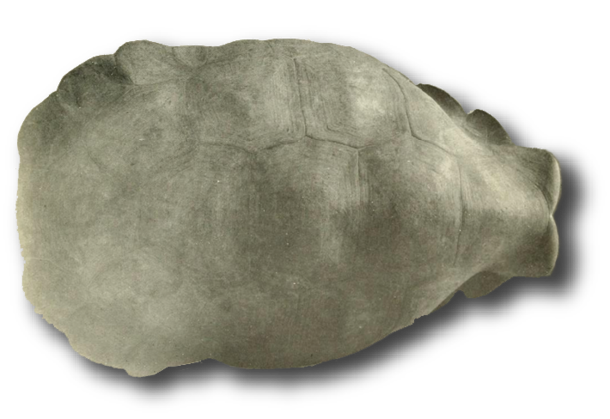
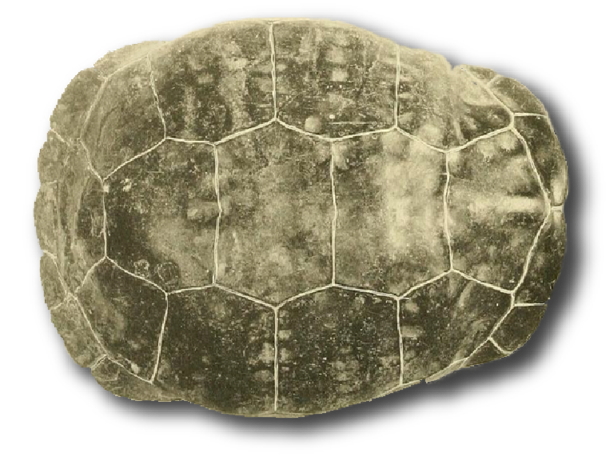
But we can observe micro-adaptations such as in the case with the saddle tortoises in Galapagos. The first one has shells that rise in front, like a saddle. This adaptation makes it easier for them to lift their heads high to eat tree cactus and to resolve disputes over limited food resources
View attachment 44950View attachment 44951

Note: This post was recovered from the Sh.org archive.
Username: Bunnyman
Date: 2020-05-04 02:50:43
Reaction Score: 1
If I may ask: are you suggesting that your example of this branch specific tortoise shows a case of saltationism where one species branches into two where the progeny of both will retain those lines of one adapted and one not? How can we observe such a process as you suggest? Looking at the two shells, I can observe that we are not looking at "micro-adaptions".But we can observe micro-adaptations such as in the case with the saddle tortoises in Galapagos. The first one has shells that rise in front, like a saddle. This adaptation makes it easier for them to lift their heads high to eat tree cactus and to resolve disputes over limited food resources
Note: This post was recovered from the Sh.org archive.
Username: plamski
Date: 2020-05-04 15:02:51
Reaction Score: 0
I am not sure I understand your question. In the first paragraph you doubt that changes can be observed but in the second you confirm it. Please, explain.If I may ask: are you suggesting that your example of this branch specific tortoise shows a case of saltationism where one species branches into two where the progeny of both will retain those lines of one adapted and one not? How can we observe such a process as you suggest? Looking at the two shells, I can observe that we are not looking at "micro-adaptions".
I sure think that perceptible changes as saltationism are possible indeed. And changes in our perceptible surroundings do not change gradually and slow as a rule. I think the funda-mentals of any attempt at any such theory is rooted in the "mental" aspect from where the creator starts it's excursion into the visible.
Note: This post was recovered from the Sh.org archive.
Username: Magnetic
Date: 2020-05-04 21:03:31
Reaction Score: 2
I used to "be-lie-ve" in evolution but the more I studied it, the more problems it showed to me. They keep moving the goal posts on the "process" of evolution: for instance, it was believed that because of the slow steady change: for example of a tree climbing protobird that would gradually develop longer and longer forearms with feather like growths would be found in abundance in the fossil record. When they were not found they were fabricated by men who be-lie-ved in it. Much of the hoaxes were made by "men who believed" the science of evolution such as the piltdown man which was supposed to be a protohuman a step up from the simian line. Piltdown Man - WikipediaDo you believe in evolution? Hey, we should have a poll.
Note: This post was recovered from the Sh.org archive.
Username: Red Bird
Date: 2020-05-04 21:12:40
Reaction Score: 1
I have refused to discuss evolution anymore @s it’s been over 150 years and even today’s tech has nothing new to add. Same old, same oldI used to "be-lie-ve" in evolution but the more I studied it, the more problems it showed to me. They keep moving the goal posts on the "process" of evolution: for instance, it was believed that because of the slow steady change: for example of a tree climbing protobird that would gradually develop longer and longer forearms with feather like growths would be found in abundance in the fossil record. When they were not found they were fabricated by men who be-lie-ved in it. Much of the hoaxes were made by "men who believed" the science of evolution such as the piltdown man which was supposed to be a protohuman a step up from the simian line. Piltdown Man - Wikipedia
Note: This post was recovered from the Sh.org archive.
Username: Bunnyman
Date: 2020-05-05 06:23:27
Reaction Score: 1
I am sorry if it didn't come across clear enough. My question is in the first paragraph however. I will try again.I am not sure I understand your question. In the first paragraph you doubt that changes can be observed but in the second you confirm it. Please, explain.
Note: This post was recovered from the Sh.org archive.
Username: plamski
Date: 2020-05-05 11:08:43
Reaction Score: 1
The Galapagos tortoise is a well known and classic case of adaptation and one that is said to have made Darwin think about the evolution. The tortoise used to live on the mainland but migrated to the volcanic island of Galapagos and it had to adapt to the new environment. These tortoises have two very different shapes, each adapted for different feeding habits needed on low, arid islands (dome shaped tortoise) versus high, lusher islands (saddle-back tortoise).How do we know that one tortoise species at some point, maybe due to ecological reasons or other, branched in two (or more) tortoise species. What would cause a branch off and at the same time some to not "evolve" the original "ancestor"? These questions can of course be applied to the whole evolution theory.

Note: This post was recovered from the Sh.org archive.
Username: CitizenShip
Date: 2020-05-05 18:16:50
Reaction Score: 1
This was still mainstream education during my time at school, this was the late eighties and can remember the class as a TV and video were dragged into the room and they played a bbc docu about this, but it had been proved a hoax in 1953!I used to "be-lie-ve" in evolution but the more I studied it, the more problems it showed to me. They keep moving the goal posts on the "process" of evolution: for instance, it was believed that because of the slow steady change: for example of a tree climbing protobird that would gradually develop longer and longer forearms with feather like growths would be found in abundance in the fossil record. When they were not found they were fabricated by men who be-lie-ved in it. Much of the hoaxes were made by "men who believed" the science of evolution such as the piltdown man which was supposed to be a protohuman a step up from the simian line. Piltdown Man - Wikipedia
The Hybrid Hypothesis: IntroductionNote: This post was recovered from the Sh.org archive.Username: SeekingLogosDate: 2020-05-06 16:38:25Reaction Score: 2


Note: This post was recovered from the Sh.org archive.
Username: JezNorth
Date: 2020-05-08 00:16:13
Reaction Score: 1
Hybrids could also explain the likes of El Chupacabra?The Hybrid Hypothesis: Introduction
My work focuses on hybrids and, particularly, the role of hybridization in the evolutionary process. Here, I report certain facts, which seem to indicate that human origins can be traced to hybridization, specifically to hybridization involving the chimpanzee (but not the kind of hybridization you might suppose!). You can access detailed and documented discussions supporting this claim from the table of contents. But I’ll summarize the basic reasoning here, without a lot of citations and footnotes (see below).
Sheep-pig Hybrids - Mammalian Hybrids - Biology Dictionary
There exists in some sections of Old Mexico a type of “hog” represented as the product of crossing a ram with a sow, and the term “Cuino” has been applied to this rather violent combination. The ram used as a sire to produce the Cuino is kept with the hogs from the time he is weaned. A resident of Mexico has given the following description of the Cuino: “The sow used to produce the Cuino belongs to any race, but as a rule to the Razor-Back family, which is the more numerous. There is never any difficulty with her accepting the ram when breeding time comes. The progeny is a pig—unmistakably a pig—with the form and all the characteristics of the pig, but he is entirely different from his dam if she is a Razor-Back. He is round-ribbed and blocky, his short legs cannot take him far from his sty, and his snout is too short to root with. His head is not unlike that of the Berkshire. His body is covered with long, thick, curly hair, not soft enough to be called wool, but which nevertheless he takes from his sire. His color is black, white-black, and white-brown and white. He is a good grazer and is mostly fed on grass [Should this trait perhaps be interpreted as the influence of sheep parentage?] with one or two ears of corn a day, and on these he fattens quickly. The Cuino reproduces itself, and is often crossed a second and third time with a ram. Be it what it may, the Cuino is the most popular breed of hogs in the state of Oaxaca, and became so on account of their propensity to fatten on little food.”
Dog-cow Hybrids - Mammalian Hybrids - Biology Dictionary
Chicken-duck Hybrids: Fact or fiction? - Biology Dictionary
Bear-dog Hybrids - Mammalian Hybrids - Online Biology Dictionary


