Invisible energy (AsSalam786)

I

iseidon

Guest
This series of articles was written by the user assalam786.livejournal.com in May 2017 in Russian. This user has published many interesting articles that will be of interest to sh.net users. Many of them are (in one way or another) related to Islam and Sufism.

I found this user by a search query in Russian "three brothers energy chemistry", because lately I started to be quite deeply interested in alchemy (it seemed to me that numerous stories-legends about the three brothers are related to chemistry-alchemy). And was looking for the chemistry-alchemical properties of copper (as I came out on copper in my research on Yekaterinburg; this led me to a connection to Phoenix, Adelaide and Santiago; if someone does research related to copper, he will understand why these cities have a connection).

I really liked this author as he resonates strongly with me (as far as Islamic culture and energy is concerned). I write about this on purpose so that people will pay attention first of all to the energy context (religion, ideology do not play a big role here).

Part 1. Qi, Prana, Od, Orgone.​

Original (rus).

With this note I begin a series on the invisible power radiated and absorbed by all objects in the manifested universe, and how the various objects of Tradition are used to harness, store, redistribute, and channel this power.
The purpose of this series of notes is to help reconstruct the applied knowledge behind the various tools of Tradition, now perceived only as ritual objects or ornaments. Simply put, when you see people sitting on the floor eating with their hands while they have a "sacred" table on the altar and "sacred" spoons and forks hanging on the wall... it might occur to him that some additional information would be helpful in this situation...

The ancient Indian concept of prana, the cosmic life force permeating everything in the universe and contained in living and inanimate objects, was also very close to the Chinese qi. The Vedas state that prana comes to the Earth from the Sun and living beings inhale it together with the air: flowing through subtle channels and meridians of the body, prana nourishes and gives us life.

102704_900.jpg

Prana. The author of the picture is Alex Grey.

Personally, I have never had any doubt that the ancient teachings on prana and chi were not the superstitions of primitive societies as they are presented by modern sources. I believe that in ancient times there were more people who saw subtle energies, not 22 percent as now, but much more, and that the knowledge of qi and prana was recorded by people of knowledge for whom the existence of an unknown force was real and tangible.

You may ask, where did the information that there were exactly 22 percent of people with the ability to see this energy come from? This conclusion was reached by Karl von Reichenbach, a 19th century German chemist and industrialist who conducted research on the mysterious force we are talking about.

102981_900.jpg

Kirlian's method of photography: in the 1940s, the Soviet scientists Kirlian discovered that when photographed with high-frequency currents, the effect of a special luminescence of various living and nonliving objects was observed.

Baron Reichenbach once studied with Goethe in his youth and was greatly impressed by the great Master's teachings on light waves. This may have led him to the study of invisible light or vital force, to which he gave the name "od" after the Scandinavian god Odin. Although the scientist himself was not a visionary, he based his research on experiments with people who had the ability to perceive the subtle emanations of od by means of the organs of sight and touch.

As Reichnebach found out, the proportion of such people gifted with unusual vision is 22%. Since the other three quarters, which represent the majority, do not perceive anything "such", they consider visionaries to be not quite normal or imaginary, immediately rejecting everything they cannot see or feel themselves. Because of this attitude, all of Reichenbach's research was rejected by the scientific community as "pseudoscientific".

And the evidence was that everything radiates a special light - absolutely everything, without exception. We live in a world filled with luminous emanations. The sun is the most powerful source of invisible rays, in addition to those visible ones that we call daylight. And the Moon has its own light, though not comparable to the Sun in power. Everything on Earth also emits light, but it is much weaker. Organic substances are the dimmest: wool and other natural fabrics, wood, clay, ordinary stones; the brightest are metals, especially magnets, and some crystals, such as quartz or rock crystal.

103176_900.jpg

Reichenbach's attention was also drawn to the ability of unknown energy to move from one object to another. A magnetized or electrified object, in contact with another, transfers a charge to it, and the same was observed in the manifestations of Od.

The people who participated in Reichenbach's experiments saw that a luminous energy was continually separating from our entire body, especially from the tips of our fingers and toes. Baron believed that this separation was nothing more than the transmission of an ode to the matter of the air. In his work he noted that the strongest transfer of this kind occurs during the breathing of living beings: visionaries have noted that with each breath a cloud of luminous smoke emanates from the nose of a sleeping person, dissolving into the much dimmer, non-uniform bluish glow that fills the room.

Reichenbach did not attribute the phenomenon he observed to the field of electricity, because the electroscope, brought into contact with the crystal, remained without the slightest change. Nor could he call the phenomena magnetism because crystals and other dielectrics were obviously not magnetized. After describing in detail all the manifestations of the unknown force from the words of the visionaries, Reichenbach was forced to admit that he did not know what it was, only suggesting that this type of energy must take a place between magnetism and electricity.

One of the men of knowledge of our time capable of perceiving the invisible force was George Gurdjieff, in whose teachings many of the ideas of Tradition are reflected.

In his book "Views from the Real World", Gurdjieff spoke of a "mixed substance of the active elements of the physical body and the astral body" which forms around a person a particular atmosphere, like the atmosphere around the planet. This substance, if concentrated, Gurdjieff maintained, could be seen as an aura or glow around people, and sometimes also in holy places or churches. Just as the atmospheres of different planets constantly gain or lose some or other substance due to the influence of other planets, so a person surrounded by other people is like a planet surrounded by other planets. When the atmospheres of people who are attracted to each other meet, a bond and exchange is formed between them. The volume of their atmosphere remains the same, but its quality changes.

104153_300.jpg

20th-century science came close to studying the phenomenon of invisible energy from a practical standpoint--through the research of Wilhelm Reich, a German scientist originally from the Austro-Hungarian part of Ukraine. Reich was a close disciple of Freud and began his academic career in the field of psychoanalysis and sexual energy. In order to avoid Nazi persecution, Reich was forced to move from Germany to America, where he continued his research into the 1940s and 1950s.

In the process of studying the human psyche, he came up with the idea of the existence of a single life force that was the basis of all body processes. He claimed that this energy could be observed under the microscope as a bluish glow around the blood cells and other living substances. Reich gave this force the name "orgone," from "organism, organic," to show its connection with life processes, and believed that it was also present in an unbound form in the atmosphere. The scientist wrote of a glow of blue energy enveloping the entire planet - several years before photographs taken by the first Soviet satellite from space confirmed this exactly.

104265_300.jpg

Reich showed that orgone exists even in a vacuum, filling the entire space, it pulsates in a certain rhythm and interacts with different kinds of matter in different ways. Nonmetals - wood, cloth, plastic - attract and absorb orgone, while metals attract and immediately reflect it. Water attracts orgone with great force, turning it into "living water," indispensable for both biological processes and the formation of the planetary climate.

During his experiments with orgone, Reich created a device he called the orgone accumulator. It was a small chamber, lined inside and outside with several layers of metal sheets, between which were placed layers of dielectric materials. The essence of the device was to trap the orgone inside the chamber, preventing it from escaping due to reflection from metal surfaces. As shown by experiments, the orgon accumulator really influenced biological processes - seeds, some time spent in the chamber, germinated faster, and people inside it accelerated the healing of burns and wounds, improved the course of chronic diseases.

(I ask my interlocutors to note for themselves the information about the orgone chamber, as we will return to it in further notes).

Reich suggested that changes in the concentration of orgone in the atmosphere caused changes in the weather, and he also invented an original device that could be used to induce rain. The press of those years widely discussed the case when, at the request of farmers suffering from drought, Reich actually used the device he had created to gather clouds in a clear sky, from which heavy rain fell.

104539_300.jpg

Reich next to the device (Cloudbuster),
with which he caused it to rain.

Perhaps this power of the scientist over the forces of nature seemed dangerous to the American authorities, because soon afterwards all his research into orgone energy was banned by court order, and books containing the "dangerous to society" word "orgone" were destroyed. For disobeying the court order, Reich was imprisoned, where he died two years later.

Since then, as far as I know, no extensive scientific and experimental research on the unknown energy has been conducted. However, although the existence of the universal life force is not recognized in textbooks, and any mention of it is accompanied by labels of "pseudoscience," knowledge of it has nonetheless been inexorably seeping into the public consciousness in recent decades. This knowledge helps us better understand the purpose and functions of many objects and instruments of Tradition.

Part 2. Shah's Copper Room.​

Original (rus).

A disciple of Idris Shah, one of the great Sufi Gurus of the last century, wrote in a book of memories:

In Shah's house at St. John Wood there was a room at the very top, lined with copper sheets. This was done in order to create a space protected from any external vibrations. Apparently, gold was best for this purpose, but it would have been too expensive. Later, already in Langton, these copper sheets on wooden spools were stacked in the basement. (O. Hoare. "Everything and Nothing")

I had heard similar information from other students of Shah, and I was very intrigued by this almost fabulous "copper room." Why did he need it?

According to the FIRST VERSION, voiced by the author of the memoirs, to "protect against any external vibrations". Let's try to deal with it.

Anyone who has dealt with modern archives knows that rooms lined with copper sheets are used for storing information on magnetic disks. Of all metals (except gold), copper is the most effective in shielding a room from any electromagnetic waves and radiation, acting as a so-called "Faraday cage" - a chamber made of a conductive material.

104942_900.gif
The principle of the "Faraday cage".

Although at the time when Shah lived in St. John Wood the era of magnetic disks had not yet arrived, and there did not seem to be a problem with radiation in Britain either, in principle one can accept the version that the copper room served as Faraday's personal "cage", say, to protect against harmful electrosmog. As for other vibrations, however, the question is ambiguous.

...In the 20s of the last century on the instructions of the People's Commissariat of Defense of the USSR, Professor of the Brain Institute, a student of Bekhterev Leonid Vasiliev tried to prove the electromagnetic hypothesis of the nature of telepathy and find the frequency at which one could transmit thoughts at a distance. Vassiliev placed test subjects, people with psychic abilities, in Faraday chambers, and then the experiments were repeated outside the chambers. However, to refute the hypothesis, manifestations of telepathy in a closed metal chamber did not disappear, from which Vasiliev concluded: the transmission of thoughts is NOT carried out by means of electromagnetic waves.

Thus, the SECOND is more probable: Shah's copper room served to filter vibrations coming inside the room - to screen some without preventing the passage of others.

As another Soviet scientist of the 20s, Alexander Barchenko, who conducted research on telepathy first at the same Brain Institute and then within the special department of the OGPU, found out, some metals are capable of amplifying telepathic waves. In Barchenko's early, pre-revolutionary experiments with special helmets made of copper and aluminum plates, the accuracy of mental transmission of symbols was very high. The methodology of the experiments was as follows: two volunteers put helmets on their heads, after which the helmets were connected with copper wire. Two oval matte screens were placed in front of the subjects and they were asked to concentrate on them. One of the participants was "transmitting" and the other was "receiving. Words or images were offered as a test. Barchenko reported that in the case of images, the positive guessing result was close to 100 percent, while in the case of words, many errors were recorded.

(In the 1930s, Barchenko's research was discontinued, and he himself was arrested and shot as an English spy. But no one and nothing is forgotten, and nowadays there are craftsmen all over the world who make "Barchenko helmets" and try to use them to receive mental messages. I have heard of one such enthusiast from Latin America, but I don't know what success he has had with his helmet.)

Perhaps Barchenko was not so much an inventor of the new as a restorer of the well-forgotten old: ceremonial headdresses of noble metals were used by clergymen and priests in order to enter a special state of mental receptivity. Papal tiaras of silver, decorated with gold and precious stones, originally had not only a ritual and decorative function. The same, as Sufis believe, was the purpose of the crowns of royalty.

105440_600.jpg

Tiara of Pope Paul VI: body of silver,
girdled at the bottom with gold coronets.

...But let us return to Shah's copper room. Apparently, the metal capsule created in this way not only did not hinder, but somehow facilitated tuning to a special kind of waves for receiving and transmitting mental messages.

On the Internet you can find information about a curious device, which is called the "Egg of Nostradamus". Allegedly, the famous fortune teller of the 16th century during his meditations was inside a specially made egg-shaped capsule about two meters high. Its shell consisted of three layers: copper, brass and bronze, fastened with silver wire. The lower part of the "egg" was flat and set on the floor. The upper part was open. Inside there was an armchair where Michel Nostradamus sat. The source further claims that the idea of this construction was passed on to Nostradamus by the Templars, with whom he kept in touch.

105588_600.jpg

A modern reconstruction of what the "Nostradamus capsule" might have looked like.

Despite a thorough search, I did not find any mention of this device in the English-language sources about Nostradamus, so I have doubts about the reliability of the information. I would not have included this information here at all had it not been for one detail specific to the objects of Tradition: the combination of the three metals allegedly used for the capsule (copper, bronze/brass and silver). Generally, the most harmonious is the combination of gold, silver and copper, but because of the high cost of gold in the objects of Tradition it was often replaced by bronze (brass is a type of bronze). We will return to this question in future posts.

Why did the information about Nostradamus' capsule come to light exactly in Russian-speaking cyberspace? It appeared in the 90's in connection with the global experiments on the transmission of thought-images at a distance using the so called "Kozyrev's mirrors". The experiments were conducted under the guidance of Academician of the Russian Academy of Medical Sciences, physician and biologist Vlail Kaznacheev (rus). More than a thousand participants from twelve countries were involved in multi-day experiments. Test subjects, ordinary people - not psychics - were placed in so-called "Kozyrev mirrors" - open or closed cylinders made of metal sheets, often of aluminum, for receiving and transmitting mental information.

105925_600.png

A variant of the Kozyrev mirror with a closed top.

Although the constructions were named after the world-renowned Soviet astrophysicist Nikolai Kozyrev, who studied the phenomenon of time, such constructions were not described in his works, although there were ideas that served as a theoretical basis for the research of Kaznacheev's group. Kozyrev believed that metal surfaces of special shape, especially aluminum ones, are mirrors capable of changing the density of time.

In the space of "Kozyrev's mirrors" some human radiations were significantly amplified due to the reflection effect of metal surfaces, due to which the people placed there had unusual psychophysical sensations, and experiments on transfer of thoughts at a distance, even from Novosibirsk to Philadelphia, turned out to be very successful. As in Barchenko's experiments, the most effective was the reception of thought images in the form of symbols and ideograms.

The above supports the version of using the copper room, also a kind of "Kozyrev mirror," to work in the noosphere - the space of thought. But there is one more, the THIRD version, without which the consideration of the question would be incomplete.

In the last post about the invisible force we mentioned a device invented by Wilhelm Reich for accumulation of so-called "orgone energy" - a universal life force that fills space. Reich called it the orgone accumulator. It was a chamber consisting of several layers of metal sheets, between which were placed layers of organic material - usually wood or wool. As a result of experiments, Reich came to the conclusion that organics draw in and absorb orgone, while metals draw in and immediately re-radiate it outward.

106461_300.jpg

"хлопок" – cotton, "металл" – metal

The first layer of organics already contains some basic fraction of orgone, absorbed by it from the air. If this layer of organics is brought into contact with metal, the metal, being a conductor of orgone, transports it to the next absorbing layer of organics, and so on. With each new layer, the orgone will become more and more concentrated. Since the inner surface of the chamber is lined with metal sheets, the orgone drawn inside and infinitely reflected by metal surfaces will be "trapped", and its concentration inside the chamber will be maximum. A person placed inside the orgone accumulator can use the life energy thus focused to restore and self-heal, to concentrate mental and spiritual capabilities. Evidence of the successful use of orgone chambers is more than abundant.

Shah's copper chamber was essentially a simple orgone accumulator: the outer layer made of organic material (bricks, wood, plaster walls), the inner layer made of metal sheets. Although Reich's original chamber had several layers, even two layers - organic on the outside and metal on the inside - were enough to attract and then "trap" orgone. Reich used steel sheets in his chambers, but copper is much "friendlier" to living things than iron. Only gold and silver are better than copper.

*****

It is possible that to some extent all three versions given are true. If anyone has any alternatives, it would be interesting.
It is also possible that there is an explanation for the purpose of Shah's room that does not lie within the realm of recurring phenomena at all. As Rumi said, "The master is hidden in his workshop."
Nevertheless, we can still borrow some tools from the "workshop" of the Sufis... Which ones we will see in the next notes.

UPD. This week, I'll publish the third, fourth, fifth and sixth parts.
 
Last edited by a moderator:

Part 3. The Union of Three Metals.​

Original (rus).

This is an illustration from a 17th-century alchemical compendium, in which the seven metals known to the ancients are represented as allegorical figures. Each of the metals was associated with one of the seven planets. In the first row are the three noble metals: the Moon (silver), the Sun (gold), and Venus (copper); behind them are the other four: Jupiter (tin), Mars (iron), Saturn (lead), and Mercury (mercury).

107177_600.jpg

Why is the first three of the seven singled out by the author of the alchemical book? Of course, there are obvious reasons: gold and silver have been regarded as particularly valuable for six thousand years because of their rarity, beautiful luster, malleability and resistance to corrosion. Copper, though inferior to them, is not as beautifully shiny and easily oxidized, but also has high consumer qualities (although in ancient times, not pure copper was used more often, but its stronger alloys - bronze, copper with tin and other metals, and brass - copper with zinc).

107699_300.png

Khorasan candlestick, brass with copper and silver inlay, 12th century.

But was gold, silver and copper valued only for these qualities by people of Knowledge? Obviously, there was something else that caused them to be used to make important sacred and ritual objects. Let's try to figure out what those mystical qualities were...

The Biblical ark of the covenant in the holy of holies of Solomon's temple in Jerusalem was lined with sheets of gold inside and out, and flanked by two statues of cherubim made of olive wood and covered with gold. The altar of incense in the second, outer room of Solomon's temple was also lined with gold plates. The two huge columns outside the temple were copper (other versions translate as brass or bronze), hollow inside, and the rituals of worship and sacrifice used copper or brass altars and vessels, including the "cast sea", a multi-ton vat of brass which the Jewish priests used for ablutions.

In ancient Egypt, ritual objects found in unlooted tombs were made of gold or a beautiful alloy of gold and silver, the electrum.

Ritual objects of silver and gold, the utilitarian purpose of which remains unknown (like scepters, disks and bowls) are found in ancient tombs - from Thracian to Sarmatian.

In the grandiose temple of the Sun Coricancha ("Golden Temple") in the capital of the Inca Empire in southwest Peru was a cast disc of gold the size of a wheel and life-sized gold figures of men and llamas. Sheets of pure gold were also covered all the walls of the temple.

According to the New Testament, one of the gifts the Magi brought to the newborn Christ was gold. In Orthodox tradition, which came to Russia from Byzantium, the crosses on the domes of churches and the domes themselves were covered with a thin layer of gold leaf (an alloy of gold with a small amount of silver and copper), and the roof was made of sheet copper. The church utensils were also covered with gold leaf.

Although all these objects are usually called "ritual" or "sacred", they could also have a quite functional purpose associated with the accumulation and transmission of a special type of energy of which we are speaking.

Karl von Reichenbach's "Odic-Magnetic Letters", whose research I wrote about in Part 1, stated that the better the thermal and electrical conductivity of metal, the better it conducts the "od" - the universal life force that sensitized people see as a bright glow around metal objects.

107937_300.jpg

A photo of a Celtic cross made by the Kirlian method.

Of the metals known to the ancients, silver has the highest electrical conductivity, followed by copper and gold, then bronze and brass. In roughly the same order, these metals and alloys are also ranked by thermal conductivity. If we rely on Reichenbach's statements, silver, gold, copper, bronze, and brass also conduct the invisible universal life force in the best possible way.

This assumption has been confirmed experimentally. Wilhelm Reich, mentioned in Part 1, who also studied manifestations of the universal force, which he called "orgone," concluded through experiments that at a certain concentration orgone energy can spontaneously transform into electric energy.
Subsequently, several scientists continued their work in this field. One of them was the Canadian Peter Markovich, who in 1977 demonstrated a transformer of "ether" energy, derived directly from space, into electricity. (If you are interested in the details, there is a source about this apparatus in English).

108276_300.jpg

This device interests us in terms of the materials used in it. Markovich argued that the metals that conduct electricity best-primarily silver, copper, and gold-also conduct ether energy best, which he found out experimentally. He also discovered that conductors without natural magnetic properties, such as aluminum, could not be used to draw in ether energy, but only to dissipate it. Markovich's "machine" used copper and silver (gold was excluded because of cost), and the machine did generate electricity.

What interests us, however, is not electricity, but the fact that any objects ("ritual" or everyday objects) that incorporate knowledge of the properties and proper combination of metals can be "machines" for receiving and distributing universal energy.

The Sufi Master Omar Ali Shah spoke about this:

Take, for example, the use of metal. It is most commonly found in such Tradition items as caskets and trays. Most often three metals are used in their manufacture: brass, copper and silver. The value and functionality of these three metals is that in certain proportions they create a harmonious combination. As always, we pay special attention to the idea of harmony.

A casket, for example, can have these three metals in its composition. Its function can be further enhanced by the addition of a silver ornament. And now this box can have the special function of accumulating a certain kind, a certain quality of energy, and then redistribute it over a period of time. This box is a technical tool, a machine. The nature of what it does falls into the category of the super-ordinary, but not the supernatural.

108530_300.png
108721_300.jpg
Brass, silver and copper casket. Damascus style tray in brass and copper, inlaid with silver, 19th century. The technique of inlaying softer metals on harder ones appeared in eastern Persia in the 12th century, then spread through Sufi craftsmen to Syria and Egypt, especially Damascus and Cairo, after which two styles of metalwork were named - Damascus and Cairo. The technique had its heyday in the 13th and 14th centuries, and reached its golden age during the Mameluk sultanate, which is why this technique is sometimes called the "Mameluk style. In the 19th and 20th centuries, the Mameluk style underwent a revival, and craftsmen began again to inlay copper and brass items with silver and even gold.

Earlier, in my post "On the function of objects and objects of Tradition" (rus), I cited an excerpt from Omar Ali Shah's book where the idea of the combination of the three metals is somewhat more extended:

When everyday objects like a casket, a bowl, or a candlestick are made, the classic three materials used for them are brass, copper, and silver. When objects are made with proper craftsmanship, they are not only outwardly attractive, but also in the metallurgical sense well coordinated, which means that the metals in them do not chemically suppress each other.

So why these three metals, why not one or the other of them? There may be one or the other, for example, an object may be made entirely of brass, copper, or silver. However, a formula has been derived according to which these three materials reinforce each other. In other words, the combined effect of these three metals equals something like X to the third power. (Omar Ali Shah. "Sufi Tradition in the West," chapter "Functions of Tradition Objects").

108809_300.png

A Mameluke-style bowl of brass inlaid with silver and copper.

What does this "harmony of metals" mean? And is there even such a thing? It turns out there is.

Metals differ greatly in their activity-the ability to take electrons from other metals and appropriate them for themselves, destroying their neighbors. If we line up all the metals known to the ancient world (excluding mercury) on the basis of their electrochemical activity, we get the following sequence: gold, silver, copper (brass), lead, tin, iron. The farther apart the metals are in this row, the stronger the electrochemical reactions between them, and the higher the probability of their destruction - corrosion. Conversely, the closer the metals are to each other, the greater the harmony between them. Therefore, gold-silver-copper or silver-copper-brass triplets are indeed almost ideal and "conflict-free" from the electrochemical point of view.

109144_300.png

A pair of brass candlesticks made in the 19th century in Damascus, with silver and copper calligraphic inscriptions applied by incising.

By the way, in the alchemical engraving with which this note begins, the metals are lined up almost according to the electrochemical series-though the engraving was created much earlier than it was discovered. It was discovered by Berzelius in the 19th century, and the correct combinations of metals were known to the masters of Tradition as far back as ancient Egypt. Where did this knowledge come from?
Perhaps it was gained through trial and error.
Perhaps their source was a direct vision of the differences in the "luminosity" of metals.

Reichenbach's observation in his studies of the odic properties of metals speaks in favor of this assumption:

Considering a series of substances arranged according to the sensation of the sensitivist, we notice with astonishment that it almost perfectly coincides with that arrangement [...] which is known in science as the electrochemical series. However, although in both cases the conclusion of observations is identical, but since we have reached it in a completely different way, we will call the series of substances compiled by us odochemical.

Isn't it an extremely striking picture: a simple, uneducated girl, in one hour, by one feeling of unarmed fingers, puts all elementary bodies into a system, over the composition of which the great minds of our time worked for almost a whole half century. The famous Berzelius, the creator of the electrochemical theory, felt very keenly the advantage of such knowledge when I, while in Karlsbad, presented him the results of my experiments; but on his death other chemists did not want to dignify with their attention such a trifling discovery.

The advantage of the knowledge rejected by Reichenbach's contemporaries is that by understanding the properties of various materials in relation to universal energy, one can apply objects made of the right materials, as well as their combinations, to the accumulation and use of this energy.

How exactly - we will see in the following notes.

Part 4. Wood, metal and stone.​

Original (rus).

I am sure that many of the Interlocutors have once had rosaries made of wood or stone, wooden or metal crosses and other objects of no utilitarian value but of great significance to the owner. Perhaps those who have been to the East have once seen or purchased items made by the masters of Tradition: candlesticks, trays and caskets with embossed patterns, embroidery, wool and leather items, etc. The function of such items - special from the beginning, thanks to the energy of the craftsman invested in them - can be greatly enhanced by properly arranging and combining them.

We are referring, of course, to the function with respect to the "invisible energy" that all material objects absorb and radiate, and to which this series of notes is devoted.

Can I put wooden rosaries in a metal box? Where is the best place to place a decorative chased tray? Which items can and cannot be kept side by side, and why? Why do rosaries made of certain kinds of stones give a faint discharge sensation when you take them in your hand?

In Part 1, when we reviewed Wilhelm Reich's research on the universal life energy "orgone," we noted his observation that organic materials absorb and store orgone, while metal attracts it and immediately radiates it outward. This is very similar to the properties of electrical conductivity - dielectrics hold a charge, such as in a capacitor, while conductors conduct it.

Products made of wood, bone, wool, leather, and other organic materials inherently store subtle energy, which is reflected in the quality of their "luminosity" noted by visionaries. (Karl von Reichenbach's experiments, also described in Part 1, testify to this). The stronger the absorptive qualities of a material, the weaker the light it emits. Wool, cotton and other natural fibers have the weakest emissivity, so a wool rug on the wall is the best hormone store. The same applies to embroideries and other items made of natural fabrics and wool - robes and dervish hats, woven and leather pouches for beads, etc. - The value of these things, not only in terms of antiquity, but also in terms of accumulated energy, becomes greater the older they are and the more advanced the person who used them is.

The human body, also composed of organic materials, can interact with the stored energy in other organic objects, giving or absorbing it. This explains the reverent attitude with which dervishes or their communities treat objects given to them for use by their Friends or other communities.

Whether it is stone, wood, or other materials like horn, ivory, tusks, etc. - natural material has the ability to retain, absorb and give away the energy that humans use in the context of their activities. Since most people are also part of nature, it is logical to assume that they interact well with natural materials, not only in a tactile or visual sense, but in other ways as well. (Omar Ali Shah. Sufi Tradition in the West. Chapter "The Functions of Tradition Objects and Objects")

In the examples with the orgone accumulator, we also saw that if you create a closed space out of metal surfaces, the effect of multiple reflections allows you to "trap" the orgone within such a space. It is possible to absorb it by placing organic objects in a metal box, chest, or snuffbox, and then use the energy thus accumulated.

Sufi Guru Idris Shah once gave his disciples quite detailed instructions on this:

Place the wooden rosary in a box and keep it there under a closed lid. The substance descending from above is concentrated in the box (metals: silver, brass and copper [why these three metals are used, we discussed in Part 3] ) and absorbed by the organic matter of the rosary (wood). They act as an accumulator. Then take the rosary in your right hand and try to feel the effect of the substance flowing into your body. You may feel something like a faint jolt of electricity or an increase in concentration; other effects are also possible.

And vice versa - while doing some exercise, take the rosary again. In this case you yourself concentrate a certain substance. You cannot store it in yourself, because associative thinking and actions disturb the flow. But you saturate the rosary with it - then put it back into the box, where it will be stored until the next use. Treat it evenly, with no attachment to the result - just mark your feelings. The goal is to learn to register the taste of receiving this substance, to learn to be aware of the process of receiving the impulse. (O. Hoare. Everything and Nothing)

109327_600.jpg

An antique Cairo-style hexagonal brass box inlaid with silver and copper.

(A Friend once described feeling a kind of faint discharge when he touched the rosary. This could be the result of oversaturation of the material with accumulated "orgone," which Reich argued could be converted to thermal energy or electricity at high concentrations.)

Metal trays with embossed patterns or calligraphy are almost always visible on the walls of Sufi tekkes or khanaks, places where dervishes gather for joint practices or reside for a period of time. While they certainly have aesthetic value and are a carrier of knowledge and information, their main purpose is to serve as a kind of transmitter. They generate energy and focus it in a chosen direction.

109750_600.png

Antique Cairo style tray in brass with silver and copper inlay.

...Once I had an occasion to visit a sema-khana, a place where Turkish dervishes-mevlevis performed a whirlwind - sema. The impression left by this experience was unforgettable and incomparable, and, I think, largely due to the sema-khana itself, in the arrangement of which knowledge was applied to the effects produced by the combination of various materials, colors and sounds. It was an ancient hamam, a circular room without windows with a domed roof with openings that let in light. The thick walls were made of untreated limestone. This material, which is petrified organic matter, has excellent absorptive properties. Over the centuries it was impregnated with emanations of people who visited the hamam (in one of my articles (rus) I wrote that the medieval hamams were not just baths - they were "houses of buzz" - places of unparalleled quality of experience). A huge copper or bronze "radiator" - a convex disc with patterns on it - hung on the wall of the sema-han. It was mounted on a piece of bright red cloth and well lit. There was nothing else on the walls. During the performance, it occurred to me that the emitter was focusing a subtle energy and directing it to the center of the room, where the dervish dance was taking place.

The experience of being in this room helped me understand what Omar Ali Shah said about having the right combination of objects emitting and absorbing energy in a tekkiya or meditation room. He also said that the pattern or topography of an object's reflective surface was important in giving the radiation the right pattern. It is no coincidence that the founder of the Naqshbandi Sufi order, Bahauddin Naqshband, was by occupation not anyone but the Master of Pattern, who applied the pattern for coinage...

As Idris Shah argued (according to Oliver Hoare), stones also absorb and retain the subtle emanations of their owner. "They are also capable of transmitting to us substance emanating from outside and above. They can be placed in a box for use - just like wooden rosaries - but the stone should never be kept in the box with the wood. Some people benefit greatly from using crystal, others from using wood; it is a matter of experiment."

I can say that I have experimented with rosaries of all possible materials, and for me the Indian mala rosaries given by the Friend, where small beads of rock crystal were interspersed with sandalwood, were the most workable. I think the reason is the peculiarities of the crystal structure, which we will talk about in the next notes.

110161_300.jpg

However, I like simple wooden rosaries too, and I completely agree that everyone finds the most appropriate medium.

Certain materials-some woods, for example-may be preferred for the rosary tasbee. Such tasbis are warmer, not only figuratively, but also in the simple physical sense, and warm in the hand faster than tasbis made of stone. These characteristics certainly come from the difference between how nature produces wood and how stone is produced. ... The whole equation converges or does not converge to the extent to which an object is able to receive and retain a charge of energy, and to the extent to which it can receive and give it away under all circumstances, without necessarily manifesting it in any visible way. (Omar Ali Shah. "The Functions of Tradition Objects and Objects")

*****

Having told a little about properties, combinations and uses of various objects of Tradition, I would like to finish this note with a sentence of the great Saadi, in order to set the accents correctly:

The way is service to people,
And not a rosary or a prayer rug,
Not a dervish's garb.

UPD.

I hope you (those who sit in the chat room) understand why I am interested in these articles and this author. In my search, I came across buildings covered in copper. Skyscrapers, headquarters, archives, stadiums... There may be a correlation to the beds in the palaces (silk curtains, copper, wood, natural fabric bedding).

After reading these articles, it becomes clear why the shift to synthetics in clothing and food is taking place (in fact, it has already taken place).

There are two more parts to go.
 
Last edited by a moderator:
This looks more like a propaganda of Islamism than giving information about the real nature of energy.
That's why I warned about it at the beginning of the thread. I did not find it necessary to remove the Sufism-related inserts. Plus, I believe the truth is the same, but different religions see (or rather present in a limited way) it from different (and sometimes the same) angles.
 
I recommend filtering information related to Islam (for those people who are skeptical of religion and the number 786; at least that's what I do). Pay attention to the energetic context first and foremost.

Part 5. Crystals.​

Original (rus).

According to the recollections of one of the members of the Sufi Guru Idris Shah's study group that operated in the 1960s (Bruce Main-Smith), they were once given identical processed crystals of Afghan quartz, which the students were to keep with them for some time. No explanation as to the function of these objects was received.

Twenty years later, members of groups already studying under Omar Ali Shah (Agha), brother of Idris Shah and also a Sufi Master, received rutile quartz crystals in a similar way. These transparent egg-shaped pendants were to be worn on the body on a chain. It was explained that they were made from a solid piece of quartz, weighing over twenty kilograms, brought from Afghanistan. It was also said that the crystals were instruments whose function was to store and transmit a whole spectrum of energies.

110336_300.jpg

This is roughly what rutile quartz pendants looked like.

According to Agha, in Bahauddin Naqshband's time, a moonstone was used for this purpose. The Sufi Master "activates" the crystal with intention and hands it over to his disciple. As the latter progresses in his development, his capacity to perceive the vibrations recorded in the stone and to benefit from them increases. If the Master deems it necessary, the crystal may also be "deactivated," after which it becomes an ordinary piece of mineral of its kind.

The right choice of crystal, Agha argued, is key to its ability to serve as an instrument of transmission, so similar specimens of rutile quartz from Brazil or Canada, for example, were not suitable for this purpose. The crystal must be perfect - its formation process must flow correctly: it must not be too "crowded" with other crystals, otherwise the solutions feeding the crystal would flow unevenly from different sides and its geometry would not be perfect. Therefore, even two crystals that look exactly the same may differ in their internal potential. As Agha said, "A crystal either works or it doesn't work: either contact through it is possible or not - there is no third way."

*****

...Crystals always seemed to me to be something more than just stones - probably influenced by the childhood impressions of watching the growth of beautiful crystals that my older brother used to grow from aluminum alum. They behaved like living creatures, as if they knew how to grow-their formation was remarkably similar to that of mushrooms or corals. Subsequently I came across a statement of Nikola Tesla: "In the crystal we see the pure proof of the existence of the life-forming principle, and although, despite everything, we cannot understand the life of the crystal, it is still a living being.

110844_300.jpg

One of the facts confirming that crystals are a form of life is the Golden Proportion (rus) in their geometry. All living things in the Universe choose the Golden Proportion because it is easier to coexist and harmonize with all other creatures. The angle of 52 degrees at the base of the tops of quartz crystals is characteristic of the golden triangles (which, by the way, were used in the geometry of the Great Pyramid. Well, come to think of it - if it works in a natural crystal, why not in a pyramid?).

Tesla's thought was not entirely new: according to ancient Hermetic Knowledge, there is no inanimate matter in nature - there are only different degrees of its animation. The mineral world lies at the base of the evolutionary ladder at the stage where the development of consciousness is extremely slow.

The life cycle of a rock crystal in nature is millions of years. At some point it stops growing and, as the remarkable research chemist Marcel Vogel said, this means that the self-organizing beginning that gave life to the crystal has left it. The remaining quartz shell, which humans extract from the earth's interior, is like an empty seashell, no longer containing individual life. But just as an empty seashell can be adapted by another species to its needs, so the vacated crystal matrix can be used by another level of consciousness for its needs.

(We will return to seashells and other natural energy storage capacitors later on, but for now let's continue the topic of crystals).

...Marcel Vogel was a scientist and experimenter in the field of liquid crystals, luminescence and magnetism, the author of more than a hundred inventions. For almost thirty years Marcel worked in the research department of IBM, where he invented the magnetic coating for hard drives, still used in computers today. One day, while growing liquid crystals in the IBM laboratory, Marcel witnessed a phenomenon that struck him, which he called "the binding of Light in form."

One day, while studying the transition of a substance from molten to crystalline form as it cooled, I was surprised to notice a flash of bluish light, after which the sample transformed into the state of a liquid crystal. This process was filmed on video tape and, after a year of effort, the moment of transition was also recorded by a camera. What showed up on the film turned out to be a light matrix of the crystallographic shape that the melt was supposed to take. The blue light contained information that was later translated into a geometric form. This geometric matrix was the template of the crystallographic form, according to which the growth and development of the crystal took place. The flash of blue light observed through the microscope was a transfer of information from the level of the light code to the physical plane, something that is talked about in the metaphysical literature, but has never been so clearly witnessed and filmed.

This and other discoveries made by Marcel prompted him to study the properties of crystals that lay beyond the purely scientific method. He retired from IBM and devoted the rest of his life to studying the power of crystals to transmit information and heal. (Videos of Marcel's lectures are available online, and more information about his work is available here.)

Vogel's research literally confirmed Agi's words. In one of his lectures, Marcel said:

A crystal is a neutral object whose internal structure reflects a state of perfect balance. When one enters into a certain relationship with its structural perfection, the crystal transmits a vibration that expands and multiplies the possibilities of consciousness. Like a laser, the crystal emits energy in an extremely concentrated and coordinated manner, and this energy can be transmitted to objects and people according to the intention of the sender.

So a crystal functions like a laser: it collects scattered beams of energy and focuses them in one direction, consolidating an enormous power, many times greater than the power of individual, unconnected beams.

This applies to all kinds of energies - including the universal life force that Carl von Reichenbach called "odes" in the 19th century. Of all inanimate objects, crystals, he said, possessed the brightest glow, constantly emitting odes: "It is obvious that from these, so to speak, semi-organized stones emanates, flows, radiates something not yet known to science, but which has a being valid and evident in its effect on our organism. In total darkness the psychic seers with whom Reichenbach worked saw "the entire crystal covered with a thin light, with a wavy flame, the size of a hand, blue in color, like a tulip, which was lost in the height, like a thin pair. (Odic-magnetic letters).

110968_300.jpg

A Kirlian snapshot of a quartz crystal that clearly shows directional rays coming from the pole of the crystal.

Is it surprising that, being a universal focusing tool, a crystal can be used, for example, to concentrate field radiations (rus) of a person possessing a perfect Pattern (Master or healer), and as a mediator to transmit their effects to another person (pupil or patient)?

On what is based almost magical ability of crystals to focus received or transmitted signal?

As we know, the crystal lattice of quartz has a very ordered structure. Any information received by the crystal is reflected in its repeating molecular structure. Figuratively, quartz can be thought of as a three-dimensional string instrument, where the connections between molecules are like strings. Information is preserved by the resonance of specific molecular bonds, similar to a musical chord. Only unlike a stringed instrument, the "sound" (or vibration) in a crystal never fades out. Recorded information is preserved forever, until it is erased or rewritten.

Marcel Vogel, again almost repeating the words of Sufis, argued that every natural crystal is unique because it is formed for millions of years under specific conditions. It is impossible to find two identical crystals, so crystal phenomena are not always reproducible. The fewer defects and impurities in the composition of quartz, the more perfect its structure and the better resonator it is.

111237_300.jpg

An ordered series of tetrahedrons in the crystal lattice of quartz arranged in a hexagonal structure.

The fact that quartz can be a resonator and amplifier of electromagnetic signals was discovered by scientists as early as the last century, making quartz crystals a key component of electronic devices. However, centuries before that, the Masters of Tradition knew that crystals could also serve as amplifiers of subtle energies, used to tune energy centers and enhance receptivity.

Gemstones placed on the forehead, solar plexus, pulse, fingers of the hand, where the energy meridians pass - later, when the knowledge of their function was lost, became mere jewelry - diadems, pendants, bracelets and rings. (For example, few people know: in order for a ring to "work" the way one of its functions suggests, it should be turned inward for the time of use, as the Sufi Teachers do. At other times it may be worn, as is customary, with the stone facing outward).

Rubies, diamonds, sapphires and emeralds in the crowns and on the heads of the royal thrones were also originally used for more than decoration; the ability of these precious crystals to focus the radiation is unequalled, which is why rubies are used, for example, in laser machines. Although inferior in this respect, rock crystal and other types of quartz are also excellent amplifiers and are much more affordable. This is why they were used more widely - suffice it to recall the textbook crystal ball of soothsayers...

One analogy from technical sphere may help to understand the principle of crystal action. In radio engineering such term as antenna gain is used. It is known that the gain of a single antenna, all other things being equal, can be significantly increased by adding another antenna of the same kind. And if several of them are assembled, moreover, placed at the right distance from each other with the right combination in phase, the gain will be multiplied many times. Such a device is called an antenna array.

111556_300.jpg

Example of an antenna array with the same small antennas arranged in an orderly fashion.

The ordered molecular structure of crystals is essentially an antenna array. One can say that small antennas due to their total resonance act as a big powerful antenna, receiving clear signal even through etheric noise.

Another imaginative analogy is a gathering of Buddhist monks who have been given the task of meditating on a chosen thought-image, such as world peace. Tens of thousands of them gather in the square, sit at the same distance from each other, and recite sutras in unison with the same intention. Due to the phenomenon of resonance, the effect of such concerted action is enormous. There are not thousands but trillions of such "meditating monks" in a crystal alone - molecular bonds that pick up and amplify the transmitted vibration.

111914_600.jpg

Although the above is only a tiny part of what can be said about crystals, I hope that it will make someone interested in working with them, which lies in the field of "supernormal, but not supernatural". I also hope that the little sphere of rock crystal standing on the shelf right in front of me as I write these lines has contributed a little to that...

Part 6. Miracle Egg.​

Original (rus).

Do you see this egg? With this you can topple every theological theory, every church or temple in the world.

Denis Diderot

My interest in this subject arose during a Turkish caravan five years ago. Then, in several mosques in Istanbul, as well as in the mausoleums of Sufi saints, my friends and I noticed large egg-shaped objects hanging on a chain from the central point of the dome or placed in arches along the walls. After examining the strange artifacts, we came to the conclusion that some of them looked like ostrich eggs set in a metal frame, and some were simply imitations made of marble, onyx, or metal.

112874_300.jpg

An ostrich egg in a metal frame at the Blue Mosque, Istanbul.

Subsequently, we encountered similar objects in Bosnian dervish tekkes-sometimes the eggs were painted in the color with which the Sufi community associated itself (like the blue ostrich egg in the photo below right, which we took in the Bosnian tekkiya).

288702_800.jpg

Neither in the first nor in the second case could anyone explain to us what they were for. The answers "for beauty" or "from mice and spiders" didn't seem convincing, and the argument "it's always been like that" begged the question: why?

So I decided to find out.

The point is that when I saw the strange artifacts, I immediately remembered an interesting thing, which its inventor, the Dan Winter I have often mentioned, called a biocapacitor (energy storage device). This device was made of white ceramic and looked like a large egg, except that it was covered with a thin layer of gold on the inside. With this device, Dan measured nothing less than the life energy of various substances or objects! According to him, these weak and usually difficult to register currents could be greatly amplified and made distinguishable to instruments like a voltmeter by placing them in a natural ostrich egg or a ceramic "biocapacitor" simulating its shape.

112966_600.jpg

This is what Dan's "biocapacitor" looked like. The photo shows the experiment with measuring the life energy contained in an ordinary hen's egg.

But all in order...

My study of the question - whether egg-shaped objects of unknown purpose were unique to the Muslim and Sufi Tradition - gave an unequivocal answer: no, they were not. It turns out that their use is a very ancient tradition.

The earliest drinking vessels made of ostrich egg halves were found in a burial site in the 3rd millennium BC on the territory of modern Bahrain. As cups, ritons, containers for storing liquids or peculiar tins, ostrich eggs or their imitations made of noble metals and ceramics were used by the Minoan, Mycenaean and Aegean civilizations of the Mediterranean 3-2 millennia BC, as well as in the Middle East up to the Islamic Middle Ages.

113261_600.jpg

Ritual ostrich egg vessel, Minoan civilization, Crete, circa 1500 BC.

In Egypt at the time of the pharaohs, they were used to store spirits and incense. Apparently, from there the knowledge about the properties of ostrich eggs came to the Copts in Ethiopia and other early Christian communities of the eastern Mediterranean, who used them as cult objects. To this day in Coptic churches one can still find ostrich eggs hanging from the vaults, in the naves, or over the relics of saints. It was also common practice to place ostrich eggs on the ends of the cross that crowned the dome of the Ethiopian church. (Sources: D. A. Agius. Egypt and Syria in the Fatimid, Ayyubid and Mamluk eras; N. Green. Ostrich Eggs and Peacock Feathers: Sacred Objects as Cultural Exchange between Christianity and Islam.)

113596_600.jpg

In Albrecht Dürer's The Adoration of the Magi (1504), one of the gift-givers, Balthasar (Balthasar), is depicted as a Moor wearing a costume reminiscent of the two-color dominoes of wandering Sufi troubadours. He presents the infant Jesus with an ostrich egg in a gold frame as a gift.

Researchers explain the use of the egg in the decoration of early Christian temples by its significance as a symbol of life and rebirth, and its connection with the Easter mystery. That would be all well and good, but how do we explain a similar phenomenon in Islamic culture? What did the egg symbolize in the Muslim temple of Ottoman times, and where did the tradition of hanging them from the dome of mosques or placing them on the tops of minarets come from?

113706_600.jpg

Two ostrich eggs on top of the minaret of the Great Mosque, Niono, Mali.

Why were ostrich eggs attached, sometimes several at a time, to chains over the graves of Sufi saints? Was it solely as an ornament?

Why did all the above civilizations, regardless of creed or location, so readily use the egg as a cult object?

Perhaps it's the shape of the egg... or rather, its geometry. To get to the bottom of this, we return to Dan Winter and his explanations:

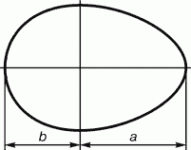
Life emerges when a biological structure concentrates charge, drawing in, like a funnel, waves of varying lengths. Living forms organize themselves according to the principles of fractal geometry ("both above and below") based on the Golden Proportion. This is the only way offered by the Universe to create in one point a "meeting place" of all kinds of vibrations in such a way that they do not destroy each other.

114133_600.gif
Golden Proportion in Egg: a : b = (a + b) / a = 1.618.

Thus, we can define vitality as the ability to attract and hold a charge. The principle is simple - the more waves carrying a force charge a biological object can collect in one place, the more viable it is, the LIVER it is. This is called implosion - charge attraction.

The egg is a biological capacitor of high capacity - a charge accumulator. If you touch the opposite ends of a fresh egg, you can feel a faint discharge, a voltage result of 4 to 12 volts. Biology cannot explain where this voltage comes from. And the answer is simple: the volts generated by the egg are called "life." The potential generated by the reproductive material - an egg or a pine cone - is the source of its self-sufficiency, its ability to sustain itself energetically.

Indeed, an egg or a cone are true natural "batteries", so arranged geometrically and structurally that life maturing in them separately from the mother being attracts enough life force from outside. From outside - where from? Dan thinks from the whole variety of spatial waves, including the Earth's gravitational field. What is remarkable is that these properties persist even after the function of the egg or cone as receptacles of genetic material ceases (these properties were the reason the ancients used them).

Bird and reptile eggs and cones of different plants vary greatly in shape, but they all tend to have a sharper apex. This kind of geometry makes it possible to create an implosion point - the neck of the funnel, a place of sorting spatial waves into those that can be adapted for life (they are drawn in by the principle of similarity) and all the rest, which are eliminated. As shown in this illustration by Dan, only those waves that have passed the Cosmic Standard, the Golden Proportion of 1.618, are allowed inside the egg or cone.

1imp.jpg

It should be noted that the term "implosion" itself does not belong to Dan. It was introduced in the middle of the last century by the German visionary inventor Viktor Schauberger, whose hand creations (rus; most likely similar material is available in English and German; a video that describes Schauberger's inventions - my addition), associated with the use of water power and having the natural geometry of natural objects, acted on principles still not understood by mankind. Schauberger saw all processes in the observable world as manifestations of an invisible Unity, the essence of which was spiral, vortex motion. Where there are whirls or vortices, life appears, and vice versa.

The egg shape was one of his favorites. Schauberger believed that Nature did not choose it by chance to generate the energy of creation. The egg-shape, mathematically derived as a section of a hyperbolic funnel, is also the most perfect receptacle for its own inner funnel. It is the only sealed form that naturally generates vortex-like motion.

115382_300.jpg

It is for this reason that Victor Schauberger made his first water enrichment apparatus in the form of an egg. Since he believed water to be a living organism (and we have already seen once that water can indeed be alive - rus), he believed that it must be in constant motion in order to remain so. The only container shape that provides a constant internal spiraling motion is the egg-shaped one.

As we saw above, past civilizations knew this perfectly well, adapting eggs to store liquids. It was no accident that the ancient Greeks gave egg-shaped clay amphorae for storing water, wine, and grain. The grain from one such amphora, found by archaeologists two thousand years ago, not only survived perfectly, but also produced a sprout - such is the effectiveness of egg geometry in preserving vitality through the ages.

Intuitively, we prefer dishes and household items shaped like an egg or egg halves (jugs, vases, tea cups, etc.) because the liquids in them stay more alive. (This is also the reason, by the way, why plants grow better in pots shaped like half an egg. Schauberger even invented a form of egg-shaped compost pile, which the plants liked very much).

Another interesting feature also noticed by Schauberger is that egg-shaped bodies create a vortex pattern not only inside themselves, but also outside, generating waves of regular geometry in water or air. This makes the environment in which they are located more alive.

115830_600.jpg

Schematic section of the river channel showing, how the egg-shaped structure swirls the water flow moving toward it.

*****

I remember, in my childhood days, people often kept unopened cedar cones at home as a souvenir. They were, of course, very beautiful, but, as it turns out, they could also have another role - to act as a small biological condenser and harmonizer of space. Like the ostrich eggs in the temples of different times and peoples, with which we began this note...

For the same purpose, perhaps unknowingly, it is customary to preserve Easter eggs that do not spoil for years. My mother once gave us a pair of such boiled and colored eggs, for which she knitted special meshes, and we hung them on a houseplant. They have been hanging for three years without any sign of decay. In general, although there are no ostriches in our area, we also harmonize little by little, what God has sent.


End of article series. This author has many other interesting articles that deal with vortices, world order, alchemy, the properties of metals, etc.
 
All of these things that people use to try to get to the realm of the gods. I just don't understand.
Invisible energy, energy that is visible, are we talking about "the force".
Energy, I believe, is not always invisible. I just think that a person just needs the right eyes to see it.
We, as humans, are always looking for this connection. But if you think about it, if you are looking for it, it all ready exists. Some humans can tap in to this realm with out any gadgets.

When I have had cranial sacral body work done, I saw what was my "spiritual team", actual figures of energy surrounding my body assisting me in my bodywork. My sister is a spiritual reader as well, and she uses astral happenings to guide her energy travels. Because we live in the convoluted "reality" that most humans live in today, what we call "our world", makes it harder for people to see past the end of their noses.

Energy is all around us. Energy can not be created or destroyed. Even if you can't see it.
 
I recommend filtering information related to Islam (for those people who are skeptical of religion and the number 786; at least that's what I do). Pay attention to the energetic context first and foremost.

Part 5. Crystals.​

Original (rus).

According to the recollections of one of the members of the Sufi Guru Idris Shah's study group that operated in the 1960s (Bruce Main-Smith), they were once given identical processed crystals of Afghan quartz, which the students were to keep with them for some time. No explanation as to the function of these objects was received.

Twenty years later, members of groups already studying under Omar Ali Shah (Agha), brother of Idris Shah and also a Sufi Master, received rutile quartz crystals in a similar way. These transparent egg-shaped pendants were to be worn on the body on a chain. It was explained that they were made from a solid piece of quartz, weighing over twenty kilograms, brought from Afghanistan. It was also said that the crystals were instruments whose function was to store and transmit a whole spectrum of energies.

View attachment 23256
This is roughly what rutile quartz pendants looked like.

According to Agha, in Bahauddin Naqshband's time, a moonstone was used for this purpose. The Sufi Master "activates" the crystal with intention and hands it over to his disciple. As the latter progresses in his development, his capacity to perceive the vibrations recorded in the stone and to benefit from them increases. If the Master deems it necessary, the crystal may also be "deactivated," after which it becomes an ordinary piece of mineral of its kind.

The right choice of crystal, Agha argued, is key to its ability to serve as an instrument of transmission, so similar specimens of rutile quartz from Brazil or Canada, for example, were not suitable for this purpose. The crystal must be perfect - its formation process must flow correctly: it must not be too "crowded" with other crystals, otherwise the solutions feeding the crystal would flow unevenly from different sides and its geometry would not be perfect. Therefore, even two crystals that look exactly the same may differ in their internal potential. As Agha said, "A crystal either works or it doesn't work: either contact through it is possible or not - there is no third way."

*****

...Crystals always seemed to me to be something more than just stones - probably influenced by the childhood impressions of watching the growth of beautiful crystals that my older brother used to grow from aluminum alum. They behaved like living creatures, as if they knew how to grow-their formation was remarkably similar to that of mushrooms or corals. Subsequently I came across a statement of Nikola Tesla: "In the crystal we see the pure proof of the existence of the life-forming principle, and although, despite everything, we cannot understand the life of the crystal, it is still a living being.

View attachment 23258
One of the facts confirming that crystals are a form of life is the Golden Proportion (rus) in their geometry. All living things in the Universe choose the Golden Proportion because it is easier to coexist and harmonize with all other creatures. The angle of 52 degrees at the base of the tops of quartz crystals is characteristic of the golden triangles (which, by the way, were used in the geometry of the Great Pyramid. Well, come to think of it - if it works in a natural crystal, why not in a pyramid?).

Tesla's thought was not entirely new: according to ancient Hermetic Knowledge, there is no inanimate matter in nature - there are only different degrees of its animation. The mineral world lies at the base of the evolutionary ladder at the stage where the development of consciousness is extremely slow.

The life cycle of a rock crystal in nature is millions of years. At some point it stops growing and, as the remarkable research chemist Marcel Vogel said, this means that the self-organizing beginning that gave life to the crystal has left it. The remaining quartz shell, which humans extract from the earth's interior, is like an empty seashell, no longer containing individual life. But just as an empty seashell can be adapted by another species to its needs, so the vacated crystal matrix can be used by another level of consciousness for its needs.

(We will return to seashells and other natural energy storage capacitors later on, but for now let's continue the topic of crystals).

...Marcel Vogel was a scientist and experimenter in the field of liquid crystals, luminescence and magnetism, the author of more than a hundred inventions. For almost thirty years Marcel worked in the research department of IBM, where he invented the magnetic coating for hard drives, still used in computers today. One day, while growing liquid crystals in the IBM laboratory, Marcel witnessed a phenomenon that struck him, which he called "the binding of Light in form."

One day, while studying the transition of a substance from molten to crystalline form as it cooled, I was surprised to notice a flash of bluish light, after which the sample transformed into the state of a liquid crystal. This process was filmed on video tape and, after a year of effort, the moment of transition was also recorded by a camera. What showed up on the film turned out to be a light matrix of the crystallographic shape that the melt was supposed to take. The blue light contained information that was later translated into a geometric form. This geometric matrix was the template of the crystallographic form, according to which the growth and development of the crystal took place. The flash of blue light observed through the microscope was a transfer of information from the level of the light code to the physical plane, something that is talked about in the metaphysical literature, but has never been so clearly witnessed and filmed.

This and other discoveries made by Marcel prompted him to study the properties of crystals that lay beyond the purely scientific method. He retired from IBM and devoted the rest of his life to studying the power of crystals to transmit information and heal. (Videos of Marcel's lectures are available online, and more information about his work is available here.)

Vogel's research literally confirmed Agi's words. In one of his lectures, Marcel said:

A crystal is a neutral object whose internal structure reflects a state of perfect balance. When one enters into a certain relationship with its structural perfection, the crystal transmits a vibration that expands and multiplies the possibilities of consciousness. Like a laser, the crystal emits energy in an extremely concentrated and coordinated manner, and this energy can be transmitted to objects and people according to the intention of the sender.

So a crystal functions like a laser: it collects scattered beams of energy and focuses them in one direction, consolidating an enormous power, many times greater than the power of individual, unconnected beams.

This applies to all kinds of energies - including the universal life force that Carl von Reichenbach called "odes" in the 19th century. Of all inanimate objects, crystals, he said, possessed the brightest glow, constantly emitting odes: "It is obvious that from these, so to speak, semi-organized stones emanates, flows, radiates something not yet known to science, but which has a being valid and evident in its effect on our organism. In total darkness the psychic seers with whom Reichenbach worked saw "the entire crystal covered with a thin light, with a wavy flame, the size of a hand, blue in color, like a tulip, which was lost in the height, like a thin pair. (Odic-magnetic letters).

View attachment 23260
A Kirlian snapshot of a quartz crystal that clearly shows directional rays coming from the pole of the crystal.

Is it surprising that, being a universal focusing tool, a crystal can be used, for example, to concentrate field radiations (rus) of a person possessing a perfect Pattern (Master or healer), and as a mediator to transmit their effects to another person (pupil or patient)?

On what is based almost magical ability of crystals to focus received or transmitted signal?

As we know, the crystal lattice of quartz has a very ordered structure. Any information received by the crystal is reflected in its repeating molecular structure. Figuratively, quartz can be thought of as a three-dimensional string instrument, where the connections between molecules are like strings. Information is preserved by the resonance of specific molecular bonds, similar to a musical chord. Only unlike a stringed instrument, the "sound" (or vibration) in a crystal never fades out. Recorded information is preserved forever, until it is erased or rewritten.

Marcel Vogel, again almost repeating the words of Sufis, argued that every natural crystal is unique because it is formed for millions of years under specific conditions. It is impossible to find two identical crystals, so crystal phenomena are not always reproducible. The fewer defects and impurities in the composition of quartz, the more perfect its structure and the better resonator it is.

View attachment 23261
An ordered series of tetrahedrons in the crystal lattice of quartz arranged in a hexagonal structure.

The fact that quartz can be a resonator and amplifier of electromagnetic signals was discovered by scientists as early as the last century, making quartz crystals a key component of electronic devices. However, centuries before that, the Masters of Tradition knew that crystals could also serve as amplifiers of subtle energies, used to tune energy centers and enhance receptivity.

Gemstones placed on the forehead, solar plexus, pulse, fingers of the hand, where the energy meridians pass - later, when the knowledge of their function was lost, became mere jewelry - diadems, pendants, bracelets and rings. (For example, few people know: in order for a ring to "work" the way one of its functions suggests, it should be turned inward for the time of use, as the Sufi Teachers do. At other times it may be worn, as is customary, with the stone facing outward).

Rubies, diamonds, sapphires and emeralds in the crowns and on the heads of the royal thrones were also originally used for more than decoration; the ability of these precious crystals to focus the radiation is unequalled, which is why rubies are used, for example, in laser machines. Although inferior in this respect, rock crystal and other types of quartz are also excellent amplifiers and are much more affordable. This is why they were used more widely - suffice it to recall the textbook crystal ball of soothsayers...

One analogy from technical sphere may help to understand the principle of crystal action. In radio engineering such term as antenna gain is used. It is known that the gain of a single antenna, all other things being equal, can be significantly increased by adding another antenna of the same kind. And if several of them are assembled, moreover, placed at the right distance from each other with the right combination in phase, the gain will be multiplied many times. Such a device is called an antenna array.

View attachment 23263
Example of an antenna array with the same small antennas arranged in an orderly fashion.

The ordered molecular structure of crystals is essentially an antenna array. One can say that small antennas due to their total resonance act as a big powerful antenna, receiving clear signal even through etheric noise.

Another imaginative analogy is a gathering of Buddhist monks who have been given the task of meditating on a chosen thought-image, such as world peace. Tens of thousands of them gather in the square, sit at the same distance from each other, and recite sutras in unison with the same intention. Due to the phenomenon of resonance, the effect of such concerted action is enormous. There are not thousands but trillions of such "meditating monks" in a crystal alone - molecular bonds that pick up and amplify the transmitted vibration.


Although the above is only a tiny part of what can be said about crystals, I hope that it will make someone interested in working with them, which lies in the field of "supernormal, but not supernatural". I also hope that the little sphere of rock crystal standing on the shelf right in front of me as I write these lines has contributed a little to that...

Part 6. Miracle Egg.​

Original (rus).

Do you see this egg? With this you can topple every theological theory, every church or temple in the world.

Denis Diderot

My interest in this subject arose during a Turkish caravan five years ago. Then, in several mosques in Istanbul, as well as in the mausoleums of Sufi saints, my friends and I noticed large egg-shaped objects hanging on a chain from the central point of the dome or placed in arches along the walls. After examining the strange artifacts, we came to the conclusion that some of them looked like ostrich eggs set in a metal frame, and some were simply imitations made of marble, onyx, or metal.

View attachment 23267
An ostrich egg in a metal frame at the Blue Mosque, Istanbul.

Subsequently, we encountered similar objects in Bosnian dervish tekkes-sometimes the eggs were painted in the color with which the Sufi community associated itself (like the blue ostrich egg in the photo below right, which we took in the Bosnian tekkiya).


Neither in the first nor in the second case could anyone explain to us what they were for. The answers "for beauty" or "from mice and spiders" didn't seem convincing, and the argument "it's always been like that" begged the question: why?

So I decided to find out.

The point is that when I saw the strange artifacts, I immediately remembered an interesting thing, which its inventor, the Dan Winter I have often mentioned, called a biocapacitor (energy storage device). This device was made of white ceramic and looked like a large egg, except that it was covered with a thin layer of gold on the inside. With this device, Dan measured nothing less than the life energy of various substances or objects! According to him, these weak and usually difficult to register currents could be greatly amplified and made distinguishable to instruments like a voltmeter by placing them in a natural ostrich egg or a ceramic "biocapacitor" simulating its shape.

View attachment 23269
This is what Dan's "biocapacitor" looked like. The photo shows the experiment with measuring the life energy contained in an ordinary hen's egg.

But all in order...

My study of the question - whether egg-shaped objects of unknown purpose were unique to the Muslim and Sufi Tradition - gave an unequivocal answer: no, they were not. It turns out that their use is a very ancient tradition.

The earliest drinking vessels made of ostrich egg halves were found in a burial site in the 3rd millennium BC on the territory of modern Bahrain. As cups, ritons, containers for storing liquids or peculiar tins, ostrich eggs or their imitations made of noble metals and ceramics were used by the Minoan, Mycenaean and Aegean civilizations of the Mediterranean 3-2 millennia BC, as well as in the Middle East up to the Islamic Middle Ages.

View attachment 23270
Ritual ostrich egg vessel, Minoan civilization, Crete, circa 1500 BC.

In Egypt at the time of the pharaohs, they were used to store spirits and incense. Apparently, from there the knowledge about the properties of ostrich eggs came to the Copts in Ethiopia and other early Christian communities of the eastern Mediterranean, who used them as cult objects. To this day in Coptic churches one can still find ostrich eggs hanging from the vaults, in the naves, or over the relics of saints. It was also common practice to place ostrich eggs on the ends of the cross that crowned the dome of the Ethiopian church. (Sources: D. A. Agius. Egypt and Syria in the Fatimid, Ayyubid and Mamluk eras; N. Green. Ostrich Eggs and Peacock Feathers: Sacred Objects as Cultural Exchange between Christianity and Islam.)

View attachment 23271
In Albrecht Dürer's The Adoration of the Magi (1504), one of the gift-givers, Balthasar (Balthasar), is depicted as a Moor wearing a costume reminiscent of the two-color dominoes of wandering Sufi troubadours. He presents the infant Jesus with an ostrich egg in a gold frame as a gift.

Researchers explain the use of the egg in the decoration of early Christian temples by its significance as a symbol of life and rebirth, and its connection with the Easter mystery. That would be all well and good, but how do we explain a similar phenomenon in Islamic culture? What did the egg symbolize in the Muslim temple of Ottoman times, and where did the tradition of hanging them from the dome of mosques or placing them on the tops of minarets come from?

View attachment 23273
Two ostrich eggs on top of the minaret of the Great Mosque, Niono, Mali.

Why were ostrich eggs attached, sometimes several at a time, to chains over the graves of Sufi saints? Was it solely as an ornament?

Why did all the above civilizations, regardless of creed or location, so readily use the egg as a cult object?

Perhaps it's the shape of the egg... or rather, its geometry. To get to the bottom of this, we return to Dan Winter and his explanations:

Life emerges when a biological structure concentrates charge, drawing in, like a funnel, waves of varying lengths. Living forms organize themselves according to the principles of fractal geometry ("both above and below") based on the Golden Proportion. This is the only way offered by the Universe to create in one point a "meeting place" of all kinds of vibrations in such a way that they do not destroy each other.

Golden Proportion in Egg: a : b = (a + b) / a = 1.618.

Thus, we can define vitality as the ability to attract and hold a charge. The principle is simple - the more waves carrying a force charge a biological object can collect in one place, the more viable it is, the LIVER it is. This is called implosion - charge attraction.

The egg is a biological capacitor of high capacity - a charge accumulator. If you touch the opposite ends of a fresh egg, you can feel a faint discharge, a voltage result of 4 to 12 volts. Biology cannot explain where this voltage comes from. And the answer is simple: the volts generated by the egg are called "life." The potential generated by the reproductive material - an egg or a pine cone - is the source of its self-sufficiency, its ability to sustain itself energetically.

Indeed, an egg or a cone are true natural "batteries", so arranged geometrically and structurally that life maturing in them separately from the mother being attracts enough life force from outside. From outside - where from? Dan thinks from the whole variety of spatial waves, including the Earth's gravitational field. What is remarkable is that these properties persist even after the function of the egg or cone as receptacles of genetic material ceases (these properties were the reason the ancients used them).

Bird and reptile eggs and cones of different plants vary greatly in shape, but they all tend to have a sharper apex. This kind of geometry makes it possible to create an implosion point - the neck of the funnel, a place of sorting spatial waves into those that can be adapted for life (they are drawn in by the principle of similarity) and all the rest, which are eliminated. As shown in this illustration by Dan, only those waves that have passed the Cosmic Standard, the Golden Proportion of 1.618, are allowed inside the egg or cone.


It should be noted that the term "implosion" itself does not belong to Dan. It was introduced in the middle of the last century by the German visionary inventor Viktor Schauberger, whose hand creations (rus; most likely similar material is available in English and German; a video that describes Schauberger's inventions - my addition), associated with the use of water power and having the natural geometry of natural objects, acted on principles still not understood by mankind. Schauberger saw all processes in the observable world as manifestations of an invisible Unity, the essence of which was spiral, vortex motion. Where there are whirls or vortices, life appears, and vice versa.

The egg shape was one of his favorites. Schauberger believed that Nature did not choose it by chance to generate the energy of creation. The egg-shape, mathematically derived as a section of a hyperbolic funnel, is also the most perfect receptacle for its own inner funnel. It is the only sealed form that naturally generates vortex-like motion.

It is for this reason that Victor Schauberger made his first water enrichment apparatus in the form of an egg. Since he believed water to be a living organism (and we have already seen once that water can indeed be alive - rus), he believed that it must be in constant motion in order to remain so. The only container shape that provides a constant internal spiraling motion is the egg-shaped one.

As we saw above, past civilizations knew this perfectly well, adapting eggs to store liquids. It was no accident that the ancient Greeks gave egg-shaped clay amphorae for storing water, wine, and grain. The grain from one such amphora, found by archaeologists two thousand years ago, not only survived perfectly, but also produced a sprout - such is the effectiveness of egg geometry in preserving vitality through the ages.

Intuitively, we prefer dishes and household items shaped like an egg or egg halves (jugs, vases, tea cups, etc.) because the liquids in them stay more alive. (This is also the reason, by the way, why plants grow better in pots shaped like half an egg. Schauberger even invented a form of egg-shaped compost pile, which the plants liked very much).

Another interesting feature also noticed by Schauberger is that egg-shaped bodies create a vortex pattern not only inside themselves, but also outside, generating waves of regular geometry in water or air. This makes the environment in which they are located more alive.

View attachment 23277
Schematic section of the river channel showing, how the egg-shaped structure swirls the water flow moving toward it.

*****

I remember, in my childhood days, people often kept unopened cedar cones at home as a souvenir. They were, of course, very beautiful, but, as it turns out, they could also have another role - to act as a small biological condenser and harmonizer of space. Like the ostrich eggs in the temples of different times and peoples, with which we began this note...

For the same purpose, perhaps unknowingly, it is customary to preserve Easter eggs that do not spoil for years. My mother once gave us a pair of such boiled and colored eggs, for which she knitted special meshes, and we hung them on a houseplant. They have been hanging for three years without any sign of decay. In general, although there are no ostriches in our area, we also harmonize little by little, what God has sent.


End of article series. This author has many other interesting articles that deal with vortices, world order, alchemy, the properties of metals, etc.
Quickly adding to the egg shape since I didn't see this mentioned:
This is what happens when you put a magnet in distilled water and freeze it:
1655811638558.png
Egg!

I tried this myself already, so I can personally verify this phenomenon.
 
I would like to mention that the "egg" shape has been revered as a sacred form for a long time now, and is found use in many cultures. Has anyone here seen pictures of Salvador Dali's house in Spain? He was an extraordinary surrealist painter and symbolism was quite the forefront of his persona. I used him for the modern example.

The golden ratio is also present in the "egg" shape.

I also have some polished stones in the oval, or "egg" shape, that I use for meditation and Reiki body work, also craniosacral therapy.

Stones, crystals, minerals, etc. are within the earth rock cycle, they are filled with wonderful vibrations. For example, Dolomite is a wonderful stone that has a soft low vibration, which in turn helps with realigning the skeletal system when called for. AMAZING!!!! Hematite helps clean the blood, rose quartz is good for restoring healers energy, and is a nurturing healing vibration, etc..... I recommend finding a stone book that explains this, very good read and helpful.

Good energy is out there and all around us, finding it is not as hard as you would think. All of these wonderful tools at the tips of our fingers, within our reach, waiting to be used with good intention. We have been blessed with all this, on this awesome planet, and all we have to do is open our minds eye, and heart.

Everything is very connected and works closely in relation with the other. Our youth have not been taught these wonderful things that are here for us to use learn, to use, to be a part of and share in the energetic matter that truly exists on this planet, in this galaxy, in this universe. It is crucial that the youth of this planet regain that connectedness that has been bestowed upon us, and regain the consciousness that we all are so arduously trying to reclaim. Now that's some energy!!!!
 
Very interesting articles. At home I have a water vortexer (egg-shaped), that cleans the water.

Part from the article "Implosion Technology and Viktor Schauberger": about water.


DESCRIPTIONS OF WATER
Water itself What is water? We may truly ask!. Water is everywhere and predominantly so. There are many answers to that question as there are as many types of water as there are living organisms.. Maintaining the opinion that water is H2O is merely reducing the matter to "the lowest common denominator" only. Off all the water on Earth, only 2-3% is available as drinking water. This should be kept in mind while we use and abuse that small amount! When we see water not merely as H2O, but as versatile and highly mysterious substance, we might get closer to understanding the dynamics, the harmonics and potentials this medium displays to us. Water was here first, so to speak; it is a mystery and a complete wander in itself that it was created at all!. If we would understand water, we would not have the many perilous environmental crises of today!!. Some characteristics of water are: The dynamics of flow Good healthy water is absorbed with levitational qualities. Water is always in change, it flows down and moves about at varying speeds, shaping and folding itself in layers which slide over each other, thus fitting a greater volume into a smaller surface area and cooling off. The forward movement of every particle is closely associated with a specific temperature. Schauberger made a big point about "the temperature gradients", which regulate movement. When flowing water warms up (e.g. by the sun), its' tractive forces weaken. Cooling down occurs in the flow-axis, this core water mass moves fastest and thus deepens its' channel.. This higher flow-velocity, relative to the peripheral flow along the embankments, creates suction which also releases pressure from these embankments. The higher the flow-velocity of the cooler core-water mass is, the higher the buoyancy. Water quality Water is qualitatively not the same at different temperatures; Water can "go off" too. The anomaly point for water is at 4* Celcius, where water is healthiest and densest. Water always carries other substances. The sea water contains mineral salts and silicon from eroding granite mountains. This silicon is associated with the waters' levitation properties, which is why Schauberger uses siliceous emulsions in his Implosion technology. (In Bio-Dynamics too, great importance is put on the role of silica, whereas in conventional agriculture it hardly gets a mention.) Water is electrically charged too, during and after a storm the drop size is enormous at times. As such, water can justly be called "The Blood of the Earth", it is rich in many ways and very much alive.
 

Attachments

  • Viktor Schauberger - Implosion technology.pdf
    779 KB · Views: 409
Last edited by a moderator:
...Crystals always seemed to me to be something more than just stones - probably influenced by the childhood impressions of watching the growth of beautiful crystals that my older brother used to grow from aluminum alum. They behaved like living creatures, as if they knew how to grow-their formation was remarkably similar to that of mushrooms or corals. Subsequently I came across a statement of Nikola Tesla: "In the crystal we see the pure proof of the existence of the life-forming principle, and although, despite everything, we cannot understand the life of the crystal, it is still a living being.

Tesla's thought was not entirely new: according to ancient Hermetic Knowledge, there is no inanimate matter in nature - there are only different degrees of its animation. The mineral world lies at the base of the evolutionary ladder at the stage where the development of consciousness is extremely slow.

That is exactly how the Australian Aborigines see them, too! The ancient wisdom is finally coming back! They treat everything as alive, just with a different "pace" of moving...

"In fact, the isomorphic fit between the natural and supernatural means that all nature is coded and charged by the sacred, while the sacred is everywhere within the physical landscape. Myths and mythic tracks cross over.. thousands of miles, and every particular form and feature of the terrain has a well-developed ‘story’ behind it."
 
Tips
Tips
Please respect our Posting Rules.
Back
Top