SH Archive Lady of Elche, and Lady of Guardamar: what are they wearing?

SH.org OP Username
KorbenDallas
SH.org OP Date
2018-10-29 07:29:25
SH.org Reaction Score
47
SH.org Reply Count
19

KD Archive

Not actually KorbenDallas
Active Member
Joined
Sep 22, 2020
Messages
4,691
Reaction score
1,500
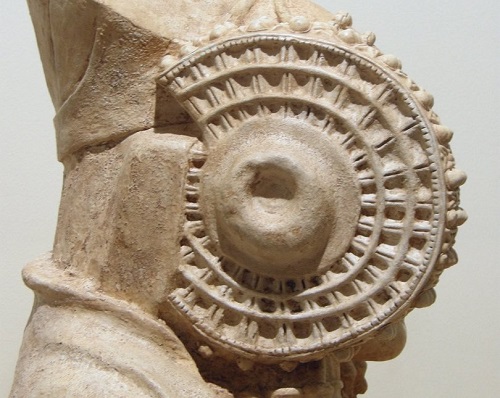
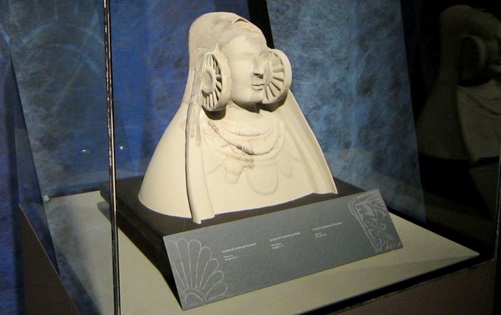
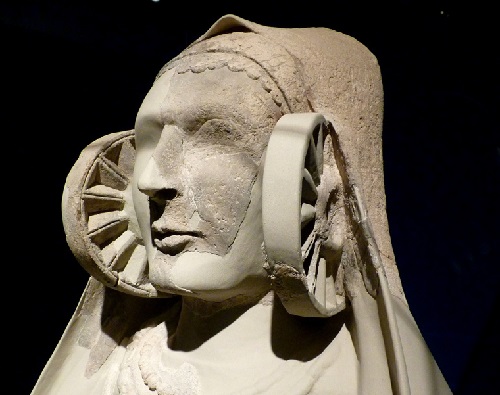
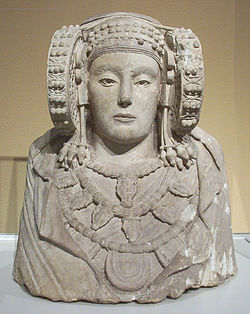
We have busts of two ladies wearing some bizarre looking headdresses. At least that is the version provided by the official history. Somehow, I am not so sure about the decorative purpose of these devices looking wheels attached to their head. Both busts were located in Spain, and are claimed to be from the 4th century BC. The Lady of Elche was located in 1897, and the Lady of Guardamar was discovered in 1987.
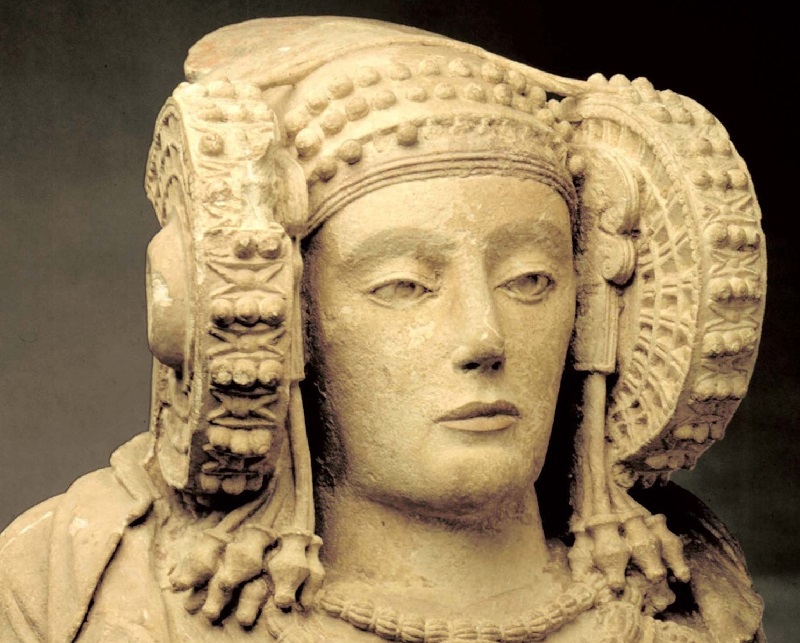
Lady of Elche
The Lady of Elche is a limestone bust that was discovered in 1897 at L'Alcúdia, an archaeological site on a private estate two kilometers south of Elche, Spain. It is currently exhibited in the National Archaeological Museum of Spain in Madrid. It is generally known as an Iberian artifact from the 4th century BC, although the artisanship suggests strong Hellenistic influences. According to The Encyclopedia of Religion, the Lady of Elche is believed to have a direct association with Tanit, the goddess of Carthage, who was worshiped by the Punic-Iberians.
  • claimed to be from 4th century BC. Located in 1897
Headgear (official): The originally polychromed bust is thought to represent a woman wearing a complex headdress and large wheel-like coils (known as rodetes) on each side of the face.

Dama_de_Elche.jpg

lady_of_elche_1.jpg

Dama_de_Elche_2.jpg

Dama_de_Elche_3.JPG

"The below presumed artifact was found in 1969 at the level of 6 feet below the surface and in virgin soil. Until I find reason not to, at this time I am taking the finders word for it. It would appear to be a buckle due to the apparatus on the rear of the medallion and it has a slight curvature. it is approximately 3 inches in width." - source

The Presumed Lady?... of Elche?
Dama_de_Elche_4.jpg

* * * * *
Lady of Guardamar
The Lady of Guardamar, is a limestone female bust, 50 cm high, dated circa 400 BCE, that was discovered in fragments in the Phoenician archaeological site of Cabezo Lucero in Guardamar del Segura in Alicante province, Spain, on September 22, 1987. A large piece of a stone rodete (wheel headgear) was found first, at a shallow depth. There followed other fragments of the bust of an Iberian lady, and one large piece included the headdress, face and neck, which were found to have similarities to the Iberian bust, Lady of Elche. The sculpture had been hammered to fragments and even burnt in places. These fragments were taken to the laboratory of the Provincial Archaeological Museum of Alicante, where restorer Vincent Bernabeu began with washing and identifying the bits, first the chin, then the lips, then collar and chest pieces, and many other fragments that did not fit together and were not part of the carved surface. The delicate and painstaking task of restoration began in October 1987 and was completed in June 1988.

As nothing from the site is more recent than 300 BCE, and the site flourished between 430 and 350 BCE, it seems likely that the Lady dates from 400 to 370 BCE.
  • claimed to be from 4th century BC. Located in 1987
Headgear (official): Claimed to be just a headdress.
Lady of Guardamar_1.jpg

Dama-de-Guardamar.jpg

Lady of Guardamar_2.jpg

Sources:
Buddhism Connection
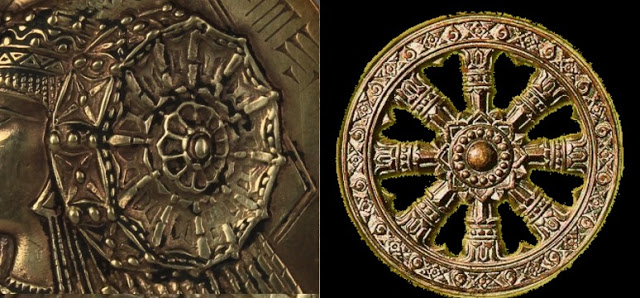
The gentleman who wrote this article thinks that the "headdress" could be related to the Wheel of Dharmachakra.

wheel_Dharmachakra.jpg

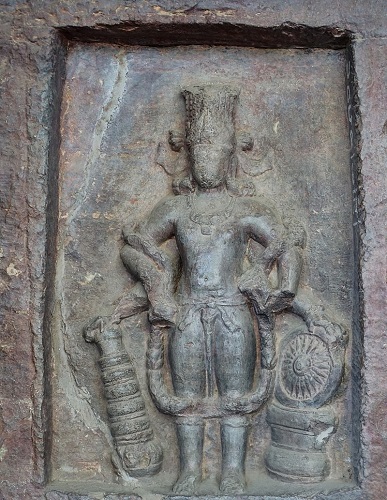
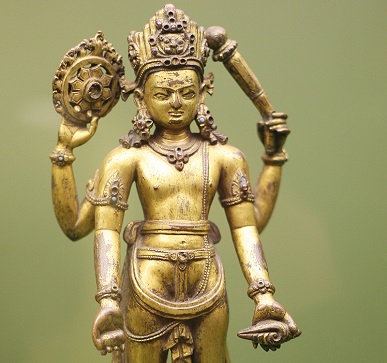
The wheel is also the main attribute of Vishnu, the Vedic god of preservation. Madhavan and Parpola note Chakra sign appears frequently in Indus Valley civilization, on several seals. Notably, in a sequence of ten signs on the Dholavira signboard, four are the chakra.

Vishnu
Vishnu.jpg

Vishnu_1.jpg


* * * * *​
KD: Any ideas what purpose these headdresses could have been used for? (besides being decorations, of course)

As it stands, this is a decoration which was even recreated. Has to be real comfortable to wear, I assume.

lady_of_elche.jpg
Note: This OP was recovered from the Maxine archive.
 
Hi,
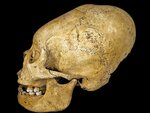
I`d like to add that they have another skull shape, so we are looking to another type of human, from previous scene :)
 

Attachments

  • skull.jpg
    skull.jpg
    158.1 KB · Views: 253
Id like to think we are looking at a woman of Atlantis or some other Prediluvian high civilization. A high priestess in a matriarchal society.
The headless may have enhanced her psychic powers.

woman.jpeg
 
download.jpg
images.jpg
Взаимодейстдругими
Тhis are two werry stranges hats? first mongolian? second russian mordva
 
Hi,
I`d like to add that they have another skull shape, so we are looking to another type of human, from previous scene :)
Thank you! Great observation. I was so busy looking at the wheels and the facial structure that I didn't even notice the head shape under the veil on the back of the head.
We have busts of two ladies wearing some bizarre looking headdresses. At least that is the version provided by the official history. Somehow, I am not so sure about the decorative purpose of these devices looking wheels attached to their head. What an interesting post! The items hanging near the ears, from the inside of the disc, look very much like wrapped wires and plugs. The original TENS machine had wires and plugs at the chiropractor's office. Now they are remote. The girl has a replication of the same. The statue with discs(further down this article) has earrings that hang down but the ends look very much like a replica of wires and plugs. Whoever made the statue may not have known the original usage, thus earrings instead of wires with plugs. Like playing the "telephone" game. Original knowledge and information can be changed slightly. I noticed that the one with the broken hammered burnt pieces, did not have the wires with plugs. I am assuming they were smashed to smitherines easily. Blind or liar "archaeologists" say alot of items were for "worship of the gods." Almost any item could for used for technology, health, war and maybe even some for decoration or entertainment. These discs certainly look like they were for health, or even music speakers, if we drop the false assumption that there was no electricity/power usage. Moses' staff had power, to open a pathway in water, kill all things in water - causing bloody water in "Egypt," to zap a huge rock... Yes power from God, led by God, and maybe yes from inherent static electricity of some sort, of course created by God. In order to realize this possible truth, people have to drop the ever-present fairy tale that the rod and staff were for shepherds, just made of wood, to lead dumb sheep around. It could very well have been a fasces. The definitions online say fasces are wooden rods, with an axe. To me it looks like metal rods with a speaker on it. A side view of the speaker. A speaker could send out electrical sound rays. They can be very powerful. Thus back to the headdresses. Looks to me like they had power hook ups. [QUOTE="KD Archive, post: 444, member: 308"] [PARSEHTML]We have busts of two ladies wearing some bizarre looking headdresses. At least that is the version provided by the official history. Somehow, I am not so sure about the decorative purpose of these devices looking wheels attached to their head. Both busts were located in Spain, and are claimed to be from the 4th century BC. The Lady of Elche was located in 1897, and the Lady of Guardamar was discovered in 1987.
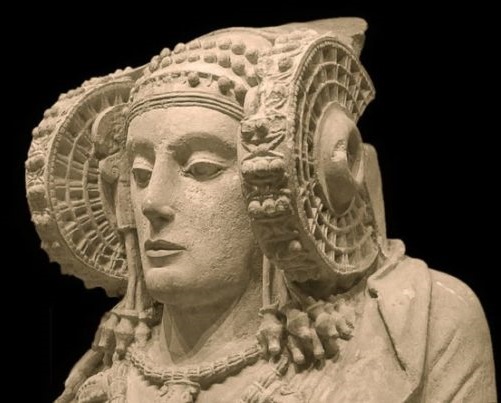
Lady of Elche
The Lady of Elche is a limestone bust that was discovered in 1897 at L'Alcúdia, an archaeological site on a private estate two kilometers south of Elche, Spain. It is currently exhibited in the National Archaeological Museum of Spain in Madrid. It is generally known as an Iberian artifact from the 4th century BC, although the artisanship suggests strong Hellenistic influences. According to The Encyclopedia of Religion, the Lady of Elche is believed to have a direct association with Tanit, the goddess of Carthage, who was worshiped by the Punic-Iberians.
  • claimed to be from 4th century BC. Located in 1897
Headgear (official): The originally polychromed bust is thought to represent a woman wearing a complex headdress and large wheel-like coils (known as rodetes) on each side of the face.

Dama_de_Elche.jpg

lady_of_elche_1.jpg

Dama_de_Elche_2.jpg

Dama_de_Elche_3.JPG

"The below presumed artifact was found in 1969 at the level of 6 feet below the surface and in virgin soil. Until I find reason not to, at this time I am taking the finders word for it. It would appear to be a buckle due to the apparatus on the rear of the medallion and it has a slight curvature. it is approximately 3 inches in width." - source

The Presumed Lady?... of Elche?
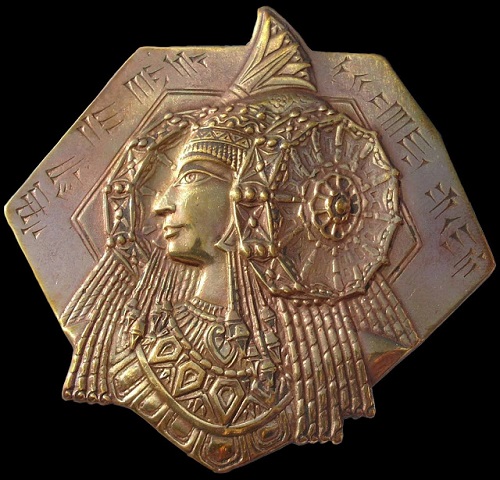
Dama_de_Elche_4.jpg

* * * * *
Lady of Guardamar
The Lady of Guardamar, is a limestone female bust, 50 cm high, dated circa 400 BCE, that was discovered in fragments in the Phoenician archaeological site of Cabezo Lucero in Guardamar del Segura in Alicante province, Spain, on September 22, 1987. A large piece of a stone rodete (wheel headgear) was found first, at a shallow depth. There followed other fragments of the bust of an Iberian lady, and one large piece included the headdress, face and neck, which were found to have similarities to the Iberian bust, Lady of Elche. The sculpture had been hammered to fragments and even burnt in places. These fragments were taken to the laboratory of the Provincial Archaeological Museum of Alicante, where restorer Vincent Bernabeu began with washing and identifying the bits, first the chin, then the lips, then collar and chest pieces, and many other fragments that did not fit together and were not part of the carved surface. The delicate and painstaking task of restoration began in October 1987 and was completed in June 1988.

As nothing from the site is more recent than 300 BCE, and the site flourished between 430 and 350 BCE, it seems likely that the Lady dates from 400 to 370 BCE.
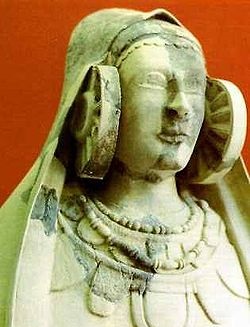
  • claimed to be from 4th century BC. Located in 1987
Headgear (official): Claimed to be just a headdress.
Lady of Guardamar_1.jpg

Dama-de-Guardamar.jpg

Lady of Guardamar_2.jpg

Sources:
Buddhism Connection
The gentleman who wrote this article thinks that the "headdress" could be related to the Wheel of Dharmachakra.

wheel_Dharmachakra.jpg

The wheel is also the main attribute of Vishnu, the Vedic god of preservation. Madhavan and Parpola note Chakra sign appears frequently in Indus Valley civilization, on several seals. Notably, in a sequence of ten signs on the Dholavira signboard, four are the chakra.

Vishnu
Vishnu.jpg

Vishnu_1.jpg


* * * * *
KD: Any ideas what purpose these headdresses could have been used for? (besides being decorations, of course)

As it stands, this is a decoration which was even recreated. Has to be real comfortable to wear, I assume.
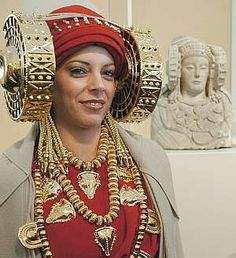
lady_of_elche.jpg
[/PARSEHTML] [/QUOTE]
What an interesting post! The items hanging near the ears, from the inside of the disc, look very much like wrapped wires and plugs. The original TENS machine had wires and plugs at the chiropractor's office. Now they are remote. The girl has a replication of the same. The statue with discs(further down this article) has earrings that hang down but the ends look very much like a replica of wires and plugs. Whoever made the statue may not have known the original usage, thus earrings instead of wires with plugs. Like playing the "telephone" game. Original knowledge and information can be changed slightly. I noticed that the one with the broken hammered burnt pieces, did not have the wires with plugs. I am assuming they were smashed to smitherines easily. Blind or liar "archaeologists" say alot of items were for "worship of the gods." Almost any item could for used for technology, health, war and maybe even some for decoration or entertainment. These discs certainly look like they were for health, or even music speakers, if we drop the false assumption that there was no electricity/power usage. Moses' staff had power, to open a pathway in water, kill all things in water - causing bloody water in "Egypt," to zap a huge rock... Yes power from God, led by God, and maybe yes from inherent static electricity of some sort, of course created by God. In order to realize this possible truth, people have to drop the ever-present fairy tale that the rod and staff were for shepherds, just made of wood, to lead dumb sheep around. It could very well have been a fasces. The definitions online say fasces are wooden rods, with an axe. To me it looks like metal rods with a speaker on it. A side view of the speaker. A speaker could send out electrical sound rays. They can be very powerful. Thus back to the headdresses. Looks to me like they had power hook ups.
 
Tips
Tips
Please respect our Posting Rules.
Back
Top