Latin never was the spoken language in Rome/Pompeii

Suppose they spoke Greek in Rome. Why would they need to censor this fact so much and invent such forgeries as the graffiti to make sure that people don't look too much into it?

Since we can't peer into the minds of those who have been altering history to get precise reasoning in any conclusive form, all we can do is guess at what their motives may have been.

And if I must guess, then my first guess would be the obvious fact that given proof of an Etruscan and so-called 'Greek' culture present before the Romans, the origin and cultural/linguistic relations of that culture must be sufficiently confused in order to install a new narrative.

The Micean theory is something that follows the "10.000 years ago..." line of reasoning

The Mycenaean culture is dated to the so-called Bronze age as is the Minoan., and there are plenty of archeological and linguistic records for that time period all over the 'known' world. (It would be nice to be able to piece together an actual, realistic timeline for that time period.)

If anyone can give a reference for the earliest historical source of the word 'Greek' , it would be appreciated (I tried to find it but to no avail).

Pretty much everything in the Minoan/Mycean area is subject to carbon dating and Linear A/B in particular are more or less shady as the guy who deciphered Linear B, Michael Ventris, is a member of the "chosen tribe".

Exactly the problem as you mentioned. For instance, here's a Hungarian-American university professor from Nebraska using data-mining techniques to attempt to decipher 'ancient' runic scripts;


View: https://www.youtube.com/watch?v=dl31zBg6xPU


And here he is applying it to Linear A:


View: https://www.youtube.com/watch?v=PiLyN9T2stY


However my main goal was to figure out which language was spoken through both linguistic and non-linguistic analysis. Judging purely by linguistics and all the other arguments provided, I would say that Greek or even Albanian are very likely candidates.

What is 'Greek'? Is it Hellenic? Minoan? Mycenaean? I would like to know more about the origin of that word since it seems to be a 'Roman' invention.

I still tend to think that something really weird is going here and that the true language has to be something that people wouldn't consider even after thinking about the topic for many years,

What if the so-called Anatolian languages were a common language with various dialects understood by all the people of the cultures of the Bronze Age?

Or if not, and there was an original world language, then at what states of cultural expansion did the languages become so separated as for people of distant lands to not be able to understand each other?

I think that the data-mining techniques as applied to linguistics can finally yield some logical answers in this regard.
 
Hi.
I was born in Poland in late 60s and lived there till early 80s .I recollect that all medicine prescriptions written by the doctors were in Latin and patient medical files were also written in Latin .I remember my mum sayjng she studied Latin and that it was a dead language only used by the medical profession. Also the mass in Catholic church was in Latin up until 1963
 
According to the book "The Secret Parchments" of Radu Cinnamar, (old) Romanian was the language spoken in all antique Europe and is the origin of all Indo-European languages (very interesting book - all his books are very revealing, best begin with his first one "Transylvanien Sunrise"). Besides, the Thracien culture seems to be much older then the Greek culture (see "The Thraciens, a Hidden History on youtube).
 
Personally I don't think the Roman Empire existed as we are told in the books, some very very major empire did exist but finding its name or a list of rulers is a difficult task.

that major empire might have been the IMPERIUM GERMANICUM, just skip the Romano

romano-germanicum.JPG

we have mainly languages called germanophones and francophones. The first derive from German, English included, the second derive from French, François, not LATIN. Otherwise they would be called latinophones.

LATIN and GREEK have been sacred/secret languages, used by the rulers for secret communication and to conceal knowledge. Used in Medicine, Anatomy, for Plants, etc. LATIN numbers are used to represent dates on coins, memorials, etc, but you cannot calculate with them. So never used by common people.

Imo people still speak similarly to what they spoke 500 years ago, which is the time of "ancient Rome", Pompeii got buried in 1631.
Pompeii could have been the real Rome, or the ROMan REIpublicae ... take koine letters, where Rho is written P, to write it POMan PEIpublicae .. would have been abreviated POM.PEI.
 
I think that this was a hint at Berserk having masonic significance/information about true history. Makes me wonder if Miura's death was a coincidence...
A quick Wikipedia search reveals that Mr. Miura died from "acute aortic dissection": Kentaro Miura - Wikipedia.
And an aortic dissection being "relatively rare", I would be more inclined to think he died from the Covid Vaccine: Aortic dissection - Wikipedia.
what the most spoken language in Rome was according to you!
German! I was wondering for a while now why was Germany called the "Holly Roman Empire".
And again, let me know if I formatted this post well!
Very well formatted. A pleasure to read!
 
michael tsarion: irish origins of civilzation must read. he is a collector of antiquities and ancient knowledge, it clears all of this regarding the roman supression of history and the hijack of. it illustrates etymology of launguages and where all the languages originate. the romans were the same as the spaniards in south america, and the catholics to the north man, they went and destroyed cultures pasts. it happens after each reset by TPTB. the rome story maybe 5% accurate at best, i think they did alot of culture assimilation as they did with pagan and christian religions. my last name is cornelius so i researched the italian roots of it. not suprising at all the cornelii had a very detailed and colorful past including nobility(generals, emperors, allegedly one was Ceasars first wife, politicians), ironically i traced it back to estrucan roots who were a family of lawyers that heled at the founding of rome(allegedy)even read a book on scipio afikanus cornelius the famous general that finally defeated Carthage. it was interesting tale likening scipio to to marcus aurelias type, brilliant general with the classic greek moralistic virtues, it was based off the writings of polybius and livy i want to say. at the time it was awe inspiring and swelled my chest with pride in realizing i was a distant relative of such a prestigous family lineage. then i searched the rest of the family lines only to find they could only be traced to around the classic 1066 invasion of normandy year. which is a separate subject. just found it ironic at the vast wealth of alleged roman history yet none from and anglo saxon, welsh, scottish,dutch, etc very hard to find traces from that period, im aware of the vast coverup yet i cant help but to wonder when and where my family actually existed in history, ive concluded that the roman side of the fam had to ahve been members of the elite nobility ions ago, thus the mention in the roman history, my grandfather and great gfather were also just questionable and mysterious characters not nefarious just was always a shroud of mystery to them, even my father sees the shroud of illusion yet unaware of historical deception, the more digging you do the more questions that arise, i honestly want to know who are the mystery faces that wrote this history for us, clearly it must be a panel spread through time, anyways thanks for the post really set my questioner off lol
 
This is a clip from a video of biblicist Mauro Biglino. His English is bad (almost as mine:LOL:) but this gave me an epiphany. Listen to the way he pronounces the meaning of the biblical word Elyon with an Italian pronounciation.

View: https://youtu.be/EdBNY1ITNFY?t=381


Is it just me or the word HIGHEST, pronounced this way, is basically the same as AUGUSTUS? Even the meaning fits particularly well, since Augustus, true name Octavius/Octavian (don't know if it was his true name either), was in fact the Highest in terms of rank in the Roman society, as much as Elyon in the biblical 'pantheon'.

I think this is not a detail, please share your opinion so that I don't think I'm crazy. The underline note here is that "highest" is the actual original word (can't say it's the English word properly but in any case the one from which 'highest' derives), and Romans were in fact using the same exact word rather than a title exclusively as told to us nowadays in regard of this term.

edit: wikipedia basically shares a lot of semi-synonims like "majestic", "great" or "venerable" incredibly missing the equivalent "highest"... (Augustus (title) - Wikipedia)
 
Last edited by a moderator:
If Augustus merely meant The Highest and was therefore used as in 'Your Highness' (note the French HAUTE related to aristocracy) than the tale of the month of August deriving its name from the Emperor (whose real name was Octavian) could be a posterior explanation.
The month could be named August as in The Highest, possibly implying the higher point reached by the Sun during its revolution. Today it reaches that point in June, but the calendar was subjected to many variations so...
 
So the word Augustus can be divided in three parts:
  • aug, meaning high and a possible cognate word
  • ust, the superlative form
  • us, the variable suffix
So the linguists apparently did not detect the similarity between aug and high, possibly due to chronological problems, but it's also to notice that in the wiki for comparisons (Comparison (grammar) - Wikipedia) they say that the Greek superlative ended in istos: 'The suffixes -er (the "comparative") and -est (the "superlative") are of Germanic origin and are cognate with the Latin suffixes -ior and -issimus and Ancient Greek -ῑ́ων : -īōn and -ῐστος : -istos.'
So the month of August seems to precede the title of Augustus and seems to have a clear meaning both in Greek and English, which is 'The Highest'.

That brings to mind at least another couple of strange unexplained similarities between Greek, Latin and English and or Germanic languages.


First of all the renown city of Pergamon. The Italian wiki for a supposed ancient hero called Pergamus (Pergamo (mitologia) - Wikipedia) gives the meaning of his name as: 'Πέργαμος, "acropolis, upper part of a settlement", cf. the Homeric custom of calling the upper part of Troy thus.'
It seems historians cannot see how the translation of the Greek hero perfectly fits the meaning of what Pergamon really was: an acropolis, a fortified citadel!!!

Pergamon,_walls.jpg

Near the ruins of this ancient citadel lies nowadays the modern city of Bergama (Bergama - Wikipedia). Being Italian and living in Lombardy it cannot escape to me the incredible similarity between this Bergama/Pergamon and the Lombard city of Bergamo (Bergamo - Wikipedia), which is in fact a citadel as well.

Città-alta.jpg
The wiki gives this meaning for the city: 'from the proto-Germanic elements *berg +*heim, the "mountain home".' This is almost the same meaning of Pergamon, definitively drawing another parallel between Greek and Germanic languages.


Second strange thing I detected sometime ago, upon many without a doubt, is the English word street being extremely similar to the Greek word used for army: στρατός - stratós.
Now it is said that the strenght of the ancient Roman Empire were in fact roads... streets, which were built in order to facilitate, first and foremost, the control of provinces through the military. Therefore there was a clear connection between streets and the military right from the start...

but the word used for streets is a Greek word, or maybe Germanic right from the start, and not Latin!!!
The Latin words for street, according to various Latin dictionaries are: via, iter, vicus, limes. No hint at streets/stratioi anywhere.


edit: it is most likely that the title of Augustus took its name from the month of August. In that case the Emperor was equated to the Sun at its highest point, therefore drawing a clear parallel with the cults of Mithras and Sol Invictus.

sol.jpg

edit2:By the way, it is said that the name August substituted the previous name of the month Sextilis (Sextilis - Wikipedia). So this could be a clue to some kind of calendar manipulation, when in fact we see nowadays that the highest point of the Sun in the sky happens in the month of June, the sixth month of the year. Is it possible that June was in fact called Sextilis/August in a previous time?
 
Last edited by a moderator:
I believe the word 'Thule' is just a misreading of the word 'insula'. The idea came to me while inspecting the Hereford map (Hereford Mappa Mundi - Wikipedia).
The misreading went on as follows:

t h .... u l e
i n
(s) u l a

or as a alternative we should consider the map itself and the way in which 'insula' was written, with the typical way of writing s similar to an f. In this case we have:

.... thu l e
i n f u l a

Immagine 2023-01-01 145043.png
Immagine 2023-01-01 172933.png

(sorry for the bad quality)
An implicit confirmation is the famous 'ultima Thule' talked about by Seneca in his Medea. 'ultima' means 'the last' but 'Thule' is never translated even though it makes sense that Iceland would be in fact considered 'the last Island'.

That said it is curious to note that Vikings chose the name Iceland for their Island which was an Insula known as Thule.

And this is why I'm reporting this here, because I'm not sure what came first. I'm not even sure what Seneca meant, since if he meant to write 'island then everything is fine (almost), but if he verily meant to say 'Thule', than it would mean he was probably a late author who misread some maps or manuscripts with carolingian lettering (I think it's carolingian but I could be wrong).
 
Last edited by a moderator:
So the word Augustus can be divided in three parts:
  • aug, meaning high and a possible cognate word
  • ust, the superlative form
  • us, the variable suffix
So the linguists apparently did not detect the similarity between aug and high, possibly due to chronological problems, but it's also to notice that in the wiki for comparisons (Comparison (grammar) - Wikipedia) they say that the Greek superlative ended in istos: 'The suffixes -er (the "comparative") and -est (the "superlative") are of Germanic origin and are cognate with the Latin suffixes -ior and -issimus and Ancient Greek -ῑ́ων : -īōn and -ῐστος : -istos.'
So the month of August seems to precede the title of Augustus and seems to have a clear meaning both in Greek and English, which is 'The Highest'.

That brings to mind at least another couple of strange unexplained similarities between Greek, Latin and English and or Germanic languages.


First of all the renown city of Pergamon. The Italian wiki for a supposed ancient hero called Pergamus (Pergamo (mitologia) - Wikipedia) gives the meaning of his name as: 'Πέργαμος, "acropolis, upper part of a settlement", cf. the Homeric custom of calling the upper part of Troy thus.'
It seems historians cannot see how the translation of the Greek hero perfectly fits the meaning of what Pergamon really was: an acropolis, a fortified citadel!!!


Near the ruins of this ancient citadel lies nowadays the modern city of Bergama (Bergama - Wikipedia). Being Italian and living in Lombardy it cannot escape to me the incredible similarity between this Bergama/Pergamon and the Lombard city of Bergamo (Bergamo - Wikipedia), which is in fact a citadel as well.

The wiki gives this meaning for the city: 'from the proto-Germanic elements *berg +*heim, the "mountain home".' This is almost the same meaning of Pergamon, definitively drawing another parallel between Greek and Germanic languages.


Second strange thing I detected sometime ago, upon many without a doubt, is the English word street being extremely similar to the Greek word used for army: στρατός - stratós.
Now it is said that the strenght of the ancient Roman Empire were in fact roads... streets, which were built in order to facilitate, first and foremost, the control of provinces through the military. Therefore there was a clear connection between streets and the military right from the start...

but the word used for streets is a Greek word, or maybe Germanic right from the start, and not Latin!!!
The Latin words for street, according to various Latin dictionaries are: via, iter, vicus, limes. No hint at streets/stratioi anywhere.


edit: it is most likely that the title of Augustus took its name from the month of August. In that case the Emperor was equated to the Sun at its highest point, therefore drawing a clear parallel with the cults of Mithras and Sol Invictus.


edit2:By the way, it is said that the name August substituted the previous name of the month Sextilis (Sextilis - Wikipedia). So this could be a clue to some kind of calendar manipulation, when in fact we see nowadays that the highest point of the Sun in the sky happens in the month of June, the sixth month of the year. Is it possible that June was in fact called Sextilis/August in a previous time?

Brilliant.

I got it like this (I assume that most European languages are code for "snake" language, filled with hissing, windy, whistling and ringing sounds; I think that includes Arabic, with Hebrew; but I know too little about those cultures yet; I only learned to parse the letters freely to quickly work with dictionaries myself). I was parsing the Russian version and the modern English one (leaving out the "us"; as far as I understand it means masculine; so I left it out).

August
[au]=ya/yo=я/ё-ө
[g]=zh/zhch=ж/җ
[ust]=yts/its=ыц/иц

[aug]+[ust]
[yazh/yozh/yazhch/yozhch]+[yts/its]
[яж/яҗ/өж/өҗ]+[ыц/иц]

I raised the «au=ya=я» theme earlier.


Here is the song where the "zhch" sound is clearly audible. Between 1:15-1:17. The sound is heard only once in the word "доЖДи/doZHDi/rains". This reading of the word is not typical, but it does occur occasionally. There are many other words in Russian where this sound occurs. Although there is no letter for this sound in modern Russian Cyrillic. But, there is a similar letter in Tatar Cyrillic. I have chosen a popular song, where this sound is clearly heard, so that you understand what I am talking about. Ignore the asynchrony. In my opinion, this is the sound of the origin of life, the buzzing of bees (and is also represented on the emblem of the Freemasons).

It turns out Yazhitsa (in a nearby post, at the very end of the post, I gave my version of what yash/yazh means; kernel). The letter "V" in Cyrillic is called "izhitsa". Perhaps someone will be interested in this connection. I assume there is a transition between 'ya' and 'i' (best expressed in the Russian and English versions of 'I'="ya" in Russian).

Assuming that "yazh/yozh"="kernel" (the "ya/yo" transition between Russian and Polish; "yozh" is hedgehog; rather explicit connection to the core), it turns out that "yazhitsa/august" is the best/beautiful/important core (the suffix "its"/"yts" conveys the superlative degree; it is easy to see that the letters in the Russian and Western European code have simply swapped out [st], [ts]; In modern Russian, this superlative suffix is used most often for women and for feminine phenomena. Although, you may have come across Jewish surnames from the Russian Empire that have "its/yts" at the end; the most popular example is Dustin Moskovits, one of the co-founders of Facebook).

In Russian and Slavic folklore, Baba-Yaga occupies an important (if not central) place.

In modern Russian and youth slang, the word "yaga" means "jaguar". By the name of a low-alcohol energy drink. Any such drink (which contains a lot of chemicals) is called a "yaga". Such drinks are popular among those who sit (play, work) at a computer for at least 12 hours a day.

Perhaps in the alchemical books, "core/kernel" was coded as "sun" (son; in a nearby thread, I also deduced the connection of kernel with Andrew and Jesus Christ, the son of God). Either the sun and the core are one and the same (assuming we have no true concept of the real shape of the earth).

UPD.

It is possible that "ust" (at the end of the word) could be read as "ishch/ищ/yshch/ыщ". This is the highest (enthusiastic or extremely derogatory; depending on the context) superlative degree. Then, it turns out that "august" reads "yazhyshch/яжыщ», «yozhyshch/өжыщ», «yazhchishch/яҗищ», «yozhchishch/өҗищ» (within this presupposition).


Here is a video where you can clearly hear the sound and show the situation in which this suffix "ishch/yshch" is used.

In Cyrillic, this difference in sound strength between "ts" and "shch" is expressed graphically as "ц" and "щ".
 
Last edited by a moderator:
Phoenicians introduced language and writing to Ancient Italy. The further one goes into the past of Ancient Italy, the more the writing script resembles Phoenician. Etruscan language is also written in Phoenician script.

The Oldest Inscriptions in or around Italy are written in the Phoenician language, for example, the Nora Stone, an ancient Phoenician inscribed stone found in Nora, south coast of Sardinia.

The Pyrgi tablets are written in the Phoenician language (left) and the Etruscan language (right).

I don't believe Phoenician script was borrowed for the writing of the ancient Latin language, but Latin developed from Phoenician language. Latin as lot of words and components that are unexplained or have no PIE root, for example the common Latin prefix, re- which I believe came from the Phoenician Hiphil.

The Latin word lăbos, which derives Labor and Labourer, also as no etymology, but lăbos resembles לאך , the unused verbal root of מלאך
which is the same as ἔργμα/ἔργον, its verbal root ἔργω is also unused.

In Latin, cōnfīsus "trust with" is made up of Phoenician components. עם (com- con- σύν-) "with" and בטח (πιστεύω) "trust".

cornucopia קרן "horn" שבע "plenty"
pômum פעמן "Bell" i.e., bell-shaped fruit
 
Last edited:
Phoenicians introduced language and writing to Ancient Italy. The further one goes into the past of Ancient Italy, the more the writing script resembles Phoenician. Etruscan language is also written in Phoenician script.
There's no proof to it. It's a series of assumptions taken from academia and based upon modern interpretation of events and chronology.

The Oldest Inscriptions in or around Italy are written in the Phoenician language, for example, the Nora Stone, an ancient Phoenician inscribed stone found in Nora, south coast of Sardinia.
Sardinia is not Italy. It's part of the modern Italian state, that's all.

Here is a video where you can clearly hear the sound and show the situation in which this suffix "ishch/yshch" is used.
Milan - Juventus?

unforgivable
 
Last edited by a moderator:
Regarding the invention of Latin.
I checked some of Dantes (1300s) defence of vulgar languages ,and his view about Latin:

I call ‘vernacular language’ that which infants acquire from those around them when they first begin to distinguish sounds; or, …, I declare that vernacular language is that which we learn without any formal instruction … There also exists another kind of language, at one remove from us, which the Romans called gramatica [i.e. Latin] … Few, however, achieve complete fluency in it, since knowledge of its rules and theory can only be developed through dedication to a lengthy course of study. Of these two kinds of language, the more noble is the vernacular: first, because it was the language originally used by the human race; second, because the whole world employs it, though with different pronunciations and using different words; and third because it is natural to us, while the other is, in contrast, artificial. And this more noble kind of language is what I intend to discuss.

Dante, De Vulgari Eloquentia, translated by Stephen Botterill*


This french recentisme-video discusses this and argues that Latin was the language enforced by the Church (based in the region Latium (Rome))
Probably as a unification attempt.


View: https://youtu.be/xLHknfC_OCY


(better subtitles needed )


*
Dante and the Invention of the Italian Language - Italian Stories
An implicit confirmation is the famous 'ultima Thule' talked about by Seneca in his Medea. 'ultima' means 'the last' but 'Thule' is never translated even though it makes sense that Iceland would be in fact considered 'the last Island'.

Since like for most old authors, Thule seems to be Iceland.
But on Carta Marina, "Tile" is an island south of Iceland.

Carta marina - Wikipedia
Perhaps there were at least two Thules north of britain, but farthest away with a large population at last got the Ultima name at some point.
 
Last edited:
I borrow this thread
Gothorum_Sveonumque_Historia.jpg
to ask if some one of you can try to translate this?
 
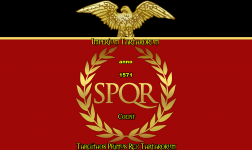
Roman empire was the Tartarian or some Global thing
i remade the flag with Scythian things XD
and sometimes they left some ''clues'' coz for exp. is a book of Alcionyius who says ''Atila sended magisters from his country to teach the latins to gothic language''' XD
-
page 8 in nonets;
The Works of Nicholas Machiavel ...
 

Attachments

  • b4c5a5fce399b51e7cea7ae27bfcdd73.png
    b4c5a5fce399b51e7cea7ae27bfcdd73.png
    303.6 KB · Views: 147
Dacia.
Deutchland.
Dutch.

Can we hear what we say?

Ovidiu wrote in his mother tongue, not "latin", on the shores of the Black Sea and supposedly, the Vatican will not release the manuscripts for anyone to study.
 
Tips
Tips
Please respect our Posting Rules.
Back
Top