Lost New Orleans

I ran across a few more old structures that are worth adding, one in particular. The following image is from the 1979 book Lost New Orleans by Mary Cable:
20230816_080323.jpg
Looks like the houses in the front were added. This was the "Alms House" built by our old friends Judah Touro and Rezin Davis Shepherd.

Let's let Richard Campanella describe it:
20230816_210614.jpg
"Part cathedral, part fortress, and part castle."
20230816_210708.jpg
Shepherd again.

Here is a photo from the Gary Van Zante book, 1867 New Orleans, which I was able to track down:
20230816_151032.jpg
20230816_151220.jpg
20230816_151223.jpg
20230816_151225.jpg
20230816_151227.jpg
We hit all the classics here: an inexplicably large population that needs to be contained/housed/re-educated ("swarms of mendicants"); an architectural competition won by a very young unknown architect, just like the Houses of Parliament in London; a building that was never more than a roofless shell.

At this point it was occupied by the Union Army. Let's let Campanella tell us what happened next:
20230816_211831.jpg
What terrible luck. Reads like fiction to me.

They then built a different alms house at a different location:
20230816_080346.jpg
Not too shabby.
20230816_080504.jpg
There was a mayor named "Shakespeare"?

Speaking of orphanages and alms-houses, I found photos of a few of those:
20230816_080536.jpg
20230816_080523.jpg
So not only do we have "swarms of mendicants", we have "masses of orphans". We're supposed to believe that all these rich "philanthropists" just built these castle-like structures out of love for widows, orphans, and the poor. Both these buildings were torn down.

I found a few more random photos.

Custom House under construction, 1860. Still don't buy that this thing was built then:
20230816_151113.jpg
Here's another photo. Looks like they had to patch it up near the top on the left side, see how it's white and the blocks look different?
20230816_150315.jpg
I found the following description of that drawing of the "temporary" arch I posted earlier:
20230816_082058.jpg
So it was built and torn down after six days in 1825...but then someone drew it eighty-four years later...? Based on what? Not a photo, they weren't invented yet. On another lost drawing, I guess? And they put the wrong guy on the bust? I don't buy any of it.

Back to Lafayette Square. Here's a nice one:
20230816_082245.jpg
It supposedly replaced this one, which burned down in 1866:
20230816_145945.jpg
And here’s yet another grand Gallier building, the Mechanics' Institute, that was torn down:
20230816_082143.jpg
I don't know what to believe. More photos coming.
 
1692313605617.png


In the upper picture the verticals are going outwards. Normally if a camera is at ground level the verticals go inwards. Why is this happening? I've seen this in a few old photos. Is a bellows camera effect?
 
-credit-Sara-Essex-Bradley-vertical-e1550686874570.jpg

Here's another one that burned down recently in 2019...

https://www.wwltv.com/article/news/...tion/289-ffdfec71-6f75-48ee-a817-16f599448665

The "Downman Mansion" at 2525 St. Charles Ave. This was the "Rex House" where the King of Mardi Gras would stop on Mardi Gras Day and toast. They even toasted the ashes after it burned down that year.

"The Queen Anne style mansion known as the Morris-Downman House is a widely known historic landmark. This house has a longtime and celebrated relationship with the Krewe of Rex, which is the reason the parade crosses from the “river side” of St. Charles Avenue to the “lake side” of the Avenue mid-parade. Past residents include a legacy of Carnival royalty, most notably Charles H. Downman, Rex of 1907. Ever since the reign of this Mardi Gras king, the current king has stopped the parade here to receive a formal toast, and to toast all the former kings and queens who have gathered here over the years.

It is believed that this house was built by famed architect Henry Howard for Charles Miltenberger sometime prior to 1865. Tax records from 1865 described Miltenberger’s property as a “fine house and grounds”. Due to Miltenberger’s business connections, it is speculated the decorative fencing currently surrounding the home may have been produced by the Philadelphia firm Robert Wood and Co., one of the country’s premier manufacturers of ornate cast-iron fencing. After Miltenberger died of typhoid pneumonia in 1888, the house was advertised in the Times-Democrat as a very fine residence and was sold at auction to Cora Hennen for $27,000. It is believed that Hennen then hired architect Thomas Sully to remodel and enlarge the home, clothing the core building with an array of decorative architectural features popular at the time. Some details, such as the Ionic columns and classically inspired ornament, seem to be vestiges of Henry Howard; while other features, such as the asymmetrical plan, decorative shingle siding, and gambrel roofs are typical of Sully’s design style."


SIDEBAR: I had an oil executive tell me that they burned the house on down to cover up evidence of....ahem...indecent behavior. Me, knowing the usual games of ultra rich people, asked "Did it involve children?" (not in those words, I cleaned it up) and he nodded.
 
I have been accumulating more photographs and references. I don't have as much time to collate everything these days but I will continue doing quick hits.

Remember the Citizens Bank on Toulouse Street?
1981.290.33_web.jpg
1971.14.13 i-iii_web.jpg
1998.74.2_web.jpg
I went to the Historic New Orleans Collection and looked at microfilm of the sketchbook of the antebellum New Orleans architect JNB de Pouilly. It hasn't been digitized. There are four volumes and the HNOC only has the third one. Regular people cannot consult the book itself, only the microfilm.

It's full of drawings of splendid buildings, a few of which are recognizable, most of which are not. It's unclear if they were sketches of pre-existing buildings, plans that were never realized, or buildings that were torn down.

The Citizens Bank is one of the recognizable ones. Here's a photo I took of the microfilm:
20230825_105438.jpg
I can't read what's written. The handwriting is too old-fashioned. Look at the roof and the flanking wings.

So, at least three possibilities:

1. The bank was found in a dilapidated state and de Pouilly drew up these plans to rehab the building. The plans were never realized.

2. The bank was found in this state and de Pouilly simply sketched what he saw.

3. De Pouilly simply designed and built the bank as mainstream history suggests, and it fell into disrepair before being destroyed.

It's shocking to me that this sketchbook has not been digitized.

There are images like this inside:
20230825_113834.jpg
Corner of Claiborne and Ursulines. No more information than that. This church is a ghost.

I would love to track down the three other missing sketchbooks. The one I looked at was full of mystery buildings, most of which were too ornate for the time period.
20230825_113452.jpg
20230825_113218.jpg
 
The Iconic Avenues of Paris are Ancient Canals

(Side idea. If Otto Didactic is correct and old world cities had canals instead of streets, is it possible that the vehicles were not boats but rather some kind of floating antigravity airships that hovered over water and only water? Was Paris Atlantis?)
Wow, I am impressed with the quality of work put in here. This has started off as a good thread. I havent had time to finish it though but if it stays like this good job. I have been wanting to make a new Orleans post since the beginning when I read that Alexander Burr fled here but thats for another discussion.
With your permission Id like to post it on the Its All Fake website. If you write like this all the time you can be an admin and have your own page. Im sure you have learned its best to go where the research takes you, but that makes it difficult to stay on task.
Thanks for the shout-out too btw. It can be discouraging at times to feel like nobody reads the content and it takes so much time to put into a good essay. Even Phi Beta Kappa got an honorable mention, lol, i didnt even think anybody knew who that was, now I'll have to go back and touch some things up. PBK is one of those Hidden Hand fractal groups nobody knows about but it connects so many other groups... Basically every word you learned in middle school history class is BS
Canal Streets are everywhere once you start looking, I have a chapter here about Canal St in Manhattan

The canals of Paris turned into the subway true but you have skipped the catacombs. The Paris catacombs are the old canal grid.
Back to New Orleans I have a file of bullet points Ive been wanting to expand on but if you have 8 or 9 parts here you probly hit them all already. Check all the infrastructure. bridges and arches especially since they go with canals but also dams and reservoirs. Also hit the World Fairs. people dont appreciate what the fairs really were. This is where all the fake sites and hidden hand intel groups could get together and debrief each other and imprint on the Orphan Class the fake historical narrative. New Orleans was a World Fair city. Its deceiving to even compartmentalize the fairs, in reality it was one big operation on a world stage but by confusing even the definition of what a fair is provides camouflage.
I have an image somewhere of an equestrian monument, big bronze sumbitch. Cant remember the name but it doesnt matter. One of the first orders of business was to erect monuments in strategic locations. Doesnt matter who or why, the narrative is built around the marker. By placing a bronze monument up before the repopulation even first gen orphans can be told fantasy history and have a visual to go with it. An extension of this is to survey all the monuments in general. Obelisks, victory column, statuary, plaques...
The Works Progress Admin and Civilian Conservation Corps were two early spook groups that landscaped the country to match the narrative, they created the national and State Parks network and almost exclusively dealt with Olde World sites, either erasing them or modifying them. WPA and CCC were very active in New Orleans.
I attached an image I recently found about the underground canal that goes under the Bastille. Its still in operation today. This supports my claim that the catacombs and tunnels are the old canal grid. they didnt even have to be covered and backfilled, there was underground systems already. Note the fire damage discoloration is eminating from inside the canal. This is supposedly from the Paris Commune but thats BS, the French Revolution is an allegory for the Great Reset. Paris was built and rebuilt so many times, you cant trust the dates on the label/ I also have a picture of two layers of canal, one on top and one underneath
Thanks for letting me ramble for a few. Lemme know if you want to publish on Its All Fake site. I can add commentary or make my own presentation and we can compare notes. fuckin epic.
 

Attachments

  • Screenshot 2023-08-28 2.49.49 PM.png
    Screenshot 2023-08-28 2.49.49 PM.png
    545.1 KB · Views: 193
Last edited:
PART TEN: NOTARIAL HISTORY

Back to New Orleans I have a file of bullet points Ive been wanting to expand on but if you have 8 or 9 parts here you probly hit them all already. Check all the infrastructure. bridges and arches especially since they go with canals but also dams and reservoirs. Also hit the World Fairs. people dont appreciate what the fairs really were. This is where all the fake sites and hidden hand intel groups could get together and debrief each other and imprint on the Orphan Class the fake historical narrative. New Orleans was a World Fair city.
First of all, I would be very interested to hear those eight or nine bullet points, even if they are not yet fully fleshed out. Regarding infrastructure, I still think that the presence of the huge levee system is the single best argument I have advanced for New Orleans being older than claimed. It's always possible that the buildings are indeed as old as they say. I don't think that's true, but of course it's possible. Another piece of suspicious infrastructure is the waterworks designed by Benjamin Latrobe (the architect of the United States Capitol) in 1813 and featured on the Tanesse map. I found another image of this structure that strikes me as highly anomalous. Here's the 1813 image:
1813Pumping.jpg
And here's the other image I found, dated "1816-1826":
1937.2.5_web.jpg
Look at the windows. They look haphazardly boarded up, like this structure was not in use. And where's the portico? Maybe there's some anodyne explanation for this...

Regarding New Orleans being a World's Fair city...the 1884 Cotton Exposition was essentially a World's Fair, located in what is today Audubon Park. I was hoping someone else might want to hit this as I am more interested in the pre-Civil War history of the city.

Another quick hit...the name Ogden has come up three times already in this thread. There was Jackson Ogden Belknap, the flagmaker who was supposedly responsible for the possible atmospheric energy fountain on Canal Street. There was the current gay Ogden who runs the Ogden Museum and was profiled in the Los Angeles Times. There was also the Ogden who traveled to Washington after the death of Latrobe to secure funding for a new waterworks. Well, I found another Ogden who also seems like a spook.

Frederick Nash Ogden (January 25, 1837 – May 25, 1886)[1] was a Confederate officer and leading white supremacist organizer of New Orleans, Louisiana.[2] He was a major in the 8th Louisiana Heavy Artillery Battalion during the Siege of Vicksburg.[citation needed] He then led the 9th Louisiana Cavalry Regiment, a mounted infantry unit known as Ogden's Cavalry. After the war he became a leading White Leaguer and was involved in the Battle of Liberty Place. He became known as General Fred Ogden and the Louisiana State Museum obtained a dress sword he was presented.[3] It also obtained a few of his papers.[4] He served as president of the Crescent City White League shortly after its founding.[5] A bronze relief was made of him by George T. Brewster in 1921 for his role at Vicksburg.[6] His funeral was a major event attended by political leaders. A road in New Orleans was named for him.

We get a couple of engravings from Harper's and Frank Leslie's magazine:
640px-Harpers1874LouisianaOutrage.jpg
Battle_of_Liberty_Place_Leslies_Illustrated_Newspaper.jpg
Both feature the Custom House prominently, perhaps to anchor its fabricated history. Remember, they say this thing was under construction from 1848 to 1881, but between the earliest photos I have found (1859) and these 1874 images, nothing changes. The walls are fully built and the building lacks only a roof. So it took them decades to just add a roof...?

I don't feel like digging into this right now but I bet there's something good in here.

Jackson, Ogden, and Belknap were all names of men involved in New Orleans battles. William Belknap, whom we saw in an earlier post, played a role in an 1872 uprising that is mentioned in his Wikipedia article. Ogden we just saw, and Andrew Jackson was of course the hero of the Battle of New Orleans in 1815. Both Belknap and Ogden would have been notorious names in New Orleans in 1873 when the fountain was installed, which tells me that the flagmaker named "Jackson Ogden Belknap" is a fake character. He is a "false flagmaker"...is this a spook pun that could be deciphered as "Jackson, Odgen, and Belknap were all false flag makers"?

The Ogden museum, run by the current gay liberal Ogden, just happens to be next door to the Confederate Museum. I guess these people get off on switching roles like this, "Nazis" today, "Jews" tomorrow, "Catholics" the next day.

Confederate Memorial Hall Museum is a museum located in New Orleans which contains historical artifacts related to the Confederate States of America (C.S.A.) and the American Civil War. It is historically also known as "Memorial Hall". It houses the second-largest collection of Confederate Civil War items in the world, behind the American Civil War Museum in Richmond, Virginia.[2] The museum has been advertised as Louisiana's Civil War Museum and as Louisiana's Oldest Museum. This "Adjunct of the Howard Memorial Library Association", according to Frank T. Howard's letter of 8 Jan. 1891, was placed in the "possession" the Board of Governors of the Louisiana Historical Association "to be set apart forever for the use of" that organization. Sully & Toledano designed the hall, which was completed in 1888, following the Richardsonian Romanesque style of the Howard Library designed by H.H. Richardson.[3]
confederate-memorial-hall-new-orleans-la.-779.jpg
The building was constructed in 1888. They also make a point of including that January 8 in there for the aces and eights. Is this building older than claimed? Remember, the Battle of New Orleans took place on January 8 and the dome of the St. Charles burned on January 18.

I want to do another quick hit on the St. Charles Hotel. Here's a very detailed engraving from a French magazine that I found at the Historic New Orleans Collection archives:
2008.0182.14_web.jpg
The building is once again completely different. This just gets stranger and stranger. I have found at least four different domes. This one is the most anomalous. Unfortunately there is no reference to the source of this French article. I will say that the building depicted here resembles closely the drawings in de Pouilly's sketchbook.

I have a hypothesis as to why they chose 1851 as the date on which the dome burned. It so happens that the other most visible structure in the city, the St. Louis Cathedral a few blocks away, was rebuilt in its current form in...1851. By situating the disappearance of the St. Charles and the reconstruction of the St. Louis Cathedral in the same year, they offer themselves a "buffer zone" going both backwards and forwards to explain away anomalies such as the wrong dome appearing next to the wrong cathedral spires. They can very easily claim that the artist had simply copied the hotel, or the cathedral, or whatever, from an earlier image without checking all the details. It would make sense that these two structures would be their anchor. It would also suggest that 1851 was possibly the "nexus" date chosen from which to write the fake history of the city. This would also make perfect sense inasmuch as this is the date of the very first photographs of the city.

I brought up the sketchbook of de Pouilly in my last short post. I was told by the (very friendly) research librarian at the HNOC that they might have the other sketchbooks at the notarial archives. I will try to make it there soon. She told me something like, "In the 1880's the city was completely transformed. You wouldn't recognize what was there before." I am not paranoid enough to think that this was some coded statement but I am paranoid enough to think that this is another possible sign that something other than an organic urban transformation was occurring at that time. Now, when reading about de Pouilly, I discovered that his father was a notary in France. This may be important. It is very difficult to become a notary in France. They operate like a secret society. You need a "medallion" issued by the state to become a notary. There are a limited number of these medallions and they can be passed down from parent to child (!). Once you get one in the family, you keep it forever. Regular notaries answer to the "supreme council of notaries". These are not ordinary public servants. I remember reading a few years ago that they make on average something like 17,000 euros a month. These are the document masters, the modern chancery guards that Kammeier zeroed in on as being responsible for the universal forgery operation run through the monasteries. The "notariat" looks to me like a secret society operating in plain sight. If de Pouilly's father was a notary, then de Pouilly was probably a spook.

The gold medallion is full of symbols:
264_photo_article.jpg

It would of course be logical that any forging of history would start with a spook notary structure. Think how easy it would be for notaries to come up with a fake property timeline. All these people do is write letters and sign them. They are trained to unravel documentary labyrinths (meaning they are also trained to create them). That is their entire job. Presto, you have a documentary history. It would only take a few months to fake an entire line of succession for an entire city. The crucial detail here is that only people who are in the notary mafia can draft these documents. They literally write the history at the bedrock level. They do not even all have to be in on the con. Lower-level notaries can simply be tasked with managing the archives.

Think about it. What would the minimum organizational structure necessary for such an operation be?

A few painters to crank out fake portraits.
A few notaries to crank out fake succession documents.
A few architects to modify existing structures.
A few scriptwriters to add color to the fake characters.
A bunch of slaves to do the actual work.

The Notaire and his role in France, the French Notary

For an example of how it works, check out the following fascinating article about the documentary history of Charity Hospital (the "biggest hospital in the world" in 1832, constructed in a city with forty thousand people) on the New Orleans Notarial Archives website. Please, follow the link and look at the photos at the very least:

The Many Lives of Charity Hospital

It's very easy to be bluffed by how old and official all these documents appear, but when it comes down to it, these are just words on paper guaranteed with nothing but signatures. The fact that they are strictly controlled by a highly secretive guild makes them even less reliable.

The article pays special attention to Don Andres Almonester y Roxas:

Almonester was born in Spain and came to New Orleans shortly after Spain took control of Louisiana. He was a Spanish nobleman and a civil law notary. When he came to New Orleans in 1769, he was appointed by King Charles III of Spain as the royal notary. The Notarial Archives Research Center holds eighteen volumes of original notarial acts by Almonester dating from 1770-1782. As the notary for the city and the “notary attorney” for all property transfers in the city, he had amassed an extreme amount of wealth, by 1782. Due to his success, he was able to offer 114,000 pesos fuertes to rebuild Charity Hospital in the same location.

Eighteen volumes, of course. They give us a painting of him:
almonasteryrojas_neworleans.jpg
After the fire of April 1771, then Almonaster with the positions of secretary, accountant and recorder of Governor Unzaga, would both have to re-plan part of this city urbanistically and constructing the main buildings of what will be the capital of Louisiana.[4] [Wikipedia]

(That’s a third Great Fire if anyone is counting.)

So this royally-appointed spook hiding his hand is the man responsible for the BEDROCK LAYER of documentary history of New Orleans upon which everything else is built. He may not even have existed. I guess that most of what is in those eighteen volumes is fabricated. It all comes down to this ONE GUY and all we have to do is look at his portrait to know who he is working for. This forger was put in power by the king himself. We therefore have a direct connection between the banal notarial archives on Poydras Street in New Orleans and the King of Spain. There is only one degree of separation between the ground-level notary spook grinding out fake history block by tedious block and the King. This Almonester guy probably arrived from Spain with a group of handpicked spooks who could have whipped up an entire fake property history in a very short time. Nothing but their signatures as proof of authenticity. How easy is that? After Almonester personally checked their work for continuity, the important stuff was sent straight back to the royal court. This means that any document I might consult from this archive was by definition handled, read, and corrected by the man in this portrait, a personal agent of the King. In other words, good luck finding anything good in there. And we should not be cowed into accepting the archives in New Orleans simply because they are confirmed by the archives in Spain or France. That's the first thing they would have done: made sure everything was backed up in the royal center.

And whenever any one of these notary spooks got his hands on a document that contradicted the narrative, the document would have been destroyed. After a few years, not to mention a few decades or a few centuries, the narrative has been polished, burnished, and locked in. Keep in mind as well that these people appear to be so ruthless as to tear down beautiful monumental structures just because there's an off chance that someone one day will realize they are older than claimed. Imagine what they do to documents!

(And why should notaries be allowed to "amass extreme wealth" if all they are doing is stamping documents anyway?)

Again, all these people need to do is salt in a bottom layer of fake properties and fake buildings and the con is "laundered" moving forward. Everything after the original fake layer is real and can be pointed to. Another possibility is to invent a few "great fires" and hurricanes to get rid of obviously forged early documents.

Again...I am not saying that this is necessarily what happened. I do not have enough proof to make such an assertion. What I am saying is that if nothing else, it is possible. That's already something. From a strictly logical point of view, the argument can be made that (1) if something is possible and (2) that possible thing would grant power, we have to assume that someone somewhere has probably realized that possibility. This is easiest to imagine with weapons technology. If there is some possibility of an experimental technology being transformed into a weapon, you can be sure that some secret government agency has already made and tested the weapon. When it comes to psychological warfare, which is the business of the controllers, deception remains the most powerful weapon. I continue to be amazed at how few people are necessary to pull off an operation like this. Every time I zero in on something, I get down to a handful of names. Regarding proof, once we accept the Kammeier hypothesis that no written documents can be trusted, the only possible form that proof could take would be (1) contradictions between documents (which we have found) or (2) contradictions between documents and physical evidence (which we have also found, for example the glaring contradiction of a city of forty thousand people building the biggest hospital in the world and the second-biggest domed monumental building in the United States, among others). What we can expect NOT to find is direct documentary evidence of fraud. We will NOT find buried documents from 1790 referring to missing buildings. Those documents, if they ever existed, were the very first things to be burned. Otto Didactic says that the very first thing the Resetters did was to erect fake monuments around which to anchor their fake history. I suppose the second thing they did was begin working on a fake notarial history.

ADDED: Almonester was the father of the Baroness Pontalba, one of the most famous women in New Orleans history. She is still remembered for constructing the so-called Pontalba Apartment buildings that flank Jackson Square as well as the Hôtel de Pontalba in Paris, where the US ambassador to France still lives.

She looks like a man to me:
1974.25.27.358_crop_web.jpg
micaela2-329x500-1.jpg
images (31).jpeg
Note the clever one-eye symbolism.
md-baroness-pontalba.jpg
Cupping her junk with one hand and pointing down at it with the other, mocking us.

I am pretty sure Illuminati trannies are a real phenomenon. It's one of the weirdest pills to swallow. But check out the "wives" of Obama, Macron, Trump, Kissinger, Chuck Schumer, Georges Pompidou, and a bunch of others. Check out Jacinda Ardern and Barbara Bush. Those are dudes. I used to think they did this for arcane theological reasons (worship of an ancient hermaphroditic god/dess) but now I think they are just perverts who love deceiving and mocking us.

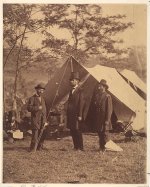
My last quick hit does not directly concern New Orleans, but it is too juicy to leave out. I mentioned earlier the famous Mathew Brady Civil War photographs, which are about the spookiest and most easily pulled-apart images out there. A lot of people here have noticed the men in top hats posing in front of ruins in old photos. I think they are the owners/investors who are paying for the repairs (and probably also paid for the destruction). While flipping through a coffee-table book entitled "Brady's Civil War" by Webb Garrison, I encountered the following photo with the familiar Top Hat Man posing in front of what looks like a ruined old pre-Reset stone bridge that has just been fixed up with wood.
s-l1600.jpg
The image is a smoking gun in itself, but the caption in the book is what made my jaw drop:
20230828_201340.jpg
So the man in the stovepipe hat just wandered into the scene. Right. And the photographer couldn't just say, "Hey, get out of the frame!" This is what mockery looks like. Notice they use the word "operative" and not "assistant". Elsewhere in the book we get the following caption:
20230828_201036.jpg
which refers to this image:
20230829_151429.jpg
A few more quick howlers:
20230829_151032.jpg
20230828_201019.jpg
I guess that Lincoln was given the stovepipe hat to identify him as the Resetter-in-chief.
 

Attachments

  • confederate-memorial-hall-new-orleans-la.-779.jpg
    confederate-memorial-hall-new-orleans-la.-779.jpg
    139.2 KB · Views: 138
  • 20230829_151429.jpg
    20230829_151429.jpg
    3.2 MB · Views: 141
Last edited:
The image is a smoking gun in itself, but the caption in the book is what made my jaw drop:

That explanation made my jaw drop as well. The phrase "thou dost protest too much" comes to mind here. Why even bother trying to explain the men in stovepipe hats if you're going to make a claim that silly and un-verifiable? I suppose most who would read that book are so bought into the modern historical fakery there is little chance their faculties would allow them to wonder about such an absurd explanation of "men in stovepipe hats loved following cameras around to photobomb an old world bridge". Are these the same photobombers who put on their hats to stand in front of the smoking, rubble-ized ruins of Baltimore, Chicago, and San Francisco?

Thanks again for your hard work and time spent on this topic, I only wish I had more time in my day to help out with some research for you.
 
Why even bother trying to explain the men in stovepipe hats if you're going to make a claim that silly and un-verifiable?
The only explanation I can come up with is that they just cannot resist the temptation to mock us at every turn. The first thing people say when you begin to share "conspiracy theories" with them is inevitably, "But someone would reveal the secret!!" This is bad epistemology. Yes, it seems counterintuitive, but psychological verisimilitude ("no one could keep such a secret") is already a product of our hypnotic conditioning. How many regular people have ever been initiated into a generational Great Lie? Well, until you've had that experience, you have no idea how easy or difficult keeping a secret would be. I think that the constant mockery serves the precise psychological function of relieving the internal tension and desire to reveal the truth that must indeed haunt the conspirators. That's why these little winks they leave everywhere are the easiest way to catch them.
 
Last edited:
Those French notaires had some serious power and secrecy! They were clearly instituted to manage the coverup in Paris and France, and then their techniques were also used in the French territories of the New World. They were essential to create the paper trail for the Resetters.

The medallion could be passed from parent to child and kept in the family, as well as keeping all the secrets in the family. The medallion in the picture would not have been used as the seal. Each Notaire would have had his own personalized seal with his/her name on it to further identify the validity of their signature. I would think that these seals from each generation would be kept safe with the medallion in the family vault. Frostychud said "It would only take a few months to fake an entire line of succession for an entire city." Even easier with all the old seals and handwriting samples in the same location!

These individual seals were definitely kept under lock and key. Multiple image searches gave me few results. Here's an embossing of a seal from an individual notaire named P. Erossier who operated in Vienna:

721ffb66b2cec3abdd982b40ed2e0584--rabbit-hole-the-rabbit.jpg


Here's a few key quotes from the Notaire article linked by Frostychud:

The Notaire and his role in France, the French Notary

"The Notaire is subject to professional secrecy in absolute terms and no person can release him from it."

"He has an important role at every stage of the purchase process...he has a monopoly over the preparation and signing and execution of the final deed..."

"He will keep the original deed indefinitely but will provide you with a copy of the title which has been registered at the Land Registry and proves your ownership of the property."


So the Notaire is legally able to keep secrets, has a monopoly on document preparation, and also gets to keep the originals.


Here's some nuggets of gold found in the Charity Hospital article linked by Frostychud (found in the pictures he mentioned):

The Many Lives of Charity Hospital

We are used to pre-existing buildings being converted into hospitals to explain their existence. This particular hospital was used to explain a few different pre-existing buildings as it was moved from one location to another.

There is a VERY interesting item I discovered in a picture in the article. It might be a really important clue or it might be really good civic planning. This clue is in a Plat Map of the hospital attached to the Bill of Sale from the City of New Orleans for the fourth Charity Hospital in 1814. New Orleans technically became part of the USA in 1803 with the Louisiana Purchase. There was still a majority of French speakers until about 1830. The Plat Map from 1814 is in French for this reason. I think that the elite French and Creoles that ran the city would still be using the French Notaires and their code of conduct. The Notaire is the person responsible for filing the paperwork with the Land Registry. All Notaires and Registars would have been in on the deception since the French founded New Orleans in 1718. These records were considered pretty secret and sacred. I think they may have been overlooked when things got purged. These Plat Maps are folded papers attached to handwritten deed documents. At the time this Notaire drew this Plat Map, the city was probably going to keep or restore the canals, so there was nothing to hide.

Look at the plot outlined in brown, that is the one being used for the hospital. Please look at the street names to the right of the outlined area.

lafitte-marc-1814-june-21-vol-4-plan.jpg

What you see is "Rue du Canal" on both sides of the "Canal de Navigation Projetté". Which roughly translates to Canal Street on both sides of either a Raised Navigation Canal or a Planned Navigation Canal.

Projetté is a tricky word and is not the same as projet, which it gets mixed up with. Projetté comes from the root 'projeter' and relates to an outward thrust like a lance, a protrusion, the projection of light like a movie, to cast away, or jutting out. Projet comes from the root 'projectum' and means a plan or a proposed design. I looked for historical usage and older French usage was more commonly related to a protrusion or to casting away.

English modern usage would be 'project', which is a heteronym word. Heteronyms are two words that are spelled the same but pronounced differently and with different roots and meanings. There's 'project' like a protrusion or light beam or to cast away, and there's 'project' like a plan or undertaking.

In the case of the Canal de Navigation Projetté, I envision a navigation canal protruding from the ground, with roads on both sides.

Maybe something like this, but on the ground. In the second picture of this canal bridge you can see it is constructed out of metal. The New Orleans canal could have been like this, on much shorter pilings, or with the metal slightly buried in the ground due to a mud flood or the passage of time in a swampy area.

8bb60c313013483b47ae231ba62209fa-1.jpg
17422338638_e5a788e4c6_b.jpg

Or like this, but in the city with roads on both sides. This one is made from molded poured concrete, which is similar to the molded polyconcrete they used in the past:

irrigation-canal-26972383.jpg

Or perhaps it was more like this, with the canal only slightly projecting above the path. The paths would be paved of course, and the shack would be a grand stone edifice lining the main canal of the city:

okanagan-irrigation-canal-irrigation-canal-providing-water-agriculture-industry-okanagan-briti...jpg

I don't speak French, but I can read it fairly well based on experience with Latin and
Romance languages. Can someone who is fluent please give input on the meaning of projetté in 1814 usage? Do you speak French, Frostychud? Are you able to check the New Orleans Land Registry Office for other Plat Maps from the early 1800's attached to bills of sale? There could be other clues. Or if you are over in France right now, there are archives of the New Orleans land transactions kept there, the notaires were required to send copies to headquarters.

Let's explore the other possibility, that the projetté/project usage could be that of making a plan. It could be saying the Planned Navigation Canal. Supposedly back in France there had been a network of navigation canals built in the 1600's, mostly in the Burgundy area. This is where Orleans, France, was. The one that New Orleans was named after. So it could be named New Orleans because it ALREADY had canals like old Orleans. Or because they PLANNED on making it look like old Orleans. I think it's the first choice.


Back to the Charity Hospital article, the gift that keeps on giving...

The fifth incarnation of Charity Hospital opened in 1833 in another new location. This image is from an 1837 Plan Book, in English, used in the article to show the location of the fifth hospital, on the far left of the image.

023.023.jpg

I'm interested in the far right of the image. As you see, the Canal de Navigation Projette` is now two sets of railroad tracks. So we have the time frame for the destruction of the remnants of the canal between 1814-1837.

That's it on the canal for now. Maybe someone has more input or clues. The Plat Maps are a great resource to dig into.

----------

On a completely different note. You brought up transexual Illuminati and were speculating on WHY. My belief, based on decades of observation and research, is that one of the entry fees to The Club is a major sacrifice. One option for the sacrifice is the 'death' of a close family member. Another option is a sex change or living as a transsexual. These sacrifices give a person full membership status in The Club and all the benefits and responsibilities that come with it.

Examples of sacrificing someone close to you include: Joe Biden's first wife, Jennifer Hudson's mother and brother.

Examples of a sex change or living as a transsexual: Michael Robinson Obama, Kaitlyn Jenner, Bill and Melinda Gates.

There are many more examples, but I've been writing this reply for days, so I will let you think of them on your own.
 
"The Notaire is subject to professional secrecy in absolute terms and no person can release him from it."

"He has an important role at every stage of the purchase process...he has a monopoly over the preparation and signing and execution of the final deed..."

"He will keep the original deed indefinitely but will provide you with a copy of the title which has been registered at the Land Registry and proves your ownership of the property."


So the Notaire is legally able to keep secrets, has a monopoly on document preparation, and also gets to keep the originals.
Indeed, it would seem that the only logical raison d'etre for the incredible privileges of the notaire class in France (another of which is their unbelievably high salaries) would be to hide something. Why should property ownership be so secret? If you read between the lines, the framework is being provided for a double set of books. The Land Registry only has copies of the titles. Only the notary has the original, and he is guaranteed absolute secrecy. Maybe I am putting the pieces together incorrectly, but theoretically the secret originals could tell a vastly different story from the copies in the Land Registry.

I visited the notarial archives in New Orleans. It was a fascinating experience even if I did not find either of the things I was looking for, namely the history of the mystery victory column along Decatur Street in images (supposedly) from the 1850's (see the spinoff thread for images) and volumes 1 and 2 of the de Pouilly sketchbooks. There is a huge poster on the wall informing the visitor that Louisiana still uses the "Roman" system of property transfer and notarial privilege. Apparently every other state uses a system derived from English common law. I am not in my element here so maybe someone who knows more than I do can correct me.

According to Google, "The role of the Clerk of Court in each parish is to maintain and preserve the official records of the parish. This includes processing and recording all land records, UCC documents, civil and criminal court proceedings, marriage licenses and other miscellaneous legal documents."

The Clerk of Court is an elected position. That seems strange. Why should the archivist be elected? This seems like an admission that the archives can be weaponized politically.

The current New Orleans clerk of court is a black woman named Chelsey Richard Napoleon. Okay, maybe I am too eager to see coincidences everywhere, but that's an unusual name. She is an active Catholic, which is not especially unusual in New Orleans, where for many years the largely Catholic and light-skinned "Creole of Color" class has maintained a near-monopoly on local politics. This makes sense for the simple reason that pure whites and pure blacks will often not vote for each other, but both are more likely to vote for Creoles.

KEEP: Chelsey Richard Napoleon - Clerk-Civil District Court

I was met in the notarial archives by two black women who ran the historical library. I suppose they were appointed by Ms. Napoleon. I asked them if Chelsey Richard was related to the Napoleon and they just chuckled and said that if you go back far enough, everyone is probably related.

Let me describe the archives. First of all, there is a big sign on the wall informing visitors that no photographs are allowed. The information in there cannot leave in an uncontrolled way. There is a small reading room and a larger room full of shelves of archives to which only the librarians have access. The stacks are arranged by notary. So to take the example of Felix de Armas, they have ten or twenty large bound volumes of every act he drafted. Note, I am not sure if these are the originals or simply the copies in the Land Registry. You can check out these volumes and flip through the pages. I did this with a few random notaries whose volumes had been left out. The oldest one I flipped through dated from 1811. It was pretty cool. You can see the old handwriting, the old signatures, the old lists of property. Nothing is stopping you from handling the pages yourself. There were wills in there with lists of objects as well as land transfers and slave transfers. Again, at some point going backwards all of this transitions from real to fake (according to the hypothesis we are investigating), and we are trying to figure out when exactly that is. It would make sense to me that the earliest inhabitants of the city, the Resetters themselves or perhaps simply the first groups of settlers, would need to buy and sell property from each other even in the context of a reclaimed and rebuilt city. Most of the acts and deeds of course concerned small pieces of property and individual slaves. I suppose that these documents are real. If the archives really were completely forged, the forgers gave themselves a lot of work populating the city with ghost slaves and ghost property owners. Again, I think it is more likely that these documents are real.

The property deeds are cross-referenced by city block and name of owner.

There were a few map fragments haphazardly attached to some of the deeds. I didn't see anything anachronistic.

I came away from the visit with a couple of observations. First of all, these documents are under lock and key and have been for a very long time. Anyone with inside access could very easily tamper with, destroy, or forge these documents and that has been true for hundreds of years. Chelsey Richard Napoleon could very easily visit the stacks after hours and take her time changing anything she might want to. The same would be true for each of her predecessors. Actually touching the old documents made me realize how fragile this system is. At the same time, one walks away with a feeling that the whole thing is solid, stable, and real. The old books make a strong impression on the imagination. Faking an archive like this would be a huge undertaking, but not an impossible one, especially if the only outright forgery happened at the very beginning.

My guess, after visiting the archives, would be that at some point, there were two sets of books, one destined for future archives and one kept secret. There was never any need to forge the first set of books. The second set of books, the one that concerned the pre-Reset remnants, which I think were fairly few in number, could simply be seeded in as necessary at any later date. Or rather, I can imagine the notaries comparing the two sets of books and then forging documents as necessary to make the two stories fit. This could easily done by inventing a fake notary with a fake background and simply assigning him all of the deeds and acts concerning spooky properties like the St. Charles Hotel. Actually, that would be a good research avenue for someone based in New Orleans. This notary could be invented at any time and his documents forged by a handwriting expert, bound, and inserted into the stacks. If the forgers were thorough they could toss in a few cross-references with real contemporary notaries and insert those forged documents into the bound archives of the latter.

They have had hundreds of years to do whatever they want to these documents. They could invent a new 18th century notary today and "find" his archives, and we would probably have no way of finding the fake out. Even I could have pretty easily stolen and destroyed the entire paper trail of a given property just by ripping pages out when no one was looking.

As for my visit, they didn't have the de Pouilly sketchbooks. They appear to have been either lost or "lost". That's a pity.

They were unable to help me locate the column. They said they needed an exact block and date range and the images of the column were not precise enough to zero in on a specific block. If I had a full week to spend there I might be able to make progress, but that's impossible for me. Maybe someone living in New Orleans with a lot of free time on his or her hands could try this...

It would take a lifetime to read through all these archives. The handwriting is mostly unintelligible and they are written in three languages. The sheer mass of these documents is a wonderful deterrent to investigation. It would be very easy to hide a few needles of forged documents in the haystack of real ones.

Anyway, one glance at Almonester's hidden hand and his "daughter's" male face is enough to tell us that they are playing around.

Regarding the canal on that Charity Hospital article, I was also surprised to see that they had actually drawn the "projected" canal in. This tells me that EVERYTHING on that map is possibly projected. It's possible that the word "projetté" was added later, but I doubt it. Perhaps at this point they had not yet decided if they would keep the old canal yet or not and so they wrote "projetté" in to hedge their bets. Regarding the double meaning of "projected", I am pretty sure that the French word for a raised canal would be "élevé", but I might be wrong. If you look at the signature at the top part of the map, it says:

pour Copie Conforme -
Nlle Orléans le 2 juin 1814
Tanesse
ILLEGIBLE la ville

But if you zoom in the 2 and the 1814 are clearly written in different, darker, thicker ink!

Jacques Tanesse was the surveyor who made that 1815 map cited by Richard Campanella that includes a drawing of the Latrobe Waterworks.

So we come back to the same few names. Tanesse was the map guy at that time.

Regarding your observation that the railroads replaced the canal sometime between 1814 and 1837, this would fit with Otto Didactic's theory that all the canals became railroads during the transition.

I am the one who brought up Illuminati Trannies so I only have myself to blame if the thread becomes derailed, but I do want to follow up on something you mention. You suggest that there are multiple ways in, one of which involves sacrificing a family member, another of which involves changing gender. You cite Joe Biden as an example of the first path. Well, when you look at the Wikipedia entry for his deceased first wife, you get plenty of numerological signaling:

On December 18, 1972, shortly after Joe became U.S. senator-elect, Neilia was driving with her three children west along rural Valley Road in Hockessin, Delaware. At the intersection with Delaware Route 7 (Limestone Road), their vehicle pulled out in front of a tractor-trailer truck traveling north along Route 7 and was hit by the tractor-trailer. Police determined that Neilia drove into the path of the tractor-trailer, possibly due to visibility issues.[9][10] The truck driver, identified as Curtis C. Dunn, 33, of Avondale, Pa., escaped without any major injury.[11]

So we have December 18 -- that's aces and eights with the "Dec" in December also functioning as a ten (clever spooks). But the most obvious clue that this story is a cover is that conspicuously and unnecessarily included 33. Does anyone really need to know how old the guy was? His initials, CC Dunn, also function as a 33 (C is the 3rd letter of the alphabet). So we know this story is fake. We just don't know what the truth is. Was she indeed sacrificed to get Joe in the club, or was the whole story simply invented from whole cloth?

I just googled "CC Dunn Joe Biden" and found this article:

https://www.cnn.com/2023/06/11/politics/anita-dunn-white-house-2024/index.html

He’s nodded to Dark Brandon in official speeches, aides have shared the image on social media, and his 2024 campaign is selling $32 T-shirts emblazoned with his online alter-ego. While it’s a minor part of his repertoire, it shows how Dunn – a longtime Democratic operative and Biden confidante – has used her influence to engage in the kind of street brawling needed to combat perceptions of the aging president and the challenge ahead as he seeks a second term. “It fits well with who she is, which is a f**k-sh*t-up-brawler. It’s not a coincidence that the stuff that came behind Dark Brandon was very much in line with Anita’s way of seeing the world,” Rob Flaherty, the White House’s director of digital strategy, told CNN.

Anita Dunn also looks like a possible tranny with the pearl necklace coding:
1693867045534.png
Black and white dress, Tyrian purple background.

There appears to be some fake manufactured story about the daughter of Curtis Dunn, Pamela Hamill, trying to get Biden to apologize for the false accusation that her father was drunk. She also looks like a tranny.

I will stop here with this line of research as it is not directly germane. Anyway we all know that everything is a lie today, so no need to go too deep into the current rotation of deceivers.
 
There is a huge poster on the wall informing the visitor that Louisiana still uses the "Roman" system of property transfer and notarial privilege.

France was one of the most Catholic country for hundreds of years. Which would be Roman Catholic, which would be the Holy Roman Empire. Louisiana was the new Roman stronghold on the southern mainland of North America near the Caribbean and Quebec was the new Roman stronghold on the northern mainland.

Quebec real estate law is different than all the other Canadian provinces. Based on French law/Napoleonic code. Of course they have their own notaires and their own Supreme Council called Chambre des Notaires du Quebec. From the Chambre website:

"...for certain acts, the notarial form is mandatory, in particular for real estate mortgages...Moreover, since the original copy of the notarial document is kept at the notary’s office, it cannot be lost or altered. You can obtain a copy at any time, since they are kept in perpetuity by the notary or the notary’s successors."

There were lots of buildings in Quebec that needed false provenances created. This hotel, the Chateau Frontenac, was said to have started being built in 1892 and opened their doors for business in 1893. That notaire was definitely keeping secrets.

wall3.jpg

So the two French strongholds in North America both still follow the Old World French/Roman law. Even though the rest of the countries they are part of use a different system. I can speculate a couple of possibilities for this:
- The Vatican still runs the state and the province and the legal system allows them more powers than if it changed
- If Americans are owned by a corporation masquerading as the United States of America and Canadians are owned by a corporation masquerading as Not The Crown, perhaps the people in Louisiana and Quebec are owned by the Vatican or the French

The Clerk of Court is an elected position. That seems strange. Why should the archivist be elected? This seems like an admission that the archives can be weaponized politically.

The current New Orleans clerk of court is a black woman named Chelsey Richard Napoleon.

I'm sure the position was appointed by the King or the Governor back in French Colonial times. Mainly because they made so much money.

I think Chelsey's maiden name is Robert and her married name is Napoleon. So hubby would be the possible despot blood.

Faking an archive like this would be a huge undertaking, but not an impossible one, especially if the only outright forgery happened at the very beginning.

I agree with this. The modern clerks haven't done nefarious things. Chelsey isn't sneaking in at night to forge documents. It was the Resetters and the Masons back when they were active, which included the clerks and notaires. They explained everything to their own satisfaction, had an expo and somes fires as needed, the Battle of New Orleans and some slave revolts and racial tension. I'm sure the period of Spanish rule helped confuse things too. But once all the stories were told and paperwork changed, the successors wouldn't have to fake stuff.

As for my visit, they didn't have the de Pouilly sketchbooks. They appear to have been either lost or "lost". That's a pity.

They were unable to help me locate the column. They said they needed an exact block and date range and the images of the column were not precise enough

It's possible that the full set of de Pouilly sketchbooks are at the French repository where duplicates were sent. I'm sorry I can't remember the name of it, I will keep an eye out.

I think someone on the forum will work out a close enough block and date range to work. There are some clever people here that can think in that way. But wouldn't the search need to be requested in person?

Regarding the canal on that Charity Hospital article...If you look at the signature at the top part of the map, it says:

pour Copie Conforme -
Nlle Orléans le 2 juin 1814
Tanesse
ILLEGIBLE la ville

But if you zoom in the 2 and the 1814 are clearly written in different, darker, thicker ink!

The 1814 appears to have been written the same day as the rest of the document. The 2 was filled in later along with the exact dimensions of the plot. The notaire likely prepped the paperwork first and then filled in the exact date when he physically measured the lot.

Jacques Tanesse was the surveyor who made that 1815 map cited by Richard Campanella that includes a drawing of the Latrobe Waterworks...Tanesse was the map guy at that time.

Good observation. The more we are able to put names on villians, the better supported we are when the rest of the world starts to listen.

I am the one who brought up Illuminati Trannies so I only have myself to blame if the thread becomes derailed, but I do want to follow up on something you mention. You suggest that there are multiple ways in, one of which involves sacrificing a family member, another of which involves changing gender. You cite Joe Biden as an example of the first path. Well, when you look at the Wikipedia entry for his deceased first wife, you get plenty of numerological signaling:

On December 18, 1972, shortly after Joe became U.S. senator-elect, Neilia was driving with her three children west along rural Valley Road in Hockessin, Delaware. At the intersection with Delaware Route 7 (Limestone Road), their vehicle pulled out in front of a tractor-trailer truck traveling north along Route 7 and was hit by the tractor-trailer. Police determined that Neilia drove into the path of the tractor-trailer, possibly due to visibility issues.[9][10] The truck driver, identified as Curtis C. Dunn, 33, of Avondale, Pa., escaped without any major injury.[11]

So we have December 18 -- that's aces and eights with the "Dec" in December also functioning as a ten (clever spooks). But the most obvious clue that this story is a cover is that conspicuously and unnecessarily included 33. Does anyone really need to know how old the guy was? His initials, CC Dunn, also function as a 33 (C is the 3rd letter of the alphabet). So we know this story is fake. We just don't know what the truth is. Was she indeed sacrificed to get Joe in the club, or was the whole story simply invented from whole cloth?

Those numbers just keep showing up!
 
So this guy was ALSO involved in the staged and fake Matthew Brady photo psyop! He may even have directed it.
abraham-lincoln_mathew-brady-jpg.jpg
The wooden staging, the double hidden hand, the creepy Resetter watching everything from the corner, the benchwarmer Lincoln stand-in who doesn't even look like the main actor...of course it makes sense that the guy who tore everything down (Belknap) would also be involved with the fake coverup stories and photos.

Otto Didactic demolishes this photo in his paper, "Matthew Brady is a Fake-Ass Bitch":
Abe Lincoln and the Fake Founding Fathers
I get excited every time I see this photo, like a little kid, I'm like "Ohh Ohh, I got this one", Someone beat me to it. Thanx for the support guys.

To the OP, Have you done anything on Civil War activty in N.O.? I ask for a few reasons, Im working on an extended Civil War breakdown. The whole place was in ruins and the C.W. was made up to dismiss the devastation and consolidate authority. Repair or destroy remaining infrastructure so people can be easily caged in. Yank vs Reb is just the same as Rep vs Dem, theyre all on the same side. Normies even acknowledge Gen Lee was invited to lead the North. However long the clean up was IDK but once places reached a certain point the repopulation started and the recent immigrant/orphan class was told the standard war narrative. the huge Black population explained by slavery but the Africans were already in America BEFORE the EEuropeans, No trans Atlantic Slave Trade.
I saw someone mention Sherman March and the infrastructure, let me expand if I may. The railroad is an ancient artifact, its always been here, most of it built on top the older canal grid. During the Reset Event and subsequent power struggles the railroad was destroyed for the most part. Contemporary society might have done some rerouting but no new construction, repairs only. Shemans March provides a narrative for the rail damage in the South. Supposedly they marched around the entire Southeast tearing up railroad tracks.
This inly works in the South, In the North to West there was no Civil War activity to speak of. instead they had the 'Great RR Strike of 77', from Baltimore to all points west; philly pittsburg, st louis, chicago, San Fran the nations first national strike targeted the rr and does for them what Sherman does for the South. I working on an extended article about railroad damage now but I already had a good one, till I learned about Sherman. Here is what I got about the National Strike... Did I mention all the cities also hosted a World Fair or two and had a 'Great Fire"? yeah, its like that.
I ask about No'rlens bc General Butler was in charge and i do know him. He took credit for mucking out an old canal that connect Richmond and the fake historic Jamestown settlement. I also know of Butler bc he was the 33rd gov of Massachusetts and one of his cases was a mock congressional investigation into the Tewksbury Almshouse. The scandel involving the same Reset families leeching off the orphan class. I came across it bc Helen Keller is one of the biggest sneaky-pants hoaxers of all time, her companion, Anne Sullivan, supposedly was rescued from Tewksbury...i even got an essay on that somewhere...Here it is. Helen Keller and every person she is connected to is lying, The investigation into the tewksbury asylum details how the med team at Harvard was in the dead body trade and bought corpses form the almshouse, even had a pair of red shoes made from the skin of a breast in the window and stretched tattoo skin for momento's... good stuff
So Butler was there right after he came home from New Orleans , I havent looked at his jacket yet but i think he hung a few locals from lamp posts and promote rape culture to beak Southern Spirit,,, know what I just figured. The National Strike article I linked to touches on a political scandal, the rigged election of Hayes that lead to the Strike and was the official end of the Reconstruction era, which pulled all yanks out of N.O. Everything connects...
Also there is a good story about that famous duel, Burr, I think he was VP at the time but he killed his homeboy in a duel and fled to new orleans. its a good story but its all fiction history.
If you dont have any Civil War stuff theres a lead for ya, its a good thread. I'll share when Im done. So far I got James River, Getttysburg, Charleston, Ft Sumter ((thats a good one) and Richmond, with Harpers Ferry and Fredericks berg still in draft. Maybe if I ever get some time I figure out how to post and start new threads on S.H. lol, thankx guys, See ya Civil War Posts
offee-table book entitled "Brady's Civil War
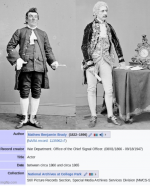
Brady was fictional character, he serves more as like a file name, He has near 20,000 images at the library of congress alone, Ive skimmed through most of them, (I know, Im hopeless) They are all stock images that any narrative can be built around. little dumbass shit captioned like 'Cooking with a pan over a fire in camp" There are so many that are just head shot with no caption and just as many that say 'actor' in the description... Brady is the first 'Crisis Actor' portfolio.
you wanna go even farther. there is alot of people in the Brady file dressed up in medieval Europe costume with the Actor caption. Thats bc there was no medieval era, its europes version of the Wild West, its fantasy. I found that by accident looking through the Rijksmuseum achives, in Amsterdam. Thats a good resource as well. when it clicked i was floored, other countries are using the Matthew Brady file to fill in the narrative with visuals, its the NWO, of course they do. read here, they communicate with sigil based language, the spoken word is spellcraft. theres two down there
 

Attachments

  • Screenshot 2023-09-18 8.31.10 PM.png
    Screenshot 2023-09-18 8.31.10 PM.png
    471.7 KB · Views: 245
Last edited:
They were unable to help me locate the column. They said they needed an exact block and date range and the images of the column were not precise enough to zero in on a specific block. If I had a full week to spend there I might be able to make progress, but that's impossible for me. Maybe someone living in New Orleans with a lot of free time on his or her hands could try this...
First off, amazing research! I am so excited that someone has finally touched on New Orleans! I am a born and raised New Orleanian and ever since discovering SH I have always felt that New Orleans is ALOT older than they say it is. I believe that the architecture holds the key to the true history. At the very least, it points us in the right direction to getting a bit closer to the truth.

That being said, I would love to join you in helping further the research. I still live in the city and at this time in my life I happen to have a lot of free time to do some on the ground leg work. My educational background is in architecture and I am a photographer by trade. I would be happy to share some more information about myself / more on how I could be of service. However as to not muddy this thread, if you'd like to discuss further or maybe share some direction for furthering the research, shoot me a PM!
 
This is information from a reply I made in the Moonlight Towers thread. It's also relevant here.

Moonlight Towers and the Wayne County anomaly

-----------

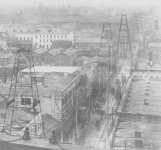
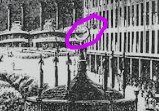
These are the New Orleans Moonlight Towers, all lined up in a row on Carondelet Street over the streetcars. The 'Moonlight Towers' may be powering all the following tasks, or powered them in the past when functioning properly.
- streetcar electrical grid
- telegraph lines
- street lights/illumination

5d13d79f231e6-image-1-jpg.jpg

----------

I found something else interesting in New Orleans while looking into Moonlight Towers.

These two images are the same plaza from two different angles. It is New Orleans at night. In the first picture you can see the steamships are on the river to the right, the church in front has a brilliant light shining from it's steeple, and beyond the church you can see the row of lighted Moonlight Towers lining Carondelet Street. This image is supposed to be 1883, so the church light would be an arc light.

20231015_223303.jpg

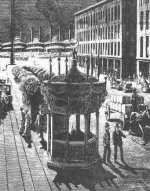
The second image is dominated by the Moonlight Tower. You can see the steamships on the river in the background.
In the foreground of the second image is a little metal gazebo in the middle of the road.

20231015_223331.jpg

Look closer at that little gazebo. The first thing that I thought was "There's a small vereya within the light of a large vereya, does that amplify the energies?" Then I saw the designs on the small vereya, specifically the roof.

6a00e0099229e88833010536d7c4c4970b-500wi-3-jpg.jpg

There are spears projecting upwards at regular intervals with trefoil type heads, which is a shape we are learning is important to generating aetheric energy. There is a crescent on the peak, which is ancient symbology used on flags, frequently with a star and whatever weapon the locals used. The star itself may have represented energy weapons. The hammer and sickle symbol often used by Red countries is a clever way to incorporate the crescent crossed with a weapon.

20231015_223424.jpg

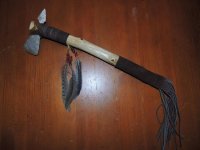
But on this gazebo vereya the crescent is crossed with a tomahawk!!!! Which is a weapon developed by Native Americans. Which tells me that when that little iron gazebo vereya was built, the Native Americans were in power.

6a00e0099229e88833010536d7c4c4970b-500wi-2-jpg.jpg

Here are two traditional tomahawks:

native-american-stone-tomahawk-jpg.jpg
blades-review-029-jpg.jpg

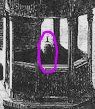
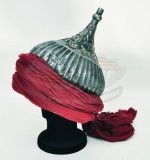
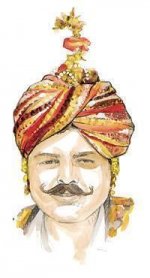
This vereya gets even more interesting if you look inside it. There is a bearded man wearing some kind of crown or turban with a central spike coming out of it.

6a00e0099229e88833010536d7c4c4970b-500wi-6-jpg.jpg

3ac157ca667c416cc948f93a5b81529b-jpg.jpg
turban_indian-jpg.jpg

There are no newspapers or articles for sale around him, so this vereya is not being represented as a sales kiosk. And there are no advertising posters on the outside of the structure, so this vereya is not being represented as an advertising kiosk. It's not big enough to house a band or music performance. So what is this random structure in the middle of the road? It has to have some purpose.

The artist would have had an understooding of it's purpose at the time they drew this picture. And the artist's choice was to draw a single person with pointed headgear sitting inside an open air gazebo where people walking by can see him and talk to him.

At first I believed that he was either an individual sitting there to receive the positive benefits from the vereya or that he was a fortuneteller. Passersby would perhaps pay him a few coins to see what information he could pull out of the aether to tell them. The headgear with the spike would increase the signals received, whether psychic, spirit or radio-type transmission.

Then as I was writing I received a deeper understanding of all vereyas...

They are ALL receiving stations.

These kiosks are the small local receiving stations. Just like churches are larger local receiving stations. And cathedrals were receivers and transmitters. People would go to vereyas and churches to receive blessings and rejuvenate their health, as well as bringing their 'iron objects' to get recharged. These people and objects were RECEIVING this energy being focused and enhanced by the shapes and patterns of the iron vereya.

I think this fellow sitting in the vereya was the news source and the postmaster of the neighborhood. Instead of paper mail or email, he would pick up mental mail. People could pay to pick up and send messages. Messages may have come from across the world. In the Old World these duties would have been handled by priests inside of churches. But here in the New World people were not as controlled by the Church and they could communicate however they chose. This Elder understood what this vereya could be used for, so he put on his special headgear and sat down to receive whatever energy or messages came his way. I will call him a 'wise Elder with special headgear sitting in an ornate vereya and delivering news and messages from the aether.' Local Elders probably took turns occupying the vereya 24/7 so they wouldn't miss any important incoming information. These may have been psychic, spirit or radio-type transmissions (or perhaps the voice of our creator?)

----------

Vereyas of all sizes were once common but have been repurposed to many other uses.
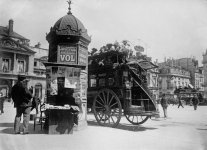
The natural progression of this small roadside vereya would be to make it into the newspaper kiosk, supposedly invented in Barcelona in 1888. People would have been used to going to the vereya for their mental news, so why not have them go the same place for the printed news? The vereya in the first picture below probably had contained a 'wise old man with special headgear sitting in an ornate vereya and delivering news and messages from the aether' and then was then changed into a newspaper seller with a cap sitting in the same structure selling the current false narrative, in print, from all over the world. In a generation no one would remember that it had changed from mental/spirit to print.

typical-paris-newsstand-19th-century-1024x744-jpg.jpg
-grand-via-spain-plaza-de-santa-domingo-bkc4mn-jpg.jpg

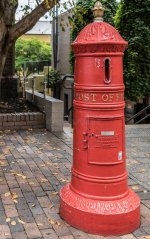
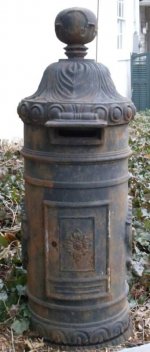
Since vereyas used to be where you would also get your mental mail, it would make sense to use a similar shape and intricacy of design when switching to paper mail. Easier transition for the general public to recognize where to put their letters.

office-mail-box-rocks-neighborhood-circular-to-jpg.jpg


5c419975231848a5d5de391c15616171-jpg.jpg

And the Fortune Teller Booth is the cargo cult version of 'wise Elder with special headgear sitting in an ornate vereya and delivering news and messages from the aether.'

0b5d21d96709846c8c5eff39c428898b-jpg.jpg

f808d17febff15fd99fa2146fd0a3f24-jpg.jpg

...I am a born and raised New Orleanian and ever since discovering SH I have always felt that New Orleans is ALOT older than they say it is. I believe that the architecture holds the key to the true history. At the very least, it points us in the right direction to getting a bit closer to the truth...
Hi Franco, please keep an eye out for old drawings of vereya, gazebos, pavilions, etc. with people in them. Any city will do for the above theory. Thanks.
 
This will be a quick hit. I found the following maps at www.falsehistory.net, which has a lot of great articles. The first, by Antonio Pereira from 1546, shows a huge medieval walled city in a location that could be anywhere between New Orleans and Pensacola, Florida. In fact, it's the biggest city on the entire map. My guess is that it's either New Orleans or Mobile, Alabama (if it's even real):
legendary-city-of-norembega.jpg
Unfortunately the resolution is too low to read the writing. Does anyone recognize this flag?
Screenshot_20231129_134806.jpg
The next image is from the 1597 map of Cornelius Wytfliet. We no longer see a city on the site of New Orleans but we get a bunch of other mystery cities with weird names:
35549576566_288d049710_b.jpg
"Tascalisa" must be Tuscaloosa, Alabama. We see a city called "Quigata" that might be Natchez, Mississippi, itself a fascinating place. At the following link we can read the account written by a man named Biedma of the De Soto expedition.

de Biedma. "A Narrative of the Expedition."

In the footnotes they place Quigata near Little Rock, AR. Go ahead and read the account. A high school student could write this in a single day. It's lazy, incoherent, and unbelievable. If I were the King of Spain and this garbage were the only description I received of an expedition lasting years, I would toss the bum who wrote it in prison for sedition. If the 1597 map is based on this story, then the map itself is probably not to be trusted. My guess is that sometime between the first and second maps, the decision to substitute a fake history for the real one had already been made.
 
Last edited:
This will be a quick hit. I found the following maps at www.falsehistory.net, which has a lot of great articles. The first, by Antonio Pereira from 1546, shows a huge medieval walled city in a location that could be anywhere between New Orleans and Pensacola, Florida. In fact, it's the biggest city on the entire map. My guess is that it's either New Orleans or Mobile, Alabama (if it's even real):
Unfortunately the resolution is too low to read the writing. Does anyone recognize this flag?
The next image is from the 1597 map of Cornelius Wytfliet. We no longer see a city on the site of New Orleans but we get a bunch of other mystery cities with weird names:
"Tascalisa" must be Tuscaloosa, Alabama. We see a city called "Quigata" that might be Natchez, Mississippi, itself a fascinating place. At the following link we can read the account written by a man named Biedma of the De Soto expedition.

de Biedma. "A Narrative of the Expedition."

In the footnotes they place Quigata near Little Rock, AR. Go ahead and read the account. A high school student could write this in a single day. It's lazy, incoherent, and unbelievable. If I were the King of Spain and this garbage were the only description I received of an expedition lasting years, I would toss the bum who wrote it in prison for sedition. If the 1597 map is based on this story, then the map itself is probably not to be trusted. My guess is that sometime between the first and second maps, the decision to substitute a fake history for the real one had already been made.
It's the flag of Spain I believe
 
Merry Christmas, everybody.

Nola.com ran an interesting story today. A look back at the old Odd Fellow's building that used to be on Lafayette Square.

6585d2c4096dd.image.jpg6585d2ceeaa20.image.jpg

Of all the clubs, fraternities, coffee klatches and confederacies formed in New Orleans over the years — of dunces and otherwise — one stands out as particularly, well, odd.
It was the Independent Order of Odd Fellows, a Mason-like benevolent society with roots in 18th-century England, and the name of which has adorned a number of public places in New Orleans.
That notably includes the colorfully and memorably named Odd Fellows Rest cemetery, which, though largely neglected, still reposes today at Canal Street and City Park Avenue.

The Odd Fellows name was also, however, attached to one of the city’s most prominent buildings of the late 1800s, and in one of its most prominent locations, to boot.


So who were these Odd Fellows? And what of their building?

Chapters across America​

The order first established itself in America in 1819, with a chapter in Baltimore. In an era in which membership in civic and fraternal organizations was in vogue, other chapters soon began popping up across America.
That included in New Orleans, where a lodge was chartered in 1831 for “religious, charitable and literary purposes,” according to former city attorney Francis P. Burns, writing in 1963 for the journal of the Louisiana Historical Association.
By 1846, the Odd Fellows had established a clubhouse at 13 Camp St. and, as one of their first major local projects, set about establishing a cemetery for its members. Three years later, Odd Fellows Rest was dedicated, its cast-iron gates adorned with various Odd Fellows symbols, including a beehive, an all-seeing eye, a five-pointed star and an image of the Bible.


(Most of those symbols have since disappeared, aside from the likeness of a widow and child, and a cornucopia. A three-link chain, also a symbol of Odd Fellowship, occupies the cement lintel above the gate.)
That same year, the order purchased land facing Lafayette Square on the block bounded by Camp, Lafayette, Magazine and Girod, and then cleared the site of “the unsightly shanties which have so long marred its appearance,” according to The Daily Picayune.

Inspired by a Greek temple​

Architect George Purvis — who also had a hand in designing the second St. Charles Hotel, which was going up at the time — was then hired to design the Odd Fellows a new home.


Inspired by the Greek Temple of Diana, the Neoclassical structure would be an imposing one, standing three stories, with rented storefronts on the ground floor and a large central dome atop.
The new lodge would notably also boast a massive ballroom, measuring 132 feet by 60 feet and with 36-foot-high ceilings, designed to host concerts and social affairs. Although the building was still under construction in early October 1852, it was far enough along to host its first musical performance, by Messemer’s Brass Band.
The next month, however, plans for “a Grand Dedication Ball” had to be put on hold, according to the Picayune, “in consequence of the non-arrival of the ship Carnatic, having on board the Chandeliers and Gas Fixtures for the Ball Room.”


A dedication was, indeed, held on Nov. 22, although apparently without a ball. The day did, however, include a parade through the city by members of what by then more than a dozen local Odd Fellows lodges, all dressed in full regalia, followed by speechifying at the new hall.

A triple funeral​


Just more than two weeks later, on Dec. 9, the new lodge would host what would be among its most noteworthy events: a massive, communitywide funeral in honor of the U.S. Senate’s so-called “Great Triumvirate” of Henry Clay, John C. Calhoun and Daniel Webster, whose outsized influence dominated American politics of the era.
(Calhoun had already been dead for almost two years by that time, but Clay and Webster were both fresh in the ground, having died within five months of each other, in June and October 1852, respectively.)


“For weeks preceding, the citizens of New Orleans busied themselves in making great preparations for the ceremony,” Burns wrote. “The city was decorated with somber and solemn emblems of grief, attesting the feelings of the people for the deceased statesmen.”
Central to it all was another Odd Fellows parade through the city. In addition, a cenotaph was erected in the middle of Lafayette Square — where the city’s famed statue of Henry Clay now stands — upon which three symbolic funeral urns were ceremoniously deposited.
Additionally, three eulogies were held. One for Calhoun was held at City Hall, Webster’s was held at First Presbyterian Church, and Clay’s was held in the Odd Fellows’ ballroom.


Not counting the years of the Civil War, when the lodge — like the city — was occupied by the Union Army, the hall would continue to be a center of local social life until the night of July 4, 1866, when it burned in a spectacular midnight blaze.

Years of decline​

The next morning, the charred walls still stood, but the building was a total loss.
The Odd Fellows sold the site and rebuilt at a new location on Camp Street, between Poydras and Lafayette. That building would be foreclosed upon in 1937 for an unpaid mortgage, a reflection of the once-prominent group’s declining membership — and its declining impact on the community.


Meanwhile, by 1875, St. Patrick’s Hall — another noteworthy public hall in the city’s history — would replace the original Odd Fellows Hall on Lafayette Square. St. Patrick’s Hall would be demolished around 1908 after being sold to the federal government.
Replacing it: the John Minor Wisdom federal court building.
Home to the 5th U.S. Circuit Court of Appeals, it still occupies the site today.
 
I just came across an interesting fact about the number 18 and it’s multiples that may add to the aces and eights explanation in a lot of this stuff.
18 is sacred in the Kabbalah.
If it’s sacred to that, it’s sacred to Freemasons as well seeing as their entire mythological structure is just “Kabbalah for goyim”
The Number 18 - GalEinai
Sacred and Profane History of Cherished Jewish Number 18
 
New Orleans is a very old city.

You can recover its lost history if you know its old name: Principality of Orange. Tulane University was founded in 1365 or something like that.

Also related: Arles, France. Remember, as the Romans used to say, typography is the other tenth of the law.
 
Tips
Tips
Please respect our Posting Rules.
Back
Top