- Joined
- Nov 17, 2021
- Messages
- 319
- Reaction score
- 2,009
I recently took a trip to West Virginia. This state is a time capsule. I’ve traveled a lot in the United States, including to many of the forgotten places, but West Virginia is frozen in time to a degree I haven’t encountered anywhere else. Only Mississippi comes close.
I had a free day, so I went to Grafton to see the old abandoned train station and Weston to see the Trans-Allegheny Lunatic Asylum.
Grafton is poor and depressing. Every city in West Virginia is full of meth demons skulking and staring with hollow eyes. It’s the most obese state in America and maybe the poorest as well. Grafton must once have been a happening spot, but it’s almost a ghost town today.
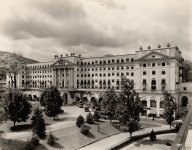
The railroad created the place, according to official history. Or maybe they just found the railroads here. Either way there was a handy plaque outside the abandoned train station and fancy hotel:

Exactly thirty-three trains a day, of course.
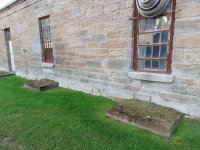
What struck me most about Grafton were all the old stone walls and staircases everywhere. I got the feeling in West Virginia that the pre-Reset past was right at the surface and would require very little digging to unearth. Check out the big stones under the bricks.


But Grafton was just an appetizer. Weston was the main dish.
To get there, I just hopped onto the following convenient highway cut and blasted through the mountains by doughty pioneers on horseback:

I wonder how they settled on that number?
I passed by some beautiful civic art on the way. Look, it says WV, kids! What a creative way to write it!

After arriving in Weston, I stopped at the conveniently located Gomart gas station to fill up:

Where have I seen that logo before?
 I stopped for a delicious bag of Utz brand potato chips at the Mountaineer Mart:

Where have I seen that logo before?

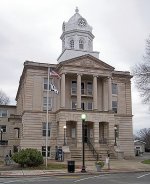
As I was eating my potato chips I espied a disproportionately monumental building a few streets away. City Hall? The public library? The local high school mayhaps? I approached it to get a closer look.

...right. I think everyone is starting to get the picture. The Masons have West Virginia on lock, baby.
Why do they have such a big presence in Weston, population 3890?
It couldn’t be because of the giant stone castle located there, could it?


I have learned that the best approach to adopt when doing historical research is a kind of split mind. Half of my mind immediately buys into whatever hypothesis I am investigating while the other half remains strictly neutral. Regarding the dug-out cities hypothesis, I have enthusiastically read everything I can find documenting it. I am simultaneously convinced and skeptical…if that makes sense. That said, the Trans-Allegheny Lunatic Asylum is the closest thing to a smoking gun for the Mud Flood that I have ever seen with my own eyes.
Let’s start with the signs out front:


So let me get this straight. In 1858, when the population of Weston was between two and three hundred (according to the tour guide), the state decides to build the largest hand-cut stone building in North America…to house a few dozen lunatics?
According to the book West Virginia’s Dark Tourism, only the Kremlin tops it as far as hand-cut stone buildings go (!):
 Please note as well that we have a big fat numerological wink in the construction date: March 22 or 322, the Skull and Bones code.
I mean, this place is huge. It really looks and feels like a European castle. I have never gotten such a strong Old World feeling in the United States.
The asylum was bought from the state by the Jordan family in 2007. They left it pretty much as is, thankfully, and make money by offering corny Haunted Tours led by guides in old-timey nurse costumes. Well, it’s better than tearing it down.
According to the tour guide, the stone was quarried and cut twenty-five miles away and carted by horse to the construction site. Is that realistic? Who knows? She also mentioned that the laborers were all prisoners sent over by the Governor. In other words, built (or dug out) using slave labor.
She described the building style as “rubble construction”. When I asked her if that meant the building was...reassembled from rubble, she said that it simply referred to the practice of putting imperfectly shaped stones together.
Years ago I stayed at a 17th century stone house in a remote mountainous area of the Lozere region of France. I was surprised when the host, a Swiss hippie, told me that when he and his father had bought the property thirty years earlier, the house was nothing but a pile of rubble. All they had to do was pick up the stones and stack them back up into walls over the building's remaining footprint. There was absolutely no way to tell that this house had ever been demolished and rebuilt. It looked exactly like all the other old houses around it. Two guys working occasionally on it for a few years was all it took.
I got excited when we went out back and saw this:

This is supposedly the oldest wing of the hospital, completed during the Civil War.
Why do they say it was completed during the Civil War? Simple, because the entire West Virginia statehood narrative is anchored to the place. West Virginia supposedly declared its independence from Virginia in 1863 to join the Union.
Here’s the laughable story:
https://www.google.com/amp/s/www.wt...-gold-heist-in-what-is-now-west-virginia/amp/
Most Mountaineers have heard of how West Virginia became the 35th State to join the union, but there’s one crucial event that took place to help tip the scales that many don’t remember being taught in West Virginia History class. (...) The event in question is the seizure of gold from the Exchange Bank of Virginia in 1861.
To tell the story we need to go back a few years to 1850, where overcrowding and high demand led the Virginia legislature to approve the building of a new mental institution, which would later become the Trans-Allegheny Lunatic Asylum.
"Overcrowding and high demand"
After touring several towns the Legislature picked Weston, then still in the state of Virginia. The towns’ people went all out to sway the legislations decision. They made sure their homes and businesses were freshly painted, repaired dilapidated streets and sidewalks, and even cleaned the streets of trash in preparation for the committee’s visit.
They even went as far as to meet the arriving committee with a brass parade. During the visit, the town folk made sure to show the committee all of the natural resources that would aid in construction including coal, stone, timber, and even water power from the local river. The efforts of the townspeople paid off and the committee chose Weston as the site for their new mental institution.
Of course.
Construction for the Trans-Allegheny Lunatic Asylum began in 1858. However, shortly after the Civil War broke out in 1861 the Virginia Legislature halted construction on the building and demanded that the remaining funds for the project, in the form of gold, be returned to Virginia to aid the state in its preparations for war. Governor of the Restored Government of Virginia, Francis H. Pierpont, feared this money would fund the confederacy and informed Union General George B. McClellan of the situation. General McClellan ordered the Seventh Ohio Infantry to march overnight to Weston to secure the funds, which were about $30,000 in gold.
At dawn on June 30, 1861, the federal troops arrived in the town. After securing a perimeter the Union troops made their way into the bank and secured the funds. The next day the troop escorted the gold north to Clarksburg and then placed it on a guarded train bound for Wheeling, where the funds helped finance the fledgling Restored Government of Virginia.
I mean…sure.
Continued in Part Two.
I had a free day, so I went to Grafton to see the old abandoned train station and Weston to see the Trans-Allegheny Lunatic Asylum.
Grafton is poor and depressing. Every city in West Virginia is full of meth demons skulking and staring with hollow eyes. It’s the most obese state in America and maybe the poorest as well. Grafton must once have been a happening spot, but it’s almost a ghost town today.
The railroad created the place, according to official history. Or maybe they just found the railroads here. Either way there was a handy plaque outside the abandoned train station and fancy hotel:
Exactly thirty-three trains a day, of course.
What struck me most about Grafton were all the old stone walls and staircases everywhere. I got the feeling in West Virginia that the pre-Reset past was right at the surface and would require very little digging to unearth. Check out the big stones under the bricks.
But Grafton was just an appetizer. Weston was the main dish.
To get there, I just hopped onto the following convenient highway cut and blasted through the mountains by doughty pioneers on horseback:
I wonder how they settled on that number?
I passed by some beautiful civic art on the way. Look, it says WV, kids! What a creative way to write it!
After arriving in Weston, I stopped at the conveniently located Gomart gas station to fill up:
Where have I seen that logo before?
Where have I seen that logo before?
As I was eating my potato chips I espied a disproportionately monumental building a few streets away. City Hall? The public library? The local high school mayhaps? I approached it to get a closer look.
...right. I think everyone is starting to get the picture. The Masons have West Virginia on lock, baby.
Why do they have such a big presence in Weston, population 3890?
It couldn’t be because of the giant stone castle located there, could it?
I have learned that the best approach to adopt when doing historical research is a kind of split mind. Half of my mind immediately buys into whatever hypothesis I am investigating while the other half remains strictly neutral. Regarding the dug-out cities hypothesis, I have enthusiastically read everything I can find documenting it. I am simultaneously convinced and skeptical…if that makes sense. That said, the Trans-Allegheny Lunatic Asylum is the closest thing to a smoking gun for the Mud Flood that I have ever seen with my own eyes.
Let’s start with the signs out front:
So let me get this straight. In 1858, when the population of Weston was between two and three hundred (according to the tour guide), the state decides to build the largest hand-cut stone building in North America…to house a few dozen lunatics?
According to the book West Virginia’s Dark Tourism, only the Kremlin tops it as far as hand-cut stone buildings go (!):
I mean, this place is huge. It really looks and feels like a European castle. I have never gotten such a strong Old World feeling in the United States.
The asylum was bought from the state by the Jordan family in 2007. They left it pretty much as is, thankfully, and make money by offering corny Haunted Tours led by guides in old-timey nurse costumes. Well, it’s better than tearing it down.
According to the tour guide, the stone was quarried and cut twenty-five miles away and carted by horse to the construction site. Is that realistic? Who knows? She also mentioned that the laborers were all prisoners sent over by the Governor. In other words, built (or dug out) using slave labor.
She described the building style as “rubble construction”. When I asked her if that meant the building was...reassembled from rubble, she said that it simply referred to the practice of putting imperfectly shaped stones together.
Years ago I stayed at a 17th century stone house in a remote mountainous area of the Lozere region of France. I was surprised when the host, a Swiss hippie, told me that when he and his father had bought the property thirty years earlier, the house was nothing but a pile of rubble. All they had to do was pick up the stones and stack them back up into walls over the building's remaining footprint. There was absolutely no way to tell that this house had ever been demolished and rebuilt. It looked exactly like all the other old houses around it. Two guys working occasionally on it for a few years was all it took.
I got excited when we went out back and saw this:
This is supposedly the oldest wing of the hospital, completed during the Civil War.
Why do they say it was completed during the Civil War? Simple, because the entire West Virginia statehood narrative is anchored to the place. West Virginia supposedly declared its independence from Virginia in 1863 to join the Union.
Here’s the laughable story:
https://www.google.com/amp/s/www.wt...-gold-heist-in-what-is-now-west-virginia/amp/
Most Mountaineers have heard of how West Virginia became the 35th State to join the union, but there’s one crucial event that took place to help tip the scales that many don’t remember being taught in West Virginia History class. (...) The event in question is the seizure of gold from the Exchange Bank of Virginia in 1861.
To tell the story we need to go back a few years to 1850, where overcrowding and high demand led the Virginia legislature to approve the building of a new mental institution, which would later become the Trans-Allegheny Lunatic Asylum.
"Overcrowding and high demand"
After touring several towns the Legislature picked Weston, then still in the state of Virginia. The towns’ people went all out to sway the legislations decision. They made sure their homes and businesses were freshly painted, repaired dilapidated streets and sidewalks, and even cleaned the streets of trash in preparation for the committee’s visit.
They even went as far as to meet the arriving committee with a brass parade. During the visit, the town folk made sure to show the committee all of the natural resources that would aid in construction including coal, stone, timber, and even water power from the local river. The efforts of the townspeople paid off and the committee chose Weston as the site for their new mental institution.
Of course.
Construction for the Trans-Allegheny Lunatic Asylum began in 1858. However, shortly after the Civil War broke out in 1861 the Virginia Legislature halted construction on the building and demanded that the remaining funds for the project, in the form of gold, be returned to Virginia to aid the state in its preparations for war. Governor of the Restored Government of Virginia, Francis H. Pierpont, feared this money would fund the confederacy and informed Union General George B. McClellan of the situation. General McClellan ordered the Seventh Ohio Infantry to march overnight to Weston to secure the funds, which were about $30,000 in gold.
At dawn on June 30, 1861, the federal troops arrived in the town. After securing a perimeter the Union troops made their way into the bank and secured the funds. The next day the troop escorted the gold north to Clarksburg and then placed it on a guarded train bound for Wheeling, where the funds helped finance the fledgling Restored Government of Virginia.
I mean…sure.
Continued in Part Two.
Last edited: