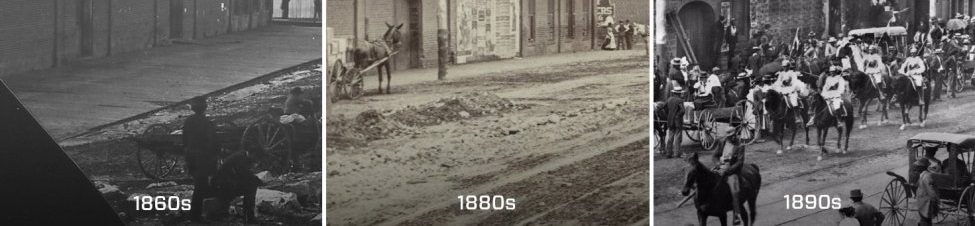
SH Archive Mud Flood in Chattanooga, TN and Leavenworth, KS. Underground Cities and Tours.

SH.org OP Username
KorbenDallas
SH.org OP Date
2018-12-17 02:45:52
SH.org Reaction Score
10
SH.org Reply Count
5

KD Archive

Not actually KorbenDallas
Active Member
Joined
Sep 22, 2020
Messages
4,691
Reaction score
1,499
To be honest, I doubt there is a "not in the loop" person out there, who knows the exact mechanism of the arrival of mud. We clearly have multiple theories which provide possible explanations of why lower floors of the 19th, and early 20th century buildings ended up buried under up to 20 feet of mud. Whether it was a single catastrophic event, or a combination of several different ones remains to be seen. In reality, we do not even know if it was an artificially created, or a 100% natural catastrophe. Yet, we do understand that there is this, for the most part, officially explained phenomena of "buried first floors", and "underground cities". The academic narrative suggests we move along, for there is nothing special to see there. We, obviously, think otherwise.


Combined effort of multiple independent researchers slowly inches us towards a possible solution to the riddle. Most importantly, with every uploaded video, or published article, the exposure, as well as public awareness, goes up.

Today I wanted to attract your attention to a new video uploaded by CONSPIRACY-R-US. It is titled "Buried Street Levels and the Mud Flood". In the video he talks about two cities displaying evidence of what we universally call "The Mud Flood".
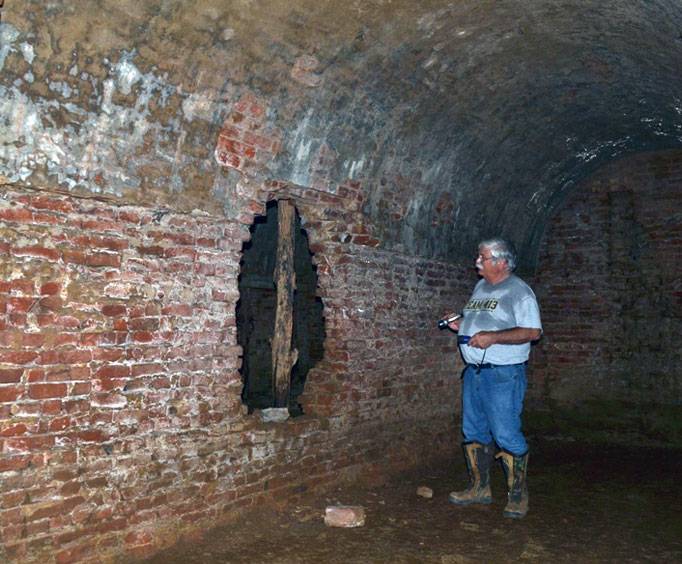
Chattanooga, TN and Leavenworth, KS
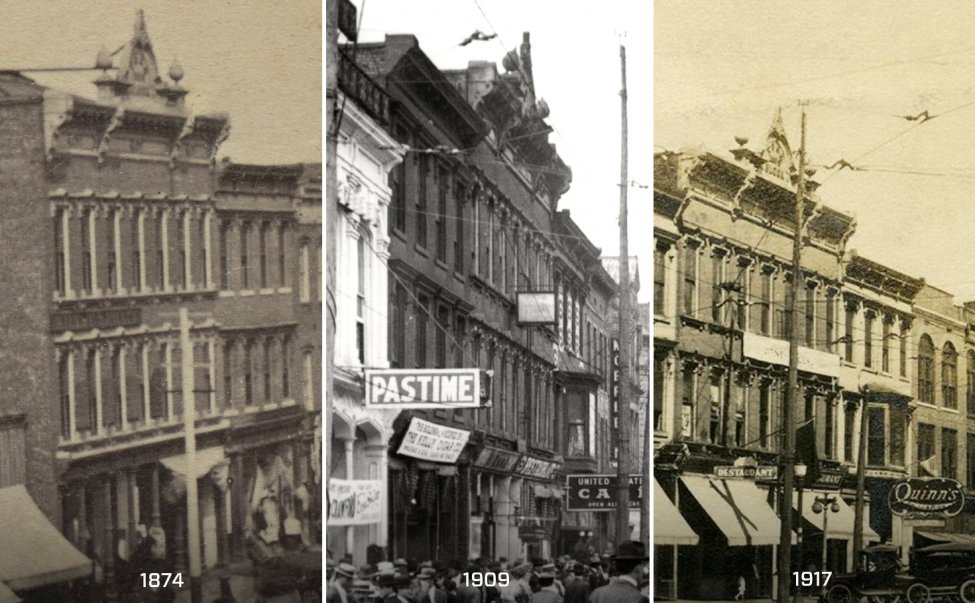
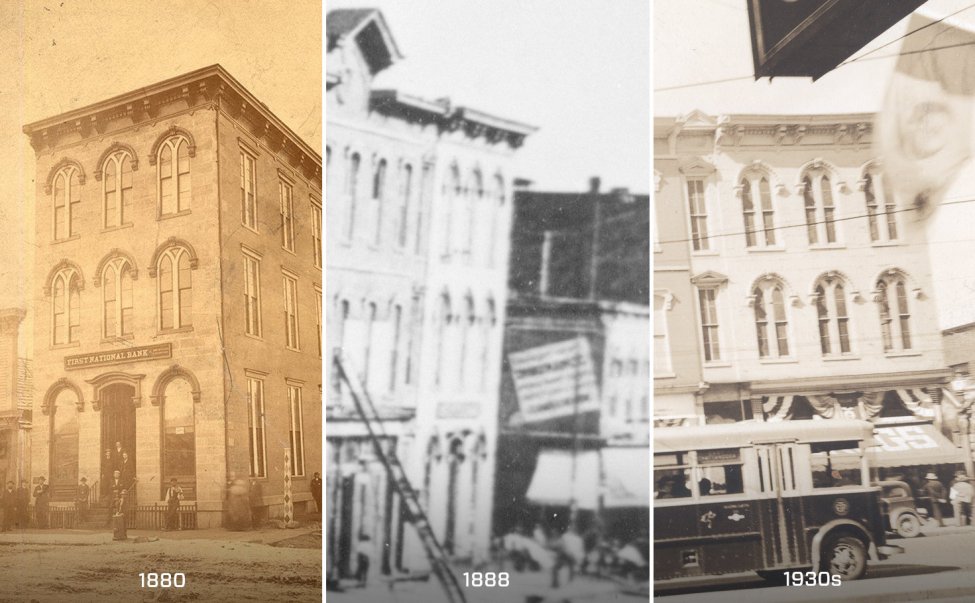
Chattanooga official: Underground Chattanooga is a below-ground area of Chattanooga, Tennessee that resulted from citizen efforts to prevent floods in the aftermath of the flood of 1867. It was rediscovered by Jeff Brown in the 1970s.

chattanooga.jpg


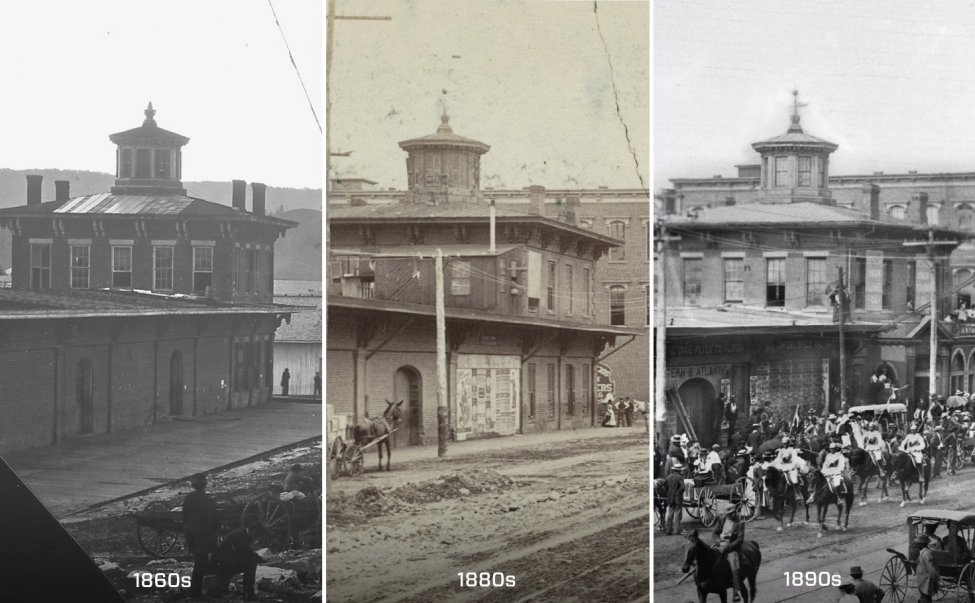
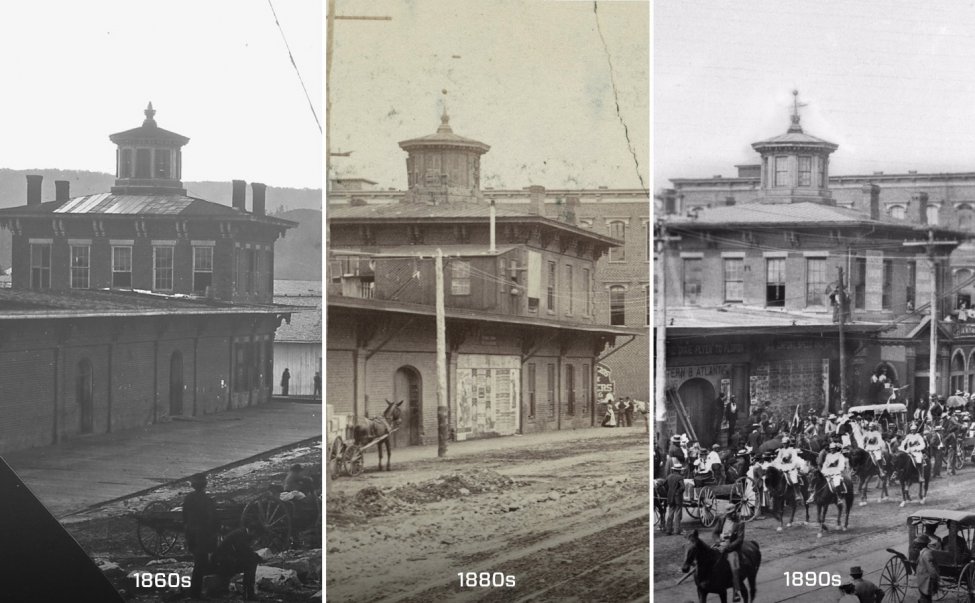
The Atlantic Depot, Chattanooga, TN
atlantic-depot-1.jpg
  • Archaeologist and University of Tennessee-Chattanooga professor Jeff Brown started noticing small clues to the underground world while walking around downtown Chattanooga. He learned from utility workers of doorways leading to nowhere and underground tunnels and rooms. Entire basements of buildings were once first floors, including some obvious storefronts complete with windows. None were marked on maps and no one could tell him why these features were there. He discovered that much of the city had been backfilled, by six feet at 9th Street and up to 20 feet at other places, but very little documentation of this process existed.
  • Because of lack of historical documentation backing up the raising of the city's streets, some suggest that it is just a legend. Some suggest that it was a common practice for the basements in buildings downtown to have stairs leading down from the street. These walk-downs, some complete with handrails leading down towards a basement entrance, existed in downtown Chattanooga at the time. The basements had windows to provide light as well as ventilation. There has been some photo documentation of structures over a span of thirty years that show little or no change. An explanation for the archways in some buildings could be explained by being used as support for the building. Some suggest that the only evidence is that of a normal growing city infrastructure and, no monumental effort to raise the city's streets. After 1925, the use of commercial basements began to fade. Over time parts of the city began to be filled in that fell below grade.
  • During the nineteenth and early twentieth centuries, Chattanooga experienced bouts of systematic flooding roughly every decade. The impact of flooding was severe; it affected many of Chattanooga's manufacturers as well as the merchants in the area. Building damage was frequent as well as the interruption of daily life. Chattanooga's commerce was constantly affected by the flooding, After years of suffering through flooding, in March 1867 Chattanooga experienced a record flood following four days of heavy rainfall. The river had risen 53 feet (16 m), which was 15.5 feet higher than a flood twenty years earlier. The rain lasted for four days, bringing the water level in the Tennessee River 28 feet above flood range. The bridge across the river was destroyed, as were many buildings. There was a considerable loss of life and looting took place. Upwards of 4,000 homeless in Chattanooga were ferried out of the flooding city to areas of higher ground.[ During a 64-year span ranging from 1875 to 1938, the Tennessee River had risen above its flood range more than 70 times.
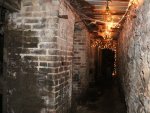
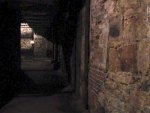
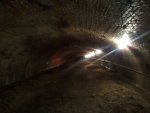
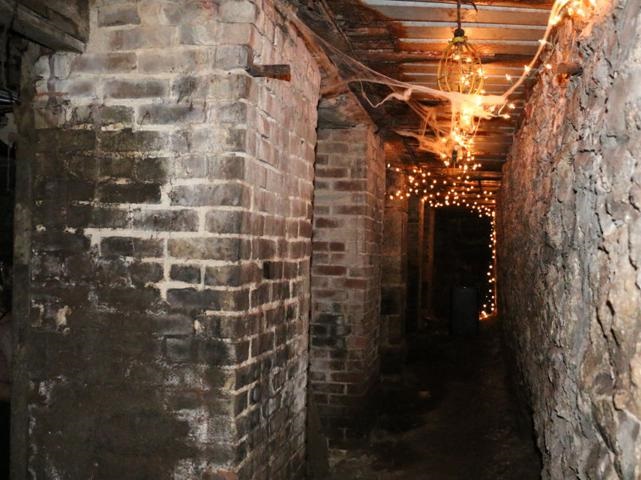
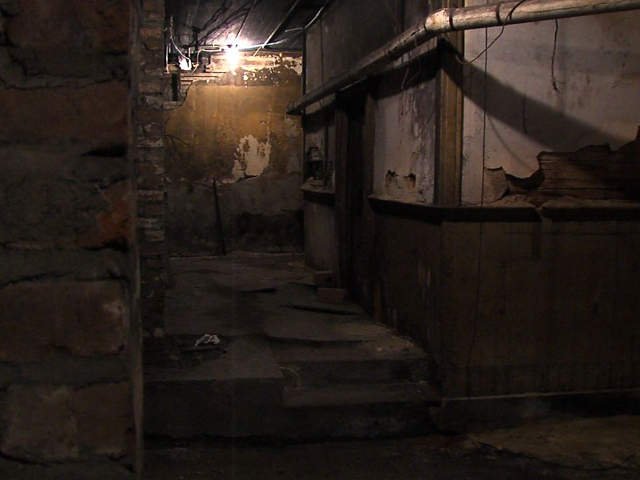
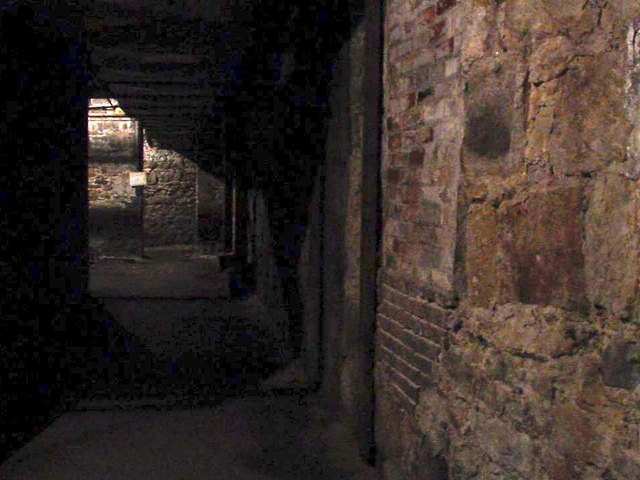
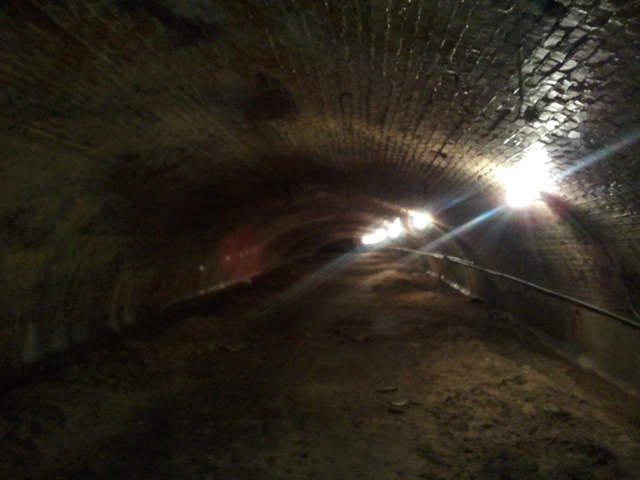
Leavenworth official: The underground city in Leavenworth, Kansas remains a big puzzle. No-one knows who built it and for what reason.

leavenworthundergroundcity_4.jpgleavenworthundergroundcity.jpgleavenworthundergroundcity2.jpgleavenworthundergroundcity3.jpg
  • Underneath the sidewalk of downtown Leavenworth sits a 200-year-old system of tunnels, a component of the town that few know, but is now becoming more open to the public.
  • Very little is known about this mysterious underground city. All we have are speculations. Researcher who examined the place discovered windows, doors and narrow paths beneath a title company at South Fourth and Delaware streets that lead to storefronts stretching several city blocks and perhaps beyond.
  • A lot of people refer to this as the Leavenworth underground. Few seem to know the real origins of this city. Some speculate that businesses just added stories over time as paved roads and new construction standards evolved. Others point to the Underground Railroad.
  • The underground city of Leavenworth is by no means ancient, but it is nevertheless an important piece of history that should not be neglected and forgotten about. Hopefully more research will be conducted to shed more light on this enigmatic and little known place.
Buried Street Levels and the Mud Flood
by CONSPIRACY-R-US

KD: It appears there are way more of these underground cities than we realize. Some of them became a money making machine by providing underground tours. In my home state of Washington we have at least two:
If your city or town was established some time in the 19th century, look for tell tale signs of the Mud Flood. Port Townsend, WA could serve as a good example of what to look for.

Please watch the above video, and share your opinion with the forum members.

If you have any underground cities in your neck of the woods, please post some relevant links. What is the "official story" explaining their existence?
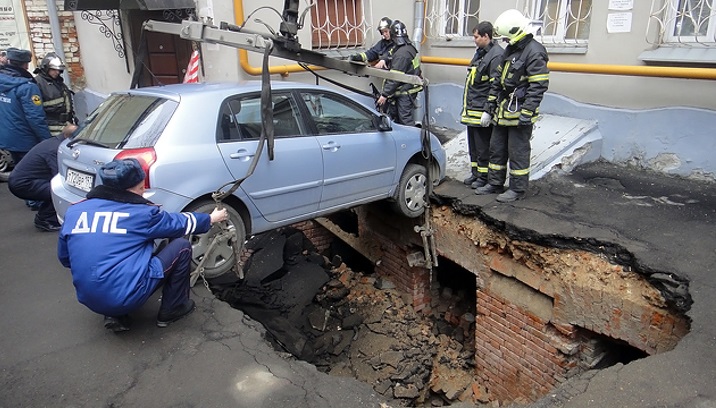
Note: This OP was recovered from the KeeperOfTheKnowledge archive.
Note: Archived Sh.org replies to this OP are included in this thread.

 
Note: This post was recovered from the Sh.org archive.
Username: whitewave
Date: 2018-12-17 04:13:14
Reaction Score: 8
Pictures are too big to load so here's a link to the picture and an article.
Apparently the immigrating Chinese experienced legal sanctions and discrimination so they adapted and went underground. There's a section of OKC known as the Asian District that's in the area mentioned in the article.

1545019249838.png
 
Note: This post was recovered from the Sh.org archive.
Username: CyborgNinja
Date: 2018-12-17 09:29:53
Reaction Score: 8
Doesn't Portland have a city wide tunnel system used by the chinese during the turn of the century to gangpress westerners into slavery. Where the term getting "shanghai'd" cones from.

They'd kidnap people and smuggle then through underground tunnel systems to the port where these ppl would be put and board ships bound for china.

The offical story was that the chinese built these tunnels. That never made sense to me. How could they do that undetected. More likely they used these buried streets.
The truth about Portland's 'Shanghai tunnels'
 
Note: This post was recovered from the Sh.org archive.
Username: Ice Nine
Date: 2018-12-17 13:44:25
Reaction Score: 10
(y) great thread!

I had a brainstorm yesterday and started checking old newspapers.

Digitized newspapers 1789-1963

If you just search "flooding" you get, 1,333,002 results containing “flooding ”:eek:

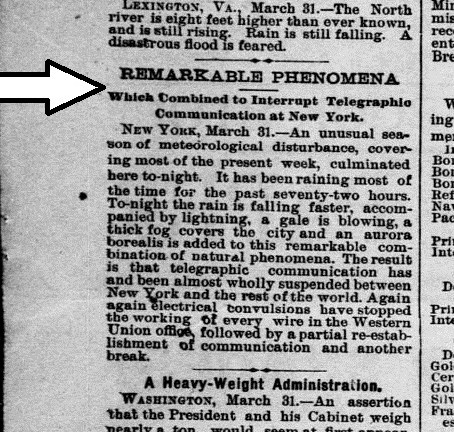
I tried "flooding Chattanooga" just now and so far I've found major flooding in 1886 and 1867.

This is just a small excerpt from one page there is more on the whole page. but, read this.."an aurora borealis is added to this remarkable combination of natural phenomena."

The Eaton Democrat., April 08, 1886
image_681x648_from_5,2936_to_1467,4329.jpg

Chattanooga had flooding in 1867 as well.
Marshall County Republican., June 27, 1867, I

And disastrous flooding in Leavenworth reported.
The daily dispatch., March 08, 1867

(Yesterday I searched "Tartary" and got over 6,674 hits, 'Tartarian" 4,632.
But don't try Tartar, you get 367,458 hits, and the majority of them are for Cream of Tartar)
 
Note: This post was recovered from the Sh.org archive.
Username: trismegistus
Date: 2018-12-17 16:30:27
Reaction Score: 9
I used to live in Denton, TX and there are a few curiosities related to mudflood/underground tunnels (not to mention its location on the 33rd parallel).

To add some background to the area, Denton is home to the Region 6 HQ for FEMA. It is kind of an open secret that the site has multiple underground floors, I've confirmed that there are at least 3 underground by someone who works for them, though I would warrant a guess there are quite a few more. In addition, I have gathered from local anecdotes that the construction company who built the FEMA building is owned by a fairly prominent family of Mormons/Freemasons. Interpret that as you will.

So, the official explanation is that Denton is home to several decommissioned military bases, specifically a missile test base. This site is an attempt to document all the various places in the town that still show evidence of this. A lot of this is perfectly in line with the DUMB (Deep Underground Military Base) theory, but there are a few wrinkles that have me wondering if it isn't connected to something bigger.

Here is a map view of a particular bookstore (one of my favorites) in the town. Nothing really jumps out at you, in the way of mudfloods BUT I overheard a very interesting conversation while in there one day.

It goes like this: I was in the basement of the bookstore (this would be the slightly darker purple floor if you are looking at the linked street view) perusing the history section. There was another guy in there that looked like he was looking for something specific, but not a book. It looked like he was trying to find an exit, or something along those lines. There was an employee down there putting away some books who noticed the same thing, the employee asked the man if there was something he could help him find. Below is a summary of the conversation I overheard:

"I noticed that the floor in the basement is made from wood, there isn't any foundation underneath this level. Is there an additional floor under here?"

"Oh yes, there actually is a basement under here but there is nothing there. There isn't even a way to get down there, I think the owners removed the door a while ago"

After stomping around for a few minutes, I realized he was absolutely right. There was another floor underneath the "basement" level of the bookstore. I'd been a frequent patron of the store for years and I had never even paid attention! I was flabbergasted and very intrigued.

This leads me to two conclusions: This is either an old entrance to the rumored "military" tunnels under the city, or evidence of a mudflood burying the first level at some point in history.

Addendum: Recycled Books is housed in the old Wright Opera House, build date is said to have been 1899. That Wiki mentions that they built the thing from the decommissioned court house. What happened to that courthouse, you asked?

:unsure:

I have to say that spending time looking into this period of time, I can start to predict what happens to these buildings. If they were around in the late 1800s, they were either struck by lightning, set aflame, or encountered some other disaster seemingly without fail.
 
Note: This post was recovered from the Sh.org archive.
Username: Bemused
Date: 2019-12-23 21:09:00
Reaction Score: 0
I was researching the history of the railway systems and ended up researching Chattanooga along the way. It is funny to hear the citizens try and make sense of their city history. They have a bad case of cognitive dissonance. They know the streets were raised and buried the first floors of their old buildings. There are articles about who okayed it, who paid for it, where did the dirt come from, etc. They are still trying to figure it out.
Chattanooga Underground - WDEF
There is an underground 145 foot waterfall that you access through a cave under Lookout Mountain. These pictures are of the entrance to Lookout Mountain with an Incline Railway and lookouts. Nothing fishy here!


Incline_prep.jpglookout mountain.jpgrock.jpg
 
Note: This post was recovered from the Sh.org archive.
Username: AlexMcJones
Date: 2020-01-18 23:35:12
Reaction Score: 0
Came here to post something similar.

You mentioned Chattanooga; I actually grew up in Chattanooga, and I’m all too familiar with buildings that look identical to the photos in this thread. And everyone in Chattanooga knows why; it’s not some big mystery.

Chattanooga raised the entire city by one story following the great flood of 1867.

1867 flood of Chattanooga - Wikipedia

I imagine that other cities were raised in a similar fashion during the same time period due to rising water levels as well.

The big question for me is what caused this rise and was this a global event or just isolated to certain regions? And based upon these photographs it seems to have been a global phenomenon, and I find that very intriguing—makes me want to research this more in depth.
 
Note: This post was recovered from the Sh.org archive.
Username: Timeshifter
Date: 2020-01-19 09:00:14
Reaction Score: 0
From the wiki link above Waki

Following the destruction of the Military Bridge, Chattanooga city was without a bridge until the Walnut Street Bridge was constructed in 1891. On March 9, an anonymously written article appeared in the Daily American Union saying that city officials had begun planning to start a major city project that would raise the street level by about one story through the city. The remnants of this massive project are still noticeable to the naked eye. Downtown Chattanooga is filled with tops of old windows and doors protruding out of the sidewalk and what seem to be basement doors that do not lead anywhere.

Thats a wiki admission of a mud flood!
 
Note: This post was recovered from the Sh.org archive.
Username: KorbenDallas
Date: 2020-01-19 09:48:49
Reaction Score: 2
Looks like they forgot to bury this building here.

atlantic-depot-1.jpg
The above photograph is from the first post of this thread. It also says in there:
  • Because of lack of historical documentation backing up the raising of the city's streets, some suggest that it is just a legend.
Personally, I think that saying stuff like "Chattanooga raised the entire city" is conveniently plausible, for it is easier said than done. I do not know what the populationof Chattanooga was in 1867, but in 1870 it allegedly was 6,093 people.

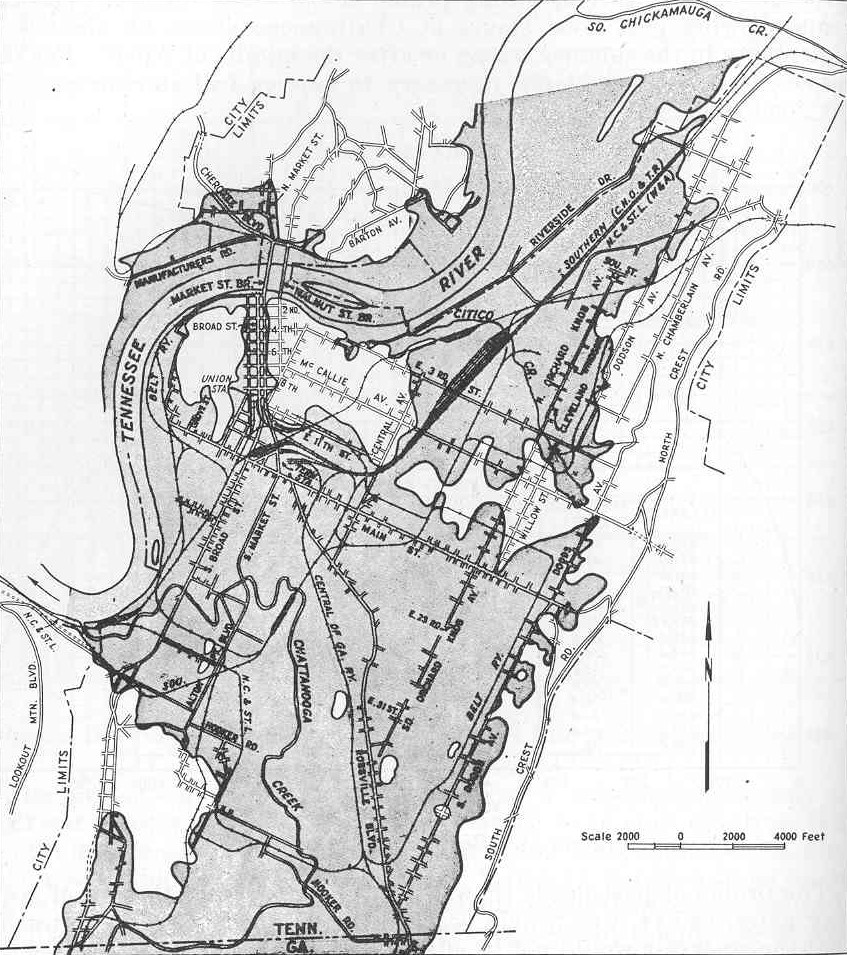
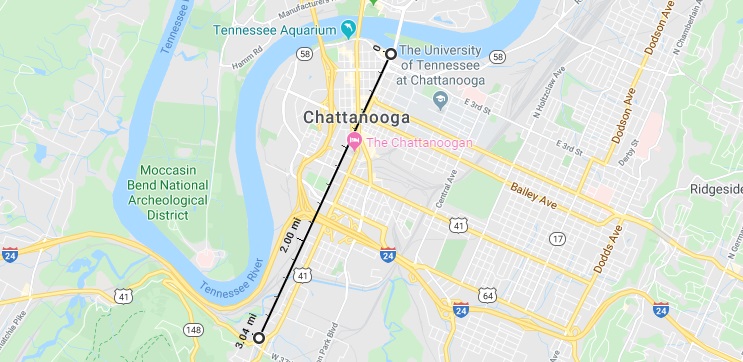
The above map is supposed to represent the area flooded in 1867. The below map should give an idea of the distances which were allegedly filled after the flood.
  • From the OP: Archaeologist and University of Tennessee-Chattanooga professor Jeff Brown discovered that much of the city had been backfilled, by six feet at 9th Street and up to 20 feet at other places, but very little documentation of this process existed.
Chattanooga-1867.jpg
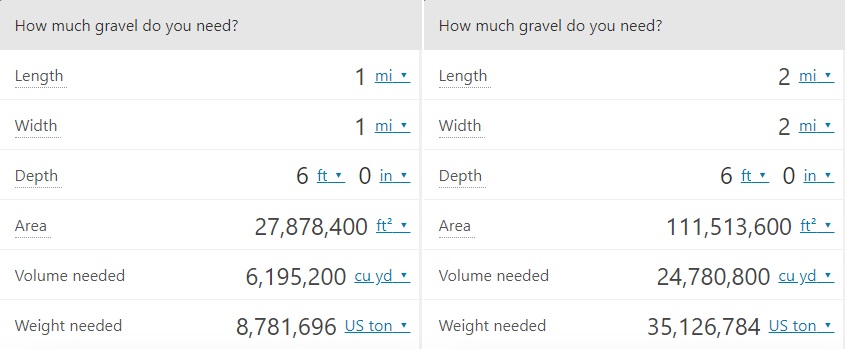
Using this calculation website we get the following volumes of dirt needed to raise 1, or 4 square miles by 6 feet.

dirt-1-1.jpg
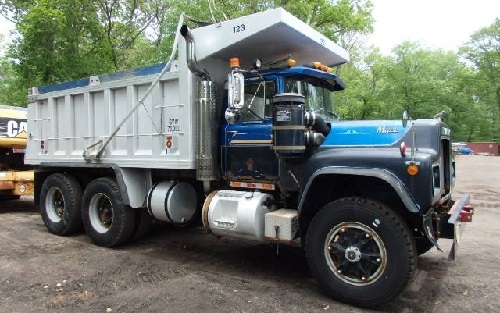
The average commercial dump truck holds anywhere from 10 to 18 cubic yards of dirt.

dump-truck.jpg
Naturally we get the following dump truck trip numbers:
  • 1 square mile raised by 6 feet - 344,177 trips
  • 4 square miles raised by 6 feet - 1,376,711 trips


I am not sure what transportation they used to deliver the dirt circa 1867, but conventional wisdom says that they had no access to dump trucks. What dirt moving equipment does it leave us with? Photographs normally suggest horses and buggies.

atlantic-depot-12.jpg

Additionally, I wanted to point out, that the actual buried structures are hard to justify, when your 1870 population was only 6k. I do not want to get into construction inconsistencies here, but this is something to think about.

For those supporting the "self-burial" version, I have the following questions:
  1. Do we have any photographic evidence of the raising process?
  2. What year was the city raised?
  3. How long did it take to get it raised?
  4. Where did the dirt get transported from?
  5. What equipment was used to transport millions of cubic yards of dirt?
  6. Any 1867ish sources describing the process, or confirming it?
 
Note: This post was recovered from the Sh.org archive.
Username: Reichenbach
Date: 2020-04-15 02:59:04
Reaction Score: 0
the underground areas of the cities give fresh meaning to the Underground Railroad ... all of Tennessees' major cities were "Antiquity" cities ... i don't think 6,000 people could get the city raised by one floor and 1.4MM trips with average of 14 cubic yards of dirt ... the underground city was a left over from the past covered by mud ... Tennessee river is my suspicion ... and then where did the river get its mud from ...
 
Tips
Tips
Please respect our Posting Rules.
Back
Top