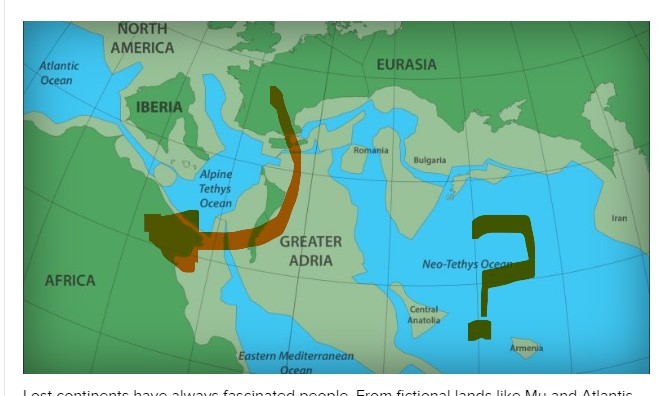
Motivated by the latest KD thread, I went back to that Mickey Mouse map of the Mediterranean Sea, for some more detailed and collected thoughts.
I think it explains some historical mysteries and brings us a tool for trying to fit even more answers to it.
This video illustrates the look of the Med coastline on different water levels:
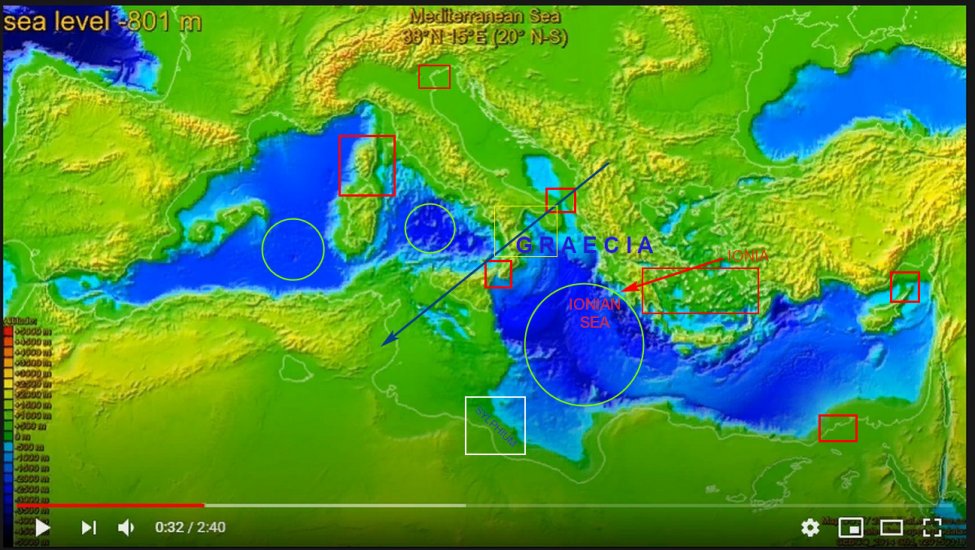
Around -800m a continuous land bridge is created that connects the north coasts of the Med to its south ones.
Therefore, we no longer have a North and a South region that are kept remote from each other by a big and dangerous to navigate on water mass.
Instead, every part of the Med becomes easily accessible even on horse and by small boats.
Here is the -800m level with annotations and my thoughts below it:
These are just thoughts and proposals; here are some questions that, if answered could connect the dots:
I think it explains some historical mysteries and brings us a tool for trying to fit even more answers to it.
This video illustrates the look of the Med coastline on different water levels:
Around -800m a continuous land bridge is created that connects the north coasts of the Med to its south ones.
Therefore, we no longer have a North and a South region that are kept remote from each other by a big and dangerous to navigate on water mass.
Instead, every part of the Med becomes easily accessible even on horse and by small boats.
Here is the -800m level with annotations and my thoughts below it:
- Blue arrow: One can now walk from Italia and the Balkans to North Africa on a short, easy route.
- There are two smaller Meds, the east and the west one ('Roman' and 'Greek' worlds, maybe?)
- Green circles: One can now circumnavigate each of the smaller Med lakes and reach every part of them only by sailing safely next to the coast.
- Great civilizations are able to grow on big islands (Cyprus, Sardinia/Corsica/Crete) as they are not ... islands but connected to and part of the mainland.
- The glorious 'Roman' ruins found in North Africa make more sense as an easily accessible part of that 'Roman' world.
- The landmasses that sank may hold the original places whose names were later used to re-designate non-flooded areas, thus giving the impression of continuity in the new false timeline, but also creating discrepancies like the many 'Calabrias'. The real 'Athens' for example, could be underwater, until romantic wanderers (= secret society missionaries on a mission to re-designate places and peoples) arrived in the Acropolis area and named it ... 'Athens'.
- Malta raises as a serious candidate for being the Atlantis.
- 'Island-hoping' was much easier in the Aegean, as there were ... no islands.
- Even wikipedia claims that "the current coastline of the Aegean Sea dates back to about 4000 BC"... only!
- Underwater ruins of Alexandria can be easily explained (red square down-right).
- The extinction of the north african Silphium/(Sylphium) plant can be easily explained (white rectangle).
- The flooding of Venice and the creation of the venetian lagoon could be explained.
- 'Ionia' was the western coast of Anatolia in today's Turkey and the Ionian Sea is the sea to the west of mainland Greece. However, on this map we can 'drag' the west coast of Anatolia more to the west (red arrow), as it is now a continuous land mass, and the Ionian Sea becomes ... the sea of Ionia !!! (Note, that the two terms are not identical in greek spelling and gender, the phonetics though are, and this is a major indicator that a different spelling&gender may have been used to emphasize the new, false terms). And why did the Turks who arrived there during the 11th century call the natives 'Ionians' until now ('Yunan')? That was supposed to be one of the ancient tribes of the region, unless the Ionians were still around.
-
- Graecians were supposedly an ancient greek tribe, yet it is a term that was still in use by the natives during the beginnings of our War for Independence, in early 19th cent. (Note that 'Graecian/Greci/Greek' are one in ... greek : ' Γραικοί, Graikoí '). How could it be that a 18th cent. balkan tribe named themselves after a specific ancient one that they would have encountered only in scholar books? Well, maybe because the ancient Graecian tribe never actually went extinct; like the Ionians. Instead, the sea level rise created the Adriatic Sea and separated them into an italian part (yellow rectangle) and a balkan one. The key is this: While the balkan part was 'hellenized' by the 'Philhellenes' during our War for Independence and started calling themselves 'Hellenes', the italian cousins remained unaffected by the philhellenic movement and continued calling themselves 'Griko' ! The Philhellenes, though, did not feel the need to stop calling the Greeks 'Greeks' and that's why we ended up with this name duality. The harshness of the Apulian and Calabrian landscape kept the Grikos away from the rest of the italian people and they managed to preserve the Griko language until today, even as a living relic.
These are just thoughts and proposals; here are some questions that, if answered could connect the dots:
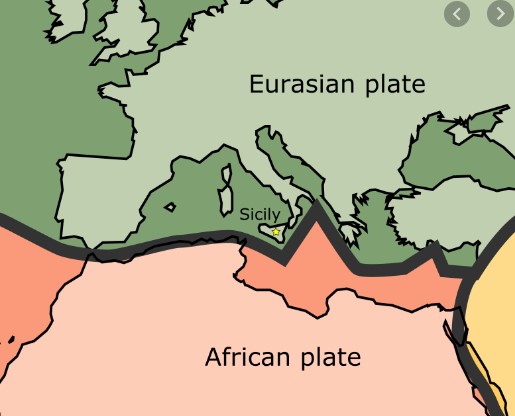
- Which moment/s in the historical timeline could connect the creation of the Adriatic Sea, the Calabrian earthquakes, the separation of the greek people and the flooding of Venice?
- What does 'Magna Graecia' indicate as a term? What was 'big' about her?
- Does Malta fit into the Atlantis descriptions?
- Are there other places whose names or history can be explained by shifting them on this map?
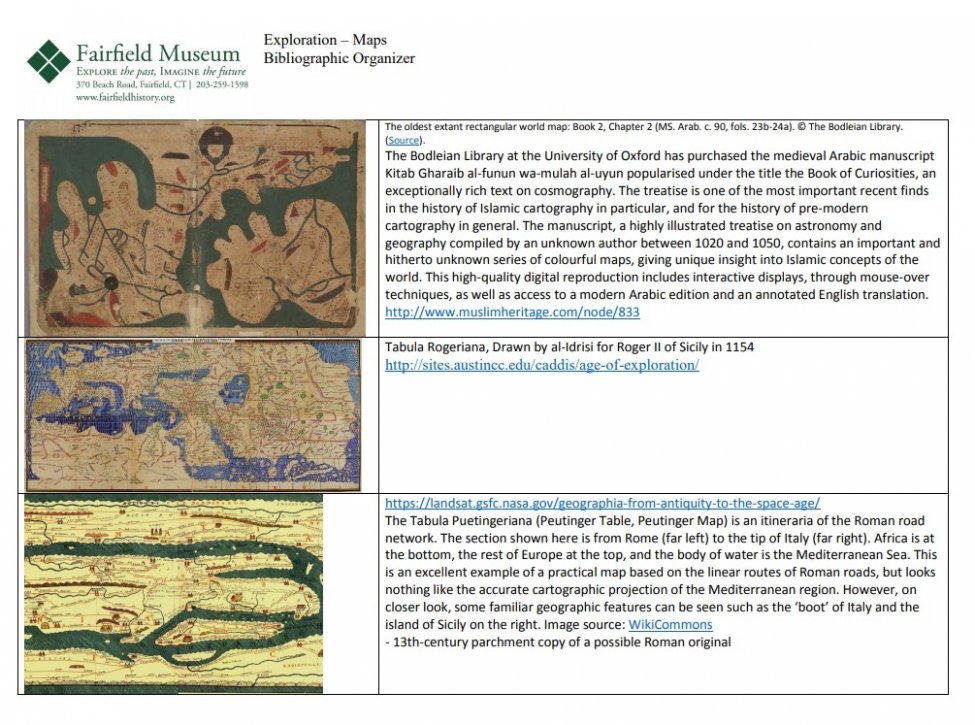
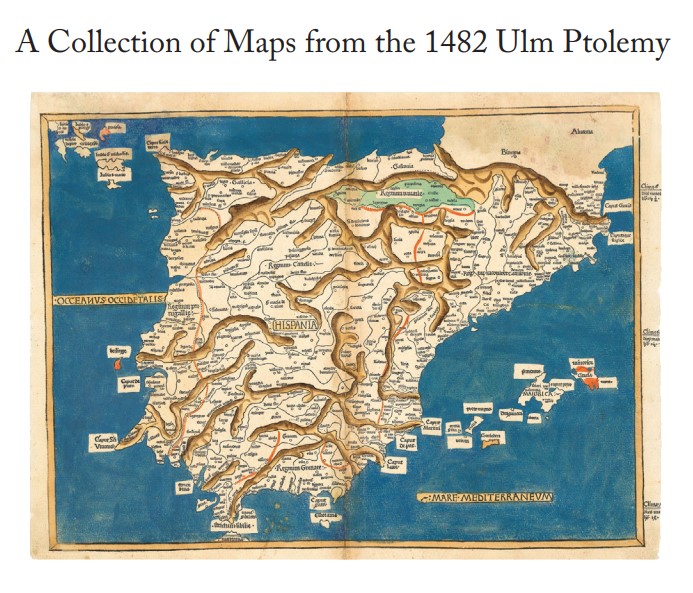
- Are there maps or map copies that illustrate such a look for the Med?
Note: This OP was recovered from the Sh.org archive.
Note: Archived Sh.org replies to this OP are included in this thread.