Note: This post was recovered from the Sh.org archive.
Username: asatiger1966
Date: 2018-12-04 08:20:32
Reaction Score: 11
Here is a little video I find to be pretty interesting. At the end the guy connects the dots, in a way, and Smithsonian pops up on the radar once again.
The gate keepers just love caves. In Illinois about 1988 a former 101st paratrooper said that he had
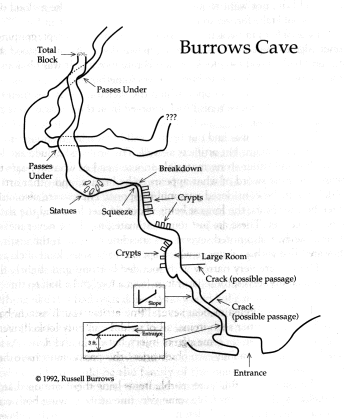
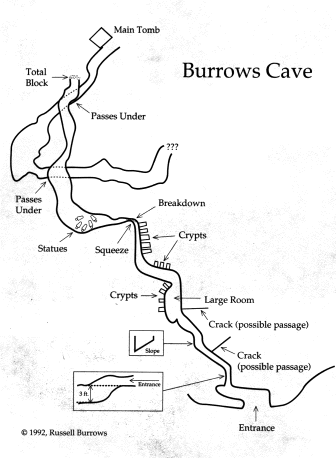
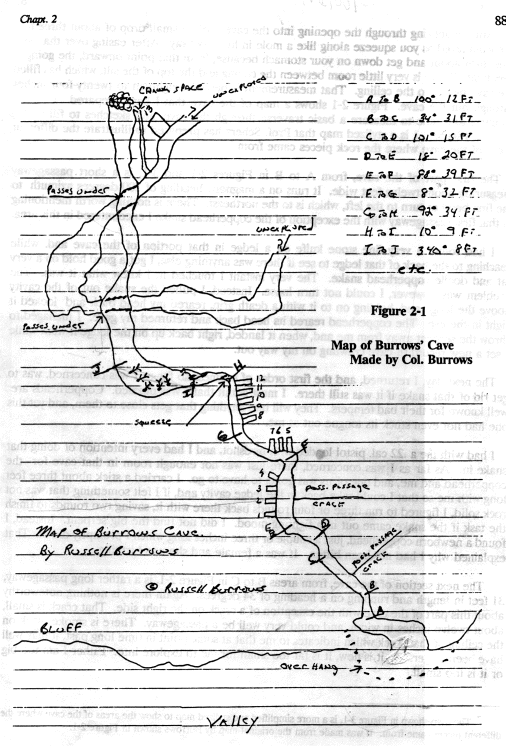
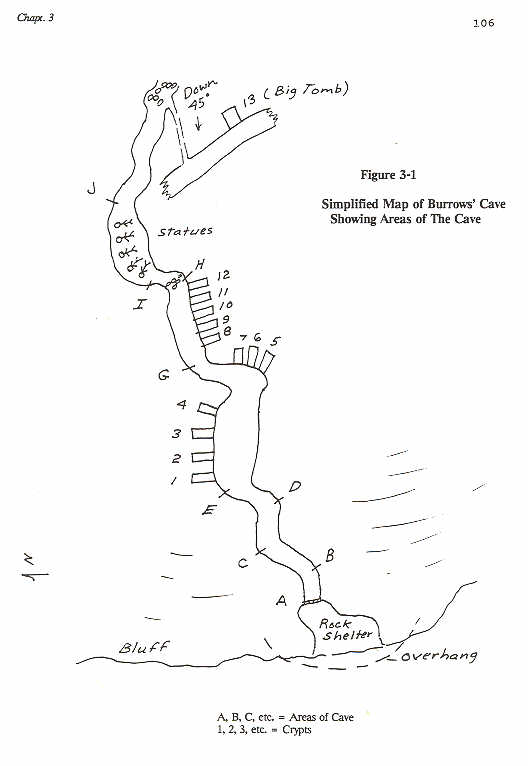
accidentally found a cave located along a river bank. From the information coming out apparently there was many mummies in niches along the walls. The cave branched off in multiple directions. There were alcoves with gold,silver and Gem stones in pots. A ton of carved stones written in five languages from the Mediterranean Sea countries. The combined find seemed to indicate maybe an African or Egyptian king , or even Alexander The Great's resting place. A large amount of gold artifacts,
Sometimes my rhetoric is difficult to get your head around. We never lie, never try to stand out any way whatsoever. We blend in and listen.
Take my comments together and look for a thread.
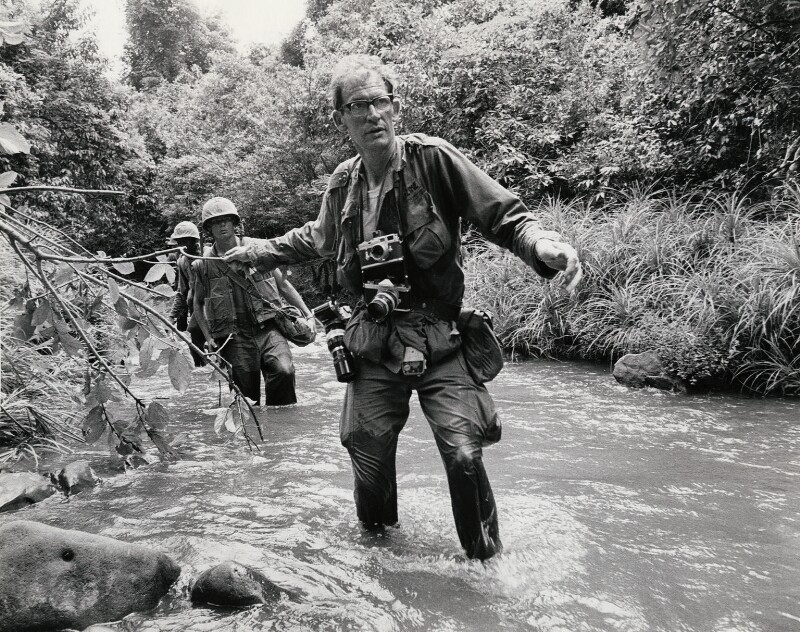
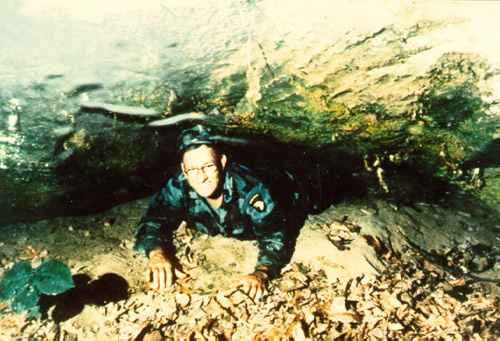
The man below crawling out of a cave has on his shoulder a 101st Abn patch. Remember the officer over me in the LRRP platoon in the mountains of Vietnam also wore that same uniform but I mentioned ,he really was a British Commando with the SAS. if you will notice the older picture of the same man he now has his British SAS uniform on.
The professional Archeologist ,over 50 organizations and museums , said everything was fake. Called the whole affair a hoax calling Mr. Burrows a lair. Oddly enough the Smithsonian stayed out of the public fight.
I can not tell you the amount of just gold that was removed from that site but we heard over 1.2 billion during the first seven months.
Attached is enough information to form an opinion. Watch how the discovery is covered up.
“Fury from the Sky”
May/June 2015 - #111
New Light on the “Burrows Cave” Controversy
Could the Debunkers Have Gotten Ahead of Themselves?
In 1982, Russell E. Burrows was trolling alone among the sparsely inhabited hills and fields in southern Illinois, twenty miles from the Ohio River. The amateur treasure hunter, originally from West Virginia, would later claim to have been searching for Civil War-era buckles, pioneer horseshoes, or old coins, with his metal detector, when he supposedly fell into a large, overgrown hole. The subterranean interior, he would say, connected to a corridor and series of man-made chambers filled with a vast and bewildering array of black river stones (known as
argillite), white marble, and sandstone engraved predominantly with the portraits of men attired in the garb of ancient Rome, Judea, Carthage, and West Africa. Other stones were covered with Christian themes and a mix of inscriptions in hieroglyphic Egyptian, Hebrew, Numidian (ancient North African), Ogham (Keltic), and North Semitic (a form of Phoenician). Similar imagery appeared on a cache of gold coins and bars.
Over the next seven years, Burrows removed large numbers of these items, selling them mostly to amateur antiquarians, but was accused by many of engaging in a transparent fraud. While mainstream scholars—convinced that no one from the ancient (old) world arrived in America before Columbus—dismissed the collection out of hand as a bunch self-evident fakes, debate concerning their prehistoric authenticity still rages among many amateur archaeologists, who are, themselves, deeply divided about the real provenance of the “cave” artifacts. This uncertainty was chiefly instigated by Burrows himself, who steadfastly refused to reveal the site of his cave for independent verification, a reluctance that quite naturally cast serious doubt on the veracity of his claims.
After seven years of independent research, Wayne May, publisher of
Ancient American magazine (Colfax, WI), decided to initiate professional excavations near Richmond County’s Embrarras River, which, he concluded, was the most likely site of Burrows Cave. But after making some promising finds, however, May was forced to discontinue his project for want of financial support, a result of the 2008 recession. About the same time, Bear and Company (Rochester, VT) published my book,
The Lost Treasure of King Juba, which described the disparate objects allegedly removed from the unidentified site as possible evidence for Roman Era colonizers. These were, I argued, refugees from Emperor Caligula’s invasion of Mauretania, a quasi-independent kingdom in North Africa comprising territories equivalent to modern Morocco and western Algeria.
Juba II (52 BC–AD 23) was a Mauretanian monarch who amassed great wealth coveted by the bankrupt Caesar. Caligula’s imperial legions, on entering the mausoleum containing the King’s treasures, found it empty. Perhaps, I speculated, these riches had been spirited across the ocean to North America. At that time—AD the first century—the Mauretanians were skilled mariners, while our continent was one, vast battlefield of intertribal warfare, save only for part of what is now southern Illinois, where Burrows Cave was said to be found.
Since my book’s publication twelve years ago, new light from various sources has been shed on its still unresolved subject matter. Among the new investigators is Scott Wolter, a university-trained forensic geologist, who subjected several of the alleged artifacts to careful study at his award-winning laboratory in St. Paul, Minnesota. He is also the host of a History Channel series,
Ancient America Unearthed. While scrutinizing several engraved blocks of white marble from the cave, Wolter discovered that their reverse sides were faintly, but discernibly, carved with Anglo-Saxon names, brief inscriptions in mid-nineteenth century English, along with dates and places of birth and death, together with Christian crosses. They were tombstones from the early to mid-1800s. He and other investigators concluded that someone had stolen badly weathered headstones from an old, southern Illinois cemetery to carve Roman-like imagery on their backsides. Case closed, or maybe not.
On further reflection, the apparent exposure of fraud seemed less clear. Skeptics pointed out that nineteenth-century stonecutters might just as well have stumbled upon some of the anciently engraved slabs in a farmer’s field and exploited the otherwise costly marble for use as grave markers. Such a possibility seemed more plausible to long-term followers of the cave controversy, who recalled that as far back as in the early 1990s, critics of the cave’s self-styled discoverer had noted the resemblance of his carved tablets to tombstones. The point is, if, in fact, these particular stones, engraved with the profiles of helmeted warriors and ancient script, had been recycled as headstones 170 or more years ago, as suggested by the dates on their surfaces, then they could not have been faked in modern times. Unfortunately, there was no way to know for sure, one way or the other.
These nineteenth-century associations seemed to be corroborated by local but unrelated farmers, whose continuous family roots in the area went back to the days of its first modern settlers. When word of Burrows Cave began to spread throughout the region during the late 1980s, a few senior residents recalled how they and their forebears occasionally unearthed similarly illustrated stones while plowing wheat fields. Sometimes, the peculiar objects were kept as curiosities or traded with neighbors but, more often, discarded. These multigenerational inhabitants remember how their grandparents believed that the peculiar artifacts had been used by practitioners of a black-magic cult said to have conducted secret rituals in Richmond County caves during the 1880s and 90s.
While efforts to verify the prior existence of such a group came to nothing, satanic ceremonies and sacrificial activities reportedly occur to this day in rural southern Illinois and, indeed, at least a few Burrows Cave-like stones have surfaced beyond the Embrarras River—most notably, the so-called “Bird-Man Tablet,” found east of the city of St. Louis, just across the Mississippi River in Collinsville, Illinois, at Cahokia, where a large ceremonial center that flourished during the tenth and eleventh centuries AD. Radiocarbon dating of charcoal found at the base of the lobe or stump associated with the tablet found inside Monks Mound—a colossal step pyramid—yielded an approximate date of AD 1310. Discovered in 1971—more than ten years before Russell Burrows first entered his cave—the image on the front of the sandstone depicts a human dressed in eagle or falcon regalia. As such, the Bird Man stone—92 mm long, 62mm wide, and 17mm thick—physically and stylistically resembles Burrows Cave objects.
Excluding the lithic Bird Man and a half dozen or more, similar-sized sandstone tablets found near Cahokia and around Madison County’s Horseshoe Lake, nine miles north of Monks Mound, precisely how many illustrated stones have been associated with Burrows Cave? Estimates ranged from a few dozen to tens of thousands. To calculate a realistic figure, Scott Wolter, Wayne May, and I tallied up all our information concerning Burrows’ customers, compiling the total number of their verified purchases. Unable to track down every, individual object, we could not arrive at a precise determination but did account for around three thousand known artifacts, six thousand less than cited in my book. This number is, nevertheless, still far too great for any single hoaxster—or even a group of forgers—to mass-produce. This conclusion is especially credible given the stones’ sometimes lengthy, complex texts in at least five, different, written languages and the often-high artistic quality of the portraits themselves.
It was, in fact, their frequently visual excellence that particularly attracted the recent attention of Jill Baker. The award-winning painter, illustrator and teacher at the University of Southern Indiana, Evansville, closely studied Burrows Cave imagery, which she easily recognized as the diverse work of not a few, but many different artists. It was clear, then, that most of the numerous depictions were not simply knocked out by untrained craftsmen, but could only have been carefully carved in the hard argillite by skilled hands.
Baker’s research went beyond artistic considerations to the making of a startling deduction: Burrows Cave never existed. Her diligent, personal investigations led back to an old, agricultural estate in southern Illinois. It was here that she learned how Lowery farmstead family members, as long ago as the late nineteenth century, were perplexed by a large, undetermined number of shallow pits pock-marking their land. Inside the irregularly spaced depressions were found caches of mostly black stones inscribed with strange writing and emblazoned with the faces of strange men wearing unfamiliar headgear. Generations of Lowerys regarded these “Indian stones” with superstitious dread and had little personally to do with them. Rumors, nonetheless, spread locally of these mysterious objects, which were eventually featured in a treasure-hunting magazine of the 1920s, according to Kent Christon, antiquarian and lecturer at an alternative archaeology conference held in Washington, Indiana—thirty-four miles, incidentally, from the suspected location of Burrows Cave—last November. It was from a pertinent issue of this old periodical, Christon stated, that Russell Burrows, himself an avid treasure hunter, learned about the Lowery farm pits, from which he extracted and purchased the artifacts.
The farm in question and its many pits—all of them empty now—still exists. The story of its pits may provide an alternative explanation to the “cave,” which Mr. Burrows declined to disclose since he began selling its artifacts in the early 1980s. Or, as other investigators, such as Wayne May, argue, the Lowery site might be an additional source for such objects, which have, as described above, been discovered in other parts of southern Illinois. Before being shut down for lack of funding, May’s forty-foot-tall tractor-rig was positioned by crewmembers above the suspected site and did, in fact, sink a drill bit into an almost perfectly square, stone chamber. Unfortunately, whatever it may once have contained had been flushed out years before by the rushing waters of the nearby Embrarras River. The disappointed researchers concluded that a gunpowder explosion set off too close to the site in late 1989 had ruptured an adjacent aquifer, flooding the chamber to its ceiling. That this artificial, subterranean room had been identified as a possible location for Burrows Cave served to encourage May and his crew.
Since Wayne May’s drill found its mark, there have been other suggestions of less dramatic, but no less revealing, character. May has since obtained an unlikely subgroup of the Burrows Cave collection, comprised of small, polished, dark stone, human figures, occasionally nude, but mostly dressed in what appear to be humble clothes. Carved with contiguous imagery on either side, the objects seem to have served, not ritual purposes, but also, as toys; specifically, dolls, each averaging about four to five inches in length. There are between fifty to seventy of them, sometimes comically portrayed as grumpy-looking laundresses or washer-women, hefting bags of clothes over their shoulders, or engaged in similarly arduous, everyday chores. Three, larger specimens are yellowish-brown sandstone carved in the round.
The charming simplicity of these little models suggests authenticity to some. They also comprise the only known physical references to children throughout the whole assemblage of Burrows Cave materials. After all, the few, university-trained scientists brave enough to risk the ire of their colleagues by speaking out publicly on behalf of the ancient provenance of these and related artifacts were convinced that the body of the site’s material evidence belonged to Roman Era refugees from North Africa, which must have included their children.
James P. Scherz, professor of civil engineering from the University of Wisconsin, in Madison, and a leading archaeoastronomer; Wake Forest University’s professor of history in North Carolina; Dr. Warren Cook, professor of history and anthropology at Vermont’s Castleton State College; and Dr. Joseph Mahan, professor of history at the University of Georgia, in Columbus—have all stated that a neo-Mauretanian colony established itself nearly two thousand years ago in down-state Illinois. Its southern-most frontier was set up against the violent incursions of native American tribal peoples—perhaps, at least partially, the ancestors of today’s Shawnee Indians—in the form of stone battlements atop strategic bluffs forming a staggered line from the Mississippi River in the west across the state to the Ohio River in the east.
When
The Lost Treasure of King Juba was written twelve years ago, nine such walls were recognized. Since then, Mark Motsinger won the Outstanding Illinois Teacher Award from the Illinois State Historical Society for his discovery of an additional six prehistoric breastworks. Over the last twenty centuries, the devastation of severe earthquake activity in this tectonically active zone—geological lair of the notorious New Madrid Fault—has undoubtedly shaken many of the formerly twelve-foot-high parapets to their foundations, now hidden under thick vegetation that never relinquishes its cover, even in the mild winters of southern Illinois.
Only Motsinger’s methodical research preparation, followed by no less meticulous scouring of the region’s suitable clifftops, enabled him to make his additional discoveries. Commenting on his success, Robert Jackson, a retired forester with the state’s Department of Natural Resources, has himself collected evidence for forty-one ancient, dry-stone bulwarks running from the Missouri to Indiana borders. If Motsinger’s continuing investigations eventually verify these many ancient walls, they could testify to a virtual pre-Columbian Maginot Line in southern Illinois.
While these ongoing revelations offer intriguing, even credible possibilities for the area’s colonization by Roman Era refugees, the location or very existence of Burrows Cave itself is still unknown.
If you recall My mothers younger brother James, CIA, recruited convicts, with the promises of a pardon, to perform missions with them. This was done to lower the military profile and help deniability.
Ice Nine
Another edge I crossed, there might be 10-15 pictures in the world of me. At formal black tie type events, even sitting at the dignitary table. We were routinely blacked from the pictures, it was a rite of passage in the unit.
Give me feed back good ,bad or ugly


 ...
...