Smithsonian: Suppressed Archaeological Finds

SH.org OP Username
whitewave
SH.org OP Date
2018-11-12 02:32:44
SH.org Reaction Score
73
SH.org Reply Count
69
Note: This post was recovered from the Sh.org archive.
Username: KorbenDallas
Date: 2018-12-04 20:56:00
Reaction Score: 3
To send those remains all the way to Holland they had to have some serious reasons. Though looking in the general direction, our Holland could just as well be at the bottom of the Atlantic Ocean.
 
Note: This post was recovered from the Sh.org archive.
Username: trismegistus
Date: 2018-12-04 22:28:51
Reaction Score: 6
Sounds like the archaeological equivalent of how they disposed of Osama Bin Laden's body.

"He's dead!"
"Great, where is the evidence of the raid?"
"That one picture of everyone standing around a TV screen looking concerned."
"What did they do with his body?"
"They buried it."
"Oh, okay."
"At sea."
"Surely you didn't need to do that."
"Can you imagine the reaction if people could visit his grave? There would be terrorism"
"Fair point, I am convinced there is nothing more to wonder about here."
 
Note: This post was recovered from the Sh.org archive.
Username: Taliezin
Date: 2018-12-11 10:29:12
Reaction Score: 2
Could it be the bones got send to Holland US? There are some place in the US that is called Holland.
 
Note: This post was recovered from the Sh.org archive.
Username: BStankman
Date: 2018-12-11 11:33:41
Reaction Score: 3
New Amsterdam became New York in the corporate rebranding of 1664. Glorious revolution.
 
Note: This post was recovered from the Sh.org archive.
Username: Taliezin
Date: 2018-12-11 11:36:16
Reaction Score: 2
I am not talking about New York, there are still places, not only quarters within cities but city names themselves that are called Holland. Could the bones be sent to Holland US? As in the city Holland inside of the US.
 
Note: This post was recovered from the Sh.org archive.
Username: Magnetic
Date: 2018-12-11 21:52:35
Reaction Score: 7
So I am reading a book about a slave of Charleston who stole a large paddle wheel ship and escaped to the Union Naval line during the siege: Live Free or Die. In passing they mention that Port Royal of South Carolina had one of the largest libraries in the South and it was turned over to the Smithsonian's only to have it...wait for it...burned in a fire and all was lost! Part of the aims of the Civil War was to destroy the culture and knowledge that the Southerners had. I'm with KD that many many things do not add up here and perhaps the South had links to the old Tartaria and the catastrophes that destroyed much of the South (like the burning down of Charleston 5 years earlier) precipitated by southern weakness due to the catastrophes the War of Northern Aggression as Southerners call it.
The Romanov's were not Russian or Tartarian. So the Czars support could be different than we are led to believe.
 
Note: This post was recovered from the Sh.org archive.
Username: pushamaku
Date: 2019-02-01 07:57:23
Reaction Score: 12
America’s archaeology data keeps disappearing – even though the law says the government is supposed to preserve it
Archaeology – the name conjures up images of someone carefully sifting the sands for traces of the past and then meticulously putting those relics in a museum. But today’s archaeology is not just about retrieving artifacts and drawing maps by hand. It also uses the tools of today: 3D imaging, LiDAR scans, GPS mapping and more.

Today, nearly all archaeological fieldwork in the U.S. is executed by private firms in response to legal mandates for historic preservation, at a cost of about a billion dollars annually. However, only a minuscule fraction of the data from these projects is made accessible or preserved for future research, despite agencies’ clear legal obligations to do so. Severe loss of these data is not unusual – it’s the norm.


Unanswered questions
Federally mandated projects yield massive amounts of irreplaceable data, particularly on Native American history. Those data are generated for the explicit purpose of benefiting the American public.

The primary data include things like counts of different kinds of artifacts; information on fragments of plant and animals found in fire pits; maps and photographs of ruined buildings; dates from charred roof beams; and the chemical composition of paint on pottery. This allows researchers to understand life in the past – inferring, for example, human population size and movement, social organization, trade and diet.

The data further enable archaeologists to study social processes that are important in today’s world, but that operate so slowly that they aren’t perceptible on time scales available in other social sciences. Why does migration occur? Why do migrant groups maintain their identities in some circumstances and adopt new ones in others? What factors have allowed some societies to persist over very long time periods?

However, this sort of synthetic research depends upon online access to a wealth of research data and unpublished technical reports. Access to these data also gives the researchers the ability to replicate the work of or correct errors by the original investigators.

What’s more, for many, ancestral sites are critical to maintaining identity and purpose in an increasing global world. Government agencies are responsible for appropriately managing sites for their scientific, cultural and educational values. But to do so effectively, they must have access to full documentation of past investigations.


Preserving the data
About 30,000 legally mandated archaeological investigations are conducted each year in the U.S. These projects are usually documented only in so-called “gray literature” reports that, in most cases, are not readily accessible, even to professional archaeologists.

The databases that contain the project data are even less frequently adequately documented, made accessible to other researchers or preserved in a way that will make them likely to be usable in a few years, much less 20 or 50 years. Data may be stored on media that degrade, like punch cards, floppy disks or magnetic tape. Hard disks on office computers or servers may fail, and database software can become obsolete, making the data unreadable. Data may become a victim to institutional housekeeping if files not used within a certain period of time are automatically deleted.

As a professional archaeologist and former president of the Society for American Archaeology, I believe that archaeologists have an ethical obligation to ensure that the digital records of what is discovered, like the artifacts, remain available for study in the future.

There are digital repositories expressly designed to make archaeological information discoverable, accessible and preserved permanently for future use. At my university, I led the initial development of the Digital Archaeological Record (tDAR), which has been publicly available for eight years. tDAR allows archaeologists to directly upload databases, documents, photographs, GIS files and other necessary data. The cost to upload a document or image is typically US$5, while the cost for a database depends on its size. This includes costs of permanently preserving the file and making it continuously accessible.

A similar service is available through the University of York’s Archaeology Data Service in the U.K., which has been around for more than 20 years.

I believe that for all newly authorized projects, agencies must ensure that the full digital record of their archaeological investigations is deposited in a recognized digital repository. That information would then become available not only to researchers and agency personnel, but also to the public. The cost for doing this is about 1 to 3 percent of the archaeological project cost, with lower percentages for larger projects.

Agencies also need to begin properly curating the data from projects that have already been completed. Notably, at tDAR, this process has been started by a number of U.S. agencies, including the Air Force, the Army Corps of Engineers and a few offices at the Bureau of Reclamation and the National Park Service.

Federal agencies are already legally required to preserve the digital records of publicly funded archaeological investigations. They just aren’t doing it. To avoid this is to ignore not only their legal obligations and their obligations to the American public, it is to consign the data – and all that can be learned from them – to oblivion


Source: America’s archaeology data keeps disappearing – even though the law says the government is supposed to preserve it
 
Note: This post was recovered from the Sh.org archive.
Username: ScottFreeman
Date: 2019-02-13 06:31:39
Reaction Score: 1
Aww crud, now you made me think we might be the Uruk in the story, a created race, hidden hand and all...that would be something for a movie thread!
 
Note: This post was recovered from the Sh.org archive.
Username: Ice Nine
Date: 2019-02-13 14:24:18
Reaction Score: 1
Somebody made us! If we could ever see what's hidden at the Smithsonian it might give us some clues.
 
Note: This post was recovered from the Sh.org archive.
Username: Mabzynn
Date: 2019-02-14 04:27:03
Reaction Score: 8
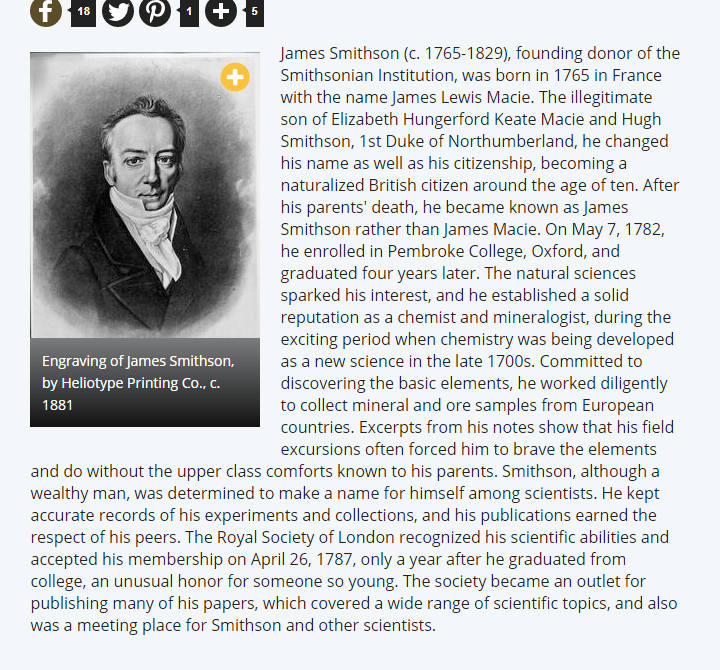
The story of James Smithson is a swamp.

17043

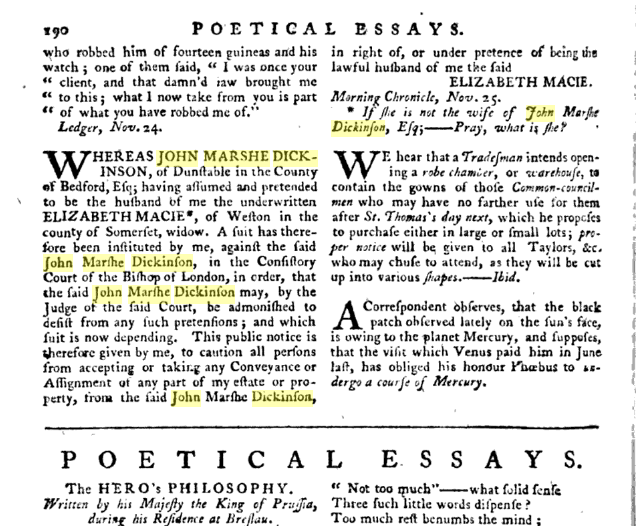
Born in France as a bastard. Became a British citizen at the age of 10. I'm not sure why his parents death are listed so soon in his timeline when his father did not die until 1786 and his mother in 1800. The official wikipedia throws in that he has a strange step father character named John Marshe Dickson that his own mother seemed to put out a public warning about :


Anyway he graduates and is accepted into the Royal Society of London after only a year.

17050
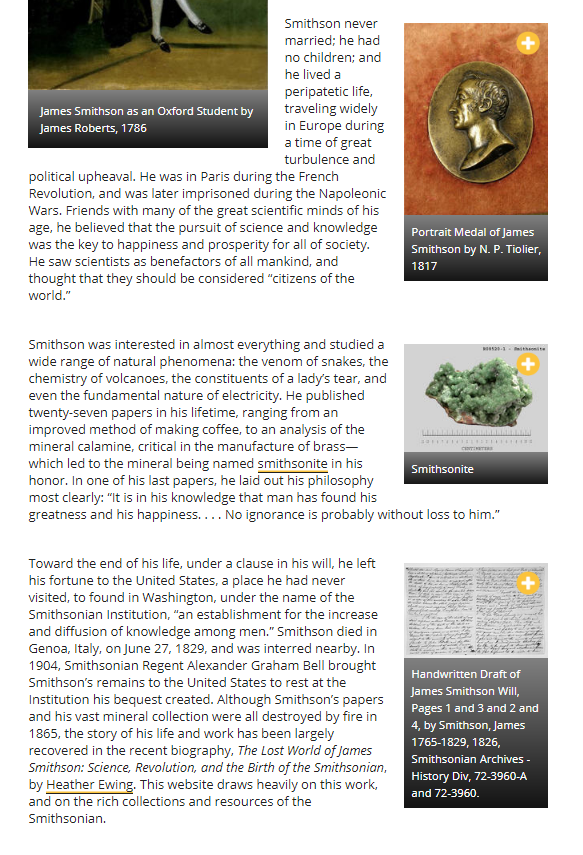
Was in Europe during all the upheaval in the early 1800s, seemed to specialize in Alchemy/Occultism, randomly left all of his money to Washington DC despite no connection before dying in Genoa, Italy. Oh also he was buried in a British Cemetary in Genoa before being moved to Smithsonian Castle in United States.

And the coup de grâce - All his work was destroyed by fire in 1865.


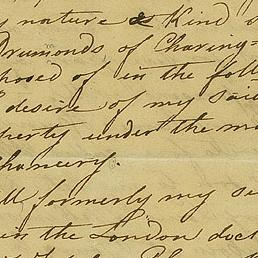
In his will he indicates:
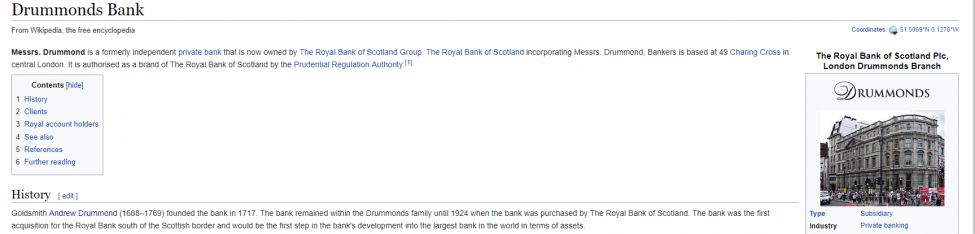
I bequeath the whole of my property of every nature & kind soever to my bankers, Messrs. Drummonds of Charing Cross

17055

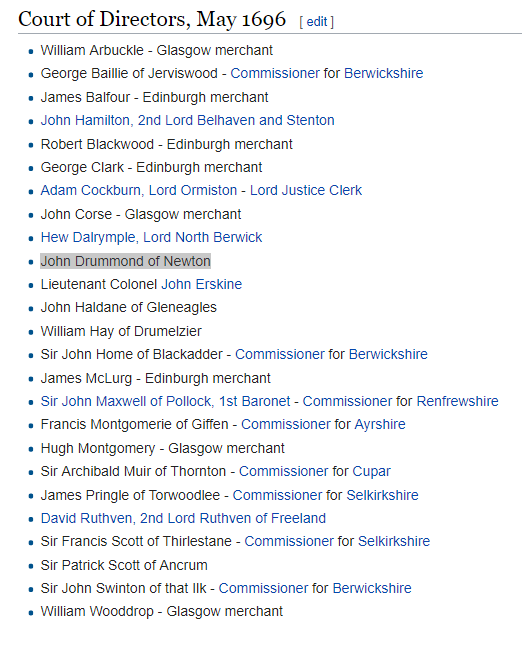
Which goes directly back to the board of director's for the Company of Scotland which just so happens to have a beautiful flag...

17056
17059
 
Note: This post was recovered from the Sh.org archive.
Username: ScottFreeman
Date: 2019-02-14 05:01:42
Reaction Score: 9
I wondered, why Scotland? Here's a connecting string perhaps.

"By Anna Von Reitz

The wage of fraud is confusion.
Let's straighten out everyone's thinking right here and now.
No actual government can be incorporated.
The reason for this is that the moment you incorporate anything, a charter is issued by another, different sovereign entity---thereby subjecting it to the authority of the other sovereign.
Scotland can't issue a charter for the actual government of America. At most, the nasty vermin can infringe on our international copyright and create a commercial corporation doppelganger. Which is precisely what they did in 1868 and what they are trying to do now.
And as for Keith Livingway and T-Roh they are trying to capitalize on the original Scottish fraud of 1868, trying to say that they bought an interest in that defunct Scottish commercial corporation and therefore now own America.
Good luck with that bull crap.

'The United States of America, Incorporated' created in 1868 in Scotland was chartered by the Scottish Government, not the American Government."
From: The Wage of Fraud

I'm of the opinion at the moment that the Smithsonian may have been created using what appears to be an unmarried childless man's fortune by the same people who also took over the administration of our federal government here around that time. Or it's just a coincidence that the money and charter lead to the same place. Also coincidence that the US VP and House Majority leader (corporate positions, both) among others are required to be on the board of the Institute in question.

I think someone was right earlier, Smithson is probably disgusted by what his money was used for.
Something else. I see a James Balfour on that list. Is that a popular name? Due to time being so messy between 1676 and 1917 how could we even tell?

Balfour Declaration, (November 2, 1917), statement of British support for “the establishment in Palestine of a national home for the Jewish people.” It was made in a letter from Arthur James Balfour, the British foreign secretary, to Lionel Walter Rothschild, 2nd Baron Rothschild (of Tring)
 
Note: This post was recovered from the Sh.org archive.
Username: asatiger1966
Date: 2019-02-26 09:51:14
Reaction Score: 2
One question for the Smithsonian people, how do they seen to show up at old special locations then act as if they did not notice what they had " stumbled upon"?

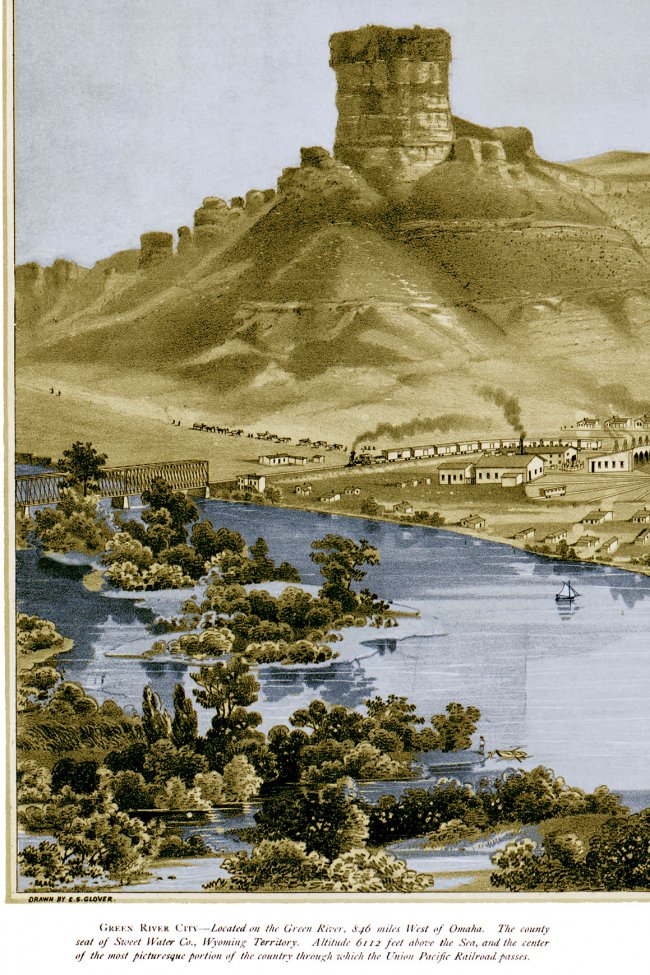
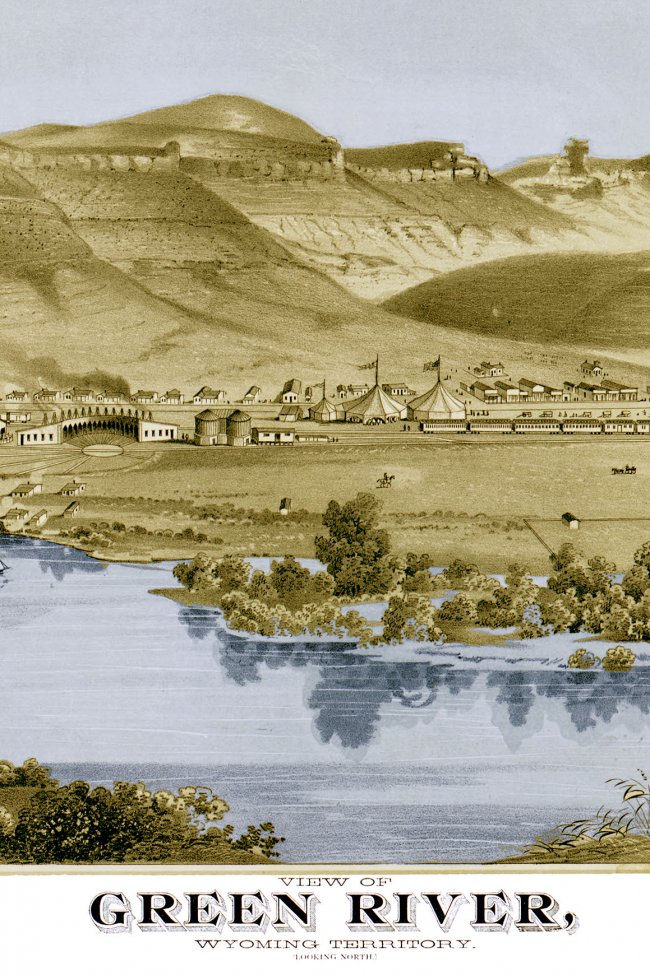
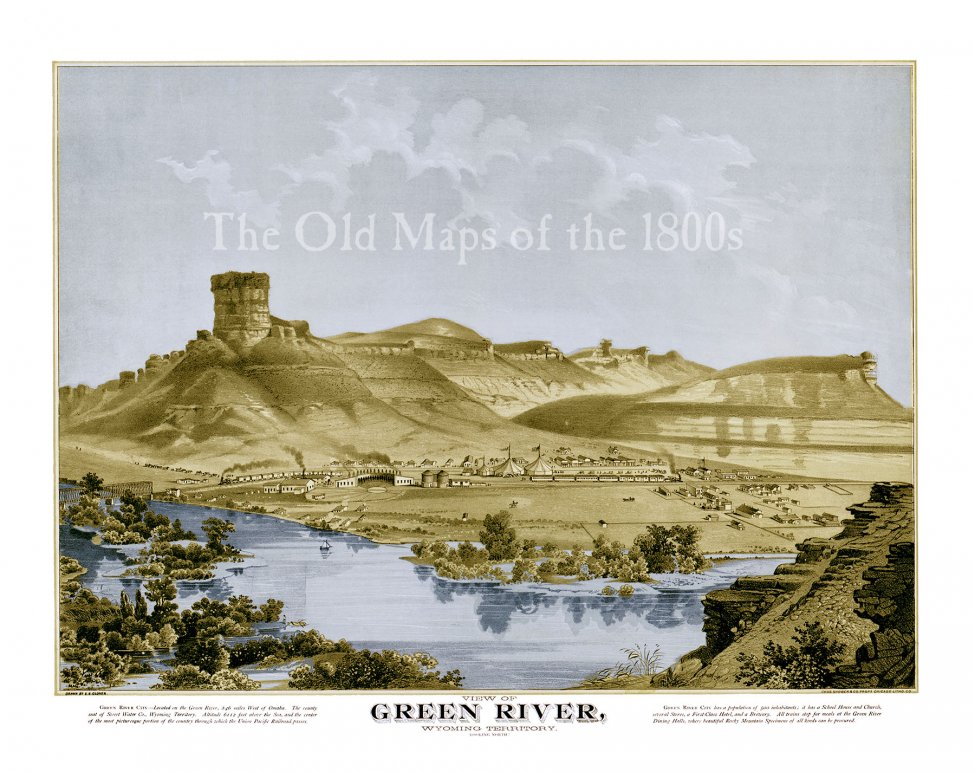
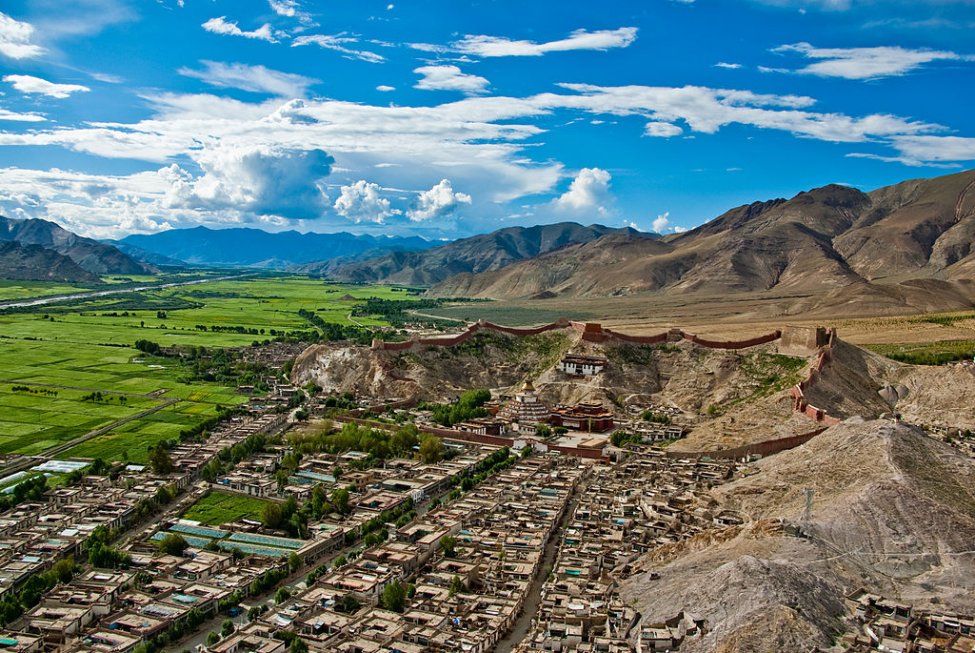
Mr. Powell is one such man. The idea came to him that he needed to take a look out west to see if the land was being used to the best advantage. Admirable , So Powell starts at a place called Green River, Wyoming. Oddly enough , see photo below of Tibet fortress, the place looks similar to my vision of an ancient destroyed fortified city?

Green River was incorporated in 1868 in what was then the Dakota Territory, on the banks of the Green River. The city was the starting point from which John Wesley Powell started his famous expeditions of the Green River, the Colorado River, and the Grand Canyon in the late 1800s.[7] The town of Green River was originally supposed to be the site of a division point for the Union Pacific Railroad, but when the railroad finally reached the point, officials were surprised to find that the large town had already been established there, likely requiring costly negotiations for railroad land. Crap happens LOL

Trona a valuable crystal like mineral was discovered in Green River. The trona near Green River, Wyoming, is the largest known deposit in the world
. Back to the destroyed ancient fortress, Trona is found in magmatic environments

On July 12, 1870, Congress appropriated $12,000 for Powell to survey the lands adjoining the Colorado River and its tributaries. The Geographical and Geological Survey of the Rocky Mountain Region, later known as the Powell Survey, was the third of the major western scientific surveys, including those already in progress led by Ferdinand Hayden and Clarence King. Powell’s and Hayden’s civilian surveys were run under the General Land Office of the Department of the Interior. King’s, though also a civilian survey, was supported by the War Department, under the Treasury. Army Lt. George M. Wheeler launched a fourth, and military, survey in 1871.

In 1869, seven months before he received funding,he set out to explore the Colorado River and the Grand Canyon. Gathering nine men, four boats and food for 10 months, he set out from Green River, Wyoming, on May 24. Passing through dangerous rapids, the group passed down the Green River to its confluence with the Colorado River (then also known as the Grand River upriver from the junction), near present-day Moab, Utah.

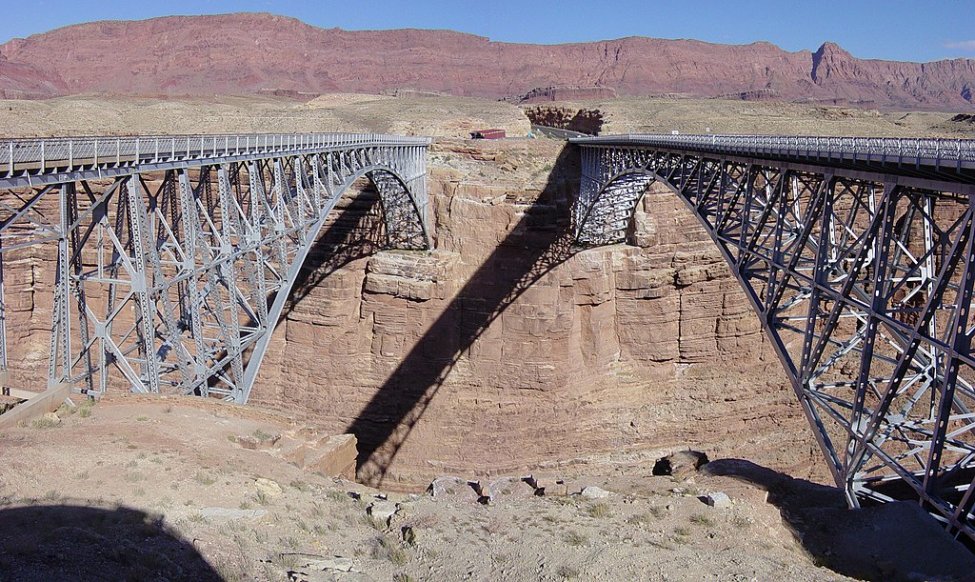
Moab, Utah was a land crossing of the Colorado river without a bridge, so its importance was very high for trade. odd as it were,
Moab's economy was originally based on agriculture, but gradually shifted to mining. Uranium and vanadium were discovered in the area in the 1910s and 1920s ?

New bridges were constructed at places other than Moab. In 1883 the Denver and Rio Grande Western Railroad main line was constructed across eastern Utah. The rail line did not pass through Moab. Soon Moab's origins as one of the few natural crossings of the Colorado River were forgotten. Nevertheless, the U.S. military deemed the crossing over the Colorado River at Moab important enough to place it under guard as late as World War II

The mighty Colorado River’s course had, until then, been a mystery even to Native Americans of the region, a blank space on the best maps available. Powell’s expeditions in 1869 and 1871-72 revealed the Colorado’s secrets, as well as some of the most remarkable terrain–including the magnificent Grand Canyon–to be found anywhere on earth.

In 1909 , one, G.E. Kincaid explored the Grand Canyon and commented on the wonders he and his party had found. A respected man, the first white child born in Idaho, and an explorer for all of his life. His words about the entrance to the discovered citadel, his words, are prophetic: ‘First, I would impress that the cavern is nearly inaccessible, he said. The entrance is 1,486 feet down the sheer face of the canyon wall. It is on government land, and no visitor will be allowed, under penalty of trespass.

So every place Mr. Powell stopped they were standing on precious metals and after two trips down the Colorado River they never saw any ancient artifacts . The Army seemed to show up shortly after Mr. Powell's arrival.

Just a bunch of odd timing, a lot of why there. Nobody is that lucky.

 
Note: This post was recovered from the Sh.org archive.
Username: Bald Eagle
Date: 2019-04-07 13:02:24
Reaction Score: 1
So, I just came across this in my newsfeed, and figured I'd share this as it has some relevance.

Familiar points include Jesuits, museums, recovered artifacts "lost" or destroyed...

They discovered something in Luxor...

Seems these people have a habit of using their institutions as a means of shielding discoveries from outside eyes, burying them, losing them, and destroying them.
Then there's their whole tie-in with the Masons, the Egyptian obelisks in DC, The Vatican, and London, ....

You don't need x-ray vision to know that there's a tuna fish sandwich from last semester in the school locker you're walking past - because the eye-watering stink emanates so strongly from it.
 
Note: This post was recovered from the Sh.org archive.
Username: Red Bird
Date: 2019-04-07 14:22:06
Reaction Score: 8
Here’s a funny story from Tom Horn about Smithsonian accuracy:
PART 2: UNEARTHING The Lost World Of The CLOUDEATERS: Compelling Evidence of the Incursions of Giants, Their Extraordinary Technology, and IMMINENT RETURN

After being on hold for several minutes over the automated system, a woman named Maryann came on the line. The conversation was a well-anticipated dead end. I knew Donna wouldn’t get much info over the phone, but I had her call nonetheless, because it was the line to the generic title “information specialist,” so I just assumed the one who answered the call might know something about it at least. If nothing else, I was sure we would be redirected to the appropriate department or person equipped to answer. However, a couple of this nice and helpful woman’s responses forced a raised eyebrow:

MARYANN: Information center, this is Maryann, how may I help you?

DONNA HOWELL: Hello, I was curious about the tomb of your founding donor, James Smithson. It’s on display there at the Castle, correct?

MARYANN: Yes, his tomb is here.

DONNA HOWELL: Oh, good. I thought so. We’re working on a project and noticed that the age of death on his tomb was incorrect. Do you know someone I can ask about this?

MARYANN: Um, uh, um. [She stammered for probably ten seconds straight.] What now? The date is incorrect?

DONNA HOWELL: His age is, yes. It says that he died at seventy-five, but he couldn’t have been older than sixty-four at most.

MARYANN: No, if it says he died at seventy-five, then that would be the age he died. [Her tone was kind, but firm.] It wouldn’t say that on his tomb if [she interrupted herself]— Is there a reason you believe we’re incorrect?

DONNA HOWELL: Oh, actually, it’s in your own literature. I have it pulled up in front of me on your website, as well as a book I have here, published by the Institution in 1904.

MARYANN: [Momentary silence.] You mean we are the ones saying the dating on the tomb is incorrect?

DONNA HOWELL: Yes, that’s right. The story goes that Smithson’s nephew wrote the epitaph and it was engraved that way, but it’s still showing the wrong age. Is it still this way for sentimental purposes, or because it’s considered to be an artifact in itself, or…?

MARYANN: Uh, you know, I don’t know. I don’t think I can answer your question. I don’t have that information. If the display says he was seventy-five years old when he died, then that’s the age [she interrupted herself again]— I mean, it’s what the tomb says, right? We would certainly only give the correct information there. Um. Uh… We don’t just have people on the phone ready to talk about James Smithson.

DONNA HOWELL: I’m sorry. I shouldn’t have assumed that you guys would know the answer to such an obscure question off the cuff. The title “information specialist” threw me off. That was probably a term that referred to scheduled tours or something. Do you know who I might be able to call or email?

MARYANN: Well, I mean we are the specialists here to— We do have information on— I tell you what, why don’t you just send your question in over email?

DONNA HOWELL: Sounds good. [Donna took the info from her and then bravely plugged one last thought.] While I have you on the line, do you happen to know if there is a plaque on display in that room anywhere that corrects the information for visitors? I mean, it’s the Smithsonian. I know the Smithsonian has very high standards of reporting only what’s true. Doesn’t it create an issue that the very founder’s information is in error and that people might be misled? Wouldn’t some think that other information on display there is inaccurate if they learn that this one is?

MARYANN: I don’t believe there is another plaque, no. Just what the tomb says. I understand why you would be concerned, but it is just the date of his age. Everything else here is true. [!!!]

DONNA HOWELL: Oh, of course. I didn’t mean to insinuate there was a conspiracy or anything. Well, this email is helpful, thank you!

Donna ended the call on a cheerful note and let Maryann get on with her day, and then immediately followed up with an email to the address she provided. She received an email back a few days later saying that her question was forwarded to the curator, but the curator never responded.

But readers should not assume that we are patting ourselves on the back just because we were able to prove that a person named Maryann at the information center didn’t know about the tomb of James Smithson. I am well aware that you cannot rely on even the most trained employees of an institution to be able to answer every question about every display on command, and Donna said as much to her during the call. The only thing this short talk confirmed to me was that our national—no, global—attitude toward historical accuracy is yielding, lenient, and far too quick to trust anything a plaque says at a museum somewhere. Maryann was absolutely so sure and so trusting that information on the tomb was accurate, just because it was posted by the Smithsonian authority she works for. Maryann’s response to the display essentially translates, “No, if the Smithsonian said it, it must be true, because they only speak the truth. And if there isan error, then it’s an irrelevant one. No big deal. Just a date. A typo. But everything else is true.” Such a quick conclusion bespeaks of substantial naïveté.
 
Note: This post was recovered from the Sh.org archive.
Username: WorldWar1812
Date: 2019-05-29 19:45:11
Reaction Score: 1
Let me see.

These guys using a jewsuits logo, where founded in 1846
Smithsonian Institution - Wikipedia

Middle 19th century in North-America it's the times of the far west conquest.
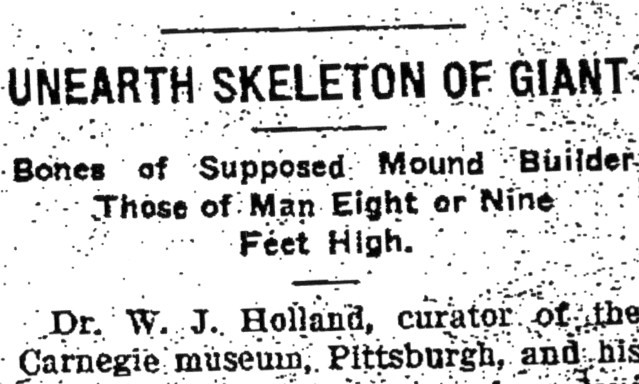
Hundreds of tombs with giants skeletons were discovered.

As soon as people crossed the appalachians


Then appeared these Smithsonian guys, and suddenly lots of "dinosaur" bones were well payed.

1842
Dinosaur - Wikipedia
When Was the First Dinosaur Discovered? | Scholastic

You see.

Smithsonian Admits to Destruction of Thousands of Giant Human Skeletons in Early 1900's

Me too. I was blind and now I can walk :)
 
Note: This post was recovered from the Sh.org archive.
Username: KorbenDallas
Date: 2019-05-30 00:49:17
Reaction Score: 2
That one appears to be this:
Obviously, the above are just your expected debunkers, but if the ruling did exist... enough time has passed to act upon it. So, I'm afraid, it was just a hoax.

That said, pretty sure things like in the link below were probably real, before being turned into hoaxes to satisfy the narrative.
 
Tips
Tips
Please respect our Posting Rules.
Back
Top