Star Forts - A correction on my part

On a quick search we can see that most star forts are right next to water.

I don’t know what “Roman” brick is made up but officially it contains seawater. And some reports suggesting seashells could also have been used.

The Secret Ingredient in Ancient Roman Concrete is Seawater

Perhaps most the minerals used come from underwater. The quarry would be right next to the star fort and underwater so it would not be visible.

If the minerals are mined from the sea this would easily explain the shipping issue and why there is seashells in “Roman” concrete.

would love to read any other information that would confirm or deny this idea.
 
Could be some phosphorus included in the mix. And I do still wonder where they got all the iron oxide from. If it is the red colour and charging properties.
 
Found another little nugget of information:

“Animal fat, milk, and blood were used as admixtures (substances added to cement to increase the properties.)”

History of Concrete & Cement - CEMEX USA - CEMEX

What effect did the ancient Romans using blood in their concrete mix have?

I’m not really sure if using blood would keep the bricks red after all this time or not, but it is interesting. When I look at these ancient structures like star forts I think of a people that does not farm animals, or make sacrifices or all the rest of it, yet I’ve read a convincing article that the “Roman public restrooms” were actually created to sacrifice and bleed out people. We could be talking about two entirely different peoples here, but it is amazing how little information on these ancient true “masons” there is.

I suggested earlier in this thread that they could be golems, or in a sense “robots” or soulless beings that performed the function of putting all these buildings tougher FOR the people to inherit. This could explain why there is no information on these people
 
My father-in-law worked at a brickworks as late as the early seventies. Bricks it produced were made from clay, added minerals, spring water. All fired in brick kilns to varying degrees depending on water properties were required in the finished bricks.
Not all bricks in the firing turned out perfect in shape, colour or constitution.
He never mentioned animal blood or anything remoterly like that. The process is in itself simple the skill is in reading the clay and adding the minerals to get the desired result.

If all of these structures are brick built then the clay pit is in the vicinity of said forts. Also within the same vicinity will be a waterr supply, spring is best as it is the cleanest, and a supply of firewood usually in the form of coppice woods. They might not be visible today but may be on old maps. The springs will certainly be marked so there is a start point for anyone who is moved to try and find the brick factory that produced the bricks for the fort. The worked out pit will either be flooded and be a pond or backfilled but it may present as a depression in the ground made visible by a lidar map or the same tech might reveal it under fields for example.
 
Could Starforts also have been built in the age when the star Istar (Atlantis) was visible in the sky ? In general, could ancient civilizations on Earth have been built with the rise of Atlantis and were they destroyed with the fall of Atlantis ?
 
Could starforts actually be formed as green mounds by the earth itself through water harmonics
and people then decorate them with bricks and dig tunnels through them or use them as fortresses ?
 
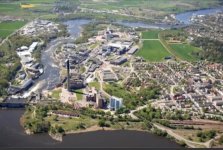
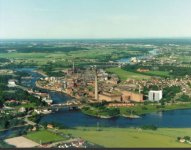
Is this the right thread for humongous sarpsborg starfort? The computer made a painting, outlining the former star even better.
Screenshot_20230809_134212_Brave.jpg
 

Attachments

  • Screenshot_20230809_134201_Brave.jpg
    Screenshot_20230809_134201_Brave.jpg
    232.5 KB · Views: 154
  • Screenshot_20230809_134149_Brave.jpg
    Screenshot_20230809_134149_Brave.jpg
    190.1 KB · Views: 176
I think that the essential issue here has to do with what a person calls a 'star fort' versus a 'fortified city' versus a 'star fort city' versus a 'star city'. These are very different things and should be looked at separately, instead of being lumped together under 'star fort'.

A few years ago when I heard about star forts and Tartary I did some research into military fortifications. I learned about the introduction of cannons and how the fort shapes changed after the 15th century to accommodate the change in warfare. The forts started including 'bastions' which are the pointy arrow-shaped protrusions that are seen as the points of a star. (They probably learned the idea from previously existing star cities that were converted to military use.) These bastions were supposedly introduced by the Italians (Romans) and spread around the world.

Here are some examples of the bastion style star fort. Obviously just a military location. But a ton of people see the points and wrongly say "It's a Tartarian star fort!"

f601c6d7021285e258d7944e00a9f2a4--th-century-la-france.jpg
4bc8dc0ac933481b7b1c162ad9e1ef15.jpg

Here are some fortified cities with bastions. They may be all pointy like stars, but they are not beautifully symetrical like a star city is.

56e01e57dbd7f7a4a5ef80b79d97acdd.jpg

mdina-malta-20-december-2019-aerial-view-of-the-medieval-fortified-city-mdina-in-malta-AAEF09088.jpg

Then there are star fort cities. These are the beautiful, symmetrical star cities that were converted into military installations. These are a little small to have held cathedrals before becoming a fort, perhaps they had towers and the larger cathedral was nearby.. When you look at wider shots from above you can see remnants of bigger stars, sometimes going out miles.
These first three are all of Parmanova. you can see the old tower in the hand drawn image. And the flagpole in the center now (after the tower got destroyed) has a lovely gold ball on the top and a six sided base that matches the six-sided layout of the city center plaza. The star part of the city is nine-sided. And there are three gates. So this would be a ratio of 2:3 for the star city with a tower in the middle instead of a temple.

aerial-palmanova-italy_ngsversion_1499974390917_adapt_470_1.jpg
114234.jpg
th-1305769207.jpg


c7a60e7531f4ea73a516de3fb0f1ac9f.png
1bbdbb543c243c5e0604a252d99ebd8b--star-fort-the-netherlands.jpg

Then there are the star cities that still have the temple or cathedral in the center. I believe there is a correspondence between the number of points on the star city design and the layout of the rose window of the cathedral. Or with the internal and external layout of the temple.

71351d20f0d1dda3114534c30c386eeb.jpg

I think Hamburg may have been a star city, but went through a lot of flooding and rebuilding. It has a church in the right location, and some streets have weirdly angled corners.

96620958a3fab18c522c930d0ce2c43d.jpg

Here's a modern version of the idea, for obviously religious reasons. This temple has a correspondence of 2:1, with 10 points on the surrounding star and 5 points on the temple.

1d0e31d628744472d3334f9a0508daf1.jpg

So, as you see, not every pointy fort or city is Tartarian antiquitech. But there are plenty of questionable elaborate and symmetrical star shaped cities that could have been used for energy concentration and transmission. And plenty of cathedrals that could have been used the same way.

There's a great thread by Frostychud regarding temples as radio transmitters. It has gone a very interesting direction with plasmoid orbs and their energy being involved.

Temples and Churches as Radio Frequency Receivers
 
Last edited:
I think that the essential issue here has to do with what a person calls a 'star fort' versus a 'fortified city' versus a 'star fort city' versus a 'star city'. These are very different things and should be looked at separately, instead of being lumped together under 'star fort'.

A few years ago when I heard about star forts and Tartary I did some research into military fortifications. I learned about the introduction of cannons and how the fort shapes changed after the 15th century to accommodate the change in warfare. The forts started including 'bastions' which are the pointy arrow-shaped protrusions that are seen as the points of a star. (They probably learned the idea from previously existing star cities that were converted to military use.) These bastions were supposedly introduced by the Italians (Romans) and spread around the world.

Here are some examples of the bastion style star fort. Obviously just a military location. But a ton of people see the points and wrongly say "It's a Tartarian star fort!"


Here are some fortified cities with bastions. They may be all pointy like stars, but they are not beautifully symetrical like a star city is.


Then there are star fort cities. These are the beautiful, symmetrical star cities that were converted into military installations. These are a little small to have held cathedrals before becoming a fort, perhaps they had towers and the larger cathedral was nearby.. When you look at wider shots from above you can see remnants of bigger stars, sometimes going out miles.
These first three are all of Parmanova. you can see the old tower in the hand drawn image. And the flagpole in the center now (after the tower got destroyed) has a lovely gold ball on the top and a six sided base that matches the six-sided layout of the city center plaza. The star part of the city is nine-sided. And there are three gates. So this would be a ratio of 2:3 for the star city with a tower in the middle instead of a temple.


Then there are the star cities that still have the temple or cathedral in the center. I believe there is a correspondence between the number of points on the star city design and the layout of the rose window of the cathedral. Or with the internal and external layout of the temple.


I think Hamburg may have been a star city, but went through a lot of flooding and rebuilding. It has a church in the right location, and some streets have weirdly angled corners.


Here's a modern version of the idea, for obviously religious reasons. This temple has a correspondence of 2:1, with 10 points on the surrounding star and 5 points on the temple.


So, as you see, not every pointy fort or city is Tartarian antiquitech. But there are plenty of questionable elaborate and symmetrical star shaped cities that could have been used for energy concentration and transmission. And plenty of cathedrals that could have been used the same way.

There's a great thread by Frostychud regarding temples as radio transmitters. It has gone a very interesting direction with plasmoid orbs and their energy being involved.

Temples and Churches as Radio Frequency Receivers
Just my two cents, I look at starforts the same way I look at the hagia Sophia and the Taj mahal....just casually looking...they're the same.....

I mean you can verbally dissect the military details all day long, but I say bullsh*t when I look at the pics....I just don't buy the official narrative, this is stolen history, at best I accept parts of official narratives, but all of them are essentially lies....

I personally don't care about Tartaria per se....but the questions for this site are always the same: who stole our history and why? And for how long?

The devil is always in the details
 
I think that the essential issue here has to do with what a person calls a 'star fort' versus a 'fortified city'
versus a 'star fort city' versus a 'star city'. These are very different things and should be looked at separately, instead of being lumped together under 'star fort'.


A few years ago when I heard about star forts and Tartary I did some research into military fortifications. I learned about the introduction of cannons and how the fort shapes changed after the 15th century to accommodate the change in warfare. The forts started including 'bastions' which are the pointy arrow-shaped protrusions that are seen as the points of a star. (They probably learned the idea from previously existing star cities that were converted to military use.) These bastions were supposedly introduced by the Italians (Romans) and spread around the world.


Here are some examples of the bastion style star fort. Obviously just a military location. But a ton of people see the points and wrongly say "It's a Tartarian star fort!"


View attachment 29468

View attachment 29469


Here are some fortified cities with bastions. They may be all pointy like stars, but they are not beautifully symetrical like a star city is.


View attachment 29473


View attachment 29485


Then there are star fort cities. These are the beautiful, symmetrical star cities that were converted into military installations. These are a little small to have held cathedrals before becoming a fort, perhaps they had towers and the larger cathedral was nearby.. When you look at wider shots from above you can see remnants of bigger stars, sometimes going out miles.

These first three are all of Parmanova. you can see the old tower in the hand drawn image. And the flagpole in the center now (after the tower got destroyed) has a lovely gold ball on the top and a six sided base that matches the six-sided layout of the city center plaza. The star part of the city is nine-sided. And there are three gates. So this would be a ratio of 2:3 for the star city with a tower in the middle instead of a temple.


View attachment 29481

View attachment 29482

View attachment 29484


View attachment 29475

View attachment 29477


Then there are the star cities that still have the temple or cathedral in the center. I believe there is a correspondence between the number of points on the star city design and the layout of the rose window of the cathedral. Or with the internal and external layout of the temple.


View attachment 29479


I think Hamburg may have been a star city, but went through a lot of flooding and rebuilding. It has a church in the right location, and some streets have weirdly angled corners.


View attachment 29483


Here's a modern version of the idea, for obviously religious reasons. This temple has a correspondence of 2:1, with 10 points on the surrounding star and 5 points on the temple.


View attachment 29480


So, as you see, not every pointy fort or city is Tartarian antiquitech. But there are plenty of questionable elaborate and symmetrical star shaped cities that could have been used for energy concentration and transmission. And plenty of cathedrals that could have been used the same way.


There's a great thread by Frostychud regarding temples as radio transmitters. It has gone a very interesting direction with plasmoid orbs and their energy being involved.


Temples and Churches as Radio Frequency Receivers

Great post Starfire. Really good info I think. I just was struck by picture number two, the one with the us flag. And whichever type of structure it is, that's just not a military design. I think the small scale shows that, yet it's the same design as much larger examples. Just struck me. That's something else that someone set up camp in.

I've been to this one, Halifax nova Scotia, it's massive

I think that the essential issue here has to do with what a person calls a 'star fort' versus a 'fortified city' versus a 'star fort city' versus a 'star city'. These are very different things and should be looked at separately, instead of being lumped together under 'star fort'.


A few years ago when I heard about star forts and Tartary I did some research into military fortifications. I learned about the introduction of cannons and how the fort shapes changed after the 15th century to accommodate the change in warfare. The forts started including 'bastions' which are the pointy arrow-shaped protrusions that are seen as the points of a star. (They probably learned the idea from previously existing star cities that were converted to military use.) These bastions were supposedly introduced by the Italians (Romans) and spread around the world.


Here are some examples of the bastion style star fort. Obviously just a military location. But a ton of people see the points and wrongly say "It's a Tartarian star fort!"


View attachment 29468

View attachment 29469


Here are some fortified cities with bastions. They may be all pointy like stars, but they are not beautifully symetrical like a star city is.


View attachment 29473


View attachment 29485


Then there are star fort cities. These are the beautiful, symmetrical star cities that were converted into military installations. These are a little small to have held cathedrals before becoming a fort, perhaps they had towers and the larger cathedral was nearby.. When you look at wider shots from above you can see remnants of bigger stars, sometimes going out miles.

These first three are all of Parmanova. you can see the old tower in the hand drawn image. And the flagpole in the center now (after the tower got destroyed) has a lovely gold ball on the top and a six sided base that matches the six-sided layout of the city center...
Great post Starfire. Really good info I think. I just was struck by picture number two, the one with the us flag. And whichever type of structure it is, that's just not a military design. I think the small scale shows that, yet it's the same design as much larger examples. Just struck me. That's something else that someone set up camp in.
Been to this one in Halifax it's huge
1749801418980.jpeg
 
Last edited:
Tips
Tips
Please respect our Posting Rules.
Back
Top