

- Joined
- Sep 22, 2020
- Messages
- 4,691
- Reaction score
- 1,500
Timur, historically known as Amir Timur and Tamerlane, was a Turco-Mongol conqueror. As the founder of the Timurid Empire in Persia and Central Asia, he became the first ruler in the Timurid dynasty. According to John Joseph Saunders, Timur was "the product of an islamized and iranized society", and not steppe nomadic.
Born into the Barlas confederation in Transoxiana (in modern-day Uzbekistan) on 9 April 1336, Timur gained control of the western Chagatai Khanate by 1370. From that base, he led military campaigns across Western, South and Central Asia, the Caucasus and southern Russia, and emerged as the most powerful ruler in the Muslim world after defeating the Mamluks of Egypt and Syria, the emerging Ottoman Empire, and the declining Delhi Sultanate. From these conquests, he founded the Timurid Empire, but this empire fragmented shortly after his death.
Timur was the last of the great nomadic conquerors of the Eurasian Steppe, and his empire set the stage for the rise of the more structured and lasting Gunpowder Empires in the 16th and 17th centuries. Timur envisioned the restoration of the Mongol Empire of Genghis Khan (died 1227) and according to Gérard Chaliand, saw himself as Genghis Khan's heir. Though not a Borjigid or a descendent of Genghis Khan, he clearly sought to invoke the legacy of the latter's conquests during his lifetime. According to Beatrice Forbes Manz, "in his formal correspondence Temur continued throughout his life to portray himself as the restorer of Chinggisid rights. He justified his Iranian, Mamluk, and Ottoman campaigns as a re-imposition of legitimate Mongol control over lands taken by usurpers." To legitimize his conquests, Timur relied on Islamic symbols and language, referred to himself as the "Sword of Islam", and patronized educational and religious institutions. He converted nearly all the Borjigin leaders to Islam during his lifetime. Timur decisively defeated the Christian Knights Hospitaller at the Siege of Smyrna, styling himself a ghazi. By the end of his reign, Timur had gained complete control over all the remnants of the Chagatai Khanate, the Ilkhanate, and the Golden Horde, and even attempted to restore the Yuan dynasty in China.
KD: Well, above is a short official synopsis (a compliant one) of Tamerlane's life. It provided us with the basics, including his appearance. It almost does not mention anything pertaining to Tamerlane's involvement with Tartary. Just a hint there was on Wiki:
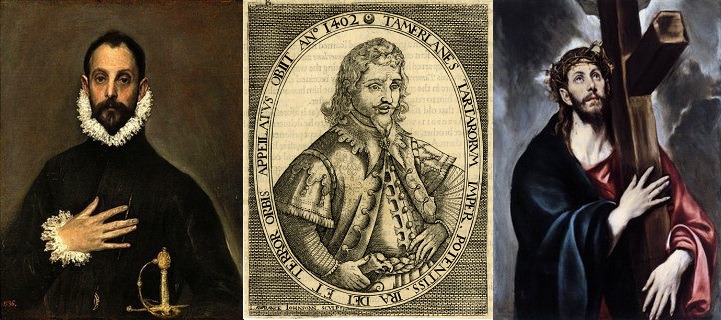
On the right we have "Christ Carrying the Cross", on the left we have "The Gentleman with His Hand at His Breast ", both, allegedly done by El Greco (1541-1614). In the middle we have animage titled "Tamerlanes Tartarorum Imper Potentiss". It was allegedly, published by Adam Islip (1596-1627) in 1603. The book was called "The Generall Historie of the Turkes", and was written by Richard Knolles (1545-1610). I was unable to find the name of the actual image artist.
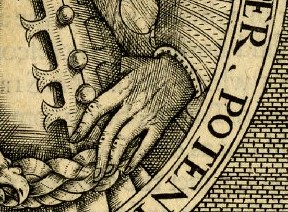
The Hand Sign: If you know what meaning, or meanings this sign could have, please share with the rest. My mini web-search came back with anything ranging from "Love and Peace" to some Maria Magdalena connections. So... I have no idea what the meaning is, but the sign is clearly there. I'm pretty sure additional digging would produce tons of famous people enjoying pressing two fingers together.
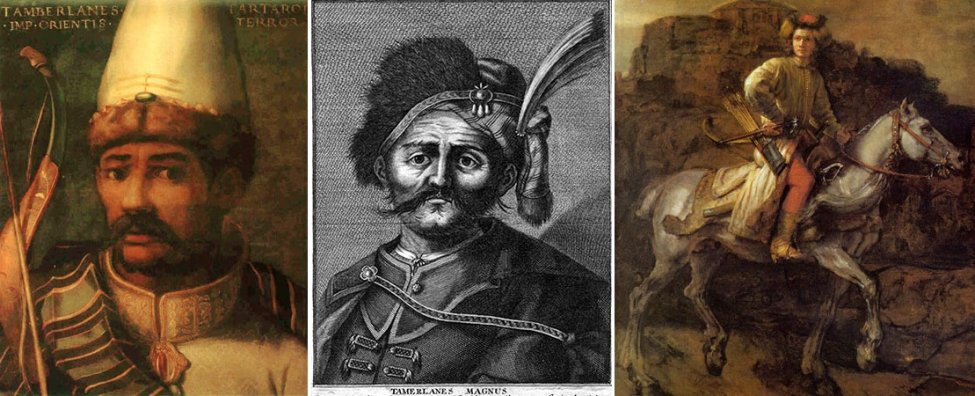
The horse rider above is a painting done by Rembrandt (allegedly, of course...). It is titled, "The Polish Rider". But... here is the description:
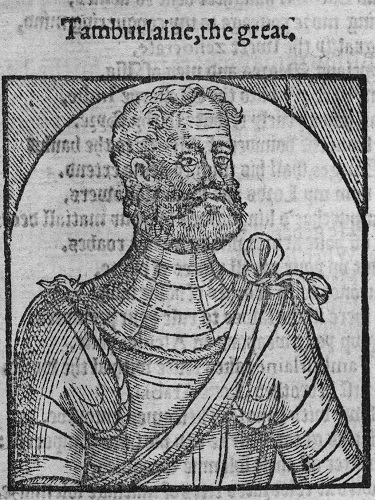
None of the above images of Tamerlane are here?: Terrifying Timur | All About History
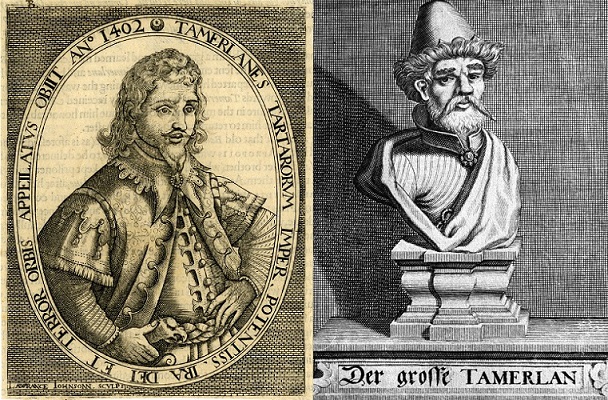
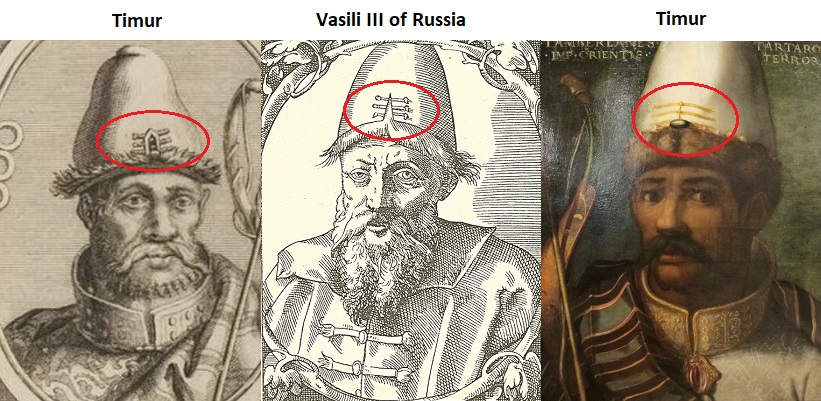
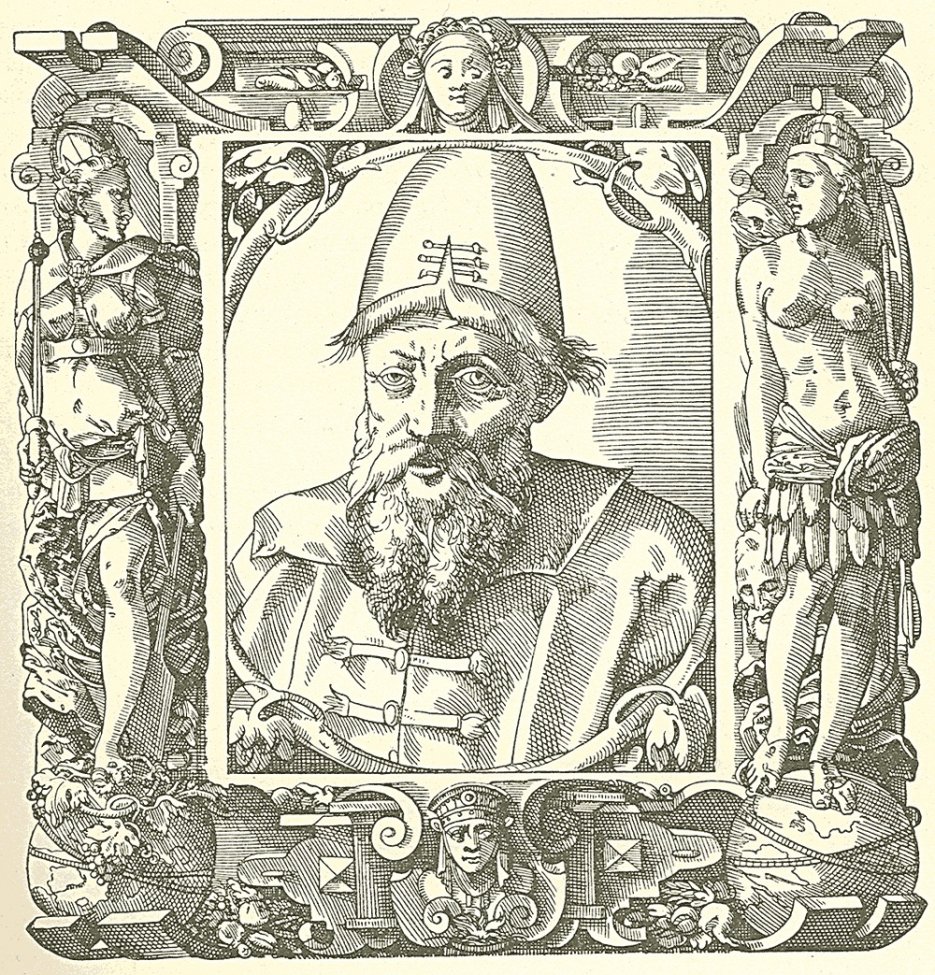
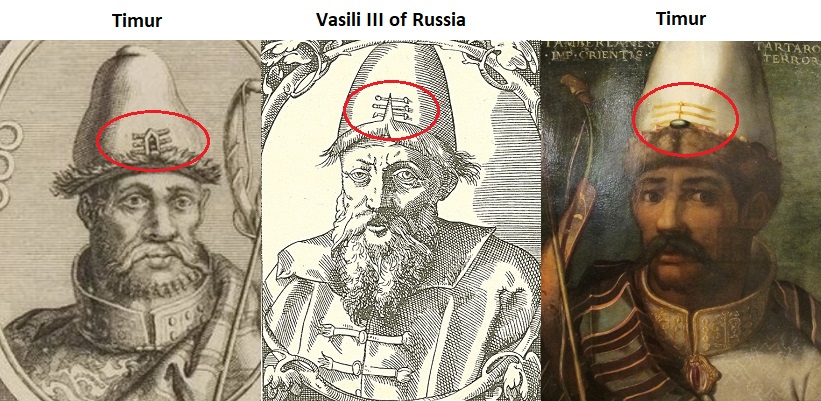
Same Hat Maker?Little coincidences like this do not really help out with the research. In the middle is Vasili the Third of Russia. He lived between 1479-1533. Compare it to 1336-1405 for Tamerlane. Were these guys shopping at the same medieval "NIKE" store, but 100 years apart? Or could these lines mean something else? Not gonna go into speculations of these two being the same person. Some additional digging could probably produce a whole bunch of guys wearing hats with this three-six liner.
Below is the original full image of Vasili III of Russia? How Russian are those ornaments around the image?
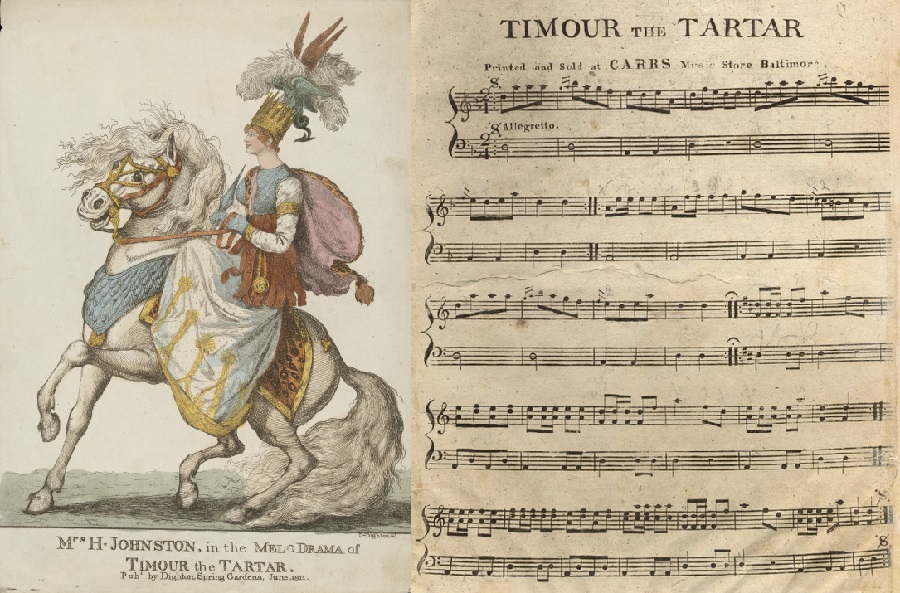
Play: Timour the TartarFor those who like the musical side of things, this could be an interesting investigation of sorts. Back in 1811, an English novelist and dramatist Matthew Gregory Lewis, wrote quite a few plays, novels and other things. Guess which one is not listed on Wikipedia? Yup...
KD Note. Here is a sad fun fact. Wikipedia tells us the following:
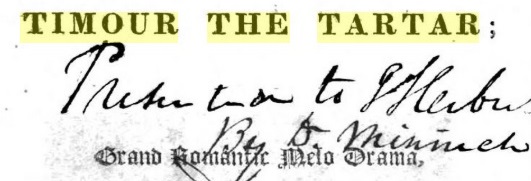
How come the below play was never written:
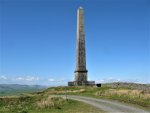
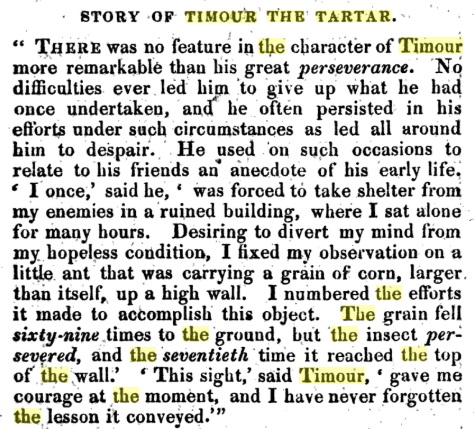
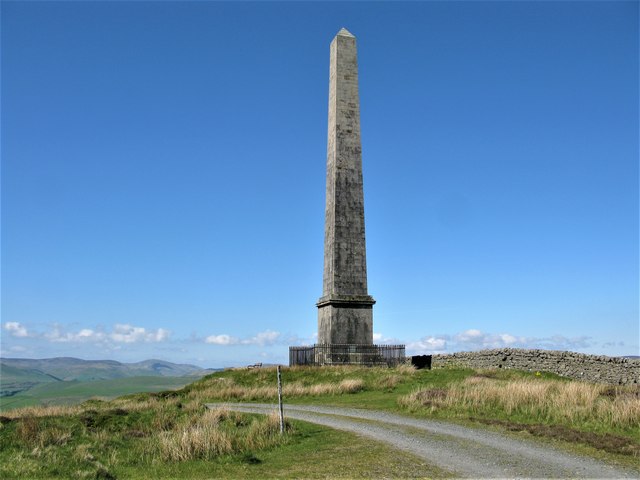
The above story line belongs to John Malcolm (1769-1833) a Scottish soldier, diplomat, East India Company administrator, statesman, and historian. And here is what a monument to this Mr. Malcolm looks like.
What did people in the beginning of the 19th century know about Timour the Tartar, that we do not now today? Anyways, for those who want to dig in and see if there is anything unusual in this "Melo Drama", above is your starting point.
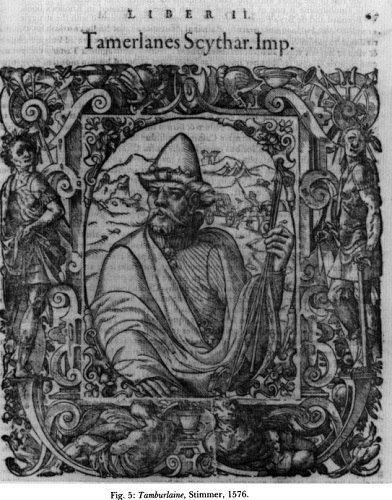
We see Scythians being mentioned all over our Medieval maps, and literature. Yet, by then, no Scythians existed for at least 1,200 years. We do not see on our contemporary maps of Northern England anything saying "Former land of the Picts".
KD: In other words, how could Timour the Tartar (whose life story was so well known by John Malcolm, who in turn had an Egyptian obelisk for a monument) be the Emperor of Scythians in 15th century AD, if Scythians seized to exist in 2nd century AD. Which is approximately 1,200 - 1,300 years prior.
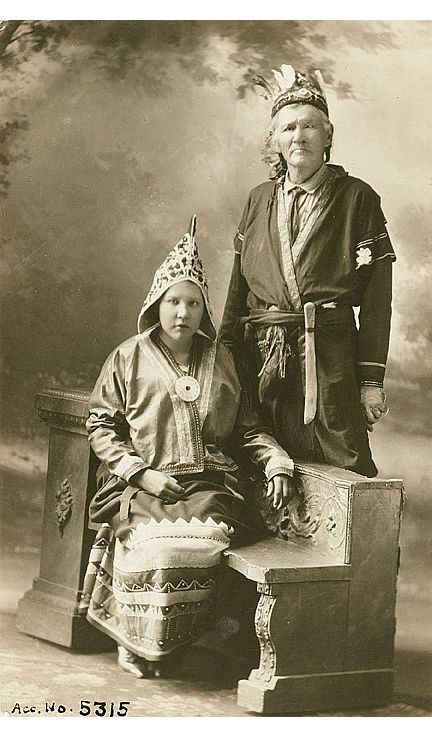
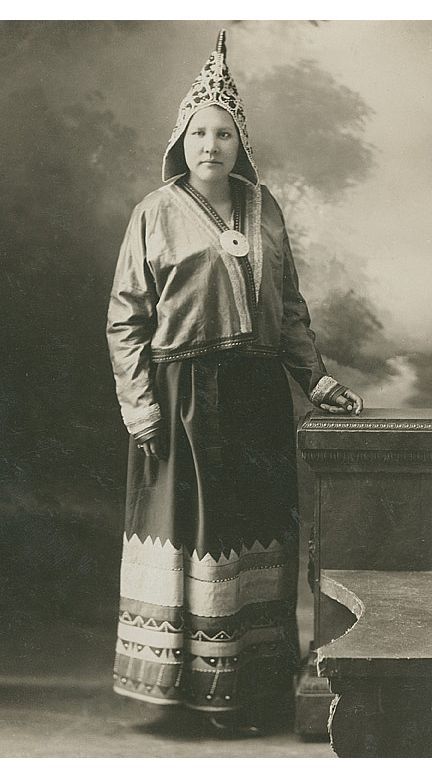
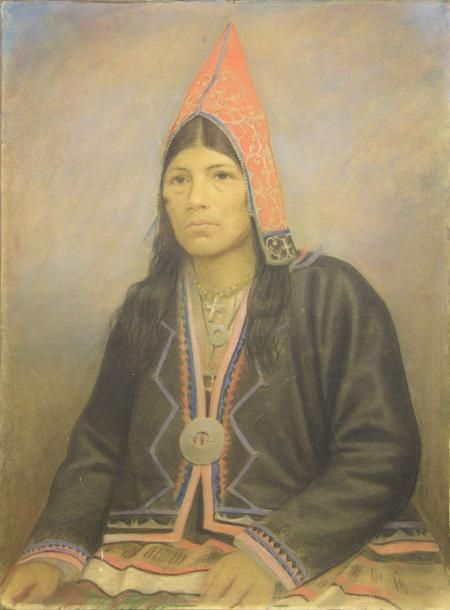
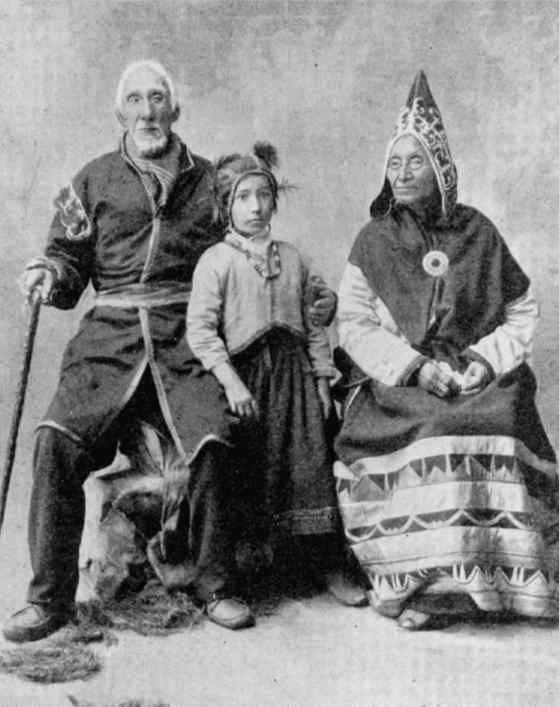
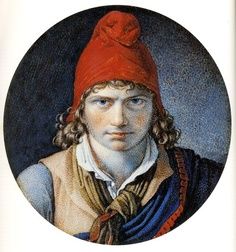
Scythians + HatsAnd when we talk about Scythians, we cannot overlook their headgear. Yep, talking about Scythian hats here, which are also Phrygian, or Liberty caps.
And this hat/cap issue takes us into a totally unregulated chronological spin, for these hats exist all over the time table.
KD: Them non-existent Scythians appear to have found a way to be present in 2019 as well.

Well, I am not sure what exactly we can get out of all of this. If you know the ethnicity of Mr. Timour the Tartar, please share with us. Personally I am not sure any more. Additionally, it does appear (again, and again) that time frames were maliciously adjusted beyond recognition.
Born into the Barlas confederation in Transoxiana (in modern-day Uzbekistan) on 9 April 1336, Timur gained control of the western Chagatai Khanate by 1370. From that base, he led military campaigns across Western, South and Central Asia, the Caucasus and southern Russia, and emerged as the most powerful ruler in the Muslim world after defeating the Mamluks of Egypt and Syria, the emerging Ottoman Empire, and the declining Delhi Sultanate. From these conquests, he founded the Timurid Empire, but this empire fragmented shortly after his death.
Tamerlane
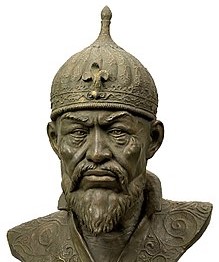
9 April 1336 – 18 February 1405
9 April 1336 – 18 February 1405
Timur was the last of the great nomadic conquerors of the Eurasian Steppe, and his empire set the stage for the rise of the more structured and lasting Gunpowder Empires in the 16th and 17th centuries. Timur envisioned the restoration of the Mongol Empire of Genghis Khan (died 1227) and according to Gérard Chaliand, saw himself as Genghis Khan's heir. Though not a Borjigid or a descendent of Genghis Khan, he clearly sought to invoke the legacy of the latter's conquests during his lifetime. According to Beatrice Forbes Manz, "in his formal correspondence Temur continued throughout his life to portray himself as the restorer of Chinggisid rights. He justified his Iranian, Mamluk, and Ottoman campaigns as a re-imposition of legitimate Mongol control over lands taken by usurpers." To legitimize his conquests, Timur relied on Islamic symbols and language, referred to himself as the "Sword of Islam", and patronized educational and religious institutions. He converted nearly all the Borjigin leaders to Islam during his lifetime. Timur decisively defeated the Christian Knights Hospitaller at the Siege of Smyrna, styling himself a ghazi. By the end of his reign, Timur had gained complete control over all the remnants of the Chagatai Khanate, the Ilkhanate, and the Golden Horde, and even attempted to restore the Yuan dynasty in China.
- Timur's armies were inclusively multi-ethnic and were feared throughout Asia, Africa, and Europe, sizable parts of which his campaigns laid to waste. Scholars estimate that his military campaigns caused the deaths of 17 million people, amounting to about 5% of the world population at the time.
- Timur - Wikipedia
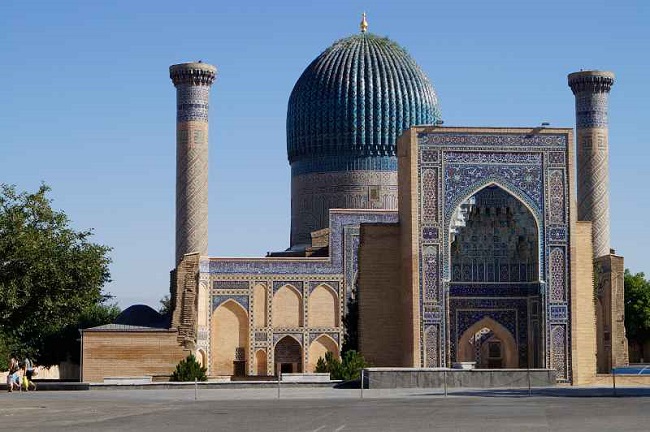
Gur-e-Amir
The Gūr-i Amīr is a mausoleum of the Asian conqueror Tamerlane in Samarkand, Uzbekistan. It occupies an important place in the history of Persian-Mongolian Architecture as the precursor and model for later great Mughal architecture tombs, including Gardens of Babur in Kabul, Humayun's Tomb in Delhi and the Taj Mahal in Agra, built by Timur's Persianised descendants, the ruling Mughal dynasty of Indian Subcontinent. It has been heavily restored. KD: Well, above is a short official synopsis (a compliant one) of Tamerlane's life. It provided us with the basics, including his appearance. It almost does not mention anything pertaining to Tamerlane's involvement with Tartary. Just a hint there was on Wiki:
- Timur is the deposed, blind former King of Tartary and father of the protagonist Calaf in the opera Turandot (1924) by Giacomo Puccini, libretto by Giuseppe Adami and Renato Simoni.
Interesting Rumors
Below is a list of google translated articles, suggesting that there could have been a few mysterious circumstances surrounding Tamerlane's 1941 exhumation.
- Believes in the curse of "Hromts"
- The legend of the curse of Tamerlane: history, facts, myths
- Tamerlane's grave
- How to open the tomb of Tamerlane
Tamerlanes Tartarorum Imper
...or, what do we really know?
We will talk about Tamerlane appearance a bit later. For right now, what is up with this M (or W) hand sign?...or, what do we really know?
On the right we have "Christ Carrying the Cross", on the left we have "The Gentleman with His Hand at His Breast ", both, allegedly done by El Greco (1541-1614). In the middle we have animage titled "Tamerlanes Tartarorum Imper Potentiss". It was allegedly, published by Adam Islip (1596-1627) in 1603. The book was called "The Generall Historie of the Turkes", and was written by Richard Knolles (1545-1610). I was unable to find the name of the actual image artist.
The Hand Sign: If you know what meaning, or meanings this sign could have, please share with the rest. My mini web-search came back with anything ranging from "Love and Peace" to some Maria Magdalena connections. So... I have no idea what the meaning is, but the sign is clearly there. I'm pretty sure additional digging would produce tons of famous people enjoying pressing two fingers together.
Timur's Appearance
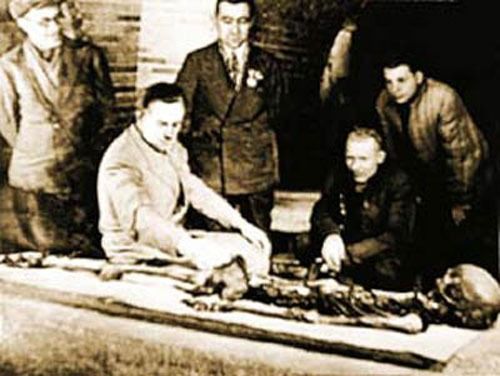
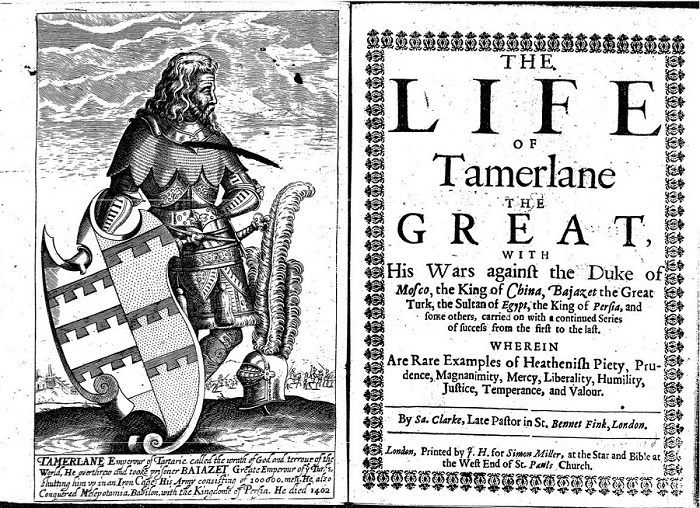
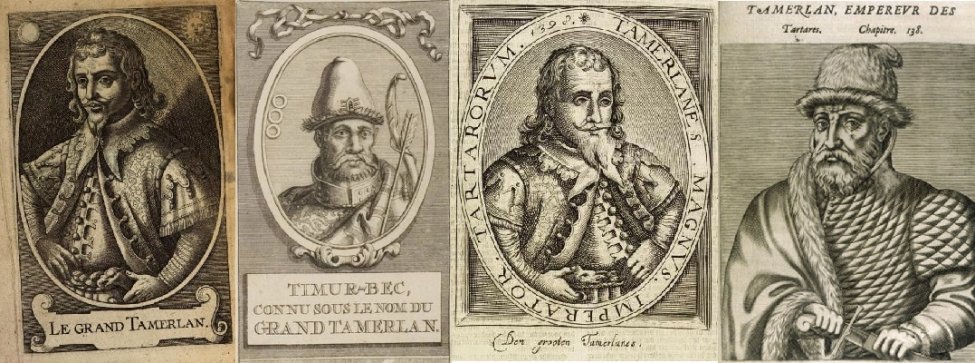
The very first image in this thread shows Tamerlane based on the post-exhumation skull reconstruction (assuming it was him in the sarcophagus). At least we are told that reconstruction produced the above features. After all, how could Timur have any other appearance?What did he look like?
Portrait of Tamerlane, half-length in an oval, bearded, wearing coat and belt, and with one hand on falcon-headed hilt of sword; illustration to the first edition of Richard Knolles' "The Generall Historie of the Turkes" (London, Adam Islip: 1603).
- The romantic and enigmatic character of this picture has inspired many theories about its subject, meaning, history, and even its attribution to Rembrandt.
- Several portrait identifications have been proposed, including an ancestor of the Polish Oginski family, which owned the painting in the eighteenth century, and the Polish Socinian theologian Jonasz Szlichtyng. The rider’s costume, his weapons, and the breed of his horse have also been claimed as Polish. But if The Polish Rider is a portrait, it certainly breaks with tradition. Equestrian portraits are not common in seventeenth-century Dutch art, and furthermore, in the traditional equestrian portrait the rider is fashionably dressed and his mount is spirited and well-bred.
- The painting may instead portray a character from history or literature, and many possibilities have been proposed. Candidates range from the Prodigal Son to Gysbrech van Amstel, a hero of Dutch medieval history, and from the Old Testament David to the Mongolian warrior Tamerlane.
None of the above images of Tamerlane are here?: Terrifying Timur | All About History
So, which one was he?
Mongolian ??? or European ???
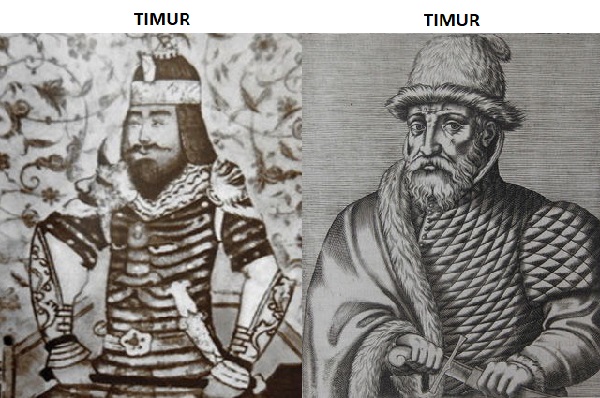
And when was he?
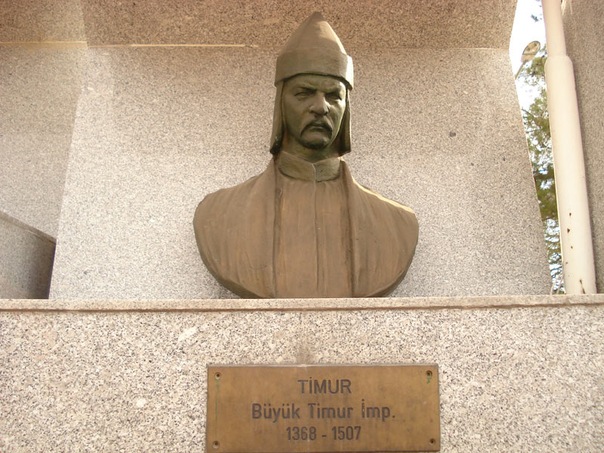
In Turkey, they apparently do not know when the Great Timur was born, and they definitely have a very weird idea of when he died. Doesn't look too Mongolian either.Mongolian ??? or European ???
And when was he?
Same Hat Maker?
Play: Timour the Tartar
- "Timour the Tartar" was omitted by Wikipedia. Coincidence again?
KD Note. Here is a sad fun fact. Wikipedia tells us the following:
- Scholars estimate that his military campaigns caused the deaths of 17 million people, amounting to about 5% of the world population at the time.
How come the below play was never written:
- Hitler the Nazi: A Grand Romantic Melo Drama.
The above story line belongs to John Malcolm (1769-1833) a Scottish soldier, diplomat, East India Company administrator, statesman, and historian. And here is what a monument to this Mr. Malcolm looks like.
- The Malcolm Monument is a tall obelisk which took less than a year to build during 1835-1836. It was erected in honour of Major General Sir John Malcolm, a Scottish soldier and diplomat, for his service to the country. The monument is a very prominent landmark on Whita Hill, Langholm, UK.
Scythian Connection
Whose Emperor?
Let us be real here. When we talk about Scythians, we are talking about times close to 2,000 years ago. Archaeologists can distinguish three periods of ancient Scythian archaeological remains:Whose Emperor?
- 1st period – pre-Scythian and initial Scythian epoch: from the 9th to the middle of the 7th century BC
- 2nd period – early Scythian epoch: from the 7th to the 6th centuries BC
- 3rd period – classical Scythian epoch: from the 5th to the 4th centuries BC
- Early Scythian – from the mid-8th or the late 7th century BC to about 500 BC
- Classical Scythian or Mid-Scythian – from about 500 BC to about 300 BC
- Late Scythian – from about 200 BC to the early 2nd century CE, in the Crimea and the Lower Dnieper, by which time the population was settled.
KD: In other words, how could Timour the Tartar (whose life story was so well known by John Malcolm, who in turn had an Egyptian obelisk for a monument) be the Emperor of Scythians in 15th century AD, if Scythians seized to exist in 2nd century AD. Which is approximately 1,200 - 1,300 years prior.
Scythians + Hats
- Other Greek earthenware of antiquity also depict Amazons and so-called "Scythian" archers with Phrygian caps. Although these are military depictions, the headgear is distinguished from "Phrygian helmets" by long ear flaps, and the figures are also identified as "barbarians" by their trousers.
Scythian Warriors
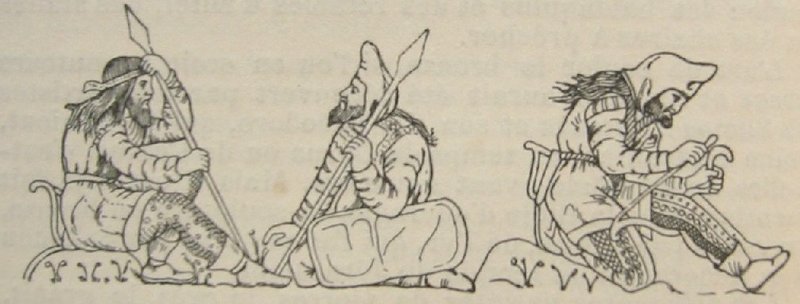
And this hat/cap issue takes us into a totally unregulated chronological spin, for these hats exist all over the time table.
KD: Them non-existent Scythians appear to have found a way to be present in 2019 as well.
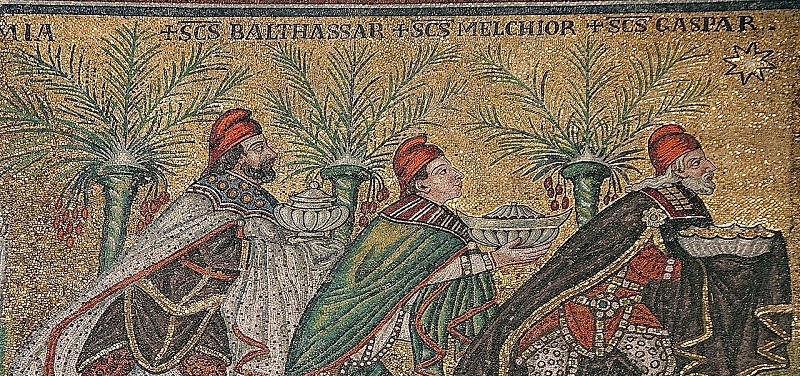
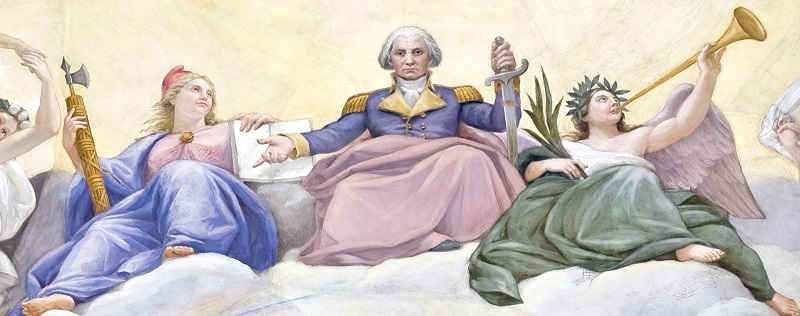

Well, I am not sure what exactly we can get out of all of this. If you know the ethnicity of Mr. Timour the Tartar, please share with us. Personally I am not sure any more. Additionally, it does appear (again, and again) that time frames were maliciously adjusted beyond recognition.
Finally
What is this thing?
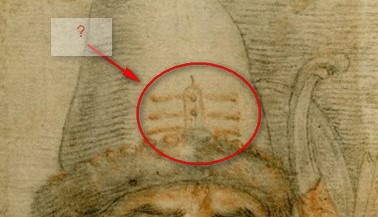
What is this thing?
Note: This OP was recovered from the Wayback Archive.
Note: Archived Sh.org replies to this OP are included in this thread.

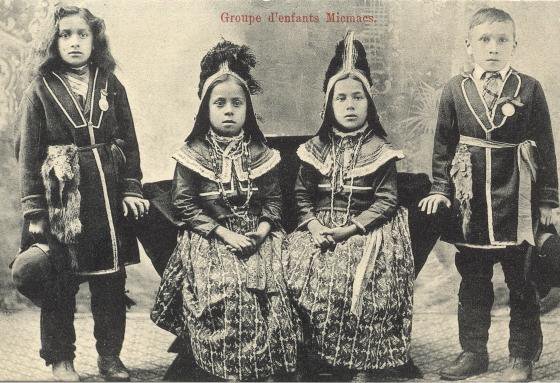
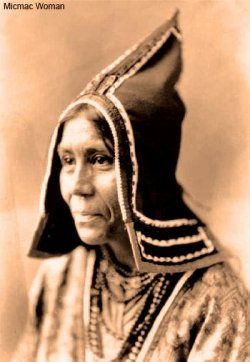


 don't say it too loud, someone might take offense.


