Still looking for a Russian take on San Francisco and this page appeared which I feel deals with the obfuscation of the terms Tartar and Tatar,
Как уничтожали память. Часть 1
It's in Russian so with google translates assistance here is the English translation.
How to destroy the memory.
We have become accustomed to the name of the Great Tartaria. True? And we are not very worried about the sloppy pronunciation in Russian: "Tartaria." Well, let's start to wean.
For starters, we write this name correctly - Great / Grande Tartaria. And from now on, to avoid confusion, we will write it only in Latin letters.
I explain ... Each country has several names:
- its own, in its own language, as it is called by the people living in it,
-and external, as it is called Neighbors in their own languages. One of the names eventually becomes international.
For example: Eesti, Chukhna, Viro, Estonia. Or: Svetia (now Sweden), Ruotsi, St. Rigue, C (c) is left, Zviedria, Zwualine (by the way, put it in memory of “Ruotsi”). Or: Holland, Isiltir, Duch, Nederland ... During the period we are considering, the names of Our Country are also diverse, there are also such limited in use as Cardandan or Madai:
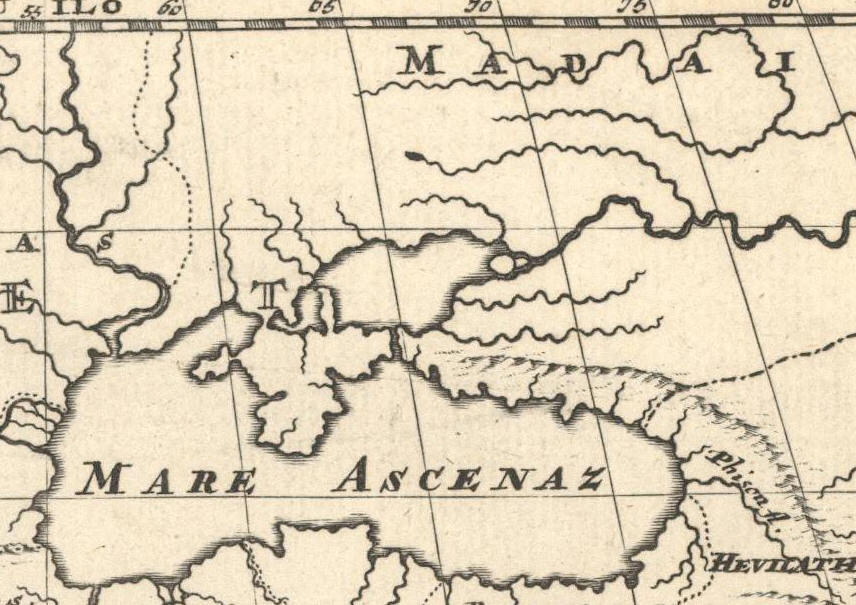
But we are now interested in only two names of our country - internal and "western".
Internal, in the main language of office work, Russian - the Great Horde.
Western, Anglo-Saxon - Great / Grande Tartaria (e) or Tartarorum (in Latin).
(There is no connection between Tartaria and the “gods” Tarh and Tara, or a connection with the “Slavic-Aryan” legends, Midgard, Iriy, etc. This is a foreign word for the Russian language that can have a very simple direct translation. TART, in several Western languages have an approximate meaning of PIE. So it can be Piroga Aria, for example. Well, our countries are famous for their cakes. Perhaps it is rooted in the West, as the Uyghur version of the name of the Great Country is connected with the Tartarus River, perhaps. We also remember bilingualism and double names ...)
Remember:
Tartaria = Horde,
tartar = Horde (resident of this Union of Countries and Peoples)
and nothing else!
This is valid both in the 14th century, before Persia, Muscovy and the Mughal Empire were separated from the Horde, as well as in the time of Peter the Great.
Let's look at the end of the 14th century:
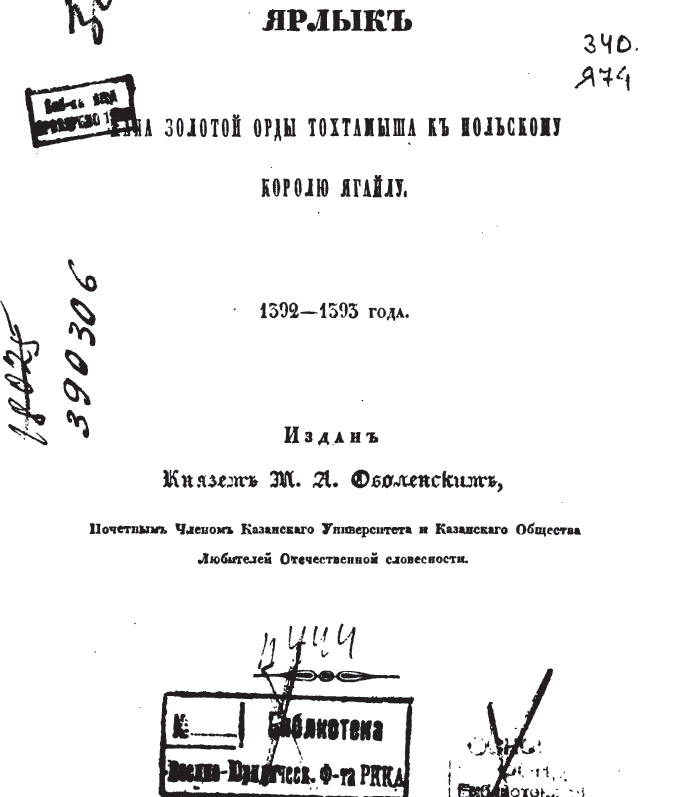
We see, there are some names of the parties that make up the Great Horde:
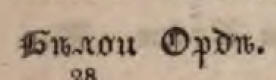

(here I ask you to postpone the memory "oh"), and there is a late "western" mark:

Legatio Tartarica = Embassy Ordynskoe.
If we looked here, we postpone it in the head - the clerical work is conducted in Russian and Uygur dynasty languages (we put in memory “Uygur”)
and in Russian - more complete. There is nothing unusual here, in secondary languages it is always shorter.
And we have already seen these pictures:


how did Kardandan or Madai:
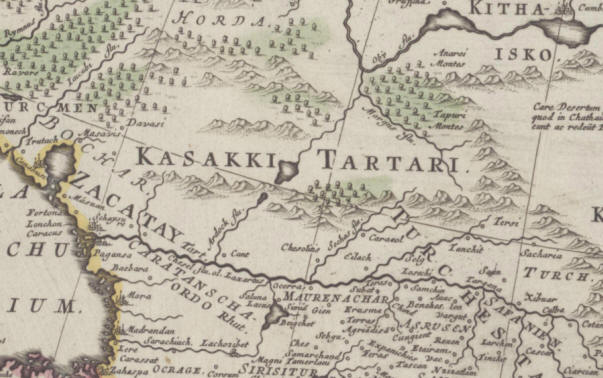
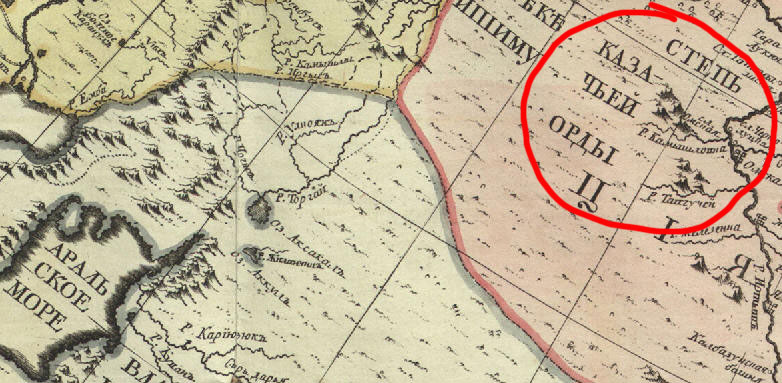
And after Peter's time, 1745:
Now, having understood the true meaning of the words
Tartaria = Horde,
tartar = ordynna
we will understand historical documents having a late Russian translation much easier.
Just to begin, let us follow HOW we have implemented a distorted and confusing value, as always - for three generations. (Immediately I recall the well-known confusion: “God is one and he is Allah” ).
).
“Why?” The question is inappropriate - DIVIDE et IMPERA - to maintain the glowing confrontation of the fraternal peoples, which can easily be blown into a fire at the right time.
Again and again, we will have to return to Peter's time ...
We have THREE “muddy” periods:
1. Birth of Peter:
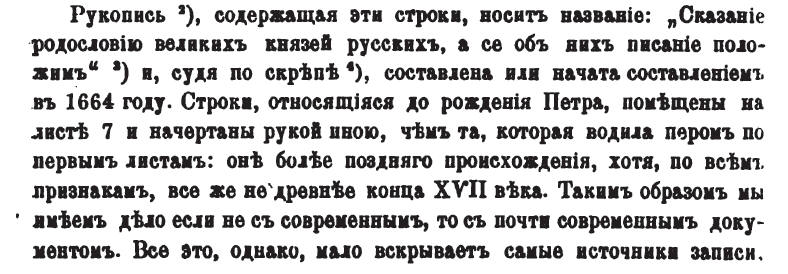
2. Secrets and intrigues associated with the real motives that led Peter to the throne.
Here, too, there is no evidence of contemporaries - only later works.
3. 1698 - Return of the "other" Peter.
And here we have enough information to understand ...
Peter the Great leaves for the West incognito.
But “incognito” is not for Westerners, there he is full of meetings and receptions at the highest level, and on the sly from his boyars and nobles - they are very unhappy with the planned trip.
Note some milestones related to the trip:
1. Gottfried Kneller writes portraits of Peter the Great:
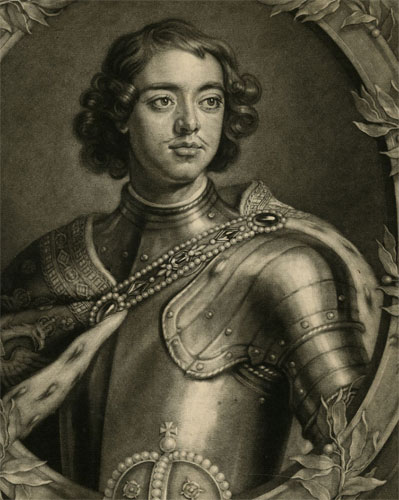
Peter the First in a knight's armor. That is, it demonstrates its belonging to the Knight's Order.
Which one?
Immediately, Ignacio de Loyola and the Military-Religious (Catholic) Order of the Jesuits come to mind:
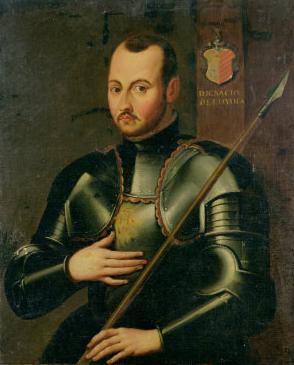
Maybe this has nothing to do with it?
2. We have already mentioned Menshikov, now we will remember the other.
Boyarin Sheremetyevu Malta entrusted diamond commander cross of the Order of Malta.
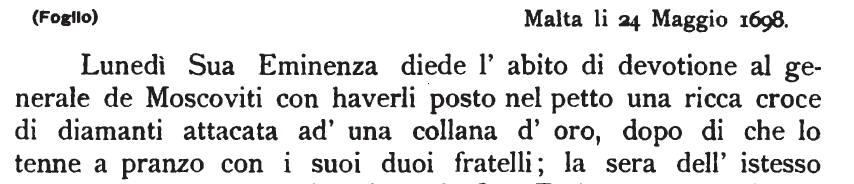
The Order of Malta is the oldest Roman Catholic Order of Knights in the world (military Order of the Knights Hospitallers of St. John of Jerusalem, since 1113).
Who else among the most famous people has been awarded this title?
In the Kremlin, November 16, 1991, to Boris Y. Yeltsin. was laid the cross knight commander of the Order of Malta.
For what?
Probably everyone knows the "merit" of this leader in the fight against the Russian people and against the Russian state. True, for some reason, the Templars of the United States were behind the assignment of the Order, but still, by analogy, Sheremetyev’s "merit" could be assumed.
Who else is on this list?
The most important is Paul the First. Here is his almost full title:
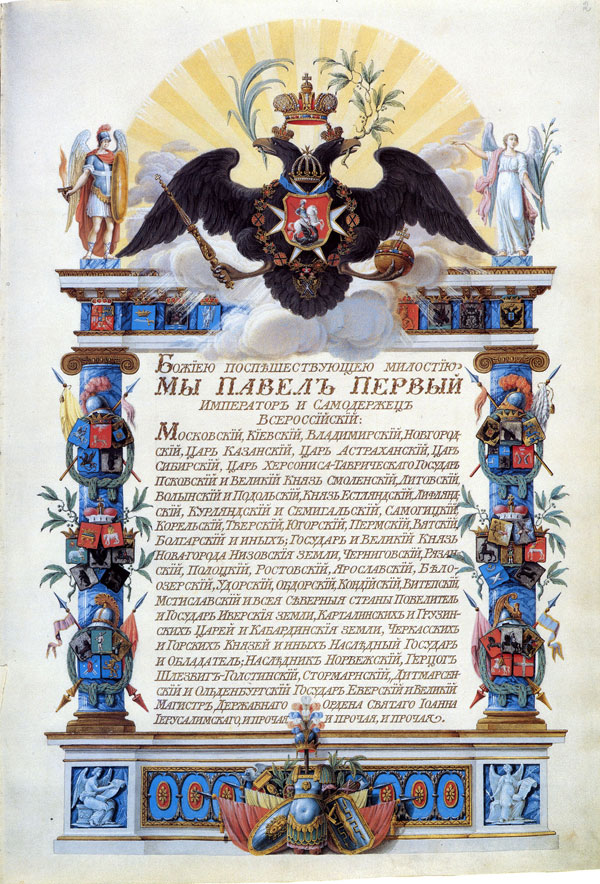
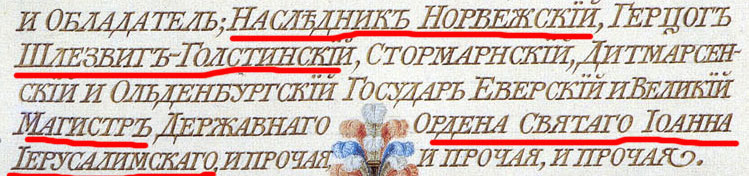
The last lines in the Title after Paul's death were already silent:
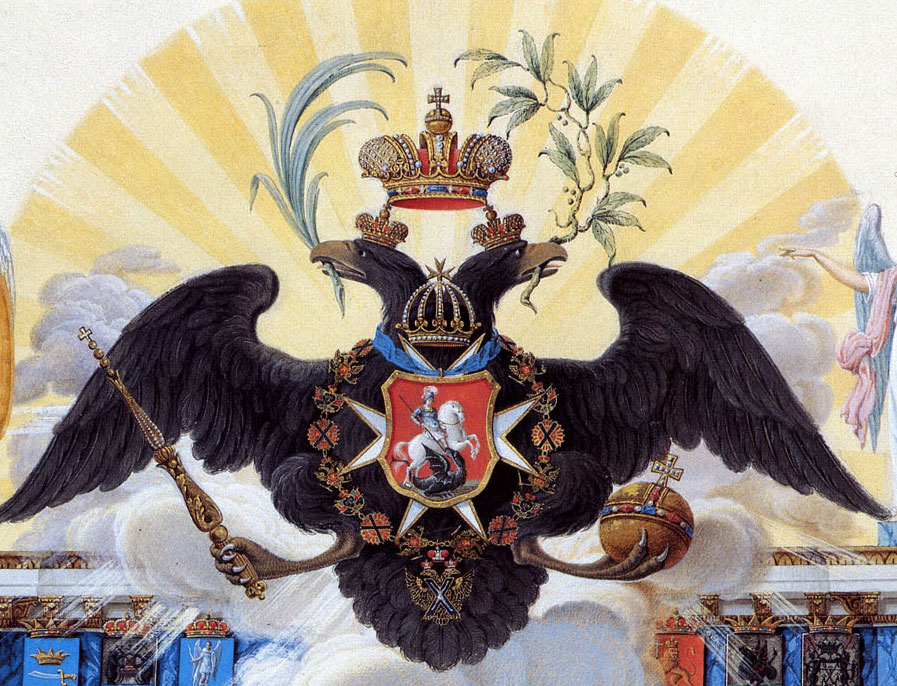
Pavel I even attached a Maltese Cross to the coat of arms of the Russian Empire:
But not for long - was killed by the Freemasons. For what? Apparently decided that he is his own master.
The three crowns on the coat of arms are “normal.” "Normal", starting with Peter the Great.
TP (s) KoRons, TP (e) KRunur = Tora Crown
And Pavel the First decided that he was allowed to acquire his own crown. It turns out - not allowed.
Alexander I removed everything that was unlawful and resigned the powers of the Grand Master (at least “according to the announcement”).
3. The special mystery of one sea trip of Peter the Great, although the imaginary “incognito” is already known to all:
4. Letter from the Jesuit (Jesuits in Russia - letters)
A very interesting letter from a direct witness to the events, but there are big complaints about the translation of this letter into Russian, a little later we will translate a few phrases ourselves.
For now, let us single out the main thing - Jesuits, who are supported by the Tsar and the main boyars, are running into Muscovy with precautions and secret plans.
5. Lambert, as without him. Here they are both dudets, with the same attributes:
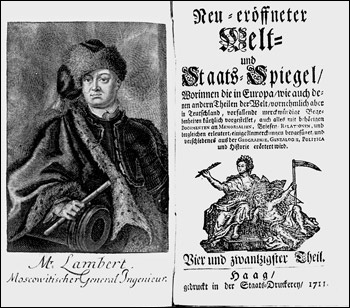
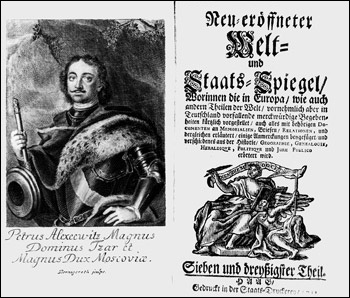
Now let's go through the 18th century.
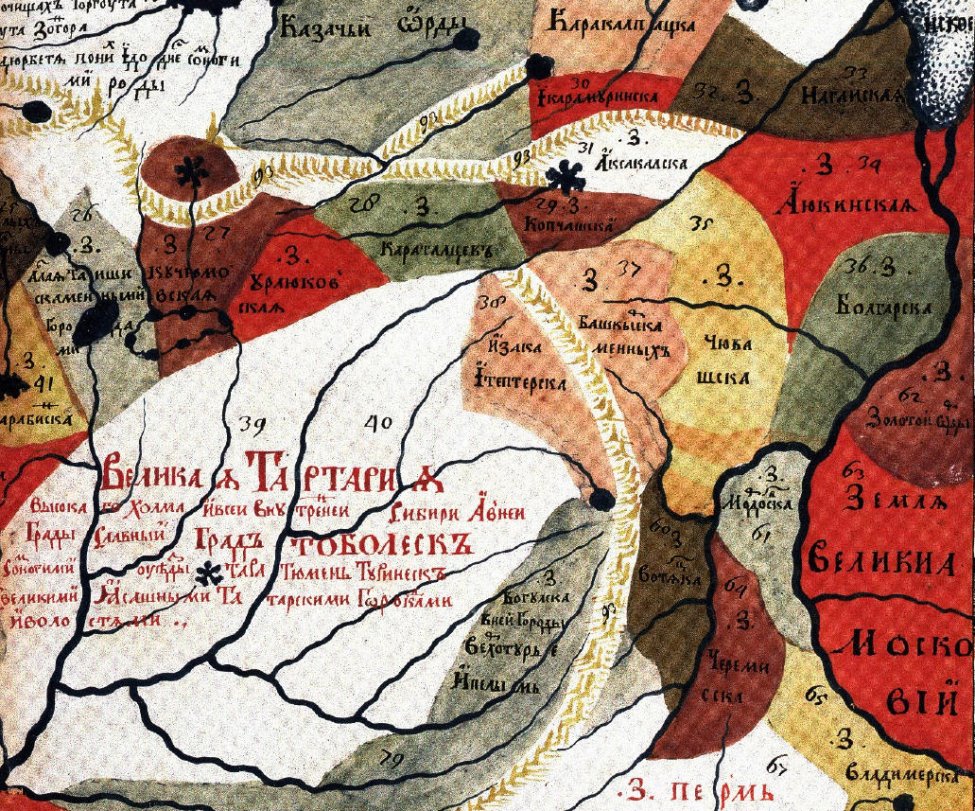
Remezov, "Drawing Book of Siberia", 1699-1701. (Download here, 727 mb: Siberian Drawing Book - Remezov)
Before the Atlas there are no official maps in Russian! Not a single document.
The first time marked "Great Tartary" - a small piece of Western Siberia. This is at a time when Grand Tartaria is the largest state in the world on the western maps and historical documents. What do they know in Muscovy of what is still unknown in the World?
The fact that the Jesuits have already agreed with all the "national elites" of the Ord on secession from the USSR, I apologize, from the Great Horde? “Sovereignty” and “independence” have already been distributed, and the Heart and Spirit of the Great Country is left with severed limbs and can not protect itself anymore?
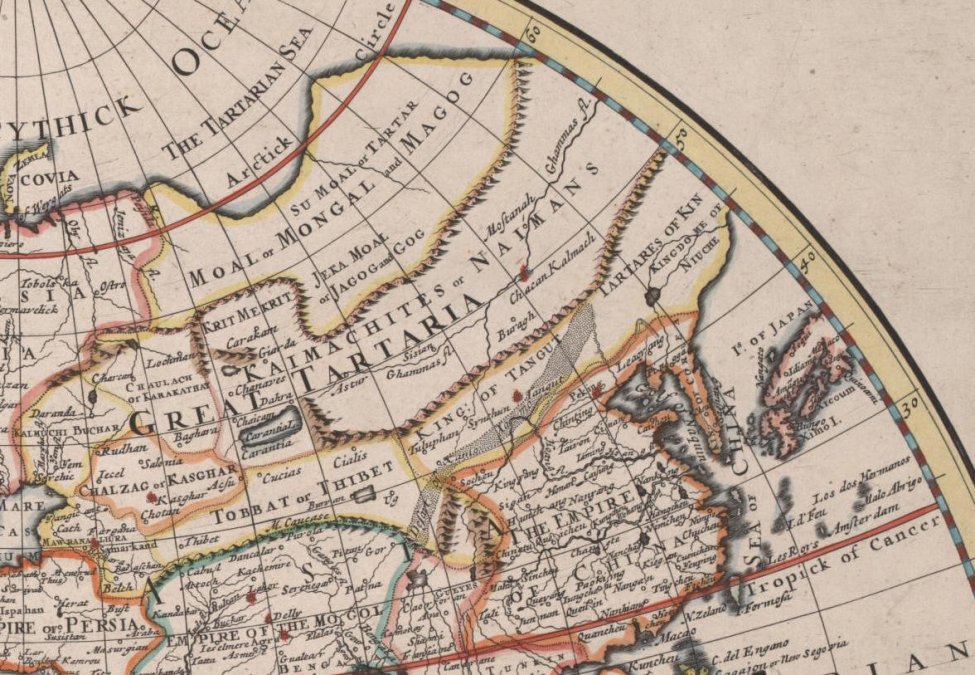
Remember?, We already looked at the map of cutting Grand Tartaria on ethnic rags:
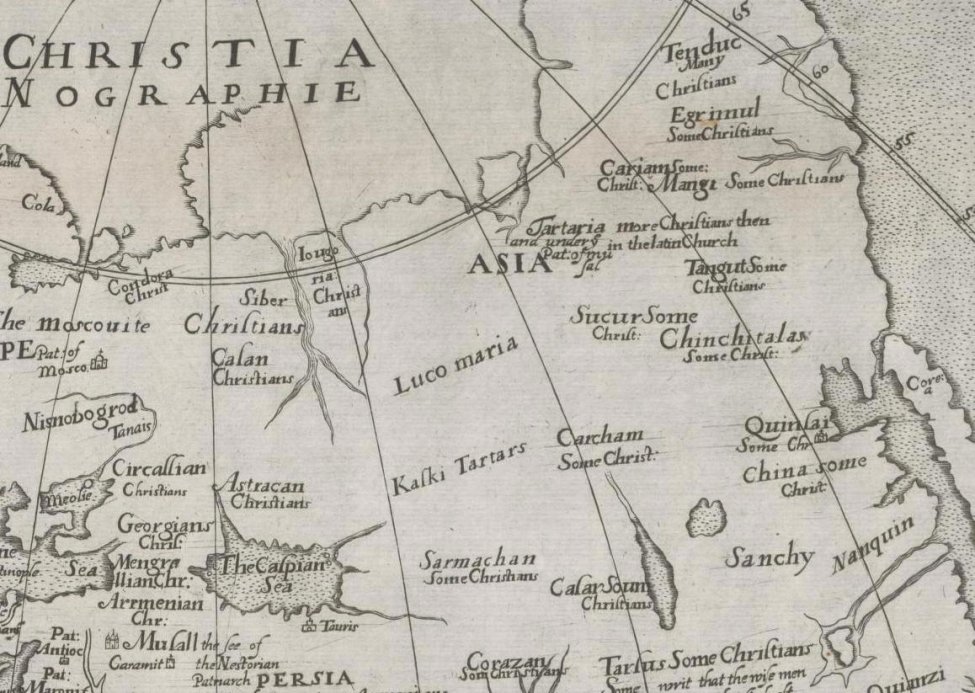
with the help of Christian preachers:
So, at Remezov we see, the first time is a complete repetition of the Anglo-Saxon transcription - “Tartaria / Tartaria”. At the same time, the modern "KazakStan" still has a mention that it is the Horde - the Cossack Horde, and the Golden Horde - the Horde.
What is the name of the people lost modern "Kazakhs"?
* * *
(The Cossack is not a nationality - it is a peasant + warrior + cavalry; equestrian + border guard; professional warrior + peasant + on horseback: Don Cossack, Zaporizhia Cossack, Kalmyk / Yaitsky Cossack, Kyrgyz Cossack ...

.. "Kazakh?" Cossack, "stuck" Cossack - this is already in Zastinenny China, in the area of Kambala / Beijing ...)
* * *
And now we will look at the region of modern “TatarStan”.
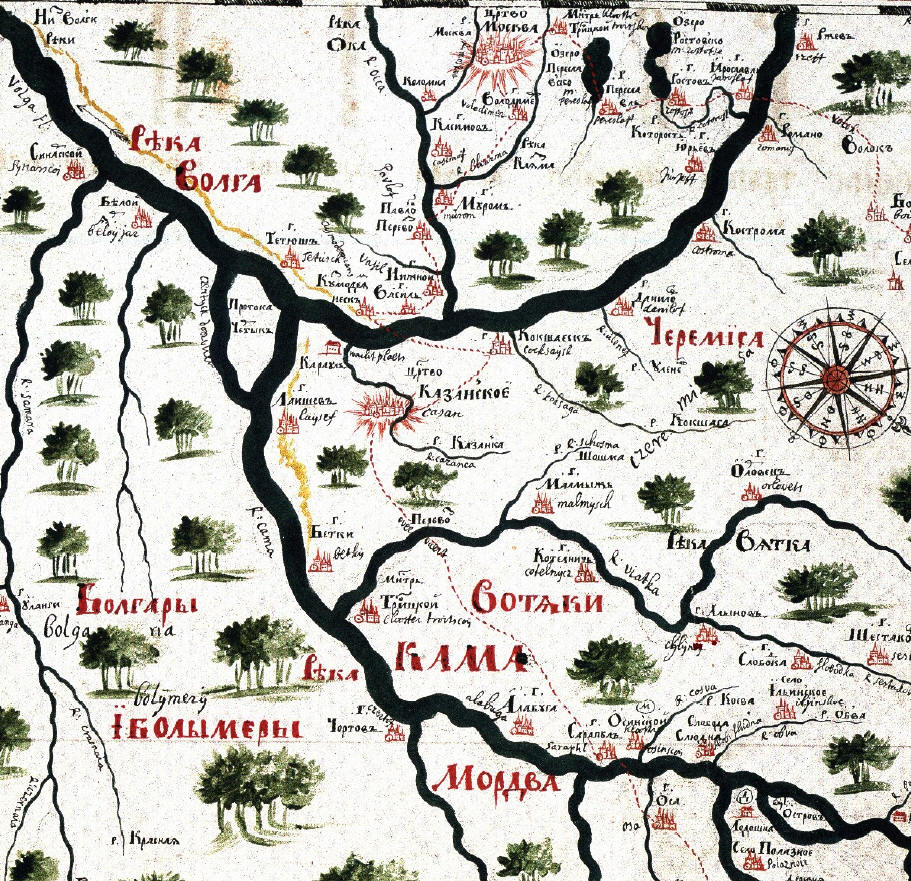
Nothing new. Cheremis, Ostyaki, Mordva, Bulgarians and Bolymers live around Kazan. No "Tatars" here and does not smell.
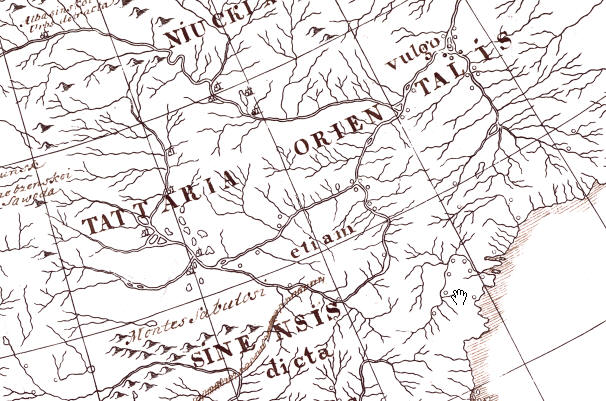
Now let's look at the "Atlas of the All-Russian Empire" Kirilov, 1722-1737:
Transcriptional changes begin (after all, Tartaria is too sloppy in Russian):
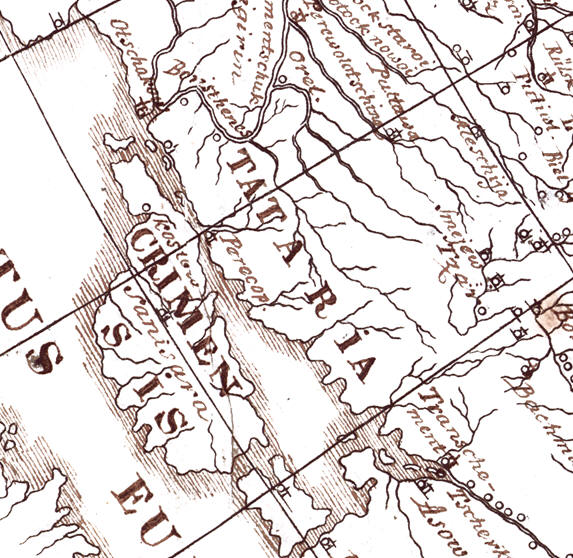
But the writing is not yet stable, here with two "T", albeit on the same map:
And, of course, take a look around Kazan:
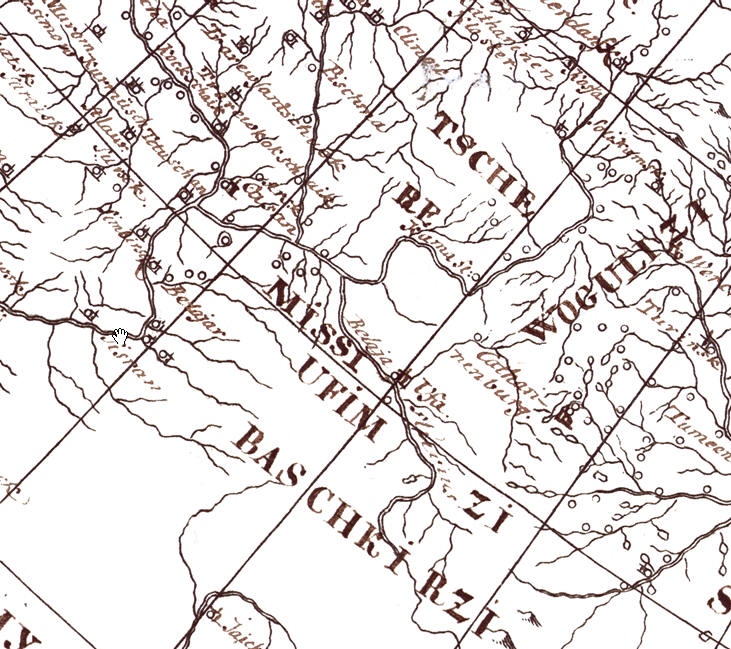
Nothing unusual - there are no "Tatars".
When did they "appear" there? Now...
First, let us pay tribute to the Chief Writer of Russian History - Miller and the Company.
We take in the hands of one of his "opuses" -
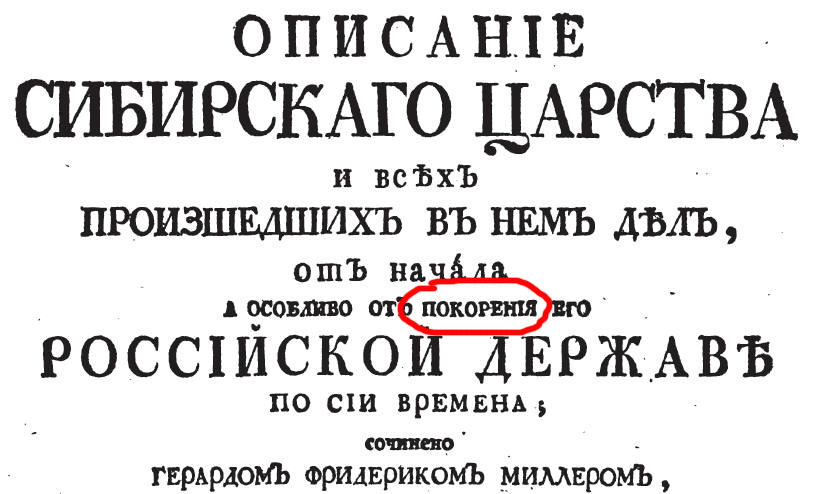
(Download here, 34 MB: Miller - Description of the Siberian kingdom.pdf.html)
Who is this writer?
The son of a Catholic pastor. He arrived in Muscovy in 1725, in the newly created Academy of Sciences.
The names of the generals have already seen, now look at the names of members of the Academy:
Schumacher,
Korf,
Blumentrost,
Wolf,
Bernoulli,
Hermann,
Bilfinger
Goldbach
Keyserling ...
Who would doubt, some "Russian Germans."
"Description of the Siberian Kingdom" appears after 25 years, in 1750.
Miller even after a quarter of a century does not speak, does not read, and does not write in Russian. Like his colleagues, he does not know Russian, but he “composes” Russian history at the Academic level. Unprecedented.
Let's see who Miller refers to?
Of course, most of all - on himself. Here are other links that deserve his trust:
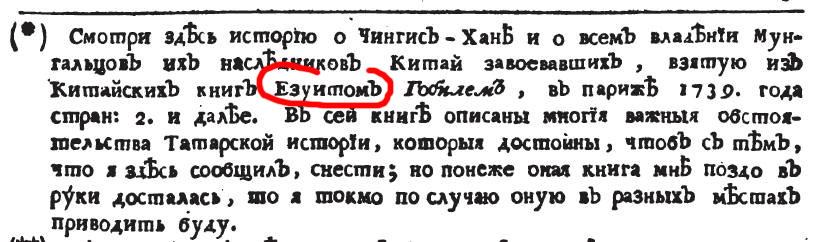


On the basis of Himself and “Ezuitov” OUR History is written, and all other sources are ruthlessly “corrected”.
About the monuments and archaeological finds Miller's point of view is known - any ancient antiquity found in Siberia is all stolen in the "West" during the raids described by the Jesuit Gobilem.

And let us check the accuracy of the information - this is the very beginning ...
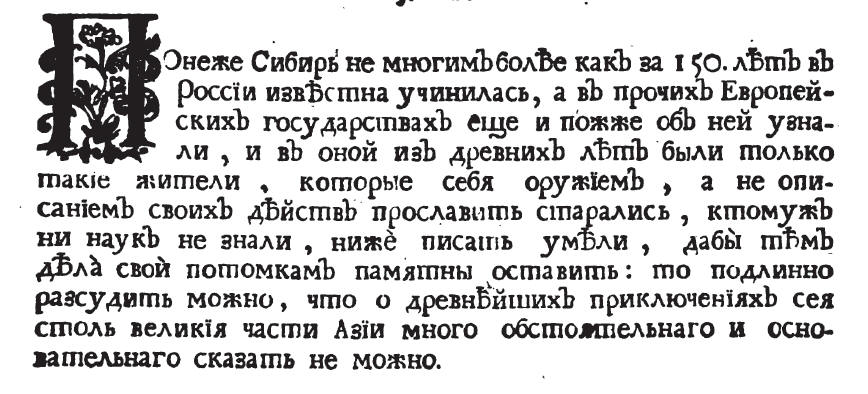
So, according to Miller, Siberia became known in Russia a little earlier than 1600, and in the “West” even later.
Although other information is available:
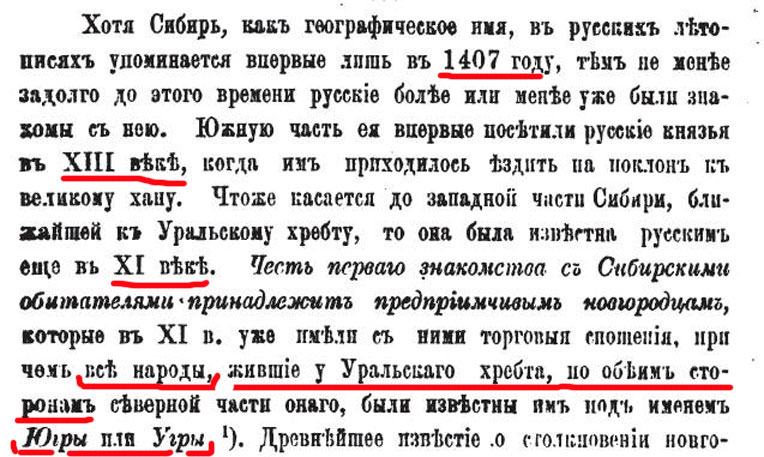
And yet - it was Miller’s “expedition”, consisting of 3,000 (three thousand!) “Scientists” who collected and removed ALL ancient archival documents from Siberia, a huge amount.
Where are they? Why not used in the "writing" of the story? Miller does not read Russian, but is there a problem with translators?
Then we look not in Russian:
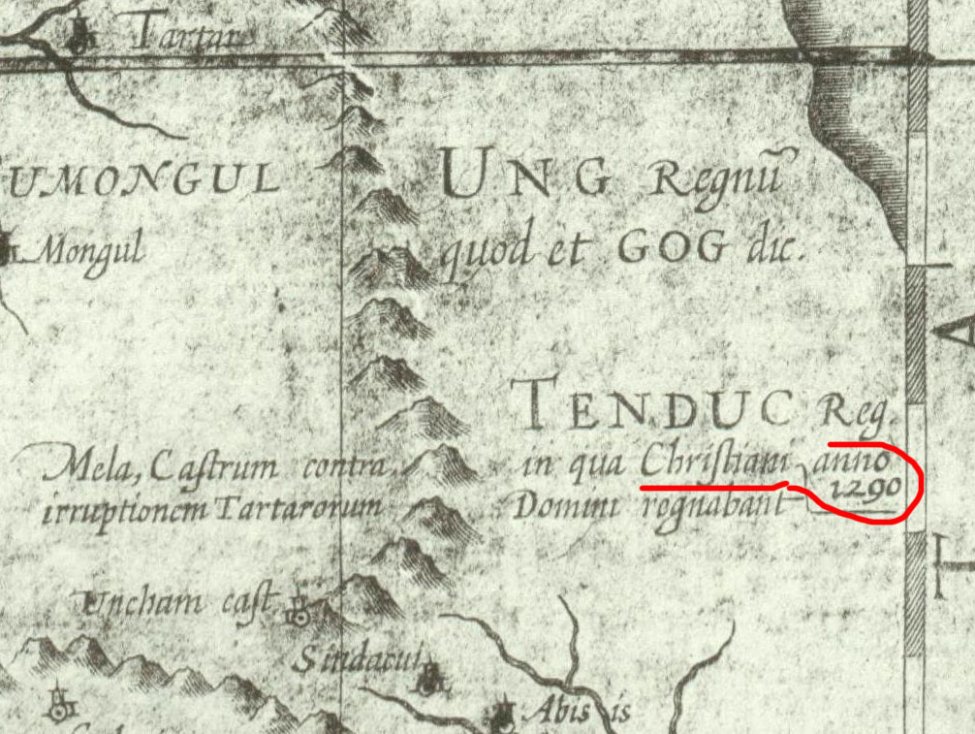
In the farthest corner of Siberia, Christianity since 1290, with the so-called "Invasions of Mongolo-Tatar".
So we got to the Chief in this Essay, the appearance of the "people of the Tatars" !:
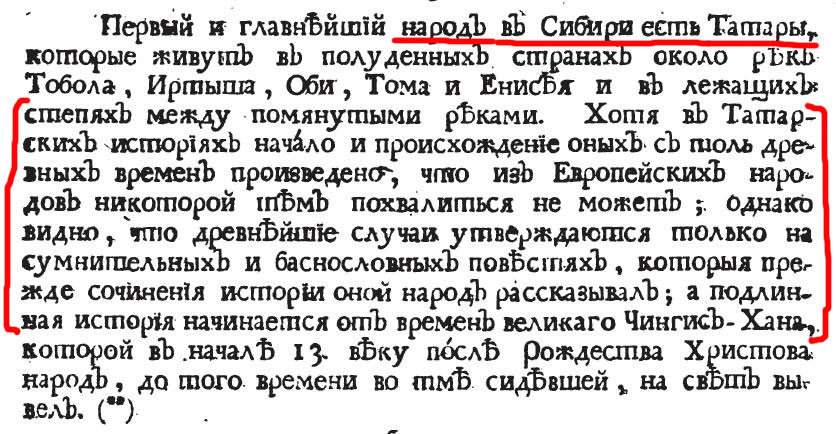
Instead of the Horde residents, residents of the Great Union of Countries and Peoples, the notion of a “people” - a violent robber, invader, illiterate savage was introduced.
Then this new "people" will begin to be localized in new "works" in the places of military opposition to the Royal Colonization and the Forced "Orthodox" Christianization.
And after the uprising of Yemelyan Pugachev, the Tatars' zones of residence, already known to us, will be finally determined. In the end, "Tatars" will remain only those who remained faithful to their Faith and whose native language was not Russian.
And the word Tataria (in Russian transcription) will begin to appear in application in the “West” - Tataria (1797–1799, Beautemps-Beaupr'e, Charles Francois).
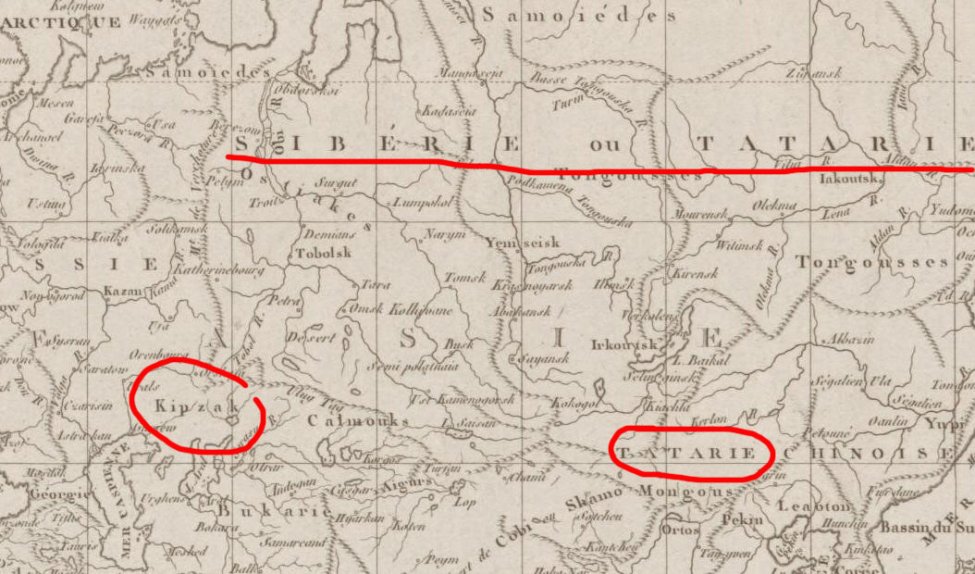
Siberia or Tatarstan!
(Attention: Kipchaks are alive and well - they live where they lived!)
So, it looks like the term "Tatars" can end:
- during three generations, some groups of people who lived in a single Eurasian space for thousands of years, intertwining blood ties with all nations, were given a made-up Name, a made-up History was inspired and, of course, Worldview was changed. Now, after eight more generations, this Lie is perceived by them as the Truth. With all the consequences - DIVIDE et EMPERA ...
Now we can move to the most difficult - the term "Russian" ...
How to destroy the memory. Part 2
"There is no sadder story in the world, what is the story of ... "
... than the story of the Russian Civilization.
* * *
And let us first recall this quote: "Who controls the past, he owns the future."
Proceeding from it, it is clear - anyone who is going to take part in the Directorate (or in the Interception of the Directorate), MUST know the TRUE key moments from the story. At least from the history of his great country.
Do we know Most throws their heads - of course we know.
And if you look from the side ?:
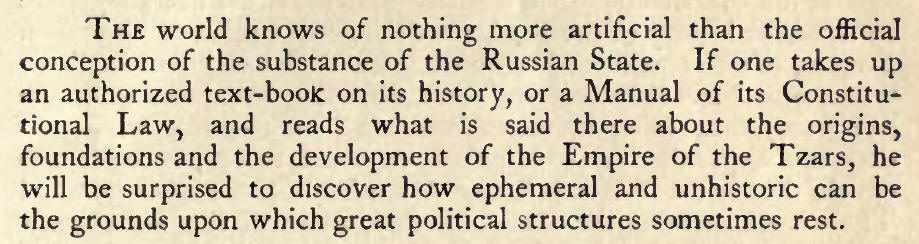
“The world does not know anything more artificial than the official concept of the essence of the Russian State. If a person takes an approved textbook on his history, or a set of Constitutional Laws, and reads what is said there about the origin, foundation and development of the Empire of Kings, then he will be surprised to find out how ephemeral and extra-historical can be foundations on which great political structures have sometimes settled. ”
Usually we don’t like that strangers say about us ...
Let's see what they say OUR ?:
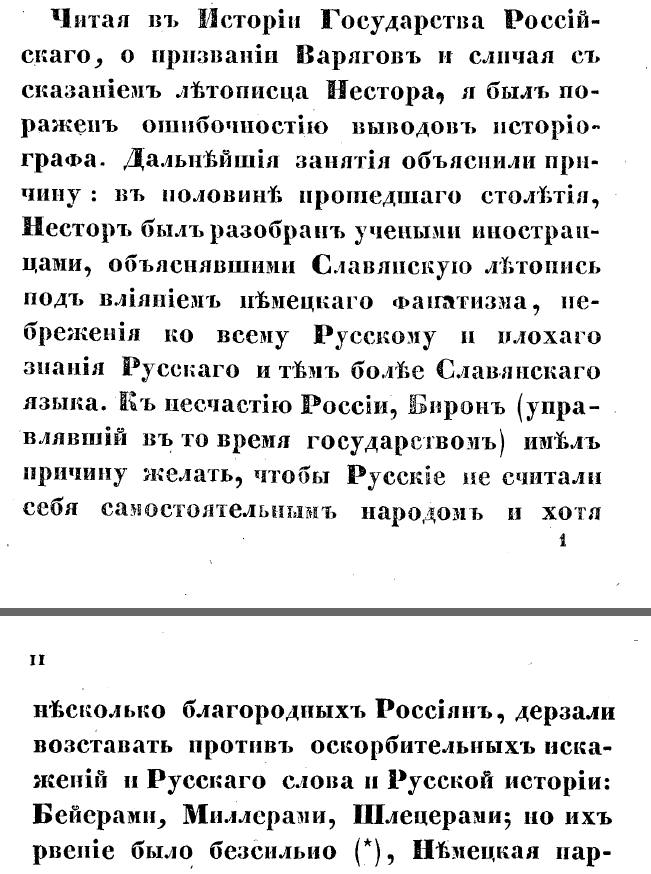
And best of all, not so diplomatically as in English, but directly and precisely, it shows the essence of this phrase of Lomonosov:

“From this it must conclude,” that we know not the history of our Great Country, but the “cattle” ...
Do we have the opportunity to correct the situation?
Of course have! Internet and digitalization of various archives gives such a chance. And it seems as if the following lines are right on the topic:
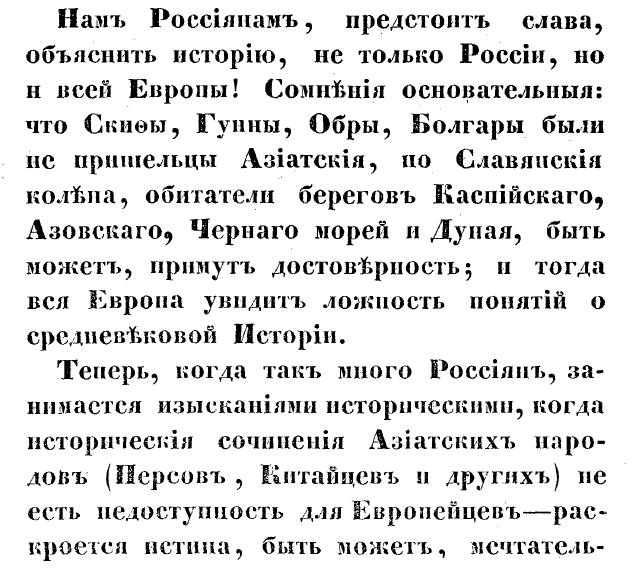
"Historical writings ... is not inaccessibility ..." - it is said as if today ...
But it has passed after these lines for more than a century and a half, and our knowledge has only become weaker.
Okay, stop crying - WE started breaking Zombie Stereotypes, and we’ll continue.
No wonder so much time spent on the realization of the true concept:
Great Horde = Grand Tartaria = Tartarorum
horde = tartar
Having taken out this brick, we will break up the whole Zombie Pyramid of concepts.
Let's calmly correct historians and translators, and understand the undistorted meaning. Let's start with the Jesuit Letters, just first to mock the "censors", correct a few phrases:
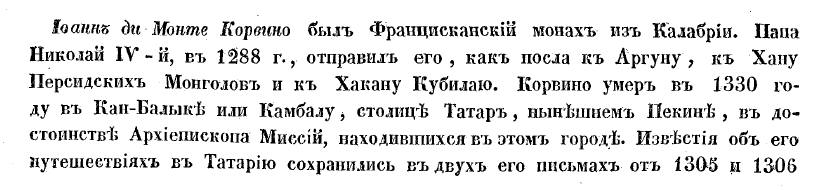
Correctly: "... Corvino died in 1330 in Kan-Balyk or Kambalu, the capital of the Horde, present-day Beijing ..."
Do you feel the difference?
Did it take so long to talk about Our Chinese Walls and the Zastennoy Horde? It was possible for historians not to distort the translation.
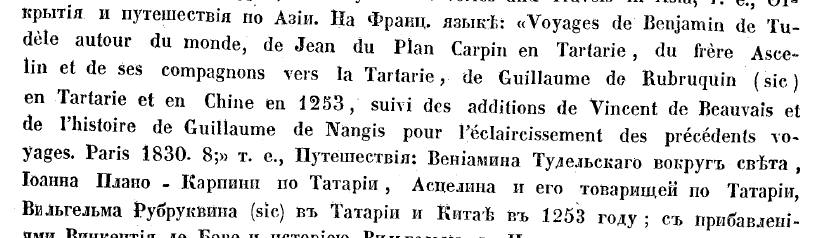
Not "in Tataria and China", but "in the Horde and Chine" ...
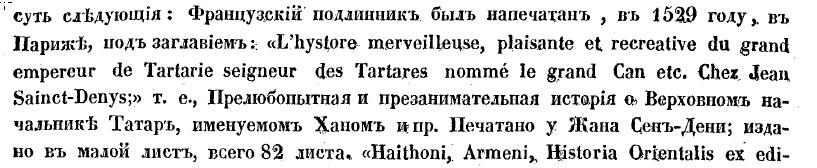
Not "... about the Supreme Commander Tatar, called Khan ...", but "... the story of the Great Emperor of the Horde, called the Great Khan ...".
Okay, open the Jesuit Letter - we will not only read, but also understand the meaning of what is written.
Immediately, we note that there are comments on the translation into Russian - the stylistics of the original are not sustained (very interesting) and ... and there are unacceptable substitutions that distort the meaning.
First, let's start with those places where the meaning is not distorted by the translation:
1. Between the Great Horde and other countries there is no “Iron Curtain” and there is no opposition.
Horde quietly moving along with other people, as well as in large numbers are present in Moscow, and the soldiers too.
2. The Jesuit gives the Horde only good characteristics.
3. In Moscow, all issues are solved with the help of money (as about today's Moscow, as if 300 years had not passed).
4. On the riot of the archers:
- "a Tatar (Horde) soldier was driving around Sloboda" - already noted, there were Horde soldiers in Moscow.
- "Streltsov, of which one part was already approaching Moscow" - from one of the Sloboda?
But it is in Moscow or practically in Moscow. Historians say that the riot began from Azov, and this is the territory of the Perekop Horde (Petite Tartaria)
- "others intended to appear from Kazan and Astrakhan, joining with the Yaik Cossacks."
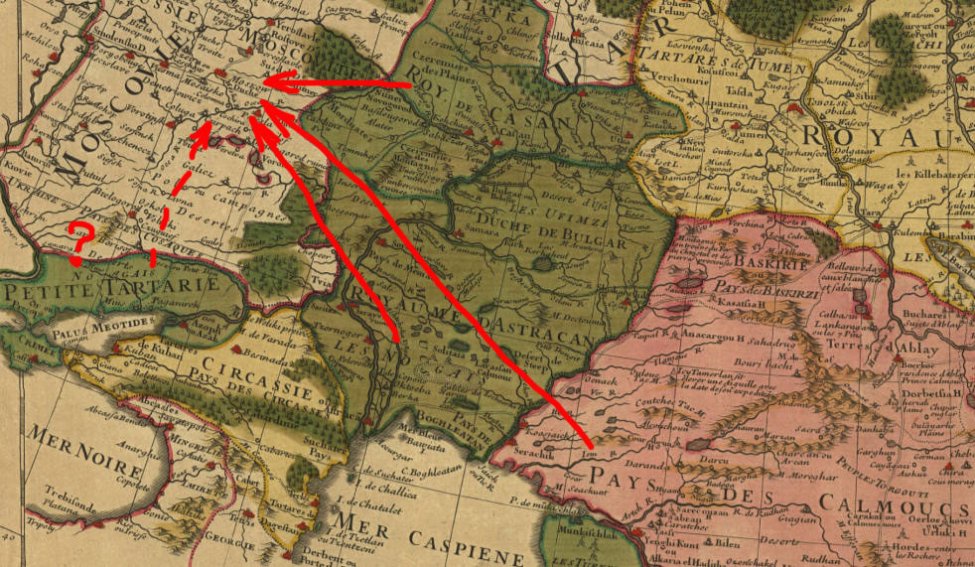
What we have?
The troops of the archers (the main military force created by Ivan the Terrible), together with the Yaik Cossacks (soldiers of the Kalmyk Horde, subsequently subjected to genocide) opposed the Coup in Moscow, and were defeated. The cruelty of the massacre of archers, which lasted until 1707, was particularly struck by all witnesses. How did this happen?
Who broke them?
As with any betrayal in the Highs, there is also confusion in the Army. Sixteen regiments of archers did not take part in the “rebellion” (they were not executed later, but only disbanded).
Those who took part went to perform police functions (the duty of archers in peacetime). They were marched by separate detachments (at least four), without having joined in one army beforehand. Why?
Because in Moscow there were only their own archers and ... and "Fun" regiments.
It does not resemble the First Chechen Campaign with its “police operation”. What ended the underestimation of the enemy?
And that time, they went to put things in order without knowing that in 1698 the Amusement Shelves were transformed. For example, in the Preobrazhensky Regiment there were 4 battalions of 4 companies of fuselers, plus a company of grenadiers and a company of scorers. Huge POWER !!! And also the Semenov regiment, the regiment of General Lima, and the regiment of Gordon.
Where did so many warriors come from?
Firstly, Poteshny themselves are “schools” of sergeants and junior officers, but now they are perfectly armed.
Secondly, the best archers transferred to them and other regiments to submission (according to Moscow, there are not enough archers in Moscow).
Thirdly, the German senior officers.
Fourth, mercenaries ... Yes, yes, mercenaries, which historians do not like to talk about, although there is enough evidence.
The goal was to conquer all free nations, and everyone who invited them, for example, to Siberia, was invited to this bloody robbery:

Here we have the answer to the question of how the Muscovy’s military confrontation began against other regions of the former Great Country, which lasted for a century and a half.
Sad story…
Now we are going to consider those places of the Jesuit Letters, the distorted translation of which broke the meaning.
And let's start with that phrase (p. 3), for which we have not yet had time to prepare:
"... in Moscow, a German-language translator, a Hungarian by birth, who was once a Catholic, now rushes in ..."
The letter was written in 1698, before the official date of the Change of Consciousness (as you remember, we assumed that January 1, 1700 is an official turning point).
The translation of the letter into Russian was made in 1891,and we read this translation in 2011.
How many malicious misrepresentations of the meaning of the word “Russian”, or consonant with it, occurred during this time? How deep is our mind?
Let's try to figure it out?
1891 For almost half a century, the concept of "nationality" has been introduced. What does it mean?
Nationality - Nationality of the State. Speaking in human Russian language - to which GOVERNOR, your HOST, you-HOLOP must give a Tribute.
All people living at the time of the introduction of this concept in the territory of the Russian Empire, officially become Russian (Whose?). That is why in the List of Peoples of 1895 there are no such people as “Russians”. All Russian listed nationalities.
Why "Russian" and not "Russians"?
After all, the Russian Empire, Russia?
- Because of the malicious substitution of meaning and the game of consonance.
By the Announcement, the master of the whole Empire is the King, a descendant in some kind of knee according to the Biblical Concept:
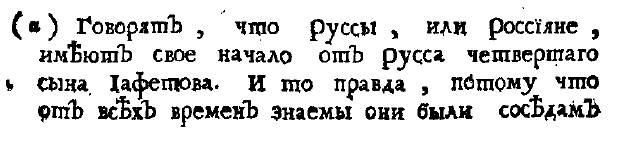
And in addition to the Default (notarikonu), P S - Rabbi "Slavs" (let it be the second word so).
And this concept of “nationality”, as Citizenship (and now citizenship), has been preserved in all Western countries.
If I fill out some form in England or Finland, I will have to put it in the “nationality” column - Estonian, despite the fact that in Estonia I am Russian. Since it is the Estonian “Roof” I am obliged to Serve a Tribute from all my incomes (by default, if the “roofs” among themselves do not agree on something else). Estonian citizenship standing in my passport is my nationality.
That is why in the West they called all Russians of the USSR “Russians” by inertia. But after the October Revolution, the meaning of the term “Russian” and the term “nationality” was again distorted. Distorted throughout the former Russian Empire.
In 2011, we already use the concepts introduced to us by the gang of Lenin-Trotsky.
On the territory of the former Russian Empire, the concept of "nationality" was given an ethnic character. "Nationalities" and "tribes" changed to "nationality".
What for?
The subtle game is divide et empire.
The “state” formed the “Nationality”, and now the “Nationality” has the right to self-determination and the formation of an independent State. And - only on the territory of the former Russian Empire.
Not-before-shred ...
So, in 2011 we (for the Zombie Stereotype) represent the term “Russian” - as some kind of ethnicity.
Let's still begin to return to the original concepts, and overwhelm the Zombie Pyramid.
1698
"... in Moscow, a German-language translator, a Hungarian by birth, who was once a Catholic, now rushes in ..."
We do not need fast reading, read slowly:
"... a native Hungarian ..." - ethnic, tribal, tribal affiliation,
"... a former Catholic ..." - was the worldview,
"... and now Russian ..." - Worldview has changed.
It is clear, yes?
Incomplete semantic translation.
It should be:
“Russian in the Spirit”, “Russian in the Soul”, “Russian in the Scale of Values”, “Russian in World Outlook”.
Either - "having the Spirit of the Rus", or simply RUS (opponents - just Catholic, just Christian-in).
Run forward?
Actually NO - we know THAT, but do not understand what we know. Or rather, those who consider Alexander Sergeevich Pushkin more or less than the poet (but wasted) know and do not understand:
"... There Russian Spirit? ..."
"... Tatiana Russian soul ..."
Okay, let's go leisurely ...
We look, and what term is used in the original, in Latin ?:
"... natione Ungarus ..." - ethnic, tribal, tribal affiliation,
"... quondam catolicus ..." - Worldview,
"... nunc Ruthenus ..." - now Ruthen (already met, in the not yet conquered Siberia) - Worldview.
As we have already said, Cyril and Methodius were removed from our ABC letter, many letters were removed, and our possibilities were limited.
There was about such a letter "Θ" and was gone. In Western languages, it was changed to "th", and in Russian ...
... and in Russian, linguists offer to pronounce it as "T", but in reality, in the modern pronunciations of old words, it is used as "T", or "C", or "F".
Therefore, we will use modern pronunciations of words to make the meaning more clear. In order not to be confused by the use of the so perverted concept of “Russian”, we will for the time being use the Latin version with modern pronunciation, and later we will reveal how he RIGHTly says in Russian. So:
"... nunc Ruthenus ..." - now Rusin (RUS-in).
We look further, the end of the 5th and 6th pages - the story of the martyr Peter.
“He was a Russian deacon ...”, we check that in Latin?: “Diaconus Ruthenus”, we correct the name “deacon”, alien to Rusins, to, let it be, “spiritual minister” and we get:
Former clergyman Rusin adopted a new Roman religion - ??? ...
(judging by the way the Jesuit praises him, for which only one true religion is Catholic)
... Former Rusin adopted the Roman Catholic religion, and "He preached a sermon ...", for which he was severely punished and possibly killed.
What was in the sermon?
- Schism - and in Russian split.
- The Headship of the Pope (Rome) ...
Well, let's take a closer look here. To begin with, we will list the main “players” - we will list the most popular worldviews, co-existing in Muscovy for the time being:
- RUS-iny - the most ancient worldview that existed in this territory, but increasingly displaced (as far as I keep the ancient).
- Nicodemians are Christians according to the apocryphal gospel of Nicodemus (apocryphal means officially not recognized after the Schism).
- Nestorians are also Christians, but the most principled opponents of the Byzantine Church. The most mass trend of Christianity, which existed for more than 1000 years in the Middle East, Central Asia and the Far East. It has been present since the times of the so-called Mongol-Tatar Fantasy in Siberia, Zastennoy China and China, and even in Japan. It was during his flourishing of these territories. It was called the Right Praising Christianity. It was this line of Christianity that was condemned as a heresy and betrayed by Anathem (again Schism).
Why anathema?
You can answer in one word, the Nestorian is ... - the great-Communist.
Yes, Nestorianism is the great parent of the Communist Worldview. The familiar Karl Marx has only turned the worldview into a wrapper of new terms (a tactical move?), Torn apart by the Byzantine Church. Then Nestorianism was anathematized, now Communism. True, the Communist Worldview has already failed to collapse in just over 1000 years, but in just 30 years (1953-1983).
“The Mohammedans are the current Muslims, but there are not so many of them.”
(These were all Worldviews that have been on the territory of the Horde for hundreds of years, and now - the “newcomer” that appeared after the new Schism, Split from Patriarch Nikon of 1654-1657)
- The “New Believers” of the Moscow Patriarchate, as part of the Byzantine Church, are “pseudo-Christians”, the only canonically legitimate church (Christians of the “correct faith”, the Orthodox), whose legitimacy and hierarchical height throughout Peter the First will be provided by the army under the leadership of the German generals.
Overnight, the Christians of the Nikodimians and Nestorians became the “Old Believers”, and together with the RUS-ins, heretics and savages, subject to either baptism or annihilation.
- And there appears an "overseer" in the person of his Jesuit "special forces" - the Roman Catholic Church, which calls itself the only Right Church, for which all the rest are heretics. That is, it appears here as the highest "Christian" hierarchy (from the Pope of Rome).
What is the difference between the Byzantine and Roman Catholic Churches - a little later.
And now, it is already clear to all - the Byzantine "New Believers" usurped the right to preach only one worldview, the attempts of all the others are severely stopped.
What is it all over?
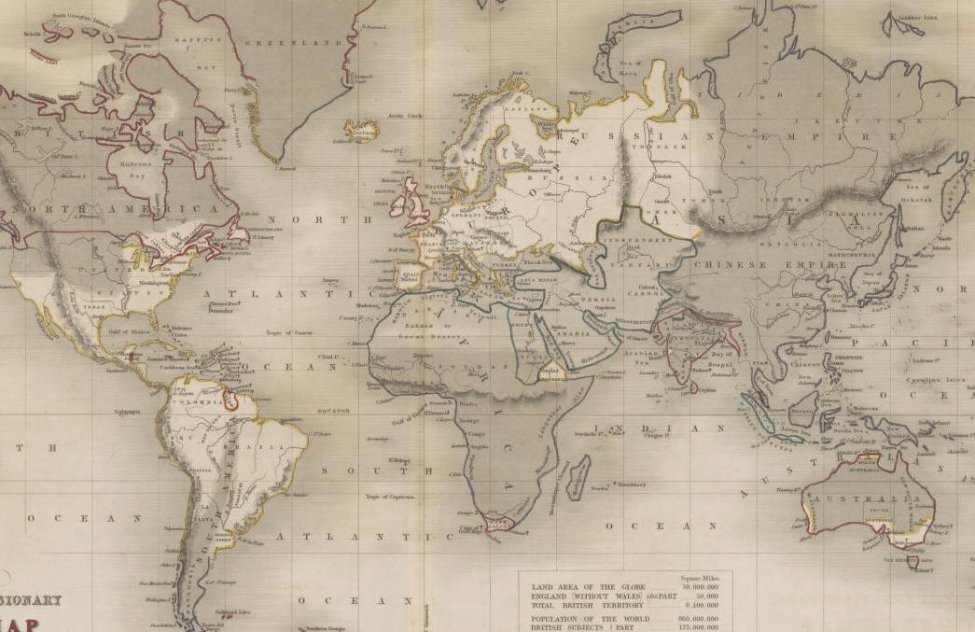
Already seen the distribution of Christianity (Christianographie 1600)
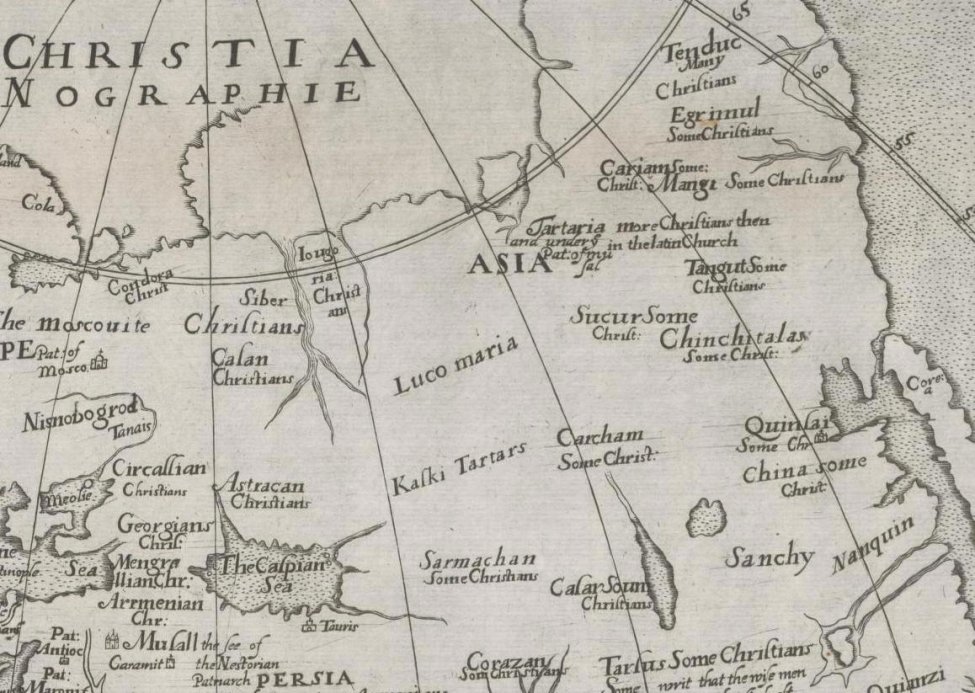
But after a complete "cleansing" of the territory of Orthodox Christianity (Church Map 1842). All white is “clean” territory; we have gray - pagans and savages, no Christians.
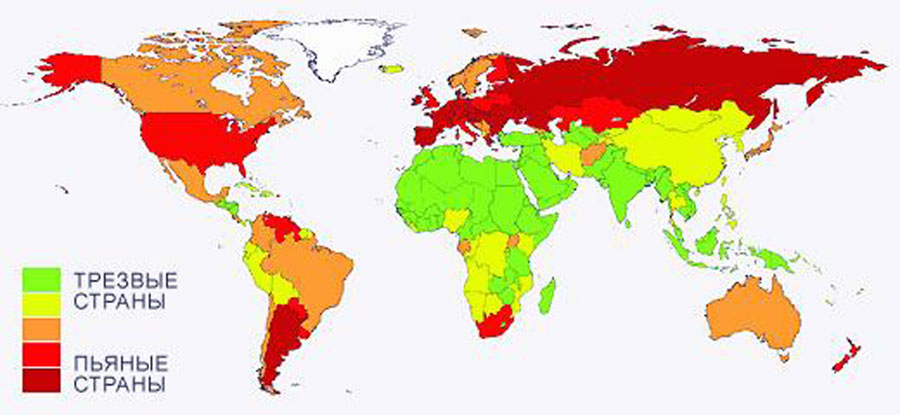
Probably on this card you need to impose one more - a modern map of the world soldering. Red and brown - the most drunk. Direct communication with the “cleaned” territories can no longer be commented:
And now let's go back to page 5 of the Jesuit letter.
"I am not talking about other closer Tatar countries."
"Sileo alias regiones Tartarorum, adeo vicinas, nam Mordicani, ..."
"I will dwell on other regions of the Great Horde, neighbors, such as Mordovia, ..."
Feel the difference in translation?
Immediately, what do we see?
Muscovy in 1698 has a nominal rule over certain regions of the Great Horde.
(As, for example, during the USSR: Ukraine had rule over the Crimea; Estonia over Prinarovya; Georgia over Ajaria, Abkhazia and South Ossetia; Lithuania over the Vilna region, Moldova over Transnistria ...)
What else?
"The Mordvins ... remain pagans, like all peoples living along the Northern Route (tractum Boreum)."
The Northern Tract is the oldest route between Northern Europe and the Far East, passing through Tyumen (remember where was the Great Khan's headquarters?).
For clarity, draw a line from the Sarmatian Sea (now the Baltic) to Manchuria, through the Tyumen marked with a red flag.
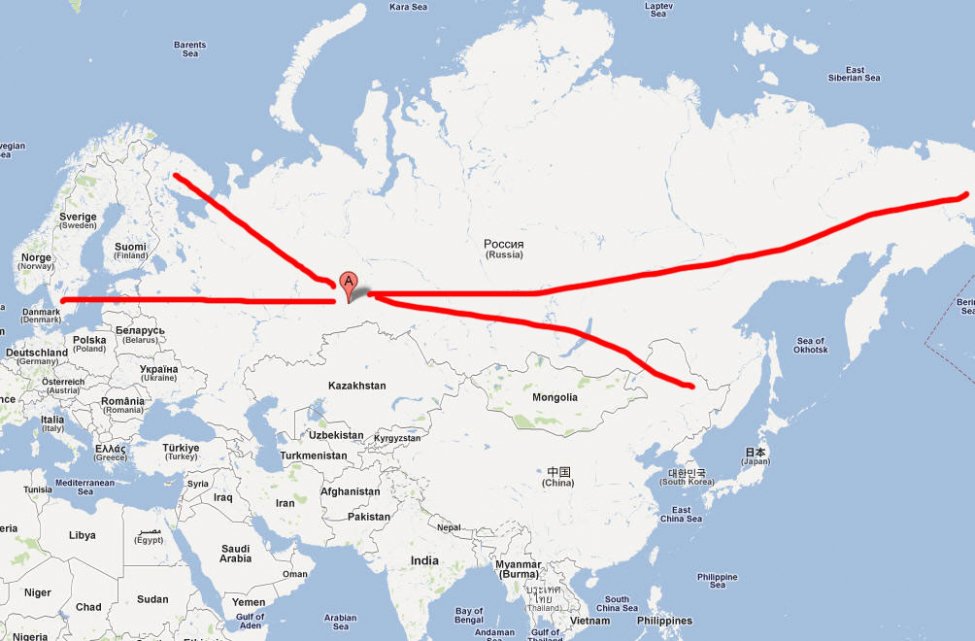
Impressive?
Everything from the red lines and to the north is the territory, mainly of Paganism (1698). Sweden is affected for a reason - put it in memory.
But paganism has different directions, what are we talking about?
Remember?, We are talking about Mordvins (ethnic, tribal, tribal affiliation), and now about their worldview:
"... therefore entering the rooms and not seeing the iconem Ruthenam ..."
We will correct the translation: icons in Russian are signs, and absolutely in Russian are icons.
SIGN and IMAGE - very important names that will be useful for understanding the very principle of communicating with the Supermundane Reality - put it in memory.
"... therefore, entering the rooms and not seeing the images of the Rusinski ...".
It is clear, yes? Mordvin-Rusin - we postpone in memory such a combination of ethnicity and worldview, will come in handy very soon.
For a while, we’ll set aside the conversation about Rusyns aside, just note one thing (end of the 3rd page):
"... Rusyns ... tell us:" we are brothers, sons of one mother "".
And then the association suggests itself - Zara-Mother (let him lie down in memory):
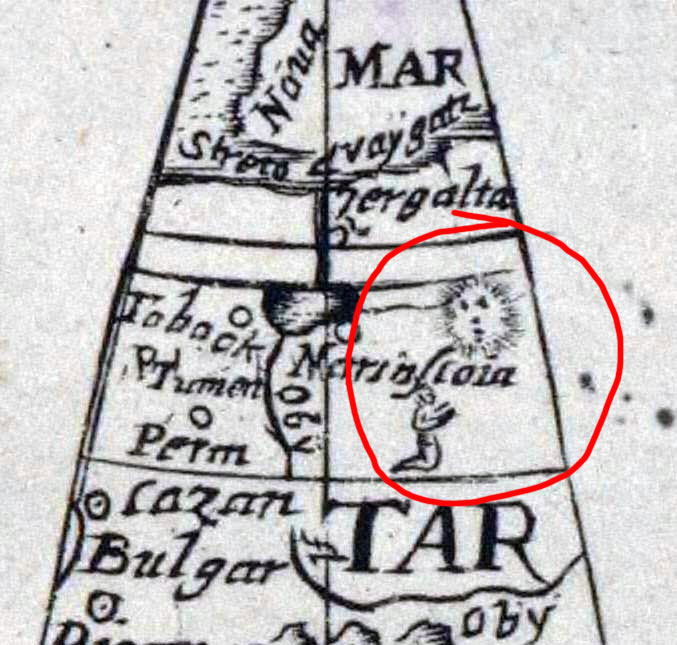
Now let's move on to the beginning of the 5th page - listing the regions of the Horde. Select from them:
- Armenia is a bow to the Armenians, as the most consistent allies of Russia. And today, and 300 years ago, and millennia ago (they will still meet in our presentation).
- Abyssinia ... (1680 - Gerard van Schagen)
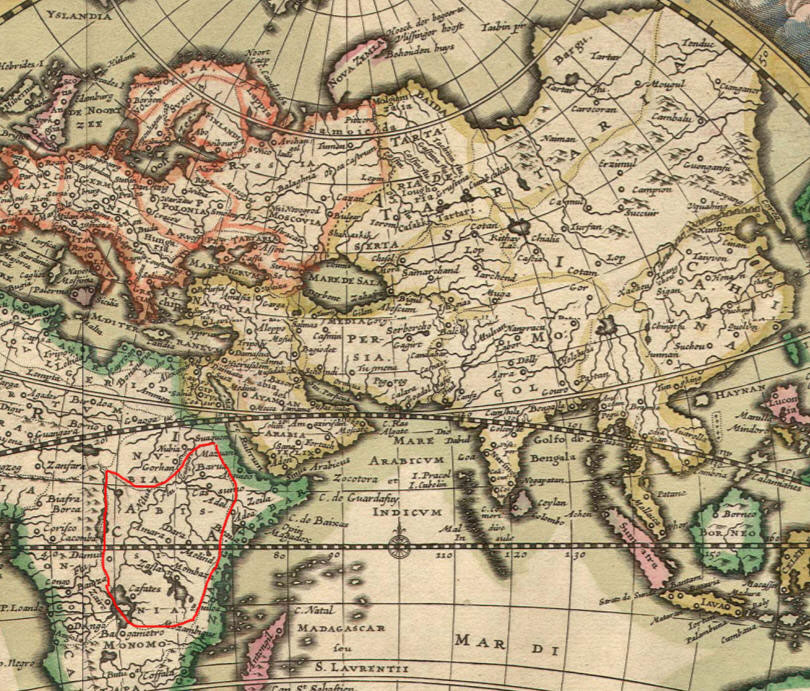
Honestly, this was a surprise for me.
Abyssinians are the Nestorian horde. But the appearance of such a (possible) fact helps to explain the “Jewish” theme in a different way, and the appearance of Abyssinian slave boys in the royal houses of Europe, immediately after the final collapse of the Great Horde. And the appearance of Ibrahim Hannibal, Alexander Pushkin's great-grandfather ...
Well, it's time to put the Jesuit letter aside, on the phrase (4 pages):
"... on the way to Mongolia ..."
- yes, there was no Mongolia at that time, it did not exist.
We look in Latin: "... iturus in Mogol ...".
Как уничтожали память. Часть 1
It's in Russian so with google translates assistance here is the English translation.
How to destroy the memory.
We have become accustomed to the name of the Great Tartaria. True? And we are not very worried about the sloppy pronunciation in Russian: "Tartaria." Well, let's start to wean.
For starters, we write this name correctly - Great / Grande Tartaria. And from now on, to avoid confusion, we will write it only in Latin letters.
I explain ... Each country has several names:
- its own, in its own language, as it is called by the people living in it,
-and external, as it is called Neighbors in their own languages. One of the names eventually becomes international.
For example: Eesti, Chukhna, Viro, Estonia. Or: Svetia (now Sweden), Ruotsi, St. Rigue, C (c) is left, Zviedria, Zwualine (by the way, put it in memory of “Ruotsi”). Or: Holland, Isiltir, Duch, Nederland ... During the period we are considering, the names of Our Country are also diverse, there are also such limited in use as Cardandan or Madai:
But we are now interested in only two names of our country - internal and "western".
Internal, in the main language of office work, Russian - the Great Horde.
Western, Anglo-Saxon - Great / Grande Tartaria (e) or Tartarorum (in Latin).
(There is no connection between Tartaria and the “gods” Tarh and Tara, or a connection with the “Slavic-Aryan” legends, Midgard, Iriy, etc. This is a foreign word for the Russian language that can have a very simple direct translation. TART, in several Western languages have an approximate meaning of PIE. So it can be Piroga Aria, for example. Well, our countries are famous for their cakes. Perhaps it is rooted in the West, as the Uyghur version of the name of the Great Country is connected with the Tartarus River, perhaps. We also remember bilingualism and double names ...)
Remember:
Tartaria = Horde,
tartar = Horde (resident of this Union of Countries and Peoples)
and nothing else!
This is valid both in the 14th century, before Persia, Muscovy and the Mughal Empire were separated from the Horde, as well as in the time of Peter the Great.
Let's look at the end of the 14th century:
We see, there are some names of the parties that make up the Great Horde:
(here I ask you to postpone the memory "oh"), and there is a late "western" mark:
Legatio Tartarica = Embassy Ordynskoe.
If we looked here, we postpone it in the head - the clerical work is conducted in Russian and Uygur dynasty languages (we put in memory “Uygur”)
and in Russian - more complete. There is nothing unusual here, in secondary languages it is always shorter.
And we have already seen these pictures:
how did Kardandan or Madai:
And after Peter's time, 1745:
Now, having understood the true meaning of the words
Tartaria = Horde,
tartar = ordynna
we will understand historical documents having a late Russian translation much easier.
Just to begin, let us follow HOW we have implemented a distorted and confusing value, as always - for three generations. (Immediately I recall the well-known confusion: “God is one and he is Allah”
).“Why?” The question is inappropriate - DIVIDE et IMPERA - to maintain the glowing confrontation of the fraternal peoples, which can easily be blown into a fire at the right time.
Again and again, we will have to return to Peter's time ...
We have THREE “muddy” periods:
1. Birth of Peter:
2. Secrets and intrigues associated with the real motives that led Peter to the throne.
Here, too, there is no evidence of contemporaries - only later works.
3. 1698 - Return of the "other" Peter.
And here we have enough information to understand ...
Peter the Great leaves for the West incognito.
But “incognito” is not for Westerners, there he is full of meetings and receptions at the highest level, and on the sly from his boyars and nobles - they are very unhappy with the planned trip.
Note some milestones related to the trip:
1. Gottfried Kneller writes portraits of Peter the Great:
Peter the First in a knight's armor. That is, it demonstrates its belonging to the Knight's Order.
Which one?
Immediately, Ignacio de Loyola and the Military-Religious (Catholic) Order of the Jesuits come to mind:
Maybe this has nothing to do with it?
2. We have already mentioned Menshikov, now we will remember the other.
Boyarin Sheremetyevu Malta entrusted diamond commander cross of the Order of Malta.
The Order of Malta is the oldest Roman Catholic Order of Knights in the world (military Order of the Knights Hospitallers of St. John of Jerusalem, since 1113).
Who else among the most famous people has been awarded this title?
In the Kremlin, November 16, 1991, to Boris Y. Yeltsin. was laid the cross knight commander of the Order of Malta.
For what?
Probably everyone knows the "merit" of this leader in the fight against the Russian people and against the Russian state. True, for some reason, the Templars of the United States were behind the assignment of the Order, but still, by analogy, Sheremetyev’s "merit" could be assumed.
Who else is on this list?
The most important is Paul the First. Here is his almost full title:
The last lines in the Title after Paul's death were already silent:
Pavel I even attached a Maltese Cross to the coat of arms of the Russian Empire:
But not for long - was killed by the Freemasons. For what? Apparently decided that he is his own master.
The three crowns on the coat of arms are “normal.” "Normal", starting with Peter the Great.
TP (s) KoRons, TP (e) KRunur = Tora Crown
And Pavel the First decided that he was allowed to acquire his own crown. It turns out - not allowed.
Alexander I removed everything that was unlawful and resigned the powers of the Grand Master (at least “according to the announcement”).
3. The special mystery of one sea trip of Peter the Great, although the imaginary “incognito” is already known to all:
4. Letter from the Jesuit (Jesuits in Russia - letters)
A very interesting letter from a direct witness to the events, but there are big complaints about the translation of this letter into Russian, a little later we will translate a few phrases ourselves.
For now, let us single out the main thing - Jesuits, who are supported by the Tsar and the main boyars, are running into Muscovy with precautions and secret plans.
5. Lambert, as without him. Here they are both dudets, with the same attributes:
Now let's go through the 18th century.
Remezov, "Drawing Book of Siberia", 1699-1701. (Download here, 727 mb: Siberian Drawing Book - Remezov)
Before the Atlas there are no official maps in Russian! Not a single document.
The first time marked "Great Tartary" - a small piece of Western Siberia. This is at a time when Grand Tartaria is the largest state in the world on the western maps and historical documents. What do they know in Muscovy of what is still unknown in the World?
The fact that the Jesuits have already agreed with all the "national elites" of the Ord on secession from the USSR, I apologize, from the Great Horde? “Sovereignty” and “independence” have already been distributed, and the Heart and Spirit of the Great Country is left with severed limbs and can not protect itself anymore?
Remember?, We already looked at the map of cutting Grand Tartaria on ethnic rags:
with the help of Christian preachers:
So, at Remezov we see, the first time is a complete repetition of the Anglo-Saxon transcription - “Tartaria / Tartaria”. At the same time, the modern "KazakStan" still has a mention that it is the Horde - the Cossack Horde, and the Golden Horde - the Horde.
What is the name of the people lost modern "Kazakhs"?
* * *
(The Cossack is not a nationality - it is a peasant + warrior + cavalry; equestrian + border guard; professional warrior + peasant + on horseback: Don Cossack, Zaporizhia Cossack, Kalmyk / Yaitsky Cossack, Kyrgyz Cossack ...
.. "Kazakh?" Cossack, "stuck" Cossack - this is already in Zastinenny China, in the area of Kambala / Beijing ...)
* * *
And now we will look at the region of modern “TatarStan”.
Nothing new. Cheremis, Ostyaki, Mordva, Bulgarians and Bolymers live around Kazan. No "Tatars" here and does not smell.
Now let's look at the "Atlas of the All-Russian Empire" Kirilov, 1722-1737:
Transcriptional changes begin (after all, Tartaria is too sloppy in Russian):
But the writing is not yet stable, here with two "T", albeit on the same map:
And, of course, take a look around Kazan:
Nothing unusual - there are no "Tatars".
When did they "appear" there? Now...
First, let us pay tribute to the Chief Writer of Russian History - Miller and the Company.
We take in the hands of one of his "opuses" -
(Download here, 34 MB: Miller - Description of the Siberian kingdom.pdf.html)
Who is this writer?
The son of a Catholic pastor. He arrived in Muscovy in 1725, in the newly created Academy of Sciences.
The names of the generals have already seen, now look at the names of members of the Academy:
Schumacher,
Korf,
Blumentrost,
Wolf,
Bernoulli,
Hermann,
Bilfinger
Goldbach
Keyserling ...
Who would doubt, some "Russian Germans."
"Description of the Siberian Kingdom" appears after 25 years, in 1750.
Miller even after a quarter of a century does not speak, does not read, and does not write in Russian. Like his colleagues, he does not know Russian, but he “composes” Russian history at the Academic level. Unprecedented.
Let's see who Miller refers to?
Of course, most of all - on himself. Here are other links that deserve his trust:
On the basis of Himself and “Ezuitov” OUR History is written, and all other sources are ruthlessly “corrected”.
About the monuments and archaeological finds Miller's point of view is known - any ancient antiquity found in Siberia is all stolen in the "West" during the raids described by the Jesuit Gobilem.
And let us check the accuracy of the information - this is the very beginning ...
So, according to Miller, Siberia became known in Russia a little earlier than 1600, and in the “West” even later.
Although other information is available:
And yet - it was Miller’s “expedition”, consisting of 3,000 (three thousand!) “Scientists” who collected and removed ALL ancient archival documents from Siberia, a huge amount.
Where are they? Why not used in the "writing" of the story? Miller does not read Russian, but is there a problem with translators?
Then we look not in Russian:
In the farthest corner of Siberia, Christianity since 1290, with the so-called "Invasions of Mongolo-Tatar".
So we got to the Chief in this Essay, the appearance of the "people of the Tatars" !:
Instead of the Horde residents, residents of the Great Union of Countries and Peoples, the notion of a “people” - a violent robber, invader, illiterate savage was introduced.
Then this new "people" will begin to be localized in new "works" in the places of military opposition to the Royal Colonization and the Forced "Orthodox" Christianization.
And after the uprising of Yemelyan Pugachev, the Tatars' zones of residence, already known to us, will be finally determined. In the end, "Tatars" will remain only those who remained faithful to their Faith and whose native language was not Russian.
And the word Tataria (in Russian transcription) will begin to appear in application in the “West” - Tataria (1797–1799, Beautemps-Beaupr'e, Charles Francois).
Siberia or Tatarstan!
(Attention: Kipchaks are alive and well - they live where they lived!)
So, it looks like the term "Tatars" can end:
- during three generations, some groups of people who lived in a single Eurasian space for thousands of years, intertwining blood ties with all nations, were given a made-up Name, a made-up History was inspired and, of course, Worldview was changed. Now, after eight more generations, this Lie is perceived by them as the Truth. With all the consequences - DIVIDE et EMPERA ...
Now we can move to the most difficult - the term "Russian" ...
Post automatically merged:
Part Two
From here Как уничтожали память. Часть 2How to destroy the memory. Part 2
"There is no sadder story in the world, what is the story of ... "
... than the story of the Russian Civilization.
* * *
And let us first recall this quote: "Who controls the past, he owns the future."
Proceeding from it, it is clear - anyone who is going to take part in the Directorate (or in the Interception of the Directorate), MUST know the TRUE key moments from the story. At least from the history of his great country.
Do we know Most throws their heads - of course we know.
And if you look from the side ?:
“The world does not know anything more artificial than the official concept of the essence of the Russian State. If a person takes an approved textbook on his history, or a set of Constitutional Laws, and reads what is said there about the origin, foundation and development of the Empire of Kings, then he will be surprised to find out how ephemeral and extra-historical can be foundations on which great political structures have sometimes settled. ”
Usually we don’t like that strangers say about us ...
Let's see what they say OUR ?:
And best of all, not so diplomatically as in English, but directly and precisely, it shows the essence of this phrase of Lomonosov:
“From this it must conclude,” that we know not the history of our Great Country, but the “cattle” ...
Do we have the opportunity to correct the situation?
Of course have! Internet and digitalization of various archives gives such a chance. And it seems as if the following lines are right on the topic:
"Historical writings ... is not inaccessibility ..." - it is said as if today ...
But it has passed after these lines for more than a century and a half, and our knowledge has only become weaker.
Okay, stop crying - WE started breaking Zombie Stereotypes, and we’ll continue.
No wonder so much time spent on the realization of the true concept:
Great Horde = Grand Tartaria = Tartarorum
horde = tartar
Having taken out this brick, we will break up the whole Zombie Pyramid of concepts.
Let's calmly correct historians and translators, and understand the undistorted meaning. Let's start with the Jesuit Letters, just first to mock the "censors", correct a few phrases:
Correctly: "... Corvino died in 1330 in Kan-Balyk or Kambalu, the capital of the Horde, present-day Beijing ..."
Do you feel the difference?
Did it take so long to talk about Our Chinese Walls and the Zastennoy Horde? It was possible for historians not to distort the translation.
Not "in Tataria and China", but "in the Horde and Chine" ...
Not "... about the Supreme Commander Tatar, called Khan ...", but "... the story of the Great Emperor of the Horde, called the Great Khan ...".
Okay, open the Jesuit Letter - we will not only read, but also understand the meaning of what is written.
Immediately, we note that there are comments on the translation into Russian - the stylistics of the original are not sustained (very interesting) and ... and there are unacceptable substitutions that distort the meaning.
First, let's start with those places where the meaning is not distorted by the translation:
1. Between the Great Horde and other countries there is no “Iron Curtain” and there is no opposition.
Horde quietly moving along with other people, as well as in large numbers are present in Moscow, and the soldiers too.
2. The Jesuit gives the Horde only good characteristics.
3. In Moscow, all issues are solved with the help of money (as about today's Moscow, as if 300 years had not passed).
4. On the riot of the archers:
- "a Tatar (Horde) soldier was driving around Sloboda" - already noted, there were Horde soldiers in Moscow.
- "Streltsov, of which one part was already approaching Moscow" - from one of the Sloboda?
But it is in Moscow or practically in Moscow. Historians say that the riot began from Azov, and this is the territory of the Perekop Horde (Petite Tartaria)
- "others intended to appear from Kazan and Astrakhan, joining with the Yaik Cossacks."
What we have?
The troops of the archers (the main military force created by Ivan the Terrible), together with the Yaik Cossacks (soldiers of the Kalmyk Horde, subsequently subjected to genocide) opposed the Coup in Moscow, and were defeated. The cruelty of the massacre of archers, which lasted until 1707, was particularly struck by all witnesses. How did this happen?
Who broke them?
As with any betrayal in the Highs, there is also confusion in the Army. Sixteen regiments of archers did not take part in the “rebellion” (they were not executed later, but only disbanded).
Those who took part went to perform police functions (the duty of archers in peacetime). They were marched by separate detachments (at least four), without having joined in one army beforehand. Why?
Because in Moscow there were only their own archers and ... and "Fun" regiments.
It does not resemble the First Chechen Campaign with its “police operation”. What ended the underestimation of the enemy?
And that time, they went to put things in order without knowing that in 1698 the Amusement Shelves were transformed. For example, in the Preobrazhensky Regiment there were 4 battalions of 4 companies of fuselers, plus a company of grenadiers and a company of scorers. Huge POWER !!! And also the Semenov regiment, the regiment of General Lima, and the regiment of Gordon.
Where did so many warriors come from?
Firstly, Poteshny themselves are “schools” of sergeants and junior officers, but now they are perfectly armed.
Secondly, the best archers transferred to them and other regiments to submission (according to Moscow, there are not enough archers in Moscow).
Thirdly, the German senior officers.
Fourth, mercenaries ... Yes, yes, mercenaries, which historians do not like to talk about, although there is enough evidence.
The goal was to conquer all free nations, and everyone who invited them, for example, to Siberia, was invited to this bloody robbery:
Here we have the answer to the question of how the Muscovy’s military confrontation began against other regions of the former Great Country, which lasted for a century and a half.
Sad story…
Now we are going to consider those places of the Jesuit Letters, the distorted translation of which broke the meaning.
And let's start with that phrase (p. 3), for which we have not yet had time to prepare:
"... in Moscow, a German-language translator, a Hungarian by birth, who was once a Catholic, now rushes in ..."
The letter was written in 1698, before the official date of the Change of Consciousness (as you remember, we assumed that January 1, 1700 is an official turning point).
The translation of the letter into Russian was made in 1891,and we read this translation in 2011.
How many malicious misrepresentations of the meaning of the word “Russian”, or consonant with it, occurred during this time? How deep is our mind?
Let's try to figure it out?
1891 For almost half a century, the concept of "nationality" has been introduced. What does it mean?
Nationality - Nationality of the State. Speaking in human Russian language - to which GOVERNOR, your HOST, you-HOLOP must give a Tribute.
All people living at the time of the introduction of this concept in the territory of the Russian Empire, officially become Russian (Whose?). That is why in the List of Peoples of 1895 there are no such people as “Russians”. All Russian listed nationalities.
Why "Russian" and not "Russians"?
After all, the Russian Empire, Russia?
- Because of the malicious substitution of meaning and the game of consonance.
By the Announcement, the master of the whole Empire is the King, a descendant in some kind of knee according to the Biblical Concept:
And in addition to the Default (notarikonu), P
S - Rabbi "Slavs" (let it be the second word so).And this concept of “nationality”, as Citizenship (and now citizenship), has been preserved in all Western countries.
If I fill out some form in England or Finland, I will have to put it in the “nationality” column - Estonian, despite the fact that in Estonia I am Russian. Since it is the Estonian “Roof” I am obliged to Serve a Tribute from all my incomes (by default, if the “roofs” among themselves do not agree on something else). Estonian citizenship standing in my passport is my nationality.
That is why in the West they called all Russians of the USSR “Russians” by inertia. But after the October Revolution, the meaning of the term “Russian” and the term “nationality” was again distorted. Distorted throughout the former Russian Empire.
In 2011, we already use the concepts introduced to us by the gang of Lenin-Trotsky.
On the territory of the former Russian Empire, the concept of "nationality" was given an ethnic character. "Nationalities" and "tribes" changed to "nationality".
What for?
The subtle game is divide et empire.
The “state” formed the “Nationality”, and now the “Nationality” has the right to self-determination and the formation of an independent State. And - only on the territory of the former Russian Empire.
Not-before-shred ...
So, in 2011 we (for the Zombie Stereotype) represent the term “Russian” - as some kind of ethnicity.
Let's still begin to return to the original concepts, and overwhelm the Zombie Pyramid.
1698
"... in Moscow, a German-language translator, a Hungarian by birth, who was once a Catholic, now rushes in ..."
We do not need fast reading, read slowly:
"... a native Hungarian ..." - ethnic, tribal, tribal affiliation,
"... a former Catholic ..." - was the worldview,
"... and now Russian ..." - Worldview has changed.
It is clear, yes?
Incomplete semantic translation.
It should be:
“Russian in the Spirit”, “Russian in the Soul”, “Russian in the Scale of Values”, “Russian in World Outlook”.
Either - "having the Spirit of the Rus", or simply RUS (opponents - just Catholic, just Christian-in).
Run forward?
Actually NO - we know THAT, but do not understand what we know. Or rather, those who consider Alexander Sergeevich Pushkin more or less than the poet (but wasted) know and do not understand:
"... There Russian Spirit? ..."
"... Tatiana Russian soul ..."
Okay, let's go leisurely ...
We look, and what term is used in the original, in Latin ?:
"... natione Ungarus ..." - ethnic, tribal, tribal affiliation,
"... quondam catolicus ..." - Worldview,
"... nunc Ruthenus ..." - now Ruthen (already met, in the not yet conquered Siberia) - Worldview.
As we have already said, Cyril and Methodius were removed from our ABC letter, many letters were removed, and our possibilities were limited.
There was about such a letter "Θ" and was gone. In Western languages, it was changed to "th", and in Russian ...
... and in Russian, linguists offer to pronounce it as "T", but in reality, in the modern pronunciations of old words, it is used as "T", or "C", or "F".
Therefore, we will use modern pronunciations of words to make the meaning more clear. In order not to be confused by the use of the so perverted concept of “Russian”, we will for the time being use the Latin version with modern pronunciation, and later we will reveal how he RIGHTly says in Russian. So:
"... nunc Ruthenus ..." - now Rusin (RUS-in).
We look further, the end of the 5th and 6th pages - the story of the martyr Peter.
“He was a Russian deacon ...”, we check that in Latin?: “Diaconus Ruthenus”, we correct the name “deacon”, alien to Rusins, to, let it be, “spiritual minister” and we get:
Former clergyman Rusin adopted a new Roman religion - ??? ...
(judging by the way the Jesuit praises him, for which only one true religion is Catholic)
... Former Rusin adopted the Roman Catholic religion, and "He preached a sermon ...", for which he was severely punished and possibly killed.
What was in the sermon?
- Father, Son and Holy Spirit?
- this is how the tryndit and the so-called “Russian Orthodox” Church (this name is a super-crony mockery of our consciousness) are about this, and in 1698 the official Church of the Moscow Patriarchate was ready to kill.
- Schism - and in Russian split.
- The Headship of the Pope (Rome) ...
Well, let's take a closer look here. To begin with, we will list the main “players” - we will list the most popular worldviews, co-existing in Muscovy for the time being:
- RUS-iny - the most ancient worldview that existed in this territory, but increasingly displaced (as far as I keep the ancient).
- Nicodemians are Christians according to the apocryphal gospel of Nicodemus (apocryphal means officially not recognized after the Schism).
- Nestorians are also Christians, but the most principled opponents of the Byzantine Church. The most mass trend of Christianity, which existed for more than 1000 years in the Middle East, Central Asia and the Far East. It has been present since the times of the so-called Mongol-Tatar Fantasy in Siberia, Zastennoy China and China, and even in Japan. It was during his flourishing of these territories. It was called the Right Praising Christianity. It was this line of Christianity that was condemned as a heresy and betrayed by Anathem (again Schism).
Why anathema?
You can answer in one word, the Nestorian is ... - the great-Communist.
Yes, Nestorianism is the great parent of the Communist Worldview. The familiar Karl Marx has only turned the worldview into a wrapper of new terms (a tactical move?), Torn apart by the Byzantine Church. Then Nestorianism was anathematized, now Communism. True, the Communist Worldview has already failed to collapse in just over 1000 years, but in just 30 years (1953-1983).
“The Mohammedans are the current Muslims, but there are not so many of them.”
(These were all Worldviews that have been on the territory of the Horde for hundreds of years, and now - the “newcomer” that appeared after the new Schism, Split from Patriarch Nikon of 1654-1657)
- The “New Believers” of the Moscow Patriarchate, as part of the Byzantine Church, are “pseudo-Christians”, the only canonically legitimate church (Christians of the “correct faith”, the Orthodox), whose legitimacy and hierarchical height throughout Peter the First will be provided by the army under the leadership of the German generals.
Overnight, the Christians of the Nikodimians and Nestorians became the “Old Believers”, and together with the RUS-ins, heretics and savages, subject to either baptism or annihilation.
- And there appears an "overseer" in the person of his Jesuit "special forces" - the Roman Catholic Church, which calls itself the only Right Church, for which all the rest are heretics. That is, it appears here as the highest "Christian" hierarchy (from the Pope of Rome).
What is the difference between the Byzantine and Roman Catholic Churches - a little later.
And now, it is already clear to all - the Byzantine "New Believers" usurped the right to preach only one worldview, the attempts of all the others are severely stopped.
What is it all over?
Already seen the distribution of Christianity (Christianographie 1600)
But after a complete "cleansing" of the territory of Orthodox Christianity (Church Map 1842). All white is “clean” territory; we have gray - pagans and savages, no Christians.
Probably on this card you need to impose one more - a modern map of the world soldering. Red and brown - the most drunk. Direct communication with the “cleaned” territories can no longer be commented:
And now let's go back to page 5 of the Jesuit letter.
"I am not talking about other closer Tatar countries."
"Sileo alias regiones Tartarorum, adeo vicinas, nam Mordicani, ..."
"I will dwell on other regions of the Great Horde, neighbors, such as Mordovia, ..."
Feel the difference in translation?
Immediately, what do we see?
Muscovy in 1698 has a nominal rule over certain regions of the Great Horde.
(As, for example, during the USSR: Ukraine had rule over the Crimea; Estonia over Prinarovya; Georgia over Ajaria, Abkhazia and South Ossetia; Lithuania over the Vilna region, Moldova over Transnistria ...)
What else?
"The Mordvins ... remain pagans, like all peoples living along the Northern Route (tractum Boreum)."
The Northern Tract is the oldest route between Northern Europe and the Far East, passing through Tyumen (remember where was the Great Khan's headquarters?).
For clarity, draw a line from the Sarmatian Sea (now the Baltic) to Manchuria, through the Tyumen marked with a red flag.
Impressive?
Everything from the red lines and to the north is the territory, mainly of Paganism (1698). Sweden is affected for a reason - put it in memory.
But paganism has different directions, what are we talking about?
Remember?, We are talking about Mordvins (ethnic, tribal, tribal affiliation), and now about their worldview:
"... therefore entering the rooms and not seeing the iconem Ruthenam ..."
We will correct the translation: icons in Russian are signs, and absolutely in Russian are icons.
SIGN and IMAGE - very important names that will be useful for understanding the very principle of communicating with the Supermundane Reality - put it in memory.
"... therefore, entering the rooms and not seeing the images of the Rusinski ...".
It is clear, yes? Mordvin-Rusin - we postpone in memory such a combination of ethnicity and worldview, will come in handy very soon.
For a while, we’ll set aside the conversation about Rusyns aside, just note one thing (end of the 3rd page):
"... Rusyns ... tell us:" we are brothers, sons of one mother "".
And then the association suggests itself - Zara-Mother (let him lie down in memory):
Now let's move on to the beginning of the 5th page - listing the regions of the Horde. Select from them:
- Armenia is a bow to the Armenians, as the most consistent allies of Russia. And today, and 300 years ago, and millennia ago (they will still meet in our presentation).
- Abyssinia ... (1680 - Gerard van Schagen)
Honestly, this was a surprise for me.
Abyssinians are the Nestorian horde. But the appearance of such a (possible) fact helps to explain the “Jewish” theme in a different way, and the appearance of Abyssinian slave boys in the royal houses of Europe, immediately after the final collapse of the Great Horde. And the appearance of Ibrahim Hannibal, Alexander Pushkin's great-grandfather ...
Well, it's time to put the Jesuit letter aside, on the phrase (4 pages):
"... on the way to Mongolia ..."
- yes, there was no Mongolia at that time, it did not exist.
We look in Latin: "... iturus in Mogol ...".
Note: This OP was recovered from the KeeperOfTheKnowledge archive.
Note: Archived Sh.org replies to this OP are included in this thread.