

- Joined
- Aug 25, 2020
- Messages
- 2,003
- Reaction score
- 8,106
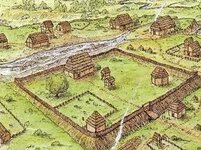
A Viereckschanze is a rectangular ditched enclosure that was constructed during the Iron Age in parts of Celtic Western Europe. They are widespread in Germany, parts of northern France and also in some regions of the Iberian Peninsula, most notably in Portugal." - Viereckschanze - Wikipedia
Celtic redoubts are among the most common structures in Europe; there are said to be 40,000 of them in Bavaria alone. But what purpose did they originally serve?
Here are some quotes from a german PDF called "Mythos Keltenschanzen" by Gernot L. Geise:
If you want to know something about the so-called "Viereckschanzen" or "Celtic redoubts", there is first of all great uncertainty, because - there is no "knowledge" about them. All that is known about them can be summarized today in the sentence that there are "some", and that they are there. Then the "knowledge" stops and gets lost in more or less nebulous fairy tales and assumptions. Many people have never heard of these installations at all, even though they are the most mysterious and common structures in Europe that are part of our habitat. Nevertheless, hardly anyone knows that they are present everywhere. If you are interested in the Celtic redoubt topic and try to get more information from literature, you will be disappointed very quickly.
Apparently they were used by the Celts for "cult purposes" - and who else should have built them? After all, there are descriptions (even if it is quite questionable whether these are not medieval fakes) that the Celts should have celebrated their (allegedly) bloodthirsty, cultic festivals and rituals on such sites. The predicate "pagan" is usually enough to dismiss a topic as "barbaric" and "overcome". Even scientific works cover themselves more or less in silence or bring only woolly interpretations. With a few irrelevant sentences one passes over one's own ignorance. Here it behaves similarly as with the entire Celtic culture. The knowledge about the former existence of an ingenious message network could still be almost completely erased by destroying the signal points or simply taking them over and misappropriating them. But there are too many Celtic entrenchments to be able to destroy them all. However, the knowledge of their function was very successfully eradicated.
In the literature the Celtic redoubts are called "Drusnemeton" (Greek Drus = oak; Nemeton = sacred grove). A nemeton was apparently the typical Celtic sanctuary, a "sacred" clearing in the woods. It was the place of sacred exchange between the world of gods and the world of men. The term Nemeton is possibly related to Temenos (= walled, sacred precinct). A Celtic place of worship was taboo for the people, because it was exclusively reserved for the gods. However, the word "sacred" must not be understood here in today's Christian sense. The Celtic holy places were later - where they could not be destroyed - built over by Christian churches and chapels. A Celtic redoubt and a nemeton or temenos have in common that certain radiesthetic phenomena meet here.
We have found out through lengthy research that large parts of the European continent - if not the entire continent - are completely and without gaps covered with "Celtic redoubts" (or square redoubts, Roman redoubts, Swedish redoubts, Devil's redoubts, etc.). They do not exist only in southern Germany, as it is sometimes still claimed. This statement can be made with certainty. Celtic redoubts have also been found in northern Germany, France and in other European countries. In Italy, for example, St. Peter's Square in the Vatican is located on a Celtic redoubt. In Egypt, the pyramids of Giza have at least similar Celtic redoubt phenomena. Celtic redoubts are thus by far the most frequently built structures in the world. There is almost no area in Germany where no Celtic redoubt was built, even if they are officially said not to exist above the Main line. In addition to the research of EFODON e. V., there are also investigations of other researchers - for example Joachim Jünemann - who have found and investigated numerous Celtic redoubts in northern Germany.
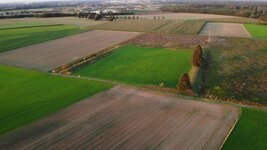
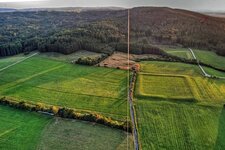
In the meantime, there are also doubts about a sacral interpretation of the redoubts, since up to now no finds of consecration character, i.e. of sacral importance, could be made within the complexes. To assume a sacral function of the redoubts also seems nonsensical in view of the fact that the Bavarian archaeology could prove with the help of the aerial archaeology that already in the area of Bavaria alone still 40,000 (in words: forty thousand!) of these installations exist. Redoubts are often so close to each other that they use the same rampart. What was the point of building large-scale sacral enclosures in such close proximity?
I assume that the Celts used some of these fortifications, but that they found them already built when they settled the country. They seem to have known how to lay out such a complex in detail in order to fulfill the desired functions, because it seems that in Celtic times at least a few redoubts were corrected or newly laid out.
(...) only after the installation of the redoubts could the previously inhospitable land be settled, and not vice versa. The construction of large quantities of redoubts causes weather harmonization over a wide area, as can be explained.
If a hurricane comes across the ocean to Europe, it dissipates on the coast. Has anyone thought about why this is? The weather deteriorations of the last years can be attributed with some probability to the fact that the Celtic redoubt stock has been drastically reduced (road construction, house construction, etc.) and that many still existing redoubts have lost their function completely or partially because the underground water conditions have been disturbed (again: by road and house construction, groundwater extraction, etc.). You can compare it like this: redoubts work similar to car batteries: If there is no more liquid in them, they no longer work.
The redoubts were by no means built "randomly" in the landscape, where just a place offered itself. The geological and geomantic conditions are extremely important for the proper functioning of the redoubts. Where the geomantic conditions were not optimal, but a harmonization of the existing conditions was necessary, the builders helped with certain manipulations and made corrections.
Due to its construction, a functioning Celtic redoubt seems to work technically similar to a large capacitor. A kind of ionized field is formed above the redoubt, which among other things causes the weather to be influenced. For example, one can observe above (today still) active Keltenschanzen that when the sky is cloudy here, the cloud cover breaks up. (...) Also against stronger weather fronts Celtic redoubts - as we have observed - can work successfully. Another characteristic of a redoubt is that lightning never strikes it.
Celtic redoubts are built in layers. The soil on the surface of a redoubt must have been completely removed several meters deep and then refilled - after the "technical" conditions for the functioning of the redoubt had been created by the correction shafts, the water loop and the four-man manipulations. In the process of backfilling, the soil that had formerly been there was used to cover the additional layers of earth that had been filled in. Previously, the excavated pit was filled with various layers of soil, including clay (AlSiO4), charcoal (officially called "wood soil"), mica, and others. Even today, this additional input is often visually recognizable by the fact that the inner surface of a redoubt is usually about half a meter to a meter higher than the outer surface. When excavating entrenchments, the stratifications can still be seen today. The knowledge of the stratification of redoubts can now be regarded as secure, because we have been able to prove it in various redoubts we have investigated.
The caused effect can be observed by everyone. It can be observed with the naked eye at many (active, not at disturbed or destroyed) Celtic redoubts, that at light cloud cover just above the redoubt the cloud cover tears open, mostly quite sharply demarcated. Often the official side talks about "weather divides", but it is not scientifically explainable, why a weather influence should take place at these places.
I myself use the phenomenon of cloud breakup specifically when I'm in the Bavarian Oberland somewhere in the area of the Ammersee in the field and want to orient myself. I look up and search for the cloud hole above the "holy mountain" monastery Andechs. (However, this only works when it is slightly cloudy, not when the sky is cloudless). For this one must know that the monastery Andechs stands on a very energetic redoubt.
That on Celtic redoubts really strong force fields work, we could also observe by the fact that by a stay on a Celtic redoubt a compass can be reversed permanently (that the needle points afterwards instead of to the north to the south). Since this phenomenon was determined only afterwards, it is so far not certain how long one must stay on a redoubt for it, or whether for it certain force lines or force fields must be crossed. As may be presupposed as known, a compass aligns itself after the magnetic grid lines of the terrestrial global grid, and not after the north pole (one imagines what a big magnet would have to be positioned at the north pole ...!).
This video goes deeper into the mystery of Celtic Redoubts:
Transcript (slightly enhanced and edited)
Welcome to the Tartaria Channel!
The Celtic Redoubts
Today we deal with another secret from the antediluvian water world. Let's talk about what are probably the oldest constructions in the ancient world. These buildings are right in front of our eyes and yet hardly anyone knows anything about them.
There are thousands spread across Europe, Asia and Africa. Archaeological excavations took place in some of them. Some of them were destroyed while working in the fields, which is nothing unusual, because the majority of these constructions are located in Europe. The farmers leveled their fields and unknowingly destroyed them in the process.
In Germany and France they were destroyed by farmers. You can't blame them for that. In Egypt it is a completely different case. At the beginning of the 19th century, there was a complete "chain" of such structures and these were deliberately destroyed by archaeologists. I will show you through real photos. So today there will be no report about the star fortresses that have already been mentioned so often, about which we have already made a video. But about other constructions, with a strange name, the Celtic entrenchments, which means something like the "trenches of the Celts" or "Celtic defense structures".
Origin of the Celts
According to official sources, in the first half of our millennium BC, from the masses of nameless peoples north of the Alps, the Celts were the first to draw attention to themselves. They were aggressive and cruel. The Celts went on a foray into the rich cultural centers of that time.
They spread across Italy, besieged Rome and invaded Sicily, Spain and Portugal. The other part of the Celts went towards Greece and Asia Minor. In the 4th century, the Celts were among the largest western ethnic groups, in line with the Persians and Scythians. These people did not build their own empire and simply disappeared from the historical scene. Everything looks perfect, a wild people spring from the northern Alps and incidentally force the whole of Europe on its knees, and not to forget Rome. Sounds pretty damn nice, but what do we really know about the Celts? In fact nothing at all. Let's start with the name.
Origin of the Name
The word Celts came to us from ancient Greek. We could believe this, if ancient Greek had actually existed. Because everything we know about Greece and about the powerful Greeks today was taken from books of the 15th century, which were in Arabic script. There is no real handwritten script in ancient Greek in this world. The ancient Romans, according to the official version, called the Celts Galen / Gauls / Gallians.
This name does not sound strange to many because there are records of the Gallic Wars written personally by Julius Caesar. Apparently one cannot deny that, as Caesar himself wrote about the Gauls. Actually a solid proof, but unfortunately there are no works by Julius Caesar that still exist today.
We only learn about these great deeds from sources from the 18th century. There is another name for this people, Galatians, which was only introduced afterwards, by an educated Greek named Polybius. He was an ancient Greek historian who became famous for his main work, the partially preserved "Historiae". In it he describes in originally 40 books the universal history of Rome over the period from the beginning of the First Punic War to the destruction of Carthage and Corinth.
One could actually believe this educated Greek guy, but unfortunately he died in 120 BC and as usual, there are no originals of his records. So then the Celts and Gauls or the Galatians are just terms that have only been conjured up from thin air. All of these terms came from the 18th century and it stands to reason that we don't even actually know what name this people who have conquered the world actually had. At this point we could actually end already ... with the result that the story was invented in the 18th century and the following question: What sense does it make to deal with the fantasies of historians?
It is likely that the story of the Celts was made up. Fortunately, we don't just have the story on paper, but real buildings from the real world, without any real story, as you've probably already guessed, the Celtic entrenchments.
The Celtic Redoubts
They looked very ordinary. A rectangular area with a 10 feet high border. There was a moat outside the wall. The circumference of the Celtic jumps was different, the smallest of them had side lengths of 160f, while the big ones were up to 1600f. And as mentioned before, almost all of the lowlands were destroyed by farming and other earthworks.
Only the Celtic redoubts, which were located in hard-to-reach places and unsuitable for agriculture , such as the Celtic redoubts in Deisenhofen in Bavaria, are well preserved. There are still 7 such buildings in a very good condition. Their height reaches up to 10 feet.
Coincidentally, the so-called Roman roads run along these entrenchments . Basically, we don't know anything about the real history of these Roman roads. What is very interesting about this, and probably most will agree, is that the Roman roads are quite ancient works. The Celtic redoubts are older in comparison.
Such a statement can be made with the help of a fact: One of the Roman roads in Deisenhofen is crossed by a Celtic redoubt. At the beginning, someone built a rectangular area with a border and later a road was laid through it. This statement alone proves the inconsistencies of the official fairy tales.
Historians say that in the beginning there was sacred ancient Rome and then later, out of nowhere, appeared the so-called Celts or Gauls, who subsequently destroyed great Rome. If it were so, we would have a completely different situation in Deisenhofen. Roman road would not cross the Celtic hill, but the other way around - The redoubt would block the road.
The so-called Celtic redoubts are of little interest to historians, only some of them have been properly inspected and very few excavations have been undertaken. Just imagine, there are thousands of them in Europe and only a few have been explored. Who, when and for what it was built has not yet been discovered.
Of course there are a few versions, barns for cattle, (military) constructions, sacred groves, but these are only guesses that are not supported by facts. Let's take a realistic look at the whole thing.
All of Europe, from England to Poland, is completely equipped with the same buildings. It is unclear who, when and what they were built for. Scientists claim the Celts built them. But one can also say that the Annunaki built these Celtic entrenchments, as these two versions have no realistic facts
Historians simply associate the Celtic redoubts with some peoples who lived in Europe. It is strange that these buildings are not only found in Europe. For example, you can also find them in New York, the Croton Distributing Reservoir:
And this buulding can also be found on the oldest engravings in New York. You get the feeling that the city was built much later than the Reservoir.
Kiev, Ukraine - early 19th century:
On the outskirts we see a huge, rectangular structure. They say it was an artillery polygon, but it looks more like the reservoir from New York and astonishingly similar to the Celtic entrenchments, but that's not really what's interesting here.
Egypt
When historians tell fantasy stories about New York and Kiev, none of them mention Egypt. They razed these buildings to the ground without causing a stir. They tell us with fascination about the old tombs and coincidentally forget that these tombs were built in the center of the so-called Celtic entrenchments.
Here is an example, on a photo from 1914, where it can be clearly seen:
Rectangular walls surround the temple complex. So you can see that at the beginning of the 20th century, these walls were removed and replaced with small fences. This procedure was carried out nationwide in Egypt.
Most of the fortresses/redoubts in Egypt have long been destroyed. There are a few leftovers that can still be found. This wall complex does not go into the official history at all.
If these trenches in Europe are attributed to the Celts, then the question arises, who did they come from in Egypt? According to official information, the Celts did not go into Egypt. Who built them there and with what aim is unknown. But they were built before the Roman roads and Egyptian temples. I do not believe that the temple complexes from Egypt and the Roman road networks are thousands of years old. These structures have a relatively young genesis story, in my opinion 400-500 years.
Purpose
Yes, you can probably argue about it, but that's my personal assessment and I don't want to convince anyone. A few hundred years ago, an unknown civilization around the world built these rectangular structures, the function of which is unknown. Now it's hard to imagine what they were built for, but they look a lot like containers for certain liquids.
Not entirely logical at first glance. Why such a complex effort to build walls? It is easier to make an area in the ground, it would definitely be more effective. That's how I thought it used to be, but such an approach has a downside, because without a pump, it is very difficult to pump liquids out of there. But if we build a reservoir above the surface of the ground, it can be emptied very easily with little energy needed.
This is theoretically how water reservoirs would explain most of these constructions worldwide. In rather warm areas, the basin was filled with water during the rainfall, for various areas of use, such as agriculture. This version is even partially confirmed by archaeological excavations.
In Germany, during the excavations at the Celtic entrenchments, strange wells were discovered with a diameter of up to 6.5 feet and a depth of up to 100 feet. Historians refer to them as ritual shafts or sacrificial pits. Well, we have a rectangular, huge reservoir at ground level, it is filled with water from the wells and used for irrigation. This could be the simple version of the evidence listed here.
It is by no means certain that the water it contains was used for irrigation. A far more fantastic hypothesis could be put forward here. What if we were to come to terms with the fact that, according to historical features, our world was populated not so long ago as one might assume. One could put forward the theory that the cloning process of modern humans took place in exactly these constructions. Massive Earth cloning was done to quickly colonize the territories. Tens of thousands of such structures were built around the world. The analysis of the strata of the earth from the ritual shafts gives a small indication of this. In the vicinity of the shaft, material that caused the decay of organic matter was found mixed with remains of flesh and blood. The humans were bred and no one told them that they were created in these very objects. This is why these so-called Celtic entrenchments have no real history, because they were built before today's people.
We got the idea, inspiration and statements from Kanal Istoria PI. This video is also a piece of the puzzle, what we bring in with our overall picture of the past and will keep coming back to it. See you soon, your Tartaria team!


 :
:


