- Joined
- Oct 5, 2020
- Messages
- 194
- Reaction score
- 875
HB: I was amazed at the great parallel between Anubis and the Xoloitzcuintle Dog of Mexican origin, but I wasn't thinking of all the ramifications.
I present them to you and please give me your valuable opinion, I would like to know more about this.

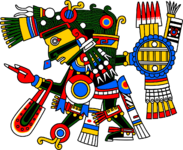
Quetzalcoatl Feathered Serpent, from quetzalli 'feather' and cōhuātl 'serpent', sometimes considered the principal divinity of the Mexica pantheon. God of life, light, fertility, civilization and knowledge. Sometimes also lord of the winds and ruler of the West. Third Tezcatlipoca, associated to the white color.
According to Alfonso Caso, Quetzalcoatl was associated with the planet Venus, as the morning star, and therefore called "the precious twin" because he was considered the brother of Xolotl, the evening star.
Quetzalcoatl - Wikipedia

Xolotl is considered the bearer and inferno of fire. He is the twin of Quetzalcoatl. He protects the Sun when it travels through the underworld during the night. In art, Xolotl was represented as a skeleton, a man with the head of a dog (San Cristobal).
Xolotl - Wikipedia

The xoloitzcuintle is the name of the Mexican hairless dog (also known as Perro Pelón Mexicano), a canine species native to Mexico and Central America. It is one of many dog breeds native to the Americas. The name xoloitzcuintle (in Nahuatl: xólo-tl + itzcuin-tli 'Dog of Xólotl, The god of the sunset" Monstrous dog') refers to Xólotl because, historically, one of the missions of this dog was to accompany the dead in their journey into eternity, just as the god was the companion of the journey of the Sun through the underworld.

Anubis is the Greek name for the guardian of the tombs associated with death and the afterlife in Ancient Egyptian religion, master of the necropolises and patron of embalmers, depicted as a large black canid lying on its stomach, probably a jackal or wild cat, or as a man with the head of a dog. Anubis was the protector and guide of the deceased, profusely represented in funerary art.
Anubis - Wikipedia

St. Christopher is venerated by the Catholic and Orthodox Churches as a martyr killed during the reign of Decius (Decius), Emperor of Rome (who reigned from 249 to 251) or during the reign of the Roman Emperor Maximinus Daya (Maximinus II Dacianus) (who reigned from 308 to 313). There is a confusion due to the similarity of the names "Decius" and "Dacian".
His veneration appears only in late Christian traditions and he is not widely known in the Western church until the late Middle Ages, although some churches and monasteries were named after him around the seventh century.
His name means "Christ-bearer," thus predicting what he would do in his adult life and indicating that the character may not have a precise historical origin. He could be the same figure as St. Menas. His famous legend, which is known especially in the West and could have been drawn from ancient Greek mythology (it would be the Christianization of the boat of Charon), tells that he carried a boy, whom he did not know, across a river before the boy revealed to him that he was Christ. In any case, he is the patron saint of travelers, and his effigy is worn on medals, bracelets or figures for vehicles by Christians.
Charon - Wikipedia
Saint Christopher - Wikipedia

The "Morning Star" is the planet Venus visible in the dawn sky, and in Aztec and Toltec culture, it was linked to Quetzalcoatl. Venus is also the "Evening Star" in the evening sky, and was associated with Xolotl. Mesoamerican cosmology was dualistic and through "opposite" gods, symbolized different aspects of the same reality.
If Quetzalcoatl was Life (fertility), Xolotl was Death (Underworld).
If etymologically Quetzalcoalt meant "precious", Xolotl meant "monstrous".
This apparent duality of a single Whole was staged through the belief that Xolotl and Quetzalcoatl were twin brothers.
This dualism is even evident in the name of the god himself, since "Quetzal" means "feather" and "precious", and the particle "coatl", although usually translated as "serpent", also means "twin".
Thus, Quetzalcoatl's name of "feathered serpent" is esoterically also translatable as "precious twin".

Xolotl was the "dog-headed" god (cinocephalus), who in the Codices carried on his shoulders the symbol of Christ: the cross.
This god was very similar to Saint Christopher of the Orthodox Church, the "dog-headed" saint who carried Christ on his shoulders.
Taking into account that Saint Christopher is the name of Columbus, there is another "curious" circumstance.
Since in Nahuatl the "X" is pronounced as "Ks", the terms "Xólotl" and "Colon" have an extraordinary phonetic resemblance.
Doesn't it seem to you that behind all this symbolism, there is a beautiful syncretic work, a work that testifies to a certain Christian influence?
Do you remember that just at the time of the Discovery, some paintings showed Christ and St. John the Baptist as twins?

According to tradition, Saint Thomas was the evangelizer of the Indies. This disciple of Christ did not believe in his Resurrection until he saw it for himself.
St. Thomas was therefore "opposite" or "contrary" to the rest of the apostles, because while they believed by faith, St. Thomas only believed through his logic and experience.
We must recognize therefore, that while St. Thomas' attitude as a believer is very questionable, as a "scientist", he had an unimpeachable attitude.

"Because you have seen me you have believed. Blessed are those who have not seen and have believed." (John 20:29)
Thomas saw and believed, and is this not the foundation of "gnosis", to certify for oneself the existence of God?
Precisely in the Gnostic text known as "Acts of Thomas", St. Thomas is explicitly named as "twin of the Messiah", as twin of Christ.
Thus, according to Gnosticism, St. Thomas was the "twin" of Christ, just as Quetzalcoatl was the "twin" of Xolotl. And precisely during the colonization of America, Quetzalcoatl was linked with St. Thomas.
And not only that.
The fact that Hernán Cortés was confused with Quetzalcoatl corroborates that the Indians also recognized a "foreign" influence in their myths. An influence that had given rise to the Toltec culture, the culture that had built the "Atlanteans of Tula".
Curiously, in Nahuatl the term "Toltec" means "builders", in the same way that in Europe, the term "Mason" meant "bricklayer". And St. Thomas, as we already know, is precisely the patron saint of builders and architects.
Yes, we have finally come up against Freemasonry.


In the prophecies of St. Malachy, Gregory X (1271-1276) is named as "Anguineus vid", "The man with the snake".
Such a striking appellation derives from the coat of arms of his family, the House of Visconti. It shows a man being devoured by a large snake or viper (Biscione). We will discover that this coat of arms bears an extraordinary resemblance to the representations of the Mesoamerican god Quetzalcoatl.
Precisely the twin brother of the serpent Quetzalcoatl was Xolotl, the dog-god of the Underworld. And it is curious because Marco Polo named the Tartar King of Kings, either "Great Can", in Latin "Great Dog" as Xolotl; or Great Kaaan, in Mayan "Great Serpent" as Quetzalcoalt.
From now on, to follow the European trail in America, we will have to make a very different reading of the legends existing on both sides of the Atlantic. And for this, nothing better than to start with the legend of "Preste Juan", the mythical priest-king of the Three Indies, and therefore, of America.
Visconti of Milan - Wikipedia
Prester John - Wikipedia
I present them to you and please give me your valuable opinion, I would like to know more about this.
Quetzalcoatl Feathered Serpent, from quetzalli 'feather' and cōhuātl 'serpent', sometimes considered the principal divinity of the Mexica pantheon. God of life, light, fertility, civilization and knowledge. Sometimes also lord of the winds and ruler of the West. Third Tezcatlipoca, associated to the white color.
According to Alfonso Caso, Quetzalcoatl was associated with the planet Venus, as the morning star, and therefore called "the precious twin" because he was considered the brother of Xolotl, the evening star.
Quetzalcoatl - Wikipedia
Xolotl - Wikipedia
The xoloitzcuintle is the name of the Mexican hairless dog (also known as Perro Pelón Mexicano), a canine species native to Mexico and Central America. It is one of many dog breeds native to the Americas. The name xoloitzcuintle (in Nahuatl: xólo-tl + itzcuin-tli 'Dog of Xólotl, The god of the sunset" Monstrous dog') refers to Xólotl because, historically, one of the missions of this dog was to accompany the dead in their journey into eternity, just as the god was the companion of the journey of the Sun through the underworld.
Anubis is the Greek name for the guardian of the tombs associated with death and the afterlife in Ancient Egyptian religion, master of the necropolises and patron of embalmers, depicted as a large black canid lying on its stomach, probably a jackal or wild cat, or as a man with the head of a dog. Anubis was the protector and guide of the deceased, profusely represented in funerary art.
Anubis - Wikipedia
His veneration appears only in late Christian traditions and he is not widely known in the Western church until the late Middle Ages, although some churches and monasteries were named after him around the seventh century.
His name means "Christ-bearer," thus predicting what he would do in his adult life and indicating that the character may not have a precise historical origin. He could be the same figure as St. Menas. His famous legend, which is known especially in the West and could have been drawn from ancient Greek mythology (it would be the Christianization of the boat of Charon), tells that he carried a boy, whom he did not know, across a river before the boy revealed to him that he was Christ. In any case, he is the patron saint of travelers, and his effigy is worn on medals, bracelets or figures for vehicles by Christians.
Charon - Wikipedia
Saint Christopher - Wikipedia
- Now let's make the connections.
The "Morning Star" is the planet Venus visible in the dawn sky, and in Aztec and Toltec culture, it was linked to Quetzalcoatl. Venus is also the "Evening Star" in the evening sky, and was associated with Xolotl. Mesoamerican cosmology was dualistic and through "opposite" gods, symbolized different aspects of the same reality.
If Quetzalcoatl was Life (fertility), Xolotl was Death (Underworld).
If etymologically Quetzalcoalt meant "precious", Xolotl meant "monstrous".
This apparent duality of a single Whole was staged through the belief that Xolotl and Quetzalcoatl were twin brothers.
This dualism is even evident in the name of the god himself, since "Quetzal" means "feather" and "precious", and the particle "coatl", although usually translated as "serpent", also means "twin".
Thus, Quetzalcoatl's name of "feathered serpent" is esoterically also translatable as "precious twin".
This god was very similar to Saint Christopher of the Orthodox Church, the "dog-headed" saint who carried Christ on his shoulders.
Taking into account that Saint Christopher is the name of Columbus, there is another "curious" circumstance.
Since in Nahuatl the "X" is pronounced as "Ks", the terms "Xólotl" and "Colon" have an extraordinary phonetic resemblance.
Doesn't it seem to you that behind all this symbolism, there is a beautiful syncretic work, a work that testifies to a certain Christian influence?
Do you remember that just at the time of the Discovery, some paintings showed Christ and St. John the Baptist as twins?
According to tradition, Saint Thomas was the evangelizer of the Indies. This disciple of Christ did not believe in his Resurrection until he saw it for himself.
St. Thomas was therefore "opposite" or "contrary" to the rest of the apostles, because while they believed by faith, St. Thomas only believed through his logic and experience.
We must recognize therefore, that while St. Thomas' attitude as a believer is very questionable, as a "scientist", he had an unimpeachable attitude.
"Because you have seen me you have believed. Blessed are those who have not seen and have believed." (John 20:29)
Thomas saw and believed, and is this not the foundation of "gnosis", to certify for oneself the existence of God?
Precisely in the Gnostic text known as "Acts of Thomas", St. Thomas is explicitly named as "twin of the Messiah", as twin of Christ.
Thus, according to Gnosticism, St. Thomas was the "twin" of Christ, just as Quetzalcoatl was the "twin" of Xolotl. And precisely during the colonization of America, Quetzalcoatl was linked with St. Thomas.
- The friars of the XVI century tried to find the reason for the presence of the indigenous people in these lands looking for the answer in the Bible, concluding that they were part of the dispersed tribes of Israel. This was reinforced when they found figures of crosses, with which the seed of this thought was given: God had planned that some apostle would come to evangelize before the arrival of the Spaniards.
- On the other hand, the image of Quetzalcoatl, a character that did not accept human sacrifices and who was chaste, came to the fingertips so that the friars began to consider that it was about some apostle. Fray Diego Durán says: "That venerable man, whom they call Topiltzin [...] was according to the indigenous traditions a chaste and penitent priest, of whom apparently miraculous episodes are remembered [...] this holy man was some apostle that God brought to this land" (Durán, 1967). López de Gómara adds about Quetzalcóatl that he was a virgin, penitent, honest, temperate, religious and holy man; for Fray Bartolomé de las Casas he was white, tall, with a big beard, while Fray Juan de Torquemada agrees that he was white, blond and bearded. In addition, he is credited with having brought the knowledge of agriculture and other contributions.
- Don Carlos de Sigüenza y Góngora wrote in the second half of the XVII century (Sigüenza y Góngora, 1959) that Quetzalcóatl was the apostle Saint Thomas, who had come to preach the Gospel, which is supported by Eguiara y Eguren in his Biblioteca Mexicana when he says about Sigüenza's work: "...that Saint Thomas, one of the Twelve Apostles, had migrated to this land, whom they called Quetzalcoatl, finding the coincidence of both names by the clothing, the doctrine and the prophecies of the Apostle..." (Eguiara, 1986). But the most serious event happened in 1794, when Fray Servando Teresa de Mier was invited to give the sermon in honor of the Virgin of Guadalupe. Based on data from José Ignacio Borunda, who had written his Clave general de interpretación de los jeroglíficos mexicanos, in which he established that the tilma of Juan Diego where the guadalupana was depicted was none other than the garment of Santo Tomás/Quetzalcóatl, he lashed out against the Spaniards denying that they were the first to evangelize in New Spain, since that had been done centuries before by the apostle in the figure of Quetzalcóatl.
And not only that.
The fact that Hernán Cortés was confused with Quetzalcoatl corroborates that the Indians also recognized a "foreign" influence in their myths. An influence that had given rise to the Toltec culture, the culture that had built the "Atlanteans of Tula".
Curiously, in Nahuatl the term "Toltec" means "builders", in the same way that in Europe, the term "Mason" meant "bricklayer". And St. Thomas, as we already know, is precisely the patron saint of builders and architects.
Yes, we have finally come up against Freemasonry.
Such a striking appellation derives from the coat of arms of his family, the House of Visconti. It shows a man being devoured by a large snake or viper (Biscione). We will discover that this coat of arms bears an extraordinary resemblance to the representations of the Mesoamerican god Quetzalcoatl.
Precisely the twin brother of the serpent Quetzalcoatl was Xolotl, the dog-god of the Underworld. And it is curious because Marco Polo named the Tartar King of Kings, either "Great Can", in Latin "Great Dog" as Xolotl; or Great Kaaan, in Mayan "Great Serpent" as Quetzalcoalt.
From now on, to follow the European trail in America, we will have to make a very different reading of the legends existing on both sides of the Atlantic. And for this, nothing better than to start with the legend of "Preste Juan", the mythical priest-king of the Three Indies, and therefore, of America.
Visconti of Milan - Wikipedia
Prester John - Wikipedia
Last edited: