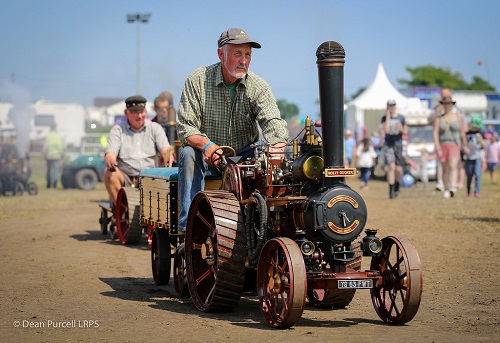
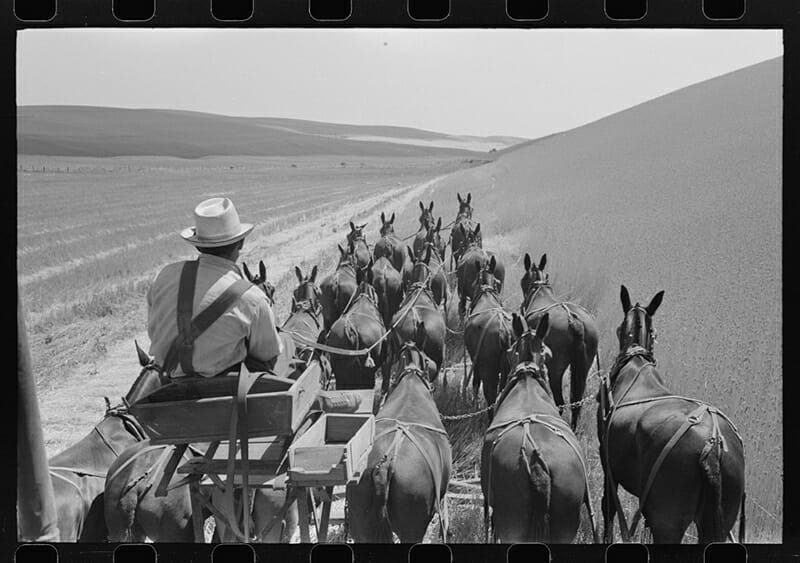
Here's the picture that triggered the posting of
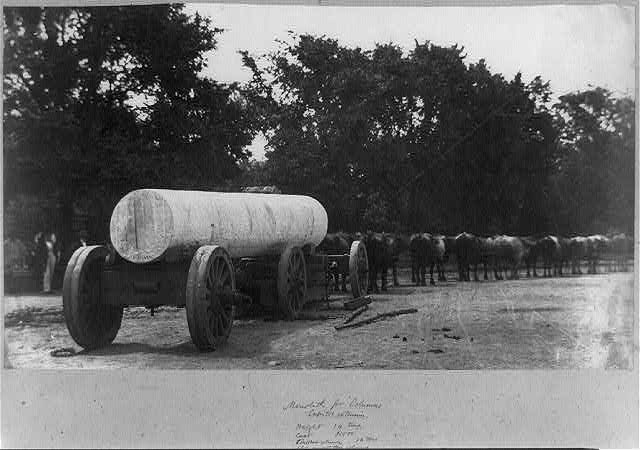
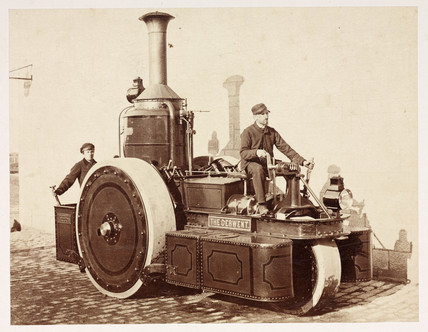
the Thompson steam tractor.
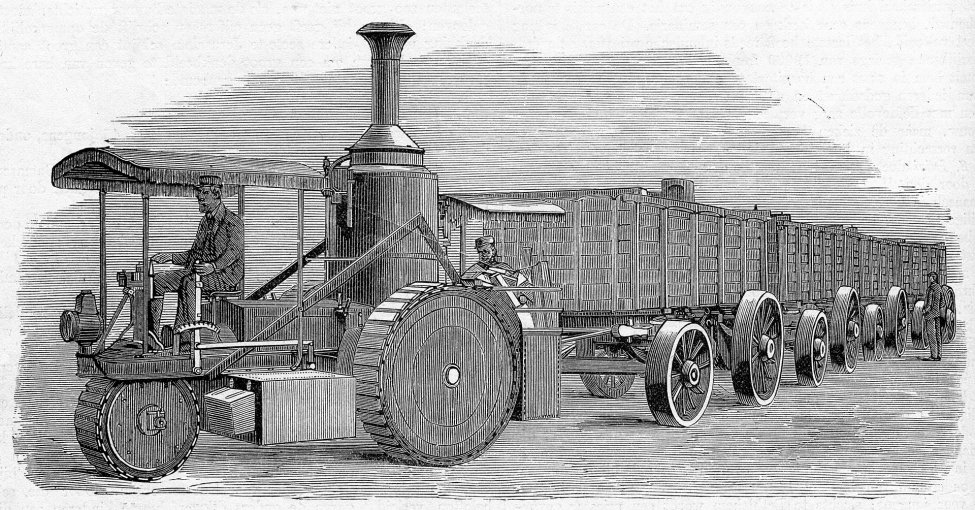
The reason for creating this post is to not dilute the capitol building thread. Evolution of the Capitol Building, Washington DC
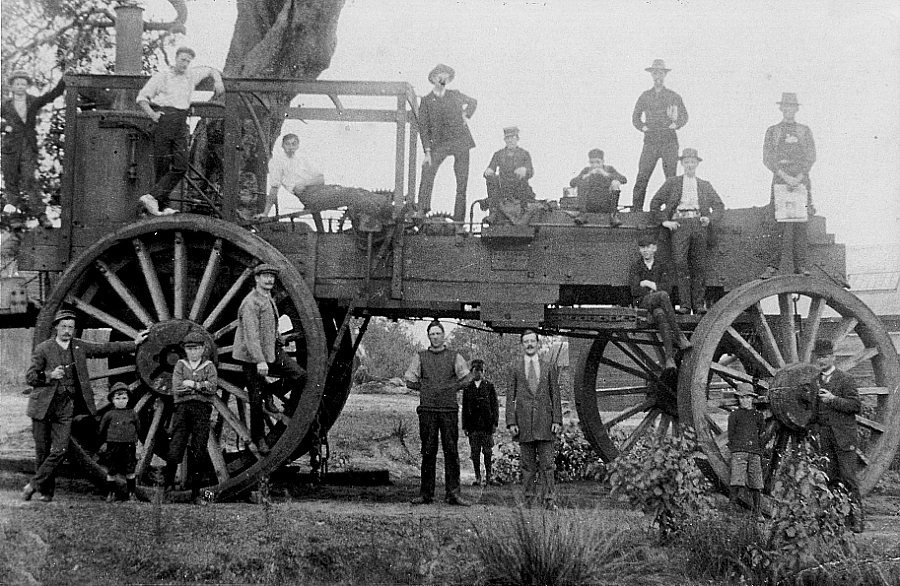
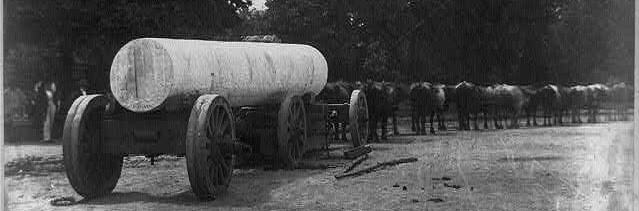
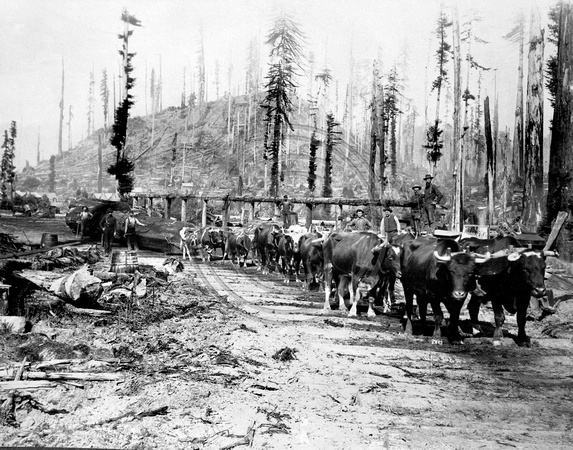
The argument goes that the machine pictured above could pull the column and cart hooked up to the oxen in the picture above therefore the picture is misleading either deliberately or accidentally by mis-dating.
Leaving aside the difference in dates, oxen power 1860, steam power 1870 as there is no way to prove neither.
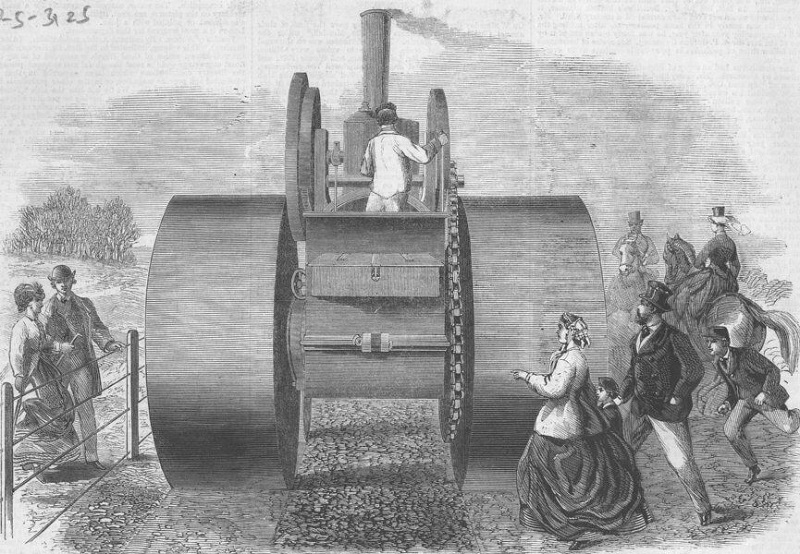
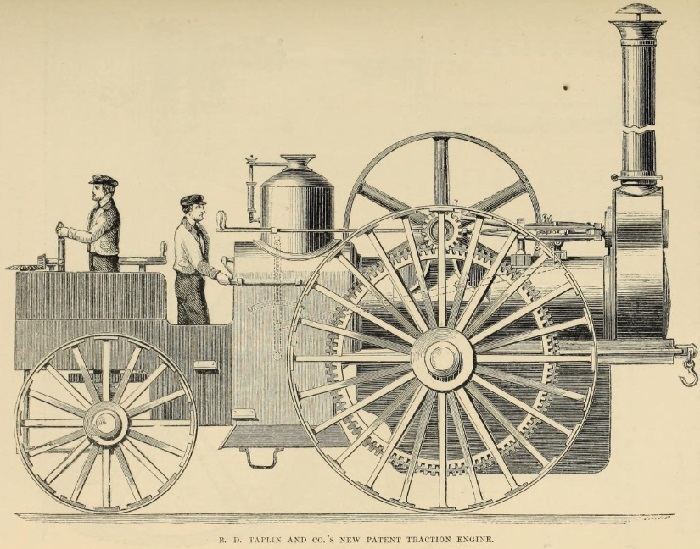
From here Thomson Road Steamer | Old Book Illustrations
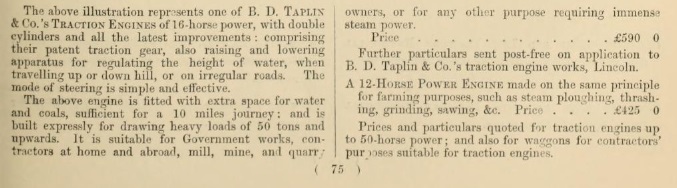
It appears the farm tractor is said to be able to pull a 30 ton load on the flat. (Imperial tons not metric tonnes hence the different spelling.)
The book the description is taken from is French dated 1876.
In 1867, Robert William Thomson patented solid India-rubber tires for the road steamers manufactured in his Leith workshop. Fitted with this equipment, a vehicle like the one shown above could be driven across a meadow without the wheels sinking too deeply into the ground. On a flat road, it could tow 30 tons at a speed of 2.5 to 6 mph (4 to 10 km/h); it could reach 16 to 18 horsepower.
Case closed it would seem. However the invention of the solid tyre comes 7 years after the oxen picture and as this seems to have been invented for a reason. And the best the traction engine could produce was 18hp.
From here Robert William Thomson: Biography on Undiscovered Scotland
By 1867 he ran a company producing "road steamers", self propelled road going steam engines. He made a series of significant improvements to their design and, most importantly, wrapped their metal wheels - which often damaged roads or simply restricted the mobility of the vehicles - with solid vulcanised rubber tyres. The popularity of road steamers for pulling goods like coal dramatically increased as a result, and by the end of the 1860s an omnibus service opened, carrying passengers between Edinburgh and Leith and using vehicles (and tyres) designed and built by Thomson.
Again mentioning 1867 as the date of significance. Seems kind of odd to me that a machine that can pull 30 tons is reduced to pulling an omnibus so soon after its invention. No mention of how many tons of coal it pulled but an omnibus full of people is not 30 tons in weight.
From here Tratores Antigos via google translate
In 1867, Thomson patented his wheels coating process with solid vulcanized rubber straps. Designed an efficient motor 6 hp steam, which was manufactured by TM Tennant & Co., located in Leith, a district of Edinburgh, Scotland. In November 1867, Thomson set up its first road steamer in his own workshop, also in Leith. The wheels were coated with solid rubber strips 5 inches thick and 12 inches wide.
6hp now gets a mention, a third of the previous article. Once again 1867 is mentioned so on the balance of probability Thomson's steamer did not exist at the probable date of the oxen picture and also the metal tyres of the machines that did gave them a distinct disadvantage to oxen as in they didn't grip that well sinking in rather than rolling over, hence the invention of the vulcanised rubber tyre.
The greatest amount of pulling effort is required to get the weight moving. Once its moving even slowly and slightly the effort required reduces dramatically, apologies if it looks like I am telling you how to suck eggs.
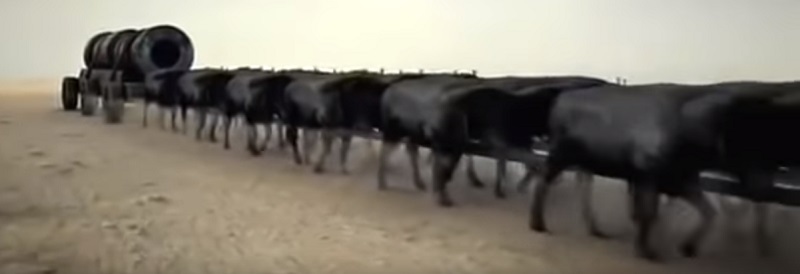
16 oxen gives 64 points of contact with the ground over a much greater surface area than the contact area of wheeled traction engine.
In short they could get the load/transporter moving whereas the traction engine could not.
But then there is this.
The road Thomson steamer was evaluated by Professor Archer (The Engineer, September 4, 1868). He noted that, at first glance, he thought the rubber was not suitable for the vehicle's weight. Disbelief found later that the vehicle passed over every type of material without any damage to rubber and flicker. It was a test in Leith, Scotland, where Thomson vehicles were manufactured until the time. Archer estimated the weight of the road steamer in about 4 or 5 tons and was impressed with what he saw. Continued reporting that the road steamer engaged a trailer with more than 10 tons and up a slope, with slope of 1 for 20 with no difficulty. Archer noted that the vehicle used an economic vertical boiler, similar externally with other time, but completely different on the inside, which made it much more efficient. In another test the road steamer pulled wagons loaded with coal, with a total weight of the assembly of more than 40 tons, a route between two locations without difficulty. Archer concluded that the vehicle has exceeded all expectations, adding that the wheels with rubber not even skated on the ice.
So just what could this machine actually pull 30 ton, more than 40 tons presumably on the flat as it could only manage more than 10 tons up a 1 in 20?
Are we just reading advertising bullshit of the day?
Who can say.
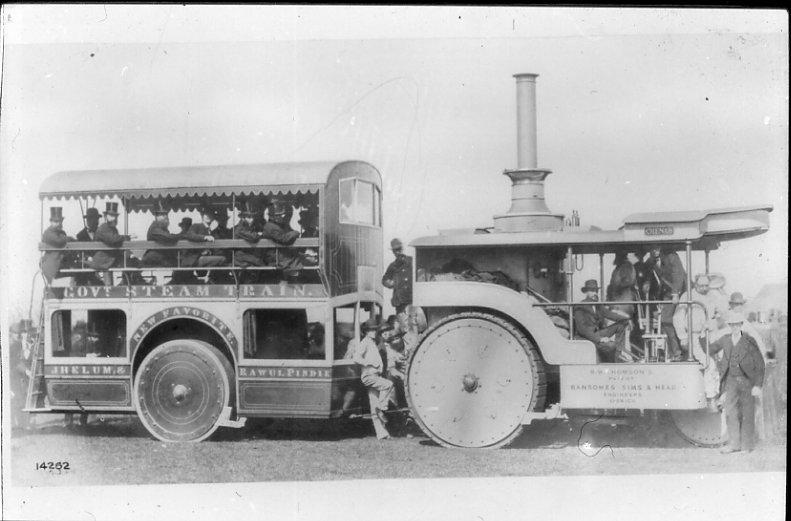
The Thomson road steamer arrived in Paris in early 1870, as stated in The New York-maker Coach's Magazine, March 1870. Acoplava Versailles bus for 50 passengers. This little steam locomotive traction with rubber-coated wheels, it was a great innovation. The rubber increased friction with the ground, preventing landslides, reduced noise and jitter. Almost were not affected by environmental factors such as heat, humidity or cold.
Why a bus why not have it pulling great weights hitherto impossible? Makes no sense if the pulling power were the selling point.
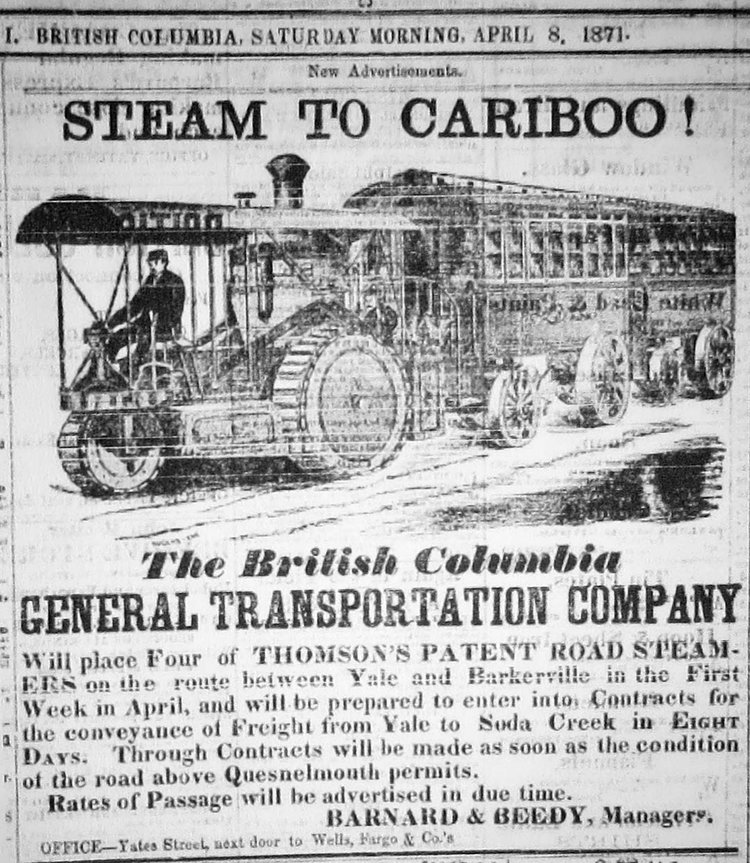
Between 1870 and 1873, the demand for Thomson road steamer was great and the Leith factory could not keep up. In 1870 and 1871, Thomson has provided licenses to manufacture its road steamer by other companies in England and the United States
Douw D. Williamson was licensed in the United States. About 50 units of the vehicle were manufactured in New Jersey and California. Many were used as plow, but have not had great success in this application.
What you make of this tale is as always up to you. For me the inability of this machine to pull the weight of 14 tons plus transporter is on the balance of probability is satisfied. The invention of the tyre suggests that prior to the tyres invention the machines that existed were even less capable of pulling what the oxen could pull, on the balance of probability.
The use of the machine to pull omnibuses not road trains of heavy loads also suggests it couldn't do what was claimed it could.
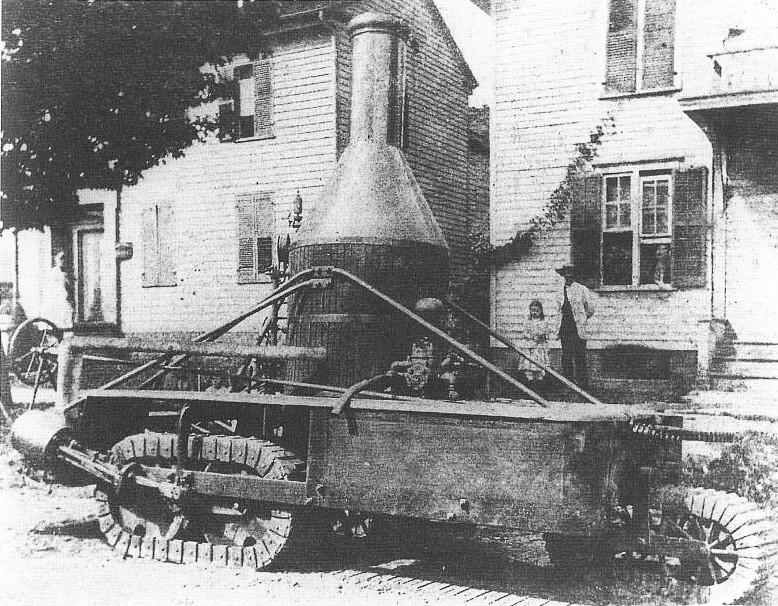
From here The Williamson Road Steamer and Steam Plow - Steam Engines - Farm Collector
In 1869, Douw D. Williamson started a five-year effort to produce a successful American steam plow, a goal he described in an article titled “Plowing by Steam” in Van Nostrand’s Magazine in 1878: “Perhaps no branch of engineering has been more fascinating to mechanical engineers than that of steam plowing. The thought of inventing an implement which would supersede the common plow and revolutionize a process which is older than Christianity itself has, for many years, stirred the hearts and brains of ingenious men and incited them to patient labor and extraordinary effort.“ None have struggled more with this problem or met with greater disappointment than American engineers. The cheapness of our prairie land; the size of our farms; their natural adaptation to steam cultivation; the high cost and uncertainty of labor and many other reasons made it appear probable that this country would bring forth the steam plow and perfect it. The records of the Patent Office show how many men thought they had accomplished it. The fact that, in the year 1870, not a steam plow was practically working in the country proved the value of these patents,”
Which seems to me to suggest that there was a problem in reality that doesn't exist in drawings and engravings or theories that make up patents.
Williamson’s quest to develop a steam plow in America began in Scotland in 1869, where he investigated the Thomson road engine, a then-new steam traction engine concept. It could not only carry heavy loads over soft ground, according to A Century of Traction Engines by W.J. Hughes, but also travel on a good road over 20 MPH when built for speed. Williamson described his experience when he first saw the Thomson engine near Edinburgh, Scotland:
“In the year 1869, I saw a ‘Thomson Road Steamer’ with its broad rubber tires draw a train of heavily loaded wagons over a soft wet field in Scotland. I rode upon the engine when it drew the same load through the yielding deep sands on the shore of the Firth of Forth, and when it climbed the steep slippery streets of the old town Edinburgh. I spent many days with it striving to find a fault with its peculiar tire, but the more I examined its workings the more I was convinced that its camel-footed, elastic tread solved the great question of maintaining its footing, whilst working in soft soil and drawing plows behind it.”
Sounds great, all again seemingly taking place after the oxen picture was taken.
“Having arranged for the right to work under the American Patents, I imported an engine from Scotland in 1870, and commenced a series of experiments with it,” Williams continued. “Whilst the rubber tire did all and more than I had expected, I found the difficulty of maintaining steam a most serious drawback.
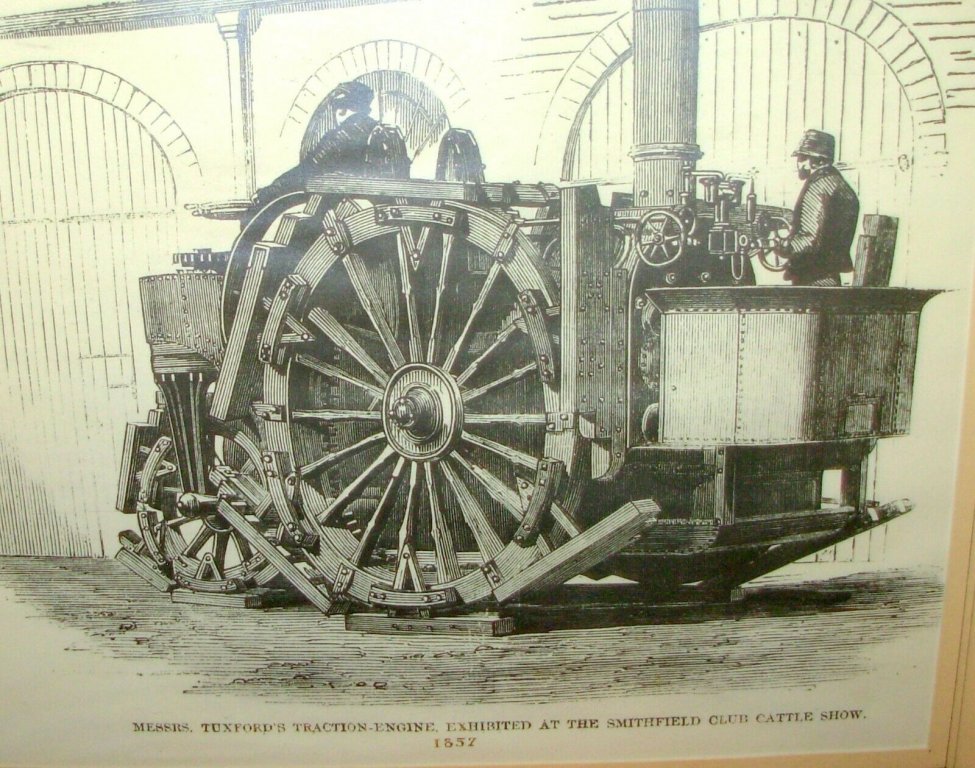
And to end a picture of an engraving which if drawn to scale shows just how small it was when compared to the people.
From here História dos Thomson Road Steamers
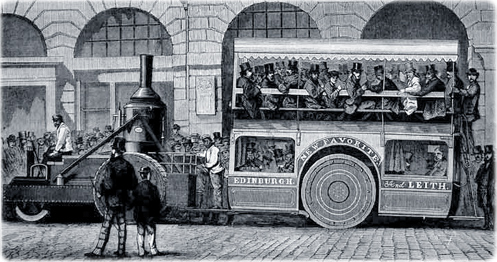
the Thompson steam tractor.
The reason for creating this post is to not dilute the capitol building thread. Evolution of the Capitol Building, Washington DC
The argument goes that the machine pictured above could pull the column and cart hooked up to the oxen in the picture above therefore the picture is misleading either deliberately or accidentally by mis-dating.
Leaving aside the difference in dates, oxen power 1860, steam power 1870 as there is no way to prove neither.
From here Thomson Road Steamer | Old Book Illustrations
It appears the farm tractor is said to be able to pull a 30 ton load on the flat. (Imperial tons not metric tonnes hence the different spelling.)
The book the description is taken from is French dated 1876.
In 1867, Robert William Thomson patented solid India-rubber tires for the road steamers manufactured in his Leith workshop. Fitted with this equipment, a vehicle like the one shown above could be driven across a meadow without the wheels sinking too deeply into the ground. On a flat road, it could tow 30 tons at a speed of 2.5 to 6 mph (4 to 10 km/h); it could reach 16 to 18 horsepower.
Case closed it would seem. However the invention of the solid tyre comes 7 years after the oxen picture and as this seems to have been invented for a reason. And the best the traction engine could produce was 18hp.
From here Robert William Thomson: Biography on Undiscovered Scotland
By 1867 he ran a company producing "road steamers", self propelled road going steam engines. He made a series of significant improvements to their design and, most importantly, wrapped their metal wheels - which often damaged roads or simply restricted the mobility of the vehicles - with solid vulcanised rubber tyres. The popularity of road steamers for pulling goods like coal dramatically increased as a result, and by the end of the 1860s an omnibus service opened, carrying passengers between Edinburgh and Leith and using vehicles (and tyres) designed and built by Thomson.
Again mentioning 1867 as the date of significance. Seems kind of odd to me that a machine that can pull 30 tons is reduced to pulling an omnibus so soon after its invention. No mention of how many tons of coal it pulled but an omnibus full of people is not 30 tons in weight.
From here Tratores Antigos via google translate
In 1867, Thomson patented his wheels coating process with solid vulcanized rubber straps. Designed an efficient motor 6 hp steam, which was manufactured by TM Tennant & Co., located in Leith, a district of Edinburgh, Scotland. In November 1867, Thomson set up its first road steamer in his own workshop, also in Leith. The wheels were coated with solid rubber strips 5 inches thick and 12 inches wide.
6hp now gets a mention, a third of the previous article. Once again 1867 is mentioned so on the balance of probability Thomson's steamer did not exist at the probable date of the oxen picture and also the metal tyres of the machines that did gave them a distinct disadvantage to oxen as in they didn't grip that well sinking in rather than rolling over, hence the invention of the vulcanised rubber tyre.
The greatest amount of pulling effort is required to get the weight moving. Once its moving even slowly and slightly the effort required reduces dramatically, apologies if it looks like I am telling you how to suck eggs.
16 oxen gives 64 points of contact with the ground over a much greater surface area than the contact area of wheeled traction engine.
In short they could get the load/transporter moving whereas the traction engine could not.
But then there is this.
The road Thomson steamer was evaluated by Professor Archer (The Engineer, September 4, 1868). He noted that, at first glance, he thought the rubber was not suitable for the vehicle's weight. Disbelief found later that the vehicle passed over every type of material without any damage to rubber and flicker. It was a test in Leith, Scotland, where Thomson vehicles were manufactured until the time. Archer estimated the weight of the road steamer in about 4 or 5 tons and was impressed with what he saw. Continued reporting that the road steamer engaged a trailer with more than 10 tons and up a slope, with slope of 1 for 20 with no difficulty. Archer noted that the vehicle used an economic vertical boiler, similar externally with other time, but completely different on the inside, which made it much more efficient. In another test the road steamer pulled wagons loaded with coal, with a total weight of the assembly of more than 40 tons, a route between two locations without difficulty. Archer concluded that the vehicle has exceeded all expectations, adding that the wheels with rubber not even skated on the ice.
So just what could this machine actually pull 30 ton, more than 40 tons presumably on the flat as it could only manage more than 10 tons up a 1 in 20?
Are we just reading advertising bullshit of the day?
Who can say.
The Thomson road steamer arrived in Paris in early 1870, as stated in The New York-maker Coach's Magazine, March 1870. Acoplava Versailles bus for 50 passengers. This little steam locomotive traction with rubber-coated wheels, it was a great innovation. The rubber increased friction with the ground, preventing landslides, reduced noise and jitter. Almost were not affected by environmental factors such as heat, humidity or cold.
Why a bus why not have it pulling great weights hitherto impossible? Makes no sense if the pulling power were the selling point.
Between 1870 and 1873, the demand for Thomson road steamer was great and the Leith factory could not keep up. In 1870 and 1871, Thomson has provided licenses to manufacture its road steamer by other companies in England and the United States
Douw D. Williamson was licensed in the United States. About 50 units of the vehicle were manufactured in New Jersey and California. Many were used as plow, but have not had great success in this application.
What you make of this tale is as always up to you. For me the inability of this machine to pull the weight of 14 tons plus transporter is on the balance of probability is satisfied. The invention of the tyre suggests that prior to the tyres invention the machines that existed were even less capable of pulling what the oxen could pull, on the balance of probability.
The use of the machine to pull omnibuses not road trains of heavy loads also suggests it couldn't do what was claimed it could.
From here The Williamson Road Steamer and Steam Plow - Steam Engines - Farm Collector
In 1869, Douw D. Williamson started a five-year effort to produce a successful American steam plow, a goal he described in an article titled “Plowing by Steam” in Van Nostrand’s Magazine in 1878: “Perhaps no branch of engineering has been more fascinating to mechanical engineers than that of steam plowing. The thought of inventing an implement which would supersede the common plow and revolutionize a process which is older than Christianity itself has, for many years, stirred the hearts and brains of ingenious men and incited them to patient labor and extraordinary effort.“ None have struggled more with this problem or met with greater disappointment than American engineers. The cheapness of our prairie land; the size of our farms; their natural adaptation to steam cultivation; the high cost and uncertainty of labor and many other reasons made it appear probable that this country would bring forth the steam plow and perfect it. The records of the Patent Office show how many men thought they had accomplished it. The fact that, in the year 1870, not a steam plow was practically working in the country proved the value of these patents,”
Which seems to me to suggest that there was a problem in reality that doesn't exist in drawings and engravings or theories that make up patents.
Williamson’s quest to develop a steam plow in America began in Scotland in 1869, where he investigated the Thomson road engine, a then-new steam traction engine concept. It could not only carry heavy loads over soft ground, according to A Century of Traction Engines by W.J. Hughes, but also travel on a good road over 20 MPH when built for speed. Williamson described his experience when he first saw the Thomson engine near Edinburgh, Scotland:
“In the year 1869, I saw a ‘Thomson Road Steamer’ with its broad rubber tires draw a train of heavily loaded wagons over a soft wet field in Scotland. I rode upon the engine when it drew the same load through the yielding deep sands on the shore of the Firth of Forth, and when it climbed the steep slippery streets of the old town Edinburgh. I spent many days with it striving to find a fault with its peculiar tire, but the more I examined its workings the more I was convinced that its camel-footed, elastic tread solved the great question of maintaining its footing, whilst working in soft soil and drawing plows behind it.”
Sounds great, all again seemingly taking place after the oxen picture was taken.
“Having arranged for the right to work under the American Patents, I imported an engine from Scotland in 1870, and commenced a series of experiments with it,” Williams continued. “Whilst the rubber tire did all and more than I had expected, I found the difficulty of maintaining steam a most serious drawback.
And to end a picture of an engraving which if drawn to scale shows just how small it was when compared to the people.
From here História dos Thomson Road Steamers
Note: This OP was recovered from the Wayback Archive.
Note: Archived Sh.org replies to this OP are included in this thread.