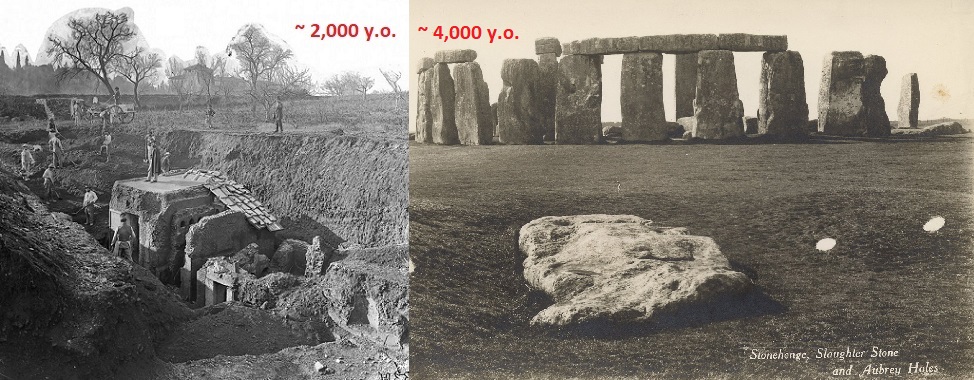
SH Archive Was Stonehenge rebuilt, or constructed in 1954?

SH.org OP Username
KorbenDallas
SH.org OP Date
2018-03-23 07:13:16
SH.org Reaction Score
110
SH.org Reply Count
110
Note: This post was recovered from the Sh.org archive.
Username: MagnusOpus
Date: 2019-12-11 13:11:08
Reaction Score: 3
I'm not really sure of the purpose of this thread..... Stonehenge was messed with for sure in the 50s....and it is unique compared to other stone circles in having the trilithon arrangement of stones

but if you are familiar with the area it is clear something was going on in the area in prehistoric times (whether that is 1000 years ago or 4000 years ago is debatable though)
the whole landscape is covered in burial mounds and other features

Not far away is Avebury which is supposedly older and a crazy landscape with two relatively unmolested stone circles which have had a village built among the stones...again countless other standing stones, burial mounds and the wonder that is silbury hill

apart from that there are hundreds of megalithic sites all over these islands that certainly predate Christianity here (and many have been ruined since then for their pagan connotations)

these things aren't under 25ft of mud....but if you've visited many of them as I have they are clearly very old, so numerous and many so obscure and unmolested that I can't see them all being fakes...I can only surmise Britain somehow mostly missed whatever dumped all that earth in Russia Rome etc

I guess what I'm trying to say is focusing on the rebuilding of Stonehenge seems like a red herring when there was clearly some kind of prehistoric megalithic culture here....the question for me is when that was and what happened to it
 
Note: This post was recovered from the Sh.org archive.
Username: Feralimal
Date: 2019-12-11 16:10:19
Reaction Score: 1
Yes, it has become a bit convoluted. I think we all recognise that it's been messed with. Personally, I'm just trying to understand what we can say, and with what degree of certainty, with the evidence that we have.

There seems to be the view that it is a modern creation. I don't accept that it was created in the 50s. I'm also not sure the case has been made that it was moved from a different location.

On the other hand, you say:
Why do you think it was so old, ie what's your evidence? You don't think it's possible to fake such monuments?

I think exploring what happened at Stonehenge is interesting. On a psychological level it says lots about how we are prepared to be harsh on the existing narrative, but very easy on any counter narratives. I'm of the view that the narrative structure should be drawn from the evidence. I don't mean one or 2 pictures, but as a whole. And I think the evidence is poor. Personally, I'm happy not to have a narrative at all if it's unclear. If we were unable to explain how many thousands of years old, who it was really built by, etc that would undoubtedly be disappointing. But simply making up an alternative narrative which cherry picks evidence and has as its primary virtue the fact it is not the official narrative, well, that's not progress to me; it's just a story swap and no closer to the truth.
 
Note: This post was recovered from the Sh.org archive.
Username: MagnusOpus
Date: 2019-12-11 17:12:45
Reaction Score: 1
I'm not making specific claims for age, this stuff is conventionally dated to 4-6 thousand years ago, but given what we know about dating methods and catastrophes as far as I'm concerned we have no way of really knowing if it's 1000 or 50000 years old.....I guess all I'm saying is there is so much of this stuff (thousands of burial mounds in the south west for instance) I can't see it all being faked for some narrative purpose....I know there is often an urge by archaeologists to push back dates, but in this case, especially as many have certainly been deliberately damaged in the Christian period (or in some cases these old stones are actually incorporated into church walls), or just ploughed away by farmers I don't see what purpose faking a whole prehistoric culture would serve

The focus on the fact Stonehenge was rebuilt recently detracts from all the other stuff out there.....one of the favourites stone circles I've visited was in a grove in a field near Inverness.....in the middle of nowhere, hardly ever visited by anyone, you wouldn't ever find it unless you knew it was there....even knowing it was it took a while to find in the undergrowth....I can think of no reason at all not to believe it's been there a long time....and in that part of Scotland there are many similar ones (a whole subset of stone circles called "four posters" in the area)

Stonehenge is pretty much an exception as far as it being a tourist trap is concerned......which does give a motive for fakery (or just making look prettier and more impressive).....but most of these things are pretty much unknown unless you research the subject....I guess what I'm getting at is Stonehenge being fake is neither here nor there in the scheme of things.....there were cultures that built many stone circles and barrows, in various parts of Britain that have to predate our historical records, probably by a fair bit as the oldest historical records seem clueless about them....that is what would make me say I can't see most of them being less than 1000 years old....basically if you take their context as a whole it pretty much precludes them all being recent

Another thing worth considering is this isn't just a British thing......Europe is also littered with countless similar things, and then you have the North American mound builders and "New England root stores" which basically seem to be similar constructions....why were people making this stuff all over the northern latitudes?

For me the interesting questions are when they were built, who by and what they were really for....personally I always find their context in the landscape fascinating....interesting that most are made from quartz rich rock...and care seems to have been taken with their place in the landscape....my hunch is that earth energy is a big part of it
 
Note: This post was recovered from the Sh.org archive.
Username: Witchcraft
Date: 2019-12-11 17:41:16
Reaction Score: 1
I drunkenly half-convinced myself a while back that the stones of Stonehenge were depicting Hebrew letters and if 'sung' correctly could do 'whatever it was I rambling about in my head at the time'. I also thought that the 'renovations' we can read about did something to undo the thing it was perhaps intended for.

That part in your post about echoes and sound in there has really caught my eye.
 
Note: This post was recovered from the Sh.org archive.
Username: jd755
Date: 2019-12-11 17:57:58
Reaction Score: 1
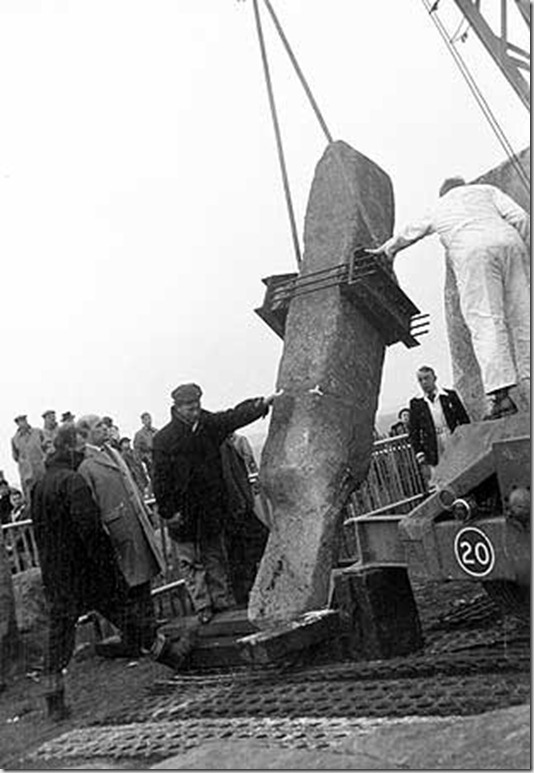
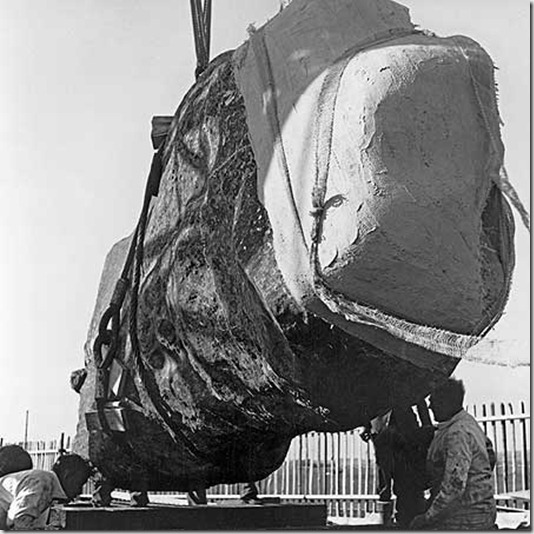
Something was done to the stones in 1954 and the only evidence for this is the photographs and officially sanctioned articles.
The fact that the whole are is under military control be it overt or covert and has been for decades is of significance to me.
The construction use and destruction of an aerodrome so close to the stones seems at odds with their oft stated 'historical' significance.
Their survival intact, along with the aerodrome, during WW2 despite sitting right in the area 'favoured' by Luftwaffe bombers and being surrounded by military establishments is very suspicious.
The concreting in the 1920's is definitely a bizzarre thing to have been done. If nothing else it buries evidence in a concrete shorud whose removal will destroy what is underneath it.

I've never been to the site or any of the other 'historical wonder' sites 'dated' (though god knows how) to 'prehistory. Sorry chaps but all dating is spurious, to me always to me. However not ten miles from where I'm sat is a 'stone circle' on a common which is just a thin skin of grass and bracken over a limestone pavement, rich in 'fossils'. It's stones are all upright and they stand around four to five feet out of the ground.
Touching and looking suggessts they are of the same limestone as the stuff the hill is made of.
Nothing fels mystical orr special about the location. It doesn't line up with anything else, it has no pathway/road leading up to it. The ground around does not reveal anything as when I say thin skin I mean from one to sux inches deep soil no more. Even gorse only gets a foothold in the little crevasses where soil deeper than a few inches accumulates and is itself confined by the limestone.
All the field boundary drystone walls are made from the limestone and the old quarries are easy to spot. In short there isn't enough soil to hold 'dating evidence.
Reason for the ramble is the site mirrors the conditions at stonehenge with a thin soil over the bedrock.
The local circle is as undateable as stonehenge but here the truly local locals who have lived around the common and use it state it was 'installed' by some of their ancestors in the late 1800's early 1900's to take the piss out of the 'antiquarians who were sniffing about the area'
Point being no bugger will ever know about either circle's origins let alone purpose as the people who did know, because they erected them are long gone. I'd lat odds most who worked on the '54 project are also long gone and as I said above their is a dearth of anecdotal evidence available anywhere. Given the supposed significance of stonehenge it is beyond belief that this should be the case.
 
Note: This post was recovered from the Sh.org archive.
Username: KorbenDallas
Date: 2019-12-11 18:07:12
Reaction Score: 1
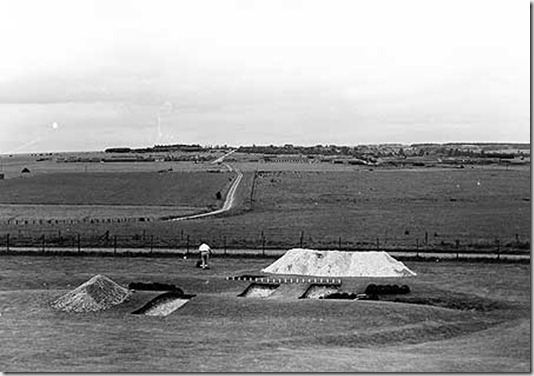
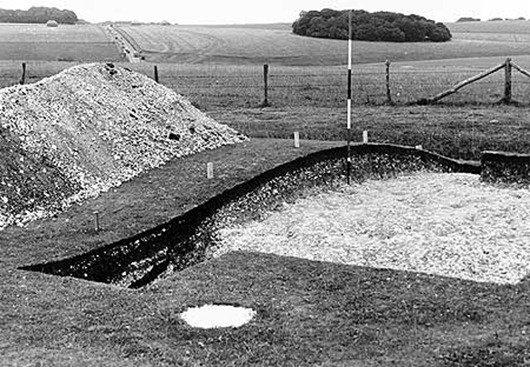
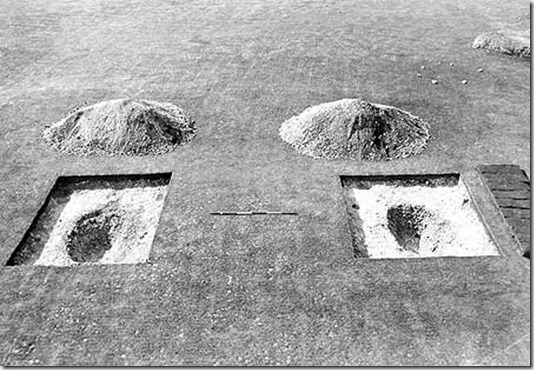
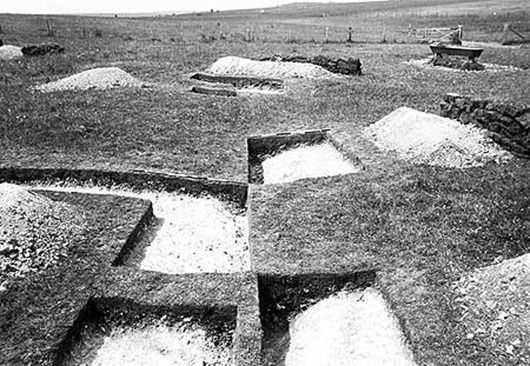
For me one of the most fascinating things is the fact that immediately prior to the 1954 restoration there was no trace of the stone removals at the Stonehenge site circle. There clearly was a leveled field with grass growing. At the very least, it suggests that the stones were gone for a long time, and the field was leveled after the stones were removed. That is if this is the same site.

The other part I find interesting is the one summarized below. I altered the image from this thread.

two_tombs-2.jpg
 
Note: This post was recovered from the Sh.org archive.
Username: jd755
Date: 2019-12-11 20:13:16
Reaction Score: 0
Maybe it's just me but does 'Stonehenge' look like a later 'addition to this story?
Not a mention until 1915.

From here; AMESBURY ABBEY, Amesbury - 1000469 | Historic England

AMESBURY ABBEY, Amesbury - 1000469 | Historic England

C18 and C19 garden and park, including early C18 work by Charles Bridgeman, around an early C19 house.

HISTORIC DEVELOPMENT

During the medieval period the Benedictine abbey of Amesbury formed part of the land of a priory manor that stood here. At the Dissolution, the latter held its own site, mills, meadows, pasture, agricultural land, parkland, and various properties in the town of Amesbury (VCH 1995). In 1541, the Crown granted the estate of the priory manor to Edward, Earl of Hertford, later Duke of Somerset. Between 1595 and 1601 the priory manor was replaced with a new house, built for Edward's son, the second Earl of Hertford. In 1600 a gatehouse known as Diana's House was built, and an ornamental tower, followed in 1607 by another gatehouse, Kent House. The precincts of the former priory, which were enclosed by the River Avon and a wall, were laid out as a park, and in 1635 the grounds included a bowling green (ibid). By the early 1660s, a new house designed by John Webb (1611-72) had been built for the third Lord Hertford or his successor, William, Duke of Somerset (ibid). The house became known in the mid C18 as Amesbury Abbey.

In 1720 Amesbury was bought by Henry Boyle, Lord Carleton (d 1725). He passed it on to his nephew Charles Douglas, Duke of Queensberry, and the latter extended the house to designs attributed to Henry Flitcroft (ibid). In 1726 Flitcroft produced a survey of Amesbury, which shows the Abbey with enclosed formal gardens surrounded by a park with a large double avenue and geometrically patterned block plantations. Between 1720 and 1725, new entrance gates were erected near Kent House, and a formal ride, later called Lord's Walk, was planted to provide a new approach to the Abbey (ibid). In 1733 the enclosed formal gardens were removed and a ha-ha was made around the house. After 1735, the Duke of Queensberry acquired more land west of the River Avon and the park was further extended. In 1730, Henrietta Howard, mistress of George II, recommended Charles Bridgeman (d 1738) to the Duchess of Queensberry to work on the Amesbury landscape. In 1738, following a visit to Amesbury, Charles Bridgeman produced a plan which shows an extensive formal landscape with lawns, avenues, rides, a canal, and a formal kite-shaped garden. It also shows part of the Vespasian Camp (the Iron Age hillfort near the Abbey) as a prominent feature in the landscape design, laid out with formal rides, avenues, and plantations. It is unclear to what extent Bridgeman's plan was implemented, or to what extent it adopted any previously laid out landscape features (see Flitcroft survey, 1726). By the late C18 (Andrews and Drury, 1773) however at least part of Bridgeman's proposals seem to have been implemented, as the park and the Vespasian Camp had been laid out with formal rides and avenues, as indicated on his plan.

After 1760 the park was enlarged to the north and west (Andrews and Drury, 1773), where the so-called Nile Clumps were planted. Some land was disparked c 1778 when the house and dukedom passed to Charles' cousin once removed, William Douglas. In 1825 the Douglas farnily sold Amesbury to Sir Edmund Antrobus. By the early C19 a new entrance to the park had been created to its south. In 1834 Sir Edmund started to rebuild Arnesbury Abbey to designs by Thomas Hopper, reusing the existing foundations. This new house was extended in 1860, and in 1904 the architect Detmar Blow undertook further improvements. In 1915 the Antrobus family sold the Amesbury estate, including Stonehenge, in several lots (Sale particulars, 1915). By that date Lord's Walk had been opened to the public, and it is now owned and managed by Amesbury Town Council. The house was converted into flats and became a nursing home c 1960. In 1969 the A303 was constructed as a northern bypass to Amesbury town, cutting off the northern tip of the park.
 
Note: This post was recovered from the Sh.org archive.
Username: Timeshifter
Date: 2019-12-11 20:21:56
Reaction Score: 0
Maybe the English Stonehenge was actually a replica of the Maryhill one @KorbenDallas mentioned here US Stone Henge :D
 
Note: This post was recovered from the Sh.org archive.
Username: KorbenDallas
Date: 2019-12-11 21:47:04
Reaction Score: 5
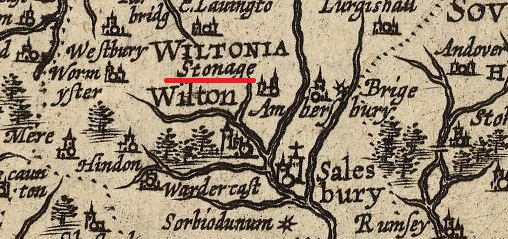
Interesting that on the earlier maps our Stonehenge area is called Stonage.


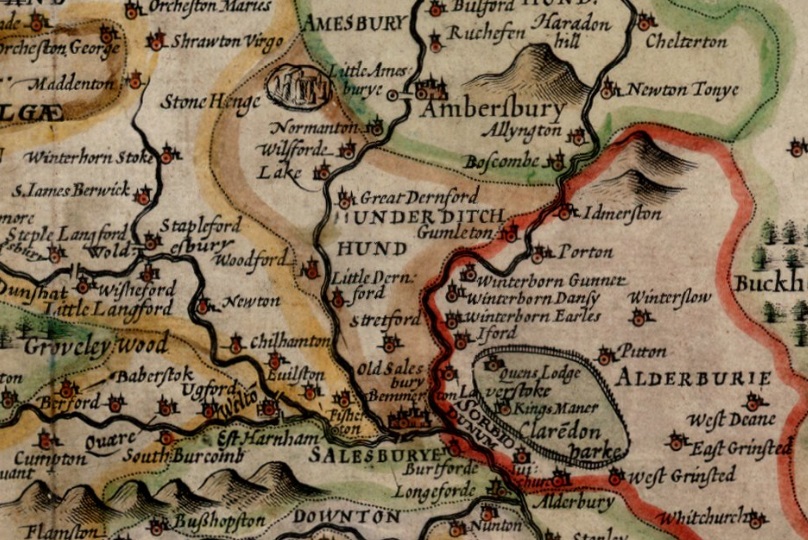
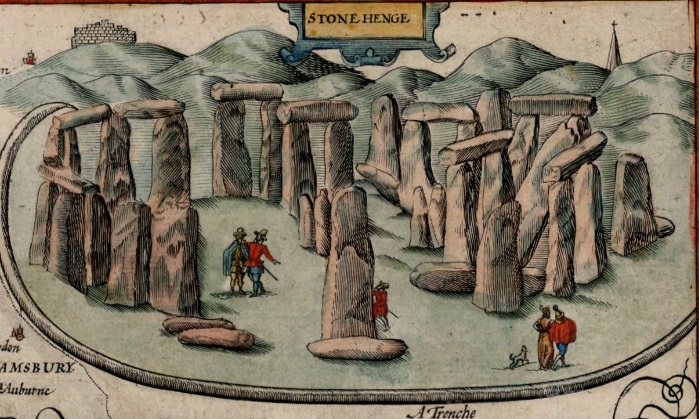
We also have John Speed, whose maps I start to distrust a bit. Not necessarily the guy's maps but the authenticity of the surviving copies. His map is the only one I could find calling the place Stonehenge. The rest mostly mention Stonage, or do not mention the place at all.
  • Amesbury appears to have moved south, and whatever happened to Ambersbury, I do not know.
1626-stonehenge.jpg
The above map is hard to date. John Speed died in 1629. Some sources date the map with 1626, and some with 1676. The original was allegedly first published in 1612, but who knows for sure?

1626-stonehenge2.jpg

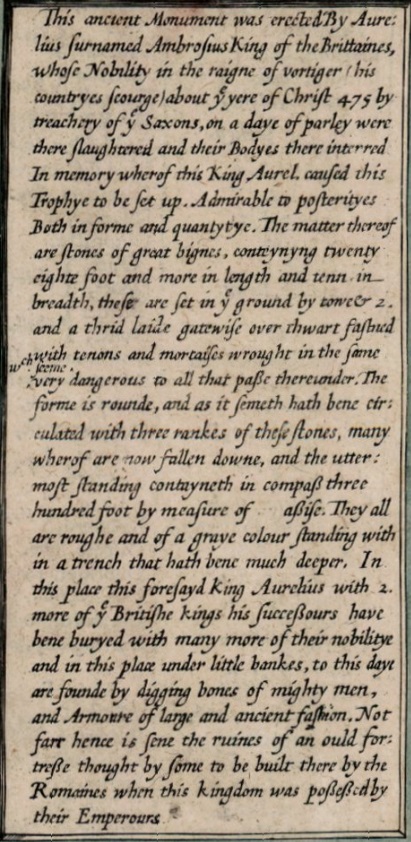
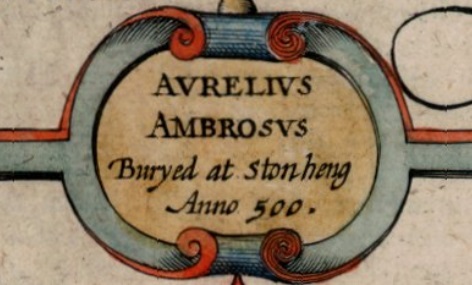
We have a few interesting things mentioned on the above John Speed Map. Ambrosius King was mentioned in one of the previous JD's posts.
  • The below info makes Stonehenge much younger - 1,544 y.o. in 2019. Not like I believe that 475 was in 475, but the map gives us some info to take into the equation.
john_speed_wiltshire 2-111.jpg

ambros-1.jpg
Was Ambrosius Aurelianus ever buried in Stonehenge? Did TPTB exhume the remains of this Giant guy?

Ambrosius Aurelianus, was a 5th century Roman leader in Britain who figures prominently in the early Arthurian legends. According to the Celtic Christian writer Gildas, Ambrosius was a war leader of the Romano-British, possibly descended from Roman royalty, who won an important battle against the Saxons.
Question: Ambrosius Aurelianus = King Arthur's Uncle = Merlin?
  • Ambrosius Aurelianus appeared independently in the legends of the Britons, beginning with the 9th-century Historia Brittonum. Eventually he was transformed into the uncle of King Arthur, the brother of Arthur's father Uther Pendragon, as a ruler who precedes and predeceases them both. He also appears as a young prophet who meets the tyrant Vortigern; in this guise he was later transformed into the wizard Merlin.
  • Due to Gildas' description of him, Ambrosius is one of the figures called the Last of the Romans.
And here we have the Romans pertaining to the same time frame. The appearance is from a certain, improperly (imho) dated Vergilius Romanus Manuscript. It is allegedly the oldest surviving British codex. Dated with the 5th century, but just like with everything else was discovered in the 15th.


VergiliusRomanusFolio100v.jpg
kd_separator.jpg

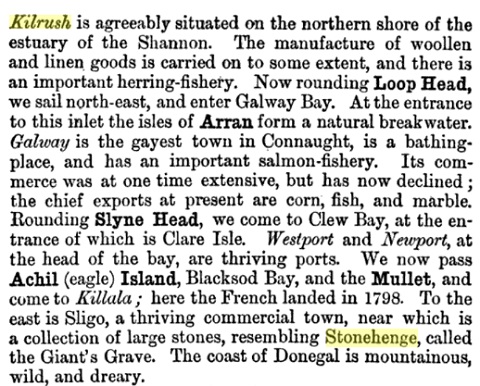
Stonehenge is from Ireland?
Aurelius Ambrosius – recently annointed King of Britain and the brother of Uther Pendragon – seeks Merlin's advice for a lasting memorial to the British princes treacherously slain by the Saxons during a truce.
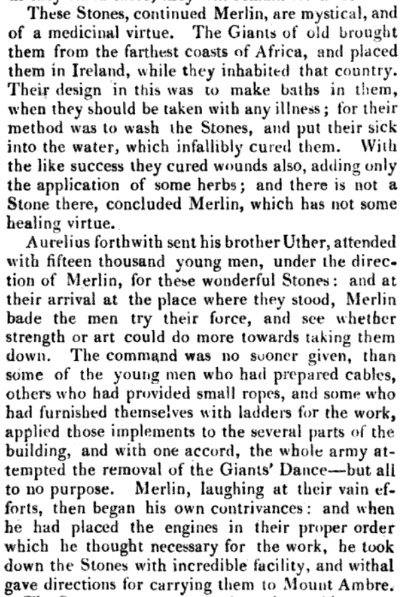
  • Merlin says: “If you are desirous to honour the burying-place of these man with an everlasting monument, send for the Giant’s Dance, which is in Killaraus, a mountain in Ireland. For there is a structure of stones there, which none of this age could raise without a profound knowledge of the mechanical arts. They are stones of a vast magnitude and wonderful quality; and if they can be placed here, as they are there, round this spot of ground, they will stand for ever.”
When Aurelius laughs at the idea of going such a long way when there are ample stones in Britain, Merlin continues:
  • “I entreat your majesty to forbear vain laughter; for what I say is without vanity. They are mystical stones, and of a medicinal virtue. The giants of old brought them from the farthest coasts of Africa, and placed them in Ireland, while they inhabited that country. Their design in this was to make baths in them, when they should be taken with any illness. For their method was to wash the stones, and put their sick into the water, which infallibly cured them. With the like success they cured wounds also, adding only the application of some herbs. There is no a stone there which has not some healing virtue.”
And so off to Ireland goes Uther along with Merlin and 15,000 men to fetch the Giant’s Dance.


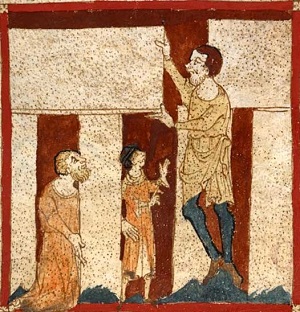
The image was previously posted by JD. A 14th Century manuscript version of the Brut accompanies the tale with an illustration of Merlin carrying out the work of re-erecting the monument, employing a giant to help him (a detail that Wace added that wasn’t in Geoffrey’s original text).

stoenhenge_1.jpg
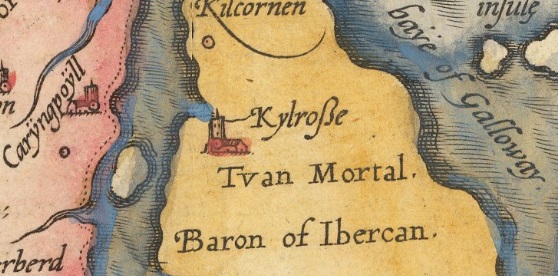
???: Where in Ireland was this Mount Killaraus?
kylrouse.jpg

Could it be this one? Does not look like a mountain on this map but there are some hills on this one here.
Obviously, none of this explains why in 1954 the Stonehenge field has no signs of the stones ever being there. It's just that the investigation continues.
 
Note: This post was recovered from the Sh.org archive.
Username: 0harris0
Date: 2019-12-12 02:32:22
Reaction Score: 0
exactly which 1954 photos show "no sign" of stonehenge?
 
Note: This post was recovered from the Sh.org archive.
Username: KorbenDallas
Date: 2019-12-12 02:39:48
Reaction Score: 1
kd_separator.jpg
As far as I understand, they chose not to install these "stones".

Stonehenge-blocks-1.jpg
Stonehenge-blocks-2.jpg
The other ones came out much better... or worse.

Stonehenge-blocks-3.jpg
Stonehenge-blocks-4.jpg
Stonehenge-blocks-5.jpg
Stonehenge-blocks-6.jpg
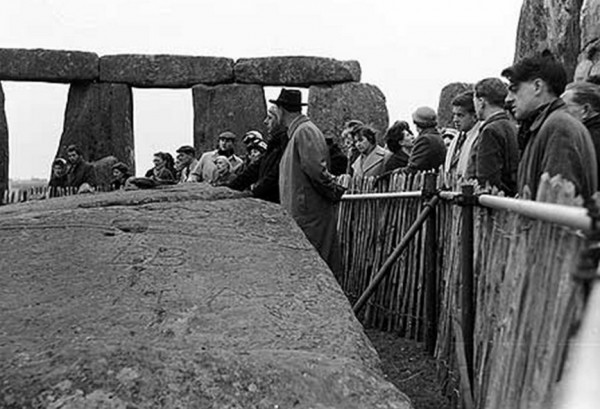
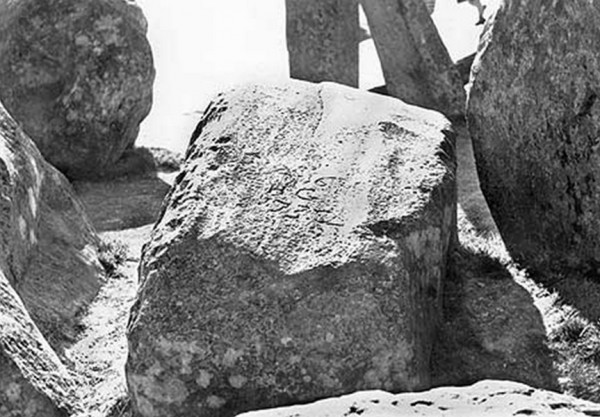
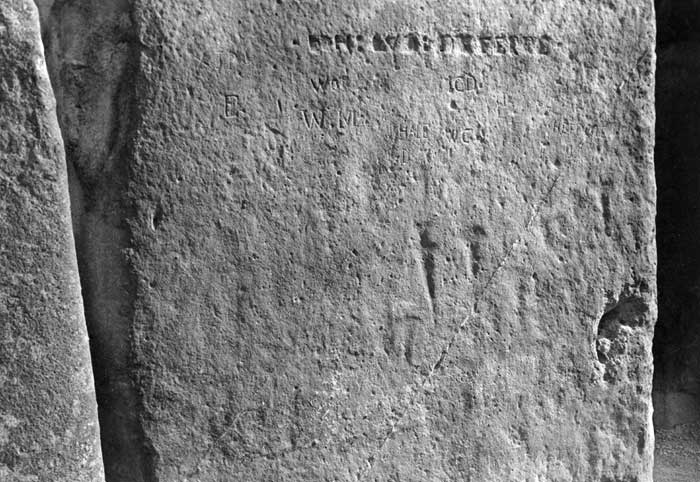
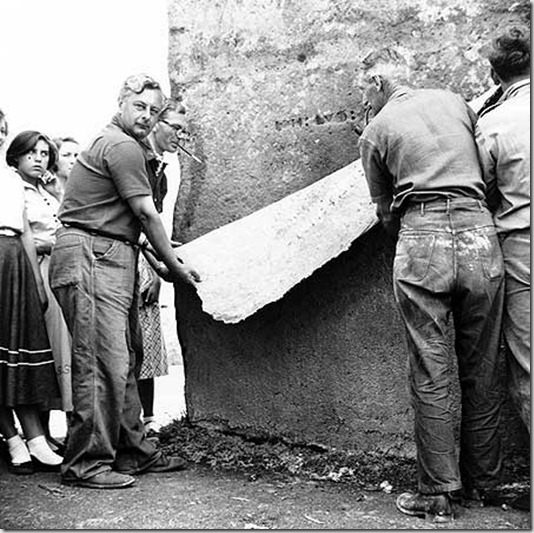
Perhaps the earliest non-prehistoric carving is the line that reads “IOH : LVD : DEFERRE” and which is carved across the inner face of Stone 53. It's also visible from the visitor path when the light is in the right direction and it's suggested that it dates from the late 16th or early 17th century based on the style of lettering. To the left, right and below are fainter carvings belonging to W.M., J HALE, ICD, H.E. FOOTE and others but far more interesting are the shallower, larger carvings lower down that aren't letters but bronze age axeheads and a dagger.
The historian John Evelyn visited Stonehenge in 1654 and wrote that he found the stones “so exceedingly hard, that all my strength with a hammer could not break a fragment.”

stone-53.jpg

stonehenge-graffiti.jpg
 
Note: This post was recovered from the Sh.org archive.
Username: 0harris0
Date: 2019-12-12 03:36:58
Reaction Score: 1
first photo in that video, it's looking outwards from the circle...
why would there be stones where there aren't supposed to be any?

i really don't get the point of trying to make stonehenge out as "fake", as others have said, what about Avebury standing stones? Stanton Drew stone circles? they're damn close, are they also fake, and for what purpose?

i think the lack of mention of stonehenge before C18th says more about the historical narrative, and what had been really happening, than when the henge was built (and possibly the fact the land was owned privately for many years meant they weren't publicised.. [ancient druid orders owned the land and tried to keep it secret and sacred, then sold off by ancestors who lost knowledge? or newcomer landowners find it after civil war?]).
no i don't go by mainstream "guesstimates" or claim to know when any of it was built, or by whom, but even most historians and archaeologists would openly admit that!
totally agree with you!
[also convenient timing with the start of the british empire takeover.. especially if the timeline is as warped as it appears]

that raises another point about stonehenge is it's location... a plain ~90 metres above sea level..

not sure that would be too susceptible to a flood, can't imagine water getting up there let alone mud.


=================================

ANYWAY, i think the more interesting and mysterious thing is not just stonehenge, but all of these prehistoric** sites as a large civilisation (I've visited many in just Somerset, Gloucestershire & Wiltshire!)
- the builders are so far unknown
- the original purpose of the structures is merely guessed at/ assumed
- something at some point wiped out those folks and wrecked everything!!

where did all the ancient, "pre-roman" inhabitants of wessex disappear to?

**[use of the word prehistoric in the sense of "before our history", not "X-amount of time ago" (ie 2500BC).
IMO that is how the word should be used, rather than to denote something of particularly ancient age]
 
Note: This post was recovered from the Sh.org archive.
Username: KorbenDallas
Date: 2019-12-12 04:44:27
Reaction Score: 1
I am not sure how by looking at a rock one can say that it is old. Generally all rocks/stones are supposed to be old. May be, I don't now. It's a separate question when that specific rock made it to where it is installed today. The appearance of being old makes it 4k, 2k, 500 year old, or 20 years old?

This is probably a good Stonehenge article to read:
stonehenge-painting.jpg
As far as the Stonehenge area being 300 feet above the sea level, and not getting flooded, I wanted to offer the following quote:
  • An astonishing complex of ancient monuments, buildings, and barrows has lain hidden and unsuspected beneath the Stonehenge area for thousands of years. Scientists discovered the site using sophisticated techniques to see underground, announcing the finds this week.
  • Source
May be it did not get flooded, but something did bury all that. Of course it is always "thousands of years ago", but what else is new?

And finally, what could be a good enough reason to replace the stones at the Stonehenge site? If half of the qualities attributed to the original stones mentioned here are true, why wouldn't TPTB take them away?
 
Note: This post was recovered from the Sh.org archive.
Username: 0harris0
Date: 2019-12-12 05:00:26
Reaction Score: 0
Literally don't know where you're trying to go with this. I didn't encounter any "riddles" in that article. There's no "dark and mysterious" secrets attempted to be hidden about it's partial reconstructions. [In fact, we have many widely available articles and photographs regarding several phases of reconstruction, and archaeological digs around the site.]
Just because they don't make a point telling everyday tourists every detail, doesn't mean something is being hidden. [In fact, I bet plenty of the visitors to Stonehenge probably DGAF about small reconstruction efforts 50+ years ago and are simply visiting to tick a box while visiting the uk.] ;)

"all that", on those images, mostly being things that are already visible as Tumuli or Earthworks from the ground. trust me!

the "newly found" structures they talk about are wooden features or "pillars of possibly stone or wood"... possibly stone, with zero evidence. I'd bet wood. Wood rots so why would anything be left above ground?
interesting to see what depth are these structures "buried"?

if they are rather old as stated, and remnants of solely wooden structures and earthworks, they would actually have become overgrown and develop the "cultural layer" [so to speak]. there's a good chance the area was wild land or woodlands for a very long time until the re-settling and developing into farmlands/ chopping down the trees for timber industry. and by that point the farmers didn't care what was under their land unless its a growing crop...

So you're taking myth into account for some speculative conspiracy while, at the same time, willing to make judgments on the actual site based on a few photographs facing the other direction?
 
Note: This post was recovered from the Sh.org archive.
Username: KorbenDallas
Date: 2019-12-12 05:13:50
Reaction Score: 3
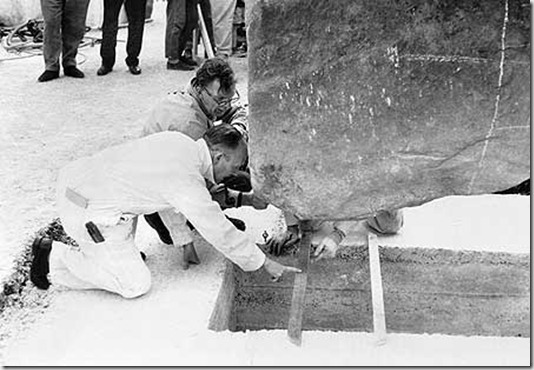
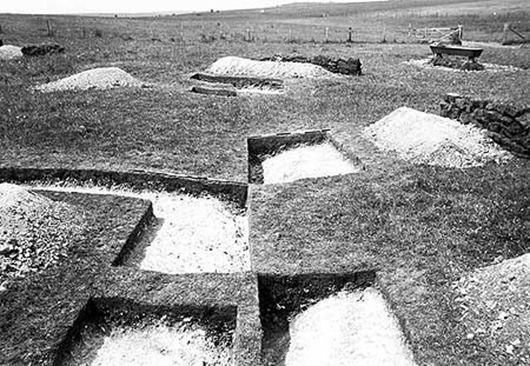
A small reconstruction would have been lifting one leaning stone upright. They started this small reconstruction in 1920s and finished in 1950s, something like that. Images show that they completely rebuilt the place. Every hole in the ground is meant for a stone which is not there.

stone-2.jpg
stone 3.jpg
stone 4.jpg
stone-1.jpg
And then they bring and install the stones.

stone 5.jpg
stone 6.jpg
stone-15.jpg

Ruins were doing just fine for the claimed 4,000 years, and suddenly started to require repairs in the 20th century. Just like the cave art. Things seem to start falling apart when we look at them.
 
Note: This post was recovered from the Sh.org archive.
Username: 0harris0
Date: 2019-12-12 05:18:28
Reaction Score: 0
where exactly does anything say that? and maybe they are digging and finding places where there was a stone in the past. they didn't replace every stone that's meant to be there. it would look complete today if they had.

i say none of those pictures show the stones because they simply are not facing the stone circle.

the site is a lot larger than just the main henge. many digs have taken place in the whole area
 
Note: This post was recovered from the Sh.org archive.
Username: KorbenDallas
Date: 2019-12-12 05:21:07
Reaction Score: 0
That happened by accident of course.

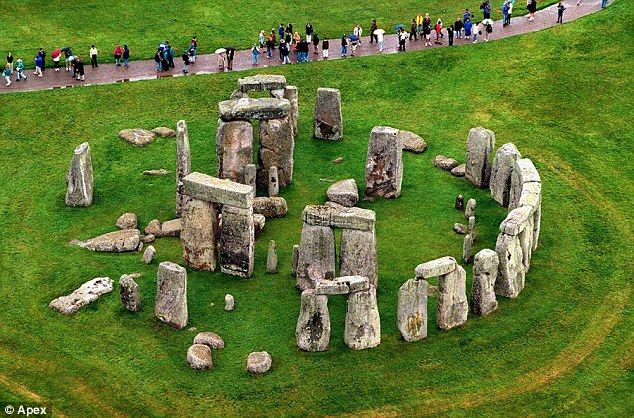
I can count at least 11 reinstalled stones. Is that a small reconstruction? There are only barely over 30 there.
 
Note: This post was recovered from the Sh.org archive.
Username: 0harris0
Date: 2019-12-12 05:22:58
Reaction Score: 0
no, more likely they are part of a much larger set of pictures (which you have also linked in this thread), and that set of pictures documents the entirety of archaeological work in the whole site. The whole site includes areas that are not the main henge, and simply plucking out a few pics to "prove" a point doesn't seem that fitting with my other experiences on this forum.
 
Note: This post was recovered from the Sh.org archive.
Username: KorbenDallas
Date: 2019-12-12 05:31:10
Reaction Score: 0
This is a tiny site. If the above images do not show that the stones are not there, there is only so much I can say.

stonehenge.jpg
This is like dead in the middle of this small reconstruction.

stone-1.jpg
 
Note: This post was recovered from the Sh.org archive.
Username: 0harris0
Date: 2019-12-12 05:36:23
Reaction Score: 0
top pic: centre of the site.
bottom pic: how can you actually tell where that is?
why are they only digging really shallow holes, if they're planning to stand giant stones in them?
do you see that stone wall or water trough in any of the other photos?

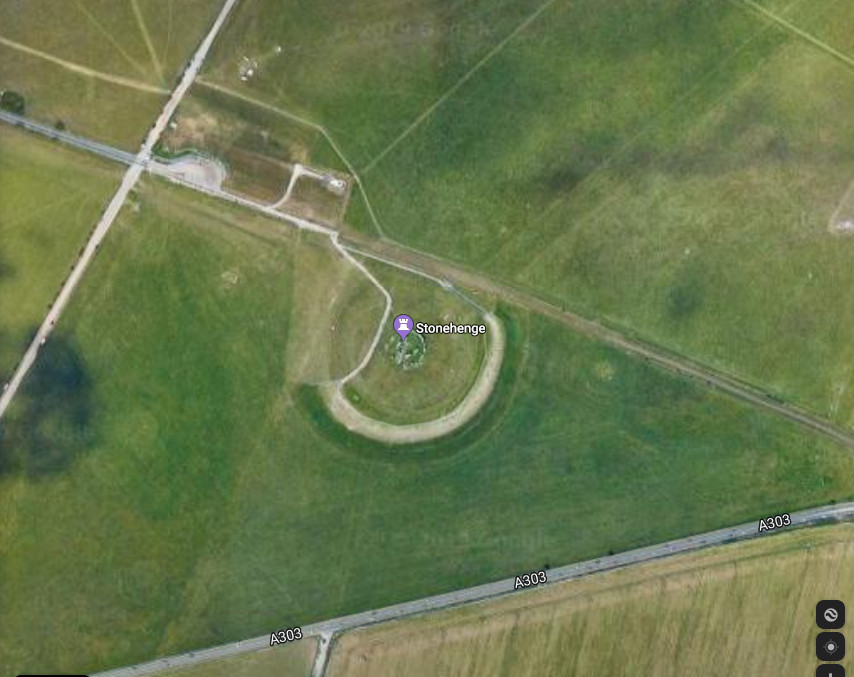
here's the area I'm referring to as "the site" of the henge, see how small the stone circle is in the centre?

stonehenge SITE.jpg

you can even see the traces of other earthworks just in the crappy res aerial photography!!
and this for a bit of fun
LIDAR Map of England and Wales, built with UK open data
 
Tips
Tips
Please respect our Posting Rules.
Back
Top