Was the temple of King Salomo in Spain? Part 01

FreiherrvonL

New Member
Joined
Mar 2, 2024
Messages
4
Reaction score
33
Site:
www.youtube.com

Where did it take place?​


1709342065621.png
We have all been told that a certain King Solomon is said to have resided in Jerusalem at the beginning of the 1st millennium BC. So, there are about 900 years between him and the story of Jesus. He was known in Idism and Christianity as a wise ruler. In Islam, he is revered as a prophet. He is said to have owned over 500 tons of gold, had 700 wives and 300 concubines. Honest? 1000 women? Who exaggerated beyond measure? He is said to have married many women in order to strengthen ties with other empires. To around 700 other rich people? Would you give your daughter to King Solomon if you knew he already had 699 wives? It seems rather understandable that the Hbrws/Iberians exaggerated a bit here in order to create their own empire, for which there is no archaeological evidence. His son and heir to the throne was Rehoboam. He is said to have reigned for forty years. Forty years? Anyone who knows anything about mythology and cosmic numbers knows that this cannot be a coincidence. Jesus fasted in the wilderness for forty days. It is forty days from the resurrection to the ascension of Jesus, and Isis mourned for her murdered husband Osiris for forty days. Legend has it that Joseph of Arimathea was in prison for forty years before going to Glastonbury with the Holy Grail. The Israelites are said to have wandered through the wilderness for 40 years. I do not think this figure is realistic.

What you may not have known is that, in fact, there is not a single solid piece of evidence that Solomon resided in Jerusalem and that his temple stood there. Archaeologists have so far tried in vain to find conclusive evidence. There are no inscriptions or remains of a palace in Jerusalem. Let us now go in search of clues together and let us open our minds together to the impossible.

Many voices argue that King Solomon never lived. One might assume that, judging by the fact that there are no archaeological or extra-biblical records. But the energy of King Solomon's soul is palpable, it's there. He must have been incarnated, though not in the way we are told. His son Rehoboam must have lived as well, as a good friend of mine has a great soul aspect of him in him. Likewise, King Solomon is currently assisting me as one of my spirit guides.

Marine archaeologist Dr. Sean Kingsley had been looking for evidence of King Solomon in Israel for a long time, but found no solid evidence. He then extended his search to the entire Mediterranean region as far as Spain. What he was to find there could be of historical importance. According to tradition, King Solomon owned a large fleet. As well as a large trading empire as well as gold mines and silver mines. Legend has it that he used as much silver as stone and that he attached 7000 talents of silver to the city walls. Where did he get so much silver and gold? He is said to have sought them in the lands of Ophir and Tarshish. King Solomon is said to have had a trade agreement with King Hiram of Tyre to find riches together. Kingsley found references to King Solomon literally on the other side of the moon. Exactly 5,200 miles, 8,400 km away from Jerusalem. Let's start with the island of Sardinia. There was archaeological evidence that the Phoenicians were active in the time of Solomon, 970 to 930 BC. Kingsley relied on the Phoenicians in his search for clues, because they transported a lot of wine. Judea, on the other hand, transported sweets and honey that cannot be found in shipwrecks. Kingsley was looking on the southwest coast of Spain, which was completely unusual. He came up with the idea because in Cadiz during excavations of the "Teatro Comico" bones of Phoenicians were found. During further investigations, he came across Phoenician remains from Huelva, Spain, in the west to Alicante in the east. Can we now rename the coast of Spain to Costa del Solomon? It has been led to one of the most famous rivers and mining areas in Spain. To the Rio Tinto. It is located about 65km north of Huelva. This was the largest known mine of antiquity and Roman times. On a hill in the middle of the mining area, they came across a former settlement with an estimated diameter of 900 meters, which dates back to the 9th century BC. It contained countless Phoenician pottery. Much of the pottery found was fused with silver. Kingsley also came across traditions that this place was still in use in the 17th century AD. "Cerro Solomon", "the mountain of Solomon". The nearby city of Huelva was then called Tartessos. Tartessos is the Greek form of Tarshish, which closes the circle. This was the old Tarshish that King Solomon told us about.

Christopher Columbus set out from Huelva to discover America. He believed that he would find El Dorado, which he believed contained the treasure of King Solomon. Is it ironic that Columbus set out from Huelva and literally sat on the treasure of Solomon? In Huelva, an infinite number of smelting furnaces for the processing of silver were found, again Phoenician ceramics. Murex shells were also found, from which royal purple was made. These are strongly related to biblical traditions. And the date of the finds was exactly in the time of King Solomon.

Traces of Phoenician artefacts dating back to the 9th century BC were also found in Carthage.

Very well, dear reader. All of this could indicate that King Solomon had a brisk trade, owned a large merchant fleet, and got his silver from the mines in Spain. Archaeology now concludes that King Solomon and the Phoenicians brought the silver from the mine to Huelva to be melted there. From there it is said to have continued to Jerusalem. But what if the temple wasn't in Jerusalem at all? What if King Solomon lived not far from Huelva and his temple was there? Remember, there is no archaeological evidence of a Temple of Solomon in Jerusalem, only claims. What if King Solomon resided only about 570km away from Huelva? This brings us to a find from Spain: the tablet of King Solomon.

This unique object of symbolic and material value was found by the Arabs in the capital of the Visigothic Empire in the early days of the conquests. Underneath Toledo there are infinitely large cave systems, the Hercules Caves. Researchers have been searching for great treasures there for centuries. Once upon a time, a "Tarik" arrived in Toledo, left some troops there and continued his march to Guadalajara. He went to the mountain there, crossed a gorge that now bears his name, and reached the town of Almeida. Almeida means table. This place was so named by the Arabs because there was found the table of King Solomon, whose edges and feet were 365 in number. They were emerald green. Subsequently, Tarik went to Amaya, where he found many jewels and riches, before returning to Toledo.

Subsequently, another Arab, a "muse", came to the country, went to Toledo and found a palace there. This was called the "House of the Monarchs". There he found twenty-four tiaras of gold. One for each king who resided. Each diadem bore an inscription with the name of the king, the number of his children, the day of his birth, the day of his accession to the throne and the day of his death. It was the custom of the Goths for every king to leave such a crown. Muse found a plaque in the palace there with King Solomon's name written on it. It even said that he was the Son of David and that God had peace over both of them. So, it was clearly the King Solomon of the Bible.

A legend in Toledo tells that a young man named Paul wanted to marry the love of his life, Magdalene. Paul wasn't rich. Magdalena's father promised him his daughter's hand in marriage if he could prove a large fortune within a week. He set out and entered the caves of Hercules under Toledo via an entrance to the inner earth. The entrance was in the church of San Ginés. He found the gold, but died in the process. Many years later, a slave escaped from the lashes of his master and sought refuge in the church of San Ginés. He found the entrance to the caves behind a pillar, just like Paul, and discovered the treasure as well as Paul's body. He also recognized a guard, a large animal, guarding the treasure. In another room, he saw a large bronze statue striking an anvil with a gold bar. However, he again found an exit to the upper world near a winery. The Higares estate in the municipality of Mocejón and was thus able to tell its story.

Toledo itself has always been considered a city that has been used for countless years by wizards, witches and necromancers as an important city in learning the dark arts. The presence of demons and the devil is confirmed in countless legends. The name of the devil is still reflected today in names such as "Devil's Villa", "Devil's Crossroads", "Tower of the Devils" or "Alley of Hell". Everywhere in Toledo we find demonic figures, gargoyles, columns and friezes on buildings that represent a threatening being. The Arabs called the city Aroth or Maroth, the Hebrews Husa or Azael, the Christians Beelzebub, Satan or Lucifer. There are countless sagas and legends about battles between fairies, angels and the devil in Toledo. Bishop Alonso Suárez was looking for King Solomon's table in the middle of the Cathedral of Jean. He had his reasons, because according to experts such as Juan Eslava Galán, the walls hold contents and secrets for those who know where to look. We find there the Solomonic knot made of stone, the Baphomet (Bab Comet) of the Knights Templar and Kabbalistic symbols. All of these circumstances, legends, and myths may well be related to King Solomon. His story tells of how he was able to bind and bind countless powerful demons with his signet ring of Solomon. King Solomon forced these demons to help him build the temple.

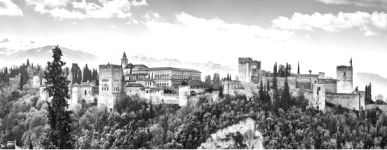
There is another legend in Toledo, according to which there was a tower with many locks attached to it and no king was supposed to open them and enter the building. A castle was added by each Visigoth king when he took office. However, King Don Rodrigo dared to do so and received terrible messages predicting the invasion of the Arabs, which happened shortly afterwards. Did this king unleash demons that King Solomon had in his day? So, we can conclude that King Solomon's temple must have been located either in Granada or in Toledo.

End Part 01​


Attachments

  • 1709341861557.png
    1709341861557.png
    74.9 KB · Views: 594
  • 1709341886984.png
    1709341886984.png
    207.4 KB · Views: 312
  • 1709342040404.png
    1709342040404.png
    283.5 KB · Views: 317
  • 1709342051974.png
    1709342051974.png
    292.6 KB · Views: 322
  • 1709342084184.png
    1709342084184.png
    309.8 KB · Views: 410
  • 1709342171132.png
    1709342171132.png
    234.8 KB · Views: 406
  • 1709342266697.png
    1709342266697.png
    204.9 KB · Views: 377
  • 1709342302218.png
    1709342302218.png
    120.5 KB · Views: 341
  • 1709344399984.png
    1709344399984.png
    292.6 KB · Views: 327
  • 1709344437259.png
    1709344437259.png
    362 KB · Views: 311
  • 1709344446615.png
    1709344446615.png
    362 KB · Views: 336
  • 1709344457427.png
    1709344457427.png
    309.8 KB · Views: 347
If those genealogy sites are right, I'm a descendant from King Salomon by many branches from both my father and mother. I can see dæmons, any kind of interdimensional entities... While visiting Toledo for my work some years ago, OMG, that cathedral was absolutely full full full of entities. I wasn't scared. Just observing them observing me.
 
Whenever it´s talk about great mysterious temples, towers or cities, I suspect that they never mean buildings built by human people.
I always suspect a religious-spiritual component behind it, with the idea that holy places are comparable to bodies. My own body is also a temple that was built at some point. David Talbott put it well in his book "The Saturn Myth" when he wrote that humans on Earth built many buildings that were intended to imitate the one great divine temple as the body of the planet god Saturn.
For this reason, I find it strange when people in Israel have the idea of wanting to build the 3rd Temple themselves. The 3rd Temple, like all the other two temples before it, should never be built by humans.
King Solomon seems to me to be a Saturnian figure, but that applies to even more incredible personalities who are said to have superhuman qualities or abilities.
 
Last edited:

Where did it take place?​


We have all been told that a certain King Solomon is said to have resided in Jerusalem at the beginning of the 1st millennium BC. So, there are about 900 years between him and the story of Jesus. He was known in Idism and Christianity as a wise ruler. In Islam, he is revered as a prophet. He is said to have owned over 500 tons of gold, had 700 wives and 300 concubines. Honest? 1000 women? Who exaggerated beyond measure? He is said to have married many women in order to strengthen ties with other empires. To around 700 other rich people? Would you give your daughter to King Solomon if you knew he already had 699 wives? It seems rather understandable that the Hbrws/Iberians exaggerated a bit here in order to create their own empire, for which there is no archaeological evidence. His son and heir to the throne was Rehoboam. He is said to have reigned for forty years. Forty years? Anyone who knows anything about mythology and cosmic numbers knows that this cannot be a coincidence. Jesus fasted in the wilderness for forty days. It is forty days from the resurrection to the ascension of Jesus, and Isis mourned for her murdered husband Osiris for forty days. Legend has it that Joseph of Arimathea was in prison for forty years before going to Glastonbury with the Holy Grail. The Israelites are said to have wandered through the wilderness for 40 years. I do not think this figure is realistic.

What you may not have known is that, in fact, there is not a single solid piece of evidence that Solomon resided in Jerusalem and that his temple stood there. Archaeologists have so far tried in vain to find conclusive evidence. There are no inscriptions or remains of a palace in Jerusalem. Let us now go in search of clues together and let us open our minds together to the impossible.

Many voices argue that King Solomon never lived. One might assume that, judging by the fact that there are no archaeological or extra-biblical records. But the energy of King Solomon's soul is palpable, it's there. He must have been incarnated, though not in the way we are told. His son Rehoboam must have lived as well, as a good friend of mine has a great soul aspect of him in him. Likewise, King Solomon is currently assisting me as one of my spirit guides.

Marine archaeologist Dr. Sean Kingsley had been looking for evidence of King Solomon in Israel for a long time, but found no solid evidence. He then extended his search to the entire Mediterranean region as far as Spain. What he was to find there could be of historical importance. According to tradition, King Solomon owned a large fleet. As well as a large trading empire as well as gold mines and silver mines. Legend has it that he used as much silver as stone and that he attached 7000 talents of silver to the city walls. Where did he get so much silver and gold? He is said to have sought them in the lands of Ophir and Tarshish. King Solomon is said to have had a trade agreement with King Hiram of Tyre to find riches together. Kingsley found references to King Solomon literally on the other side of the moon. Exactly 5,200 miles, 8,400 km away from Jerusalem. Let's start with the island of Sardinia. There was archaeological evidence that the Phoenicians were active in the time of Solomon, 970 to 930 BC. Kingsley relied on the Phoenicians in his search for clues, because they transported a lot of wine. Judea, on the other hand, transported sweets and honey that cannot be found in shipwrecks. Kingsley was looking on the southwest coast of Spain, which was completely unusual. He came up with the idea because in Cadiz during excavations of the "Teatro Comico" bones of Phoenicians were found. During further investigations, he came across Phoenician remains from Huelva, Spain, in the west to Alicante in the east. Can we now rename the coast of Spain to Costa del Solomon? It has been led to one of the most famous rivers and mining areas in Spain. To the Rio Tinto. It is located about 65km north of Huelva. This was the largest known mine of antiquity and Roman times. On a hill in the middle of the mining area, they came across a former settlement with an estimated diameter of 900 meters, which dates back to the 9th century BC. It contained countless Phoenician pottery. Much of the pottery found was fused with silver. Kingsley also came across traditions that this place was still in use in the 17th century AD. "Cerro Solomon", "the mountain of Solomon". The nearby city of Huelva was then called Tartessos. Tartessos is the Greek form of Tarshish, which closes the circle. This was the old Tarshish that King Solomon told us about.

Christopher Columbus set out from Huelva to discover America. He believed that he would find El Dorado, which he believed contained the treasure of King Solomon. Is it ironic that Columbus set out from Huelva and literally sat on the treasure of Solomon? In Huelva, an infinite number of smelting furnaces for the processing of silver were found, again Phoenician ceramics. Murex shells were also found, from which royal purple was made. These are strongly related to biblical traditions. And the date of the finds was exactly in the time of King Solomon.

Traces of Phoenician artefacts dating back to the 9th century BC were also found in Carthage.

Very well, dear reader. All of this could indicate that King Solomon had a brisk trade, owned a large merchant fleet, and got his silver from the mines in Spain. Archaeology now concludes that King Solomon and the Phoenicians brought the silver from the mine to Huelva to be melted there. From there it is said to have continued to Jerusalem. But what if the temple wasn't in Jerusalem at all? What if King Solomon lived not far from Huelva and his temple was there? Remember, there is no archaeological evidence of a Temple of Solomon in Jerusalem, only claims. What if King Solomon resided only about 570km away from Huelva? This brings us to a find from Spain: the tablet of King Solomon.

This unique object of symbolic and material value was found by the Arabs in the capital of the Visigothic Empire in the early days of the conquests. Underneath Toledo there are infinitely large cave systems, the Hercules Caves. Researchers have been searching for great treasures there for centuries. Once upon a time, a "Tarik" arrived in Toledo, left some troops there and continued his march to Guadalajara. He went to the mountain there, crossed a gorge that now bears his name, and reached the town of Almeida. Almeida means table. This place was so named by the Arabs because there was found the table of King Solomon, whose edges and feet were 365 in number. They were emerald green. Subsequently, Tarik went to Amaya, where he found many jewels and riches, before returning to Toledo.

Subsequently, another Arab, a "muse", came to the country, went to Toledo and found a palace there. This was called the "House of the Monarchs". There he found twenty-four tiaras of gold. One for each king who resided. Each diadem bore an inscription with the name of the king, the number of his children, the day of his birth, the day of his accession to the throne and the day of his death. It was the custom of the Goths for every king to leave such a crown. Muse found a plaque in the palace there with King Solomon's name written on it. It even said that he was the Son of David and that God had peace over both of them. So, it was clearly the King Solomon of the Bible.

A legend in Toledo tells that a young man named Paul wanted to marry the love of his life, Magdalene. Paul wasn't rich. Magdalena's father promised him his daughter's hand in marriage if he could prove a large fortune within a week. He set out and entered the caves of Hercules under Toledo via an entrance to the inner earth. The entrance was in the church of San Ginés. He found the gold, but died in the process. Many years later, a slave escaped from the lashes of his master and sought refuge in the church of San Ginés. He found the entrance to the caves behind a pillar, just like Paul, and discovered the treasure as well as Paul's body. He also recognized a guard, a large animal, guarding the treasure. In another room, he saw a large bronze statue striking an anvil with a gold bar. However, he again found an exit to the upper world near a winery. The Higares estate in the municipality of Mocejón and was thus able to tell its story.

Toledo itself has always been considered a city that has been used for countless years by wizards, witches and necromancers as an important city in learning the dark arts. The presence of demons and the devil is confirmed in countless legends. The name of the devil is still reflected today in names such as "Devil's Villa", "Devil's Crossroads", "Tower of the Devils" or "Alley of Hell". Everywhere in Toledo we find demonic figures, gargoyles, columns and friezes on buildings that represent a threatening being. The Arabs called the city Aroth or Maroth, the Hebrews Husa or Azael, the Christians Beelzebub, Satan or Lucifer. There are countless sagas and legends about battles between fairies, angels and the devil in Toledo. Bishop Alonso Suárez was looking for King Solomon's table in the middle of the Cathedral of Jean. He had his reasons, because according to experts such as Juan Eslava Galán, the walls hold contents and secrets for those who know where to look. We find there the Solomonic knot made of stone, the Baphomet (Bab Comet) of the Knights Templar and Kabbalistic symbols. All of these circumstances, legends, and myths may well be related to King Solomon. His story tells of how he was able to bind and bind countless powerful demons with his signet ring of Solomon. King Solomon forced these demons to help him build the temple.

There is another legend in Toledo, according to which there was a tower with many locks attached to it and no king was supposed to open them and enter the building. A castle was added by each Visigoth king when he took office. However, King Don Rodrigo dared to do so and received terrible messages predicting the invasion of the Arabs, which happened shortly afterwards. Did this king unleash demons that King Solomon had in his day? So, we can conclude that King Solomon's temple must have been located either in Granada or in Toledo.

End Part 01​

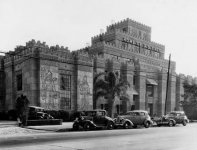
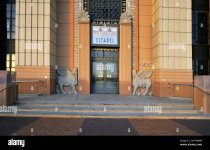
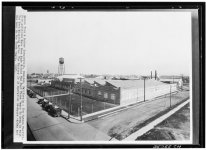
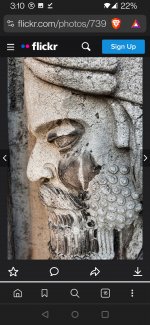
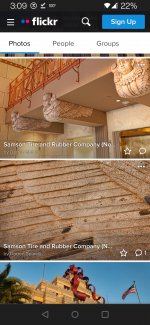
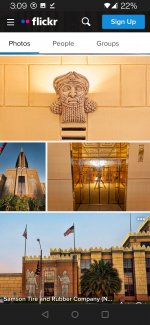
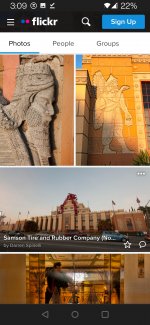
Could it have been in East Los Angeles? Seriously, this Citadel should never have existed in Los Angeles, let alone as a supposed tire factory in 1927, for a month, before the owner/builder decided to sell his "life long dream temple factory" It had 1,700' of fortress walls with relief deities all throughout. Prior to this he ran a tire retread "empire" in a 200sq ft shack, seriously that's the narrative🤣
 

Attachments

  • samson2.jpg
    samson2.jpg
    46.9 KB · Views: 220
  • exterior-art-deco-architecture-of-the-citadel-outlets-mall-originally-the-samson-tire-company-...jpg
    exterior-art-deco-architecture-of-the-citadel-outlets-mall-originally-the-samson-tire-company-...jpg
    145.2 KB · Views: 226
  • CHS-35355.jpg
    CHS-35355.jpg
    130.6 KB · Views: 214
  • Screenshot_20240710-151004.jpg
    Screenshot_20240710-151004.jpg
    1.1 MB · Views: 230
  • Screenshot_20240710-150930.jpg
    Screenshot_20240710-150930.jpg
    1.2 MB · Views: 216
  • Screenshot_20240710-150939.jpg
    Screenshot_20240710-150939.jpg
    1 MB · Views: 223
  • Screenshot_20240710-150950.jpg
    Screenshot_20240710-150950.jpg
    1.1 MB · Views: 239
Shalom [Hebrew] = hello
Mun [Egyptian]=moon

שלמן = shalom+mun = hello+moon

The word 'solomon' is the ancient Hebrew word for the new moon, so Solomon wasn't a real person.

El [Hebrew]=god
Al, Ul [old Arabic] = moon

As in Alchemy=moon+chemical

Elul = El+Ul = god+moon

The Hebrews renamed the 4th month of the Archaic Hebrew calendar 'Elul' because in 703 ATF(after the flood), in the fourth month, the full moon happened on 1326780.006 [Jerusalem time]. That's almost at noon in Jerusalem. The Jews figured that out, and referred to that moon as the moon of God. Then, they played a waiting game, for the full moon to fall one day in error with their calendar. That happened in the month of Sivan in 878 ATF. That's when they improved their value of 1 synodic month from 29.53 to 29.5305. In that month the new moon fell on Sivan 2, when they wanted it on Sivan 1. Then they hid their calendrical knowledge from the world by moving Elul from the fourth month to the fifth month, and claiming the foundation of the Temple of Solomon was laid on Sivan 2, 880 ATF.

So the foundation of the Temple of Solomon being laid is apocryphal for when in history the Jews knew the value of 1 synodic month to 4 decimal places. This happened in Jerusalem not Spain. Thus, the Temple of Solomon wasn't in Spain.
 
Last edited:
Tips
Tips
Please respect our Posting Rules.
Back
Top