SH Archive Which 13th Amendment?

SH.org OP Username
NowhereMan
SH.org OP Date
2019-02-01 18:37:41
SH.org Reaction Score
18
SH.org Reply Count
15
Note: This post was recovered from the Sh.org archive.
Username: Deleted_x7
Date: 2019-02-01 18:53:57
Reaction Score: 1
depends on how studied in the Law you are, if you actually know who you are, and if you are capable of rebutting the synigog of satan's fictitious presumptions. maybe niether, what consitutes your state of being?
 
Note: This post was recovered from the Sh.org archive.
Username: KorbenDallas
Date: 2019-02-01 18:57:37
Reaction Score: 1
Is there a specific reason we compare the 13th Amendment to Article 13?

Edit: I see now, had to magnify the images on the phone.

What year is this book?
This is a history related thread. Could we please discuss the actual history matter without derailing the OP.
 
Note: This post was recovered from the Sh.org archive.
Username: NowhereMan
Date: 2019-02-01 19:05:15
Reaction Score: 0
1841 (first image on the bottom)

The arguments for and against this issue, in a nutshell, are summarized quite well by (1) David Dodge in an article published in the August, 1991 issue of AntiShyster in favor of the Titles Of Nobility Act being officially ratified by Virginia on March 12th, 1819, and (2) A rebuttal by Jol A. Silversmith, The Missing Thirteenth Amendment: Constitutional Nonsense And Titles Of Nobility in 1999
 
Note: This post was recovered from the Sh.org archive.
Username: KorbenDallas
Date: 2019-02-01 19:16:05
Reaction Score: 5
Well, if we have this 13th Amendment present in 1841, but it is getting replaced in 1865 with a different 13th Amendment... I assume we would have a record of such a substitution somewhere. Unfortunately it appears I cannot find it as easily as one would expect to locate something of this magnitude.

Officially for the 13th Amendment we have just this: List of amendments to the United States Constitution

Here is an interesting PDF follows below.

THE ORIGINAL 13TH AMENDMENT
This Article of Amendment, ratified in 1819 and which just "disappeared" in 1876, added an enforceable strict penalty, i.e., inability to hold office and loss of citizenship, for violations of the already existing constitutional prohibition in Article 1, Section 9, Clause 8 on titles of nobility and other conflicts of citizenship interest, such as accepting emoluments of any kind for services or favors rendered or to be rendered, and is particularly applicable today in the 21st Century as government is increasingly FOR SALE to the highest bidder, as foreign and multinational corporations and individuals compete to line the pockets of politicians and political parties to accommodate and purchase protection or privilege, i.e. honors, for their special interests.

MEANING of the 13th AMENDMENT
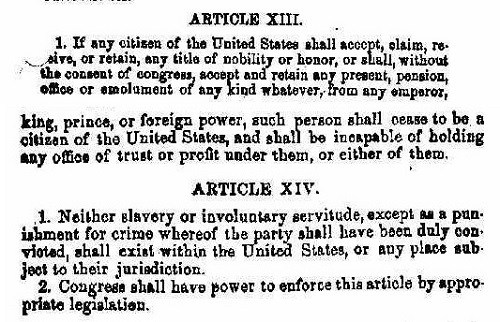
The "missing" 13th Amendment to the Constitution of the United States reads as follows: "If any citizen of the United States shall accept, claim, receive, or retain any title of nobility or honour, or shall without the consent of Congress, accept and retain any present, pension, office, or emolument of any kind whatever, from any emperor, king, prince, or foreign power, such person shall cease to be a citizen of the United States, and shall be incapable of holding any office of trust or profit under them, or either of them." At the first reading, the meaning of this 13th Amendment (also called the "title of nobility" Amendment) seems obscure, unimportant. The references to "nobility", "honour", "emperor", "king", and "prince" lead us to dismiss this amendment as a petty post-revolution act of spite directed against the British monarchy. But in our modern world of Lady Di and Prince Charles, anti-royalist sentiments seem so archaic and quaint, that the Amendment can be ignored. Not so. Consider some evidence of its historical significance: * First, "titles of nobility" were prohibited in both Article VI of the Articles of Confederation (1777) and in Article I, Sections 9 and 10 of the Constitution of the United States (1787); * Second, although already prohibited by the Constitution, an additional "title of nobility" amendment was proposed in 1789, again in 1810, and according to Dodge, finally ratified in 1819.

Source: The original 13th Article of Amendment

Additionally from the above document: our 1865 13th Amendment was actually the 14th?

16278
 
Note: This post was recovered from the Sh.org archive.
Username: NowhereMan
Date: 2019-02-01 19:31:45
Reaction Score: 5
My research has found that the primary Pro and Con arguments for the TONA 13th Amendment are:
But the real issue I'm finding now is actually tracking down the actual historical sources they cite, and this is where I think history is being subtly erased ("the devil is in the details" as they say).
 
Note: This post was recovered from the Sh.org archive.
Username: Deleted_x7
Date: 2019-02-01 19:32:31
Reaction Score: 1
he asked a question that is not as simple as you seem to assume it is KD. and it cant be answered that simply either so I briefly explained why. its a great topic that is a small part of history but a huge part of the Law of a certain land.
this Women has confirmed the original 13th was indeed ratified and holds the verifiable facts in evidence of the ratification and quite alot more but Im usure which specific video she has that deals with this exact topic so I will just link her YT chan.

lotus: justice for Maddly Arts
 
Note: This post was recovered from the Sh.org archive.
Username: NowhereMan
Date: 2019-02-01 20:55:03
Reaction Score: 3
I would like to briefly go off on a 'different 13th Amendment' and 'Grand Tartary' coincidence tangent.

Over in the Grand Tartary thread, KD made reference to how in the Napoleonic wars of 1803-1815, that it appeared that it was Napoleon Bonaparte and Alexander I fighting together against the Tartary militia.

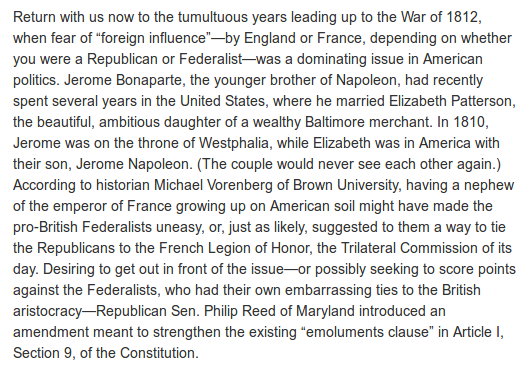
Because of Napoleon Bonaparte's younger brother Jerome, still being on the throne of Westphalia, being married to a united states citizen and having a son growing up in the United States, then Senator Phillip Reed introduced the Titles of Nobility Act in 1810 which passed both houses easily.

16286

I'm not really sure if there really is a full connection or what it could mean, but the timing and people involved make me question what is really going on.
 
Note: This post was recovered from the Sh.org archive.
Username: Deleted_x7
Date: 2019-02-01 22:38:02
Reaction Score: 8
according to this researcher, the eastern orthodox church is how the Americas were tied to the east before the Roman Catholic Crusades. its almost as if this was all a Tartarian Republic of nations? she touches on this in this vid but does not mention Tartary by name but pay attention and you might see why I think that its not out of the question.
this vid also covers the topic of this thread and the events leading upto the war of 1812.

she is not a history theorist, she is an advanced student of Law that knows how to overcome legal vs Lawful conspiracy and much of the hidden history with verifiable facts on record that are beyond any rebuttal and her work from there is now also verifiable with official court records that can be authenticated by the US Sec.of State for use to overcome these same conspiracies on a case by case basis for folks who are ready and prepared to.

Be Ware! do not go down this path half cocked, this is courting/cornering the Greatest Adversary ever known to mankind.


link the Treaty of Peace and Amity she mentions:
War of 1812 - Treaty of Peace and Amity

and to the Treaty of Ghent:
Treaty of Ghent | War of 1812 | PBS
 
Note: This post was recovered from the Sh.org archive.
Username: NowhereMan
Date: 2019-02-02 15:17:15
Reaction Score: 8
Here is the evidence from the Commonwealth of Virginia that they did indeed ratify the Titles Of Nobility Act for the 13th Amendment, established via two official publications:
  • ACTS Passed at a GENERAL ASSEMBLY of The Commonwealth of Virginia, 1819
  • The Revised Code of the Laws of Virginia, 1819
Of the first publication, we have on page 50, Chapter XXXV -- An act providing for the re-publication of the laws of this Commonwealth -- [Passed March 12th, 1819]:

1. Be it enacted by the General assembly, That there shall be published an edition of the laws of this Commonwealth, in which shall be contained the following matters, that is to say: The constitution of the United States, and the amendments thereto. (included here are relevant pages showing all acts passed to show the scope of work, with the constitution and amendments being the very first on the list, no less!):

Meaning Virginia is to officially re-publish all laws, including the constitution of the United States and amendments, as they stand. This re-publishing of the laws are then found in the official publication of The Revised Code of the Laws of Virginia, 1819 (included here are relevant pages, showing the TONA 13th amendment on page 30):


The following year, on February 24th, 1820, Virginia's General Assembly passed an act requiring the governor to transmit four copies of several different editions of Virginia's laws, for the year 1792 and specific later years, including the session laws for both 1818 and 1819; i.e., the two volume set of Virginia's 1819 Revised Code to the U.S. State Department:

At least one of these two volume sets sent to the State Department, and notated as received 29 August 1821, is still in the possession of the Library of Congress. Thus, the Federal Government did receive formal notification from Virginia that it had ratified the Titles of Nobility Amendment.

In a nutshell, the Commonwealth of Virginia is officially stating, through a certified publication of its own laws in 1819, sent to the US Secretary of State, they have ratified the TONA as the official 13th Amendment.

Now, notice how even the history cited in the original post, published 22 years later in 1841, still references that the Titles Of Nobility Act is the 13th amendment.

Stolen history, indeed.
 
Note: This post was recovered from the Sh.org archive.
Username: whitewave
Date: 2019-02-03 02:03:17
Reaction Score: 2
I know at one point it was questioned whether lawyers with their courtesy title of "esquire" could be considered to have titles of nobility but it was argued that they can't be considered titles of nobility because they can't be transferred through heredity. In the UK and Scotland Esquire may be considered a title of nobility but not in America.
 
Note: This post was recovered from the Sh.org archive.
Username: Deleted_x7
Date: 2019-02-03 02:39:10
Reaction Score: 6
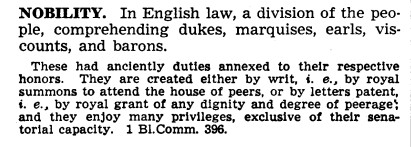
Nobility [Dignity of mind; greatness; grandeur; ] 1828 Noah Webster's Dictionary

Blacks Law Dictionary is the official definitive authority on the art/craft (legalese) of the BAR Guild. here is how they define 'Nobility':

16438

as you can read, these titles are not limited to a bloodline decent but do originate from them. 'letters patent' is where licenses, titles, degrees, etc. etc. originate.

the reason for the original 13th was to break the Monarch's (Royal) grip on mankind and it did just that but this really stirred up the SirPents and they will stop at nothing to hide this fact.
 
Note: This post was recovered from the Sh.org archive.
Username: BStankman
Date: 2019-02-03 11:52:34
Reaction Score: 1
Wow, this is good evidence that the US had its own version of the Revolutions of 1848 - Wikipedia


The revolutions were essentially democratic and liberal in nature, with the aim of removing the old monarchical structures and creating independent nation states. The revolutions spread across Europe after an initial revolution began in France in February. Over 50 countries were affected, but with no significant coordination or cooperation among their respective revolutionaries.
 
Note: This post was recovered from the Sh.org archive.
Username: NowhereMan
Date: 2019-02-03 12:10:13
Reaction Score: 0
Thanks, I haven't looked into this. I find it interesting that this is around the time of the Orphan Trains and Foundlings.
 
Note: This post was recovered from the Sh.org archive.
Username: BStankman
Date: 2019-02-03 20:46:05
Reaction Score: 0
Timing is off, but could be a better explanation for the NYC draft riots touched on here.
1863 Russian involvement in the US Civil War
Post automatically merged:

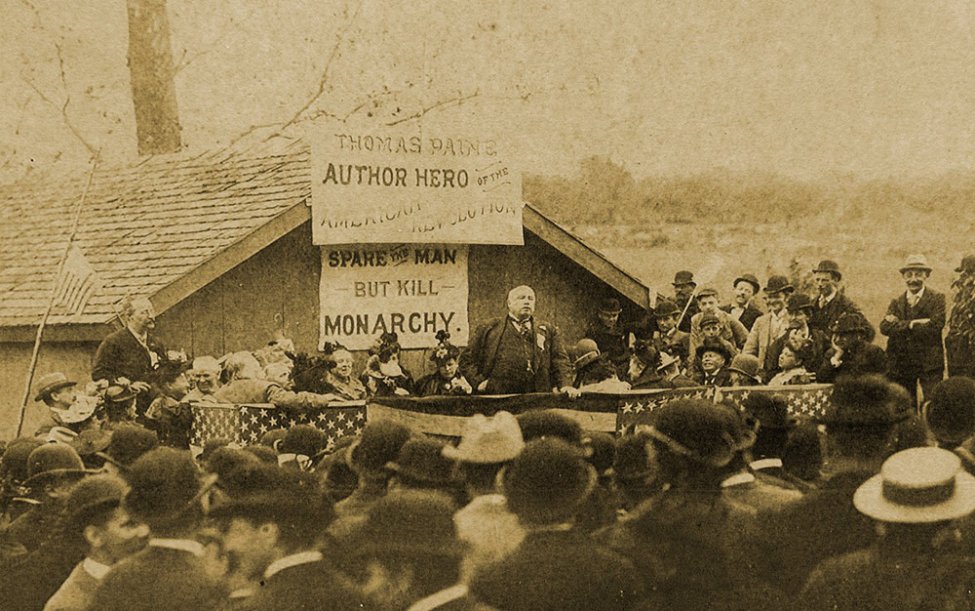
what could this photo be about?

19964
 
Note: This post was recovered from the Sh.org archive.
Username: NowhereMan
Date: 2019-04-26 21:35:34
Reaction Score: 9
Here is an incomplete list of official state law books where the Titles of Nobility Act is listed as the 13th Amendment. Of note are it being written in the 1825 Military Laws of the United States, and that both the TONA and Abolition of Slavery are written in the 1876 Compiled Laws of Wyoming

1816 Massachusetts law book:
1816 Massachusetts.png

1818 A Digest of the Laws of Missouri Territory:
1818 A Digest of the Laws of Missouri Territory.png

1818 A digest of the Laws of Pennsylvania:
1818 A digest of the Laws of Pennsylvania.png

1819 A Manual of the Laws of North Carolina:

1819 A Manual of the Laws of North Carolina.png

1819 The Revised Code of the Laws of Virginia:
1819 The Revised Code of the Laws of Virginia.png

1821 Laws of the State of North Carolina:
1821 Laws of the State of North Carolina.png

1821 The Public Statute Laws of the State of Connecticut:
1821 The Public Statute Laws of the State of Connecticut.png

1822 A Digest of the Statute Law of Kentucky:

1822 A Digest of the Statute Law of Kentucky.png

1822 The Public laws of the State of Rhode-Island:
1822 The Public laws of the State of Rhode-Island.png

1823 Acts of the Territory of Florida:
1823 Acts of the Territory of Florida.png

1823 Laws Passed by the Third General Assembly of the State of Illinois:
1823 Laws Passed by the Third General Assembly of the State of Illinois.png

1823 Masachusetts law book:
1823 Masachusetts.png

1824 Acts of a General Nature, of the State of Ohio:
1824 Acts of a General Nature, of the State of Ohio.png

1824 Digest of the Laws of Pennsylvania:
1824 Digest of the Laws of Pennsylvania.png

1824 The Public Statute Laws of the State of Connecticut:
1824 The Public Statute Laws of the State of Connecticut.png

1824 The Revised Code of the Laws of Mississipi:

1824 The Revised Code of the Laws of Mississipi.png

1824 The Revised Laws of Indiana (President Lincoln's boyhood law book*):
1824 The Revised Laws of Indiana.png

1825 Acts of the Territory of Florida:
1825 Acts of the Territory of Florida.png

1825 A Digest of the Laws of Missouri Territory:
1825 A Digest of the Laws of Missouri Territory.png

1825 Civil Code of the State of Louisiana:
1825 Civil Code of the State of Louisiana.png

1825 Military Laws of the United States:

1825 Military Laws of the United States, p1.png 1825 Military Laws of the United States, p2.png 1825 Military Laws of the United States, p3.png

1825 The Constitution of the State of Maine and that of the United States:
1825 The Constitution of the State of Maine and that of the United States.png

1827 Laws of the Territory of Michigan:
1827 Laws of the Territory of Michigan.png

1827 The Revised Code of Laws of Illinois:
1827 The Revised Code of Laws of Illinois.png

1831 Acts of a General Nature, of the State of Ohio:
1831 Acts of a General Nature, of the State of Ohio.png

1831 The Constitution of the State of Maine and that of the United States:
1831 The Constitution of the State of Maine and that of the United States.png

1831 The Revised Laws of Indiana:
1831 The Revised Laws of Indiana.png

1833 Laws of the Territory of Michigan:
1833 Laws of the Territory of Michigan.png

1833 The Revised Laws of Illinois:
1833 The Revised Laws of Illinois.png

1833 The Statutes of Ohio:
1833 The Statutes of Ohio.png

1835 The Public Statute Laws of the State of Connecticut:

1835 The Public Statute Laws of the State of Connecticut.png

1835 The Revised Statutes of the State of Missouri:
1835 The Revised Statutes of the State of Missouri.png

1837 Laws of the United States relative to the Territory of Florida:
1837 Laws of the United States relative to the Territory of Florida.png

1838 The Revised Statutes of the State of Indiana:
1838 The Revised Statutes of the State of Indiana.png

1839 A Digest of the Laws of Mississippi:
1839 A Digest of the Laws of Mississippi.png

1839 The Public and General Statute Laws of the State of Illinois:
1839 The Public and General Statute Laws of the State of Illinois.png

1839 The Public Statute Laws of the State of Connecticut:
1839 The Public Statute Laws of the State of Connecticut.png

1839 The Statute Laws of the Territory of Iowa:
1839 The Statute Laws of the Territory of Iowa.png

1840 The Revised Statutes of the State of Missouri:
1840 The Revised Statutes of the State of Missouri.png

1841 The Revised Statutes of the State of Missouri:
1841 The Revised Statutes of the State of Missouri.png

1843 Revised Statutes of the Territory of Iowa:
1843 Revised Statutes of the Territory of Iowa.png

1845 The Revised Statutes of the State of Missouri:

1845 The Revised Statutes of the State of Missouri.png

1855 Laws, Resolutions and Memorials of the Territory of Nebraska:
1855 Laws, Resolutions and Memorials of the Territory of Nebraska.png

1855 The State Register, Comprising an Historical and Statistical Account of Luisiana:
1855 The State Register, Comprising an Historical and Statistical Account of Luisiana.png

1855 The Statutes of the Territory of Kansas:

1855 The Statutes of the Territory of Kansas.png

1856 Laws, Joint Resolutions and Memorials of the Territory of Nebraska:
1856 Laws, Joint Resolutions and Memorials of the Territory of Nebraska.png

1857 Laws, Joint Resolutions and Memorials of the Territory of Nebraska:
1857 Laws, Joint Resolutions and Memorials of the Territory of Nebraska.png

1858 Laws, Joint Resolutions and Memorials of the Territory of Nebraska:
1858 Laws, Joint Resolutions and Memorials of the Territory of Nebraska.png

1859 Laws, Joint Resolutions and Memorials of the Territory of Nebraska:

1859 Laws, Joint Resolutions and Memorials of the Territory of Nebraska.png

1860 Laws, Joint Resolutions and Memorials of the Territory of Nebraska:
1860 Laws, Joint Resolutions and Memorials of the Territory of Nebraska.png

1861 General Laws, Joint Resolutions, Memorials, and Private Acts of the Territory of Colorado:
1861 General Laws, Joint Resolutions, Memorials, and Private Acts of the Territory of Colorado.png

1861 General Laws of the State of Kansas:
1861 General Laws of the State of Kansas.png

1861 Laws, Joint Resolutions and Memorials of the Territory of Nebraska:

1861 Laws, Joint Resolutions and Memorials of the Territory of Nebraska.png

1862 General Laws, Joint Resolutions, Memorials, and Private Acts of the Territory of Colorado:
1862 General Laws, Joint Resolutions, Memorials, and Private Acts of the Territory of Colorado.png

1862 General Laws of the State of Kansas:
1862 General Laws of the State of Kansas.png

1862 General laws of the Territory of Dakota:
1862 General laws of the Territory of Dakota.png

1862 Laws, Joint Resolutions and Memorials of the Territory of Nebraska:
1862 Laws, Joint Resolutions and Memorials of the Territory of Nebraska.png

1863 General laws of the Territory of Dakota:

1863 General laws of the Territory of Dakota.png

1864 General Laws, Joint Resolutions, Memorials, and Private Acts of the Territory of Colorado:
1864 General Laws, Joint Resolutions, Memorials, and Private Acts of the Territory of Colorado.png

1865 General Laws, Joint Resolutions, Memorials, and Private Acts of the Territory of Colorado:
1865 General Laws, Joint Resolutions, Memorials, and Private Acts of the Territory of Colorado.png

1866 General Laws, Joint Resolutions, Memorials, and Private Acts of the Territory of Colorado:
1866 General Laws, Joint Resolutions, Memorials, and Private Acts of the Territory of Colorado.png

1867 General Laws, Joint Resolutions, Memorials, and Private Acts of the Territory of Colorado:

1867 General Laws, Joint Resolutions, Memorials, and Private Acts of the Territory of Colorado.png

1867 General laws of the Territory of Dakota:
1867 General laws of the Territory of Dakota.png

1867 Leyes Generales del Territorio De Colorado (in spanish):

1867 Leyes Generales del Territorio De Colorado.png

1868 The General Statutes of the State of Kansas:
1868 The General Statutes of the State of Kansas.png

1868 The Revised Statutes of Colorado:
1868 The Revised Statutes of Colorado.png

1870 General Laws, Memorials and Resolutions of the Territory of Wyoming:
1870 General Laws, Memorials and Resolutions of the Territory of Wyoming.png

1873 The General Statutes of the State of Nebraska:
1873 The General Statutes of the State of Nebraska.png

1876 The Compiled Laws of Wyoming:
1876 The Compiled Laws of Wyoming.png

* Even more curious is that it is well documented that President Abraham Lincoln, as a young man, studied the 1824 Revised Laws of Indiana law book (which includes the TONA as 13th amendment!) to the point of all but memorizing the entire book cover to cover:

And not just that, but even President Lincoln's own Secretary of Treasury, Salmon P. Chase, edited the 1833 'Statutes of Ohio' law book which contained the TONA 13th amendment:
It is quite clear that even those at the highest levels of government were well aware of the original 13th Amendment. I can't help but wonder, now knowing this about President Lincoln, if he wasn't assassinated (by Shadowy Figures) so soon after the Senate passed the abolition of slavery amendment, in part, to prevent him from raising an issue about the true 13th Amendment already then on the law books.
If there is this much remaining evidence after 200+ years proving the existence of the TONA 13th amendment, how much evidence has already been destroyed in trying to erase it from the historical record? Who or what has the power to erase such a widely known, fundamental and monumental law of the United States, not by legislative repeal, not by being ruled unconstitutional, but by simply calling it a printing error?
 
Note: This post was recovered from the Sh.org archive.
Username: Nostradennis
Date: 2020-05-28 17:56:17
Reaction Score: 6
TWO THIRTEENTH (Abolition) AMENDMENTS

There are two Thirteenth Amendments that are cited in the Official Proceedings of Congress, ie, the Congressional Globe. The first 13th Amendment was recorded during the Thirty Eighth Congress and contains Twenty Sections. The second 13th Amendment was recorded during the Thirty Ninth Congress and contains Two Sections. The 13th,14th and 15th Amendments are collectively known as the Reconstruction Amendments. The Two Section 13th Amendment is well recognized and is the "official" amendment of history. The Twenty Section 13th Amendment is never mentioned and surfaced most unexpectantly while researching the Titles of Nobility Act (TONA), thee original missing 13th Amendment of 1810. Thirteen indeed is an unlucky and vexed number for this constitutional amendment.


The Thirty Eighth Congress (March 4, 1863, to March 4, 1865) 13th Amendment with Twenty Sections


Article XIII. (Sec.1 - Sec.14) April 9, 1864 (right third column)
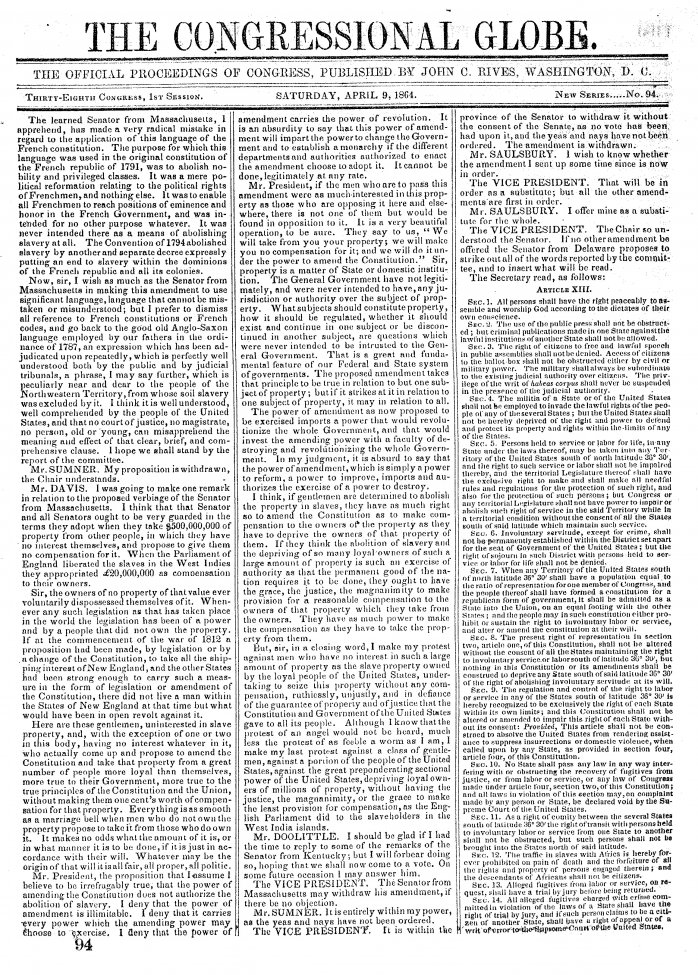
image1.jpegA Century of Lawmaking for a New Nation: U.S. Congressional Documents and Debates, 1774 - 1875


Article XIII. (Sec.15 - Sec. 20) April 8, 1864 (top left column)
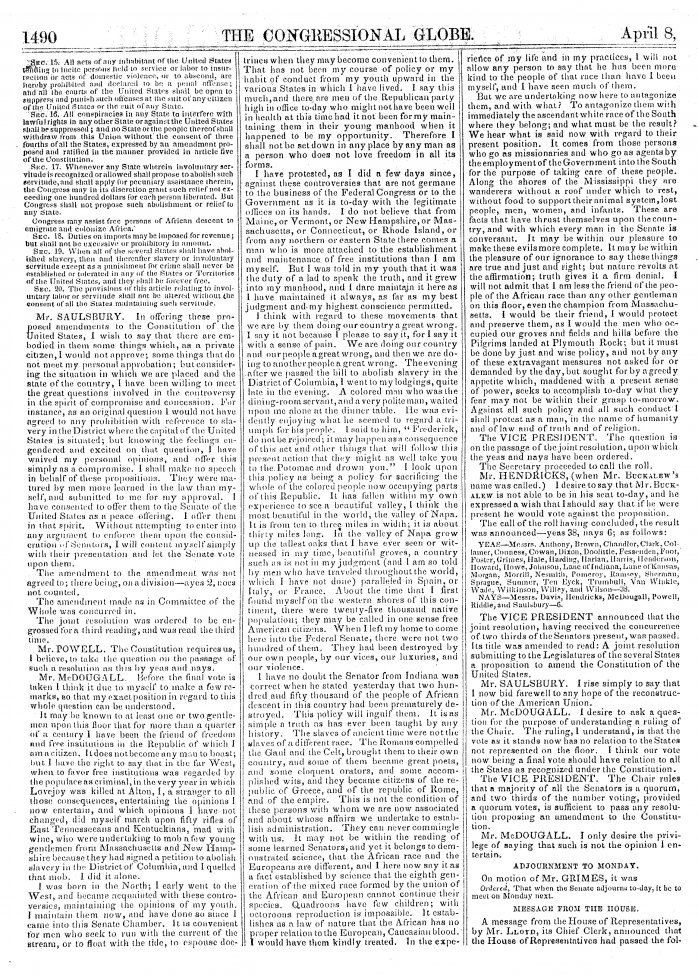
image2.jpegA Century of Lawmaking for a New Nation: U.S. Congressional Documents and Debates, 1774 - 1875


The Joint Resolution Passed: yeas 38, nays 6
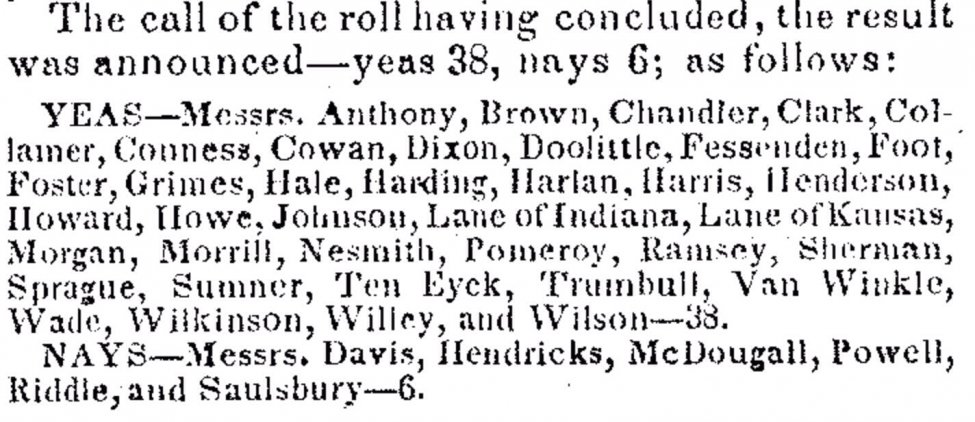
image3.jpeg

A Joint Resolution submitting to the Legislatures of the several States a proposition to amend the Constitution of the United States
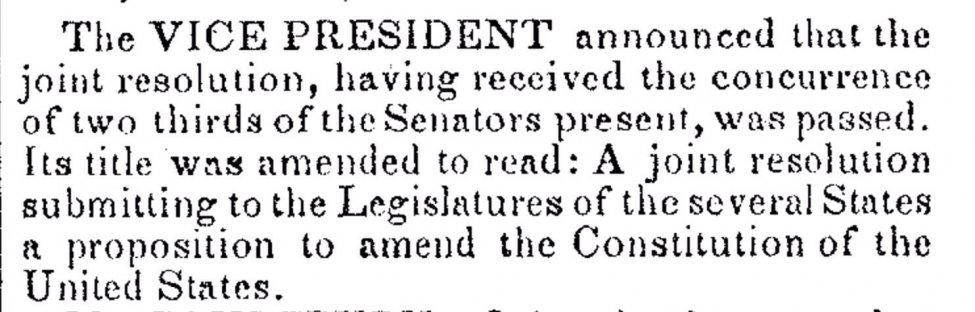
image4.jpeg
lower right third column (page 1490), April 8, 1864

NOTEWORTHY
SECTION 6 — Involuntary Servitude, except for crime, shall not be permanently established within the district set apart from the Seat of government of the United States; but the right of sojourn in such District with persons held to Service or Labor for Life, shall not be denied.

SECTION 12 – The traffic in Slaves with Africa is hereby forever prohibited on pain of death and the forfeiture of all the rights and property of persons engaged therein; and the descendants of Africans shall not be citizens.


The Thirty Ninth Congress (March 4, 1865, to March 4, 1867) 13th Amendment with Two Sections
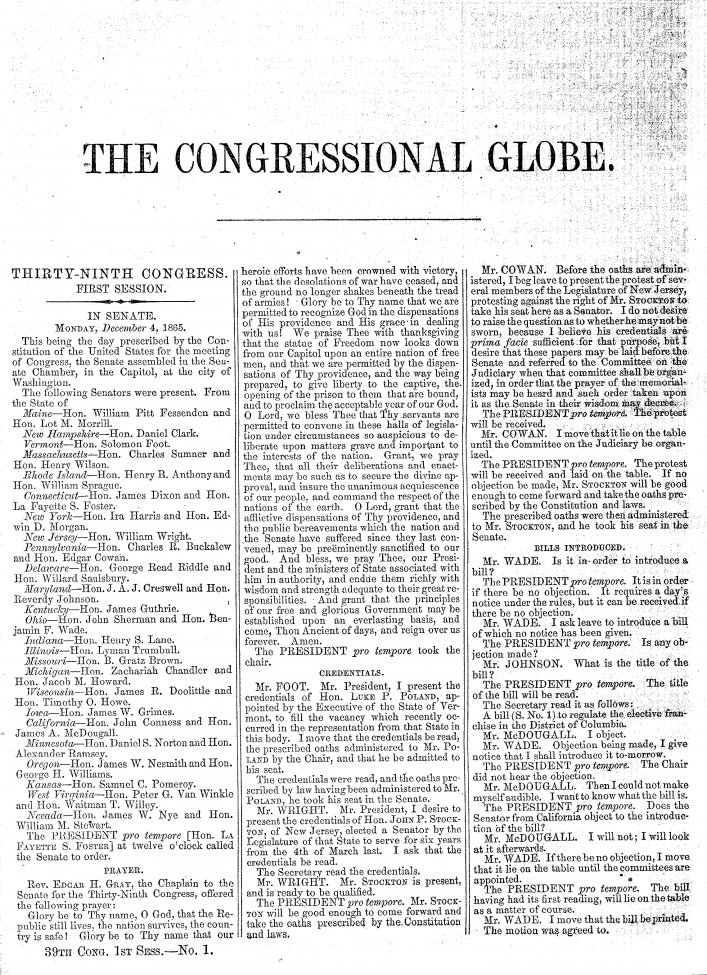
image5.jpeg
39th Congress December 4, 1865 (reference page 1)

A Century of Lawmaking for a New Nation: U.S. Congressional Documents and Debates, 1774 - 1875
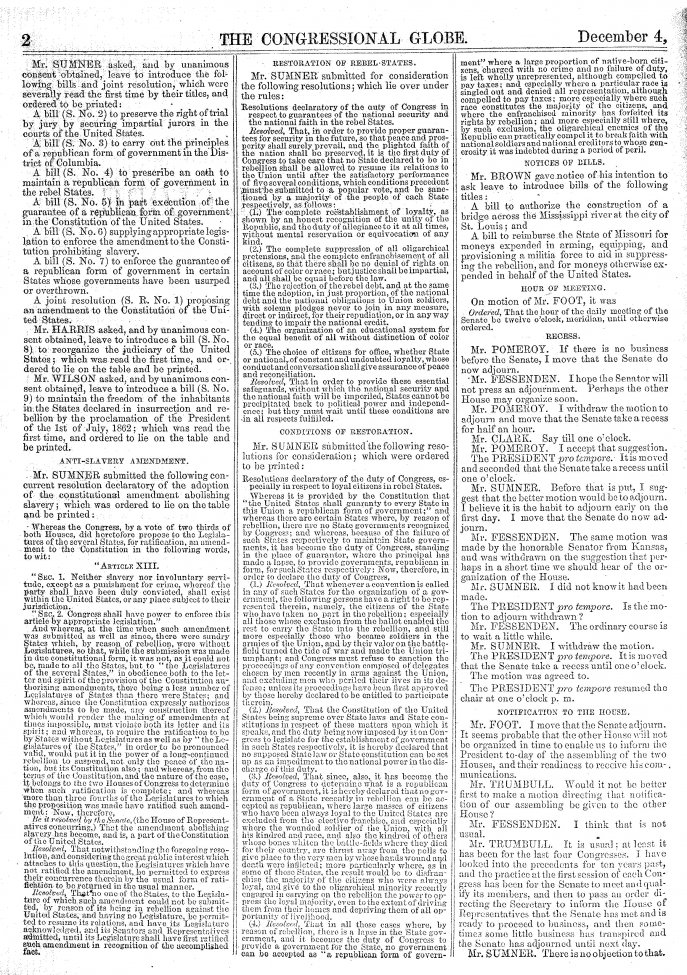
image6.jpeg
(from page 2 left column)


image7.jpegA Century of Lawmaking for a New Nation: U.S. Congressional Documents and Debates, 1774 - 1875


Compare and Contrast
(from the 20 Section version)
Section 6. Involuntary Servitude, except for crime, shall not be permanently established, within the district set apart from the Seat of government of the United States; but the right of sojourn in such District with persons held to Service or Labor for Life, shall not be denied.

Section 12. The traffic in Slaves with Africa is hereby forever prohibited on pain of death and the forfeiture of all the rights and property of persons engaged therein; and the descendants of Africans shall not be citizens.


Versus
(from the 2 Section version)
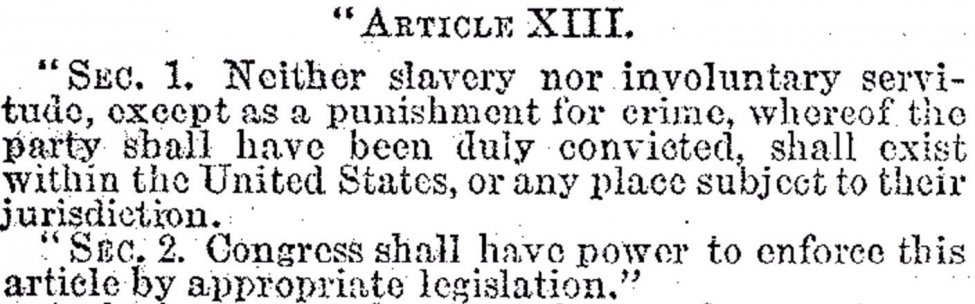
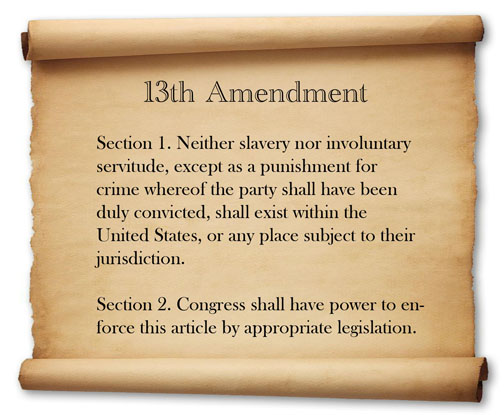
Section 1. Neither slavery nor involuntary servitude, except as a punishment for crime whereof the party shall have been duly convicted, shall exist within the United States, or any place subject to their jurisdiction.

ARTICLE REFERENCES

Commentary
Nowhere did I see in the congressional proceedings the distillation of the 20 section article down to a 2 section article? What happened to the death penalty as a punishment for slavery conviction? What happened to "the descendants of Africans shall not be citizens" or even a spirited debate of record on this issue? Where is the vote tally (yeas and nays) for this two section version of the 13th? What is meant by Mr. Sumner's "a concurrent resolution declaratory of the adoption of the constitutional amendment abolishing slavery" ? Was he merely paraphrasing the longer twenty section 13th version?

From reading the official account found in the Congressional Globe, finding the Twenty Section 13th Amendment recorded during the 38th Congress 1st Session and the Two Section 13th Amendment recorded during the 39th Congress 1st Session, one may argue and even conclude, albeit indirectly from Wikipedia, that since both approval and signature for the Twenty Section 13th Amendment occurred during the 38th Congress and not the 39th Congress, then this Twenty Section version of the 13th Amendment must necessarily be true, correct and the 13th Amendment of historical record.


From Wikipedia


38th Congressional Congress

Constitutional amendments
January 31, 1865: Approved an amendment to the United States Constitution abolishing slavery in the United States and involuntary servitude, except as punishment for a crime, and submitted it to the state legislatures for ratification 13 Stat. 567 Amendment was later ratified on December 6, 1865, becoming the Thirteenth Amendment to the United States Constitution. 38th United States Congress - Wikipedia

National Freedom Day
National Freedom Day is a United States observance on February 1 honoring the signing by Abraham Lincoln of a joint House and Senate resolution that later became the 13th Amendment to the U.S. Constitution. President Lincoln signed the Amendment outlawing slavery on February 1,1865, although it was not ratified by the states until later.
National Freedom Day - Wikipedia


NOTABLES

IMG_7404.JPG
Section 2. Congress shall have power
to enforce this article by appropriate legislation.

Section 2. Unanswered Questions?
What kind of Power? Restrained, Measured, Absolute?
Enforce how? Any means necessary? As we see fit?
Appropriate legislation? Why is not the legislation enumerated with specifics beforehand like the 20 Section 13th Amendment was? How could the Supreme Court rule on any legislation that is not spelled out beforehand by the Legislative branch in advance?

A handwritten "Congressional copy" of the Thirteen Amendment signed by President Lincoln
IMG_7426.JPG
This copy of the Thirteen Amendment is one of six known handwritten, “Congressional” copies of the Thirteenth Amendment to be signed by President Lincoln. In all, President Lincoln is believed to have signed 14 copies of the Amendment. Soon after, the Senate declared Lincoln’s signature “unnecessary,” rebuking him on the grounds that the president has no constitutional role in proposing or passing constitutional amendments.
https://constitutioncenter.org/media/files/thirteenthamendmentposter.pdf

Why ask for the President's signature on these 14 copies only to chide him later for doing so?

If the President's signature is "unnecessary" then what did President Lincoln sign on National Freedom Day? A Congressional Bill? An Executive Order? The Joint Resolution with twenty sections?

Conjecture
Was President Lincoln being set up with signing truncated copies of the 13th Amendment three months before his assassination to pave the way for a convenient reference marker for the purpose of 13th Amendment obfuscation?

Lastly
The 14th ("the second Constitution") Amendment followed a short time later. Many constitutional scholars believe that this amendment lacks proper ratification. It virtually changed everything about the republic designed at Philadelphia. There is No "Fourteenth Amendment"! David Lawrence: There is No
 
Note: This post was recovered from the Sh.org archive.
Username: Banta
Date: 2020-05-29 00:18:52
Reaction Score: 1
Heh, I was researching this a little while back and apparently missed this entire thread. Your post would have saved me some time. Great work compiling this!
 
Note: This post was recovered from the Sh.org archive.
Username: ScottFreeman
Date: 2020-06-12 00:01:04
Reaction Score: 2
Love the thread, this topic would do more to wake others than any I could think of.

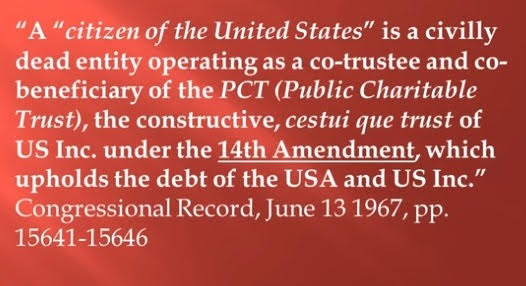
So, where to begin...most of the replies in this thread appear to come from the idea that "we" have only one "Constitution". Who exactly are "We the People" and are you sure there aren't three Constitutions, one for each of our original branches of government?

This slide is the best explanation I've seen. (I gave up trying to get it to a size this site would take.)

If that chart is true then it and this..
1591921781425.png

..means everyone in the western world who has an incorporated government may already have their names in the "Book of the Dead".
 
A very cute amendment to quietly erase since this place is totally compromised with all sorts of enemy nation agents.
 
Tips
Tips
Please respect our Posting Rules.
Back
Top