Note: This post was recovered from the Sh.org archive.Username: KorbenDallasDate: 2020-07-01 02:10:46Reaction Score: 6
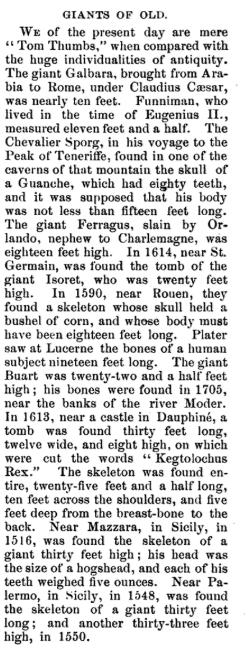
It looks like the below article is talking about the same 25 foot giant, only this time his name is somewhat different.
- OP name: Kegtolochus Rex
- Updated name: Theutobochus Rex
- World-Historical Individual: Teutobod
- Teutobod was a king of the Teutons, who, together with the Cimbri invaded the Roman Republic in the Cimbrian War, won a spectacular victory at the Battle of Arausio in 105 BC. He was captured at the Battle of Aquae Sextiae in 102 BC.
- At the Battle of Aquae Sextiae the Teutons were virtually annihilated and Teutobod along with, reportedly, 20,000 of his people were captured.
- After this, he and his tribe drop out from history.
- He most likely was sent to Rome for a triumphal procession to celebrate his defeat, then ritually executed afterwards.
I think it's safe to assume that
Theutobochus Rex is the same giant mentioned in the OP. Both articles are virtually the same. This time searching for the giant's name produced some results.
Teutobochus was a legendary giant and king of the
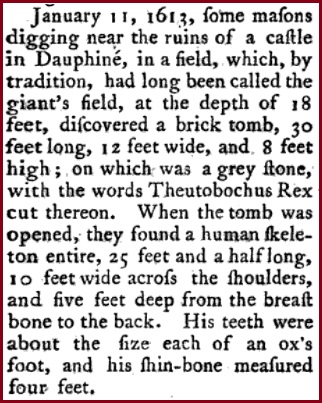
Teutons. Large bones discovered in 1613 were claimed to be his skeleton. In 1869 W.A. Seaver wrote: "In times more modern (1613), some masons digging near the ruins of a castle in
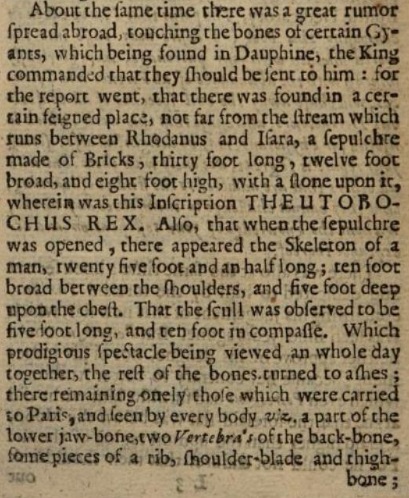
Dauphiné, in a field which by tradition had long been called 'The Giant's Field,' at a depth of 18 feet discovered a brick tomb 30 feet long, 12 feet wide, and 8 feet high, on which was a gray stone with the words 'Theutobochus Rex' cut thereon.
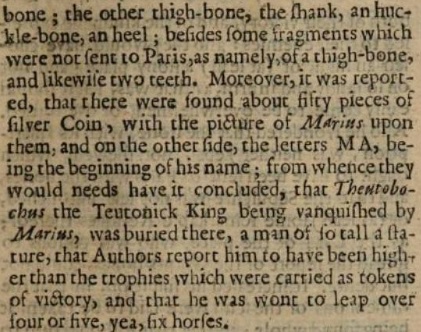
When the tomb was opened they found a human skeleton entire, 25-1/2 feet long, 10 feet wide across the shoulders, and 5 feet deep from the breast to the back. His teeth were about the size of an ox's foot, and his shin-bone measured 4 feet in length."
The bones were displayed in Paris by Pierre Mazurier, a surgeon who claimed to be one of the finders.
Elephant
After the finding of the bones, the legend of the king Teutobochus, which was thought to be the Teuton king defeated by
Caius Marius, spread despite analysis by anatomist
Jean Riolan the Younger, who ascribed the bones to one of Hannibal's elephants.
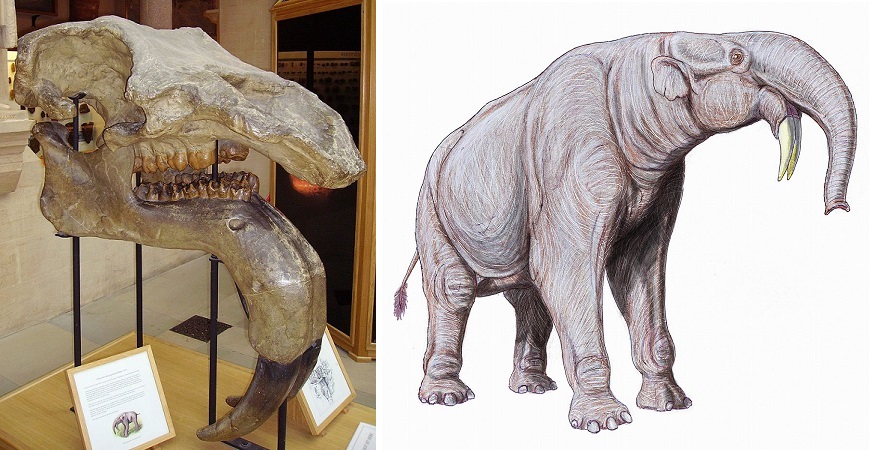
Deinotherium
As you can see, it took our scientists 367 years to "positively" identify "
a plaster mold." Deinotherium
("terrible beast" derived from the Ancient Greek δεινός, deinos meaning "terrible" and θηρίον, therion meaning "beast") was a large prehistoric relative of modern-day elephants.
During that time, it changed very little. In life, it probably resembled modern elephants, except it had downward-curving tusks attached to the lower jaw.
Here is what adult species of these Deinotherium were supposed to look like I guess. Sounds like we have 2 complete skeletons, and a few additional bones, though I am not sure.
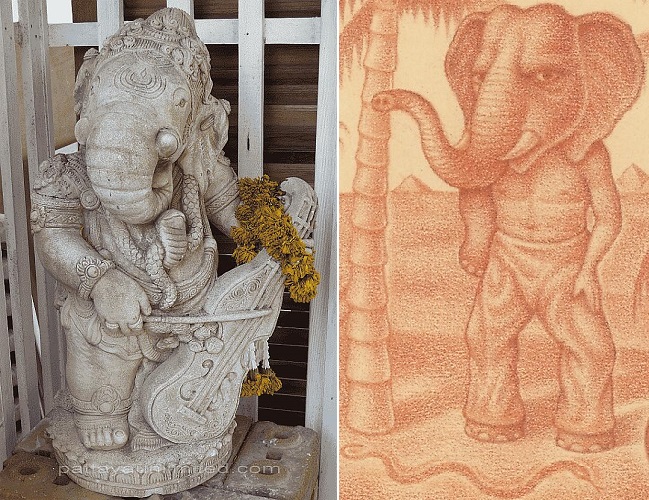
 Man vs. Elephant
The skeleton of this Deinotherium looks virtually identical to that of our contemporary elephant. Sure there can be differences a scientist would recognize. At the same time does this skeleton look like it could belong to a humanoid? I don't think so.
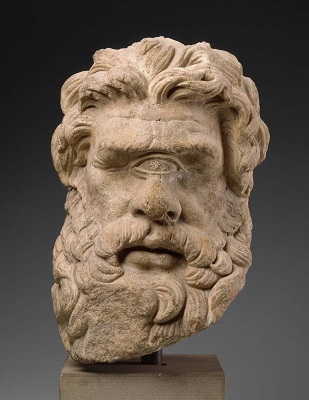
On the other hand, if our "elephant" looked something like this... well... may be... I don't know.
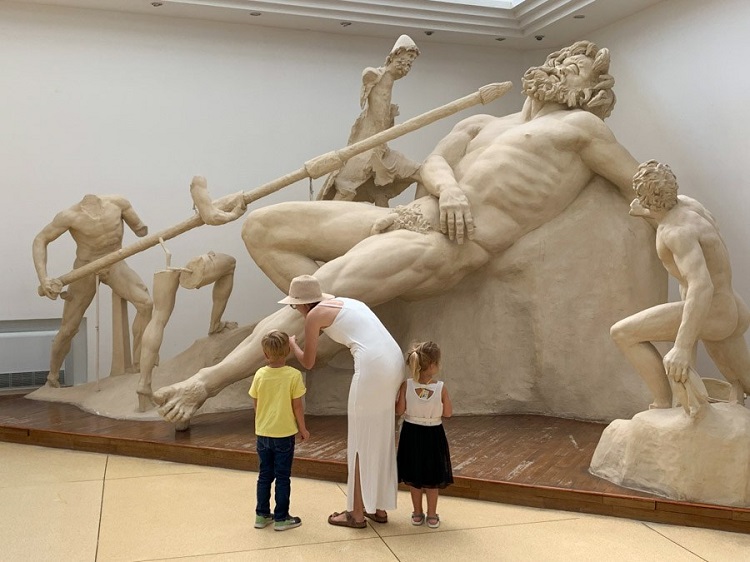
We are also supposed to believe that cyclops did not exist.
I was unable to find any pictures of the actual "elephant" bones they allegedly keep at the
Gallery of Paleontology and Comparative Anatomy. And I have no idea what plaster mold was given to
Léonard Ginsburg to analyze.
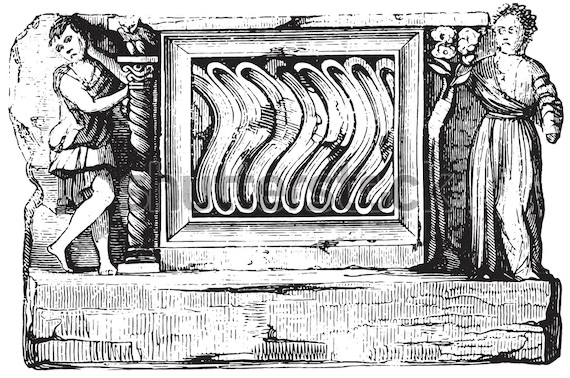
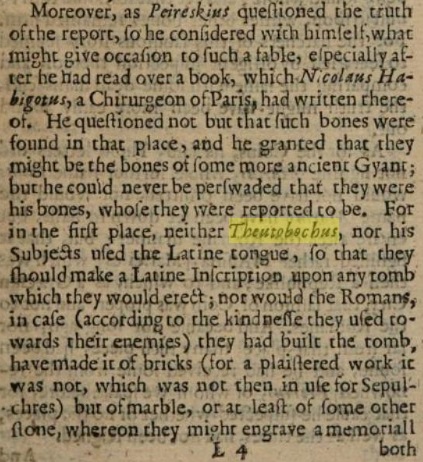
The below
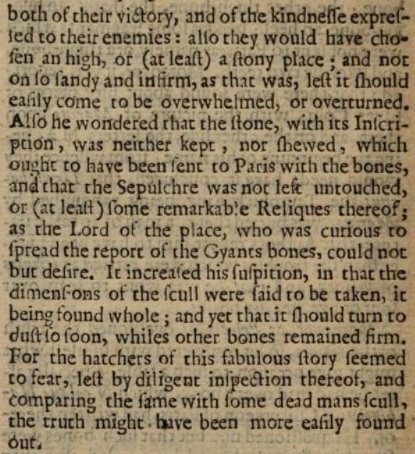
1657 publication casts doubt on the entire story. At the same time it is hard to blame its author for being skeptical, if all he had was a secondary source of information.
There are several 16th-17th century publications
mentioning Theutobochus. Most are in Latin. If
Theutobochus and
Teutobod were indeed one and the same... could it add some credibility to the story? Let's see what else we have.
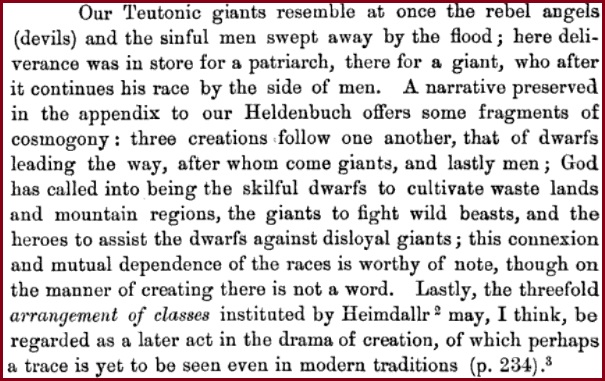
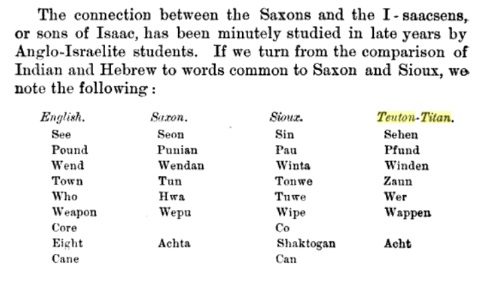
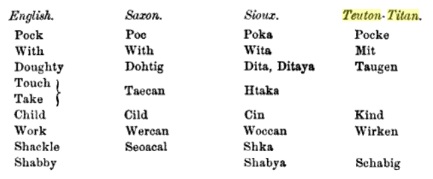
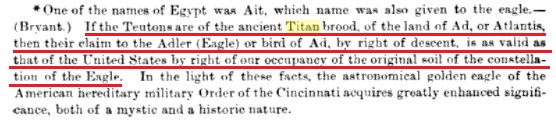
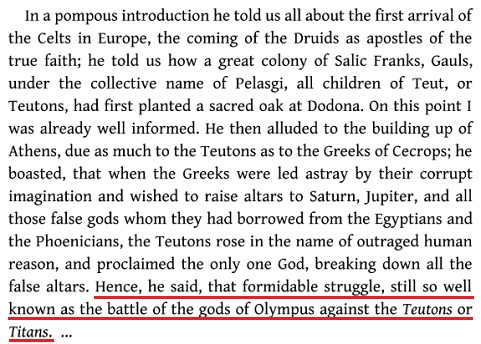
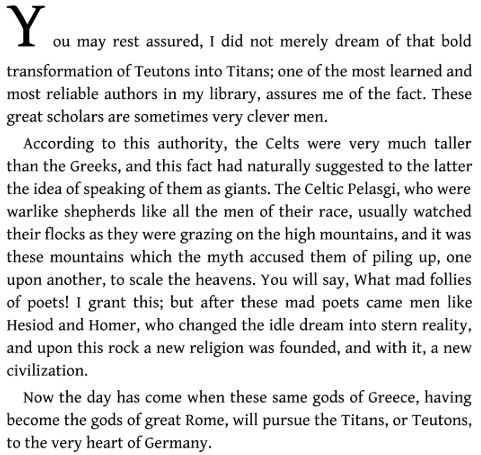
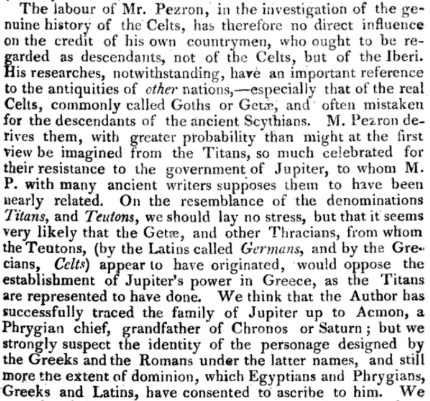
I got sucked into this rabbit hole. So far it appears that both Teutons and Titans were giants. Do we have any textual connection between the two? The
first book I ran into, gave me more than I bargained for. The Sioux are in the mix?
Simple
google-searching produced the following:
2019 book titled Myths of the Rhine.
And
one more pub dated with 1811...
I do not know if the above information is credible, but it sounds interesting enough to prompt further investigation.
KD: Anyways, take it for what you will. I think that something like this cannot be properly investigated within a single post. I definitely was not planning on going even that far.
Too sad that our main stream historians have their hands tied.