No straight answer? You are the one who brought up The Book of Ballymote. I figured that if you use it as a point of reference, and given your credentials and background, you would either know, or have an easy way to find out. Currently it appears that you are taking at face value something you have not personally verified. Naturally, you are that professional historian who should know that he is working with authentic documents. Don’t send me to some library please. Simply answer the following questions:
- Do you know which documents establish the history of The Book of Ballymote between 1391 and 1724? A simple yes or no will suffice.
- How come you are not wondering why Noah has a crown on his head? Wouldn't it be important to find out?
Really? What do 2,000 books or manuscripts from his collection have to do with a specific history defining manuscript you referenced?
If you want to have a serious conversation, you need to start addressing matters at hand. And the matter at hand says that we have 2.5 sources including
Geoffry de Villehardouin to reference one of the most controversial events in history. World disposition changed quite drastically between
1215 - c.1614. New victors came to power, and those do like to write their own history. Simultaneously you do not know where to verify 400 years of this document's existence, and appear to not care. If you did know, you would have answered my question.
Hmm, this is where the issue with history as a discipline is. Those teaching it, simply repeat what they were taught themselves. Taught by somebody who did not bother to cross reference either. While it does amaze me that you do not want to personally verify the history of this "
The Conquest of Constantinople" manuscript, I am more surprised to see that you apparently see nothing weird about the Fourth Crusade itself. Because if you analyzed the documented events, and cross examined with other contemporary documented events, you would be like, "Which author is lying?" Who cares really that dudes were going to Jerusalem but ended up sacking the Christian city of Constantinople.
Back to the manuscript authenticity. I am not sure which one of this two you find hard to believe:
- 1. Does it really surprise you that throughout periods of time powers that be were introducing adjusted narrative supporting information?
- 2. Do you question their ability to produce a quality fake in proper language?
#1 I am not even going to address.
As far as #2 goes... Is there a school teaching you guys this excuse? This is far from the first time I hear that "Exhibit A" cannot be fake, because it is written in "Language X", and “Language X” was not spoken for "Y" years at the time when "Exhibit A" was discovered in some year "Z". So what?
- Are you saying that today, in 2020, you do know what a fluent Old French looks like, but professional scribes in 1600s did not?
- How would you even know the difference between a fluent Old French and a non-fluent Old French?
- Even today, in 2020, it is not impossible to find an expert to put a document together.
The work force of scribes available around the 15th-17th centuries is well documented by the narrative. Being a professional in the field of history, you are most likely aware that medieval manuscript forgery was a booming business. Allegedly of course it was.
And how do you guys pull things like this off? Immaculate precision...
There are a lot of documents which were considered to be authentic, until they were not. For example:
Bible Museum's Dead Sea Scrolls 'are fake'. At the time when these were considered authentic, some expert was probably saying that scrolls were written in a fluent ancient paleo-Hebrew, and therefore could not be forged. Famous forgeries are not hard to google out.
The flip side would be when a possible authentic document gets declared a forgery. I do not think there is a way to recover from that for such a document. These could also be of tremendous interest, for they can provide a vector for investigation.
KD: Not knowing everything is expected. It's impossible to know and remember everything. At the same time being able to reference, cross-reference and verify things should be a must. You will never see patterns unless you start looking.
As it stands our history is not really a history, but a narrative. That is in my opinion, of course.
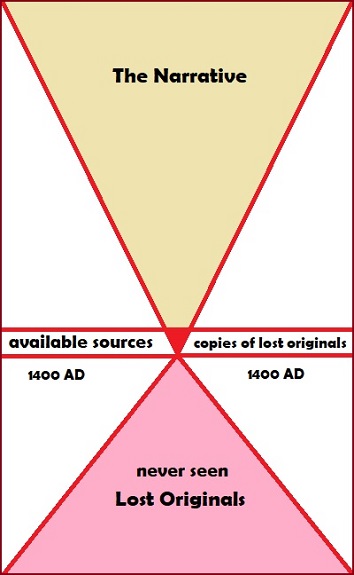
Figuratively speaking, our history
(pseudo history imho) consists of 50 available copies of the non-existent originals. These 50 figurative copies of non-existent originals were turned into hundreds of thousands of the so-called "scientific" works. Historians reference each other, and those who came before them, in the process adding fraudulent credibility to their "works."
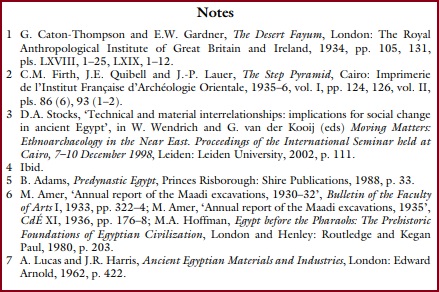
Here is an example of references
provided by you in the thread you currently choose to ignore. There are 54 referenced works all of which were published in the 20th century. This is ancient Egypt we are talking about. Where are the original sources of information? The answer is simple, there are none. Otherwise those sources would have been included, along with the information when those sources were discovered. These are opinions at best. Without ancient Egyptian sources such opinions are nothing but speculations.
I'm preaching to the quire here. Our history related scientific community does not appear to care for the origins of information. The establishment references each other, providing the appearance of credibility to get various doctoral dissertations approved.
I believe a true historian should always be asking one question when presented with a body of information. This question is:
- How do we know this or that? As in... where and when did this information really originate?
Imho, a historian not asking the above question is not a historian. He is a narrator of the narrative provided by other narrators.
- Is there a difference between being a PhD in history vs. a PhD in narrating the narrative? I believe there is.
Based on the contents of your answers,
@Oisín, it appears that you do not care where everything you know comes from, and simply narrate the narrative. Blaming you for that would be wrong, because this is the way our education system operates. Stepping outside of the boundaries of this system would probably be a career ender.


 The threads Korban Dallas mentioned would be a good start for an introductory familiarization of the questions being posed to you. Rather eye-opening information as well as entertaining reading.