Archive
Old SH Archive
- Joined
- Sep 8, 2020
- Messages
- 17,737
- Reaction score
- 3,168
Stumbled on some pretty juicy stuff in another small Texas town (that just also happens to be a county seat) named Columbus.Of course my spidey senses went off immediately and it took no time at all to discover this puzzling tower.Columbus has the distinction of being "the oldest surveyed and platted Anglo-American town in Texas."
The story of it's creation is so twisted it is pretty hard to believe they got away with it!
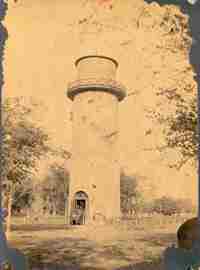
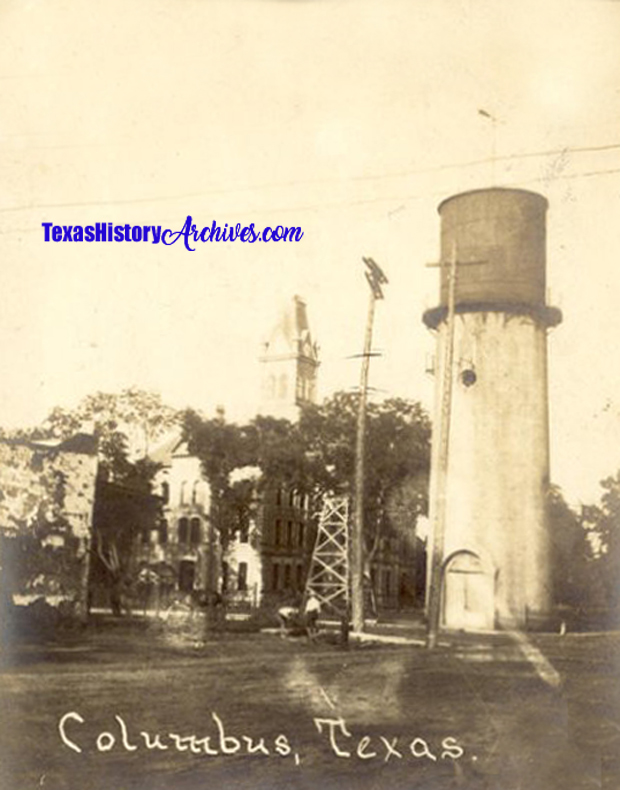
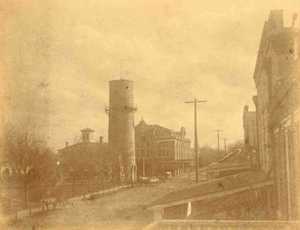
Above is the earliest picture of the tower, standing alone surrounded by mature trees.
So, here's a taste of the official version of how it got there:
So, the story goes on to quote letters from a local boy and Texan Confederate soldier named John Shropshire (letters on display in the tower) who describes his journey to New Mexico via El Paso in 1861-62, from which he never returned (why were Civil War soldiers going West?)A round, white tower on the Colorado County courthouse square looks like an architectural survivor of the days of yore in England. No matter how European it looks, however, the tower is the product of Yankee – well, Southern – ingenuity.
The letters contain this interesting comment:
So, the story goes on, attempting to somehow tie in the Shropshire story with the tower.By late January 1862, the Texans had reached New Mexico. “In this long wearisome march my fancy has been idle and allowed to roam at will,” he penned. “Many are the fancy castles I have built for you and I and our little ones and I believe that some of them will be realized…”
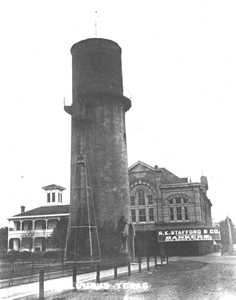
Despite the fact that the tower stood alone in the first picture just 20 years before, we can see that it now sits next to a fancy opera house and has a metal water tank on top.In the spring of 1883, two decades after the war that claimed Shropshire, a fire gutted a livery stable and adjoining hotel in Columbus. Volunteer fire fighters managed to contain the blaze before it leveled downtown, but getting enough water on the fire had been a problem.
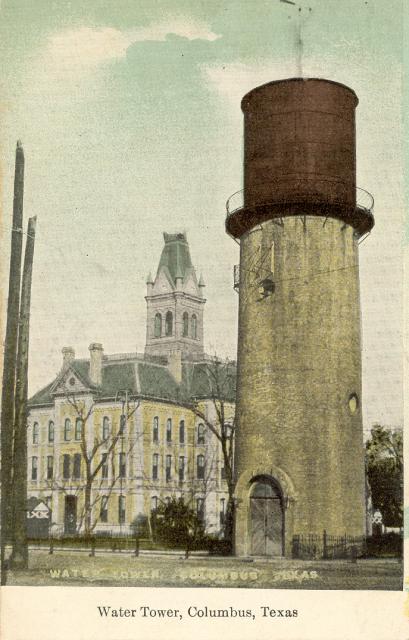
To provide the city a water system, the county commissioner’s court authorized construction of a brick water tower. Built by R.J. Jones, the tower took shape from 400,000 locally made bricks. The walls lack only four inches being three feet thick. A metal water tank went atop the two-story brick tower. Beneath it, the city’s volunteer fire department had its office and equipment.
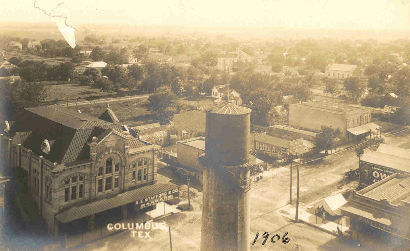
Let's see what happens to it next!
Say what? They couldn't bring down a brick tower with dynamite? Really? Didn't even put a dent in it?A hurricane damaged the top of the tower in 1909. The county had the structure repaired, but three years later decided the city needed a better water system. With completion of that system, the tower stood abandoned. Eventually, the county hired someone to tear it down, but dynamite did not phase it.
Okay, whatever.
Anyway, it just sat around being indestructible until...
Just wow. Do you see ANYTHING on that tower that suggests it has ANYTHING to do with the Confederacy?In 1926, it finally occurred to someone that the tower had other than utilitarian value. The officers of the John Shropshire and John C. Upton chapter of the United Daughters of the Confederacy got county officials to agree to let them use the tower as their meeting place.
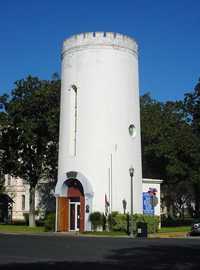
Not a flag or statue...really?
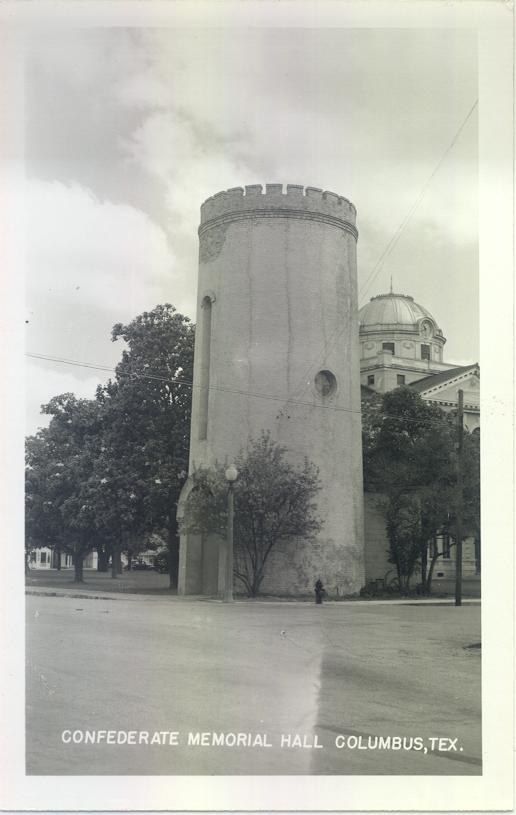
Oh, here's the explanation for that anomaly, I guess:
FROM WATER TOWER TO WAR MEMORIAL
So they bought it in 1926 and just held meetings there until 1962 when this guy fixes it up for them. Guess they still didn't want anything added that might indicate it was a war memorial? Okay...The Confederate Memorial Museum, located in Columbus, commemorates far more than the soldiers of Colorado County who fought in the Civil War. According to the Shropshire-Upton Chapter of the United Daughters of the Confederacy (the memorial’s stewards), this Recorded Texas Historic Landmark is dedicated to the Colorado County veterans of all wars. In its service as a museum, the memorial houses a collection of artifacts and objects of Civil War soldiers and their families associated with Columbus and surrounding Colorado County.
Oh, gotta be careful not getting this place confused with the National Civil War Navel Museum in Columbus, Georgia! Any idea how many places in America are named Columbus? According to this chart, 54, but I suspect there are more. Ran across a reference in one of the articles about an annual meeting of cities named Columbus...Local architect Milton Wirtz and contractor A.N. Evans Sr. refurbished the old tower, adding a small, rounded room on the east side of its base and a circular staircase leading to a second floor. Since 1962, the tower has been the home of Columbus’ Confederate Memorial Museum and Veterans Hall.
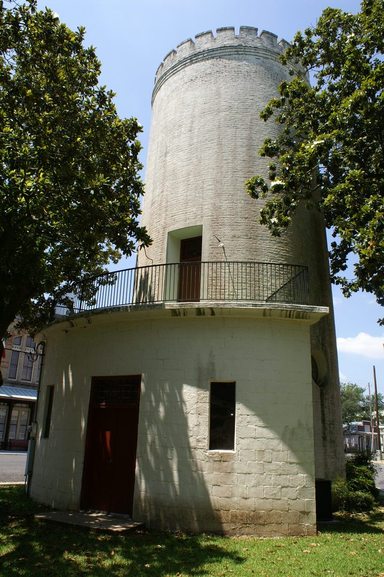
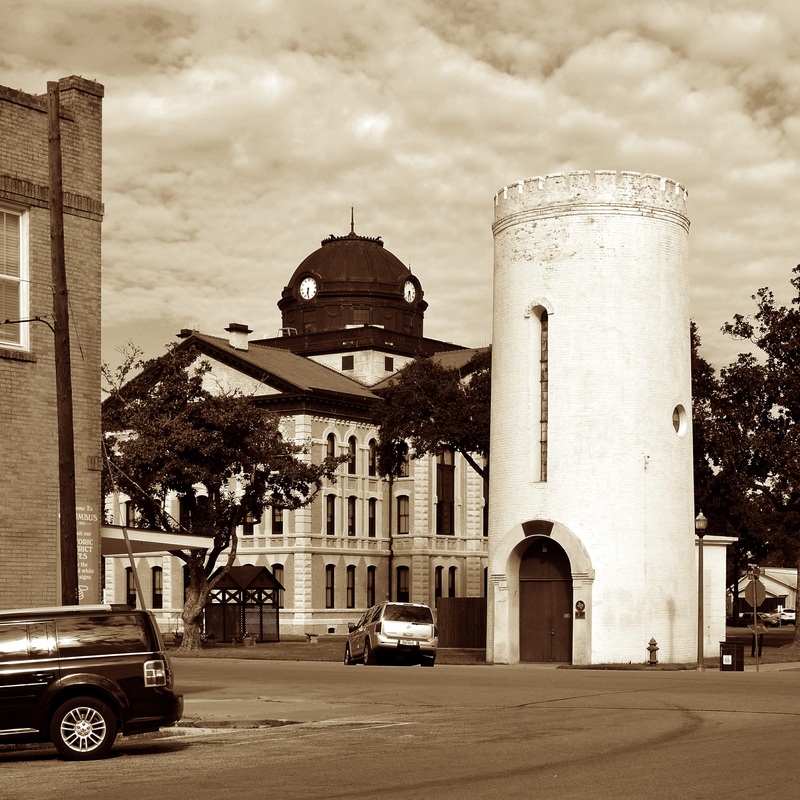
Interesting to note that across the street from this tower was the opera house and behind it was the courthouse, both supposedly built after the tower.
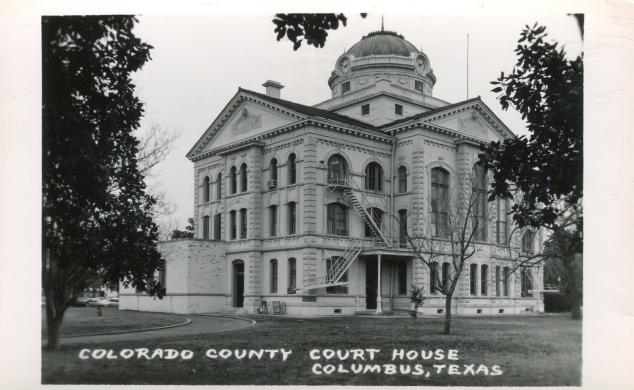
Pretty wild story about the guys who built the Opera House, too.The Colorado County Courthouse was built in 1890, the fourth such structure in the city. It was designed in the Classical Revival and Italianate styles of architecture by noted Houston architect Eugene T. Heiner. He designed at least nine other Texas courthouses. The bell tower was damaged in a 1909 storm. The dome was added before 1939. It is listed on the National Register of Historic Places. In 2013–2014, the courthouse was being renovated and upgraded for current uses; the project included restoration of historic exterior colors.[citation needed]
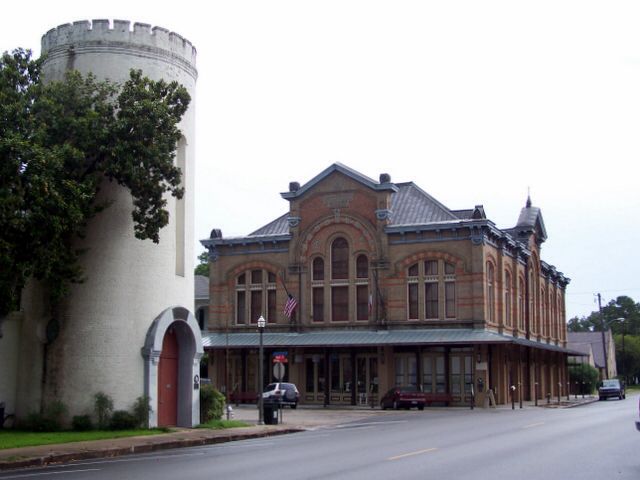
The Stafford Opera House
was built in 1886 and his future looked pretty darn good. John and Bob Stafford were shot dead in 1890 by Columbus Deputies who confronted them in front of a saloon.
This opened the lid on a whole bunch of smoldering feuds which, when fully in flame, continued well into the 20th Century. They even resulted in Columbus being unincorporated from 1907 to 1927.
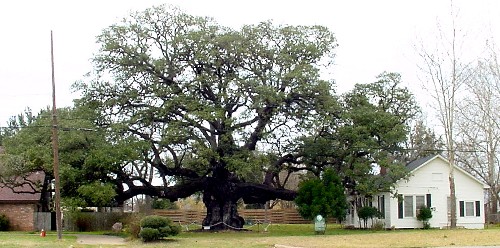
And get a load of the famous Columbus tree!
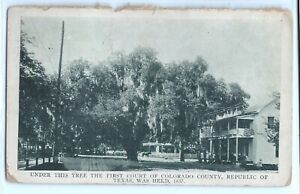
It's still there too, but the buildings around it have certainly downsized!
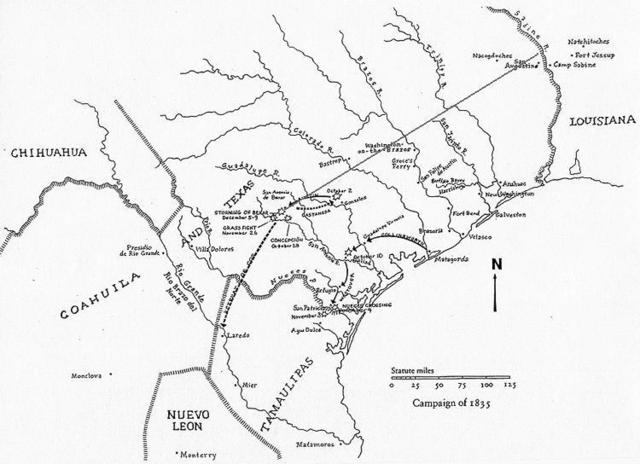
Oh, and this investigation led me to the Runaway Scrape, which probably deserves a thread of its own -- it was news to me since I don't actually remember this episode from my history classes!
Anyway, since it affected Columbus specifically and involved the destruction of nearby towns (some by Sam Houston's troops), I thought I'd throw it in for further investigation.
This is a better map of Runaway Scrape from Wiki, but it's png.
The Blurb:
Residents on the Gulf Coast and at San Antonio de Béxar began evacuating in January upon learning of the Mexican army's troop movements into their area, an event that was ultimately replayed across Texas. During early skirmishes, some Texian soldiers surrendered, believing that they would become prisoners of war — but Santa Anna demanded their executions. The news of the Battle of the Alamo and the Goliad massacre instilled fear in the population and resulted in the mass exodus of the civilian population of Gonzales, where the opening battle of the Texian revolution had begun and where, only days before the fall of the Alamo, they had sent a militia to reinforce the defenders at the mission. The civilian refugees were accompanied by the newly forming provisional army, as Houston bought time to train soldiers and create a military structure that could oppose Santa Anna's greater forces. Houston's actions were viewed as cowardice by the ad interim government, as well as by some of his own troops. As he and the refugees from Gonzales escaped first to the Colorado River and then to the Brazos, evacuees from other areas trickled in and new militia groups arrived to join with Houston's force.
The towns of Gonzales and San Felipe de Austin were burned to keep them out of the hands of the Mexican army. Santa Anna was intent on executing members of the Republic's interim government, who fled from Washington-on-the-Brazos to Groce's Landing to Harrisburg and New Washington. The government officials eventually escaped to Galveston Island, and Santa Anna burned the towns of Harrisburg and New Washington when he failed to find them. Approximately 5,000 terrified residents of New Washington fled from the Mexican army. After a little over a month of training the troops, Houston reached a crossroads where he ordered some of them to escort the fleeing refugees farther east while he took the main army southeast to engage the Mexican army. The subsequent Battle of San Jacinto resulted in the surrender of Santa Anna and the signing of the Treaties of Velasco.
Note: This OP was recovered from the Sh.org archive.
Note: Archived Sh.org replies to this OP are included in this thread.