
Please check my maths here !! If the French border is approx 3850 miles from the Russian border, and the troops can march at a maximum of 20miles per day ... then ??? The French army would have needed to have been within 400miles to achieve Napoleon's goal of 'finishing off the Russians' in 20 days. So unless the French army was somewhere in eastern Germany or Poland, and the Russians were similarly in 'Ukraine' (hahaha) ... no wonder the campaign proved such a disaster !! Correct me where i am wrong. regards goddoThank you.
I am doing this on the fly as I am reading.
Robert Burnhams article, the last one on your list. Talks of Napoleon and Russia.
He makes the statement.
Then says this.
And then this
So a supply train carrying 30 days supply of food for 600,000 men an unknown number of camp followers, and 50,000 horses sets off.
This tells me there is no resupply coming from France or any part of the continent controlled by the French.
After 10 days travel the soldiers on foot would be fifty miles ahead of their supplies.
Why ten miles?
Well that is half way through the claimed estimate of Napoleons 20 day campaign plan.
By day 15 both men and horses having being travelled over these respective distances.
Soldiers on foot 225 miles.
The supply train horses and people 150 miles.
With their supplies half gone. The last day they could turn round and get back to France under their own steam so too speak.
Losing condition each day and at least for those in the column well aware of the supply trains 30 day supply limit the increasing knowing that they are eating up supplies with no prospect of resupply then fears and worries must have taken hold and humans being humans the dwindling supplies would have been noticed by ever increasing numbers of men.
And of course by day 15 it would take the supply train 8 days to catch up if the soldiers stayed still where they were. So do the soldiers just sit hungry and thirsty?
Of course not so they go looking for food and water in the local vicinity of where they find themselves. Knowing nothing of the land, the people, the terrain, where Russian soldiers may be and losing discipline as the need to eat and drink overrides any payment to fight or any belief in a man god Emperor.
I'll read the other articles later but I just took the opportunity to show what I am on about.
You are using an out of date browser. It may not display this or other websites correctly.
You should upgrade or use an alternative browser.
You should upgrade or use an alternative browser.
Fact and fiction as sources.
- Thread starter Jd755
- Start date
D
Deleted member 37
Guest
You're missing the point here though. There's tons of material sources about the war, so I posted just a few authors who interpret data to build up a story. We may say that story is not 100% correct, it's maybe let's say 70% correct worst case scenario, but how is it possible to say it never happenned? It's a leap of faith way bigger than saying it is incorrectly described.Thank you.
I am doing this on the fly as I am reading.
Robert Burnhams article, the last one on your list. Talks of Napoleon and Russia.
He makes the statement.
Then says this.
And then this
So a supply train carrying 30 days supply of food for 600,000 men an unknown number of camp followers, and 50,000 horses sets off.
This tells me there is no resupply coming from France or any part of the continent controlled by the French.
After 10 days travel the soldiers on foot would be fifty miles ahead of their supplies.
Why ten miles?
Well that is half way through the claimed estimate of Napoleons 20 day campaign plan.
By day 15 both men and horses having being travelled over these respective distances.
Soldiers on foot 225 miles.
The supply train horses and people 150 miles.
With their supplies half gone. The last day they could turn round and get back to France under their own steam so too speak.
Losing condition each day and at least for those in the column well aware of the supply trains 30 day supply limit the increasing knowing that they are eating up supplies with no prospect of resupply then fears and worries must have taken hold and humans being humans the dwindling supplies would have been noticed by ever increasing numbers of men.
And of course by day 15 it would take the supply train 8 days to catch up if the soldiers stayed still where they were. So do the soldiers just sit hungry and thirsty?
Of course not so they go looking for food and water in the local vicinity of where they find themselves. Knowing nothing of the land, the people, the terrain, where Russian soldiers may be and losing discipline as the need to eat and drink overrides any payment to fight or any belief in a man god Emperor.
I'll read the other articles later but I just took the opportunity to show what I am on about.
Apparently the French controlled all land between the French border and the Russian border.
From this article middle one on the list, Section V - Insects, Disease, and Histroy | Montana State University
Then there is this.
Turns out this river rises in what wasRussia, today is Belarus, and flows west through Poland, Lithuania and Kaliningrad.
From the supply and distance logistics quoted above the maximum distance the men could have marched in 20 days is 400 miles. The supply train a mere 240.
As it isn't clear where the French army actually gatherred on the west bank of the Neiman river other than the eastern border of Gerrmany was assumed or recognised to be the course of the river.
How far it is from Moscow according to this site is 669 miles.
So no way could a French army moving at the limits of man and horse get to Moscow in 20 days let alone be in any condition to fight.
From this article middle one on the list, Section V - Insects, Disease, and Histroy | Montana State University
I don't know how far it was from the Russian or Prussian or Bavarian borders with Russia.By spring 1812, Napoleon controlled most of Europe, from Spain to Russia. England, however, controlled the seas.
Then there is this.
Russia was violating Napoleon's Continental System by trading with England. Napoleon used this as an excuse to invade the "Colossus" and began gathering his huge army in cantonments that reached from northern Germany to Italy. In June 1812, the entire army of 500,000 men congregated in eastern Germany. (Although estimates vary because precise records were not kept, Napoleon's central French army contained about 265,000 soldiers. French reinforcements and allied forces constituted an additional 235,000 soldiers.) With breathtaking fanfare, Napoleon reviewed his troops on the west bank of the Niemen River on 22 June 1812.
Turns out this river rises in what wasRussia, today is Belarus, and flows west through Poland, Lithuania and Kaliningrad.
From the supply and distance logistics quoted above the maximum distance the men could have marched in 20 days is 400 miles. The supply train a mere 240.
As it isn't clear where the French army actually gatherred on the west bank of the Neiman river other than the eastern border of Gerrmany was assumed or recognised to be the course of the river.
How far it is from Moscow according to this site is 669 miles.
So no way could a French army moving at the limits of man and horse get to Moscow in 20 days let alone be in any condition to fight.
D
Deleted member 37
Guest
ok, so there was no French invasion of Russia. okApparently the French controlled all land between the French border and the Russian border.
From this article middle one on the list, Section V - Insects, Disease, and Histroy | Montana State University
I don't know how far it was from the Russian or Prussian or Bavarian borders with Russia.
Then there is this.
Turns out this river rises in what wasRussia, today is Belarus, and flows west through Poland, Lithuania and Kaliningrad.
From the supply and distance logistics quoted above the maximum distance the men could have marched in 20 days is 400 miles. The supply train a mere 240.
As it isn't clear where the French army actually gatherred on the west bank of the Neiman river other than the eastern border of Gerrmany was assumed or recognised to be the course of the river.
How far it is from Moscow according to this site is 669 miles.
So no way could a French army moving at the limits of man and horse get to Moscow in 20 days let alone be in any condition to fight.
We may say is 50% or 90% correct no way to prove any of it.There's tons of material sources about the war, so I posted just a few authors who interpret data to build up a story. We may say that story is not 100% correct, it's maybe let's say 70% correct worst case scenario, but how is it possible to say it never happenned?
The fact there is so much written about this campaign in contrast to all the other campaign claims attributed to Napoleon is a sign something is off.
The same modus operandi is run today to obfuscate false flags into the historical record.
From the diaries/journal entries the story is universal. The French soldiers who were just as likely to be Prussian or Italian as French were clean and honourable but the Polish people, the Russian people were lice infested people riddled with disease and lived in absolute poverty in shithole houses.
Yet it is precisely these poor excuses four humanity were the people the invaders pillaged to get food for themselves and their horses.
On what level does that make any sense?
D
Deleted member 37
Guest
You have probably more interest than me in that conflict. I'm sure you can find a mountain of mistakes in the common narrative. I myself have doubts after seeing the medallion depicting Napoleon and Tzar together as friends, or when talking about that sudden fire/explosion happening in Moscow and described by one of Napoleon's generals. But in order to have that description Napoleon had to enter Moscow. And there's tons of documents like that.We may say is 50% or 90% correct no way to prove any of it.
The fact there is so much written about this campaign in contrast to all the other campaign claims attributed to Napoleon is a sign something is off.
The same modus operandi is run today to obfuscate false flags into the historical record.
From the diaries/journal entries the story is universal. TheFrench soldiers who were just as likely to be Prussian or Italian as French were clean and honourable but the Polish people, the Russian people were lice infested people riddled with disease and lived in absolute poverty in shithole houses.
Yet it is precisely these poor excuses four humanity were the people the invaders pillaged to get food for themselves and their horses.
On what level does that make any sense?
So I'm not going to debate the logistics, which were a failure in any case since French died in great numbers, but I'm once again underlining how much of a leap of faith is to consider that war non existent.
Instead of sulking present your evidence that shows these men and horses could cover the ground within the 20 day campaign estimate.ok, so there was no French invasion of Russia. ok
The journey is the base of the story. The distance covered if you will is the base of the story.
I have shown repeatedly using the known limits of horse and man using my own sources and the ones you provided that it was impossible for hundreds of thousands of men, their horses, their carts, their supply train to get to Moscow in any sort of order to fight within the planned timescale.
I have also shown the maximum supply they carried was 30 days. This is irrespective of how far they travelled in a day.
But I could be totally off beam.
D
Deleted member 37
Guest
I'm not discussing what you did. I don't even know where the data were taken from. The event was such an enormous thing that reading that thread of few lines by KD immediately raised my eyebrow. I am taking your analysis into consideration but I'm not going to deduce there was no war. At the same time, and I'm sorry for it, I'm not very interested in this time period therefore I'm not ready in a confrontation on it. What I'm saying is that I clearly remember the tons of notes and quotations from the book I read years ago and I remember them because they were too much! So I'm totally sure different interpretations are possible but I can't reject everything on the basis of what you're saying. It's not about what you're saying is wrong (I repeat that I don't know and am not interested right now), it's just about the conclusions you are deducing. That's it. Sorry if I gave the impression I wanted to open a debate.Instead of sulking present your evidence that shows these men and horses could cover the ground within the 20 day campaign estimate.
The journey is the base of the story. The distance covered if you will is the base of the story.
I have shown repeatedly using the known limits of horse and man using my own sources and the ones you provided that it was impossible for hundreds of thousands of men, their horses, their carts, their supply train to get to Moscow in any sort of order to fight within the planned timescale.
I have also shown the maximum supply they carried was 30 days. This is irrespective of how far they travelled in a day.
But I could be totally off beam.
No need to apologise for anything.
All I am about is finding a way to establish veracity in the abscence of demonstrable repeatable methodology.
War whatever it is is not what official historical documents tell us it is. I've recalled this experience before but it bears repetition.
One of my journeymen in my apprenticeship was a man called Ernie Jackson. He told me he was in at the very start of the Long Range Desert Group in North Africa in WW2. He was a driver and along with the other crew members he roamed far and wide behind enemy lines. Using a four wheel drive light truck moving by night holing up under camouflage netting, in old buildings, amongst scrapped/abandoned vehicles during the day to avoid detection primarily by aircraft and secondly to keep out of view from the wandering Arabs.
The purpose was to identify and map enemy positions, supplies strengths etc and wherever possible put them beyond use.
The truck he drove had to carry four men sometimes six, all their supplies inc water, ammunition and fuel plus spares. There was no supply column.
So logistically they were on their own, sometimes in concert with another truck but most often four men one truck.
If they ran across abandoned vehicles of any side they topped their truck up with as much as they could because it put the supplies beyond enemy use and maximised their own chances of getting back alive.
He told me that during his entire time in North Africa he never saw a German soldier. He saw German pilots often close enough to wave at and at the surrender he saw a small number of German officers.
All the soldiers he encountered were either Italians or Algerians.
He contrasted that with his crossing into Italy which he said was full of Germans. Tough buggers as well he remarked.
Point is the logistics of night and day are known limits and the need to remain undetected means they are observed to ensure survival.
The Afrika Korps was according to historical record composed of mainly German soldiers yet this man who probably covered much more of the physical area than many never saw one.
Does this means the German soldiers weren't there?
No of course not but it does point to the probability they were far fewer in number than we are taught.
Point is both the official and the life experience could both be true. The thing that gets to decide is me what do I trust?
Ernie retelling his stories or an academic paid by an institution to read and pronounce on data sourced from the offices of state?
Were I a general or admiral or even a leader/emperor/king/bishop/sultan or whatever tasked with defending my charges from an aggressor or indeed one being sent as an aggressor to take something from some other people I would seek out the opponents weak link and utterly destroy it as quickly and effectively as possible to stop the opponent in their tracks and render them impotent.
More often than not its the supply train or supply line that is the weakest link. In the case of the Russians defendfing French aggression I let the French into Russia falling away in front of them and at the same time sending my soldiers the long way round to hit the French supply lines so massively they are beyond use.
Once thats accomplished all that's left is harrasment of a French army that cannot supply itself.
No need for pitched battles, thousands of deaths protracted conflict.
Today the UK has two large aircraft carriers. It has one solid supply ship and three tankers.
To defeat the carriers or confine them to friendly ports all that is required is to sink the unarmed solid support ship and the tankers.
This was just as doable in all steel hulled wars yet the historical record has us believing battles between warships is the way its done.
As for Formenko I have never read any of his books. I tried once but found it turgid. Neither have I read Velikovsky. I have no idea what recentism is nor do I know what is meant by meta.
As for seeing an embossed image of two men on a medallion and accepting they must have been good buddies so would be unlikely to fight each other well that sits firmly in the realm of belief.
Its said Napoleon wanted India. Its also said Russia was trading with England in direct contravention of either a treaty or an agreement (jury is still out even after all this time) established between France and Russia.
Its also said the Royal Navy controlled the seas.
Its said Russia, presumably in the form of the Czar, was annoyed at France, presumably in the form of Napoleon, for restoring Poland, presumably in the form of a monarchy.
To achieve the prize of India. Napoleons grand plan was to invade Russia. Remove the Czar from power. Force an end to Russian trade with the English and use the Russian resources as a springboard to invade India by land.
Call me thick by all means but how daft is all that?
Russia is an enormous country so all the Russian Czar had to do was keep moving East away from the invaders. Moscow may be lost but but the Czar, the court the multitude of land, people and resources east of Moscow would remain under the Czars control so he could easily prevent the French from taking Napoleons prize of India and it would further cement the trading position with England. Englands rulers could also be persuaded to use the Royal Navy to prevent further French expansion and exploitation by going after soft and easy French possessions wherever they may be.
Or did the Russians not really exist as a unified country or people and it was Muscovites that were the problem by ignoring the Czar and trading with the English?
All I am about is finding a way to establish veracity in the abscence of demonstrable repeatable methodology.
War whatever it is is not what official historical documents tell us it is. I've recalled this experience before but it bears repetition.
One of my journeymen in my apprenticeship was a man called Ernie Jackson. He told me he was in at the very start of the Long Range Desert Group in North Africa in WW2. He was a driver and along with the other crew members he roamed far and wide behind enemy lines. Using a four wheel drive light truck moving by night holing up under camouflage netting, in old buildings, amongst scrapped/abandoned vehicles during the day to avoid detection primarily by aircraft and secondly to keep out of view from the wandering Arabs.
The purpose was to identify and map enemy positions, supplies strengths etc and wherever possible put them beyond use.
The truck he drove had to carry four men sometimes six, all their supplies inc water, ammunition and fuel plus spares. There was no supply column.
So logistically they were on their own, sometimes in concert with another truck but most often four men one truck.
If they ran across abandoned vehicles of any side they topped their truck up with as much as they could because it put the supplies beyond enemy use and maximised their own chances of getting back alive.
He told me that during his entire time in North Africa he never saw a German soldier. He saw German pilots often close enough to wave at and at the surrender he saw a small number of German officers.
All the soldiers he encountered were either Italians or Algerians.
He contrasted that with his crossing into Italy which he said was full of Germans. Tough buggers as well he remarked.
Point is the logistics of night and day are known limits and the need to remain undetected means they are observed to ensure survival.
The Afrika Korps was according to historical record composed of mainly German soldiers yet this man who probably covered much more of the physical area than many never saw one.
Does this means the German soldiers weren't there?
No of course not but it does point to the probability they were far fewer in number than we are taught.
Point is both the official and the life experience could both be true. The thing that gets to decide is me what do I trust?
Ernie retelling his stories or an academic paid by an institution to read and pronounce on data sourced from the offices of state?
Were I a general or admiral or even a leader/emperor/king/bishop/sultan or whatever tasked with defending my charges from an aggressor or indeed one being sent as an aggressor to take something from some other people I would seek out the opponents weak link and utterly destroy it as quickly and effectively as possible to stop the opponent in their tracks and render them impotent.
More often than not its the supply train or supply line that is the weakest link. In the case of the Russians defendfing French aggression I let the French into Russia falling away in front of them and at the same time sending my soldiers the long way round to hit the French supply lines so massively they are beyond use.
Once thats accomplished all that's left is harrasment of a French army that cannot supply itself.
No need for pitched battles, thousands of deaths protracted conflict.
Today the UK has two large aircraft carriers. It has one solid supply ship and three tankers.
To defeat the carriers or confine them to friendly ports all that is required is to sink the unarmed solid support ship and the tankers.
This was just as doable in all steel hulled wars yet the historical record has us believing battles between warships is the way its done.
As for Formenko I have never read any of his books. I tried once but found it turgid. Neither have I read Velikovsky. I have no idea what recentism is nor do I know what is meant by meta.
As for seeing an embossed image of two men on a medallion and accepting they must have been good buddies so would be unlikely to fight each other well that sits firmly in the realm of belief.
Its said Napoleon wanted India. Its also said Russia was trading with England in direct contravention of either a treaty or an agreement (jury is still out even after all this time) established between France and Russia.
Its also said the Royal Navy controlled the seas.
Its said Russia, presumably in the form of the Czar, was annoyed at France, presumably in the form of Napoleon, for restoring Poland, presumably in the form of a monarchy.
To achieve the prize of India. Napoleons grand plan was to invade Russia. Remove the Czar from power. Force an end to Russian trade with the English and use the Russian resources as a springboard to invade India by land.
Call me thick by all means but how daft is all that?
Russia is an enormous country so all the Russian Czar had to do was keep moving East away from the invaders. Moscow may be lost but but the Czar, the court the multitude of land, people and resources east of Moscow would remain under the Czars control so he could easily prevent the French from taking Napoleons prize of India and it would further cement the trading position with England. Englands rulers could also be persuaded to use the Royal Navy to prevent further French expansion and exploitation by going after soft and easy French possessions wherever they may be.
Or did the Russians not really exist as a unified country or people and it was Muscovites that were the problem by ignoring the Czar and trading with the English?
Last edited:

- Joined
- Sep 19, 2020
- Messages
- 110
- Reaction score
- 419
- Location
- Brussels
- Site:
- jefdemolder.blogspot.com
I would like to add three things to this interesting discussion.
1. When someone tells me nonsense about Malawi, I can always travel to Malawi. When someone tells me nonsense about Julius Caesar, it is not possible to take a camera crew and travel back to Alexandria for an interview with Cleopatra. Empirical verification of pretended historical truths is impossible. And that it is the simple reason why it is so easy to create false history. Nobody will ever be able to verify. Moreover, the more you expect history books to contain historical truths, the easier it is to cheat you. For you are using the modern concept of truth, believing that truth is a property of statements, and that history books contain such statements. The whole falsification of history is modern, because the falsification is built on the modern concept of truth.
2. Fourty years ago, when I was young, I worked on a doctoral thesis about De Civitate Dei (The City of God), a big work of Augustine of Hippo, written by him between 412 and 427, according to official history. I discovered that "Augustine" was a conglomerate of different authors, that sources created by this authors were invented by them, that the historical circumstances of the work were inconsistent, and that the supposed historical background (the Theodosian Roman empire with Christianity as state religion) referred to concepts of politics and religion that only existed from the 16th century on. Of course this kind of results were not acceptable at my respectable University and finally I abandoned. Now the curious thing is that some academics clearly KNEW that Augustine is modern. Someone congratulated me for discovering it all on my own. Someone else pointed to Jean Hardouin (already mentioned above) who became completely sceptical on all ancient writings while studying the writings of Saint Augustine. I spoke to a very learned man who even had published on medieval falsifications of Augustine, and he was full comprehension, but said that I could not make it to write such things about De Civitate Dei. Since the beginning of modern times, there has always existed an academic subculture and tradition of people who knew. But on the stage, there is the play.
3. Nevertheless, ancient writings give ample opportunity to discover the truth. Not the "historical truth" different from what is told in the history books, but the truth ABOUT THE MAKERS of history. Once you discover that history is perpetrated, the perspective changes and you become a detective doing policy work. This ancient manuscripts / early prints EXIST. One or more persons have perpetrated this acts. Who did it? Did they leave traces? (There are ALWAYS traces). What is the scope and coherence of the acts? What were the ciricumstances? What were the motives? And finally, what is the qualification of this acts (as such, writing fiction is not a crime). MANY things can be discovered this way, beyond usual history, and even beyond usual physics.
1. When someone tells me nonsense about Malawi, I can always travel to Malawi. When someone tells me nonsense about Julius Caesar, it is not possible to take a camera crew and travel back to Alexandria for an interview with Cleopatra. Empirical verification of pretended historical truths is impossible. And that it is the simple reason why it is so easy to create false history. Nobody will ever be able to verify. Moreover, the more you expect history books to contain historical truths, the easier it is to cheat you. For you are using the modern concept of truth, believing that truth is a property of statements, and that history books contain such statements. The whole falsification of history is modern, because the falsification is built on the modern concept of truth.
2. Fourty years ago, when I was young, I worked on a doctoral thesis about De Civitate Dei (The City of God), a big work of Augustine of Hippo, written by him between 412 and 427, according to official history. I discovered that "Augustine" was a conglomerate of different authors, that sources created by this authors were invented by them, that the historical circumstances of the work were inconsistent, and that the supposed historical background (the Theodosian Roman empire with Christianity as state religion) referred to concepts of politics and religion that only existed from the 16th century on. Of course this kind of results were not acceptable at my respectable University and finally I abandoned. Now the curious thing is that some academics clearly KNEW that Augustine is modern. Someone congratulated me for discovering it all on my own. Someone else pointed to Jean Hardouin (already mentioned above) who became completely sceptical on all ancient writings while studying the writings of Saint Augustine. I spoke to a very learned man who even had published on medieval falsifications of Augustine, and he was full comprehension, but said that I could not make it to write such things about De Civitate Dei. Since the beginning of modern times, there has always existed an academic subculture and tradition of people who knew. But on the stage, there is the play.
3. Nevertheless, ancient writings give ample opportunity to discover the truth. Not the "historical truth" different from what is told in the history books, but the truth ABOUT THE MAKERS of history. Once you discover that history is perpetrated, the perspective changes and you become a detective doing policy work. This ancient manuscripts / early prints EXIST. One or more persons have perpetrated this acts. Who did it? Did they leave traces? (There are ALWAYS traces). What is the scope and coherence of the acts? What were the ciricumstances? What were the motives? And finally, what is the qualification of this acts (as such, writing fiction is not a crime). MANY things can be discovered this way, beyond usual history, and even beyond usual physics.

We may say is 50% or 90% correct no way to prove any of it.
The fact there is so much written about this campaign in contrast to all the other campaign claims attributed to Napoleon is a sign something is off.
The same modus operandi is run today to obfuscate false flags into the historical record.
From the diaries/journal entries the story is universal. The French soldiers who were just as likely to be Prussian or Italian as French were clean and honourable but the Polish people, the Russian people were lice infested people riddled with disease and lived in absolute poverty in shithole houses.
This is something I picked up on when reading one of the sources @Silveryou posted in an earlier comment (https://psource.sitehost.iu.edu/PDF/Archive Articles/Spring2011/LynchBennettArticle.pdf)
While I understand that logistically it would have been nothing short of a nightmare to cross Russia in the winter with half a million people - some of those stories reeked of propaganda. Eating horse blood popsicles and ripping flesh off of horses who were too cold to notice and eating it raw, all of these grotesque war stories are reminiscent of "killing babies in incubators" and "throwing babies up in the air and catching them on bayonets" that ended up being shown to have been fabricated war propaganda. Of course warfare is one of the most depraved and disturbing events one can witness in the course of human history, but who knows how many of them are merely stories to paint a picture in the readers head versus what truly happened in those conflicts.
Still none the bloody wiser what meta means. Nor recentism. Hey ho. Adds to the ever growing pile of stuff I don't know.
Is it right to seek the source?
Is it right to seek the commissioning agent of documents, maps, images, buildings?
Is it right to follow other peoples ideas because they fit within my individual comfort zone of what I find acceptable to me?
Is it right to examine any claim made especially when the claimant makes no effort to explain how they arrived at the claim?
Jef makes an excellent point from his experience. St Augustine being a conglomerate of sources. Lao Tsu from the Chinese sphere of influence is another along the same lines. Alan Watts and some bugger whose name escapes me both detail how the stories are a collection not the work of one man. Save of course the man who wrote the Tao De Ching.
For what its worth I don't see how its possible to point the finger at any specific time or character and state hand on heart when history was corrupted from what was there before.
Scaliger gets mentioned, a lot, John Dee comes into the frame, the Jesuit silveryou names is one I have never heard of. Bede is in the mix as well and I'm sure there are a multitude of names.
Germans for example who are claimed to have invented Russian history back 'in the day'. Brought in by Peter the Great I think to create a 'Russian identity'. But then what about Rus?
Where did the history of Rus go.
Locking oneself into a timeframe as suggested above is blind alley if ever there was one.
Surely the key that has to be found is two part.
When did the printed word as opposed to the written word usurp the latter?
Writing by hand is slow. The paper wordage produced is slow to disseminate even if it is copied, again by hand. The original work wouldn't likely go beyond the person who commissioned it and their circle.
The printed word by comparison takes on a life of its own and easily travels to places the author never knew existed. Whether it can then be read at the destination is another matter and let's be honest here many written and printed languages cannot be read unless the reader can actually comprehend what the words mean.
This means translations done by hand. I know of no pair of languages where words in one match the exact meaning in another so translations are by their nature corruption's at the hand of the translator.
Which begs the question just how did all the perople moving around through time come to communicate with each other?
Of course translators and interpretors are posited as the answer to that conundrum.
I feel that if the printing press could be tracked down to a likely place either by detective work going back from today or at an oblique by looking at what materials, processes, method made the printing press possible. Or by the even more oblique looking for names who profited be it in financial wealth, land, claims or notoriety then it should be able to construct a recognisable pattern out from that point to show how it spread and on the back of that show how it drove this academic authority being construed to implement control of people using a historical record crafted in a specific way.
Is it right to seek the source?
Is it right to seek the commissioning agent of documents, maps, images, buildings?
Is it right to follow other peoples ideas because they fit within my individual comfort zone of what I find acceptable to me?
Is it right to examine any claim made especially when the claimant makes no effort to explain how they arrived at the claim?
Jef makes an excellent point from his experience. St Augustine being a conglomerate of sources. Lao Tsu from the Chinese sphere of influence is another along the same lines. Alan Watts and some bugger whose name escapes me both detail how the stories are a collection not the work of one man. Save of course the man who wrote the Tao De Ching.
For what its worth I don't see how its possible to point the finger at any specific time or character and state hand on heart when history was corrupted from what was there before.
Scaliger gets mentioned, a lot, John Dee comes into the frame, the Jesuit silveryou names is one I have never heard of. Bede is in the mix as well and I'm sure there are a multitude of names.
Germans for example who are claimed to have invented Russian history back 'in the day'. Brought in by Peter the Great I think to create a 'Russian identity'. But then what about Rus?
Where did the history of Rus go.
Locking oneself into a timeframe as suggested above is blind alley if ever there was one.
Surely the key that has to be found is two part.
When did the printed word as opposed to the written word usurp the latter?
Writing by hand is slow. The paper wordage produced is slow to disseminate even if it is copied, again by hand. The original work wouldn't likely go beyond the person who commissioned it and their circle.
The printed word by comparison takes on a life of its own and easily travels to places the author never knew existed. Whether it can then be read at the destination is another matter and let's be honest here many written and printed languages cannot be read unless the reader can actually comprehend what the words mean.
This means translations done by hand. I know of no pair of languages where words in one match the exact meaning in another so translations are by their nature corruption's at the hand of the translator.
Which begs the question just how did all the perople moving around through time come to communicate with each other?
Of course translators and interpretors are posited as the answer to that conundrum.
I feel that if the printing press could be tracked down to a likely place either by detective work going back from today or at an oblique by looking at what materials, processes, method made the printing press possible. Or by the even more oblique looking for names who profited be it in financial wealth, land, claims or notoriety then it should be able to construct a recognisable pattern out from that point to show how it spread and on the back of that show how it drove this academic authority being construed to implement control of people using a historical record crafted in a specific way.
Last edited:
I feel that if the printing press could be tracked down to a likely place either by detective work going back from today or at an oblique by looking at what materials, processes, method made the printing press possible. Or by the even more oblique looking for names who profited be it in financial wealth, land, claims or notoriety then it should be able to construct a recognisable pattern out from that point to show how it spread and on the back of that show how it drove this academic authority being construed to implement control of people using a historical record crafted in a specific way.
Since this is your thread, feel free to let me know if this particular subject should get its own thread instead, but in any case:
The world's two oldest printing presses | Museum Plantin-Moretus
So there is the claimed "oldest" we have still kicking around. They certainly look old - and the museum does little to fill in the gaps on where they found them, who built them, if they were bespoke or actually created by a local business, etc.
Science and Civilisation in China, Part 1, Paper and Printing
This author (who apparently feels their opinion important enough on the matter to charge almost $400 for a copy of their book) seems to put forward the theory that China had presses using ceramics "sometime around AD1040". However, not surprisingly, I can't seem to find any examples of physical presses, only its mention in articles discussing the invention of chinese ceramic presses. Wiki also refers to this book as its sole proof of its existence, so I suppose we'll just have to take their word for it

Traditional Chinese movable type printing
In the 1980s, archaeologists found Buddhist scriptures and amanuensis in wooden movable type printing in Xixia period in Gansu province. It indicates that 100 years after published movable type printing, this technique has spread to the remote minority area. At the end of the 14th century, movable type printing was transmitted to Korea, as well as to Japan and Southeast Asian countries, and then to the Middle East and Europe through the Silk Road.

- Joined
- Mar 13, 2022
- Messages
- 381
- Reaction score
- 701
As far as I am concerned the information that we read as "sources" are all in the view of the person that wrote the thoughts down. You can have two people see the same event or happening and get two different stories of the same account. I find that "sources" are just a guide line if that, and should be taken with a grain of salt.
That is why there are so many different religions, languages, ways of dress, etc.. Humans are a funny creature and they are always looking for a concrete answer to things, especially history.
I have been on this site and have been asked for "sources" but what does that mean. You would believe what I had to say because I got a source that someone else believed was the "true" source?
It is evident that the written word, or word that could be reproduced on a mass scale seems to direct the masses on which way to go or what to believe. It is almost scary!!
That is why there are so many different religions, languages, ways of dress, etc.. Humans are a funny creature and they are always looking for a concrete answer to things, especially history.
I have been on this site and have been asked for "sources" but what does that mean. You would believe what I had to say because I got a source that someone else believed was the "true" source?
It is evident that the written word, or word that could be reproduced on a mass scale seems to direct the masses on which way to go or what to believe. It is almost scary!!
Trismigistus, do carry on. This detective work must be done as devoid of personality/ego/belief as possible to get closer to the most likely time before print.
I went to that site and looked for evidence of age. By evidence I mean a dated nameplate on one of the machines, a component of the machines that could lead to an invented process or a paper trail.
As you discovered so did I.
If there is dating evidence in the museum its not available anywhere in digital form.
The component and construction materials appeared to be a dead end. Wood, malleable iron, possibly bronze are the materials used to produce the machines. They are likely to have been repaired if they are anywhere near as old as claimed and if the source of age is a paper trail then there will be paper detailing repairs. Once again not digitised.
In the repair it is feasible steel components replaced malleable iron and possibly bronze. Speculation obviously.
Looking at the machines, ignoring the names most pointedly, I could not see where to go next so began looking for the 'Chinese connection'.
Turns out that porcelain was apparently used to produce the Chinese type. Porcelain is a high fired conglomerate of China clay with additions so its safe to suggest the Chinese type cutters either cut a mould for each character and pushed the China clay mixture into it to get the characterr impression in reverse or cut the clay whilst still wet.
Either way when fired the resultant porcelain would be hard enough to take ink and the pressure of a roller and paper to create a printed page. Readable and likely crisp.
The problem porcelain has it is brittle and given the nature of the Chinese character alphabets intricacy I would suggest failure was common place.
As an aside here is an article from Korea which reveals how little if anything the official historians and academics actually know.
Report finds oldest movable type to be fake
I came back to the claim of the oldest presses and just sat looking at them. It dawned that I should be looking for the fundamental that the machines are built on.
I realised its the type itself.
The rest of the machine is a simple press. Presses are used for all sorts of things and they seem to have been in existence for along time. The basis of a press is a means of applying a pushing pressure onto something to get a result that could not be achieved without the pressure.
At its most basic its a lever attached to a spindle, secured in a strong frame, which when pulled forces the spindle and whatever its connected to down onto something.
A cam or inclined plane at the base allows for fast controllable effective repetive use.
One such use would be a brick press or a ceramic plate press, another could be a juice press although instead of a lever there would be a wheel and there would be a screw thread cut into the spindle and its stock to keep increasing the pressure.
Paper is produced using a press to achieve a usable, durable surface. Paper production does not require pressure from a press but the press does speed the process up and standardises the paper thickness.
The Chinese type was not movable apparently. It is claimed the Chinese typesetter carved an entire page or two page spread at a time and printed from it until it broke then they had no choice but to carve a new version of the same page.
This led to a Chinese inventor creating movable type where each character is an indfividual type and they are compiled together in trays to create the page to be printed.
Movable Type — the very first printer and a brief look at its history
So the movable type is claimed to have been invented thousands of miles away from any other culture in one single culture for its own use.
This led me to look at what is the gain from printing over hand written or oral recitation.
The most obvious gain is repetition of the same text. It is carved/compiled once and any number can be printed off as long as there is sufficient ink, paper and crispness in the printed page.
This leads to a speed if dissemination of these printed pages that neither oral or hand writing could match.
It also makes indoctrination by the written word more widespread.
It increases the number of people who are taught to read.
It allows whoever is creating the source document to change it with ease.
It allows an easy faking of texts.
It allows eassy manipulation of attribution and dating.
It locks new words into the written and then spoken language via dictionaries than hand writing does.
It also allows the degradation of words.
Finally it allows definitions to be quickly and easily altered.
I'm sure it does other things not least of which is fixing a history in place.
This got me to thinking about what the type is made of as it alone is what makes the press a printing press.
According to this site its a specific alloy that has been around for 550 years. It is alloy of lead, tin and antimony.
Movable type - Wikipedia
Lead, tin and antimony is also known as solder. I used this formulation to solder copper, brass, bonze pipes in my shipyard days. I used a lead, tin solder to solder lead as it is lower melting and can be wiped with moleskin.
The addition of antimony and a change in the ratio of the lead and tin makes the solder harder.
Both can be flattened and knocked very thin with a steel hammer on an anvil but that is the only similarity they have in terms of hardness.
Ignoring the attribution given to Gutenberg who apparently was the man who brought a press to Europe, though where from I have yet to look for, the fundamental remains the metal alloy for the type.
How was it discovered, by what trade, how was it established that this specific alloy performed better than the alternatives?
Secondary to that is what trade was the printing press adopted from?
Which people or tradesmen are candidates for developing the alloy, developing the mechanism of the press to make the most of the alloy and who is most likely to have the know how or desire to bring he various disciplines together to develop the new machine to the point it is reliable and effective.
Its seems the press predates the use of a press for printing.
It also seems the solder of lead, tin and antimony and its use predates the invention of metal movable type.
With that alloy it is easier to carve a master mould then cast any number of identical copies from it.
I say this as I was taught to easily melt soft solder from old joints in a small steel ladle and pour it out into channels in sand or angle iron to get useable flat lengths. I did the same for recovered hard solder though I used angle iron not sand to cast it.
From the Belghian museum page the claim is the type for the presses was carved in France by the French type carvers. Carving such things by hand and getting a consistency across carvers must have been a nightmare whereas if the carver simply produced a master mould the type casters would be trained to produce identical copies of the master.
The latter makes much more sense on every level but then again truth be told I am here looking back so could be off beam.
Other sites I read through.
World’s First Metal Type | Explore DPRK
Movable Type – History of the Book
I went to that site and looked for evidence of age. By evidence I mean a dated nameplate on one of the machines, a component of the machines that could lead to an invented process or a paper trail.
As you discovered so did I.
If there is dating evidence in the museum its not available anywhere in digital form.
The component and construction materials appeared to be a dead end. Wood, malleable iron, possibly bronze are the materials used to produce the machines. They are likely to have been repaired if they are anywhere near as old as claimed and if the source of age is a paper trail then there will be paper detailing repairs. Once again not digitised.
In the repair it is feasible steel components replaced malleable iron and possibly bronze. Speculation obviously.
Looking at the machines, ignoring the names most pointedly, I could not see where to go next so began looking for the 'Chinese connection'.
Turns out that porcelain was apparently used to produce the Chinese type. Porcelain is a high fired conglomerate of China clay with additions so its safe to suggest the Chinese type cutters either cut a mould for each character and pushed the China clay mixture into it to get the characterr impression in reverse or cut the clay whilst still wet.
Either way when fired the resultant porcelain would be hard enough to take ink and the pressure of a roller and paper to create a printed page. Readable and likely crisp.
The problem porcelain has it is brittle and given the nature of the Chinese character alphabets intricacy I would suggest failure was common place.
As an aside here is an article from Korea which reveals how little if anything the official historians and academics actually know.
Report finds oldest movable type to be fake
I came back to the claim of the oldest presses and just sat looking at them. It dawned that I should be looking for the fundamental that the machines are built on.
I realised its the type itself.
The rest of the machine is a simple press. Presses are used for all sorts of things and they seem to have been in existence for along time. The basis of a press is a means of applying a pushing pressure onto something to get a result that could not be achieved without the pressure.
At its most basic its a lever attached to a spindle, secured in a strong frame, which when pulled forces the spindle and whatever its connected to down onto something.
A cam or inclined plane at the base allows for fast controllable effective repetive use.
One such use would be a brick press or a ceramic plate press, another could be a juice press although instead of a lever there would be a wheel and there would be a screw thread cut into the spindle and its stock to keep increasing the pressure.
Paper is produced using a press to achieve a usable, durable surface. Paper production does not require pressure from a press but the press does speed the process up and standardises the paper thickness.
The Chinese type was not movable apparently. It is claimed the Chinese typesetter carved an entire page or two page spread at a time and printed from it until it broke then they had no choice but to carve a new version of the same page.
This led to a Chinese inventor creating movable type where each character is an indfividual type and they are compiled together in trays to create the page to be printed.
Movable Type — the very first printer and a brief look at its history
So the movable type is claimed to have been invented thousands of miles away from any other culture in one single culture for its own use.
This led me to look at what is the gain from printing over hand written or oral recitation.
The most obvious gain is repetition of the same text. It is carved/compiled once and any number can be printed off as long as there is sufficient ink, paper and crispness in the printed page.
This leads to a speed if dissemination of these printed pages that neither oral or hand writing could match.
It also makes indoctrination by the written word more widespread.
It increases the number of people who are taught to read.
It allows whoever is creating the source document to change it with ease.
It allows an easy faking of texts.
It allows eassy manipulation of attribution and dating.
It locks new words into the written and then spoken language via dictionaries than hand writing does.
It also allows the degradation of words.
Finally it allows definitions to be quickly and easily altered.
I'm sure it does other things not least of which is fixing a history in place.
This got me to thinking about what the type is made of as it alone is what makes the press a printing press.
According to this site its a specific alloy that has been around for 550 years. It is alloy of lead, tin and antimony.
Movable type - Wikipedia
Lead, tin and antimony is also known as solder. I used this formulation to solder copper, brass, bonze pipes in my shipyard days. I used a lead, tin solder to solder lead as it is lower melting and can be wiped with moleskin.
The addition of antimony and a change in the ratio of the lead and tin makes the solder harder.
Both can be flattened and knocked very thin with a steel hammer on an anvil but that is the only similarity they have in terms of hardness.
Ignoring the attribution given to Gutenberg who apparently was the man who brought a press to Europe, though where from I have yet to look for, the fundamental remains the metal alloy for the type.
How was it discovered, by what trade, how was it established that this specific alloy performed better than the alternatives?
Secondary to that is what trade was the printing press adopted from?
Which people or tradesmen are candidates for developing the alloy, developing the mechanism of the press to make the most of the alloy and who is most likely to have the know how or desire to bring he various disciplines together to develop the new machine to the point it is reliable and effective.
Its seems the press predates the use of a press for printing.
It also seems the solder of lead, tin and antimony and its use predates the invention of metal movable type.
With that alloy it is easier to carve a master mould then cast any number of identical copies from it.
I say this as I was taught to easily melt soft solder from old joints in a small steel ladle and pour it out into channels in sand or angle iron to get useable flat lengths. I did the same for recovered hard solder though I used angle iron not sand to cast it.
From the Belghian museum page the claim is the type for the presses was carved in France by the French type carvers. Carving such things by hand and getting a consistency across carvers must have been a nightmare whereas if the carver simply produced a master mould the type casters would be trained to produce identical copies of the master.
The latter makes much more sense on every level but then again truth be told I am here looking back so could be off beam.
Other sites I read through.
World’s First Metal Type | Explore DPRK
Movable Type – History of the Book
Last edited:
It simply means where you got your thinking from.I have been on this site and have been asked for "sources" but what does that mean
If its your own head fine.
If its reading something fine.
If its from an inspiration, a eureka moment, something you did equally fine.
If there is a link to something fine.
Problem is when stuff gets posted and written about in terms of fact and folks are not keen on showing where and how they arrived at where they are.
Its not a question of invalidating or validating. If its your opinion, thought, eureka moment say so.
If there are other sources/resources that helped list the links to them so others can go read and see what they come up with.
If its memory, say so.
View: https://youtu.be/ViQpix70pwg
Some more research on presses brings the following:
The Patent Columbian Printing Press. [A Prospectus, with Testimonials. With a Plate.]
Some names to potentially look into regarding 19th century commerical printing:
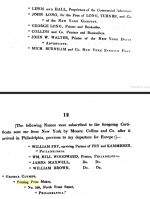
Translation: "If you notice that there are contradictory or incorrect dates throughout this book, its not my fault I just do this in my spare time" Hell of a way to preface a book on history, if you ask me.
Skimming through this book, its not a surprise the author does not go into the Chinese origins, at least as far as I can see.
I could not give a monkeys what this Pfister name has to say about what he thinks.Imho, Gutenberg is the key person in the history narrative to dissect. Pfister thinks Gutenberg need to be put into the 18th Century, and mentions that Fomenko already mentioned that the oldest printed books were backdated:
Neither do I give a monkeys what Formenko mentions about backdated books.
This direction down specific authors routes irks me as it is managing a narrative and seeks to subdue investigation by defering to the opinion of famous names.
Note I said a narrative not the narrative.
Equally it could be the name of a butchers dog!Gutenberg could be a metaphor or symbol for a group that worked tirelessly to turn the well-known process of "printing" into industrial and automated book-production, by inventing a printing press that has a high output.
You make some giant leaps in thought without stopping to test that thought. As you state on more than one occasion you are not interested in detail but prefer the overview. Fine each to their own but the blue sky overview like it or not is built on and contains details.
I see these details as markers that cannot be ignored or swept up in the writings of famous authors. They are physical things, processes, materials, skills that are the precursor to printed words on paper being produced. Each on their own is not capable of producing a printed word but put them altogether with someone a human being or two humans who figured out how to do it and thus the printed word appears.
I fully accept the people building and working the press may not be the sponsors of the build. In that I agree with your statement back up the thread about the importance of the commissioners of the work.
Just because it is dfifficult to find out who they were doesn't mean giving up and turning them into a hidden hand or mason/Jew/Jesuit/secret society whatever and as such beyond scrutiny.
Cobblers. We know nothing of the sort. Its an assumption.We know (according to the official narrative, as always) that normal printing was in use for hundreds of years. What "Gutenberg" did was that he perfected the process so the semi-automated process of producing and copying large amounts of books were made possible.
We have no idea if the name Gutenberg has anything to do with printed books, the first books ever printed using a press don't forget. A man who invented and perfected metal moveable type and yet he left nothing in paper form that showed how proud he was of his inventions, his creations. As far as I know he never commissioned an artist to draw his machines, his type or anything else.
When the vague " hundreds of years" is used to cover the fact we don't know and have no method of establishing veracity figured out it comes across as desperation.
Last edited:

- Joined
- Aug 25, 2020
- Messages
- 2,003
- Reaction score
- 8,106
Cobblers. We know nothing of the sort. Its an assumption.
We have no idea if the name Gutenberg has anything to do with printed books, the first books ever printed using a press don't forget. A man who invented and perfected metal moveable type and yet he left nothing in paper form that showed how proud he was of his inventions, his creations. As far as I know he never commissioned an artist to draw his machines, his type or anything else.
That's true, but it's even worse. We will likely never know. That's the issue with history, and one way out of this problem is what I outlined.
That's why I view Gutenberg as one part of a matrix of a narrative, not as a real human. He is relevant (to me) because he exists in the official narrative as a key character. I don't care at all whether he lived or not, because I will never know.
That's why I said that we "know" printing was used before. It was used before in the official version of history, and in a self-referential system, all you can do is looking for internal inconsistencies.
The only way to discover what really happened in the past is if we would be able to find some kind of outside reference - "Give me a lever and a place to stand and I will move the earth.".
Having said that, I don't want to prevent anyone from detective work and solving historical riddles. The approach by Fomenko and Pfister and others makes it easier to solve them, actually. You don't really need to ask yourself whether something was real, you just work with the events and figures that are deemed most important by academia.
View: https://youtu.be/ViQpix70pwg
Not to bring everything back to the pyramids again, but I had a thought about this. If we take the narrative for granted that some civilization in the past had the superior technology to construct the pyramids - they absolutely had the means and the intelligence to also produce the printing press. They certainly had presses - as that is how papyrus was allegedly created. They had their own means of writing characters (hieroglyphs), which means they could have theoretically developed a movable type to add to the presses they were already using for papyrus. So the question is - why didn't they?
Some speculations:
__________________________________
- Reading was only for the privileged, and they did not want the plebs having easy access to the written word, outside of the interpretations of the higher elite.
- Hieroglyphs were reserved exclusively for ceremonial or decorative purposes, not for consumption of information
- Hieroglyphs have nothing to do with the pyramid structures, and were a later invention used to "color" a picture of a civilization that may or may not have existed or had anything to do with the construction of megaliths.
Some more research on presses brings the following:
The Patent Columbian Printing Press. [A Prospectus, with Testimonials. With a Plate.]
Some names to potentially look into regarding 19th century commerical printing:
A Dictionary of Printers and Printing, with the Progress of Literature, Ancient and Modern; Bibliographical Illustrations
Translation: "If you notice that there are contradictory or incorrect dates throughout this book, its not my fault I just do this in my spare time" Hell of a way to preface a book on history, if you ask me.
Skimming through this book, its not a surprise the author does not go into the Chinese origins, at least as far as I can see.
Excellent stuff.
I strtuggle reading Google books not sure why just find it annoying.
Tomorrow I'll pull the National Encylopedia out dated 1897 and see what that has to say about printing.
What makes the Chinese question a possibility for being true is China is in reality a land of tribes. If my memory is recalling correctly there are presently fifty-two of them and none can communicate with each other orally but they all can using the written Chinese Alphabet.
This is as good an incentive as I can think of for one tribe seeking dominance over others to find a way to produce printed paper works to extend influence and bring other tribes under control.
Speculation obviously but sensible nonetheless.
The routes out of China of old were overrland to the west, south and north of China and east to the Americas and everywherre else by ship.
Overland it would be fair to suggest the printing press would travel organically outwards from China to any states seeking to control people. I don't see how it would travel overland to European countries where the clever Europeans then invent metal type without being introduced along any overland route from China.
Metalworking in the subcontinent of India not to mention China itself is very well developed and as knowledge of smelting metal from ore is easy to carry in the mind it could cross border after border so arise simultanerously in many places at once long before the printing press was invented.
Knowledge of alloys would follow a similar pattern I would argue.
The ship route overr the sea would mean it could easily travel down the length of the Americas and around to the east coasts of the Americas.
It could concievably cross the American land mass from west to east.
Africa could get the knowledge of the press via the land route through India and into Anatolia and the middle east. By sea across the Indian ocean or into the med or Atlantic coasts.
As it is the tale is a group of western Europeans invented the press and its key component the metal alloy and the movable type its made from and it disseminated from there.
Of the two 'points if origin' the China point has at least a plausible identifiable reason for inventing a printing press. The Western European point has no apparent good reason for doing so.
I'm not as defeatist as you appear to be.That's true, but it's even worse. We will likely never know. That's the issue with history, and one way out of this problem is what I outlined.
That's why I view Gutenberg as one part of a matrix of a narrative, not as a real human. He is relevant (to me) because he exists in the official narrative as a key character. I don't care at all whether he lived or not, because I will never know.
That's why I said that we "know" printing was used before. It was used before in the official version of history, and in a self-referential system, all you can do is looking for internal inconsistencies.
The only way to discover what really happened in the past is if we would be able to find some kind of outside reference - "Give me a lever and a place to stand and I will move the earth.".
Having said that, I don't want to prevent anyone from detective work and solving historical riddles. The approach by Fomenko and Pfister and others makes it easier to solve them, actually. You don't really need to ask yourself whether something was real, you just work with the events and figures that are deemed most important by academia.
You are keen on managing the way things need to be done. You might not view it like that but you're choice of words suggests otherwise.
How about we both crack on in our own ways and each leave the other alone.
Last edited:

Similar threads


- Replies
- 130
- Views
- 16K

- Replies
- 5
- Views
- 3K


- Replies
- 2
- Views
- 699
