Great/Grandparents and What We Learn From Them

SH.org OP Username
AgentOrange5
SH.org OP Date
2018-11-21 11:24:49
SH.org Reaction Score
55
SH.org Reply Count
55
At the risk of sounding arrogant, I believe that not one of the family members described here was psychologically capable of questioning anything presented to them by authority, no matter how much it might contradict what they saw with their own eyes. Sadly, after Covid, this no longer surprises me.
My family story is similar in many eays, my great grandparents by mom's side were born "1894" and "1896", aparently cousins, who were their parents? No one has a clue. They had 7 kids, he was harsh with all of'em from what my mom told me, never spoke about where they came from, and were also hostile to any sort of history, legit hated the subject and never questioned if there was more to life. Either by trauma or programming is my guess.

They both passed on the same day, only hours appart. Of all 7 kids i only met 2, mt granddad and a distant aunt. For some reason the entire family, to this day, is very prone to disease. Anyway, my granddad met my grandma in a small countryside party, fell in love and married some time later.

Grandpa unfortunally passed when i was 7 due to a horrible cancer that destroyed him inside out, but my mom was very attached to him, like his father, didn't liked old objects (appart from his guns) and was always thinking of "the future", never questioned authority too much, just went along with whatever narrative was around. My grandma, much the same. Me and mom lived with her for about 20 years, everytime there was a vaccine campaign in the City, she was there getting a jab, regardless of my attempts to warn her, it never worked. They both grew up in harsh farm life conditions

She passed 7 years ago due to an accident at home, it was traumatic to say the least. I don't know much about her father and Mother, other than he was an asshole involved with some satanic ritual staff. And who were their parents? No one has a clue too

The common element among both sides is: hatred for history/antiquities, never questioned much of anything and just followed whatever was the current govt programming. Fortunato, me and mom question the hell out of reality on a Daisy basis almost, it feels amazing
 
I thought I would add my knowledge of my great-grandparents, and great-great-grandparents, from Dalarna, in rural central Sweden. This is my favourite photograph:

1725819246412.png


My great-great-grandparents are seated, with my great-grandmother standing by her mother’s right shoulder. At least three, if not all, of her brothers went to America, never to be seen again. The women are all wearing national dress, and the house is likely to be yellow, so it would have been a colourful scene. The neighbours’ house can be seen in the distance and is almost certainly deep red.

1725819323866.png

Hopefully the resolution is high enough to see the faint diagonal line on the right hand side, in the sky - this a wire supplying the house with electricity and my great-great-grandfather was apparently very proud when he arranged the connection. I’m guessing the photo was taken around 1910 or so.

He used it to run a lathe, and I still have a chair and a spinning wheel that he made:

1725819389803.png

My great-grandmother had a child out of wedlock, but she wasn’t cast out of the family, and was supported by her father. Later, she walked from farm to farm, with a cow as dowry, and soon after married my great-grandfather. My mother would enjoy staying with them on their farm every summer when she was young. They were self-sufficient, with chickens, cows, and a horse (two, when one had to retire due to age). They had a dairy, with tall metal milk churns, and my great-grandma would make långmjölk (similar to yoghurt).

During the 1970’s, my father traced my mother’s family history quite successfully, and I remember one holiday when we searched for the resting place of one Olaf Flodström, the earliest family member that he had been able to identify.

The Scandinavian male name Olaf means descendant of the ancestors, ancestor’s relic or legacy of ancestors. My pocket Welsh-English dictionary from 1861 includes olaf as meaning last. You can see how Flodström translates from Swedish today as river current.
1725819513823.png

We did eventually discover a potential gravestone, but I remember Dad saying it was impossible to know if it was the right Olaf Flodström, as it had been a popular name in Sweden at the time! I will try to find the records my father kept and provide dates, if possible. It could give the time of the reset, by virtue of cataclysmic flooding.

I don’t know so much on the English side, but my aunt has married a gentleman whose grandfather was left outside a pharmacy in a paper bag! It wasn’t so uncommon, apparently, due to the shame (and financial implications) of having a child out of wedlock, and he was taken in and raised by the pharmacist and his wife.
 
This is something that's currently in the process of being rewritten, but your great grandmother probably was actually Caucasian, just not "white" by the racial standards of the time. "White" classification has made a lot of transformations over the years, and even today people still argue about whether all light skinned Caucasians are "white" or not.

Anyway, the Cherokee and surrounding peoples weren't a fully homogeneous bunch, but they were mainly of Mediterranean descent. That's why there are so many modern Americans with family stories of Cherokee and etc. ancestry whose DNA results tell them "No, you're Jewish!" or "No, you're Spanish!" etc. This is also the case in my family. We have verifiable Native ancestry, and not a small amount of it either, but my DNA test looks like somebody closed their eyes and threw darts at a map of Eurasia. It's something you see whispered about in the corners of the internet, but people really don't talk about it in real life. Even tribes don't really talk about it. You're family or you're not, and race is only an issue if you're not.

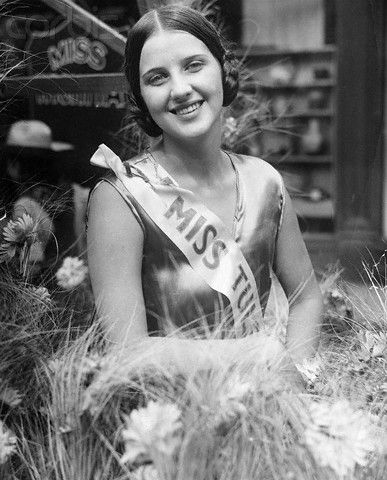
Example of a full blooded Cherokee girl from a century ago:


At the time they described her looks as "Grecian". They knew.
To be "Cherokee" is to be a mixture of Anglo-European and any of the Aniyunwiya clans. There is no "r" in the various strains of the Tsalagi language and dialects. "Cherokee" is the Chata name for Aniyunwiya people. Anglo-Europeans preferred using the word "Cherokee" because it's easy on their tongue. So the woman featured in may be "Cherokee" isn't Aniyunwiya. I am a descendent of Aniyunwiya and Narragansett folks, people who were relabeled Negroes, Black and African-Americans.

Meanwhile, it's tiring to hear people - mainly Americans - use the word Caucasian and white interchangeably when speaking about Anglo/Irish/Dutch, etc folks. They are not Caucasian. Armenians, Turks, etc. THEY are Caucasian.
 
<br/>
Which makes me wonder, how common is this? Anyone here who has grandparents/great-grandparents from the turn of the century, what kind of stories did your grandparents tell? Did they avoid history? Or maybe they didn't avoid it but their stories sounded text-book like? <br/>
<br/>

Interesting thread, I questioned the same often until I realised that grandparents / people in the past were same to us in a sense that confirmers were lifted in society, those who questioned authority were cancelled, eliminated. Thus, fear and shame ruled the world and most people were tools for the authority, ready to torture a truth teller to death for a dollar (as the ie Milgram Experiments argued and showed time and time after again). So few dare to question anything, let alone the past, even fewer have the stamina to dig deep through the fields of rabbitholes. So yeah, if your granny didn't tell you anything interesting, chances are, she or he was an NPC. Congrats to you for making this far.
 
Tips
Tips
Please respect our Posting Rules.
Back
Top