Archive
Old SH Archive
- Joined
- Sep 8, 2020
- Messages
- 17,737
- Reaction score
- 3,168
I recently spent a long time backpacking around Peru exploring the various enigmas. Terraces are one of the most profound yet unstudied topics of the area. The mainstream view is correct in the claim that some terraces were and are used for agriculture, but there are reasons to doubt that was their original purpose.
The mainstream view (Wiki):
"Terraced farming was developed by the Wari culture and other peoples of the south-central Andes before 1000 AD, centuries before they were used by the Inca, who adopted them. The terraces were built to make the most efficient use of shallow soil and to enable irrigation of crops by allowing runoff to occur through the outlet."
Many modern day researchers (Brien Foerster) claim these terraces, because of their (mostly) non polygonal retaining walls, were created by the Inca far after the "megalithic" construction era. The two different terrace styles can be seen at Ollanta, Polygonal at the bottom and upper left terraces, and the rough "ukun" pacha in between.
The scale and seamless integration of the terraces into the megalithic sites lead me to believe that it was the builders material/labor choice, rather than a less capable civilization. Viewing these constructions as the same project opens up some interesting possibilities.
Strip Mines:
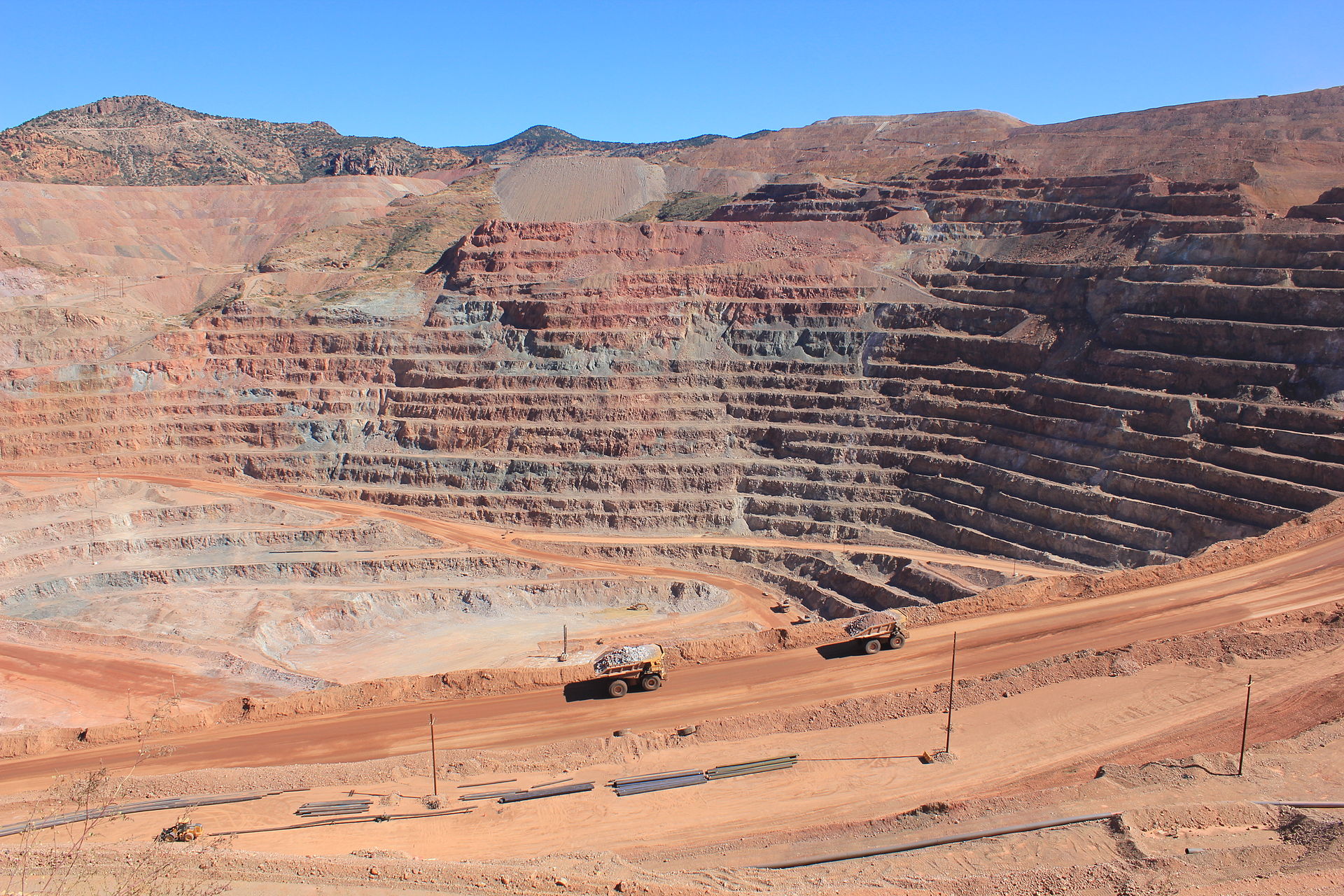
A few weeks after I came back from Peru I was driving through the mountains of Colorado and passed a strip mine on the side of a mountain. After spending so much time hiking around terraces in Peru I was shocked to see such a similar structure at home. The further I looked into it the more convinced I am that these "Inca" terraces were primarily constructed as a byproduct of mining excavation.
Here is a photo of a strip mine:
Inca Terrace:
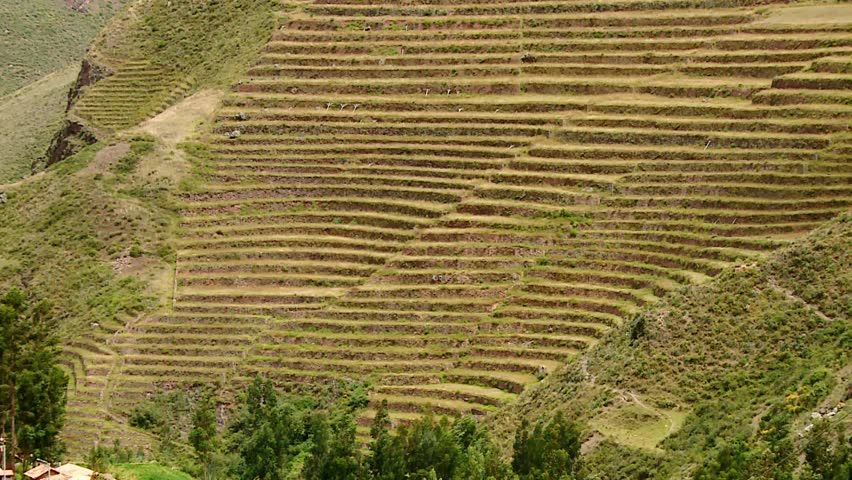
As you can see in the strip mine photo, the different levels of the mine have started to collapse. The logical next step would be to reinforce the levels by adding a supporting layer of stones. Some layers would need varying degrees of strength, which I believe explains the two different types of masonry found at Ollanta and other sites. This reaffirms that such a project as a whole, would have been undertaken as one project.
The scale of Inca terraces:
The amount of terraces throughout Peru is astounding and that is only what has been publicly uncovered. The terraces are not just a few levels, they often extend to the very top of mountains. The logistics of farming up an entire mountain when there is plenty of flat arable valley land is absurd. This is further amplified by the abundance of non reinforced upper mountain terraces. These can be seen on google maps satellite view, I highly recommend spending sometime looking north of Cusco and throughout the Sacred Valley on sat view.
Satellite view of a mountain top in Peru:
Satellite of a mountain top in Colorado:
This second photo is of a burn area in Colorado. The mountain has been mined in parallel strands. I believe the resemblance speaks for itself.
Conclusion:
Terraces have definitely been built and or used for agricultural purposes, but due to the immense scale, illogical origin story, and resemblance to modern day mining techniques, I believe that is enough to at the very least doubt the mainstream story.
The mainstream view (Wiki):
"Terraced farming was developed by the Wari culture and other peoples of the south-central Andes before 1000 AD, centuries before they were used by the Inca, who adopted them. The terraces were built to make the most efficient use of shallow soil and to enable irrigation of crops by allowing runoff to occur through the outlet."
Many modern day researchers (Brien Foerster) claim these terraces, because of their (mostly) non polygonal retaining walls, were created by the Inca far after the "megalithic" construction era. The two different terrace styles can be seen at Ollanta, Polygonal at the bottom and upper left terraces, and the rough "ukun" pacha in between.
The scale and seamless integration of the terraces into the megalithic sites lead me to believe that it was the builders material/labor choice, rather than a less capable civilization. Viewing these constructions as the same project opens up some interesting possibilities.
Strip Mines:
A few weeks after I came back from Peru I was driving through the mountains of Colorado and passed a strip mine on the side of a mountain. After spending so much time hiking around terraces in Peru I was shocked to see such a similar structure at home. The further I looked into it the more convinced I am that these "Inca" terraces were primarily constructed as a byproduct of mining excavation.
Here is a photo of a strip mine:
Inca Terrace:
As you can see in the strip mine photo, the different levels of the mine have started to collapse. The logical next step would be to reinforce the levels by adding a supporting layer of stones. Some layers would need varying degrees of strength, which I believe explains the two different types of masonry found at Ollanta and other sites. This reaffirms that such a project as a whole, would have been undertaken as one project.
The scale of Inca terraces:
The amount of terraces throughout Peru is astounding and that is only what has been publicly uncovered. The terraces are not just a few levels, they often extend to the very top of mountains. The logistics of farming up an entire mountain when there is plenty of flat arable valley land is absurd. This is further amplified by the abundance of non reinforced upper mountain terraces. These can be seen on google maps satellite view, I highly recommend spending sometime looking north of Cusco and throughout the Sacred Valley on sat view.
Satellite view of a mountain top in Peru:
Satellite of a mountain top in Colorado:
This second photo is of a burn area in Colorado. The mountain has been mined in parallel strands. I believe the resemblance speaks for itself.
Conclusion:
Terraces have definitely been built and or used for agricultural purposes, but due to the immense scale, illogical origin story, and resemblance to modern day mining techniques, I believe that is enough to at the very least doubt the mainstream story.
Note: This OP was recovered from the Sh.org archive.
Note: Archived Sh.org replies to this OP are included in this thread.